

INTERVIEW/Nikos Papathanasis: Greece seen as digital transformation case study, digitalisation helped curb tax evasion

Europe operates on the basis of the single market, which requires cohesion in order to achieve regional convergence and offer citizens a comparable standard of living, Alternate Minister of the Greek Ministry of Economy and Finance Nikos Papathanasis declared in an interview with AGERPRES.
He stated that there cannot be a two-speed Europe, where some citizens have access to certain goods and others do not.
The Greek official stressed that Greece ranks among the top EU countries by the degree of absorption of European funds, but also by the payment requests under the Recovery and Resilience Plan, thanks to the reforms it has implemented and the reduction of bureaucracy. The government has set four key pillars regarding cohesion funds, namely digital transformation, green transformation, skilling and upskilling.
He added that Greece serves as a case study in digital transformation, with the program for digitizing the economy delivering improved fiscal results by curbing tax evasion.
Nikos Papathanasis also spoke in the interview about the future Multiannual Financial Framework, and about the way Greece managed to move from a significant budget deficit to a budget surplus and about the efforts to reduce national debt.
AGERPRES: You participated in Bucharest in the conference on the future of cohesion policy. In this context, can you tell us what the current absorption rate of cohesion policy funds in Greece is and how has Greece managed to improve its absorption rate of European funds?
Nikos Papathanasis: Well, first of all thank you for the opportunity you gave me to discuss very important issues. I would like to thank [Minister of European Investments and Projects Dragos Pislaru], the Ministry and Romania for the opportunity they have given us to discuss cohesion. We live in a Europe that runs on the single market, and in order to operate, the single market needs cohesion, because it needs regional convergence and you cannot have regional convergence without cohesion. So, this is the issue that we discussed today (on Friday, ed. note). And of course, in Greece, because we've been through a financial crisis, and now our fiscal picture shows how much we have progressed, we cannot afford to lose any European money or European resources, so we proceed with a high absorption.
Greece is now among the top five or six countries, if we talk about the Recovery and Resilience Plan (RRP), we are first in terms of absorption per GDP. But we are also among the first four or five countries when it comes to payment requests, but also in terms of the partnership agreement we are still in the first position, because we have learned that in order to succeed, we have to continue with the reforms, we have to cut down red-tape, bureaucracy, and, of course, we have to be very careful to achieve the milestones and the targets in order to proceed with the payment requests. And we have done so, and we will continue to do so.
AGERPRES: What are the areas the cohesion funds were directed to and what are the main projects in this field?
Nikos Papathanasis: Well, we have a strategy, actually this strategy started back in 2019, when we came into power, and Kyriakos Mitsotakis became Prime Minister. We have set four basic pillars, which are the digital transformation, the green transformation, skilling and upskilling, because, as I said, we had been through the financial crisis and we had high unemployment, so we had to train our people to get back to work, and also to support SMEs, because due to the crisis we had many SMEs that didn't have access to the banking system so we had to support competitiveness. So these four pillars we actually utilized and through the European funding supporting the green transition. So we have many projects in the green transition, now Greece is producing approximately 50% of its energy from renewable resources and it also serves as a case study for digital transformation. We have now a country that is completely different from what it was six years ago, and actually we run a very strong program to digitize and digitalize our economy. And that is how we have achieved better fiscal results, because we have fought tax evasion.
AGERPRES: How has the cohesion policy contributed to reducing regional disparities in Greece?
Nikos Papathanasis: Cohesion policy is very important. Actually, cohesion is targeted towards reducing disparities among the regions. As I said before, we need regional convergence, and in order to have regional convergence, we need the cohesion policy. What we as politicians have to do - as we live in Europe and Europe has a way of life: we have to provide this way of life to every citizen. We cannot have a two-speed Europe and citizens that have access to certain goods other citizens don't have access to. So we have to work on that and the cohesion policy actually supports the 13 regions. We have 13 regions in Greece and we allocate the funds so each region, according to its GDP, improves through infrastructure projects, projects that have to do with health, improving the hospitals, improving the schools. So we are doing that in order to upscale every function in every region by utilizing the European funds the proper way.
AGERPRES: What are the priorities of the Greek Government regarding the use of European funds and what are the criteria according to which the projects are selected?
Nikos Papathanasis: Well, as you know, there are new priorities in the European Union, for example housing is something very important now. This is a European problem. But it's also a Greek problem. So with the mid-term review, the Commission now requests us to reallocate approximately 10% of the funds from the partnership agreement towards priorities like defense, housing, water management. This is a very important subject. Water is becoming a significant problem now in Europe, and because of the climate crisis it's becoming even more difficult. And then there's also competitiveness. So through this we are redirecting our funds in order to support these pillars and I think this is the effort that will keep as we negotiate for the new MFF in order to redirect funds towards these priorities.
AGERPRES: What are the lessons learned from the current Multiannual Financial Framework (MFF) for a more efficient use of funds in the next financial year, which will start in 2028? What do you think should be changed or improved?
Nikos Papathanasis: Well, things are running very fast. If we were to do this discussion about three, four years ago, I think we would be discussing different issues. First of all, we have artificial intelligence. Artificial intelligence makes us believe that we know what the future holds for us, but this is not really true. We don't really know what the future has in store. So it's parameters that we do not know exactly. But what we have learned is that we have to adjust our needs according to the times. The previous MFF did not have, for example, when it started, a very severe climatic crisis. We have damages that occur at a high frequency, that we didn't see before. For example, Greece was hit by Cyclone Daniel that has cost the economy approximately 3.5 billion euros. And I have to say that Slovenia underwent the same situation. And Europe had designed a solidarity fund before the intensification of the climatic crisis, and out of the 3.5 billion euros they only gave us 100 million. So we had to redirect funds from the European, from the RRP and from the partnership agreement and also to have an economy strong enough to support the people in the area. So what I'm saying and what we have learned is that we have to be proactive. We have to design according to our needs. For example, Romania might have different needs from what Greece has. But at the core of what we've learned is that cohesion must remain a connecting issue between all the programs, because cohesion is the basis on which we build competitiveness. We don't have cohesion, we don't have solidarity with the people, we cannot have competitiveness. So we cannot see cohesion and competitiveness as antagonists. We see that cohesion must be the template on which we can build the next day.
AGERPRES: At the European level there was a proposition to unify cohesion funds with the agricultural subsidies. What is Greece's position on the intention to merge cohesion funds with agricultural subsidies?
Nikos Papathanasis: We don't like this idea. We believe that we should keep it separate. I think there are two different issues, and I think at the end we'll find a common landing ground. You see, Europe has shown its solidarity. For example, we saw that during COVID, Europe responded with the RRP. So we think we should keep on discussing. We are Europeans. We know how to resolve our problems, but we should keep this separate because they serve a separate purpose.
AGERPRES: According to Eurostat data, in the second quarter of this year Greece recorded a budget surplus of 2.7% of GDP. What were the measures taken by the Greek government to move from a large budget deficit to a surplus?
Nikos Papathanasis: It is true, Greece is a case study in Europe. We were almost thrown out of Europe, but we came back strong. And we plan to stay this way. We do not repeat the mistakes that we did in the past. We are a reformist government. We like to be on the fiscal path, we like through the reforms to enhance the capacity of the state, for example, to reduce tax evasion, and this is what we do through digitization and digitalization. So in 2025 will have a growth of 2.2 percent. Europe will not exceed 1 percent. In 2026 we will have a growth of 2.4 percent. Again, this will be more than double the European average. But what we believe is that we should keep the reformist picture that we have, the reformist effort that we do. And also we should continue building a country that creates a business-friendly environment.
Greece is now attracting very big investments. Our FDIs have increased a lot. And I think we have changed the way investors used to see us in the past, because we believe that through the investment, through the enterprises, through attracting business and businesspeople to Greece we will succeed in supporting our growth. Of course, we have reduced our unemployment. Now our unemployment is below 8%. We started back in 2019 at 18%. We want to continue. And of course, we would like to support our decrease in the debt-to-GDP ratio. Greece in 2030 will not be the country with the highest debt-to-GDP in Europe. We are on a downward trend, we have the fastest decrease and we will continue this way.
AGERPRES: Regarding Greece's public debt, the Greek Government forecasts that it will fall to 137.6% of GDP from 210% of GDP before the pandemic. How will this performance be achieved?
Nikos Papathanasis: Well, as you know, now in Europe we have a fiscal structural plan which has, for example, an expenditure ceiling. Now, all countries have to meet this ceiling. As you know, we have countries like France that cannot meet the expenditure cap. Greece has met all the requirements of the new fiscal structure plan and because of the primary surplus - because we service our loans, we can decrease our loans much rapidly, more rapidly than any other state. And we plan to do keep doing that. Fitch has upgraded our rating just three days ago. Now we are at BBB, which means that we are borrowing money with lower interest than many other European countries. And we believe that as we decrease our debt-to-GDP, as we support our growth, as we reduce our unemployment, we will be a country very attractive for investment. We are a stable government. We are a staple country geopolitically. We have great weather and we have great employees, STEM talent that many investors and many businesses find when they come to establish their business in Greece. AGERPRES (RO - writing by: Constantin Balaban; EN - editing by: Simona Klodnischi)
The content of the www.agerpres.ro website has the exclusive purpose of public informing.
All the information published on this website by AGERPRES is protected by relevant legal dispositions.
It is forbidden to copy, reproduce, recompile, decompile, distribute, publish, display, modify, create derived components or products or full services, as well as any exploitation of the site's content.
Details in the section Terms of Use. If you are interested in picking up AGERPRES news items, please contact the Marketing Department – marketing@agerpres.ro.
The use of the Comments section entails your obligation to respect the AGERPRES terms and conditions in regards to the publishing of comments on the www.agerpres.ro.
Other news in category
Bill on educational rights of national minorities, challenged by associations of Romanians in Ukraine
Three organizations defending the interests of Romanian citizens in Ukraine have submitted a memorandum to the authorities in Bucharest, urging urgent intervention with the leadership in Kyiv to amend draft law no. 16.119 regarding the educational rights of national minorities. The memorandum was sent to Nicusor Dan; the interim Minister of Foreign Affairs, Oa
Focsani student awarded money as prize by municipality for winning gold at International Applied Chemistry Olympiad
Student Cezar Beniamin Rentea, from the 'Al. I. Cuza' National College Focsani, will be awarded 3,000 lei by the Focsani Municipality, after he won the Special Jury Prize and the Gold Medal at the 2026 edition of the International Applied Chemistry Olympiad (IACHO), held in Bandung, Indonesia. The Focsani City Council approved, on Thursday, in an extra
Fourth Romania - Japan Innovation Forum to take place Oct 20 - 23 in Tokyo, Kyoto, Osaka and Kobe
The fourth edition of the Romania - Japan Innovation Forum, which will take place from October 20 to 23 in four Japanese cities - Tokyo, Kyoto, Osaka and Kobe - is a platform for dialogue and cooperation aimed at strengthening economic, technological and innovation ties between the two countries. According to a statement from the Ministry of Foreign Affairs (M
Ankara Mayor Mansur Yavas visits Bucharest as counterpart Ciucu aims to revive twinning ties
Ankara Mayor Mansur Yavas is paying an official visit to Bucharest at the invitation of Bucharest Mayor Ciprian Ciucu. Yavas is due to be welcomed at the airport by Ciucu on Thursday evening. Talks on issues of interest to residents and the two cities will begin on Friday, with the Turkish delegation remaining in Bucharest until Saturday evening, the Bucharest

PNL is open to voting Niculescu Gov't but does not intend to rule with PSD (Bolojan)
The PNL does not intend to participate alongside the PSD in the government proposed by Prime Minister-designate Luca Niculescu, but is open to granting it an 'investiture vote,' with a final decision to be made next week, PNL President and Interim Prime Minister Ilie Bolojan announced on Thursday. 'I listened to Prime Minister-designate Luca Nicule
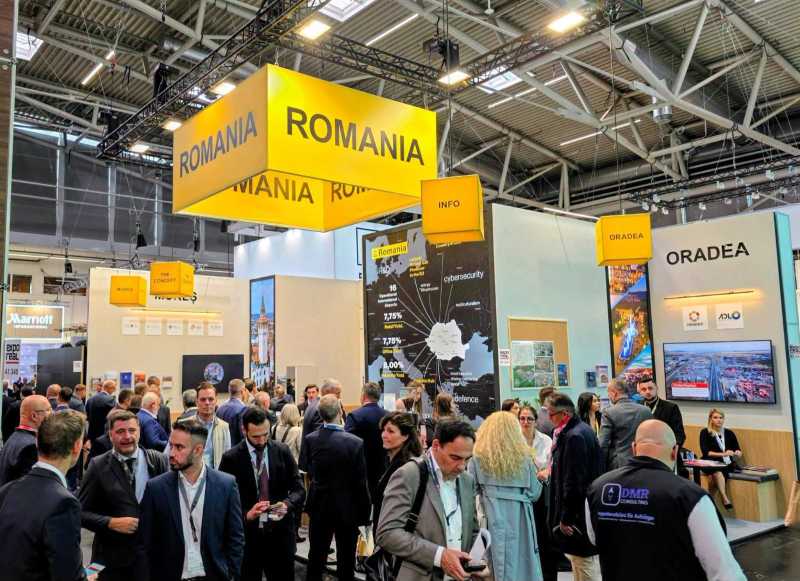
Investors from eight countries express interest in 'Why Mures' opportunities showcased at EXPO REAL Munich
More than 50 international organisations and companies from eight European countries expressed interest in the opportunities presented by the 'Why Mures' delegation, which brought together local and county authorities, the business community and academia at EXPO REAL Munich, one of the continent's leading trade fairs dedicated to investment, real estate developme
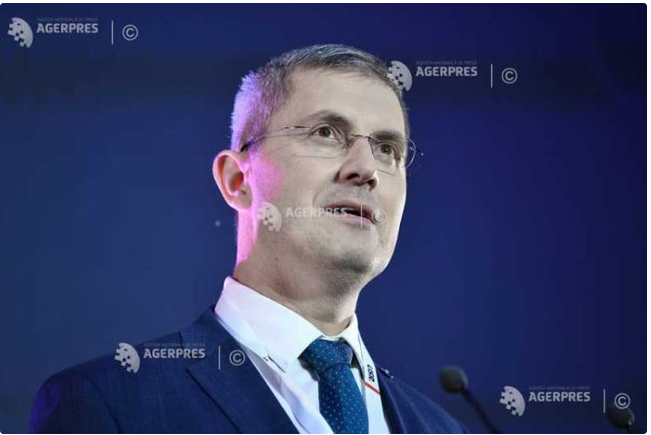
MEP Dan Barna: Building a stable parliamentary majority is practically impossible now
AGERPRES special correspondent Tudor Martalogu reports: Romania is currently facing such a deep political crisis that forming a stable parliamentary majority is practically impossible, MEP Dan Barna (Renew Europe Group) told AGERPRES on Thursday, stressing that early elections are an option for overcoming the current deadlock. Referring to the talks Prime Mini
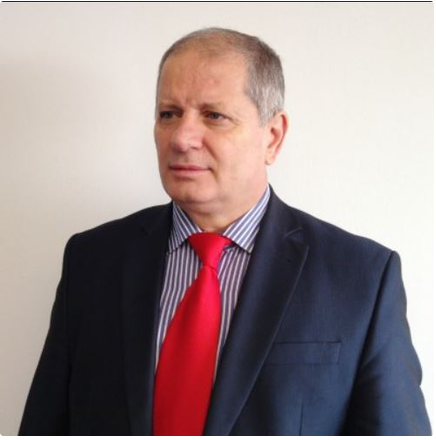
CNR-CME DirGen: Romanian consumers can rest assured, energy security is guaranteed
Stefan Gheorghe, director general of the Romanian National Committee of the World Energy Council (CNR-CME), told AGERPRES on Thursday that Romanians can rest assured this cold season, as energy security is guaranteed. 'Romanian consumers can rest assured, energy security is guaranteed. As for the rest (the price - ed. n.), I cannot guarantee that,' Ste
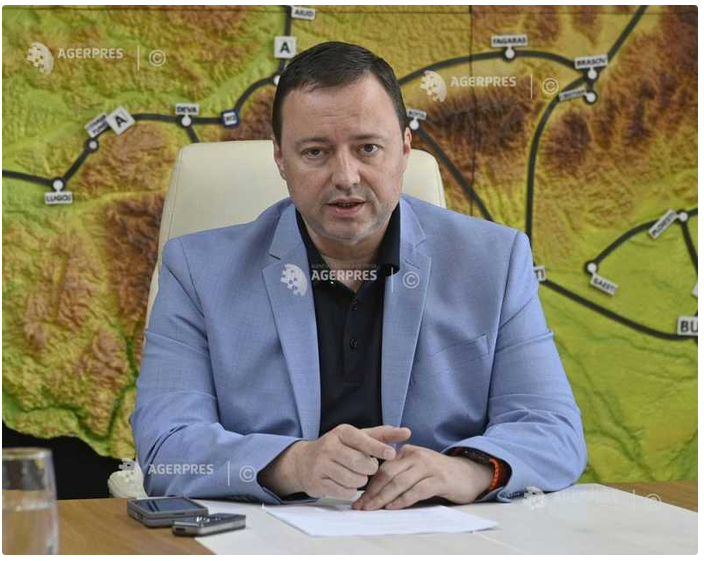
CNAIR Director General Pistol announces opening of traffic on new road bridge over Tisza River
Traffic on the new road bridge over the Tisza River, linking Sighetu Marmatiei (Romania) and Bila Tserkva (Ukraine), was opened on Thursday to passenger vehicles with a maximum authorised mass of up to 3.5 tonnes, Director General of the National Company for Road Infrastructure Administration (CNAIR) Cristian Pistol announced. 'Today, we opened traffic on

PSD's Grindeanu: I particularly appeal to the PNL and UDMR to contribute to building a transparent majority
Social Democratic Party (PSD) leader Sorin Grindeanu said on Thursday that the Social Democrats had set two conditions for Prime Minister-designate Luca Niculescu in order to support the future government: a change in economic policy and a committed parliamentary majority, particularly from the National Liberal Party (PNL) and the Hungarian Democratic Union of Romania (UDMR)

Tulcea hosting international symposium on managing jackal populations
Over 100 scientists from Romania and abroad are participating, October 7-10, in Tulcea, in a symposium on the jackal and related species, an event organised by the Danube Delta National Institute for Research and Development (INCDDD), within the Golden Jackal Informal Study Group in Europe (GOJAGE) international network dedicated to the study, monitoring and conservation of
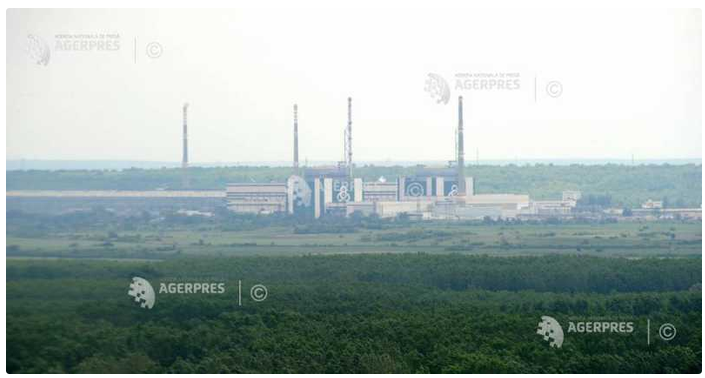
Kozloduy Unit 6 shutdown increases pressure on Romania's energy system (expert)
The scheduled shutdown of Unit 6 at Bulgaria's Kozloduy nuclear power plant, starting on Thursday for annual maintenance and refuelling, is increasing pressure on Romania's energy system, as electricity consumption rises during the evening hours while domestic production does not always cover demand, Dumitru Chisalita, chairman of the Intelligent Energy Association (

PM-designate Niculescu on meeting with PSD representatives: I saw openness in trying to find solutions
Prime Minister-designate Luca Niculescu said on Thursday that he saw openness from the Social Democratic Party (PSD) in trying to find solutions, and the priorities discussed with the Social Democrats were aimed at the budget revision and next year's budget. 'The immediate priorities which we have and which I have discussed with the PSD representatives
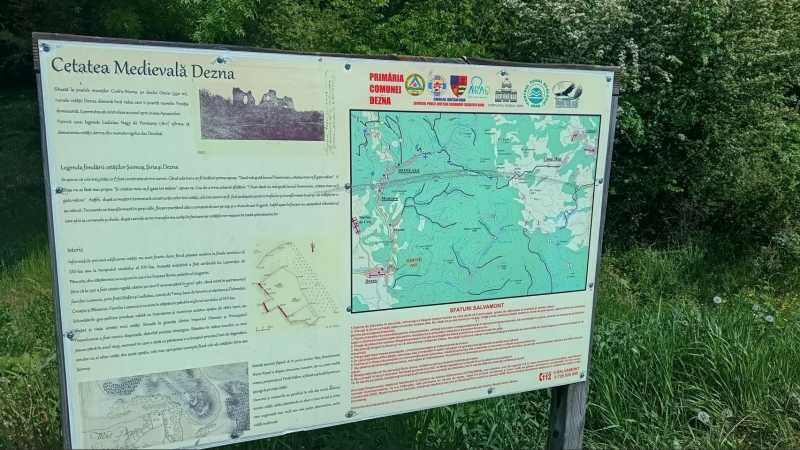
Dezna Fortress becomes tourist magnet after via ferrata route development
The ruins of Dezna Fortress have become a magnet for adventure tourism in recent years, following the development of the county's first certified via ferrata route, with thousands of adrenaline enthusiasts, many from abroad, coming to climb the cliffs beneath the historical monument. Opened four years ago on the cliffs of Osoiu Hill, the route is fully equ

Bolojan:We'll meet Luca Niculescu; we will analyse how to end to political crisis triggered by PSD-AUR
National Liberal Party (PNL) leader and interim Prime Minister Ilie Bolojan said that at Thursday's meeting with Prime Minister-designate Luca Niculescu, they will discuss how to put an end to the 'political crisis triggered by the PSD and AUR,' stressing that a fully empowered government is needed as soon as possible to manage urgent matters. '