

EANA Debate in Brussels 2026: The Role of News Agencies in Fighting Disinformation in Europe
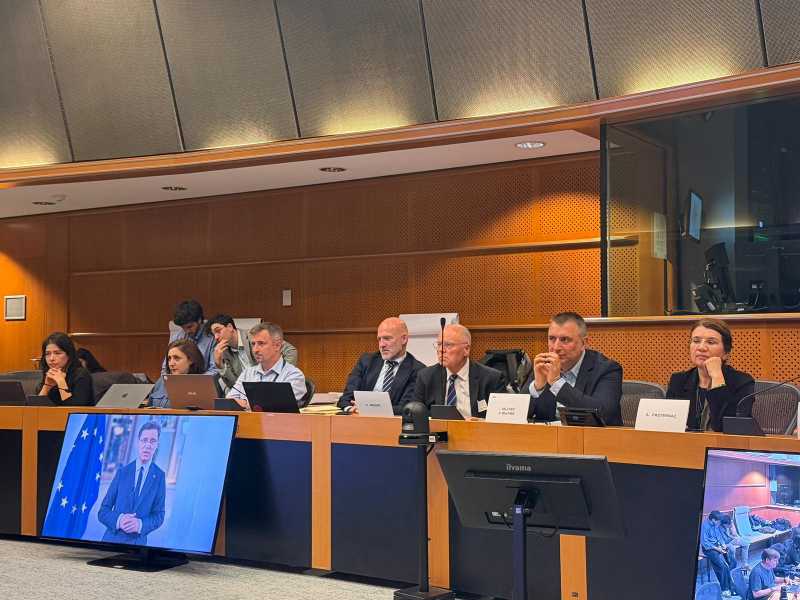
News agencies represent the critical infrastructure of European democracy and must be treated as such in the digital and legislative architecture of the European Union, stressed the participants in the debate organized on Tuesday, in Brussels, by the European Alliance of News Agencies (EANA) and co-hosted by Antonella Sberna, Vice-President of the European Parliament (EP), and Pina Picierno, also a Vice-President of the EP.
The event, dedicated to the role of news agencies in combating disinformation in Europe and moderated by EANA Secretary General Alexandru Giboi, brought together representatives of EU institutions and news agencies, with the participation as a special guest of Henna Virkkunen, Executive Vice-President of the European Commission (EC) for Technological Sovereignty, Security and Democracy, and European Commissioner for Digital and Frontier Technologies.
The CEO of the Italian news agency ANSA and President of EANA, Stefano De Alessandri, stressed that news agencies represent the 'backbone of the European information ecosystem', providing verified information to governments, institutions and the media on a daily basis.
He warned that disinformation had entered a new phase, being automated and amplified by generative artificial intelligence, capable of massively producing false content and manipulative narratives. In this context, De Alessandri called for the recognition of agencies as critical European infrastructure and insisted that the truth has a real cost, based on verification, correspondents on the ground and editorial standards.
He also drew attention to the economic imbalance in the industry, where digital platforms and AI companies use journalistic content without fair compensation, and called for licensing models adapted to the era of artificial intelligence, based on transparency and fair remuneration.
Along the same lines, Patrick Lacroix, CEO of the Belga news agency and Member of the EANA Board, described news agencies as a 'democratic information infrastructure', comparable to a data network essential for the functioning of society. He warned that the platforms' algorithms favor emotional and polarizing content, while generative artificial intelligence amplifies information 'noise' and erodes the public's ability to distinguish between truth and falsehood.
Patrick Lacroix advocated for the introduction of a mandatory opt-in system for the use of journalistic data and press content in the training and operation of artificial intelligence models, stressing that this is not about restricting the open internet, but about protecting the verified information that underpins democracy.
He also called for transparency on the content used by AI models, through modern mechanisms that are easy to process automatically, including APIs (application programming interfaces) and advanced protocols, as well as the creation of tools through which rights holders can express their choices in a differentiated manner, including through a centralized register at the European Union Intellectual Property Office (EUIPO) for the management of opt-out options.
In turn, the Director General of AGERPRES, Claudia Nicolae, emphasized that the speed at which information circulates has increased significantly, and the volume of content made available to the public every day is unprecedented. In this context, an extremely worrying phenomenon has occurred, the extent of which is only now beginning to be quantified.
She underscored that verified information has a high cost, as it requires the presence of journalists on the ground, time to verify sources, the involvement of editors, the existence of an institutional infrastructure and the assumption of responsibility.
The Ambassador of Romania to the Kingdom of Belgium, Andreea Pastarnac, emphasized the relevance of the relationship of the Romanian community in Belgium and other European states with the press and correct information in diplomatic activity. She mentioned the existence of initiatives by Romanian journalists in the diaspora, focused on ensuring a flow of correct and relevant information, as well as the essential role of communication in the relationship between communities and states.
EC Vice-President Henna Virkkunen reaffirmed that the fight against disinformation is a strategic priority of the European Commission, warning of the growing economic pressures on the media and the impact of generative artificial intelligence.
The Commission is proposing media support programs worth billions of euros, including through the AgoraEU initiative (a funding framework dedicated to culture, media and civil society), and is developing instruments such as the Digital Services Act and the European Democracy Shield to combat disinformation and protect the integrity of elections.
The European Commission's representative drew attention to the changing information consumption behavior, especially among young people, where social platforms have become the main sources of information, raising issues of media literacy and critical thinking.
MEP Victor Negrescu stressed that disinformation and artificial intelligence are closely linked, as the same technologies that bring benefits can also be used for large-scale manipulation. He showed that news agencies have an essential role as trusted sources, by verifying and filtering information in an increasingly crowded content space.
At the same time, the MEP insisted on the need to support independent journalism, protect press freedom and provide resources so that media organizations can remain competitive in the digital environment. He also stressed the importance of media education, especially for young people, pointing out that the fight against disinformation is a shared responsibility of European institutions, authorities, platforms and journalists.
In her intervention, Antonella Sberna, Vice-President of the EP, highlighted the current difficulty of distinguishing truth in the digital age, where artificial intelligence and online platforms amplify unverified information. She stressed the need for a functioning information ecosystem based on cooperation between institutions, media and decision-makers, insisting that European rules must not only be adopted but also effectively applied.
Pina Picierno, also a Vice-President of the EP, sounded the alarm on propaganda and external influence, stating that 'propaganda is not journalism' and that public or private platforms must not amplify the messages of authoritarian regimes. She argued that news agencies are essential for fact-checking and protecting democratic space, in a context where disinformation already affects the majority of European citizens.
Participants concluded that disinformation cannot be combated by a single actor or instrument, but requires a joint effort between European institutions, Member States, digital platforms and the media. News agencies were described as an essential element of the European democratic infrastructure, and their financial, legal and technological strengthening was considered a necessary condition for defending democracy in the age of artificial intelligence. AGERPRES(RO - writing by: Mariana Ionescu; EN - writing by: Bogdan Gabaroi)
The content of the www.agerpres.ro website has the exclusive purpose of public informing.
All the information published on this website by AGERPRES is protected by relevant legal dispositions.
It is forbidden to copy, reproduce, recompile, decompile, distribute, publish, display, modify, create derived components or products or full services, as well as any exploitation of the site's content.
Details in the section Terms of Use. If you are interested in picking up AGERPRES news items, please contact the Marketing Department – marketing@agerpres.ro.
The use of the Comments section entails your obligation to respect the AGERPRES terms and conditions in regards to the publishing of comments on the www.agerpres.ro.
Other news in category
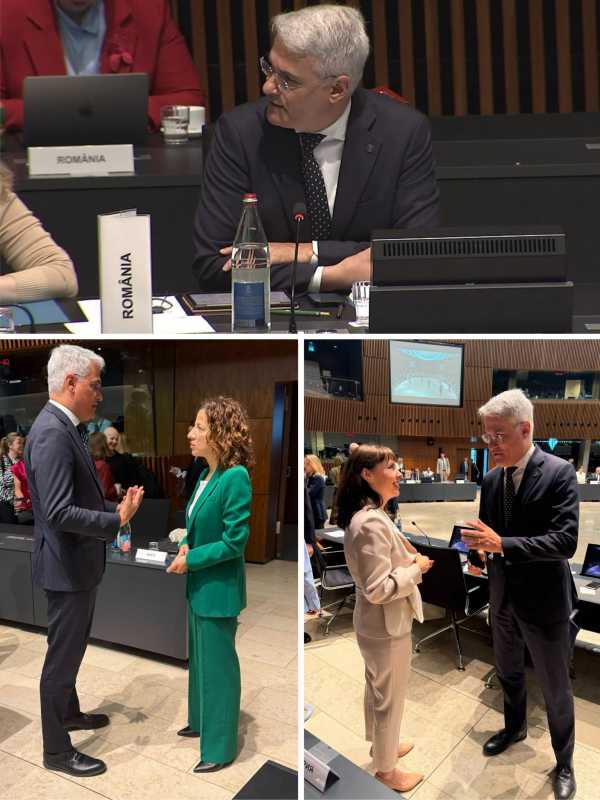
Social Europe must be a Europe of work, dignity and competitiveness (InvestMin Pislaru)
Social Europe must be, at the same time, a Europe of work, dignity and competitiveness, considers the interim Minister of Investments and European Projects, Dragos Pislaru. 'Today I represented Romania at the EPSCO Council meeting, dedicated to employment, social policies and housing, which took place in Luxembourg and was chaired by Cyprus, with the parti

Israeli President Isaac Herzog meets leaders of Romania's Parliament, addresses joint plenary
Israeli President Isaac Herzog, on an official visit to Romania, was in Parliament on Monday, where he met the heads of the two Chambers - Mircea Abrudean and Sorin Grindeanu - and delivered an address to the joint plenary. In talks with Senate President Mircea Abrudean, discussions focused on strengthening Romania - Israel relations. Abrudean underscored Roma

Moody's warns that political uncertainty may affect fiscal consolidation (Finance Ministry)
The major economic stake these days is avoiding a downgrade of the country's rating, Minister of Finance, Alexandru Nazare announced after, at the end of last week, the rating agency Moody's drew attention to the fact that the prolonged political uncertainty and the lack of a functional parliamentary majority may put pressure on the fiscal consolidation process and o

Museum dedicated to Cardinal Iuliu Hossu opens in Cluj-Napoca's Cathedral of 20th Century Martyrs and Confessors
Major Archbishop Claudiu Lucian Pop of the Romanian Greek-Catholic Church attended on Monday the inauguration of the 'Blessed Cardinal Iuliu Hossu' Museum in Cluj-Napoca, located inside the Cathedral of the 20th Century Martyrs and Confessors in Cipariu Square. The inauguration followed the Arch-hierarchical Divine Liturgy celebrated on the feast of Sa
NATO Summit in Ankara - opportunity to remind allies of situation in Black Sea region (CSAT)
The NATO Summit in Ankara represents an opportunity to bring to the attention of allies at the highest level the complicated situation in the Black Sea region and the consequences that Russian aggression has at a regional level and on Romania, through incidents such as those with drones, reads a press release from the Presidential Administration sent on Monday, after the mee

Exhibition dedicated to Romania - Spain historic ties reflected in the press opens in Madrid's El Retiro Park
The Embassy of Romania in the Kingdom of Spain and the Romanian Cultural Institute in Madrid, with the support of AGERPRES National News Agency, are organising the exhibition titled 'The Romania - Spain Relationship Reflected in the Press: A Bilateral Historical Perspective', open to the public from June 29 to July 26 on the Paseo de Coches avenue in El Retiro Park,

China's Pan Zhanle joins David Popovici for training camp in Romania
Olympic swimming champion David Popovici announced on Monday on his Facebook page that he will train in Romania alongside Pan Zhanle, one of the world's top swimmers and the holder of the 100-metre freestyle world record. Popovici is convinced the training camp will provide an important exchange of experience for both athletes. 'I am hap
Constanta: Albanian Ambassador to Romania, talks with representatives of local authorities about economic cooperation opportunities
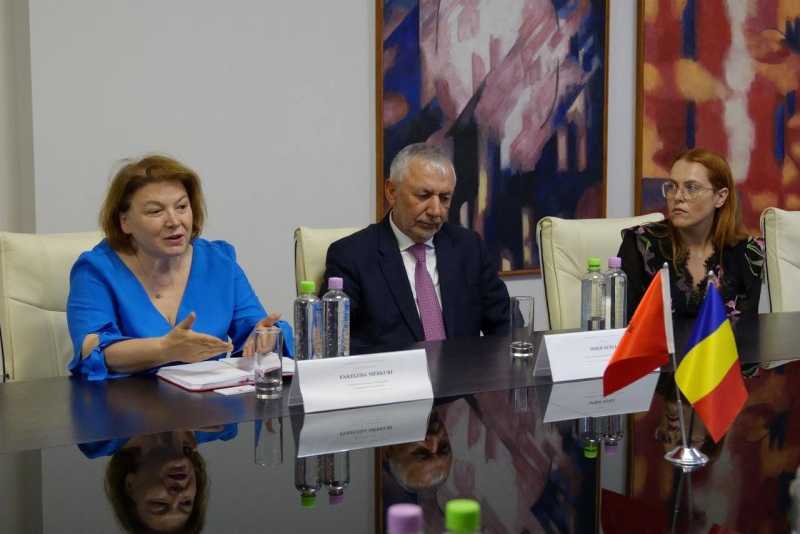
The Ambassador of the Republic of Albania to Romania, Enkeleda Merkuri, discussed on Monday with representatives of the administration of the county and municipality of Constanta about cooperation opportunities in various fields of activity, while highlighting the contribution of the Albanian community to the economic and cultural life of Constanta. According
Prince Radu, meetings with ForMin Toiu and DefMin Mirută
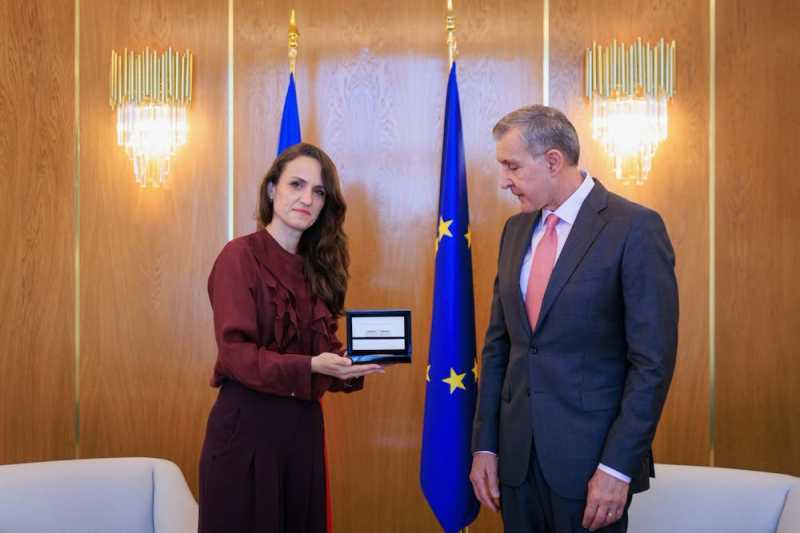
Prince Radu met on Monday with the interim ministers of Foreign Affairs, Oana Toiu, and Defense, Radu Miruta, the discussions focused on the public actions of the Royal Family in the second half of 2026, to strengthen our country's position within the European Union and NATO. 'On behalf of His Majesty, Prince Radu held a dialogue with high dignitaries
Isaac Herzog: Israel and Romania are not only partners but also friends
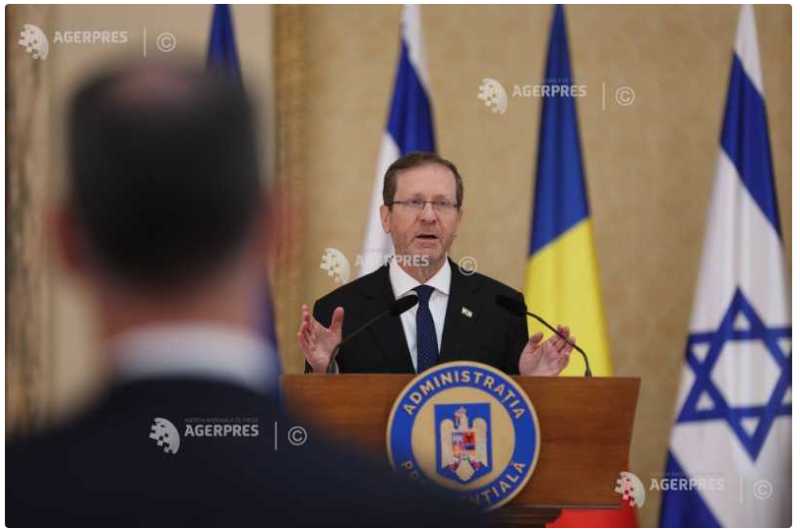
Israel and Romania are not only partners but also friends, Israeli President Isaac Herzog said on Monday during a joint press conference with Romanian President Nicusor Dan at the Cotroceni Presidential Palace. He said that his state visit represented a symbol of the special bond between the two nations, which he noted has roots in centuries of Jewish history
FITS 2026/ Multimedia show with over 400 drones attracts thousands of spectators
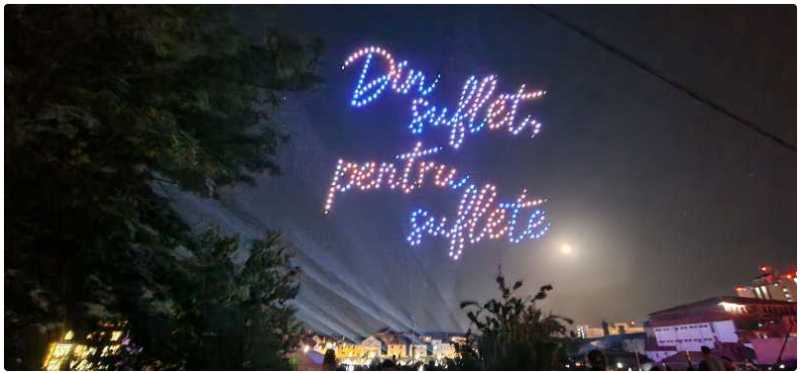
A multimedia show that closed on Sunday night the 33rd edition of the Sibiu International Theatre Festival (FITS) was the most complex so far in the city, with 420 drones synchronised with lights, music and stagecraft, gathering for a quarter of an hour thousands of Sibiu residents and visitors around the Radu Stanca National Theatre House in the city, show official Madalin
UPDATE/President Dan: The Romania-Israel relationship is strong at a political, economic, human level
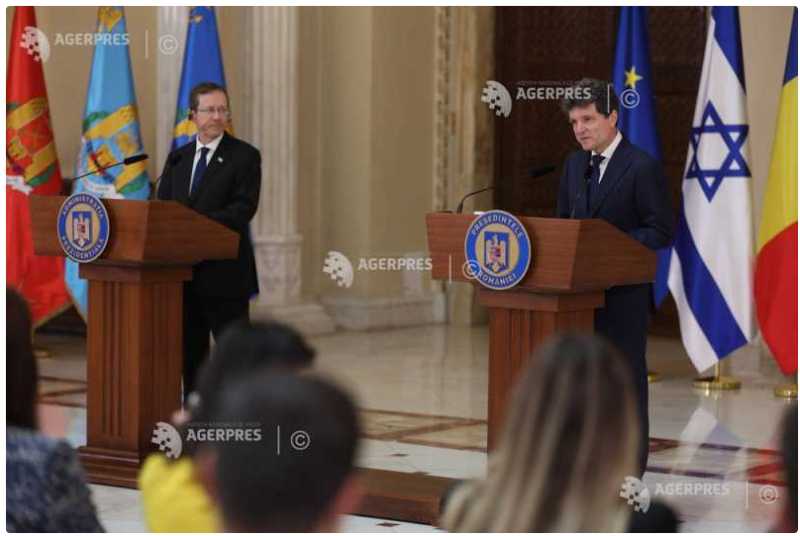
The relationship between Romania and Israel is strong at the political, economic and human level, President Nicusor Dan said on Monday at a joint news conference with visiting Israeli President Isaac Herzog. He underlined the historical character of this relationship, emphasising that 'a binder is the community of Israelis who are originally from Romania,
Number of people living in poverty down 3.5% in 2025 (statistics)
The number of people living in poverty in Romania stood at 3.468 million in 2025, down 3.5% from the previous year, while the at-risk-of-poverty rate (AROP) was 18.4%, 0.6 percentage points lower than the level reported a year earlier, according to data the National Institute of Statistics (INS) published on Monday. According to the institute, the poverty rate

President Dan welcomes Israel's Isaac Herzog
President Nicusor Dan on Monday welcomed at Cotroceni Palace the President of the State of Israel, Isaac Herzog, who was on a state visit to Romania together with Israel's First Lady, Michal Herzog. The Romanian head of state was accompanied by his partner, Mirabela Gradinaru, at the official ceremony on the Marinescu Plateau. The two offici
Three quarters of Romania, including Bucharest, under Code Red for scorching heat
Three quarters of Romania, including Bucharest, will be under a Code Red warning for scorching heat and severe thermal discomfort until Wednesday morning, with maximum temperatures expected to reach up to 41 degrees Celsius. According to the forecast issued by the National Meteorological Administration (ANM), between 10:00 on 29 June and 10:00 on 1 July, the r