

REVOLUTION 30: What happened in Timisoara, over December 16-20, 1989

The year 1989 meant the end of the communist regime in the Central and Eastern European countries. Romania was the only ex-communist country in the case of which the switch to democracy was violent, involving protests and street fights, and the only country where the leaders of the former regime got executed. The spark that ignited the fire that burnt the dictatorship of Nicolae Ceausescu first appeared in Timisoara. The so-called "Timisoara Revolution" took place between December 16 and December 20, 1989, with December 21 becoming the first day of the Bucharest Revolution.
***
On December 16, 1989, the Revolution that led to the fall of the communist regime in Romania started in Timisoara, according to the volume "Romania 1989-2005. A Chronological History" by Stan Stoica (Meronia Publishing House, 2005).
On that day, many believers in the city were protesting peacefully around the reformed Cathedral in the Maria Square, against a court decision by which reformed priest László Tokés was supposed to be evacuated and moved to another locality. The movement got bigger, as increasingly more people, students, workers, locals in general, joined the protest. Several rows of locals headed downtown. And this is how the anti-communist revolution started, on the background of a dramatic drop in the living standards and the fall of the European communist system in the former socialist countries, as the work "Romanian History in Data" (Enciclopedica Publishing House, 2003) mentions.
In a short while, there were several hundreds of people gathered in the Maria Square, chanting slogans like "Liberty," "Justice," and singing "Wake Up, Romanian!." The lines of protesters headed to the County Committee of the Romanian Communist Party (PCR). The Ministry of Interior, the Militia, the army, the patriotic guards, the firefighters were being mobilized. The protesters were met with water canons and tear gas. The demonstrators and the law enforcement forces clashed. Arrests were made. The demonstrators withdrew and they gathered in front of the Cathedral. The people started to march again through the city and they were once more attacked by the law enforcement forces; there were real fights; many of the protesters got arrested.
Around 4 pm, more trams were blocked by protesters chanting "Down with Ceausescu!." Part of the crowd headed to the student centres to convince more people to join. Until midnight, some of the protesters, priest László Tokés included, were beaten and arrested.
On the second day, December 17, 1989, even more locals took to the streets to protest; they were joined by the workers from the factories and plants. The crowd chanted: "Down with Ceausescu!," "Down with Communism!," "Don't Be Afraid." The County Committee of the PCR was taken by "assault" by the demonstrators, who got into the building through the broken windows. The army stepped in.
By order of Nicolae Ceauescu, General Velicu Mihalea, Deputy Chief of the Counter-intelligence Directorate of the State Security Department (DSS), Colonel Filip Teodorescu from the 3rd Counter-intelligence Division of the DSS and other high-ranked officers were sent to Timisoara, to help the local and county leaders. Ion Coman, Secretary of the Central Committee of PCR was appointed single commander for Timisoara. He went to Timisoara accompanied by General Stefan Gusa, Victor Atanasie Stanculescu, Miuhai Chitac, Florea Comsa, Colonel Gheorghe Radu etc, to coordinate the repressive actions. At midnight, the law enforcement opened fire against the protesters; they killed and wounded children, young people, women and elderly. More than 20,000 members of the "patriotic guards" from Dolj and Ramnicu Valcea counties were sent by special trains to Timisoara; they carried canes as weapons and their mission was to help scatter the crowd. The action failed. Part of them joined the protesters and another part was stopped somewhere on the road and returned home.

On the same day, Nicolae Ceausescu called a teleconference with the party officials in the counties and announced them he gave the order to the law enforcement forces to shoot the demonstrators. "We are facing a state of necessity, and we need to apply the law to anybody who refuses to answer to the call of the law enforcement bodies," the communist leader threatened. All the factories and institutions in the country were being guarded 24 hours a day, security measures were strengthened, the atmosphere got more intense, even explosive. Squadrons made of a militiaman, a soldier and a member of the patriotic guards were patrolling on the streets.
The first gun shots were then heard in Timisoara, with street fights continuing in the city after midnight, between the civilians and the army, with tanks and shops being set afire. Moreover, on the steps of the Cathedral, a group made of children and young civilians started chanting: "Down with Ceausescu!," "We Want a Free Country!". They also sang Christmas carols, being joined by several hundreds protesters, and waved the Romanian flag with the communist emblem removed.
While on December 18, 1989, Nicolae Ceausescu started his official visit to the Islamic Republic of Iran, in Timisoara people broke the windows of the stores, the militiamen were everywhere and the military ordered people to never stop moving, and never gather in groups.
After two days of failed attempts by the militia, the army, and the intelligence service to repress the revolt, the protesters occupied, on December 19, 1989, Timisoara's downtown Opera Square. Most factories in Timisoara closed their gates, organised protests, made claims. On the streets, the soldiers made peace with the revolutionaries, who chanted "The Army is With Us!."
More than 40 dead bodies of victims in Timisoara, unidentified, were carried in secret from the mortuary of the Timis County Hospital to Bucharest, where, on the night between December 19 and 20, and they were burnt at the "Cenusa" Crematory.
On December 20, 1989, the protesters in Timisoara created the group called the Romanian Democratic Front, led by Lorin Fortuna (President), Ioan Chis (Deputy President) and Claudiu Iordache (Secretary General), while intending to organise the resistance movement. In the morning, tens of lines of workers from the factories in the city headed to Opera Square. Around 11.00 am, General Stefan Gusa ordered the soldiers to go back to their garrison and banned them from using their weapons. Around 1.00 pm, the columns of protesters reached the Opera Square and the soldiers joined them. At 2.00 pm, the soldiers were back in the garrison and the central and local authorities gave up controlling the city. Timisoara became thus the first free city of Romania.
In the balcony of the Opera, the Timisoara Mayor, Petre Mot, received the protesters' claims: to free those who were arrested, to return the dead bodies to their families, Nicolae Ceausescu to resign, free movement of the people and of the ideas. The crowd chanted: "We won't leave, the dead don't let us," "Today in Timisoara, tomorrow in the whole country!."
The headquarters of the County Committee of the PCR is surrounded by workers. in trying to solve the crisis, communist leaders Emil Bobu and Constantin Dascalescu met with a delegation of the protesters. Ceausescu's messengers, terrified by the claims (Ceausescu's and the government's resignation) returned in a hurry to Bucharest.
Nicolae Ceausescu returned from his official visit to Iran and established a state of necessity. During his televised speech, he said "hooligans (...) caused destructions of a Fascist type meaning to destabilize the country, to dismantle the territory, to put an end to the socialist revolution and place us under foreign rule again." At the same time, Ceausescu blamed everything on the "foreign intelligence services and the inside Romanians who sold their country for a handful of dollars or other foreign currencies."
The mass media controlled by the government never broadcast or wrote anything about what happened in Timisoara, but people did find out through the Romanian language broadcasts of the main Western radio stations and also through Budapest and Belgrade-based broadcasts. The only indirect account of the Timisoara events were the gatherings organised hastily in the institutions and factories, by which "the workers voiced their 'determination' to defend "the conquests of socialism!."
On December 20, 1989, a Presidential Decree was issued by which a state of necessity was established in the Timis County, because of the "serious violation of public order through terrorist acts, vandalism and destruction of community assets." The municipal committee of the party announced the organisation of a great meeting in the Palace Square, where it hoped that Bucharest would condemn "the hooligan actions" of Timisoara.
*The material is based on chronologies and specialised studies related to the Romanian Revolution of 1989: "Romanian History in Data" - Enciclopedica Publishing House, 2003, and "Romania 1989-2005. A Chronological History" by Stan Stoica - Meronia Publishing House, 2005. AGERPRES (RO - Documentary - Cristian Anghelache, Editors of the Photo Archive: Mihaela Tufega; editor: Mariana Zbora-Ciurel; EN - author: Cristina Zaharia, editor: Adina Panaitescu)
The content of the www.agerpres.ro website has the exclusive purpose of public informing.
All the information published on this website by AGERPRES is protected by relevant legal dispositions.
It is forbidden to copy, reproduce, recompile, decompile, distribute, publish, display, modify, create derived components or products or full services, as well as any exploitation of the site's content.
Details in the section Terms of Use. If you are interested in picking up AGERPRES news items, please contact the Marketing Department – marketing@agerpres.ro.
The use of the Comments section entails your obligation to respect the AGERPRES terms and conditions in regards to the publishing of comments on the www.agerpres.ro.
Other news in category

Incident at sea / Nine sailors rescued after vessel sinking brought to Port of Constanta
The nine sailors rescued from the water after the sinking of the 'Khoryv' vessel have been brought to the Port of Constanta aboard a rescue vessel and are being attended to by SMURD ambulance crews and border police officers. The sailors are undergoing medical assessments to determine whether they need to be taken to the County Emergency Clinical Hospi

CONTEMPORARY AUTHORS/Andreea Rasuceanu: Bucharest is an endless source of stories to explore in literature
Author Andreea Rasuceanu, one of Romania's contemporary prose writers whose work explores the relationship between literature, history and memory, has been awarded the Romanian Writers' Union's June 2026 Writer of the Month Award for her novel 'Hemiptera' (Polirom, 2026). In an interview with AGERPRES, the author discusses the award-winning book, her rese
Incident at sea/ForMin Neculaescu: Attack on a commercial vessel - blatant violation of international law
Foreign Affairs Minister Dan Neculaescu condemned the attack on a commercial vessel located just 13 nautical miles off the coast of Constanta, in which one sailor was killed and others were injured, underscoring that Romania is working closely with NATO allies, including Bulgaria and Türkiye, to boost the implementation of additional surveillance capabilities agreed at
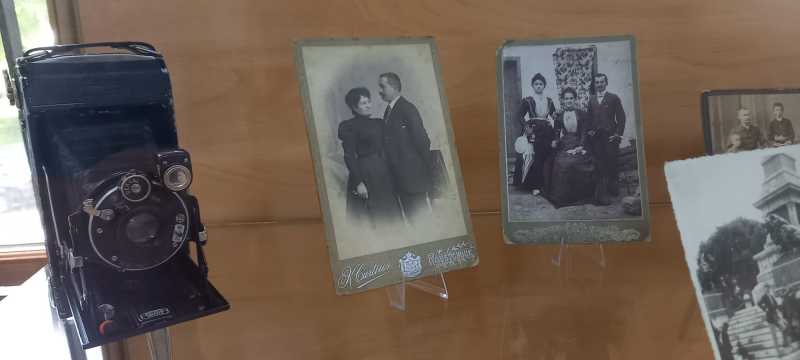
'Giurgiu-Ruse. Superangular' exhibition opens at Regional Museum of History in Ruse
The exhibition 'Giurgiu-Ruse. Superangular - Vintage Photography and Photographic Technique', which includes vintage photographs, cameras and images from the library of the National News Agency AGERPRES, opened this week at the Regional Museum of History in Ruse, Bulgaria, after being launched in May at the Teohari Antonescu County Museum in Giurgiu. T
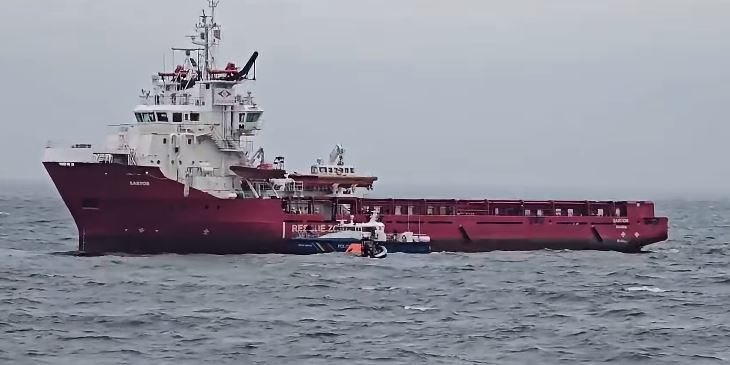
Incident at sea / Drone-hit vessel capsizes, with imminent risk of sinking
Structures of the Ministry of Internal Affairs (MAI) are participating on Friday in the search and rescue operation for people missing from a Comoros-flagged commercial vessel that was struck by a drone in the Black Sea, outside Romania's territorial waters. 'At around 10:00, border police officers from the Coast Guard were informed by the Constanta Ma
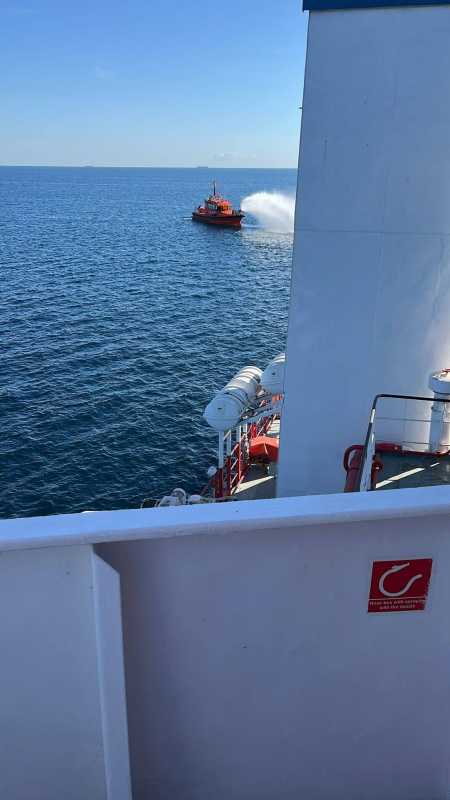

Major rescue operation offshore of Constanta for crew of vessel at risk of sinking; one dead
Authorities launched a search and rescue operation on Friday for the crew of a vessel reportedly at risk of sinking 13 nautical miles offshore from Constanta. One person has been found dead. According to the Romanian Naval Authority (ANR), a major search and rescue operation is currently under way in the Black Sea. The Maritime Coordination Cent
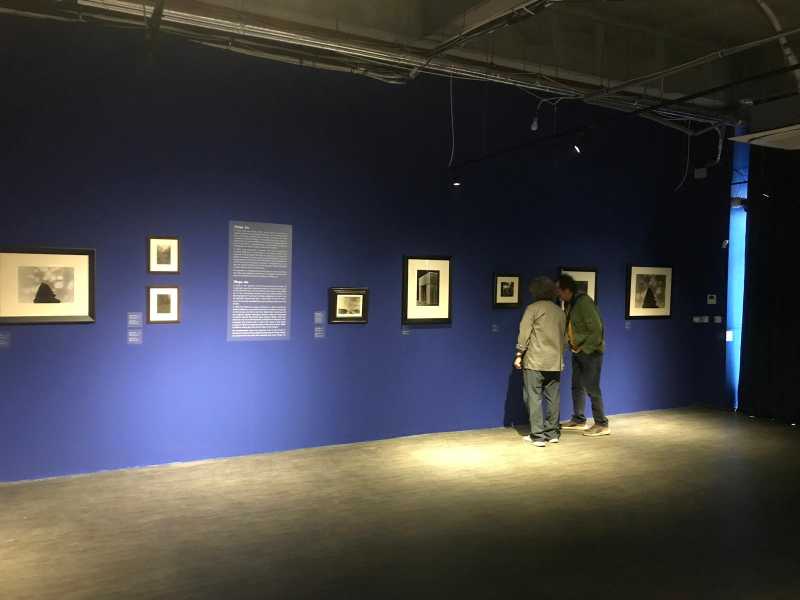
Constantin Brancusi celebrated in major exhibition at Museum of Modern Art (MoMA)
The Museum of Modern Art (MoMA) in New York is hosting the retrospective exhibition 'Brancusi: The Artist and His Studio' from 25 October to 27 February 2027, dedicated to one of the most influential artists of the 20th century. Organised with the support of the Romanian Cultural Institute (ICR) in New York, the exhibition marks the continuation and st
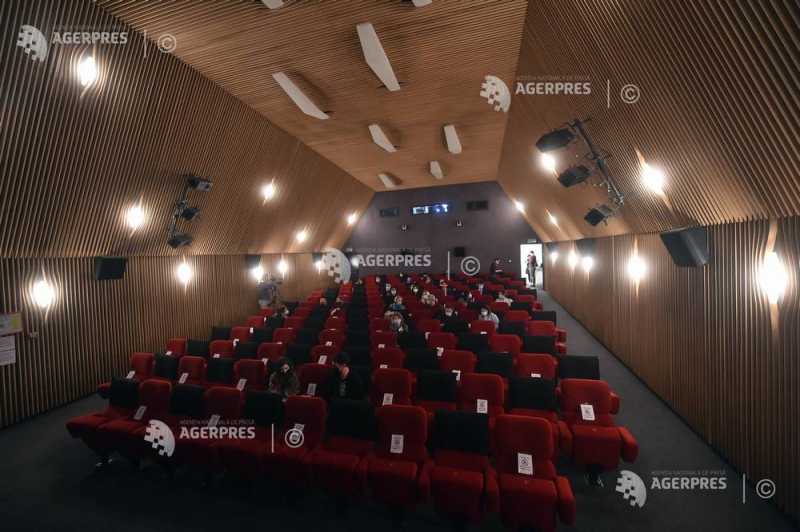
'Les Films de Cannes a Bucarest' opens on Friday, in Bucharest; 'Fjord' - gala screening at Romanian Athenaeum on Saturday
The 17th edition of Les Films de Cannes a Bucarest, one of the highlights of the autumn film season, opens in Bucharest on Friday. Between October 23 and November 1, the Cinema Elvire Popesco, the Peasant Museum Cinema, the Auditorium Hall of the National Museum of Art of Romania and Apollo 111 will host this special experience for festival audiences.
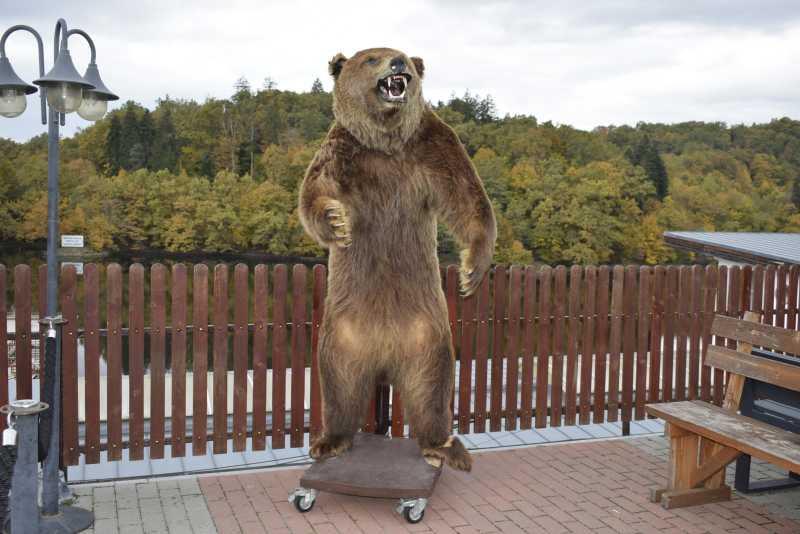
EUR 2.5-million theme park dedicated to bears from all over the world to open at Sovata
The City Hall of Sovata will build a theme park dedicated to bear species around the globe, an investment estimated at EUR 2.5 million euros that will get European funding. 'Where did the idea come from? Lately we still have problems with bears, but not only us. And then I said that, anyway, if we have bears in Targu Mure, and in Cluj-Napoca, we have alway
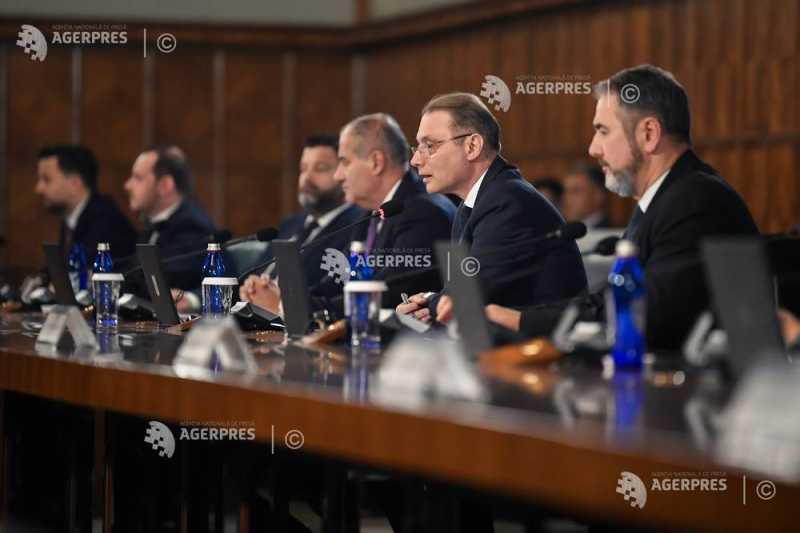
PM Niculescu: I want us to establish an integrated plan to improve safety in schools very quickly
Prime Minister Luca Niculescu announced at the start of the Government meeting that an integrated plan would be drafted to improve safety in schools, with clear responsibilities, prevention measures, rapid intervention and firm sanctions for acts of violence. On Friday, the prime minister will hold a working meeting with ministers and the relevant institutions

'Romania and the Republic of Moldova. The Partnership for the EU' volume launched in Bucharest
The tenth volume in the Documentary Notebooks series, entitled 'Romania and the Republic of Moldova: The Partnership for the EU', coordinated by Andrei Stoian and Victor Vevera, was launched on Thursday by Club Romania Publishing at the 'Carol I' Central University Library, in the presence of several of the contributors. The book brings togethe

President Dan to host meeting of Forum of Young Romanians Abroad
The Forum of Young Romanians Abroad (FTRP), now in its sixth edition, opens its works on Friday at the Cotroceni Presidential Palace, in the presence of President Nicusor Dan. Over 150 young people from Romania and the diaspora will participate, for six days, in activities dedicated to identifying concrete solutions to the problems that concern them. The event
Royal Charity Concert to take place at Romanian Athenaeum on Sunday
The traditional Royal Charity Concert will take place at the Romanian Athenaeum on Sunday, in the presence of the Royal Family of Romania. According to a press release sent to AGERPRES on Thursday, the 17th edition of the gala, organised by the Margareta of Romania Royal Foundation, will bring together internationally renowned musicians, classical music enthus

Romania aims to contribute to Ukraine's reconstruction as a long-term partner, says Finance Minister Alexandru Nazare
Ukraine's recovery and reconstruction needs are estimated at almost 600 billion US dollars over the next decade, and Romania wants to contribute as a long-term partner through projects that create value on both sides of the border, Finance Minister Alexandru Nazare said on Thursday at an event dedicated to the reconstruction of the neighbouring country. &#
FinMin Nazare:We must create best real instruments to internationalise Romanian business in Ukraine and elsewhere
Romania must create best possibly real instruments to internationalise Romanian business in Ukraine and elsewhere, and the authorities must be more ambitious in this demarch, Finance Minister Alexandru Nazare told an event dedicated to the neighouring country's reconstruction. 'Beyond offering advice, I believe we need to take a much more conscientious