

INTERVIEW/Moldova's Deputy PM Valeriu Chiveri: Taxes and duties for economic operators in Transnistria from 1 July

The authorities in the Republic of Moldova have decided to introduce taxes and duties for economic operators in the separatist region of Transnistria from 1 July, Moldovan Deputy Prime Minister for Reintegration Valeriu Chiveri announced in an interview with AGERPRES Romanian National News Agency.
The new taxes levied on companies located on the left bank of the Dniester River will be used to support the population in the region, Chiveri points out.
In the interview, the Moldovan deputy prime minister speaks about the influence Russia has over the authorities in Tiraspol, as well as the growing tendency of the population in Transnistria to seek employment in Chisinau and other major cities in Moldova.
He says that more than 25,000 people cross the so-called border between Transnistria and the Republic of Moldova every day in order to go to work or school.
Valeriu Chiveri acknowledged that 'reintegration comes at a cost' and voiced hope that, together with the European Union, funding sources would be identified to cover the needs related to the reintegration of Transnistria into the Republic of Moldova.
AGERPRES: Mr Valeriu Chiveri, you are the Deputy Prime Minister of the Republic of Moldova in charge of the reintegration of Transnistria. How do you currently perceive the relationship between Chisinau and Tiraspol?
Valeriu Chiveri: The relationship is, first and foremost, one of dialogue and working-level correspondence through the existing communication platforms. If we look at the not-too-distant past, we could speak about managing the situation in the sense of maintaining peace and stability and preventing conflict situations. Now, through the latest actions undertaken by the Government of the Republic of Moldova, we hope to achieve greater momentum and some visible results within a reasonable timeframe. At the same time, the objectives of the parties to the conflict remain different. We continue to advocate respect for sovereignty and territorial integrity, therefore a settlement based on this principle. Those in Tiraspol continue to advocate for the status quo. So, at this moment, this is where we stand.
AGERPRES: Negotiations have been ongoing for quite some time. Have you felt that any progress has been made recently?
Valeriu Chiveri: Negotiations have indeed been ongoing for quite some time. At present, however, we cannot speak of negotiations in the proper sense. What exists is working-level communication, either in the existing 1+1 format between political representatives or within the territorial working groups or joint control commissions. As I said, we do not currently have a genuine negotiation format and, so far, we have not seen signs of flexibility from the other side in Tiraspol.
AGERPRES: Are there forces operating behind the scenes that oppose this negotiation and reintegration process of Transnistria?
Valeriu Chiveri: These forces are very visible. First of all, we must take into account the fact that the regime in Tiraspol acts in tandem with Russia, and this must be stated very clearly. Russia has considerable influence over the region, including through its illegal military presence, political messaging and support, as well as economic and especially energy support. For these reasons, we believe that Tiraspol's uncompromising position is dictated primarily by this support.
AGERPRES: Recently, the Republic of Moldova's Parliament voted to create a convergence fund involving the taxation of companies on the left bank of the Dniester. How will this work? What effects will this measure produce?
Valeriu Chiveri: I said at the beginning that in recent times certain actions have been undertaken which should provide increasing positive momentum to the reintegration process. I was referring first of all to the creation of the convergence fund and the elimination of the tax facilities previously enjoyed by economic operators on the left bank of the Dniester. This process will be gradual, beginning on 1 July 2026. Value added tax and excise duties will be applied to excisable goods. We are talking about alcohol, tobacco products and luxury goods. Gradually, the system will be expanded and the entire tax regime will be unified by 1 January 2030. These funds will also be used to create the convergence fund. The mechanism is due to be developed by 1 August 2026 and we intend to use the accumulated funds for social and infrastructure projects in the Transnistrian region. We will also work actively with our partners. We want this fund to also be supplemented with contributions from the European Union as an organisation, as well as from member states and partners. Through this fund, we want to create conditions that would raise living standards on the left bank of the Dniester, especially for vulnerable groups, and to some extent align incomes with those of citizens of the Republic of Moldova living on the right bank.

AGERPRES: Could this also involve relocating production capacities from the left bank of the Dniester to the constitutional territory of the Republic of Moldova?
Valeriu Chiveri: Not necessarily. It depends on the enterprise and on the companies operating there. If similar conditions are created, I do not see why relocation would be necessary. Through our actions aimed at integrating enterprises from the left bank of the Dniester into Moldova's economic, customs and fiscal space, the same operating conditions will apply.
AGERPRES: The inhabitants of the region are facing a rather difficult economic and social situation. Do they understand the advantages they could gain through reintegration into the constitutional territory and accession to the European Union?
Valeriu Chiveri: First of all, I would not want to dramatise the situation. It is complicated, but not critical, and it is generated by the poor way things have been managed on the left bank of the Dniester. An economy based on free energy sources could not function indefinitely and we have reached the point where this affects the living standards of the population there. Incidentally, the population and economic operators on the left bank already benefit from the Republic of Moldova's agreements and commitments within several international organisations. For example, the Deep and Comprehensive Free Trade Agreement. Enterprises on the left bank operate under the same conditions. Another example is freedom of movement. Citizens from the left bank who hold Moldovan passports enjoy the same rights as those on the right bank. So these benefits are already visible and practical.
The fact that the Republic of Moldova, through reforms supported by the European Union, is becoming an increasingly attractive country for citizens regardless of whether they live on the left or right bank of the Dniester is also evident and we have concrete data. Every day, more than 25,000 citizens from the left bank travel to Chisinau or other localities in the Republic of Moldova for work, medical treatment or education. So we have already become a centre of attraction for our citizens and this will continue. As long as the Republic of Moldova pursues the strategic objective of European integration, more and more benefits will emerge for our citizens. I am also referring here to the quality of services provided to our citizens, regardless of whether they live on the left or right bank. Last year, 75,000 citizens of the Republic of Moldova living on the left bank were included in Moldova's health insurance system. This is a large number when compared with the estimated total population of the region, which we estimate at 350,000.
AGERPRES: Could the Transnistrian issue become an obstacle in the Republic of Moldova's accession process to European structures?
Valeriu Chiveri: It is an issue that we are approaching with the utmost seriousness. We want the Republic of Moldova to become part of the European Union as an integrated country. At the same time, we understand that these two processes, European integration on the one hand and the reintegration of the country on the other, are two distinct and parallel processes with different timelines and speeds. Why do I say this? Because integration into the European Union is also a highly complex process, but we have a very clear timetable, practically day by day, outlining what needs to be done, how and by whom.
In the case of reintegration, matters are more complicated. Not everything depends on our efforts or on the efforts of the Government in Chisinau. There are very important external factors affecting this process. First and foremost, I am referring to the illegal presence of Russian military forces on the country's territory. We must also take into account the regional geopolitical situation and the war in the neighbouring country and we must understand that the peace agreement currently under discussion will have a major impact on regional security and, one way or another, on the settlement process. The security guarantees being discussed in relation to Ukraine will likewise affect how this issue is managed.

AGERPRES: Reintegration, beyond its political dimension, also involves a substantial economic and financial effort. Have you estimated the costs?
Valeriu Chiveri: We are in such a dynamic situation that it is very difficult to make very clear estimates. There are approximate estimates. I would not like to provide figures now in order to avoid speculation and unnecessary debate on the subject, but we must acknowledge that reintegration comes at a cost. When we designed the convergence fund, we also considered the fact that part of the resources needed for reintegration would come from this fund, including with contributions from European partners.
AGERPRES: So you have discussed with European officials the possibility of supporting part of these expenses?
Valeriu Chiveri: We have had general discussions. We are not yet at the stage of implementing this project. We have created a project, the convergence fund. Nor has the reintegration process itself reached the scale at which we could request additional funds to pursue this objective. However, in general terms, the issue has been discussed and we are pleased that European partners have shown understanding towards these requests.
AGERPRES: You have recently returned from Brussels, where you met with other European officials. Did you discuss a concrete plan regarding Transnistrian reintegration?
Valeriu Chiveri: We discussed our strategic vision rather than a concrete plan, especially considering that, as I mentioned, on 30 April Parliament voted on the law on lifting tax facilities and the creation of the convergence fund. These were the main topics of discussion.
AGERPRES: Romania was part of a conflict settlement format immediately after the end of the Transnistrian war. Do you think it could now play a role in this process?
Valeriu Chiveri: Romania has always played an important role in this process, even if not directly, but by supporting the Republic of Moldova, strengthening state institutions and promoting reforms, it contributed to making the Republic of Moldova on the right bank a stronger and more attractive country, a centre of attraction for our citizens. This is already a very good example showing that Romania has always stood by us, especially since it is the country that best understands the realities in the Republic of Moldova, the mentality, considering our shared past and history, common language, culture and traditions. As for Romania's future role, we are not currently discussing a new negotiation format and we do not have an international one. The 5+2 format is dysfunctional and, for the time being, we are not discussing a different approach. We are not even using the format that existed until recently, but Romania, as a member state of the European Union, could make a substantial contribution to creating a correct perception of the settlement process regarding the Transnistrian conflict, and I am sure this is exactly what it is doing. AGERPRES (RO - writing by: Cristian Lupascu; EN - writing by: Adina Panaitescu)
The content of the www.agerpres.ro website has the exclusive purpose of public informing.
All the information published on this website by AGERPRES is protected by relevant legal dispositions.
It is forbidden to copy, reproduce, recompile, decompile, distribute, publish, display, modify, create derived components or products or full services, as well as any exploitation of the site's content.
Details in the section Terms of Use. If you are interested in picking up AGERPRES news items, please contact the Marketing Department – marketing@agerpres.ro.
The use of the Comments section entails your obligation to respect the AGERPRES terms and conditions in regards to the publishing of comments on the www.agerpres.ro.
Other news in category
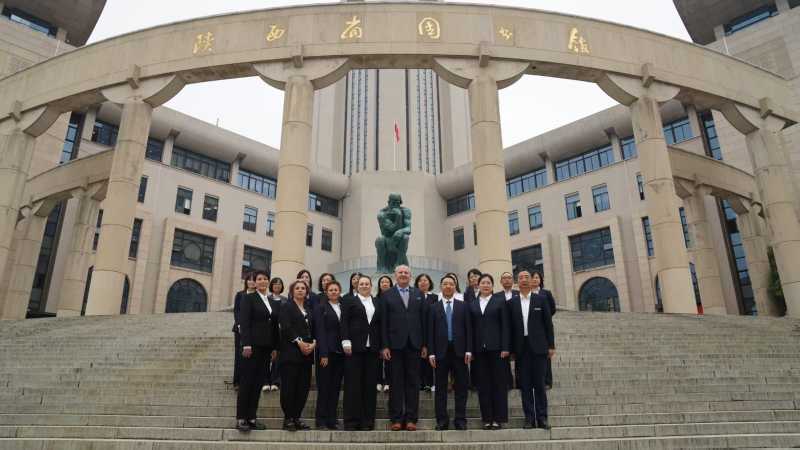
Romanian Corner book collection inaugurated at China's Shaanxi Provincial Library
A special section dedicated to Romanian books has been inaugurated at Shaanxi Provincial Library in China during a visit by the management of the Ovid Densusianu Hunedoara-Deva County Library, marking a new stage in the cooperation between the two cultural institutions that began 12 years ago. The collection in the new section, named the Romanian Corner, consi

Decree appointing Niculescu government published in Romania's Official Gazette
The decree appointing the Niculescu government, signed on Tuesday by President Nicusor Dan, has been published in Romania's Official Gazette. The members of the new government are due to be sworn in before President Nicusor Dan at a ceremony to be held at Cotroceni Palace. Luca Niculescu's Cabinet comprises 18 ministers, including two de
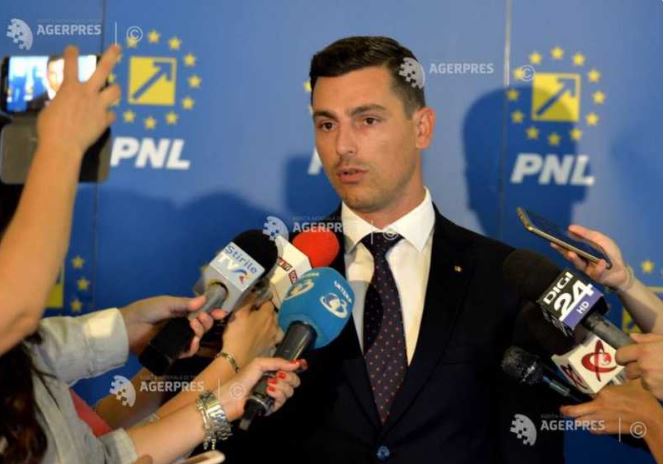
PNL spokesperson: Governing responsibility rests with PSD, PM; political dividing lines now clear
The National Liberal Party (PNL) will move into opposition and challenge every misstep by the Social Democratic Party (PSD), Liberal spokesperson Ionel Bogdan said on Tuesday, adding that Parliament's vote had brought the political crisis to an end and that responsibility for governing Romania now rested with the PSD and the prime minister. 'Today'

Venice Commission President Cartabia: Romania's annulled election prompted Venice Commission reflection
Venice Commission President Marta Cartabia said on Tuesday that Romania's experience with the annulment of the 2024 presidential election results had provided an important opportunity to reflect on new challenges to security and democracy. She drew particular attention to the influence of social media and new forms of power exercised through digital platforms and algorit

Parliament - Gov't investiture/Niculescu proposes Gov't that brings investment, creates jobs and protects Romanians
Prime Minister-designate Luca Niculescu told a joint sitting of Parliament on Tuesday that Romania no longer had time to lose and this is why he is proposing a Government that would bring money and investment into the country, create jobs and protect Romanians. 'I am standing before you today at a time when Romania no longer has time to lose. Today, we can

President Dan: It's become cheap to pay 1,000 voices to drown out a legitimate one
President Nicusor Dan warned on Tuesday about the power of social media, saying that it is becoming increasingly easy and inexpensive to mobilise large numbers of voices to drown out a legitimate opinion. 'Democracy is facing a challenge which, in my view, is its also the strongest one: communication on social media. I am not talking about content; I want

'Les Films de Cannes a Oradea' inaugural edition to open with ‘4 Months, 3 Weeks and 2 Days' screening
‘Les Films de Cannes a Oradea' festival will hold its inaugural edition from 29 October to 1 November, featuring screenings of award-winning films from Cannes, meetings with guests and a film music concert. According to a press release issued by the organisers, the opening event will take place on 29 October at the Tarii Crisurilor Museum, with a scr
Venice Commission President Marta Cartabia says judicial independence is vital to democratic institutions
Venice Commission President Marta Cartabia said within a visit to the Constitutional Court of Romania (CCR) that democratic institutions are always affected when the independence of the justice system is weakened. According to a CCR release sent to AGERPRES, the Court hosted a working visit on Monday by a delegation from the European Commission for Democracy t
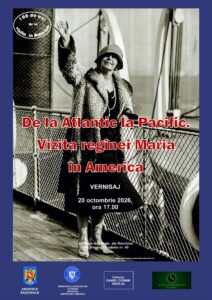
Exhibition dedicated to Queen Maria's visit to the United States opens at National Archives headquarters
The exhibition 'From the Atlantic to the Pacific: Queen Maria's Visit to America', marking the centenary of the former sovereign's trip to the United States and Canada, one of the significant milestones in Romania's diplomacy and international representation during the interwar period, will open on Tuesday at the headquarters of the National Archives of R

Bolojan says he inherited crisis-hit Romania, leaves country on path to recovery
Interim Prime Minister Ilie Bolojan says he inherited a country with its back against the wall when he took office at Victoria Palace, but will hand over to the next government a Romania on the path to sound recovery, 'with the experience of a government that did not lie, did not resort to populism and treated people with respect'. 'After almost 16
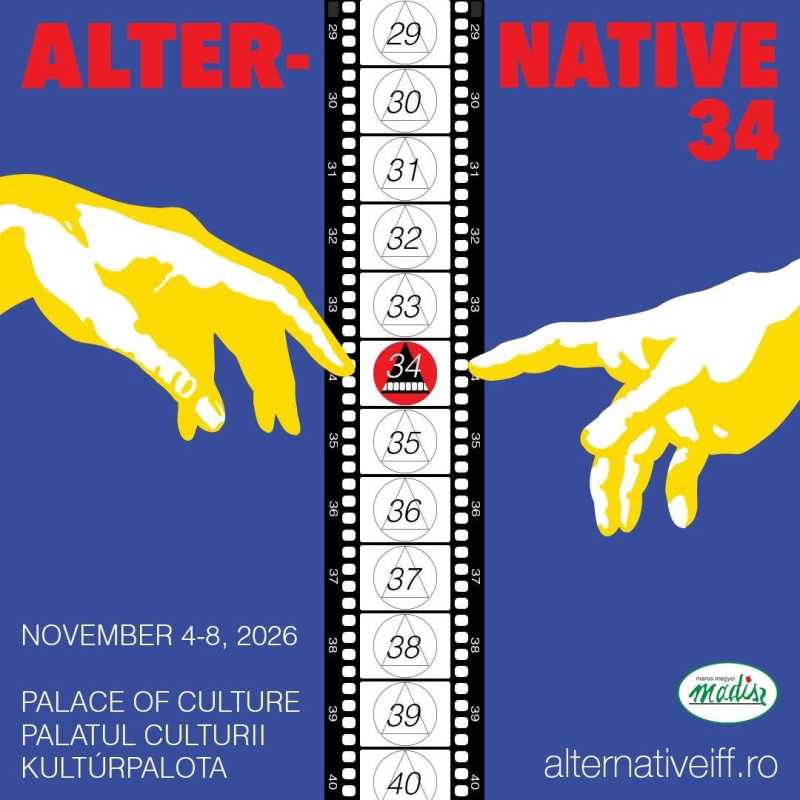
Alter-Native International Short Film Festival to present major premieres and internationally award-winning productions
The 34th edition of the Alter-Native International Short Film Festival, which will take place from 4 to 8 November at the Palace of Culture in Targu Mures, will present audiences with major premieres and internationally award-winning productions. The event offers audiences a diverse programme which, alongside the traditional short film competition, includes &#

Alexandra Capitanescu releases 'Choke Me,' her first album in English
Alexandra Capitanescu, Romania's representative at Eurovision 2026, where she won third place, has released her first album in English, 'Choke Me', Universal Music Romania reported on Monday. Capitanescu and her band, consisting of Bogdan Stoican (guitar), Matei Cohal (bass), Luca Sofron (drums) and Thomas Circota (keyboards), propose a sound that
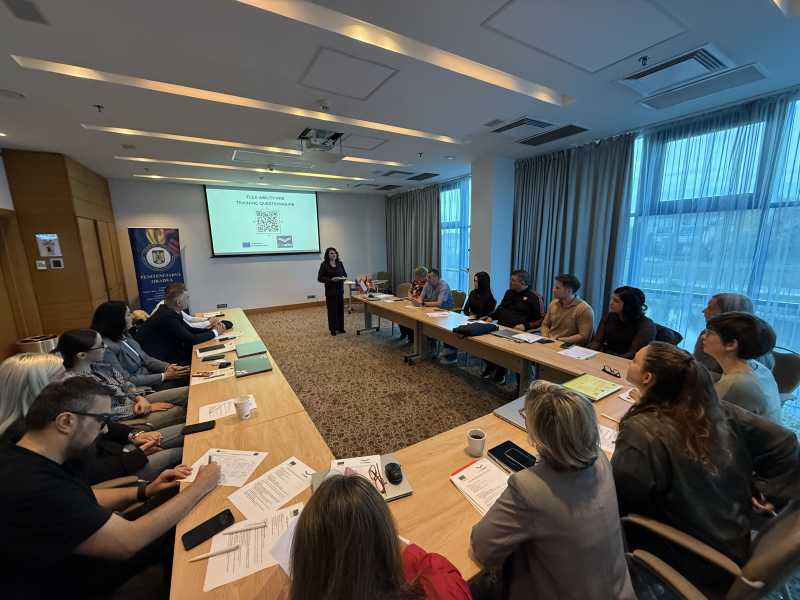
Oradea Penitentiary hosts international training on support for inmates with learning difficulties
Oradea Penitentiary is hosting an international training course for specialists from four European countries from 19 to 23 October, as part of the European Erasmus+ FLEX-ability project, initiated by senior prison commissioner Laura Opris. 'The project is primarily aimed at prison officers who work directly with people deprived of their liberty. FLEX-abili
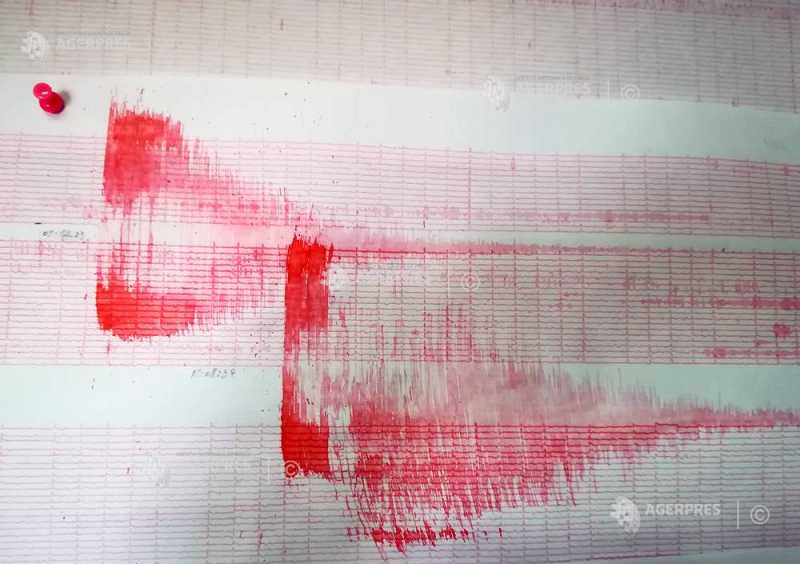
Magnitude 4.8 earthquake detected in Vrancea seismic zone on Monday
An earthquake with an estimated magnitude of 4.8 and an estimated depth of 76.5 km was detected in the Vrancea seismic zone on Monday, the National Institute for Earth Physics (NIEP) announced on its Facebook page. 'An earthquake has been detected in the Vrancea seismic zone, with an estimated magnitude of 4.8 and an estimated depth of 76.5 km. The effects
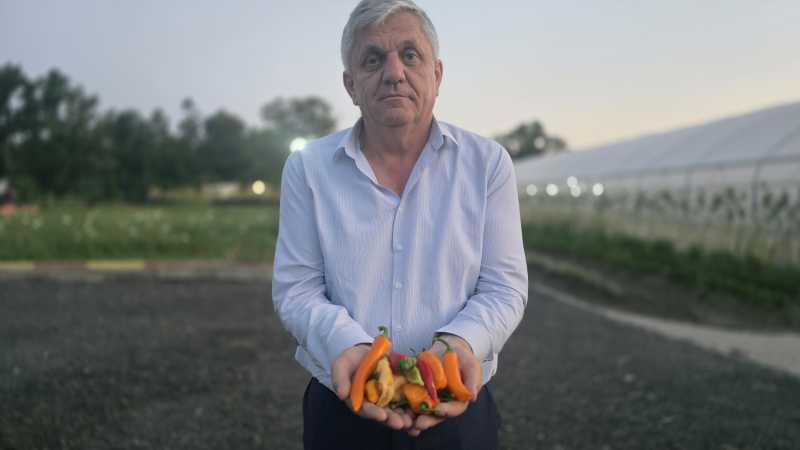
I CHOOSE ROMANIA/Horticulturist Costel Vinatoru chose to stay in Romania despite receiving many offers from abroad
Awarded the Romanian Academy Prize and the Sanctus Stephanus Magnus Order of the Romanian Patriarchate, horticultural researcher Costel Vinatoru chose to remain in Romania despite receiving offers from the United States and France, believing that he should leave behind a treasure in his homeland, as a testament to the place where 'God sowed him'.