

EU toughens driving license rules in bid to curb road fatalities (enr)
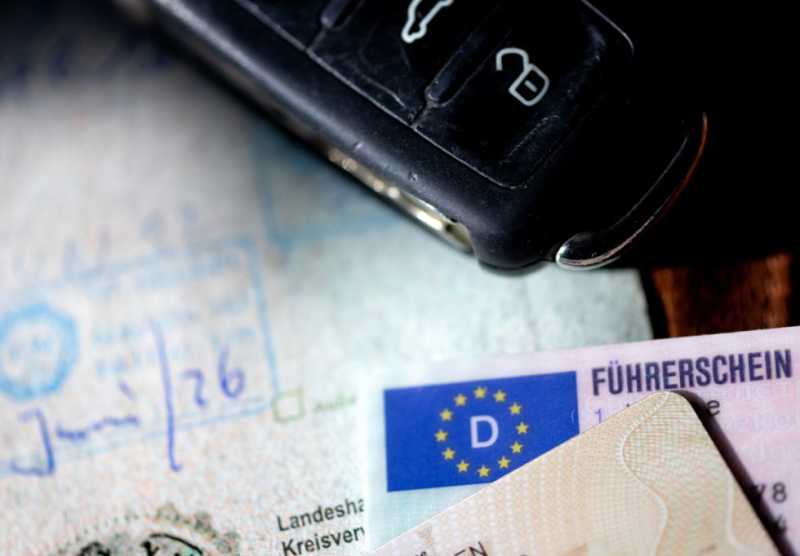
Digital licences, cross-border penalties and stricter tests for learning drivers — can the EU's latest reform close the gap between Europe's safest and deadliest roads?
Road deaths in the European Union reached nearly 20,000 last year and the bloc is determined to significantly curb that number by 2050.
In the latest move to reduce road fatalities, EU lawmakers this week adopted new EU-wide driving license rules, including the introduction of digital licenses and cross-border penalties.
'The reform is necessary because the world has changed,' MEP Jutta Paulus (Germany, Greens/EFA), co-rapporteur on the file in Parliament, told the European Newsroom (enr) in Strasbourg on Tuesday. 'We must come down from 20,000 deaths in traffic per year and this reform is part of the package,' she added.
The reform is part of the Road Safety Package, with which the EU is pursuing its 'Vision Zero' goal - zero road fatalities and serious injuries by 2050. According to the target set in 2018, the number of road fatalities is to be halved by 2030 compared to 2019 - but the EU is still far from achieving this goal.
According to the latest figures from the European Commission, 19,940 people lost their lives in road crashes in 2024, marking a 2-percent decrease compared with 2023 and a 12-percent drop since 2019.
Uneven safety progress on EU roads
Relative to population, the safest roads are in Sweden (20 deaths per million inhabitants), Malta (21/million, and Denmark (24/million), while Romania (78/million) and Bulgaria (74/million) reported the highest fatality rates in 2024. With 33 deaths per million inhabitants, Germany is well below the EU average of 45.
In 2024, at 52 deaths per million inhabitants Poland reported the largest drop in the number of road deaths among all EU countries since 2019, achieving a 35-percent- decline according to European Commission figures. In 2019, the figure stood at 77 per million inhabitants in Poland, according to the European Road Safety Observatory (ERSO).
Slovenia recorded a total number of 68 road fatalities in 2024 (32 per million inhabitants) and the Slovenian Traffic Safety Agency, the central national institution for traffic safety, has reported an increase in the number of accidents involving serious road injuries (+11 percent, 889 accidents) and the number of people involved in such accidents (+12 percent, 953 people) compared to 2023. The National Road Safety Program has set ambitious goals for 2030 - to reduce the total annual number of fatalities to a maximum of 50 and the number of seriously injured to a maximum of 400.
On the other side of the continent, Spain recorded 37 road fatalities per million inhabitants. According to the Dirección General de Tráfico', the national body dealing with road safety in Spain, distracted driving accounts for 30 percent of these deaths and remains the main cause of accidents, especially those related to mobile phone usage.
In neighbouring Portugal the ratio is 58 deaths per million inhabitants. To reduce accidents among higher age groups, Portugal's driving rules require periodic revalidation at specific ages - for example, from the age of 50, with shorter intervals as the driver ages. It also introduced specific rules on driving mopeds and agricultural vehicles.
What's new for EU drivers?
The new rules approved by EU lawmakers introduce stricter conditions for obtaining and renewing licences, promote information sharing on serious traffic offenders between member states and encourage the take-up of digital permits.
The most sweeping change is that serious traffic offences such as drink-driving or extreme speeding can lead to EU-wide driving bans. At present, penalties are generally limited to the country where the offence occurred.
At present, nearly 40 percent of drivers who have their licence revoked or suspended in a country other than the one where it was issued go unpunished, Italian EU lawmaker Matteo Ricci (Italy, S&D) told fellow lawmakers.
MEP Markus Ferber (Germany, EPP) however clarified that cross-border licence disqualifications will not apply to vacationers who receive a minor fine due to ignorance of local regulations.
Contrary to earlier deliberations, there will be no mandatory health checkups for those over a certain age. EU member states can decide for themselves whether to require a medical report or a self-assessment form for car and motorcycle driving licenses.
'It is up to each Member State to decide whether older drivers should undergo additional tests. We have ensured that member states retain full flexibility in assessing their fitness to drive, in order to avoid unnecessary bureaucracy for citizens and healthcare systems,' said MEP Elzbieta Lukacijewska (Poland, EPP).
The law also seeks to combat the shortage of skilled workers in the transport sector. The minimum age for a truck driver's license will be lowered from 21 to 18 and the minimum age for bus drivers will be lowered from 24 to 21.
The new regulations also establish a maximum validity period of 15 years for car and motorcycle licenses, which can be reduced to 10 years in states where the driving license serves as an identity document.
And what's changing for drivers-to-be?
Those seeking to obtain a driving license will face new instructions. Topics such as distraction caused by cell phone use, blind spots, and driver assistance systems will be given greater attention. Dealing with pedestrians, children, and cyclists will also be given greater consideration in the coursework.
Accompanied driving - allowing young drivers behind the wheel at an earlier age as long as they are accompanied by an experienced adult - will be expanded across the European Union.
Young drivers will also be subject to a two-year probationary period, during which they will be subject to stricter rules and penalties than established motorists.
In Sweden, teenagers feared the new rules would make it impossible for 15-year-olds to continue to drive a so-called A-tractor, which has a speed limit of 30 kilometres per hour and is popular in regions with almost no public transport. The new rules however include the new B1 car, which in practice will replace the A tractor when the new rules are applied, and even allow the cars to drive up to 45 kilometers per hour.
For a country like the Netherlands, which has more bicycles than people, bike accidents are a central issue at hand - prompting the outgoing Minister for Infrastructure and Water Management, Robert Tieman, to propose a multi-year plan for bicycle safety.
The number of accidents involving cyclists in the Netherlands is projected to increase significantly until 2040 if cycling policy remains unchanged. Cyclists account for 39 percent of all traffic fatalities, and 70 percent of people involved are seriously injured. Two-thirds of this latter group are over 60 years old.
If the outgoing government has its way, municipalities will be allowed to experiment with maximum or recommended speed limits on cycle paths starting next year. They can also investigate whether moving electric cargo bikes used for transporting goods from the cycle path to the roadway would improve road safety.
Tieman also wants to introduce a mandatory helmet requirement for children up to the age of 18 who ride an electric bicycle, such as a fat bike, citing a rising number of young people ending up in the emergency room with brain damage following an accident.
Future-proof licenses?
The reform also aims to speed up the bloc's bid to make the digital driving licence the main format, although EU citizens will still be able to request a physical document.
In Germany, the Technical Inspection Association (TÜV) has warned 'there is still a lot of work to be done' to digitise the driving license. A major obstacle is the different software systems used by state authorities. A spokeswoman for the Federal Ministry of Transport however said it aims to make the national digital license available by the end of 2026.
In Bulgaria, on the contrary, Deputy Prime Minister and Minister for Transport and Communications, Grozdan Karadjov, said on Wednesday that his country is ready to introduce digital driver's licences. According to him, the Ministry of e-Government already has such a system in development. He noted that all requirements of the EU directive will be implemented on time.
The new rules will enter into force on the twentieth day after their publication in the Official Journal of the EU, member states will have three years to incorporate the new rules into their laws and another year to implement them in practice.
FACT CHECK: Unemployed Germans can obtain a driving license
Who has the right to obtain a driving license in Germany? A video circulating on social media falsely claimed that the German government of Chancellor Friedrich Merz plans to make this a privilege only for working people.
The fact checking team of the German press agency dpa debunked the claim as a spokeswoman of Merz's Christian Democratic Union (CDU) said that there are no such plans. In fact, the Federal Ministry of Transport, led by the CDU, wants to make driving licenses cheaper.
The content of this article is based on reporting by AFP, ANP, BTA CTK, dpa, EFE, Lusa, PAP, STA, Tanjug, TT, as part of the European Newsroom (enr) project. AGERPRES (editing by: Simona Klodnischi)
The content of the www.agerpres.ro website has the exclusive purpose of public informing.
All the information published on this website by AGERPRES is protected by relevant legal dispositions.
It is forbidden to copy, reproduce, recompile, decompile, distribute, publish, display, modify, create derived components or products or full services, as well as any exploitation of the site's content.
Details in the section Terms of Use. If you are interested in picking up AGERPRES news items, please contact the Marketing Department – marketing@agerpres.ro.
The use of the Comments section entails your obligation to respect the AGERPRES terms and conditions in regards to the publishing of comments on the www.agerpres.ro.
Other news in category
Interim PM Bolojan on SAFE programme: Romania will be a safer country
Interim Prime Minister Ilie Bolojan said that, through the signing of the Security Action for Europe (SAFE) agreement between Romania and the European Commission, the country will become safer, underlining that one of the programme's key objectives is to increase the national capacity to produce more in partnership with European industry. 'Yesterday, t

Industrial turnover down 2.1% in first quarter of 2026
Industrial turnover (domestic and external markets) fell in nominal terms by 2.1% in the first quarter of this year compared with the same period in 2025, according to the National Institute of Statistics (INS) data. The decline was driven by negative developments in the extractive industry (-4.5%) and the manufacturing industry (-2%). By major industrial grou
Defence Minister visits Romanian detachment 'Carpathian Vipers' deployed in Lithuania
A delegation from the Ministry of National Defence of Romania, led by Minister Radu Miruta, is on a working visit on Friday to the Romanian detachment 'Carpathian Vipers', deployed at the Siauliai Air Base in Lithuania. On the sidelines of the visit, Minister Radu Miruta will hold a bilateral meeting with his Lithuanian counterpart, Robertas Kaunas.

Custodian of the Crown Margareta: Romania has changed a lot over the past 35 years
The Custodian of the Romanian Crown, Margareta of Romania, said on Thursday evening that 'Romania has changed greatly' over the past 35 years, expressing her satisfaction that the Margareta of Romania Royal Foundation 'has also been part of this change'. 'This is an important moment for us, because this year marks 35 years of the Margareta

Doicesti small modular reactor project complies with international nuclear standards and validated by IAEA
The phased development of the small modular reactor (SMR) project in Doicesti fully observes the specific stages of a nuclear project, being independently validated through assessments by the International Atomic Energy Agency (IAEA) and aligned with all norms and standards in the nuclear industry, Nuclearelectrica announced on Thursday. 'In Romania, the D

FEATURE/ Folk dance unites generations as 1,200 youngsters gather for traditional Miercurea-Ciuc event
Hurried footsteps, laughter and the repeated movements of folk dances echo through the corridors of the Culture House in Miercurea-Ciuc. Outside, a cold drizzle falls steadily, but inside, hundreds of children dressed in traditional costumes warm the atmosphere as they adjust their hats, boots and skirts before stepping onto the stage. Some are only a few year
European Commission signs SAFE agreement with Romania: 16.68 billion euros for defense, infrastructure
The European Commission on Thursday finalized the procedure for signing the SAFE Loan Agreement with Romania, a document signed last week by Finance Minister Alexandru Nazare and subsequently transmitted to Brussels, the Ministry of Finance (MF) announced on Thursday. 'Through this agreement, Romania will have access to European financing of 16.68 billion

TIFF 2026 to feature strong international lineup, including Game of Thrones actor Aidan Gillen
The organizers of the Transylvania International Film Festival (TIFF), which runs in Cluj-Napoca over June 12 - 21, announce a spectacular anniversary-edition program featuring numerous international guests, including Irish actor Aidan Gillen, known for his roles in Game of Thrones, The Wire and Peaky Blinders. Gillen will serve on the Official Competition jur
Heroes' Day/Miruta: A country that forgets its heroes slowly begins to lose itself
Heroes' Day is not only about the past, it is also about our obligation to the future, because a country that forgets its heroes slowly begins to lose itself, interim Defence Minister Radu Miruta said on Thursday. 'We cannot have a future if we do not know how to cherish our past. We cannot ask a nation to move forward if it forgets those who kept it s

PSD alerts Prosecutor General's Office to former PM Orban's alleged 'abusive decision' aiding Micula brothers
The Social Democratic Party (PSD) has filed a complaint with the Prosecutor General's Office over what it calls a series of 'abusive' decisions by former Prime Minister Ludovic Orban, whom the party accuses of exerting 'illegal pressure' in December 2019 on government officials to execute an unlawful payment of 912.5 million RON to the Micula brothers.
Gov't spokesperson: Halting Doicesti SMR project was never raised; concerns examined by U.S. side too
Bucharest, May 21/Agerpres/ - Acting Prime Minister Ilie Bolojan informed the American partner that the Doicesti small modular reactor project faces several issues, but the possibility of halting the program 'has never been raised', government spokesperson Ioana Dogioiu said on Thursday. She noted that the project is also under review by the American s
MApN: Romania takes part in multinational EFES 2026 exercise in Turkey
Romania participated with an army detachment between April 20 and May 21 in the multinational EFES 2026 exercise in Turkey, the Defence Ministry informed on Thursday. 'This training activity was one of the largest organised by the Turkish Armed Forces, involving approximately 10,400 troops from 50 allied and partner states. The exercise took place mainly a
Estonian PM thanks president after Romanian Air Force F-16 downs drone in Estonian airspace
Estonian Prime Minister Kristen Michal held a phone conversation on Thursday with President Nicusor Dan, thanking him for the intervention of a Romanian Air Force F-16 aircraft that shot down a drone which had violated the Baltic country's airspace, the Presidential Administration said. The military aircraft is part of the Carpathian Vipers Detachment and
Collapsed building in Goerlitz: German authorities confirm Romanian citizen's death, embassy contacts family
German authorities on Thursday confirmed the death of one of the Romanian citizens trapped under the rubble following the collapse of a building in the town of Goerlitz, the Ministry of Foreign Affairs (MAE) said, adding that representatives of the Romanian Embassy in Berlin are in contact with the deceased person's family. 'Further to previous press c
National Confederation for Female Entrepreneurship: Romania does not suffer from a shortage of competent women
The National Confederation for Female Entrepreneurship (CONAF) believes that Romania does not suffer from a shortage of competent women, but rather from a problem of representing competence in the spaces where political and administrative decisions are shaped, according to a press release issued by the organisation. 'The fact that, during the recent politi