

Europe's next chapter: EU enlargement report hails progress, urges deeper reforms (enr)

The EU's annual report on EU candidates' progress towards membership shows a Union preparing for its next wave of enlargement. Brussels says the momentum for a bigger EU is there - but not every country is moving at the same pace.
The European Commission has presented its annual enlargement report, assessing the accession process of the states aspiring to join the European Union: Ukraine, Moldova, Georgia, Serbia, Albania, Montenegro, North Macedonia, Bosnia and Herzegovina, Kosovo, and Türkiye.
Amongst the ten countries that are currently angling to join the club are some though, such as Türkiye and Georgia, that are essentially frozen in their tracks.
Leading the pack of EU hopefuls are the two Balkan countries Montenegro and Albania, while Ukraine and Moldova have made important strides after lodging their applications in 2022. Frontrunner Montenegro says it wants to complete talks by the end of 2026, while Albania is pressing to wrap them up in 2027. Ukraine and Moldova are eyeing 2028.
European Commissioner for Enlargement Marta Kos said 2026 will be a 'moment of truth for all candidate countries', stressing that a 'united continent is the strongest response to those who seek to divide and destabilise Europe'.
So what are the prospects for the individual contenders, and who is setting what pace? Here is an overview:
Montenegro and Albania: the frontrunner duo
In its annual enlargement report, the European Commission highlights the rapid progress of Montenegro and Albania in their respective accession processes.
Montenegro, which started accession talks in 2012, is seen as the frontrunner among the six countries of the Western Balkan region, with negotiations potentially concluding by the end of 2026 if reforms continue. Montenegro has demonstrated 'a continued political commitment' and 'has produced tangible results in accomplishing required reforms and moving the country forward on its EU accession path', according to the report.
The document however highlights that the country's democratic institutions remain fragile and vulnerable to political crises and potential institutional blockages. According to the Commission's assessment, Montenegro needs to improve its track record in terms of criminal prosecutions and convictions in corruption cases, particularly at a high level, as well as the overall efficiency of the judiciary, including the reduction of case backlogs.
The European Commission assessed that Montenegro is moderately prepared in the area of freedom of expression and that some progress has been made in implementing reforms. It is particularly emphasised that Montenegro needs to continue consistently implementing all media-related laws and further align them with the EU acquis - the collection of common rights and obligations that constitute the body of EU law -, thus ensuring the prompt appointment of members to the Council of the Agency for Audiovisual Media Services (AMU).
The document also highlights that Montenegro's visa policy is not fully aligned with that of the EU and that Montenegro should terminate visa-free regime agreements with countries whose nationals require visas to enter the EU.
Albania, which has been a candidate country for EU membership since 2014, could finish by the end of 2027. The report on Albania assesses significant progress in several areas such as justice reform, the fight against organised crime and the Albanian government's commitment to European integration.
However, the Commission stresses that the implementation of reforms and the consolidation of Albania's democratic system remain fundamental conditions, for example in the judicial system, the fight against corruption and organised crime, as well as political polarisation and institutional dialogue.
Ukraine and Moldova: fast progress, tough reforms
The Commission's report said Ukraine must accelerate reforms if it is to meet its self-imposed goal of completing the EU accession process by the end of 2028. The country 'has continued to show remarkable resilience and strong commitment to its European path despite the escalation of Russia's ongoing war of aggression', it noted.
Russia launched a full-scale invasion of Ukraine in February 2022. The attack breathed fresh life into long-stalled efforts to incorporate new members into the 27-nation bloc. Brussels sees swelling its numbers as a strategic priority in the face of the Kremlin's aggression, with the EU Commission's enlargement chief Kos saying more countries was 'a realistic possibility, within the coming years'.
Ukraine's President Volodymyr Zelenskyy urged Hungarian Prime Minister Viktor Orbán on Tuesday to stop blocking Kyiv's bid to join the EU, as Brussels backed advancing the war-torn country to the next step despite graft concerns.
Brussels warned against 'backsliding' on anti-corruption efforts after Zelenskyy was forced to reverse moves to curb the independence of agencies tackling graft amid discontent from his European backers.
On Moldova, the Commission has noted the country 'has continued to face unprecedented challenges as a result of Russia's war of aggression against Ukraine, attempts by Russia and its proxies to destabilise the country, and threats to its energy supply and security'. It added that 'despite this, Moldova has shown resilience and commitment to reforms'.
'Moldova has made the biggest one-year progress from all the candidates,' Commissioner Kos said.
In neighbouring Romania, the Ministry of Foreign Affairs has said it welcomes the Commission's support for Moldova's objective to conclude accession negotiations by early 2028.
Serbia: protests and anti-EU rhetoric bar progress
In its report, the Commission laments that Serbia's implementation of reforms 'has slowed down significantly', due to increased polarisation in Serbian society amid the protests that have been sweeping the country for a year.
The Commission pointed to the 'anti-EU narrative evident not only in Serbian media outlets but also used by political office holders, including at highest levels', and it urged Serbian authorities to 'take much more responsibility for proactive and more objective communication on Serbia's EU accession process and the EU, and for countering disinformation and information manipulation'.
For Foreign Minister Marko Ðuric and the Speaker of the National Assembly of Serbia, Ana Brnabic, however, the most important message for Serbia in the report was that Serbia is ready to open cluster 3 of the accession process ('Competitiveness and Inclusive Growth'), and that the country has advanced in a number of areas.
Brnabic agreed with the Commission's assessment that Serbia has slowed down with reforms. 'What I completely agree with - and it is indeed a criticism - is that we have slowed down with reforms. Yesterday, President [Aleksandar] Vucic also repeated that and called on all competent institutions to do everything they can to accelerate our reforms,' she said.
Answering a journalist's question about the need to change the often negative narrative about the EU in Serbia - which was also one of the European Commission's criticisms - Brnabic said she agreed with that. 'We must make an effort to change the narrative toward the EU and to have a much more positive - or at least much less critical - narrative about the EU, without any doubt.'
The report also reviewed Kosovo, a potential EU candidate country, saying that despite 'signalling its clear commitment to EU values', it is experiencing a slowdown in the pace of reforms due to the political stalemate following last February's elections.
Bosnia and Herzegovina: the road to stability
Despite political crises and slowed reforms in Bosnia and Herzegovina (BiH), the Commission's report highlights opportunities that could speed up the accession process.
It emphasises that political disagreements have negatively affected progress, resulting in delayed reforms - but tangible progress has also been recorded, notably in the alignment of legislation in the areas of data protection and border control, as well as the signing of a Status Agreement with the European Border and Coast Guard Agency Frontex.
Despite the challenges, the Commission praised BiH for submitting the Reform Agenda, signaling its readiness for further reforms. However, the key challenge remains the implementation of judicial reform laws, which must be fully aligned with EU standards to enable continued progress in the negotiation process.
EU chief diplomat Kaja Kallas said that the EU remains committed to BiH's stability and that judicial reform, along with the appointment of a chief negotiator for proceedings with the EU, remains the key to further progress.
North Macedonia: strong alignment on foreign policy
For North Macedonia, the report said it's important for the country to advance and finalise all the preparatory work related to the opening benchmarks for the fundamentals cluster. It was praised for maintaining good relations with other enlargement countries and for continuing its engagement in regional initiatives.
The Commission also urged the country to 'adopt the relevant constitutional changes' needed to advance, for example by 'including in the Constitution citizens who live within the state borders and who are part of other peoples, such as Bulgarians'.
After a meeting with his German counterpart Johann Wadephul in October, Bulgarian Foreign Minister Georg Georgiev said Sofia and Berlin also share the view that North Macedonia should amend its constitution as a first step toward opening EU accession talks.
The Commission said the country has actively engaged with the new Growth Plan for the Western Balkans and has started to deliver on implementation of the plan's four pillars of gradual integration with the EU single market, regional economic integration, fundamental reforms and increased financial support.
'North Macedonia maintained its full alignment with the EU's common foreign and security policy, including on Russia's war of aggression against Ukraine, sending a strong signal of its strategic choice of EU accession and showing itself to be a reliable partner,' reads the report.
Georgia and Türkiye: the odd ones out?
While there was positive feedback for some countries in the annual review, the picture for Georgia was grim as the Caucasus nation's government has cracked down on opponents and shifted towards Moscow. 'Georgia has no viable path to the EU at this stage unless conditions change dramatically. It is now a candidate country in name only,' Commissioner Kos said.
Türkiye is also noted for further backsliding on fundamental rights and rule-of-law standards. Meanwhile, however, the country is also pushing to become part of the EU's 150-billion-Euro Security Action for Europe (SAFE) - a mechanism aimed at strengthening European defence capabilities. Although Turkey is technically eligible to access the SAFE initiative, it requires approval from all 27 EU members - something Greece has threatened to block.
What's next for the EU hopefuls?
Joining the EU involves years of painstaking negotiations and major reforms, and countries can be delayed by many issues along the way. Even once a candidate country clears all negotiating hurdles, joining still requires unanimous support from the EU's existing member states.
As Polish Foreign Minister Radoslaw Sikorski put it: 'EU membership is not an obligation but a free choice made by a country and its citizens.' Poland is among the countries emphasising that enlargement must be accompanied by rigorous adherence to democratic standards, the rule of law and strategic coherence, and that bilateral disputes should not block progress on accession.
For the first time, the Commission has now spelled out the need for future accession treaties to contain 'stronger safeguards' against non-compliance with commitments made during accession negotiations to 'ensure that positive dynamics on the rule of law, democracy and fundamental rights are maintained'.
In the eyes of many observers, the EU has learnt a painful lesson as countries such as Hungary have stymied the bloc's working while backtracking on the rule of law.
According to French news agency AFP, Brussels is also weighing whether it should withhold the right to veto decisions from new members in areas like foreign policy for several years after they join.
The content of this article is based on reporting by AFP, Agerpres, ATA, ANSA, BTA, dpa, FENA, MIA, MINA, PAP, STA, Tanjug, as part of the European Newsroom (enr) project. AGERPRES (editing by: Simona Klodnischi)
The content of the www.agerpres.ro website has the exclusive purpose of public informing.
All the information published on this website by AGERPRES is protected by relevant legal dispositions.
It is forbidden to copy, reproduce, recompile, decompile, distribute, publish, display, modify, create derived components or products or full services, as well as any exploitation of the site's content.
Details in the section Terms of Use. If you are interested in picking up AGERPRES news items, please contact the Marketing Department – marketing@agerpres.ro.
The use of the Comments section entails your obligation to respect the AGERPRES terms and conditions in regards to the publishing of comments on the www.agerpres.ro.
Other news in category
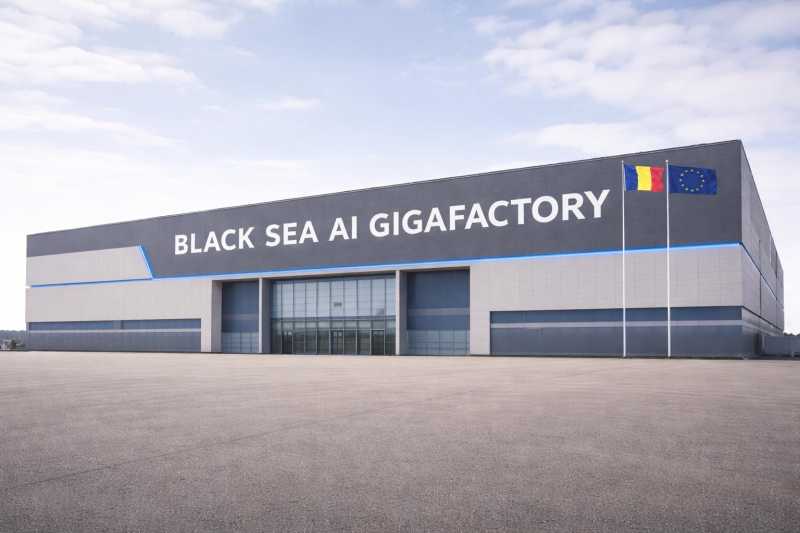
Expression of interest for selecting consortium leader for Black Sea AI Gigafactory
The Ministries of Energy and Finance have launched the pre-selection procedure for a consortium leader to implement the Black Sea AI Gigafactory project in Romania, a strategic investment in computing infrastructure for artificial intelligence. 'The Ministry of Energy and the Ministry of Finance, with the technical support of the Authority for the Digitali
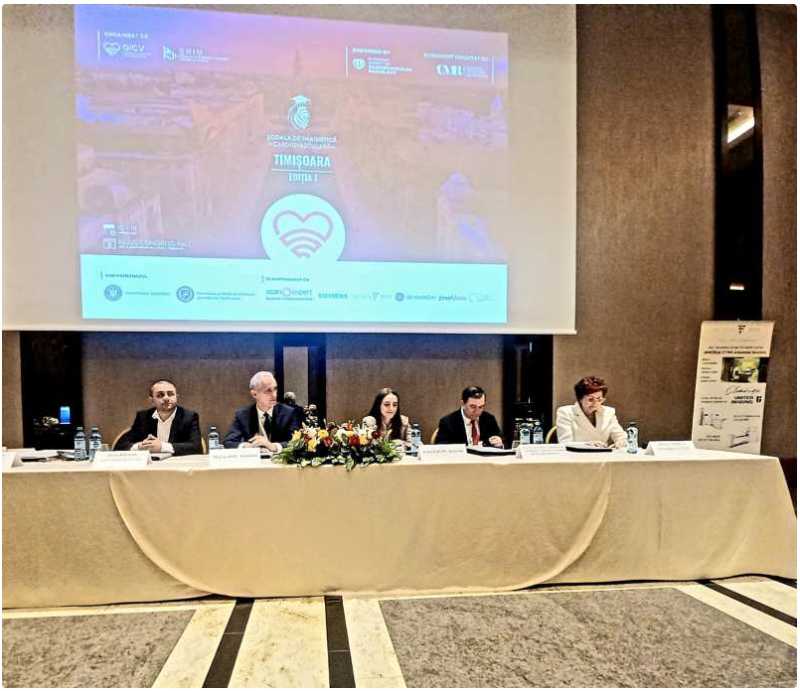
First cardiovascular imaging school brings together 25 Romanian and foreign lecturers in Timisoara
The first cardiovascular imaging school in Romania, held in Timisoara between April 15 and 18, brings together 25 lecturers from Romania and abroad - experienced specialists in the field - and offers a complex educational format with a strong practical component dedicated to both computed tomography and magnetic resonance imaging. Dr. Smarandita Lacau, primary

Romania's PM Bolojan, Hungary's PM-elect Magyar have phone conversation
Romania's Prime Minister Ilie Bolojan had a telephone conversation on Wednesday with Peter Magyar, Hungary's PM-elect, whom he congratulated on winning the recent parliamentary elections, both in his personal name and on behalf of the Romanian government. According to the government, in their conversation, the two officials addressed the stage and pros

Nine countries expected to attend second edition of the International Conference on Creativity in Dance
The second edition of the International Conference on Creativity in Dance (ICCD), an initiative dedicated to exploring the most relevant directions of contemporary dance at a global level, will take place between April 20 and 23, at the I.L. Caragiale National University of Theatre and Filmmaking (UNATC) in Bucharest. The event will be attended by researchers,

Brukenthal Museum debuts first AI audio guide, impressing visitors
The Brukenthal National Museum in Sibiu has introduced the city's first AI audio guide, an app that allows visitors to speak with an AI system and ask questions about paintings, artists and the museum in 12 languages, museum manager Raluca Teodorescu told AGERPRES on Wednesday. 'As of today, we are running a pilot test with the AI audio guide. Visitors
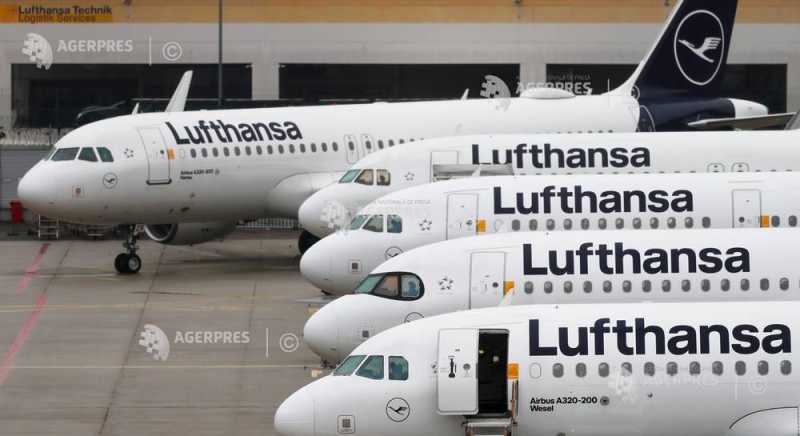
The Lufthansa strike leads to several flights being cancelled at airports in Bucharest and Cluj-Napoca
The strike at Lufthansa has led to the cancellation of several flights to and from the airports in Bucharest and Cluj-Napoca, according to information collected by AGERPRES. Three flights to Frankfurt were cancelled on Wednesday from Henri Coanda International Airport, and one to Munich. Two flights to Munich were cancelled from Avram Iancu Inte
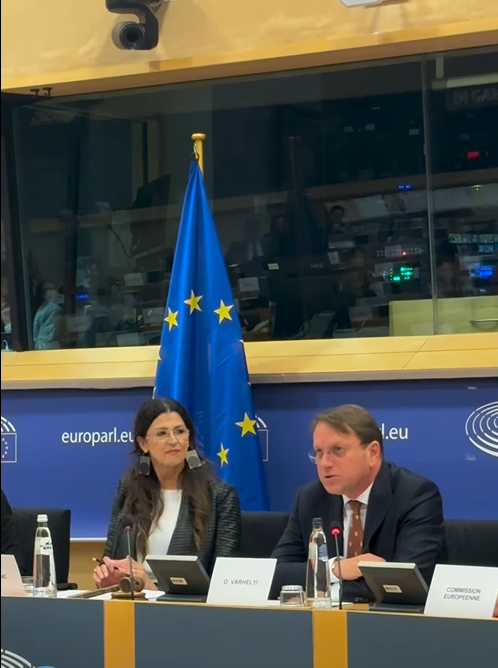
Romania, underrepresented in oncological clinical trials, despite high mortality (ESMO report)
Romania is underrepresented in oncological clinical trials, despite the scale of cancer and one of the highest mortality rates in Europe, according to a report published on Tuesday by the European Society for Medical Oncology (ESMO), in the context of implementing the next stages of Europe's Beating Cancer Plan. The report was presented in Brussels, at the European Parli
Head of Romania's animal health authority, Chinese ambassador discuss opening new export markets
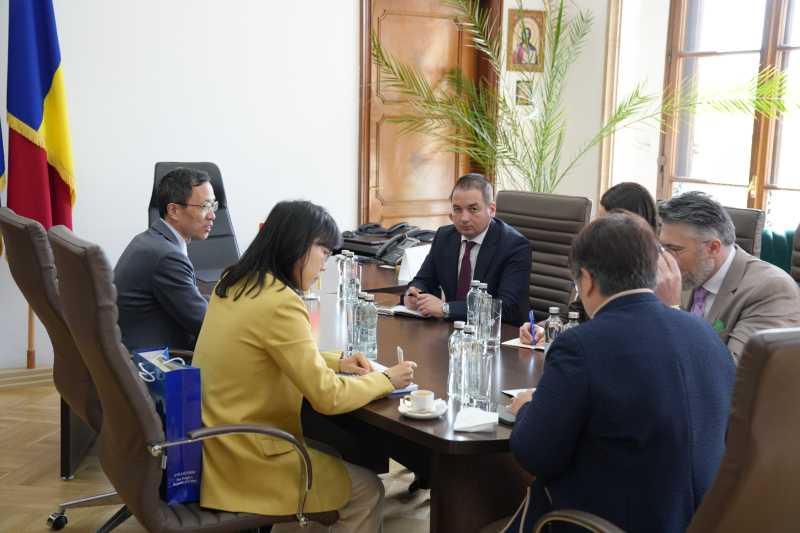
Romania has a real potential for opening new export markets, and institutional dialogue and technical cooperation are essential to Romanian producers, said Chairman of Romania's National Sanitary Veterinary and Food Safety Authority (ANSVSA) Alexandru Bociu after a meeting with Chen Feng, China's ambassador in Bucharest. 'Our main objective is to o

MP Baciu meets UN Under-Secretary-General; AI changes technology and architecture of power in society
Deputy Chairman of the Committee for Defence, Public Order and National Security in the Chamber of Deputies Andrei Baciu met last week at the United Nations headquarters with UN Under-Secretary-General Amandeep Singh Gill, the two discussing the new reality generated by artificial intelligence (AI). 'Artificial intelligence is no longer an experiment in Si

BrancusiYear/ 'The Wide Awake Muses' exhibition to be varnished on Friday in Targu Jiu
The opening of the exhibition 'The Wide Awake Muses'/'Muzele treze', part of a series of cultural events dedicated to the 'Constantin Brancusi Year', will take place on Friday at the 'Constantin Brancusi' National Museum in Targu Jiu. The exhibition belongs to Hungarian artist of Romanian origin Eva Andrea Szocs, associate profe

Traditional local gastronomy promoted at Banat Village Museum during 'Banat Spring Brunch' event
Traditional local gastronomy, part of the rural Banat heritage, will be promoted at the Banat Village Museum in Timisoara on Sunday, between 11:00 and 15:00, in collaboration with the My Banat Association, during the event entitled 'Banat Spring Brunch'. According to the organisers, the event is conceived as an early-season invitation, bringing togethe

Romania urgently needs a reset to change current wrong direction - PSD chair Grindeanu
Romania urgently needs a 'reset' to change what he described as the country's current 'wrong' direction, Speaker of the Chamber of Deputies, chair of the Social Democratic Party (PSD) Sorin Grindeanu, said on Wednesday.. 'Three pieces of bad news for the economy clearly and concretely show why Romania urgently needs a reset to change it
EnergyMin Ivan says Romania needs major projects implemented on solid, predictable funding
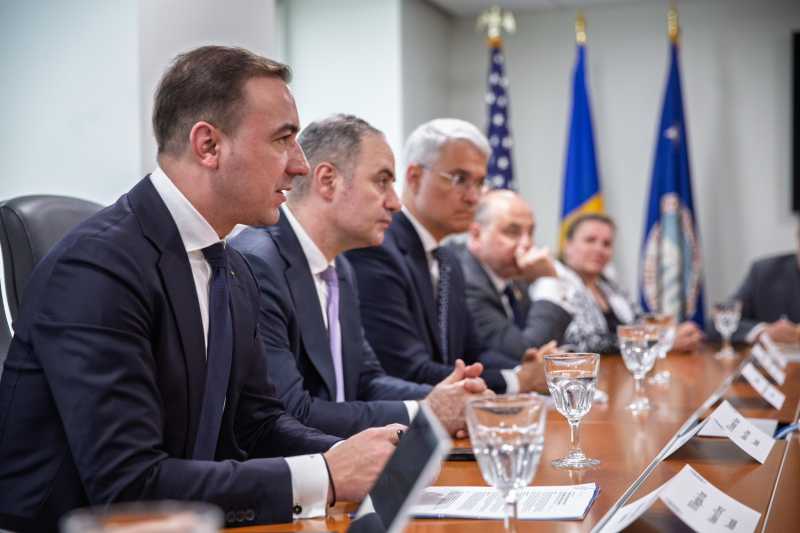
Romania needs major projects to move into implementation with solid, predictable funding tailored to their scale, Energy Minister Bogdan Ivan said in a post on his Facebook page after a meeting with John Jovanovic, President of the Export-Import Bank of the United States (US EXIM). 'After the meeting with representatives of the World Bank in Washington, D.
INS: Average net wage rises to RON 5,557 in February 2026
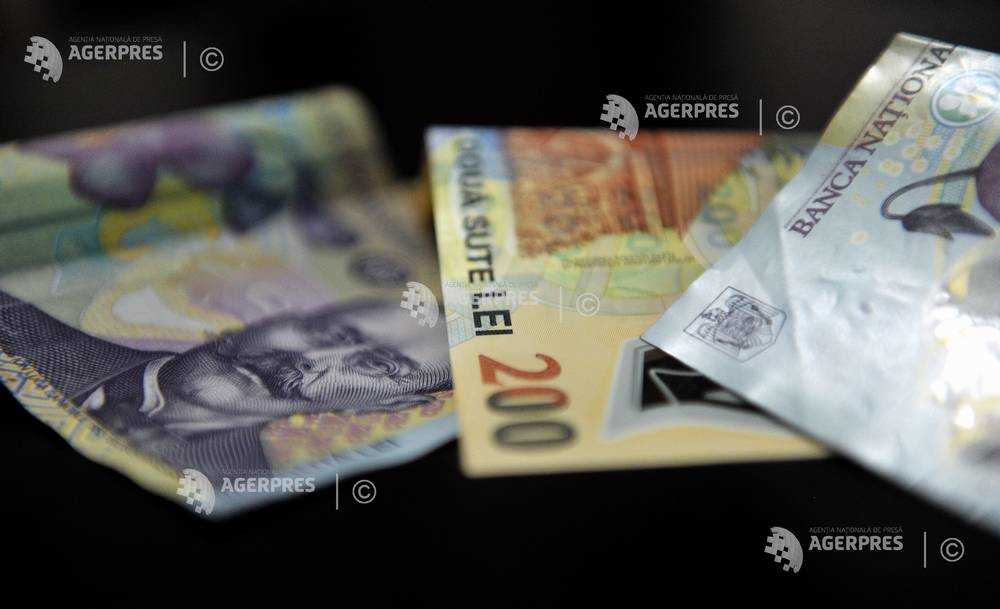
Romania's average net monthly wage stood at RON 5,557 in February 2026, up RON 39 (+0.7%) from January, while the average gross wage reached RON 9,272, an increase of RON 52 (+0.6%), according to data published on Wednesday by the National Institute of Statistics (INS). The highest average net wages were recorded in IT programming and consultancy (RON 12,9
Romania to send humanitarian aid to Lebanon after EU request
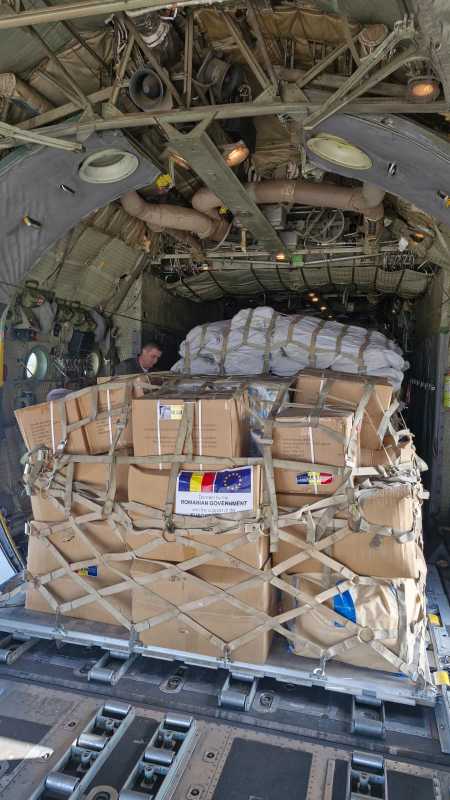
Romania is set to provide humanitarian aid to civilians in Lebanon, comprising 15 tonnes of food, tents and bedding supplies. The decision was taken by the National Committee for Emergency Situations, convened by Prime Minister Ilie Bolojan, in response to a request for assistance made through the EU Civil Protection Mechanism, the government said in a press r