

Recycling and waste management in Europe: See it, say it, sort it? (enr)
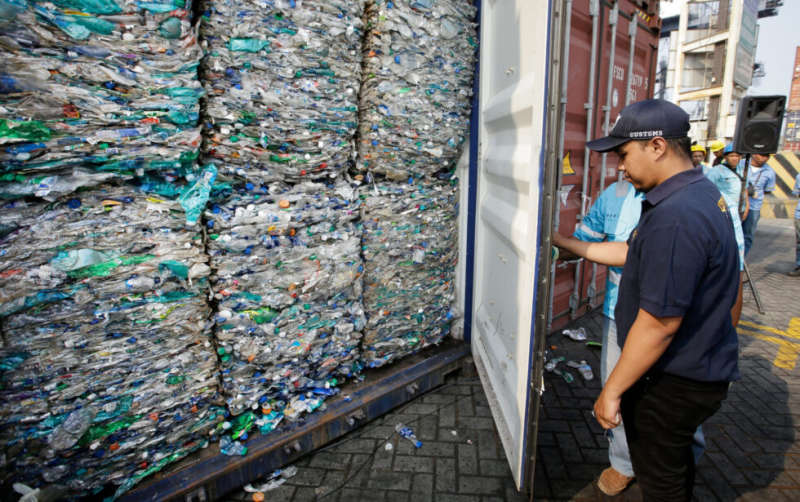
The UN recently stated that one billion meals worldwide get thrown out daily and just one percent of rare earth element demand is met by e-waste recycling, according to the International Telecommunications Union and the United Nations Institute for Training and Research. While the EU is working hard to cut waste, up recycling and double the Union's circularity rate by 2030, experts are unsure whether these efforts are enough.
Every year, all economic activities and households in the EU generate more than two billion tonnes of waste. That is equivalent to 4.8 tonnes of waste per capita.
According to the European Environment Agency (EEA), the overall recycling rate in 2020 stood at 46 percent. This figure includes three waste streams: municipal, packaging as well as electrical and electronic waste. In 2021, 64 percent of packaging waste, 49 percent of municipal waste and 39 percent percent of so-called e-waste was recycled. However, the majority of waste in 2021 was still disposed of through landfill operations and incineration.
'We are still far from the ambition to double the Union's circularity rate by 2030,' the EEA said, adding that there was a 'low or moderate likelihood' that EU's ambitions would be 'achieved in the coming years'.
The EU's plan for a circular economy aims to lessen the strain on natural resources by doubling its circular material use rate (CMUR) between 2020-2030. CMUR reflects how much recycled waste contributes to the total material used in the economy.
At the heart of the problem, according to the EEA, are business models in which products have a very short lifespan - if they are even used at all. At the same time, with its circularity rate of 11.5 percent in 2022, Europe still uses more recycled materials than any other region in the world.
EU legislation on waste, including more than 30 binding targets for the 2015-2030 period, is a key driver in increasing the levels of recycling in the Union. In March, the Union made further progress in waste regulation in a bid to meet the bloc's climate goals, aiming at increased recycling and cutting of plastic.
On March 25, the Council of the EU adopted a revision of the Waste Shipment Regulation. According to this EU states are to export less waste to third countries and recycle more themselves.
Under the new rule, waste may only be exported to countries outside the Organisation for Economic Co-operation and Development (OECD) if the destination country explicitly agrees and can prove that the waste is processed in an environmentally friendly manner to try to reach the goals of circular economy and climate neutrality.
According to figures from the statistics office Eurostat, the EU exported over 32 million tonnes of waste to non-EU countries in 2022. Of this, 39 percent went to Turkey (12.4 million tonnes), followed by India (3.5 million tonnes), the United Kingdom (2.0 million tonnes), Switzerland (1.6 million tonnes) and Norway (1.6 million tonnes).
What are recent developments in the EU?
On March 13, the European Parliament approved a proposal to curb food and textile waste. EU lawmakers voted to slash 40 percent of the food waste generated by households, retailers and restaurants by 2030, while toughening rules on textile waste linked to so-called 'fast-fashion'. Brussels estimates that the 27-nation bloc generates 60 million tonnes of food waste a year - or 131 kilograms per person.
On March 4, EU negotiators agreed on the Packaging and Packaging Waste Regulation (PPWR), to cut back on packaging waste by five percent by 2030, compared to the amount in 2018. The aim is to reduce this further by ten percent in 2035 and 15 percent by 2040. Single-use plastics in cafés and restaurants will be banned from 2030.
The text is a key element of the EU's environmental goals under the Green Deal. 'This regulation aims to reduce waste caused by packaging, making it more sustainable, while ensuring the highest waste management standards,' the government of Belgium, which holds the rotating EU presidency, said on X.
Looking at waste across the bloc: give-and-take?
While some EU countries focus on expanding their recycling capabilities, import - or export - of waste is an important part of other nations' economies.
Sweden
In Sweden, a massive high-tech sorting plant dubbed 'Site Zero' has been in operation since late 2023, described by the organisation as 'the world's largest and most modern facility for plastic recycling'.
Mattias Philipsson, CEO of Swedish Plastic Recycling, a non-profit organisation owned by the plastic industry, said the site has 'the capacity to handle the equivalent of all of Sweden's plastic waste'.
In 2022, only 35 percent of plastic waste was recycled, according to the Swedish Environmental Protection Agency, less than the EU average of 40 percent. The incineration of plastic waste, which is used to produce both heat and electricity, accounts for about seven percent of Sweden's greenhouse gas emissions.
Portugal
In 2021, according to the most recent official data, 71,182 tonnes of hazardous waste left Portugal for recovery and 1,385 for disposal. Usually, that type of waste requires special disposal treatment. 1,066 million tonnes of non-hazardous waste were shipped or exported.
According to data from the Portuguese Environment Agency, Spain is the main country of destination, receiving 80 per cent of the total non-hazardous waste while Belgian incinerators received 90 per cent of the hazardous waste. Regarding exports outside the EU, Portugal only exports non-hazardous waste to Morocco (597 tonnes for recovery).
The country also imports waste: 264,874 tonnes of hazardous waste came in, most of it for recovery (244,959) and disposal (almost 20,000 tonnes). The country also received 1.817 million tonnes of non-hazardous waste.
Slovenia
According to the Slovenian Environment Agency, Slovenia has generated an average of around
135,000 tonnes of hazardous waste per year between 2012-2021, accounting for one to three percent of all waste.
During this period, the country exported an annual average of 61,400 tonnes of hazardous waste for final treatment/disposal, mainly to EU and Balkan countries, while it imported an average of 34,200 tonnes of hazardous waste per year.
Romania
According to official statistics, Romania is currently ranking 26th among the 27 EU member states when it comes to recycling, with its recycled municipal waste exceeding by only 13 per cent of the total waste.
By implementing a Guarantee-Return System (SGR) in November 2023 to collect beverage packaging, more than 220 million packages were returned in the first three months. At present, two regional centres are operating with another five set to open in the next three months.
Bulgaria
Waste import designed for utilisation is extremely important for the Bulgarian economy and, in particular, for the processing industry, according to Environment and Water Minister Julian Popov. This waste was predominantly of non-hazardous nature and of high quality and value as raw material, he said.
In 2021, the amount of household waste generated in Bulgaria decreased by 25 percent compared to 2010, according to the National Report on the State and Protection of the Environment but it still fell short of the 51 percent recycling goal, according to data by the Bulgarian Executive Environment Agency.
The trend of meeting the recycling targets for electrical and electronic equipment waste has been maintained. The increase in recycled materials utilised in the country's economy is up to 4.90 percent, the report shows.
In November 2023, the European Commission called on several countries, including Bulgaria, to properly implement EU rules on waste treatment.
Textile waste: recycled plastic 'not circularity'
To square the recycling circle, fashion brands have been using recycled plastic - to the frustration of the food industry, which pays for the collection of used PET bottles.
'Let's be clear: this is not circularity,' the beverage industry wrote in a withering open letter to the European Parliament last year, denouncing the 'worrying trend' of the fashion industry making 'green claims related to the use of recycled material'.
Less than one percent of textiles worldwide are recycled at present, the EU says, with 12.6 million tonnes of textile waste generated in the EU each year.
A recent EEA study showed that four to nine percent of textiles introduced to the European market ended up being destroyed without ever having been used, leading to 5.6 million tonnes of CO2 emissions.
Nearly half of all textile waste collected in Europe ends up in African second-hand markets or more often it is tipped into 'open landfills', according to EEA figures from 2019. Another 41 percent of the bloc's textile waste goes to Asia, mostly 'to dedicated economic zones where they are sorted and processed'.
NGOs said much of Europe's waste clothes sent to Asia go to 'Export Processing Zones', which Paul Roeland of the Clean Clothes Campaign NGO said were 'notorious for providing lawless' exclaves, where even the low labour standards of Pakistan and India are not observed'.
Switched off: e-waste efforts lack energy
Around 62 million tonnes of old or unwanted gadgets were thrown out in 2022.
The volume of so-called e-waste, which includes mobile phones, TVs and vapes, is 'rising five times faster than documented recycling', according to the International Telecommunications Union (ITU) and the United Nations Institute for Training and Research (UNITAR), who define e-waste as any discarded product with a plug or battery.
The amount recorded in 2022 was over 80 percent higher than in 2010. 'Billions of dollars worth of strategically valuable resources squandered, dumped. Just one percent of rare earth element demand is met by e-waste recycling,' they warned.
Food Waste: 'global tragedy'
Households around the world threw away one billion meals every single day in 2022 in what the United Nations' latest Food Waste Index Report on March 27 called a 'global tragedy' of food waste. More than one trillion dollars worth of food was binned by households and businesses at a time when nearly 800 million people were going hungry.
It said that more than one billion tonnes of food - almost one fifth of all the produce available on the market - was wasted in 2022, most of it by households.
'If food waste was a country, it would be the third biggest emitter of greenhouse gas emissions on the planet behind the US and China,' said Richard Swannell from non-profit organisation WRAP, who co-authored the report with the UN Environment Programme (UNEP).
This article is published weekly. The content is based on news by AFP, AGERPRES, BTA, dpa, EFE, LUSA, STA agencies participating in the enr.AGERPRES(EN - editor: Simona Iacob)
The content of the www.agerpres.ro website has the exclusive purpose of public informing.
All the information published on this website by AGERPRES is protected by relevant legal dispositions.
It is forbidden to copy, reproduce, recompile, decompile, distribute, publish, display, modify, create derived components or products or full services, as well as any exploitation of the site's content.
Details in the section Terms of Use. If you are interested in picking up AGERPRES news items, please contact the Marketing Department – marketing@agerpres.ro.
The use of the Comments section entails your obligation to respect the AGERPRES terms and conditions in regards to the publishing of comments on the www.agerpres.ro.
Other news in category
DSU, Romanian Red Cross organising public health crisis management exercise
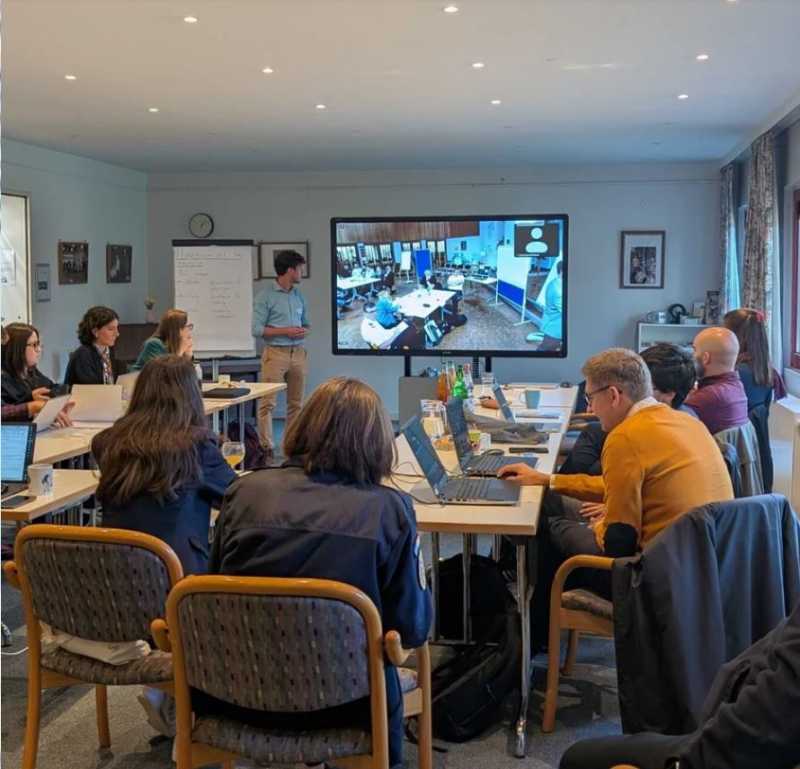
The Department for Emergency Situations (DSU) and the Romanian Red Cross are organising on Wednesday, between 9:00 and 17:00, in Bucharest, a table-top simulation exercise dedicated to managing a public health crisis, carried out within the PREPSHIELD European project. According to a press release sent to AGERPRES, the exercise's main objective is to
Political crisis/ Consultations at Cotroceni Palace with leaders of governing coalition
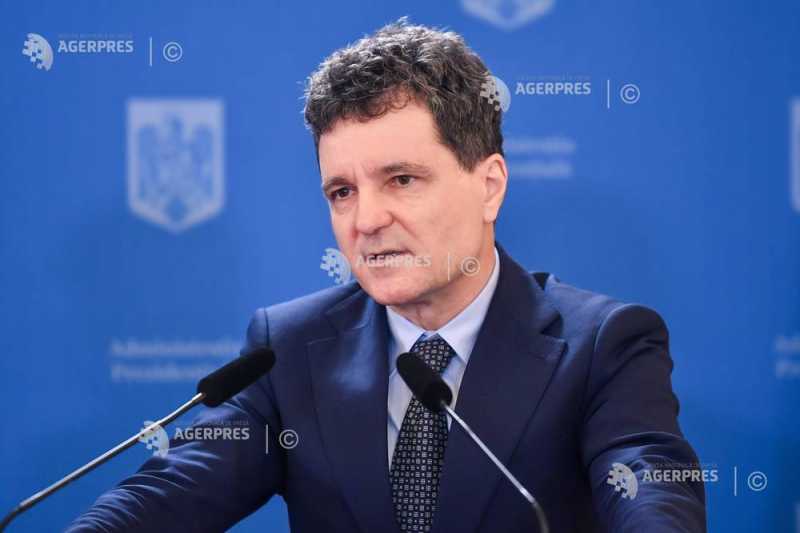
President Nicusor Dan will hold consultations on Wednesday at the Cotroceni Palace with the leaders of the governing coalition. 'Under his constitutional prerogatives, the President of Romania, Nicusor Dan, has invited on Wednesday, to the Cotroceni Palace, the leaders of the following parliamentary parties and political formations for consultations - the
DefMin Miruta: Our partnership with the US is a sustainable construction, already spanning 145 years
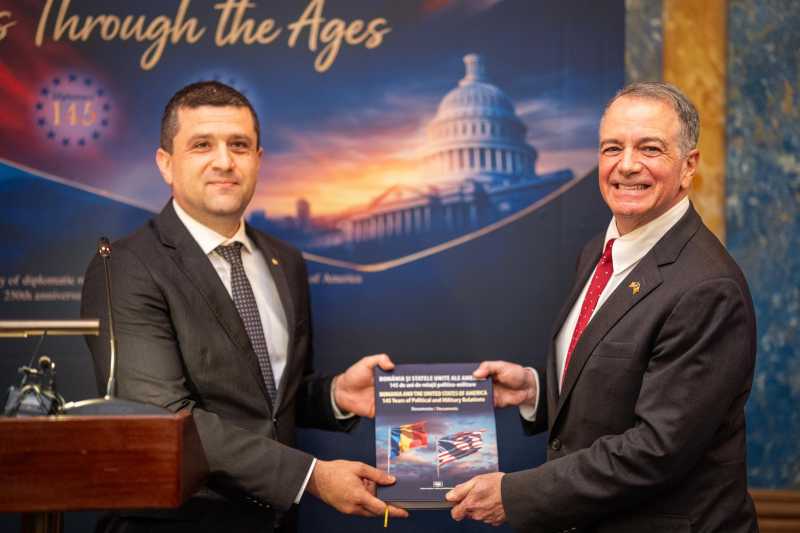
The partnership with the United States is a sustainable construction, already spanning 145 years, declared on Tuesday the Minister of Defense, Radu Miruta, who participated, together with Ambassador Darryl Nirenberg, at the launch of the album ''Romania and the United States of America - 145 years of political-military relations''. ''Pr

Prosecutors charge 17 in helicopter VAT-evasion case, including DSU head Arafat
The Military Prosecutor's Office attached to the Bucharest Military Court of Appeal announced on Tuesday that 17 people are being prosecuted for smuggling, in the forms of co-participation, complicity and incitement, in a case concerning the procurement of a replacement helicopter from Great Britain without paying VAT. The prosecutors say the case stems fr

Four defendants - two individuals, two companies - charged in 2021 'Matei Bals' hospital fire case
The Prosecutor's Office attached to the Bucharest Tribunal announced on Tuesday having completed, after five years, the investigation into the January 29, 2021 fire at the 'Matei Bals' Institute in Bucharest, which caused four deaths at the scene and nine more in the following period. Prosecutors have indicted two individuals and two legal entities for various fo

The Helmet of Cotofenesti and the two gold bracelets have been brought to Romania
The Helmet of Cotofenesti and the two gold bracelets recovered after last year's theft from the Drents Museum in Assen arrived in Romania on Tuesday. They will be transported from Henri Coanda Airport in Otopeni to the National History Museum of Romania under the escort of gendarmes from the 9th Battalion, a unit responsible for institutional protection, g
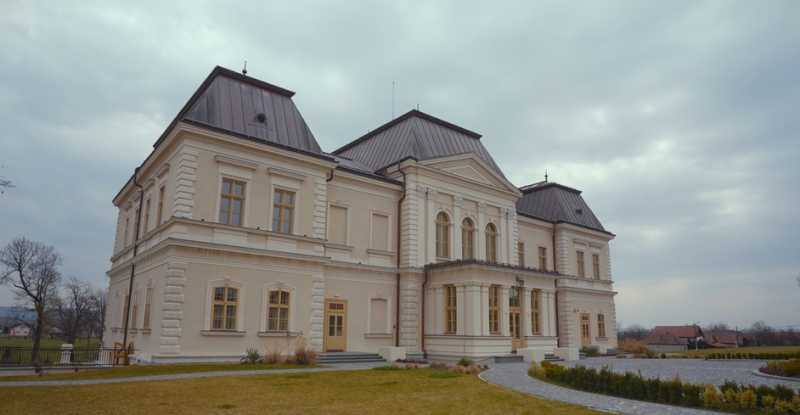
Bánffy Castle in Rascruci honoured with 2026 European Heritage / Europa Nostra Award
The Bánffy Castle in Rascruci, Cluj County, is among the winners of the European Heritage Awards - Europa Nostra 2026, the Cluj County Council (CJ) announced on Tuesday. The county authority is also encouraging supporters and heritage enthusiasts to vote for the Rascruci site in order to secure the Public Choice Award granted by the European Commission.

Bolojan: I had good collaboration with President Nicusor Dan, I believe it was fair partnership
PNL chairman, Prime Minister Ilie Bolojan, declared on Tuesday that he had a good collaboration with President Nicușor Dan, specifying that it was a 'fair' partnership. 'I had a good collaboration with President Nicusor Dan in this capacity, during the period in which I held the mandate. As responsible people, we understand that in order to achieve
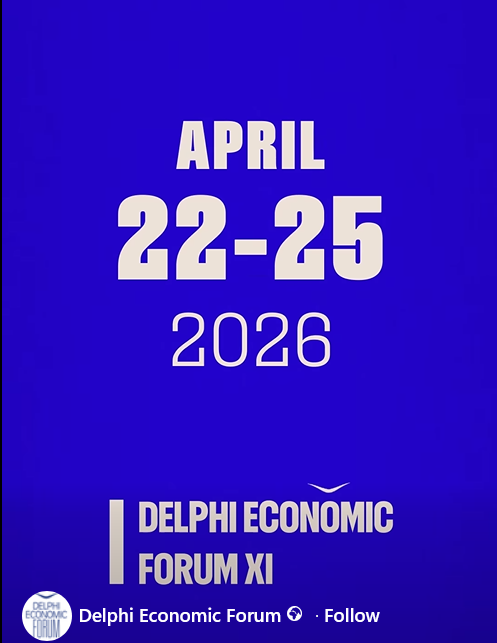
Challenges of new era and strategies for sustainable future at the 11th Delphi Economic Forum
The 11th edition of the Delphi Economic Forum will take place between 22 and 25 April, focusing on highlighting the challenges of the new era and developing strategies for a sustainable and resilient future, ekathimerini.com reports. According to a press release from the organisers, participants will include the President of Greece, Konstantinos Tasoulas, Gree

Bolojan: If PSD ministers resign and positions become vacant,holders of other portfolios take over responsibility
Prime Minister Ilie Bolojan, the president of the PNL, stated on Tuesday that, in the event that PSD ministers resign and positions become vacant, the holders of the other portfolios will take over the responsibility of these ministries, noting that each vacant position will be temporarily filled by a minister who remains in office. 'In the event that mini
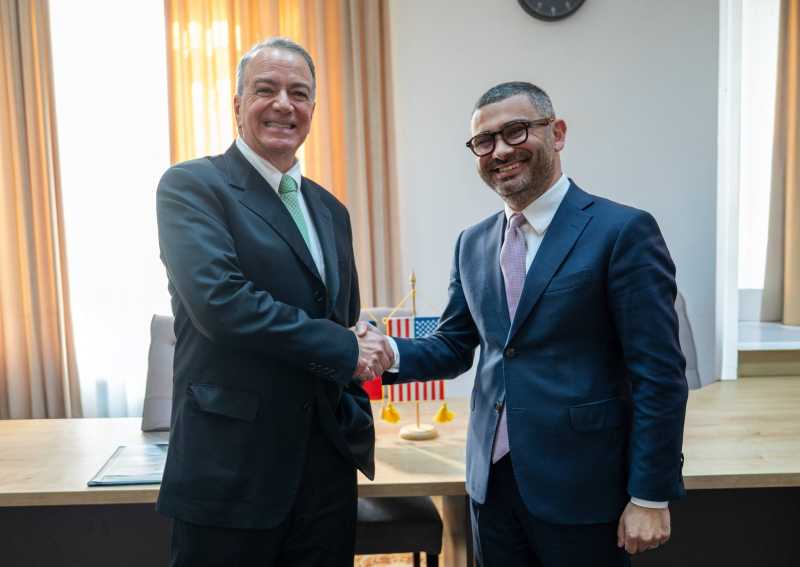
Minister of Labor and US Ambassador to Romania discuss cooperation in field of labor and social protection
The Minister of Labor, Petre-Florin Manole, had a meeting with the US Ambassador to Romania, Darryl Nirenberg, during which they discussed the strengthening of bilateral cooperation in the field of labor and social protection and common directions of action in the context of current challenges on the labor market. According to a ministry statement, sent to AGE
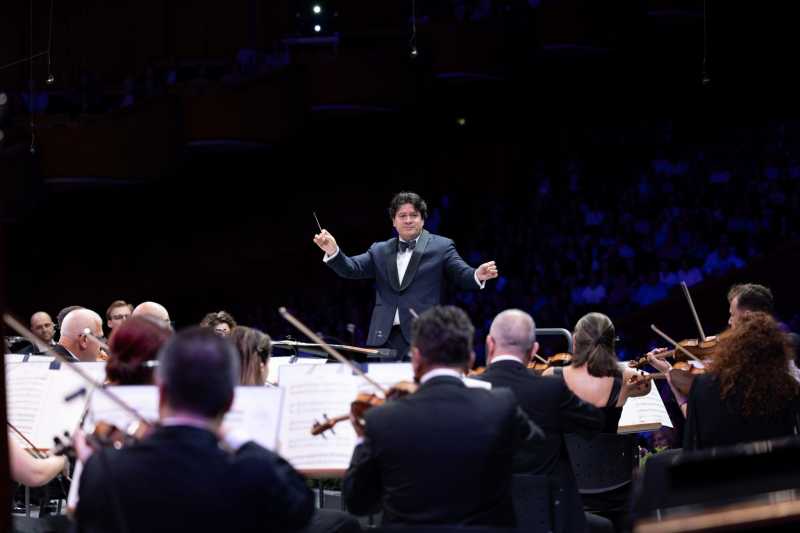
2026 'George Enescu' International Competition tickets - up for sale
Tickets for the symphonic concerts and chamber recitals within the 2026 'George Enescu' International Competition have been put up for sale, opening access for the public to one of the most relevant platforms for artistic affirmation at present. With the theme 'In Search of Excellence,' the anniversary edition of the 'Enescu' Competitio
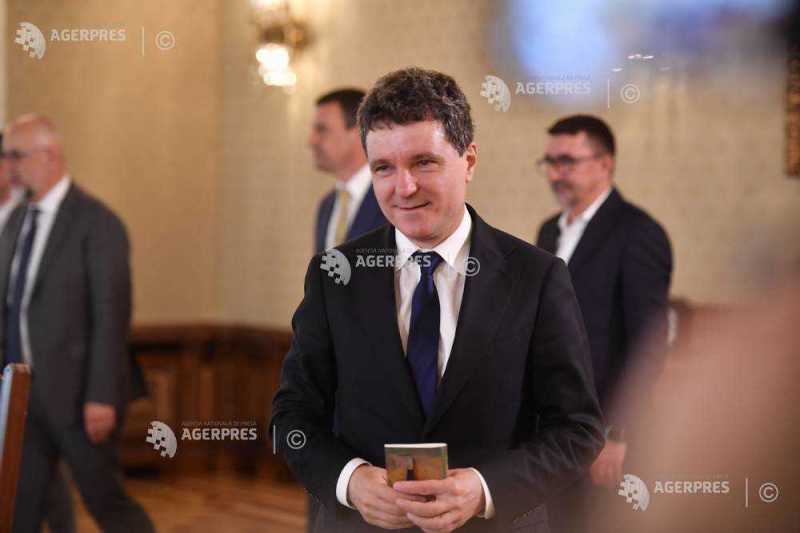
President Nicusor Dan calls coalition leaders for consultations on Wednesday
President Nicusor Dan will hold consultations on Wednesday at the Cotroceni Palace with the leaders of the governing coalition. 'Under his constitutional prerogatives, the President of Romania, Nicusor Dan, has invited on Wednesday, to the Cotroceni Palace, the leaders of the following parliamentary parties and political formations for consultations - the
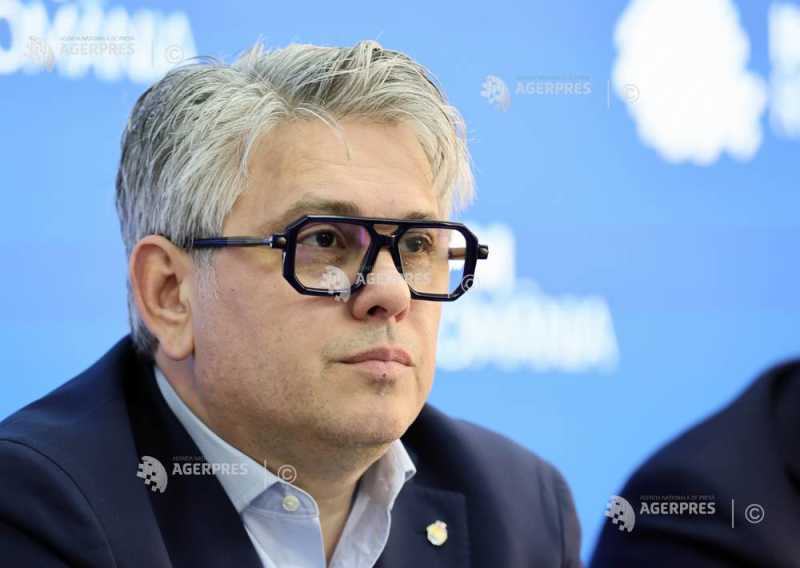
IMM Romania's Fudulea: EU Pay Transparency Directive must be adaptated according to SME size
The European Directive 2023/970 on pay transparency and the application of the principle of equal pay for the same work between women and men must be adapted according to the size of SMEs, IMM Romania Secretary General Sterica Fudulea told a press conference on Tuesday. 'IMM Romania fully supports the principle of equal pay between women and men for equal
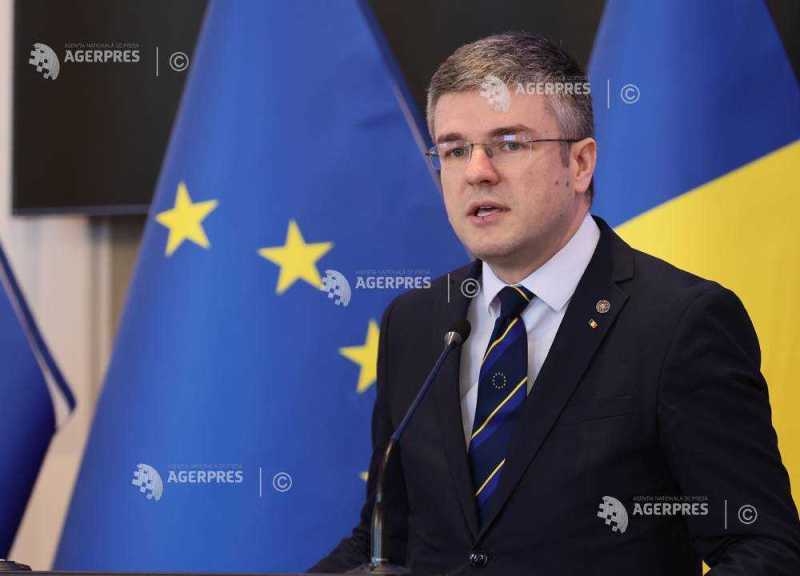
EconMin Darau: This political crisis is not helping anyone
Economy, Digitalization, Entrepreneurship and Tourism Minister Irineu Darau said in Cluj on Tuesday that the current political crisis is not helping anyone and is affecting the economy of the country. 'There are crises which can be avoided, which are unnecessary, a political crisis at this moment in Romania is absolutely unnecessary. Our responsibility, of