
CONTEMPORARY AUTHORS/Alex Ciorogar: Literature offers ways of understanding the world that statistics and algorithms cannot replace
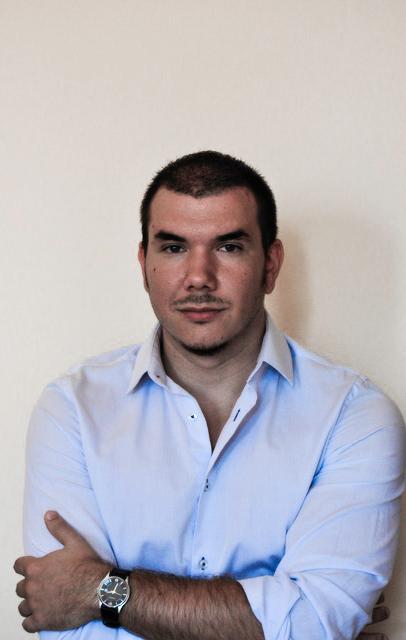
Alex Ciorogar, who holds a PhD in Comparative Literature and is a lecturer in the Department of Scandinavian and Anglophone Studies at the Faculty of Letters of Babes-Bolyai University in Cluj-Napoca, spoke to AGERPRES about his fascination with literary theory and, in particular, with the idea of the author, a concept whose meaning has shifted many times throughout history.
His book, 'Ascensiunea autorului în epoca digitalizarii globale'/'The Rise of the Author in the Age of Digital Globalisation', published in 2025 by Cluj University Press and originally submitted as his doctoral thesis, focuses on the concept of the author and related notions such as authorship, intention and creativity.
The book takes as its starting point the French literary theorist Roland Barthes' famous 1967 essay 'The Death of the Author' and traces subsequent theoretical developments on this topic. In the abovementioned essay, Barthes dismantled the prevailing concept of the author, arguing that the reader's perspective should take precedence in the interpretation of a literary work over the author's biography and intentions.
The book has received several distinctions, including the Excellence in Scientific Research Award (Babes-Bolyai University, Faculty of Letters, Cluj-Napoca, 2026), the Eugen Simion Prize (National Museum of Romanian Literature, Bucharest, 2026), and the Debut Prize at the fourth edition of the FILSTREET International Literature Festival (Pitesti, May 29-31, 2026).
Alex Ciorogar is also editor-in-chief of the literary journal Echinox and founder of OMG Publishing House.
AGERPRES: Why the author? How did it all start?
Alex Ciorogar: It all began around 2009, when I truly discovered literary theory, aesthetics and the philosophy of art. As a student at the Faculty of Letters in Cluj, where I studied English and Romanian and graduated in 2011, I found these subjects and courses fascinating. At the same time, I realised they were fundamental to the serious study of literature.
I started reading as much contemporary literary criticism, essays and theory as I could. Until not so long ago, apart from a few exceptions, this field had largely been confined to what was being written and published in the French-speaking world. Beyond the discussion about its transfer across the Atlantic, particularly to the United States, literary theory also came to be viewed as a somewhat isolated phenomenon and, more importantly, as something that had effectively come to an end sometime after 1989.
It had 'ended' in the sense that theory was no longer, first and foremost, intellectually fashionable. At the same time, other forms of scholarship, particularly historical studies, were beginning to emerge and gain prominence.
Of course, that is not really the case. However, as I tried to map the main directions in contemporary literary research, I realised that such an undertaking lacked any real purpose. That prompted me to turn my attention to what lay at the heart of the debates in the second half of the twentieth century. That is how I came to define my field of research.
It is hardly a secret that most of the methodologies associated with the Golden Age of Literary Theory, roughly between 1960 and 1980, shared a common objective: the demystification of the concept of the (human) subject. Seen from this perspective, the death of the author, proclaimed above all by Roland Barthes as a way of signalling, among other things, the transition from modernity to postmodernity, was simply a corollary of those radically anti-humanist positions.
So I set out to trace the evolution of literary theory through the lens of the concept of the author, to see how the debate had evolved. I wanted to understand why, more than sixty years later, we were still talking about the death and the return of the author. I also wanted to understand the origins of this metaphorical impasse in the language of literary criticism and, however modestly, to reshape the critical vocabulary we use when discussing authorship, intention and creativity.
AGERPRES: What is your conclusion? Did the author ever truly disappear?
Alex Ciorogar: I believe such a radical dismantling of the idea of the solitary genius - an idea established and formalised during the Romantic period - was necessary. However, it had little tangible impact on literary criticism, either in principle or in everyday practice. The literary field as a whole, and the book market alike, continued to function largely undisturbed. Literary histories, reviews, prizes, museums, interviews and canons - the list is by no means exhaustive - still revolve around the central figure of the author. Likewise, scholars continue to write monographs devoted to individual authors.
I would also add that there were exceptions. I am referring, of course, to Jacques Lacan, who never abandoned the idea of the subject. It is perhaps no coincidence that none of the three major anthologies exploring to the concept of the author - published in English, French and German, respectively - includes a single text by Lacan. There is, in this sense, a clear line of continuity running from Lacan to Alain Badiou and Slavoj Zizek, or, if you prefer, an almost unbroken genealogy linking the major attempts to understand the subject, even in an era beyond postmodernity.
At the same time, none of those who have written about authorship has ever returned to Lacan or seriously engaged with his work, perhaps because his interventions were protean, performative and often improvised. In that sense, I would argue that the author - or creator - survived after all in the writings of these thinkers, even in the midst of deconstruction.
AGERPRES: As the title suggests, the book's central concern is the author in the context of 'the age of digital globalisation'. How does that perspective change when we arrive at the present day?
Alex Ciorogar: Indeed, I began to wonder whether this habit of thinking about authorship simply as an extension of the concept of the subject has not, in fact, become outdated - or is perhaps fundamentally misconceived. Research in the field almost invariably proceeds from the assumption that the author is merely a particular manifestation of the subject. Yet it seems to me that, in the digital age, this Gordian knot ought to be cut once and for all. Only then can we begin to see that authorship has always existed as a spectrum of multiplicity, ranging from the simplest forms of collaboration to the most complex assemblages involving both human and non-human actors.
Nor do I believe that the author function, as formulated by Michel Foucault in 'What Is an Author?' (1969), offers a genuinely satisfactory solution in this context. Although Foucault argued that 'man' had disappeared as the organising category of thought, he also maintained that the author function could ultimately be assumed by another agent undergoing a new process of subjectivation through what he termed the 'technologies of the self'. Yet it seems perfectly conceivable that artificial intelligence could perform that function without ever becoming a subject in the classical sense of the term. I would therefore argue that the author neither died nor ever returned - for the simple reason that, in that sense, the author never existed.
I have a lingering sense that Plato's theory of divine - or magnetic - inspiration, together with other idealist explanations of that kind, was in fact closer to the mark than the theories of the 19th century. There have always been debates about what an author ought to be and what role an author ought to fulfil, but such debates ultimately amounted to exercises in the instrumentalisation of power within the cultural sphere. They were, if you like, epistemological pretexts that diverted our attention from the way authority actually operates within that system.
These are only some of the reasons why the idea of the author has continued to preoccupy me. The project was also, in many respects, a personal - perhaps even an intimate - investigation. For many years I wrote literary criticism and reviews of other people's books. Yet I had never consciously reflected on what it meant to be the author of literary criticism myself, even though I was, of course, guided by a set of principles and values in my work. It was only while writing this book that I realised every sentence I read or wrote ultimately became a meditation on the way I myself inhabited the authorial role while writing a study about what it means to be an author. That, almost inadvertently, is where the rhizomatic style or structure I adopted - and which has already attracted comment - came from, almost unconsciously.
AGERPRES: This is, to say the least, a substantial and highly complex work. Do you remember which chapter you wrote first?
Alex Ciorogar: First of all, thank you. I'm not entirely sure, but I believe the oldest chapter in the book is the one dealing with the return of biographical criticism in contemporary literary studies. It's an interesting phenomenon because it follows in the wake of the explosion of autofiction.
Even more striking is the fact that both autofiction and autotheory - two forms of writing situated on the boundary between autobiography and fiction, and between autobiography and theory respectively, in which the author begins with their own life but allows themselves to alter, imagine or supplement certain events - have become extremely popular today, particularly in the English-speaking world. This is somewhat paradoxical given that, in France, autofiction - first defined by Serge Doubrovsky in 1977 - emerged at roughly the same time as the debate surrounding the 'death of the author'.
In autotheory, the author writes about their own life but uses it as a starting point to explore broader ideas concerning society, identity, gender, politics, memory or culture. Personal experience becomes the point of departure for theoretical analysis.
AGERPRES: In simple terms, what is the dominant understanding today of the relationship between the author, the text and the reader?
Alex Ciorogar: I would begin by saying that one could write books similar to mine about what a text means today, just as one could launch research projects devoted to the concept of the reader. All three components - the author, the text and the reader - are equally fascinating and almost impossible to define with precision.
I can easily imagine a similar volume exploring the notion of the text, from Julia Kristeva's redefinition of it through intertextuality, tracing it back to Mikhail Bakhtin, moving through the concept of hypertext, and arriving at contemporary understandings of the text in the age of artificial intelligence.
Likewise, I can imagine a study devoted entirely to the reader, ranging from reception aesthetics and the Konstanz School, or so-called reader-response theory associated with Stanley Fish, Norman Holland and Louise Rosenblatt, through Franco Moretti's now well-known concept of distant reading, to more recent approaches such as reparative reading, surface reading and post-critical reading.
Although these traditions can certainly be studied separately, it is obvious that they should ultimately be understood as interdependent elements within a broader cultural ecosystem, which itself forms part of even larger systems.
To answer your question directly, I believe the defining characteristic of today's relationship between these three entities lies precisely in their distributed nature. The author is an ecosystem. That would be my first thesis. My second thesis is that the shape of this ecosystem is now different from what it was both in the mid-1960s, at the time of the 'death of the author', and in the early 1990s, when discussions centred on the 'return of the author'.
I describe this contemporary configuration of the authorial ecosystem through the allegory of ascent. I chose this metaphor in order to preserve the internal logic of the narrative of authorship: the modern author was born in the seventeenth century, with the emergence of the first literary field and cultural institutions; was transformed into the figure of the genius during the Romantic period of the 19th century; died with Barthes; and was resurrected - most notably through Sean Burke - in the 20th century.
Seen from this perspective, the trajectory of the author has followed, to a remarkable extent, a Christ-like narrative. The final stage of this journey is, of course, the Ascension. This is the origin of the metaphor - or allegory - of the author's ascent, although I do not intend this vocabulary to carry any religious or spiritual significance.
At the same time, I chose this metaphor because many recent developments can also be understood through the lens of ascent: the emergence of literary celebrity studies, the formulation of the concept of the world author, and digitally mediated collaborative practices that are simultaneously anonymous and organised through cloud technologies. The examples could easily be multiplied.
AGERPRES: Beyond the metaphor, in the more concrete terms of literary theory, how should we understand this 'ascent' of the author?
Alex Ciorogar: To understand what this allegory of ascent means for the concept of the author, we must first recall what was meant by both the death and the return of the author. To simplify matters, I would say that the death of the author can be understood through two main dimensions. The first is methodological: it legitimised certain modes of reading inspired by structuralism and poststructuralism. The second is institutional. Barthes himself later acknowledged that the provocations of his famous essay were, to some extent, an attempt to replace the old Sorbonne establishment with the younger generation to which he belonged. It was, if you like, a rather violent passing of the baton.
The return of the author, by contrast, represented a critique of the deconstruction of the creative subject, while also contributing to the diversification and democratisation of literary studies through postcolonial, feminist, gender and related approaches.
This brings us, finally, to the ascent of the author, which means, above all, moving beyond both of these stages while also incorporating them. It means recognising that every author is, in a sense, a world author, just as every author is necessarily a global author, regardless of the cultural space from which they emerge.
It also means acknowledging that authorship no longer operates solely on global or international coordinates, but also within digital and networked environments. The ascent of the author entails a rethinking of literary production in relation to the capitalist system in which we now live.
At the same time, any contemporary study of authorship requires a methodology that is simultaneously posthuman, ecological, decolonial, intersectional, technological and materialist. The author today is a collaborative entity, a dispositif, an assemblage. Indeed, my argument is that this has always been the case; it is simply that Romantic-liberal ideology no longer has the capacity to suppress the inherent contradictions of this phenomenon and dissolve them into a reassuring synthetic unity.
AGERPRES: Looking back, was it an overly ambitious project? After all, the book covers almost seventy years of theoretical discourse, not to mention the substantial intellectual background it required.
Alex Ciorogar: Without a doubt, it was an extremely ambitious project. To speak about the author is to speak about individuality, originality, creativity and subjectivity - concepts that are, by their very nature, inexhaustible. However, I believe that narrowing my focus, so to speak, to those seventy years of theoretical debate helped me establish certain limits in terms of time and scope. Even so, I often felt there was much more that could have been said, and this without even entering into specific case studies.
AGERPRES: Today, what do we primarily mean when we refer to a theoretical crisis? You mentioned this crisis earlier in the interview.
Alex Ciorogar: At the end of the 1990s and the beginning of the 2000s, an entire tradition emerged - almost a meta-literary genre in its own right - centred on declarations of the death of theory, the death of comparative literature, and similar diagnoses. Ultimately, all these 'deaths' followed the same logic as the death of God, followed by the death of man and, as we have seen, the death of the author.
Yet every death also implies a new beginning - or even a form of transcendence. More recently, however, the discussion has shifted towards the crisis of literary studies and, more broadly, the crisis of the humanities. This crisis has been associated primarily with the bureaucratisation of academia and universities, but also with the increasing subordination of scholarly research to the imperatives of neoliberalism. These processes have not disappeared; if anything, they have become more pronounced.
In other words, the theoretical crisis is, fundamentally, a crisis in search of the grounds on which it can continue to claim authority today.
The legitimacy of literary studies - or, more broadly, the justification for their continued existence - now depends less on the scientific, philosophical or cultural insights that research in this field may produce, and increasingly on the forms of value that such results are expected to generate for those who finance this work, whether public institutions or private entities.
AGERPRES: In 2019, you edited a collection of theoretical texts and essays entitled 'Posthumanism Today' (Tracus Arte). This was before the pandemic, before the war in Ukraine, before the resurgence and escalation of conflicts in the Middle East, and before the latest economic crisis. Do you think posthumanism remains an equally urgent concern today?
Alex Ciorogar: I believe it remains just as important. However, it is a field that has evolved at remarkable speed and now operates within a very different set of circumstances. Artificial intelligence remains one of the central - indeed, foundational - concerns of posthumanist studies.
There is another important nuance. Even when we published that volume, posthumanism was by no means a new subject internationally. Our aim was a more modest one: to bring Romanian critical discourse up to date and place it in conversation with contemporary international debates.
AGERPRES: Together with Alex Cistelecan, you also coordinated the anthology 'What Remains of May '68?' (frACTalia, 2018). Do you think the contributors' answers to that inquiry would be significantly different today?
Alex Ciorogar: Yes. I allow myself to be cautiously optimistic here, with all the necessary caveats. The answers would certainly be different today, particularly because the rise of extremist movements is closely connected to the internal dynamics of revolutionary movements of this kind.
AGERPRES: You also worked on the question of authorship together with the British scholar and literary theorist Stephen Shapiro. Could you tell us a little about that experience?
Alex Ciorogar: I met Stephen Shapiro through a research fellowship. The University of Warwick offers a series of research grants through its Institute of Advanced Study (IAS), and the Fernandes Fellowship gave me the opportunity to work alongside Stephen Shapiro for approximately six months.
I greatly enjoyed the experience and the campus where I lived. I attended courses, had full access to the university library, took part in weekly research seminars and also gave a lecture there.
Stephen Shapiro is internationally known as a member of the Warwick Research Collective (WReC). The collective produced what I consider one of the key works in contemporary comparative literature, analysing world literature through world-systems analysis and the concept of combined and uneven development - that is, the way literature develops within the framework of the modern capitalist system.
AGERPRES: Would you say that Romania has now fully overcome the theoretical gap created by the pre-1989 regime?
Alex Ciorogar: Unfortunately, I would say no. Essential works are still being translated. At the same time, however, theoretical and philosophical books, thematic collections, and both academic and para-academic publications are now being read without that same former sense of isolation. First-year students in literature, philosophy, psychology or sociology now read not only Jacques Ranciere and Fredric Jameson, but also Nick Srnicek, Yuk Hui, Gisele Sapiro and Sianne Ngai. There is a remarkable theoretical vibrancy today.
AGERPRES: You are a lecturer in the Department of Scandinavian and Anglophone Studies at the Faculty of Letters of Babes-Bolyai University in Cluj-Napoca. In an increasingly polarised society, how polarised is the academic world?
Alex Ciorogar: The academic world is just as polarised as the society at large. It operates according to a mimetic principle. I do not know whether this is good or bad; I simply think it is somewhat predictable, and I believe it has, in fact, always been this way. Academia is simultaneously conservative and progressive.
AGERPRES: You have taken part in several international conferences. Would you say that Romania is now significantly better positioned on the map of the humanities, particularly in terms of academic mobility, than it was, let's say, ten years ago?
Alex Ciorogar: Yes, certainly. There are now far more mechanisms and opportunities that facilitate academic mobility, and this is immediately visible in a wide range of outcomes: fellowships, research grants, funded projects, publications, and academic and editorial achievements. We are still fortunate, however, that there are those illegal databases through which we can access articles and books that would otherwise be much more difficult - or much slower - to obtain.
They also live in the context you described earlier: one marked by economic and geopolitical uncertainty, professional pressure, environmental crises and constant exposure to information streams. Unsurprisingly, this often makes them anxious. I think they are constantly asking themselves, 'What is the point of this? How will it help me?'
Many students value authenticity and dialogue. A lecturer's authority is no longer accepted automatically; it has to be negotiated. They respond better to interactive teaching. On the other hand, I also notice difficulties in sustaining attention and in managing large volumes of reading and time more generally. Everything now moves at a much faster pace.
Students are also more aware - and perhaps better informed - when it comes to issues such as mental health, work-life balance, identity and social inclusion.
It seems to me that, for many of them, university is no longer simply a place for professional or intellectual development. It is also a place where they seek meaning, community and validation. Perhaps this is because they are growing up in a world where radical change has become almost the norm.
AGERPRES: You are editor-in-chief of Echinox, the cultural magazine produced by students at Babes-Bolyai University. Are students still interested in writing literary reviews? Has this type of literary criticism become an outdated genre?
Alex Ciorogar: To some extent. The students who are interested in writing literary reviews tend to be first- or second-year undergraduates. Their view of the world has not yet been entirely disenchanted. At the same time, I have noticed that, after the long years of master's and doctoral study, some students return to this kind of writing because it feels freer and more enjoyable.
AGERPRES: You are also the founder of OMG Publishing House, where you have published mainly poetry. What are the prospects for small publishing houses under the current economic conditions?
Alex Ciorogar: I think their chances are quite limited, although I hope they will not disappear altogether. The entire publishing sector is going through a crisis, and there is no genuine or systematic support from the state. Even so, I am convinced we will adapt.
AGERPRES: Since we have mainly discussed the author, let me ask you this from your perspective as a publisher. Do you think authors have a responsibility to promote their own books, particularly in the age of new technologies?
Alex Ciorogar: Yes, although I say that primarily on the basis of experience. I have observed that authors who actively promote their books tend to be more visible and, generally speaking, more successful. I would not call it an obligation. It is more a role that authors may choose to assume. But it is not compulsory.
Sometimes silence or isolation can be the most effective marketing strategy. Generally, however, I would say that a book's success increasingly depends on the author's engagement with online platforms, social media and similar channels.
AGERPRES: Is visibility a prerequisite for literary success? Are there any shortcuts?
Alex Ciorogar: Visibility is certainly a condition of literary success, although it does not guarantee literary quality. Visibility means networks. It means promotion. It means networking. It is linked to the two main components of the literary field - or the cultural field more broadly: social capital and symbolic capital.
Social capital is measured, as I mentioned, by an author's ability to build relationships. Symbolic capital depends on prizes, reviews, translations and publications. I do not believe there are any shortcuts. There are probably many excellent writers we have never heard of precisely because they lack visibility.
AGERPRES: And finally, a slightly tricky question: what is literature for today?
Alex Ciorogar: Literature offers ways of understanding the world and human experience that neither statistics, algorithms nor public discourse can replace. It helps us understand what an experience actually feels like.
Today everything is about speed. There is too much text, too much language that no one reads. Too much information. Too many opinions. Too many images.
Literature has the capacity to simplify this overproduction and make it intelligible again. A poem forces us to tolerate ambiguity and to accept that some of the most important questions - death, love, friendship or knowledge - have no definitive answers.
I think literature now has a new function. In the age of artificial intelligence, we are compelled once again to ask, following Samuel Beckett, what difference it makes who is speaking, from what position and for what purpose. I hope I have not repeated too many cliches. And thank you for this dialogue.
ALEX CIOROGAR is a lecturer in the Department of Scandinavian and Anglophone Studies at the Faculty of Letters, Babes-Bolyai University in Cluj-Napoca, Romania. He is editor-in-chief of the literary journal Echinox and founder of OMG Publishing House.
In 2025 he published 'The Rise of the Author in the Age of Digital Globalisation' with Cluj University Press, a work that received the Excellence in Scientific Research Award (Faculty of Letters, Babea-Bolyai University, 2026), the Eugen Simion Prize (National Museum of Romanian Literature, Bucharest, 2026), the Debut Prize at the fourth FILSTREET International Literature Festival (Piteaști, 29-31 May 2026), the Marian Papahagi Prize awarded by the Cluj branch of the Romanian Writers' Union for a debut in literary criticism (2026), and the ALGCR Prize for a debut in literary criticism (2026). AGERPRES (RO, EN - writting by: Cristina Zaharia)
The content of the www.agerpres.ro website has the exclusive purpose of public informing.
All the information published on this website by AGERPRES is protected by relevant legal dispositions.
It is forbidden to copy, reproduce, recompile, decompile, distribute, publish, display, modify, create derived components or products or full services, as well as any exploitation of the site's content.
Details in the section Terms of Use. If you are interested in picking up AGERPRES news items, please contact the Marketing Department – marketing@agerpres.ro.
The use of the Comments section entails your obligation to respect the AGERPRES terms and conditions in regards to the publishing of comments on the www.agerpres.ro.
Other news in category

#NadiaYear/INTERVIEW Gymnastics: Nadia Comaneci says her Montreal perfect 10 did not change her as a person
Former great gymnast Nadia Comaneci said in an interview with AGERPRES National News Agency, marking the 50th anniversary of the first perfect 10 in history, that her life did not change on a personal level after receiving the maximum score at the Montreal Olympic Games on 18 July 1976, that moment only helped her understand that she could push beyond her limits and that she

Romania's industrial production falls by 3.3% in first five months of this year
Industrial production fell by 3.3% as gross series, in the first five months of this year compared with the same period in 2025, while as series adjusted according to the number of working days and seasonality, declined by 3.1%, according to the National Institute of Statistics (INS) data published on Friday. Thus, between 1 January and 31 May 2026, compared w

Romanian President Dan after ECHR ruling on limitation periods: Parliament is to blame for this situation
President Nicusor Dan said on Thursday, commenting on the Court of Justice of the European Union's (ECHR) ruling on the statute of limitations in Romania, that 'the main responsibility for this situation lies with Parliament.' 'There are several points that need to be made here. The first is that the main responsibility for this situation lies

President Dan: U.S. support for Romania was essential in many crossroads moments
The support of the United States of America for Romania was essential in many crossroads moments, President Nicusor Dan said on Thursday, when participated in the opening at the National Museum of History of Romania of the exhibition 'USA-Romania. History, diplomacy and the road to democracy.' The exhibition is dedicated to the 250th anniversary of the

NadiaYear/'Europe Cup', medals, photographs and documents - in exhibition dedicated to Nadia, opened at National Archives
The 'Europe Cup', which was awarded to Nadia Comaneci in 1979, after she won the European Championships three times, in 1975, 1977 and 1979, medals, such as the famous communist distinction 'Sickle and Hammer', awarded after winning the title of 'Hero of Socialist Labor', photographs and documents, some from the the National Council for the Study of S
Romania demonstrates it can correct imbalances even in severe international context (FinMin Nazare)
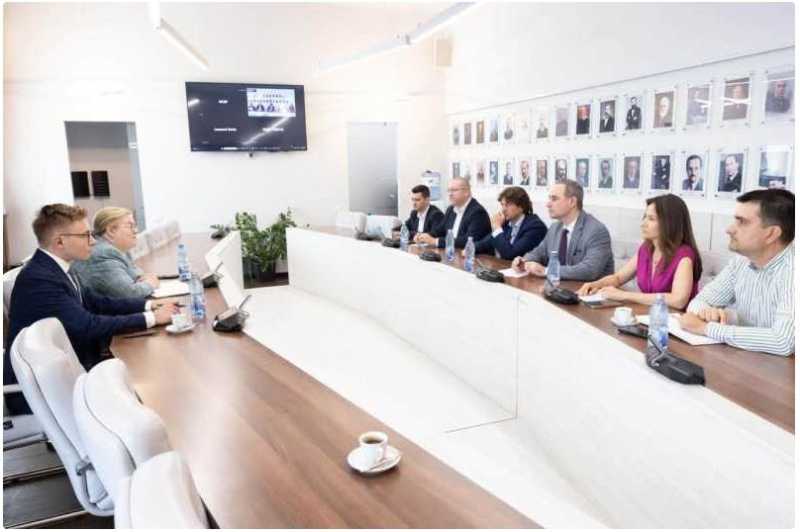
Romania has demonstrated that it can correct its imbalances even in a severe international context, but political instability directly affects confidence and risk perception in the country, warns interim Finance Minister Alexandru Nazare. He stated on Thursday, after a meeting with representatives of the financial rating agency Moody's, that the coming wee

Cristina Chiriac (CONAF): Romania grew driven by consumption and transfers; in 2026, both came to a halt
Romania's convergence has been built on consumption and transfers—wages rising faster than productivity, European funds supplementing domestic investment, and a fiscally fueled domestic market—yet what has not been built is the foundation: the employment base, industrial capacity, and an active demographic, according to CONAF President Cristina Chiriac.
NadiaYear/Nadia Comaneci, in Slatina: You don't have to be born in a specific place to be the best
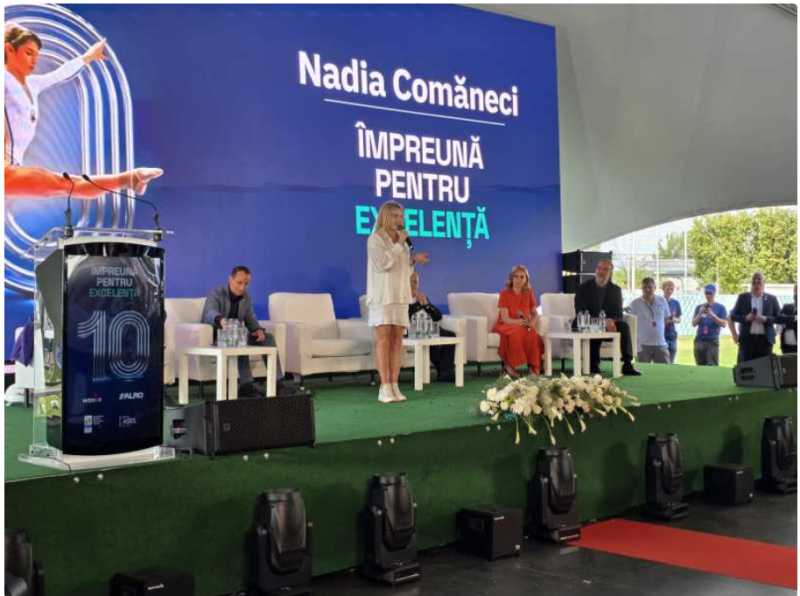
Former great gymnast Nadia Comaneci, the first sportswoman in history to score a perfect 10 at the Olympic Games, told children present at an event organized at the Alro Slatina stadium on Thursday that performance does not depend on where you are born, but on work, perseverance and courage, emphasizing that 'you don't have to be born in a specific place to be the be

AUR Senator Peiu: President Dan conceals public spending without having such constitutional authority
Alliance for the Unity of Romanians (AUR) Senate floor leader Petrisor Peiu criticised President Nicusor Dan for what he called the head of the state's 'refusal' to disclose the value of Romania's financial assistance to Ukraine. In a Facebook message, Peiu wrote that 'Nicusor Dan is arrogating to himself a right the Constitution doesn'
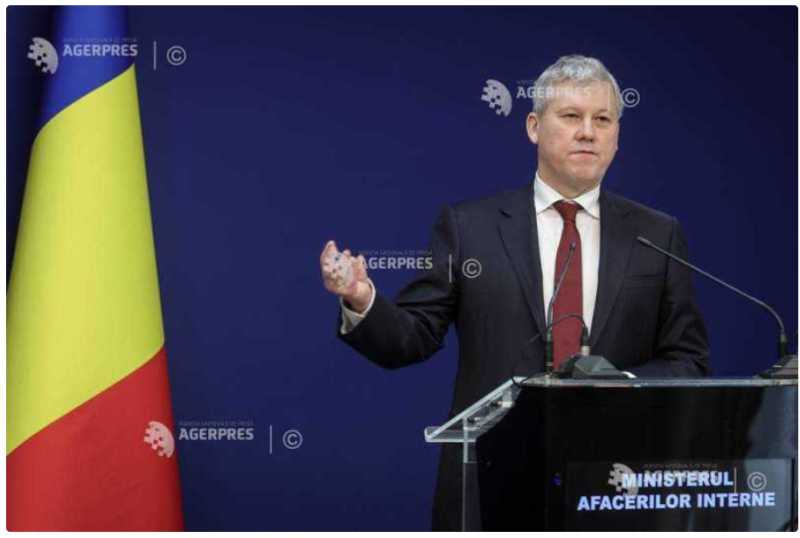
Predoiu on Ministry of the Interior Day: Romania is a country with zero migration
Acting Minister of the Interior Catalin Predoiu said on Thursday, on the occasion of the Ministry of the Interior Day, that illegal migration has been reduced 'to insignificant levels' and that Romania can be considered 'a country with zero migration'. 'The first Schengen evaluation by the European Commission, completed a few months ago, ha
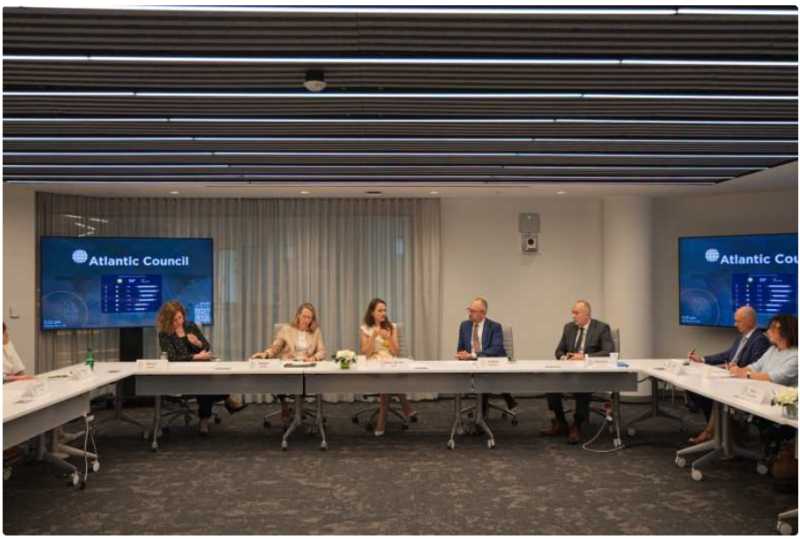
Acting ForMin Toiu on U.S. visit: Meetings in Congress, participation in Ministerial Conference on political terrorism
Acting Minister of Foreign Affairs Oana Toiu, who is on a visit to the United States of America, took part in the ceremonies marking the presence of the Mircea tall training ship in the U.S., as well as in the events marking 250 years since the adoption of the Declaration of Independence. Toiu also met with Romanian Harvard students. The visit a
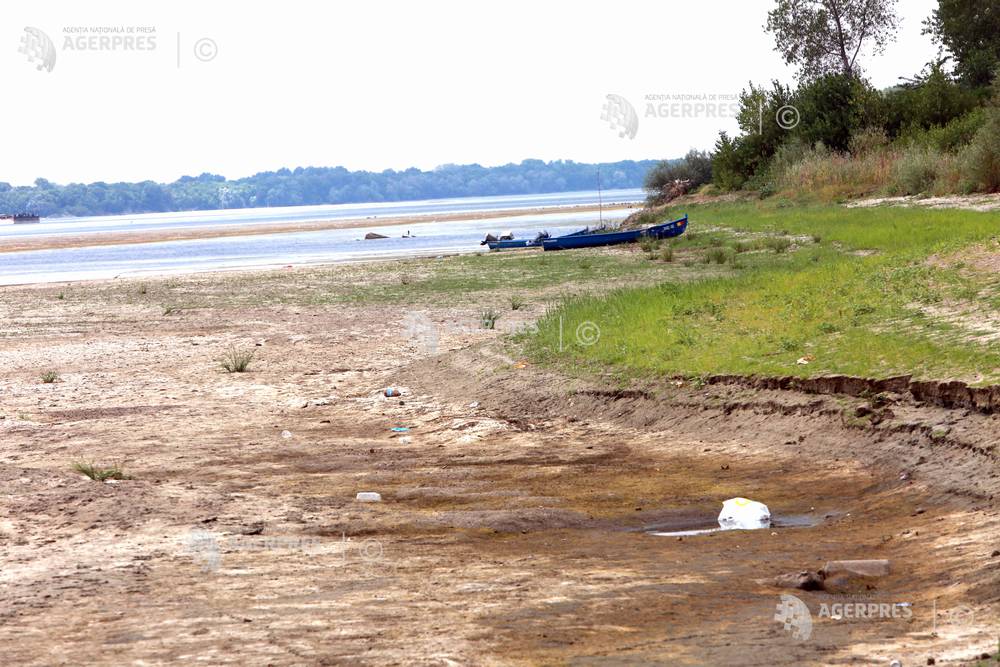
Danube at lowest level in last 30 years
The Danube reached, on Thursday, the lowest historical flow in the last 30 years, namely 1750 cubic meters/s, with a downward trend for the next 4-5 days, reaching the level of 1700 cubic meters/s, according to official forecast. According to the National Romanian Waters Administration, the current flow of the Danube at Bazias is comparable to the minimum valu
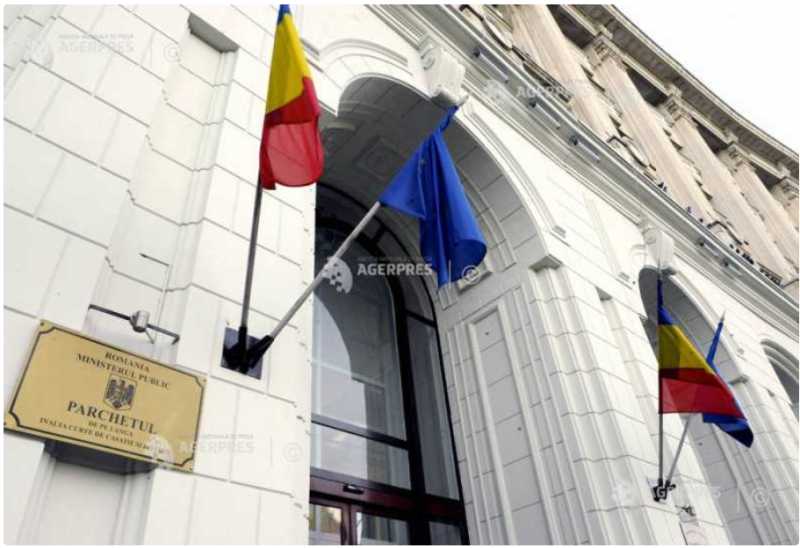
MEP Diana Sosoaca sent to trial for detaining Italian journalist in her office
MEP Diana Sosoaca has been sent to trial by the Prosecutor's Office attached to the High Court of Cassation and Justice on four counts of unlawful deprivation of liberty, after allegedly preventing an Italian journalist from leaving her office during an interview in December 2021. Her former husband, Silvestru Sosoaca, has also been sent to trial, charged

Nazare: Romania can become strategic supplier of agri-food products for region and for Europe
Romania can become a strategic supplier of agri-food products for the region and for Europe; however, realizing this potential requires more competitive farms, cooperation, investment, technology, and a much stronger processing industry, according to interim Finance Minister Alexandru Nazare. 'AgriConnect: A significant capital injection and access to tech