

CONTEMPORARY AUTHORS/ José Luis Peixoto: 'Today, there's a much broader understanding that emotion and intelligence are inseparable'

'Today, there's a much broader understanding that emotion and intelligence are inseparable', says José Luís Peixoto, one of the most appreciated contemporary Portuguese writers, in an interview with AGERPRES.
José Luís Peixoto recently visited Romania, where he participated in the 18th edition of the Bookfest Book Fair in Bucharest (May 28-June 1), on which occasion he launched his latest novel translated into Romanian, 'Câinii din Galveias' (translated by Simina Popa for the Trei Publishing House)/'Galveias' (English, Portuguese), for which he won the 2016 Oceanos Prize for the best novel published in Portuguese-speaking countries and many other prizes, as this is his most awarded work. Portugal was the guest of honour at this year's edition of the Bucharest-based book fair.
In his interview with AGERPRES, José Luís Peixoto reveals details related to the construction of his novels and the manner in which his writing changed in time, and also tells about the atmosphere at his most recent visit in our country.
The Portuguese author is also the recipient of the José Saramago Award, the most prestigious award given to Portuguese-language writers, for his debut novel, 'Blank Gaze'/'Nenhum Olhar'.
José Luís Peixoto, who is very much loved by his Romanian readers, has six more books translated into Romanian: 'Nicio privire' (Polirom, 2009, translated by Clarisa Lima)/'Blank Gaze'/'Nenhum Olhar', 'Cimitirul de piane' (Polirom, 2010, translated by Clarisa Lima)/'The Piano Cemetery'/'Cemitério de Pianos', 'Mi-ai murit'(Charmides, 2022, translated by Dinu Flamand, Cristina Dascalescu Dordea)/'You Died on Me'/'Morreste-me', 'Autobiografie'(Trei, 2020, translated by Simina Popa)/'Autobiography'/'Autobiografia' (Trei Publishing House, translated by Simina Popa), 'Cronici' (Electra, 2020, translated by Georgiana Barbulescu and Angela Radu)/'Cronicas'/'Reviews', 'Poeme reunite' (Electra, 2021, translated by Georgiana Barbulescu)/'Poems'.
AGERPRES: In 'Galveias', you wrote about the village in Southwestern Portugal you grew up in - by mixing reality with fiction, of course -, and since you also named Faulkner among your favourite authors, I want to ask you, would you say that the south is the same everywhere?
The South is always relative. What we call 'The South' depends on where we are, and those differences can be radical, especially when we consider different hemispheres. Still, there are certain similarities. There's often a strong connection to the land, a slower pace, a deep sense of tradition, and sometimes a feeling of being outside the main centres of power. These elements can create a kind of shared atmosphere, even across very different geographies.
AGERPRES: Forgetting about the south, would you say that a village has the power still to reflect the global society today?
Yes, I believe a village can still reflect global society today, precisely because a village is an archetype. It contains a set of essential characteristics that are universal, even if they appear in different forms. A village represents community, with its complex human relationships: cooperation, conflict, intimacy, and tradition. It reflects the transmission of memory across generations. It shows how individuals are shaped by place, by landscape. It often embodies the tension between change and permanence, between isolation and connection.
AGERPRES: Was there any story in the real Galveias that you couldn't tell for some reason?
Yes, definitely. Writing is always a matter of choosing, shaping through what is said and, just as importantly, through what is left unsaid. There were stories in the real Galveias that I didn't tell, sometimes out of respect, sometimes because they didn't belong to me, and sometimes because literature also needs silence, mystery, and suggestion. What's not written can be as powerful as what is.
AGERPRES: As I was reading 'Galveias', I was thinking about the unnamed village in 'Blank Gaze', with all its inhabitants wearing biblical names, and I thought that it was like the original village, the same as the Bible is like the original book, so I was wondering was it easier for you to write about the more abstract village, which is, in a way, the village in our collective memory, or about the concrete one?
That's a very insightful observation. In fact, that shift between 'Blank Gaze' and 'Galveias', almost 15 years apart, marks an important transformation in my writing. In 'Blank Gaze', the village is abstract, symbolic, more like a myth or a dream. It belongs to our collective memory, as you said, and its timelessness allowed for a different kind of language and atmosphere. By the time I wrote Galveias, my writing had evolved toward prose, toward narrative, toward story. I wanted to ground the novel in a specific place, with real names, real textures, and a sense of geography and history. That concreteness brought its own challenges, but it was also deeply rewarding. It allowed me to explore the richness of detail, to be closer to the people and the land. So yes, I would say that shift reflects not just two different villages, but two different moments in my journey as a writer.
AGERPRES: In Romanian literature there was like this bias, until not long ago, when it came to writing literature about mourning, like it was OK to write about death, which is, of course, one of the greatest themes of literature since forever, but not about the death of someone very close to you, was there such a bias in Portugal back when you were writing 'You Died on Me'?
I never felt that kind of bias specifically around mourning. What I do think existed in Portugal, especially back then, was a certain prejudice against writing about feelings in general. It came from a very simplistic view that placed reason in opposition to emotion, as if one could exist without the other. But I believe that's changed. Today, there's a much broader understanding that emotion and intelligence are inseparable. Writing about grief, or about love, fear, joy, these are not signs of weakness or sentimentality. They're essential ways of understanding what it means to be human.
AGERPRES: In 'The Piano Cemetery' you were loosely building around the biography of Francisco Lázaro, a Portuguese Olympic marathon runner, and in 'Autobiography' you write about the great Portuguese writer and Nobel-prize winner José Saramago, I can only imagine that the process was very different, could you tell us in what way?
Lázaro was the first character I created who had direct historical connections. At the time, I was still exploring how to approach real figures in fiction, trying to find the balance between fact and imagination. With Saramago, the process came later, at a moment when I had a much clearer sense of how I wanted to work with that kind of material. Writing 'Autobiography' required a different level of responsibility, not only because Saramago was a Nobel laureate and such a towering figure in Portuguese literature, but also because he was closer to us in time, and very present in our cultural consciousness. It involved deep research, of course, but also a careful reflection on how fiction can interact with reality, and how literature can pay tribute without becoming hagiography. That dimension, working with real lives, real names, has become one of the main focuses of my most recent novels. It continues to challenge and inspire me.
AGERPRES: Would you say that there is more fiction in 'Autobiography' when it comes to the biography of Saramago or the (auto)biography of José?
Definitely with José. While Autobiography includes elements from the life of Saramago, they are mostly drawn from public knowledge and treated with a certain distance and respect. The real fiction, the more intimate, imaginative construction, happens around the character of José. Even though he shares my name and profession, he's not me. He's a fictional version shaped to serve the novel's structure, themes, and emotional depth. In that sense, the boundaries between truth and invention are much more fluid when it comes to José.
AGERPRES: You said at some point that any text has a political charge to it, although the author might not be aware of his/her own positioning, would you say that the text suffers because of such lack of self-awareness when it comes to one's own political stand, even to a small extent?
Yes, I do think a lack of self-awareness can affect a text, even if only subtly. When a writer isn't conscious of their own political positioning, they might unintentionally reinforce certain dominant narratives or overlook the implications of what they're expressing. Every text carries a political charge, through the voices it amplifies, the realities it chooses to represent or ignore, the values it implies. Being aware of that doesn't mean turning literature into propaganda. It simply means writing with responsibility, with openness to complexity, and with an understanding that stories exist in a world where power, inequality, and history matter. That awareness can only deepen the text, it gives it layers, tension, and relevance.
AGERPRES: You are quite active on social media, would you say that the social networks function, at least to a certain extent, like some kind of windows for 'the man who [otherwise] sits in a room without windows and writes'?
Yes, I would say that social networks can function, to some extent, like windows for 'the man who sits in a room without windows and writes.' Writing is often a solitary act, and social media offers a way to stay connected, to readers, to the world, to what's happening beyond the silence of the page. Of course, it's a different kind of connection: faster, more fragmented, sometimes superficial. But it reminds us that literature doesn't exist in isolation, it's part of a larger conversation. Those 'windows' can be valuable, as long as we don't forget to close them from time to time and return to the deeper focus that writing requires.
AGERPRES: After reading your novel 'Autobiography', which features the great Nobel-prize winner Saramago, and the young writer José, I imagined that the 'room without windows' can also be read as a metaphor for literature, in the sense of the 'the anxiety of influence' concept proposed by Harold Bloom, did I read too much into it?
I think that's a very insightful interpretation. The 'room without windows' can definitely be seen as a metaphor for literature itself, especially in the context of 'Autobiography'. In that novel, the presence of Saramago creates a kind of enclosed space, a room filled with legacy, weight, and expectation. Harold Bloom's concept of 'the anxiety of influence' fits well here. The young writer José is navigating that space, trying to define his own voice while being inevitably shaped by the voice of a literary giant. That tension, the admiration, the pressure, the fear of inadequacy, is a real part of the creative process, especially when working so close to a monumental figure. Literature is often about those invisible dialogues, with the past, with other authors, and with the self.
AGERPRES: You first visited Romania in 2009, the year when your first novel also became your first novel translated into Romanian language, and you've returned a few times, since then, most recently two months ago, when you participated in the Bookfest book fair in Bucharest, on the occasion of the translation into Romanian of your novel 'Galveias' this time, did you feel like things were much different this last time compared to your first time here?
Back then, arriving as a debut author in a country where my own first novel was just being introduced, everything had the freshness and novelty of a first encounter, both for me and for new Romanian readers. This time, nearly sixteen years later, the visit felt more like a reunion. There were also new readers, of course, but the atmosphere was warm and celebratory; there was already a familiarity between some readers and my work, and I felt deeply the presence of an ongoing literary dialogue.
AGEPRES: What is it that thing that attracts you the most when you're visiting a new place?
What attracts me the most when I visit a new place is the chance to feel disoriented, just enough to see things differently. I'm drawn to what's unfamiliar: the details that don't quite make sense at first, the sounds of a language I don't understand, the rhythm of daily life that isn't mine. Those moments sharpen my senses. But I'm also very interested in people - their gestures, their expressions, how they move through space. I often find that in the smallest things, a café, a street corner, a conversation, I can feel something that connects to larger stories, sometimes even to my own. That mix of strangeness and recognition is what fascinates me most.
AGERPRES: By reading your books, we could see that you are pretty much into the Bible, sports and heavy metal, what's next, if it isn't a secret?
That's quite an extravagant summary, I had never seen it put that way before! But I like it. At the moment, I'm in a space of openness. What I can say is that I'm always curious, always looking for what challenges me or surprises me. So whatever comes next, I hope it will push me into new territory, even if, in some way, it still echoes the things that have always moved me.
JOSÉ LUIS PEIXOTO was born in a small village in the Portuguese region of Alentejo. He finished a degree on Modern Languages and Literature in the Universidade Nova de Lisboa. He worked as a teacher for some years in Portugal and in Cabo Verde before becoming a professional writer in 2001. He received several very prestigious awards, the most prestigious of which is Prémio Literário José Saramago 2001 for Best novel published in all Portuguese speaking countries on the two previous years, for 'Blank Gaze'. His books have been translated into 30 languages, at the most prestigious publishing house around the globe. AGERPRES (EN - writing by: Cristina Zaharia)
The content of the www.agerpres.ro website has the exclusive purpose of public informing.
All the information published on this website by AGERPRES is protected by relevant legal dispositions.
It is forbidden to copy, reproduce, recompile, decompile, distribute, publish, display, modify, create derived components or products or full services, as well as any exploitation of the site's content.
Details in the section Terms of Use. If you are interested in picking up AGERPRES news items, please contact the Marketing Department – marketing@agerpres.ro.
The use of the Comments section entails your obligation to respect the AGERPRES terms and conditions in regards to the publishing of comments on the www.agerpres.ro.
Other news in category
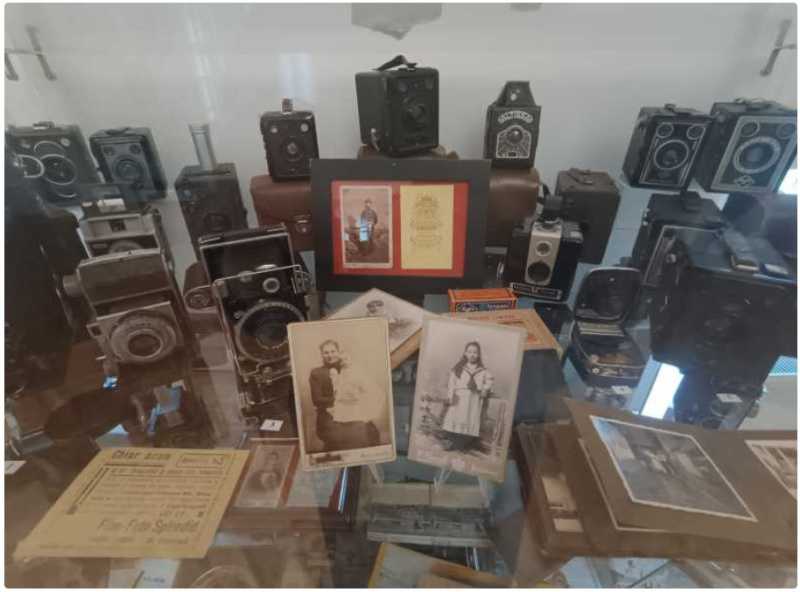
'1001 Cameras and Photo Accessories' exhibition opens in Miercurea-Ciuc, tracing a brief history of Romanian photography
An impressive exhibition dedicated to the history and evolution of photography opened on Wednesday at the Upper Olt and Mures Rivers Museum in Miercurea-Ciuc, offering visitors a chance to explore fascinating stories from the world of photographic art. Titled '1001 Cameras and Photo Accessories. A Brief History of Romanian Photography', the exhibition
Defence Minister Miruta highlights allied solidarity with Romania at NATO's top decision-making level
Defence Minister Radu Miruta said on Wednesday that, during the Alliance's ministerial meeting, NATO allies sent 'a clear message' of solidarity with Romania and with the security of the Black Sea region. 'During today's NATO ministerial, Romania brought for the first time onto the Alliance's agenda the risks posed by the use of naval d
President Dan: Politicians focused on future elections, Romanians want governing formula
Romanians want a governing formula, President Nicusor Dan said on Wednesday. 'Ever since entering politics, I have seen politicians focused solely on calculating future elections - in this case, the 2028 parliamentary elections. I want to stress that Romanians care very little about our electoral debates and political posturing. What Romanians want is a go
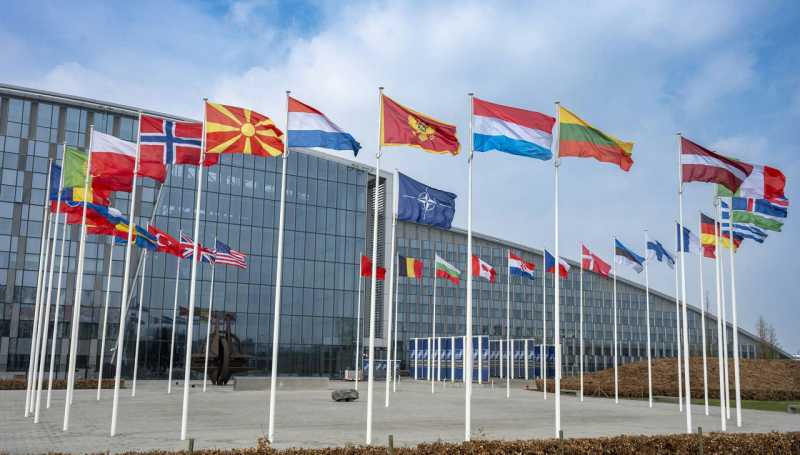
Romania highlights need to urgently strengthen NATO's air defence, drone combat capabilities
At a recent meeting of the North Atlantic Council, Romania highlighted the need to urgently strengthen the NATO capabilities deployed on the national soil, especially in the areas of air defence and drone combat, according to the Ministry of Foreign Affairs (MAE). The North Atlantic Council held a meeting on Wednesday at NATO headquarters in Brussels on Black
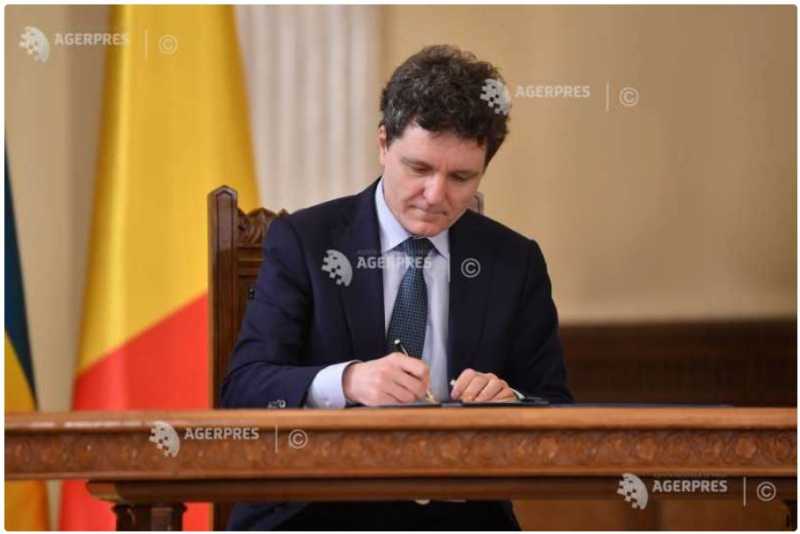
Promulgated law designates June 15 National Day for Victims of June 1990 Mineriad
President Nicusor Dan signed a decree on Wednesday establishing June 15 as the National Day of Remembrance for the Victims of the Mineriad of June 13-15, 1990 and Anti-Democratic Repression, with the aim of honouring the memory of those killed and injured during the violent crackdown, promoting civic education and preventing the recurrence of such atrocities.

Ministry of Foreign Affairs: Homes of three Romanian families vandalised during Belfast overnight unrest
The homes of three Romanian families were vandalised amid Tuesday night's unrest in Belfast, the Foreign Affairs Ministry said. According to the institution, representatives of the Romanian consular office in Edinburgh are in contact with three Romanian families whose homes were vandalised during the events of the night of 9 June. The Romanian nationals ar

La Francophonie is also a place for business promotion (expert)
La Francophonie is not only a common space of culture and civilisation, but also a space for the promotion of business, because a common language and its elements create the first step in terms of cooperation, Adrian-Victor Vevera, general director of the National Institute for Research and Development in Informatics - ICI Bucharest, said on Wednesday, at a specialist event.

ForMin Toiu: Europe's peace must be renewed daily; Romania, France uphold it together
Peace in Europe is not a given but a commitment that must be renewed every day, and Romania and France are upholding that commitment together, interim Foreign Affairs Minister Oana Toiu said on Wednesday at an event marking the centenary of the Treaty of Friendship between the two countries, the Ministry of Foreign Affairs (MAE) said. The MAE is marking the 10
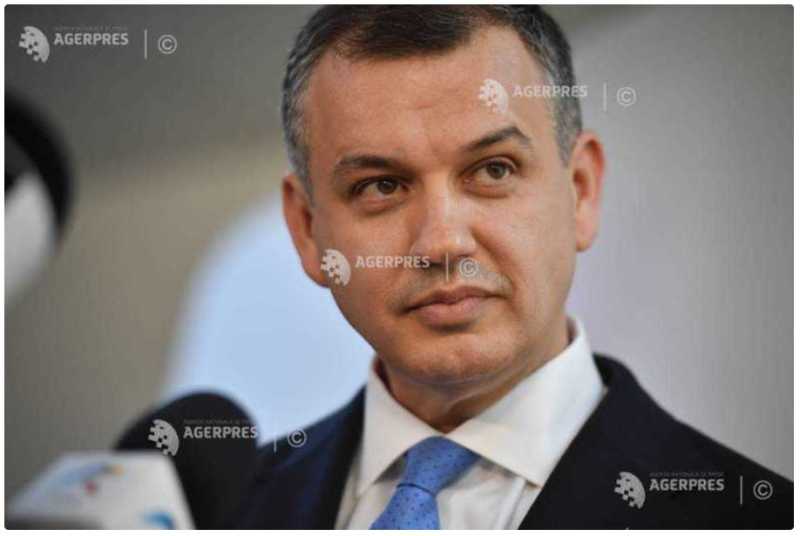
Prime minister-designate Tomac: Ready for compromise, open to alternative Cabinet nominees
Prime minister-designate Eugen Tomac said on Wednesday that he was ready to make the compromises needed to ensure stability and predictability for Romania, adding that he was willing to discuss alternative ministerial nominees with political parties if concerns were raised over the current proposals. 'I returned today for another very constructive discussi
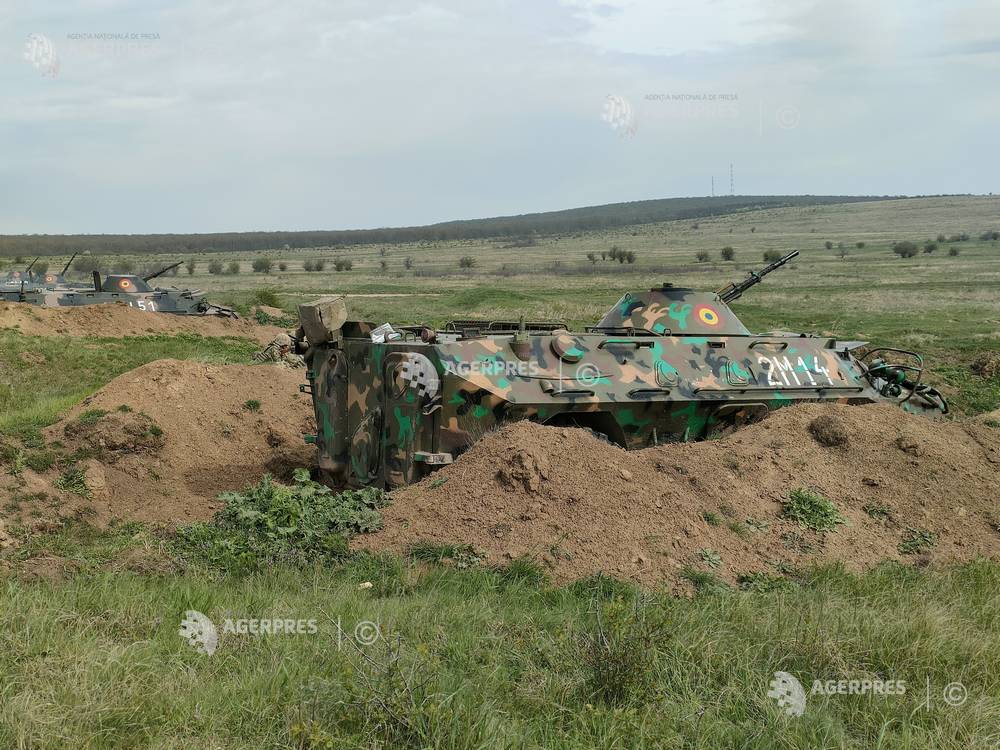
Romanian Naval Forces participating in SEA BREEZE 26.1 multinational exercise
The Romanian Naval Forces are participating in the multinational exercise SEA BREEZE 26.1, a training activity conducted alongside allied and partner nations with the aim of enhancing preparedness for joint operations and strengthening response capabilities in crisis and conflict situations. According to a Ministry of National Defence (MApN) release sent to AG

Bucharest General Mayor Ciucu to participate in the World Cities Summit in Singapore
The General Mayor of the Capital City, Ciprian Ciucu, announced on Wednesday that he will attend the 10th edition of the World Cities Summit, held in Singapore from June 14 to 16. According to the mayor, the forum is one of the most important events dedicated to mayors worldwide, and the invitation was extended by the Government of Singapore, representing '

DEER implements international anti-bribery standard
The Electricity Distribution Romania (DEER) will implement an international standard for anti-bribery management systems, as part of an effort aimed at strengthening mechanisms for preventing and managing corruption offences, the company announced on Wednesday. 'Implementing the anti-bribery standard goes beyond compliance with requirements and regulations
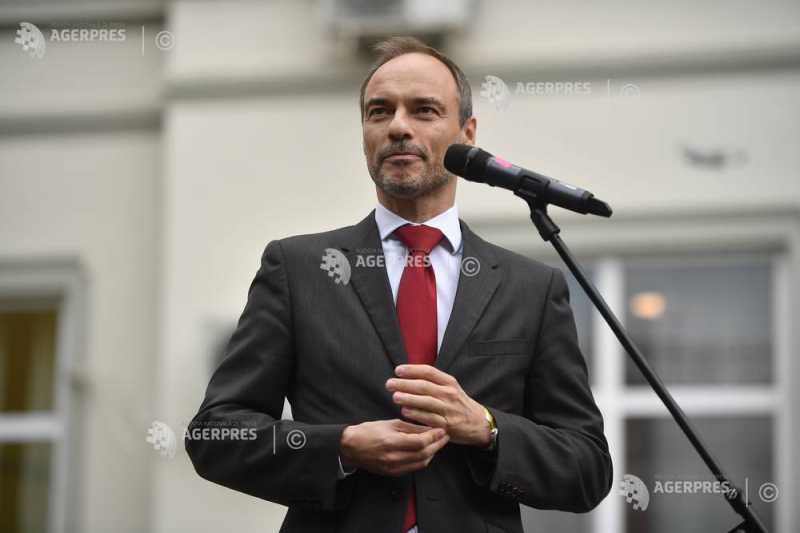
OIF's Poppe: Francophone community encompasses 90 countries and 20% of global trade
The Francophone community encompasses 90 countries across five continents, representing 17.5% of the world's population, 16.5% of global GDP, 20% of global merchandise trade and 14% of global mineral and energy resource reserves, Eric Poppe, representative of the International Organisation of La Francophonie (OIF) for Central and Eastern Europe, said on Wednesday at a sp
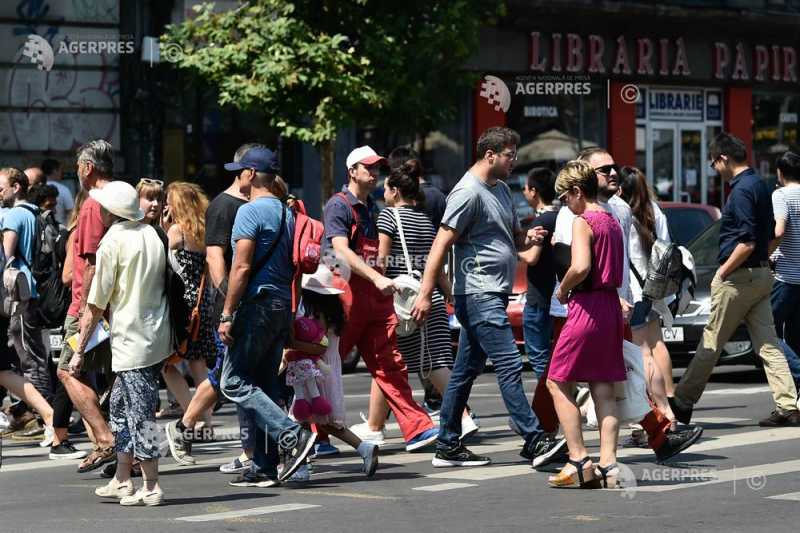
INS: Natural increase of Romania's population remains negative in April
Romania's population recorded a negative natural increase in April 2026 (-8,758), with the number of registered deaths being 1.8 times higher than that of live births, according to the National Institute of Statistics (INS) data published on Wednesday. According to official statistics, birth certificates were issued for 10,655 children in April 2026, down
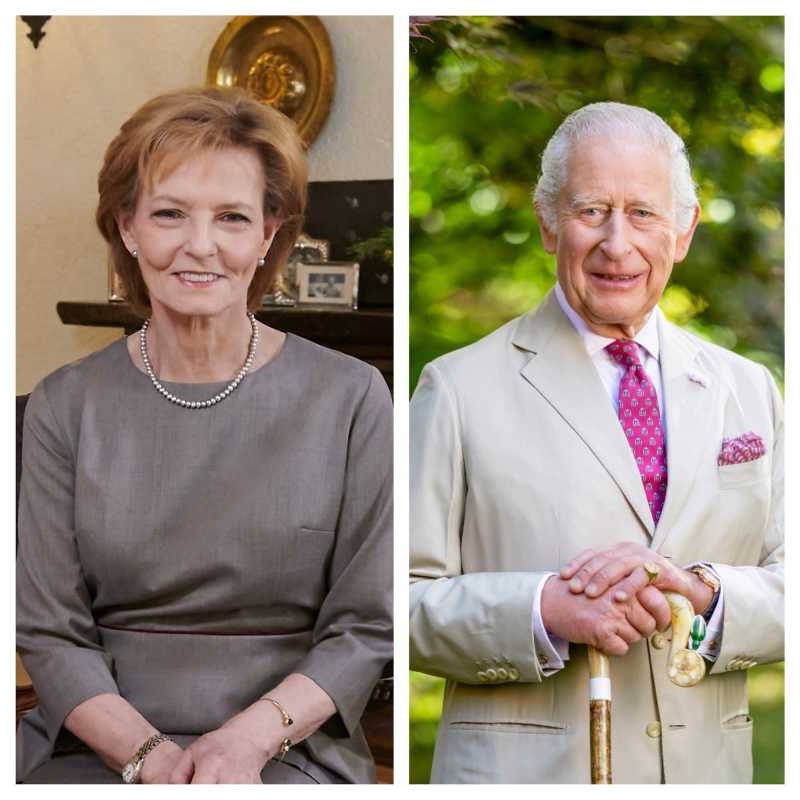
Crown Custodian Margareta meets King Charles III while on visit to London
Custodian of the Romanian Crown Margareta and Prince Radu met with King Charles III at Buckingham Palace on Tuesday. 'On Tuesday afternoon, at Buckingham Palace, Her Majesty Margareta, Custodian of the Crown, and His Royal Highness the Prince Consort responded to the invitation of His Majesty King Charles III. The meeting was private in nature,' the Ro