

CONTEMPORARY AUTHORS/Elena Vladareanu: We all dream of the professionalization of writing in Romania

We all dream of the professionalization of writing in Romania, says poet Elena Vladareanu, in an interview with AGERPRES.
Elena Vladareanu is one of the most important members of the so-called Generation 2000 in Romanian literature. In this interview, she describes the context in which she was discovering herself as a young poet, she talks about the importance of translations for any author and also about how difficult it is for Romanian writers in the current cultural context to cope, especially from a financial point of view.
She also published a short story collection 'August', back in 2021, which is about to be translated into Bulgarian. She also wrote performative texts, which later turned into theatre shows.
For five years, she and her team organized The 'Sofia Nadejde' Days for Literature Written by Women, the first gala and the first festival in Romania dedicated exclusively to women authors.
AGERPRES: You published your most recent book several years ago, the short story collection 'August' - which is about to be translated into Bulgarian - what did you do in the meantime, what gems do you have hidden in your 'drawers'?
Elena Vladareanu: I dedicated the last six years almost entirely to my PhD thesis. They were six very difficult years, during which I read a lot of books, I went to the theatre, sometimes to see the same show twice. Little time was left for fiction and for books that didn't have anything to do with my doctoral research. But I do have some projects going on. I would be very happy if I could succeed in finishing them this year, although I'm not sure if I can, so I am just waiting for the presentation [of her PhD thesis - editor's note], in order to wind down.
But maybe I should seize this opportunity and open a discussion about doctoral studies and how difficult it is for a woman to do this, especially when she is also a single mother and the only one who brings money into the family. Tightening the conditions for awarding that incentive for having a PhD diploma or removing the incentive completely does nothing else but hurts these women first, who sacrificed their time, very long hours, weeks, months, years to carry out the respective research, for the joy in it, but also while thinking of a small amount of extra money that would have made her life a little easier every month.
And everybody can rest assured, there will be no plagiarist, from among those who paid money to someone else to write their PhD thesis or copied without looking back whole paragraphs or even whole pages, who will suffer from this, since they do not care so much about the petty amount of 1000 lei.
AGERPRES: You are a poet, first of all, with 'August' being your first fiction book after six poetry collections and several plays. How was it, how comfortable is Elena Vladareanu with writing fiction?
Elena Vladareanu: I did enjoy it. However, a couple of years have passed since I published 'August' and since I wrote fiction, in general, and I must say that I miss it. I did enjoy it, yes, but it was not like a sudden change for me, it was not something like: 'now I forget about poetry for a while and I start writing fiction'. Actually, those texts in 'August' were written in time, I just had pieces that I started to put together, with notes growing on the side, and then I returned to them and so on until the book was finished.
In fact, I don't think that I ever wrote just one text at a time. I have always written several texts in parallel, leaving aside the fact that in my poetry I also use elements of prose, reportage or even dramaturgy. But I guess that I did fear more that a certain 'contamination' with poetry could take place when I write fiction, than I fear that such 'contamination' could happen when I write poetry or a performative text. I have always felt more free when writing poetry, and even with drama - I wrote several texts that were made into theatre shows, but I will never call myself a playwright. Maybe I felt that there is less room for experiment in fiction, I don't know.
Now, for instance, while searching for the same freedom in writing, I am working on an essay, a form of text that I expect will absorb more than the poetry or fiction texts do. But I guess I'll just see what happens, I still hesitate, which is a state of mind that I actually love and hate at the same time, when it comes to writing. By being insecure one can bring more emotion into a text, but at the same time I fell like this insecurity also sabotages me, for instance when I need to know how to sell my product, like when I am supposed to write an application for a residence/fellowship.
AGERPRES: Short story, as a genre, has flourished in Romania in recent years, after a long time of not being fancied at all, why do you think that happened?
Elena Vladareanu: It's hard to say, but I can always guess. I believe that an important part in that revival played the literary workshop coordinated by writers - the one organized by Revista de povestiri, and also the one organized by Marius Chivu, Florin Iaru - and also the short story collections, such as 'Kiwi' (with a new edition being published every year, coordinated by Marius Chivu) and 'Retroversiuni' (a short story collection dedicated exclusively to women authors, which also has a new edition every year, coordinated by Cristina Ispas and Victor Cobuz).
Translations are also important, in that regard, as books by Lucia Berlin, Lydia Davis, Richard Ford, to name just three authors, were translated into Romanian in the past maybe ten years. What is certain is that authors are interested in writing short stories, and I would also be interested to see how readers react to this genre as opposed to novels, for instance, but only a market research by publishing house could help us with that perspective.
AGERPRES: Would you say that the generation of writers that followed your own, generation 2000, inclined more to prose than poetry, looking back?
Elena Vladareanu: The initial bet was on poetry, yes, and generation 2000 was one of poets, first of all. But later, yes, many of these poets turned to fiction, in part due to the new conditions that were created, such as the existence of a collection especially designed for the autofiction novels of the generation 2000 - and I mean now EgoProza, the collection that was launched by the Polirom publishing house in 2005. It was there where the first fiction books by the most important authors of the generation were published - Ionut Chiva, Adrian Schiop, Ioana Baetica, Dan Sociu.
It may also be due to a certain prestige that fiction enjoys. However, I am well aware of the fact that these are only collateral elements, because otherwise I can't imagine that anyone would start writing fiction after doing some math like: 'Oh, I will now switch to fiction, for look how beautiful this new collection is, and maybe I will even get some advance money, because otherwise I will get nothing for my poetry'. It actually wouldn't hurt if we would have a more realistic approach, even a materialistic one - 'I write a novel because I need the money' - although, let's face it, it would still be rather unrealistic, considering how our market looks.
AGERPRES: I was mentioning in the beginning of this interview that your book 'August' is about to be translated into Bulgarian, how difficult it is for a Romanian writer to get to be translated? And is it that important to be translated?
Elena Vladareanu: I don't think that we can generalize here. If you are Mircea Cartarescu, well, it is not that hard to be translated - although, considering that his books are being translated with funds from the National Book Centre, maybe it's not that easy to be Mircea Cartarescu as well. And, of course, it is more difficult when it comes to little known authors, like we almost all are, for the readers outside Romania I mean. Some of us can be lucky enough and get a Traduki grant or similar ones, which encourages the translation of books from countries in our part of the world, or maybe we meet a translator who likes our writing and than he/she just gets to work. The way I see things, translators are carrying all the burden when they bet on an author who is less famous.
This is not just hard work, but they often do two jobs in one, as they also act like our literary agents in the respective country. In my case, it was Lora Nenkovska who not just translated my poetry and my short story collection into Bulgarian, but she also identified the publishing house and the respective grant to be able to translate and publish my books. I believe that we, the Romanian authors, should dedicate all of our prayers to the translators. And of course that it's important to be translated.
We all dream of the professionalization of writing in Romania, instead of just writing 'when I find a spare time' or 'when I get a vacation', or 'when I have some more time'. The problem is that, when nobody reads you and your books are not being translated you sometimes feel like giving up. And never looking back. Because you also get validated when your books are being translated. Participating in festivals abroad (where you need your writing in translation) also gives you validation, while for the poets is maybe the only way they can present their work in a larger framework.
At the same time, all these events that involve translation also mean an additional source of income, a small one, but important. Writers do need these things, because, if not, we would have kept our texts locked inside our computers and just read them ourselves, once and again. I won't go that far right now, however, to discuss the importance of translations for Romania's image in the world and stuff like that, when, honestly, Romania cares for us so little - although this is not Romania, but the people who run the country and who couldn't care less about the contemporary writers. They are more like 'let's exploit the writers some more, since the books are also cheap, let's squeeze something out of them'.
AGERPRES: Besides poetry and fiction, you also write plays, as I already mentioned, which of these genres would you say that you are most comfortable with writing right now?
Elena Vladareanu: I wouldn't say that I write plays, I would rather say that I write performative texts, meant to be staged. But I admit that right now no type of text makes me feel comfortable, after I spent the last six years writing academic text, almost exclusively. But I hope that I will befriend fiction again, although it is more difficult than I expected.
AGERPRES: For a couple of years, you and your team organized The 'Sofia Nadejde' Days for Literature Written by Women, how did you come up with this idea and how difficult it was for you to make it turn into reality? Do you intend to resume the project at some point?
Elena Vladareanu: It happened in 2018 and it was probably the first public event of this scale that was explicitly gender oriented. For me it was more a reaction to a fury I felt, to a frustration coming from the way in which literature written by women was left aside from debates, textbooks, curricula, nominations to literary awards. We had good books written by women, but they were not visible to the members of the juries (most of them men, many times). It wasn't easy, although there were people - like those from Scena9 Foundation, tranzit.ro, Goether Institute, Scena.ro, the 'Lucian Blaga' University of Sibiu, who did trust us from the very first moment.
I guess we needed this type of project in Romania, at that point, and by this I mean an independent, serious project, which had a vibe to it like it didn't necessarily want to be mainsteam. Indeed, the project remained somehow marginal during the five years we organized it. Otherwise, the project definitely had potential to be much more than it was, but even so, it was more than we could dream of, given our possibilities, as a team. Because the hardest part, of course, it was to get the funds. We were forced, for instance, to enter the repetitive category when we applied to the AFCN [the National Cultural Fund Administration] for money, and I dont't know exactly why it should be like this, but the fact is that we had to overload the project, because we were afraid that, otherwise, we wouldn't have gotten the money, and all this led to an excellent 5th edition, one that turned into a real festival, with readings, screenings, workshops, conferences in three cities and also online. The problem was that we realized it was already too much for us, too hard, and for more than six months this became like a full time job, when we actually couldn't afford a part time job. So the best solution for us was to put the whole thing on hold.
I'm not sure if we are ever going to do it again, but if we do, then we need to do it differently. However, in the meantime, I would very much like to identify a solution for the 'Sofia Nadejde' library that we started in the workshop of visual artist Liliana Basarab. I would be able to fill a couple of good shelves only with the books that I have now at home! I would get busy for that, yes, for a library with books for all ages written only by women.
AGERPRES: You were named the only poet from generation 2000 who had an explicit feminist stake in your poetry from the very beginning. How did that happen, was it rather an intuitive choice, considering also the context back then, or was it programmatic, at least to some extent?
Elena Vladareanu: Definitely and completely intuitive. Not only that I was very young and haven't read the right books for that, or even had the right discussions or the right definitions, the right concepts. I remember how we were in the early 00s and I look now at the young women around 19-20 who gear up for their debut in literature or dramaturgy and I feel grateful to the Internet, first of all, for that, because it made access to information possible, to books, to new publications that we wouldn't have reached otherwise. So yes, I was a feminist in a rather intuitive kind of way.
I remember something that happened during high school, when I spent a lot of time in libraries, writing about books, reading theory. I was terrorizing my Romanian literature teacher because I couldn't stop writing what I imagined to be literary criticism. And after I had already written about all the authors - and the women authors, just to laugh a little bit, because there was only one woman author in those textbooks, Horstensia Papadat-Bengescu, who in the meantime was eliminated, so there is no woman author left in the high school curricula - and then I wanted to write about contemporary literature. And my first instinct was to look for contemporary women poets, although, at that time, in the '98-'99, you can imagine that I couldn't find much of those in our town's library.
Anyhow, it was then when I first felt this desire to read literature written by women and tried to understand it by using all the instruments at hand. And they were quite primitive, those instruments, as you can imagine. Even when I was reading book reviews, I first read the texts written by women authors. I had a subscription to the Tomis magazine back then and I used to read two women authors whose writing I liked very much, Lacramioara Berechet and Ileana Marin. I was very happy when, twenty years later, I met Ileana Marin again, this time as a professor with the CESI doctoral school. Returning to my debut, though, at that time, in the early 00s, I see myself just arriving in Bucharest, in an environment that was rather toxic than healthy for me, with one single thought in mind: that my writing was my weapon. And I know that this doesn't sound feminist at all, and that it's problematic to use this word here. But, I do believe that women need weapons to be able to defend themselves and writing in particular could be one of the most efficient such weapons. After the #metoo moment, I knew, I felt it, I had this intuition that we can write, even if they call it 'just literature'. Because for us it was never just literature.
AGERPRES: You wrote this in your very first poetry book, 'Pages': 'all that is written influences me/ and nothing that is lived'. Is this still true?
Elena Vladareanu: I don't think so and, actually, I don't even remember writing that, honestly. But this is also something that changes with age. Let's, for instance, think of us, the children born during the 80s. We were all formed in a written culture, and I didn't even have a TV as a child. In fact, I don't have one right now, 25 years after I left my town for Bucharest. Television and everything related - music, films, shows - I discovered all that very late in my life, when I was already obsessed with literature. So, yes, I would say that a twenty-year old who is obsessed with literature thinks that she is only interested in the written word. But, in fact, she was afraid to live.
AGERPRES: You published your most recent poetry book, 'the brave disney world' in 2019, after which you also published a collection of poems from all your previous poetry books. How did you do the selection, based on what criteria?
Elena Vladareanu: If I were to make the selection for the poetry collection that it's called 'Ce poti distinge in intunericul salii'/'What you see in the dark room', published by Cartier, chances were high that the book remained unpublished to this day. So I am very grateful to Paula Erizanu, who came with the proposal to make the collection, and than she did the selection. I would have found it very hard to do it myself, because I have this problem when I read my old texts where I find them all regrettable accidents.
AGERPRES: What does it mean for a poet to publish a collection from his/her entire work, does it mean anything? Besides the simple recovery of some poems or even entire collections that are nowhere to be found on the market anymore.
Elena Vladareanu: As I was suggesting earlier, with me it was more like a humility test. I wanted to understand more about myself at a different age, and when I mean age I refer to both my actual age and the level of culture that I had back then. Otherwise, by refusing or denying my text written while I was very young I would refuse myself at that age: full of uncertainties as I was, difficult, but still me. It would be like forgetting about a piece of my journey. And I must say that it wasn't easy at all to become this wise, it took me a lot of trouble actually, and I even got scared initially when thinking about the recovery of some of my texts that I thought were long buried.
AGERPRES: 'Beauty is, of course, just a myth.' What would you say about this quote by American author Susan Sontag, considering that beauty is one of the recurring themes in your poetry?
Elena Vladareanu: I won't say anything. It's just that the essay I was mentioning before is about this topic in particular, and I am afraid that I will loose tension if I write about beauty right now.
AGERPRES: Let me challenge you to comment on some other quote, this time from the British poet David Constantine: 'Poetry is always written for somebody else,' regardless of how personal the experiences are or how particular the situations described. Forgetting about the idea of publishing, would you say that's true?
Elena Vladareanu: Maybe it is so. I have always liked poetry that comes from a kind of emergency and this is where its political nature also lies, in this urgent feeling to express what cannot be expressed. And in order for it to make sense, then, yes, we do write for somebody else, not for ourselves.
AGERPRES: Returning to 'August', your short story collection we talked about in the beginning of this interview, everything there happens in the summer, in all your stories, during a seaside or a mountain vacation, but also in a small suffocating flat in Bucharest City, in an agitated, stressing environment. Did summer become the season for exorcisation now?
Elena Vladareanu: Surprisingly, I like summer. I like heat, I like the peaceful torrid afternoons, the sweat, the overripe fruits, the ones that everybody avoids. Almost naturally, summer attracts me the most as a scenery for anything at all. It may be because summer is the only season when I can afford a vacation, which means that all my thoughts and phantasies are concentrated in this season. But I wouldn't know if summer would be the season for excorcisation or not.
I do believe, however, that if we spend time together, us, people, than we can indeed exorcise some monsters, or at least we can say things as they are. But this has nothing to do with one season or another. With respect to my characters, especially the women, the summer is a guarantee for their freedom. All, without exception, feel that they can do anything if they have summer to protect them, even something more radical in order to obtain their freedom.
AGERPRES: If you were meant to tell our readers that it's good for them to read Romanian literature, what would you say to them?
Elena Vladareanu: I don't think that actually works. And I don't think that there is anything that I could say to convince anyone to do that, unless people get there by themselves. For I believe literature is a pure personal discovery. I enter a book store, I open a book, I read a few lines, and maybe I buy the book if I like what I read. I see a book review or maybe an interview with the author, a reel on Instagram or a vlogger talking about a book and something convinces me to want more. It wouldn't work on me, actually, if someone was to come and say 'read Romanian literature because...'
ELENA VLADAREANU (b. 1981) is a poet, writer and journalist. She debuted with poetry in 2000-2001. To date, she has published eight volumes, and her poems have been translated into English, Albanian, Bulgarian, Czech, French, Croatian, German, Swedish and Hungarian. In December 2018, she initiated The 'Sofia Nadejde' Days for Literature Written by Women, an interdisciplinary micro-festival whose aim is to promote literature and arts created by women. She is one of the most important members of Generation 2000, which aimed to renew contemporary Romanian poetry. Through their initiative, they have managed to obtain professional recognition in Romania and abroad in the last 20 years, according to the Romanian Institute of Contemporary Art. AGERPRES (EN - writing by: Cristina Zaharia)
The content of the www.agerpres.ro website has the exclusive purpose of public informing.
All the information published on this website by AGERPRES is protected by relevant legal dispositions.
It is forbidden to copy, reproduce, recompile, decompile, distribute, publish, display, modify, create derived components or products or full services, as well as any exploitation of the site's content.
Details in the section Terms of Use. If you are interested in picking up AGERPRES news items, please contact the Marketing Department – marketing@agerpres.ro.
The use of the Comments section entails your obligation to respect the AGERPRES terms and conditions in regards to the publishing of comments on the www.agerpres.ro.
Other news in category
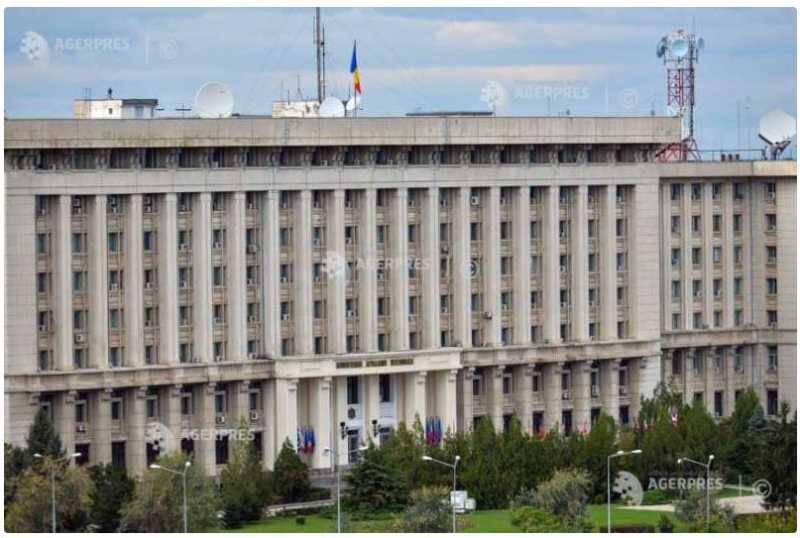
Drones detected near the river border with Ukraine; two F-16 aircraft scrambled
The radar surveillance system of the Ministry of National Defense detected a group of air targets in the vicinity of the river border with Ukraine on Thursday evening, two F-16 aircraft from the 86th Borcea Air Base being scrambled at 9:12 p.m. to monitor the situation. The National Military Command Center notified the General Inspectorate for Emergency Situat

Romanian Ambassador to Italy, Gabriela Dancau, receives Patriarchal Order 'Holy Lady Maria Brancoveanu'
The Romanian Ambassador to Italy, Gabriela Dancau, was awarded, on Thursday, with the Patriarchal Order 'Holy Lady Maria Brancoveanu', granted by His Beatitude Daniel, Patriarch of the Romanian Orthodox Church, for her activity in support of the Romanian community in Italy and her contribution to promoting institutional dialogue, including for the efforts made to obt

Romania's Maramures promotes cycle tourism through UNESCO forests and traditional villages
Romania's Maramures region is expanding its cycle tourism offer, promoting routes through traditional villages, UNESCO-listed forests and the Tibles Mountains as part of efforts to attract more visitors to lesser-known rural destinations, local tourism officials said on Thursday. Guesthouses in villages along the Lapus Valley have developed cycling routes
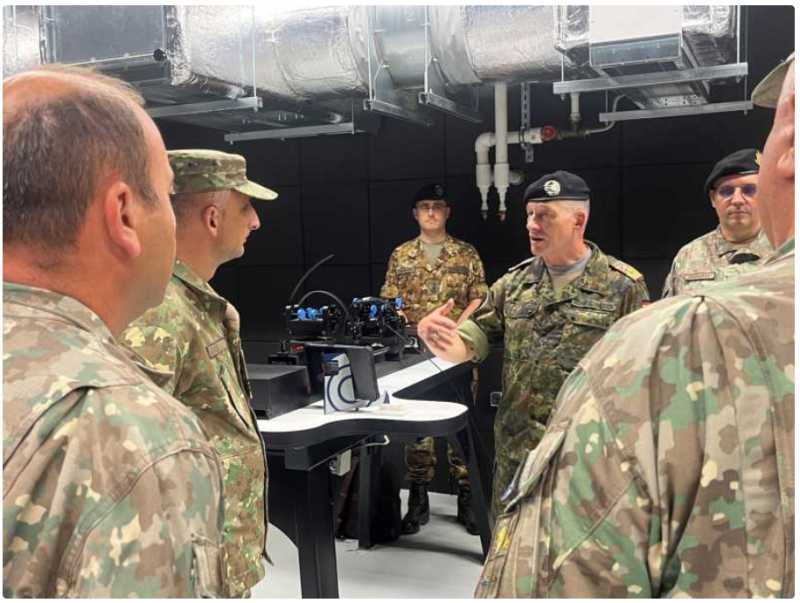
Head of NATO's Allied Joint Support and Enabling Command pays visit to Romania
The head of NATO's Allied Joint Support and Enabling Command, Lieutenant General Kai Rohrschneider, paid a working visit to Romania between July 29 and 30, according to a press release sent on Thursday by the Ministry of National Defense (MApN). According to MApN officials, the visit aimed to strengthen cooperation between the Defense Staff and the Allied

Diana Sosoaca taken to hospital after being involved in Bucharest traffic accident (sources)
One person required medical care and was taken to hospital after the collision of two vehicles on Iuliu Maniu Boulevard on Thursday, the Bucharest Traffic Police reported. Judicial sources told AGERPRES that the person taken to hospital is believed to be Senator Diana Sosoaca, who was a passenger in one of the vehicles involved. The accident occ

Romania to remain Moldova's strongest supporter in EU, acting PM Bolojan says
Romania will remain Moldova's strongest supporter within the European Union, offering its experience as an EU member state alongside political and diplomatic backing, acting Prime Minister Ilie Bolojan said on Thursday after talks with Moldova's new Prime Minister, Vasile Tofan, who is making his first official visit abroad since taking office.
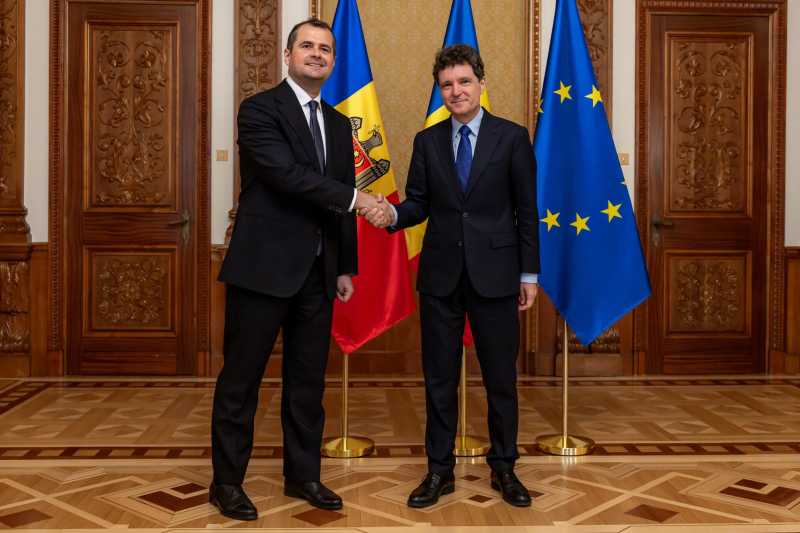
President Dan welcomes Moldova's Tofan: I reconfirmed our firm support for Moldova's European journey
President Nicusor Dan Thursday welcomed, at the Cotroceni Presidential Palace, visiting Moldova's Prime Minister Vasile Tofan, to whom he reconfirmed Romania's firm and consistent support for Moldova's European journey. 'I was glad to welcome today at the Cotroceni Palace the new Prime Minister of the Republic of Moldova, Vasile Tofan, on his f

Interim PM Bolojan welcomes Moldovan PM Tofan with military honours
Interim Prime Minister Ilie Bolojan welcomed Moldovan Prime Minister Vasile Tofan at the Victoria Palace on Thursday, in the context of his official visit to Bucharest. The official welcoming ceremony with military honours at the Government headquarters will be followed by a one-to-one meeting between the two senior officials and plenary talks between the two
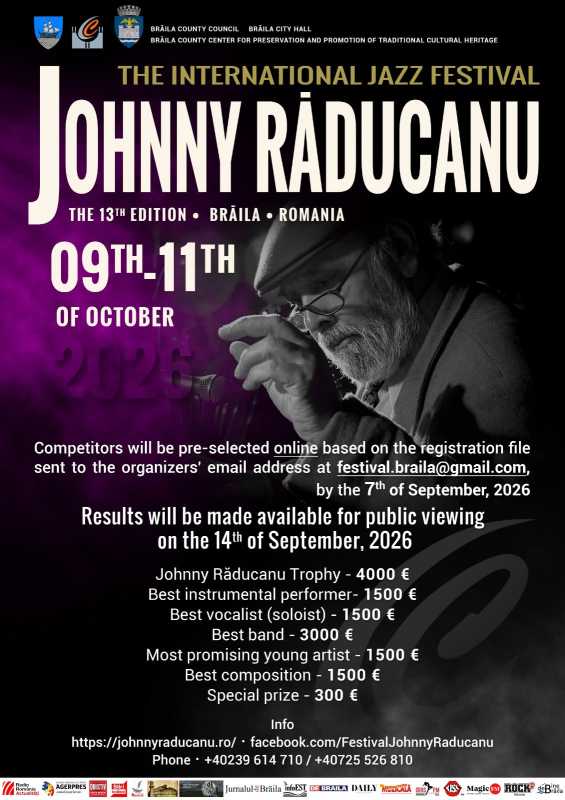
Registration deadline set for 7 September for 'Johnny Raducanu' International Jazz Festival
Young musicians aged between 16 and 35 can register until 7 September for the 13th edition of the 'Johnny Raducanu' International Jazz Festival, which will take place in Braila from 9 to 11 October, the organisers announced. According to the competition rules, the contest is divided into the following sections - vocalist (soloist), instrumental perform
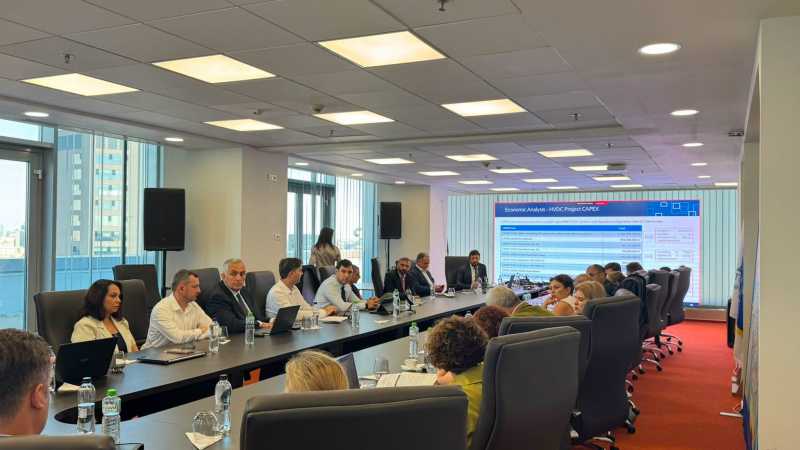
Georgia - Romania submarine cable project advances to marine survey preparation stage
The Georgia-Romania Black Sea Submarine Cable (BSSC) project, one of the European Union's strategic energy infrastructure projects in the Black Sea region, is in the preparation stage of a marine survey, which will confirm the optimal route of the cable and provide the technical data necessary for the design of the infrastructure. According to a press rele
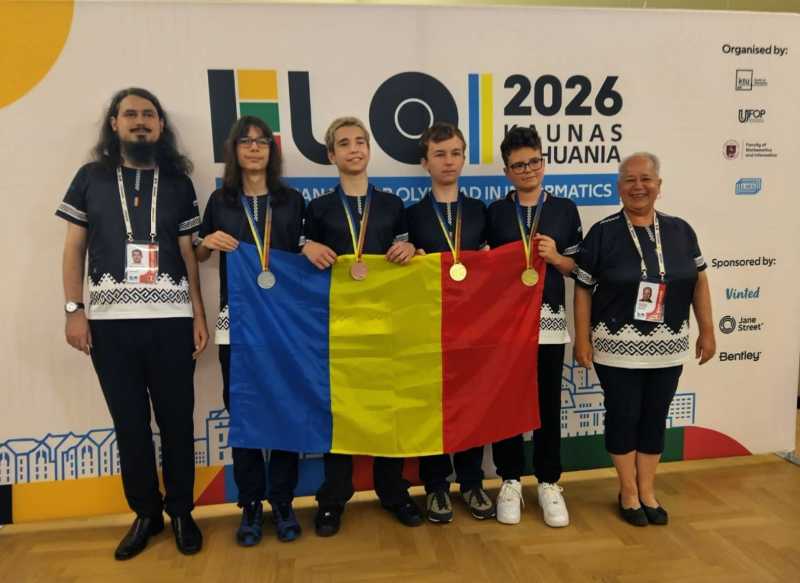
Romanian pupils take first place at European Junior Olympiad in Informatics
Romanian pupils ranked first among nations at the 10th edition of the European Junior Olympiad in Informatics, held from 24 to 30 July in Kaunas, Lithuania, with 100 students from 25 countries taking part. According to the Ministry of Education and Research, the gold medals were won by Andrei Nemtisor, an eighth-grade pupil at the 'Costache Negruzzi' N
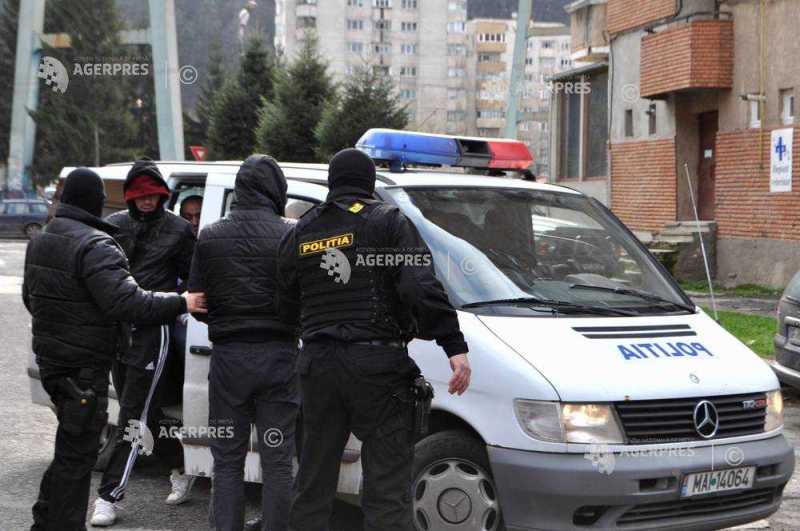
ANITP: Number of identified trafficking in persons victims up 32% in first half of 2026 compared with 2025
An analysis of the National Agency Against Trafficking In Persons (ANITP) shows that in the first six months of 2026 there is an increase by 32% of the number of identified victims of trafficking in persons compared with 2025. 'The analysis corresponding to the first semester of 2026 reveals 430 victims, 32% more than in the same period last year. The data

Romania's unemployment rate in Romania rises to 6.3pct in June 2026
Romania's seasonally adjusted unemployment rate was 6.3 percent in June 2026, down 0.1 percentage points from May 2026, but youth unemployment remains at a high level of 28.8 percent, according to data published on Thursday by the National Institute of Statistics (INS). The number of unemployed aged 15-74 estimated for June 2026 was 511,600, down from the
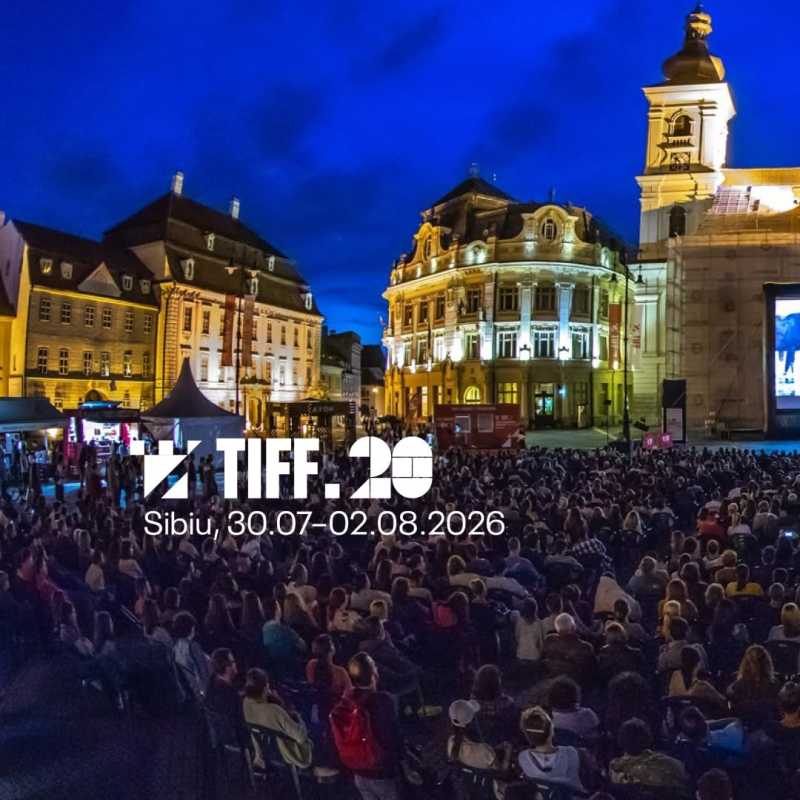
TIFF kicking off with seven screenings at CineGold, Big Square
The Transylvania International Film Festival (TIFF) is kicking off today in Sibiu, with seven screenings scheduled at CineGold and in the Big Square in the historic centre of the city, with the first day ending with a free screening of the film 'The Last Viking.' Thursday's events start at 16:00hrs, in Hall 4 of CineGold, with 'Lionel', dir
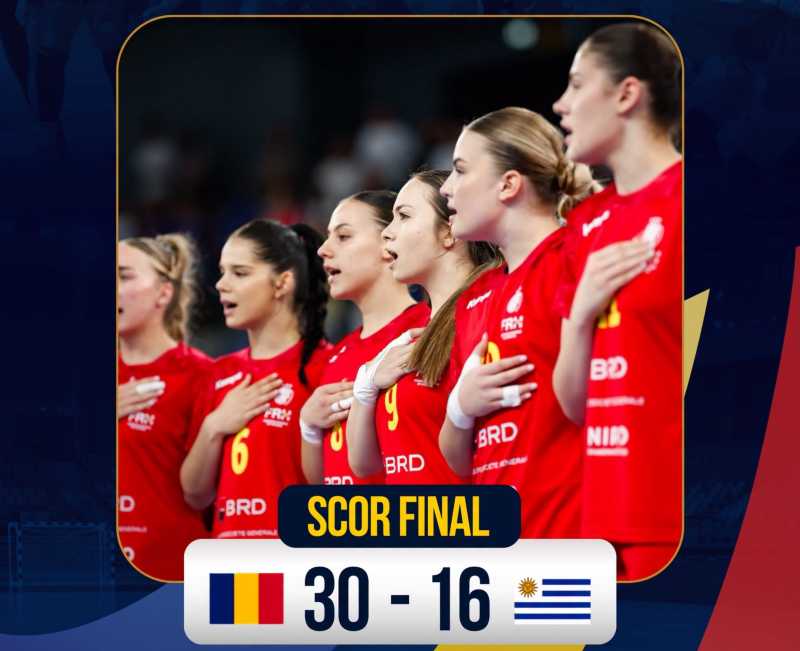
Romania off to winning start at IHF Women's Youth (U18) World Championship
Romania's national team comfortably defeated Uruguay 30-16 (12-8) on Wednesday evening in Pitesti in their opening Group F match at the IHF Women's Youth (U18) Handball World Championship, hosted by Craiova, Mioveni, Pitesti and Ramnicu Valcea. The Romanian nationals had an excellent first half before cruising to a convincing 14-goal victory.