

HOUSES WITH MEMORIES/Home of composer Gyorgy Ligeti, Polar Music Prize winner, becomes a crackers factory

One of the world's most important composers from the second half of the 20th century, Gyorgy Ligeti, who won the Polar Music Prize in 2004, basically the Nobel Prize for Music, was born and lived the first six years of his life in a small house in the town of Tarnaveni, just a few metres far from the synagogue there, which is now being turned into a small crackers factory.
Although his notoriety among the general public was mostly due to the fact that he wrote the music for a series of very successful films such as "2001: A Space Odyssey," "Shutter Island," "The Heat" or "Charlie and the Chocolate Factory," the name Gyorgy Ligeti was forgotten in his hometown, Tarnaveni.
Only after a series of foreign journalists inquired about the great composer's childhood in this city, the authorities began to look for documents to see his history and where he lived. Later, photographs of Ligeti began to appear in the Tarnaveni Museum and the house where he grew up was located right in the centre of the town.
Tarnaveni mayor Sorin Meghesan said that the municipality tried to make an offer to the current owners of the Gyorgy Ligeti's house, in order to turn it into a museum, but the offer was turned down and the building is now famous for the crackers that are being produced there.

Gyorgy Ligeti was born on May 28, 1923, in Tarnaveni, and died at the age of 83, on June 12, 2006, in Vienna. He had an extremely difficult life, but he left behind a grandiose work, being recognized among professionals for numerous monumental compositions, such as "Aparitii' [Apparitions], "Atmosfere," [Atmospheres] "Lux Aeterna," "Volumina," "Requiem," "Lontano," "Ramification," "String Quartet no.2," "Le Grand Macabre," being the winner of 26 international awards.
After leaving Tarnaveni, at the age of 6, Ligeti studied in Cluj-Napoca, completed his studies in Budapest, was sent to forced labour during the Second World War, lost his brother and father in the concentration camps, and during the Hungarian Revolution of 1959 he had to flee to Vienna, where he died in 2006.
And yet, the fact that Ligeti was born in Tarnaveni was not completely forgotten. In 2003, three years before he died, the composer received the title of honorary citizen. Gyrgy Ligeti never managed to collect his diploma leaving Vera Ligeti, his widow, to collect, in 2016, 10 years after his death, in a ceremony organized in Tarnaveni, the title that the municipality bestowed on the composer since 2003.

On that occasion, many big names visited Tarnaveni, such as professor Manfred Stahnke from Hamburg, disciple of Gyorgy Ligeti, Mike Searby from Kingston University London, Marton Kerekfy, from the Hungarian Academy of Sciences, specialist in the music of Ligeti and Kurtag, Julia Heimerdinger from the University of Music in Vienna, Heidy Zimerman, responsible for the Ligeti manuscript collection at the "Paul Sacher" Foundation in Basel, Wolfgang Marx from the University of Dublin, Louise Duchesneau (Hamburg), and from Romania, Cornel Taranu, Adrian Pop, Pavel Puscas, Tatiana Oltean, Amalia Szucs Blanaru.
Gyorgy Ligeti had a prestigious academic career, being a professor of composition at the Academy of Music in Stockholm, at Stanford University California, at the Hamburg Conservatory, which explains the presence of the representatives of these universities in Tarnaveni.
In 2016, when presenting the title of honorary citizen to Vera Ligeti, composer Manfred Stahnke, Gyorgy Ligeti's disciple, told AGERPRES that his mentor was an extremely intelligent man, who had a quick mind and an extremely personal approach of what the piece his students were working on should be.
"He had a special talent in communicating with people, showing them the final result he wanted to achieve, but also the results he wanted his students to achieve. His mind constantly processed all the possibilities and impossibilities, which made him a good, but demanding teacher, who did not shy away from telling us "it's not OK to do this, many before you have done exactly the same." We were always very careful when composing, not to make mistakes. (...) I have the first memory of him from the entrance exam, when I had a discussion with Ligeti about Richard Wagner and the classical way of composing music. He always wanted to keep a link with this classicism, he did not consider avant-garde to be only doing something that had not been done before, but basically eh though avant-garde meant to infuse the old, the classic, in a modern form," said Manfred Stahnke.
Museographer Lucia Petru from Tarnaveni is the one who followed in Ligeti's footsteps to document his life and work.
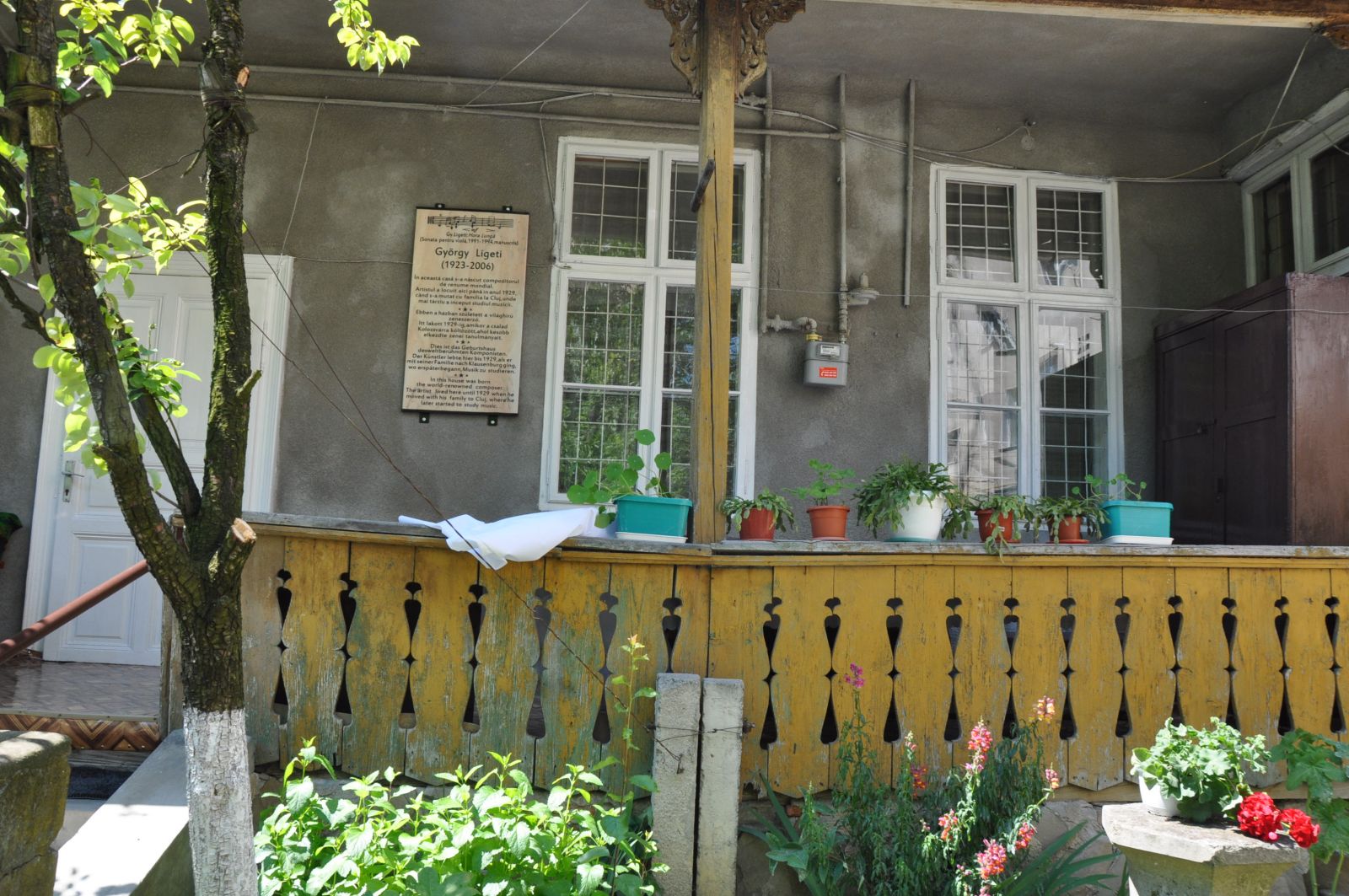
Starting with the year 2012, it was slowly discovered that he lived just a few metres far from the synagogue in Tarnaveni, that he came from an elitist family, with a father of Jewish origin - born Auer, but forced to take a Hungarian name - and, in addition, he had a famous uncle, Leopold Auer, a good friend of Piotr Ilyich Tchaikovsky.
"At some point, I happened to meet a persons from the UK, who was passing through Tarnaveni and whose passion seemed to be Ligeti. Who is Ligeti? While I was now someone who knew a lot about music, I tried to recreate a personality I did not know, by following into his footsteps, to find out what are the reasons why a poor Jewish child, who passed through Transylvania and Hungary, through forced labour camps, will accompany the Holocaust? Who is the child, the young man, the man who wanted to study the exact sciences, while the brutality of another system will randomly and brutally transform his life? Ligeti - the one born of a love that we can only guess, settled in a status quo given by his condition and conditions, a repetition of to all those in his condition," museographer Lucia Petru pointed out.
She said that Ligeti's time was measured between the Holocaust and a miraculous survival from this inferno.
"Ligeti's time begins in Tarnaveni, on May 28, 1923, the son of parents Alexander (born Auer) and Ilona (born Somogyi), he steppes into life in a permissive environment free from professional ethical constraints. The father is the one who chooses the patronymic Ligeti, by Hungarianizing the name Auer. The father studies at the University of Budapest and represents Hungarian financial interests in Tarnaveni, where he held the position of director of the Central and Industrial Bank of Valea Tarnavei, between 1920-1929. Here he meets Ilona, Gyorgy's mother, who was an ophthalmologist. Their two children, Gyorgy-Sandor and Gabor, are born in Tarnaveni. One of the paternal descendants, originally from Veszprem (Hungary), grandfather's brother, was a great violinist, Leopold Auer (in Hungarian Auer Lipot, who lived from June 7, 1845 to July 15, 1930), a close friend of Piotr Ilyich Tchaikovsky, who dedicates a violin concerto to him. In 1929, the family left Tarnaveni and settled in Cluj, where Gyorgy attended primary and secondary school at the school that today bears the name of Emil Racovita. The adolescent Ligeti, in 1937, begins to study the piano, and in the years 1938-1939 he composes his first works: Sonantina for a string quartet and Mic canon for a Romanian Christmas song, a miniature for piano, the adaptation of the well-known carol 'Oh, what wonderful news!," said the curator.
In the midst of the war, in the fall of 1941, Ligeti began to study composition at the Cluj Conservatory in the class of professor Ferenc Farkas, the director of this institution, and, paradoxically, in 1941, Gyorgy Ligeti wanted to obtain a degree in...physics.
"He was rejected on the basis of a numerus clausus so that the Conservatory seemed like an alternative solution, for the situation and not necessarily for his vocation. He spent the holidays of 1942-1943 in Budapest, where he studied privately with Professor Pal Kadosa (1903-1983). In the new academic year, the destructive system of power sends Ligeti to forced labor for the benefit of the Hungarian Army, after which the Hungarian Horthyist regime will act according to German directives throughout the country, while the Jews of Hungary and the ceded territories of Transylvania will be transferred, slowly but surely, to the death camps. From the Ligeti family, brought to the brink of extermination, only the mother will survive," the researcher pointed out.
Gyorgy's brother, Gabor, who was only 16 at the time, was sent to a forced labor camp at Mauthausen-Gusen and never returned, as was his father, who was deported to Auschwitz.
The museographer also discovered that, after this dark period of his life, when his family was decimated in the death camps, Gyorgy Ligeti obtained his license at the "Franz Liszt" Academy of Music in Budapest, in 1949, and then had two marriages. Another turning point in his life was the 1956 Revolution in Hungary.
"Following the reprisals, the Ligeti family chooses to take refuge, fraudulently crossing the border with Austria, crammed into the mail bags of a railway company. They requested and received political asylum and settled in Vienna, and in 1967 they obtained Austrian citizenship. This is where his son, Lukas, was born, today an appreciated composer and percussionist,'' Lucia Petru tells.
"His early works are tributary to Bela Bartok, whom he admires and seeks in a common place, the traditional music of Transylvania, in its entire ethnic mosaic. Representative for this period are the 'Romanian Concert for Orchestra' from 1951, 'Six bagatelles' and 'Nocturnal Metamorphoses' in 1952-1953. With time, his musical language becomes distinct, in a personal style, he composes fantastic creations, complex and fascinating musical jewels: 'Appearances' in 1959 and 'Atmospheres' in 1961 bring him European reputation. His originality, being a musician educated in a traditional school, but prone to experiment, is vividly described in an interview given by the composer to the New York Times in 1993: 'I'm in a prison, in the wall is the past and in the other, the vanguard. I want to escape!' (...) In the work 'Reflections on Music', Stefan Niculescu said that 'Ligeti is an inventor of ingeniously colored structures, and the perfect form results from joining the structures in an unpredictable way, like the events of a dream','' the museographer added.
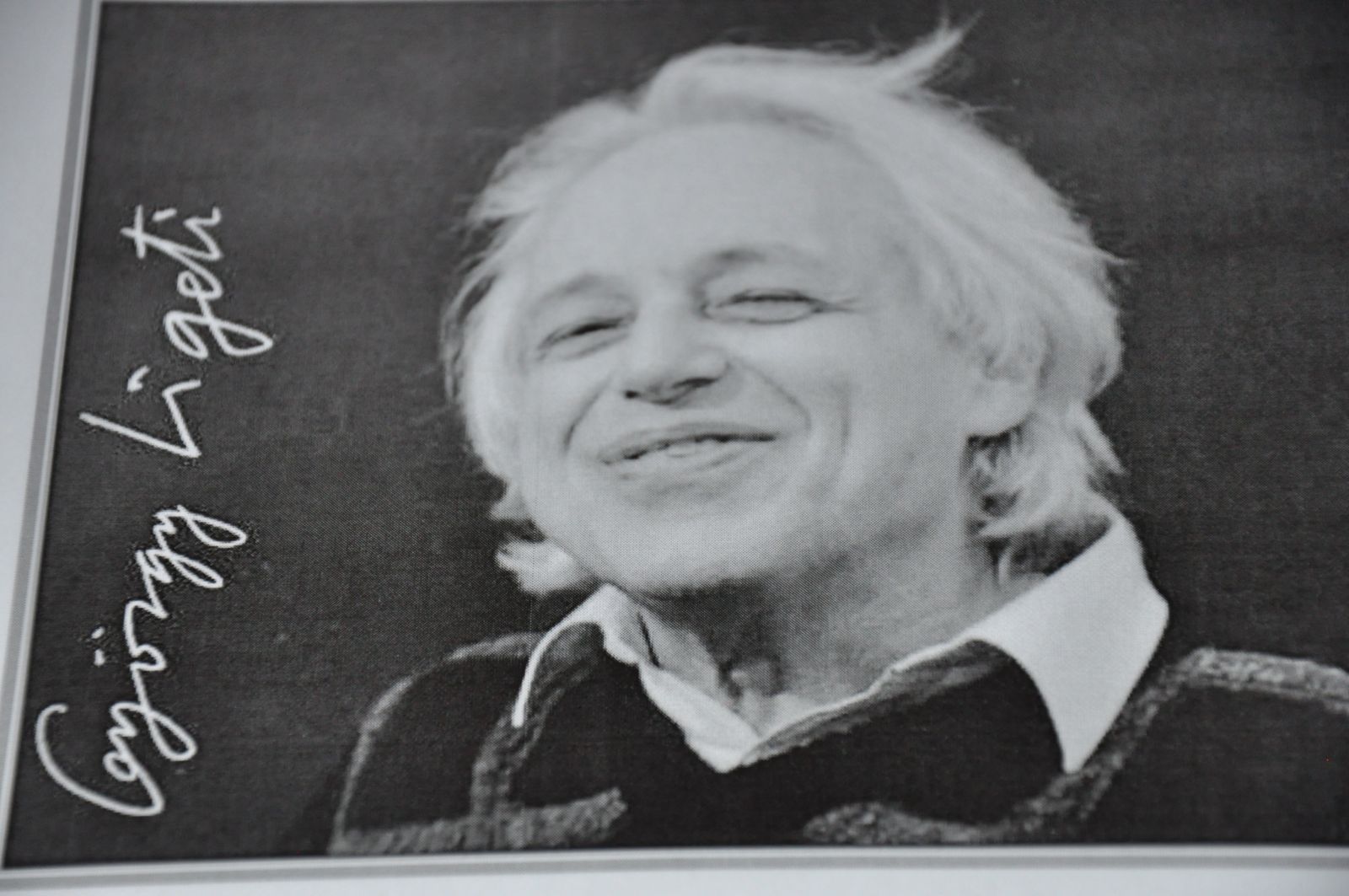
In her study she also presented a last interview given by Ligeti to the foreign press, in which he admitted that he is completely alone, without a homeland and that he misses his hometown, his old friends.
Perhaps for this reason, Gyorgy Ligeti is characterized as the 'man of pain and exile', who carried with him the 'self-awareness of the eternally threatened Jew' and who transposed the 'general human concept of Jewishness' into his compositions.
10 years after the great composer's death, on his house, near the synagogue, the municipality and the 'Gheorghe Dima' Music Academy in Cluj-Napoca unveiled a commemorative plaque. AGERPRES(RO - author: Dorina Matis, editor: Georgiana Tanasescu; EN - authors: Cristina Zaharia, Bogdan Gabaroi, editor: Adina Panaitescu)
The content of the www.agerpres.ro website has the exclusive purpose of public informing.
All the information published on this website by AGERPRES is protected by relevant legal dispositions.
It is forbidden to copy, reproduce, recompile, decompile, distribute, publish, display, modify, create derived components or products or full services, as well as any exploitation of the site's content.
Details in the section Terms of Use. If you are interested in picking up AGERPRES news items, please contact the Marketing Department – marketing@agerpres.ro.
The use of the Comments section entails your obligation to respect the AGERPRES terms and conditions in regards to the publishing of comments on the www.agerpres.ro.
Other news in category

Vanatori-Neamt Natural Park acquires first four moose under reintroduction programme
Vanatori-Neamt Natural Park has acquired its first four moose as part of a programme to reintroduce the large herbivore, the park's director Sebastian Catanoiu told AGERPRES on Monday. The male and three females were brought from Germany, Switzerland and France and will remain in quarantine for one month before being released into semi-wild conditions with

Visitors to 'Tulip Symphony' in Pitesti, able to admire 85 different varieties of tulips
Visitors to this year's edition of the 'Tulip Symphony' in Pitesti were able to admire 85 different varieties of tulips in Lunca Argesului Park, the local administration announced on Monday. 'Visitors enjoyed a rarely encountered diversity, from classic, elegant tulips to spectacular varieties with fringed petals or surprising shades. This rich
European project to protect Danube rural landscape
Representatives of research institutions and universities from six European countries participated at the end of last week in a seminar on the Danube landscape held in the Danube Delta, the working visit being part of the Danube Ruralscapes project, funded by the European Union. The initiative, launched in 2017, aims to identify solutions through which the Dan

PSD's cooperation with AUR shows falsehood of Grindeanu's previous statements, says Dan Motreanu (PNL)
The secretary general of the National Liberal Party, Dan Motreanu, said on Monday that the Social Democratic Party (PSD) has formalised its cooperation with Alliance for the Union of Romanians (AUR) by announcing a motion of censure against the government led by Ilie Bolojan, adding that this alliance 'confirms the constant falsehoods' of Social Democrat leader Sorin
InventCor Academy Deva team wins grand award and 17 gold medals at INOST 2026
InventCor Academy Deva team, coordinated by inventor Corneliu Birtok-Baneasa, has won the grand award and 17 gold medals at this year's edition of the INOST 2026 International Exhibition of Inventions, held last week in Banja Luka, in Republika Srpska. During the event, the delegation from Deva presented 17 research projects, inventions and innovations acr

'Fotogeografica", one of Romania's most prestigious national photography salons, will open on Tuesday
The 'Fotogeografica' exhibition, one of Romania's most prestigious national photography salons, will open on Tuesday at 18:00 at the Multifunctional Centre in Carei, according to a press release from the Bucharest Students' Cultural House. Organised under the banner of a passion for photography, the Fotogeografica salon brings together outstand
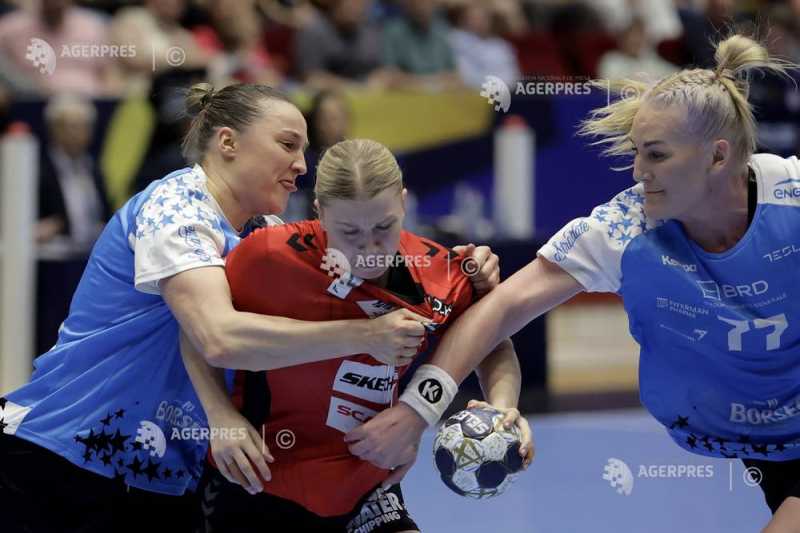
CSM Bucuresti qualifies for the Women's Handball Champions League Final Four tournament
CSM Bucuresti has qualified for the Women's Handball Champions League Final Four tournament after defeating the Danish side Team Esbjerg, 37-27 (19-14), on Sunday at the 'Ioan Kunst-Ghermanescu' Polyvalent Hall in Bucharest, in the second leg of the quarter-finals. The Romanian champions progressed to the continent's top four teams after narrow

Senate's Abrudean says EU membership has taken Romania from survival to accelerated modernisation
Senate President Mircea Abrudean said on Saturday, marking 21 years since the signing of Romania's EU Accession Treaty, that the European Union membership has meant a shift for Romania from survival to accelerated modernisation, with the country having attracted more than 108 billion euro in European funds to date. '21 years since the signing of Romani
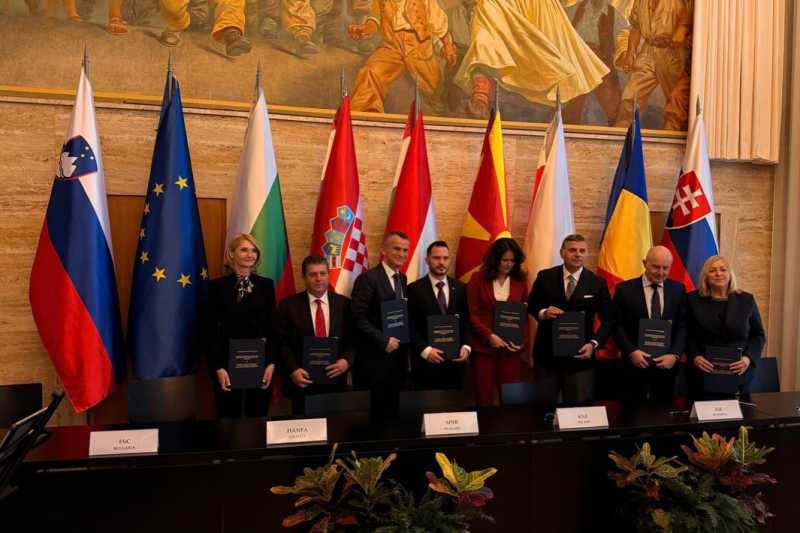
ASF: MoU on cooperation between capital market authorities in Central and South-Eastern Europe
The Financial Supervisory Authority (ASF) took part on Friday in Bled, Slovenia, in the signing of a Memorandum of Understanding (MoU) regarding the cooperation between competent authorities for capital markets in Central and South-Eastern Europe, alongside counterparts from Slovenia, Croatia, Poland, Hungary, Bulgaria, Slovakia and North Macedonia. According

President Dan: I strongly condemn Russia's irresponsible behaviour; Romania is not a party to this conflict
President Nicusor Dan strongly condemned Russia's 'irresponsible behaviour' and added that incidents such as the drone crash in Galati show a disregard for international law and endanger the safety of Romanian citizens, a NATO member state. 'Citizens must be safe and this objective remains our absolute priority. The responsible institutions act

PM Bolojan: Repeated violation of Romanian airspace by Russia - irresponsible act and breach of international law
Prime Minister Ilie Bolojan said on Saturday that the repeated violation of Romanian airspace by Russia is 'an irresponsible act' and a serious breach of international law, urging Russia to immediately stop such actions. 'Last night, a Russian-made drone crashed in Galati and damaged a household. Following the incident, I spoke with all decision-ma

DefMin: General Staff analyses repositioning of border monitoring and defence systems along Ukraine border
National Defence Minister Radu Miruta said on Saturday that, following the drone incident in the Galati area, the General Staff is analysing the repositioning of monitoring and defence systems along the border with Ukraine. 'The war launched by the Russian Federation, right at our border, is as real as it gets. It is a harsh war, with dramatic consequences

MAE summons Russian ambassador after drone crash in Galati area
Romania's Foreign Affairs Minister Oana Toiu summoned the Russian Federation Ambassador to Bucharest on Saturday at the Foreign Affairs Ministry (MAE) headquarters, following the crash overnight in the Galati area of a Russian drone used in attacks on Ukrainian civilian infrastructure. 'At the instruction of Foreign Affairs Minister Oana Toiu, the Amba

President Nicusor Dan: Leaders of pro-European parties invited to consultations at Cotroceni on Monday
President Nicusor Dan invited the leaders of pro-European parties to the Cotroceni Palace on Monday for talks on the Security Action for Europe (SAFE) and the National Recovery and Resilience Plan (PNRR) programmes, the head of state announced on Saturday morning. The invitation comes after the president signed the resignations of the Social Democratic Party (
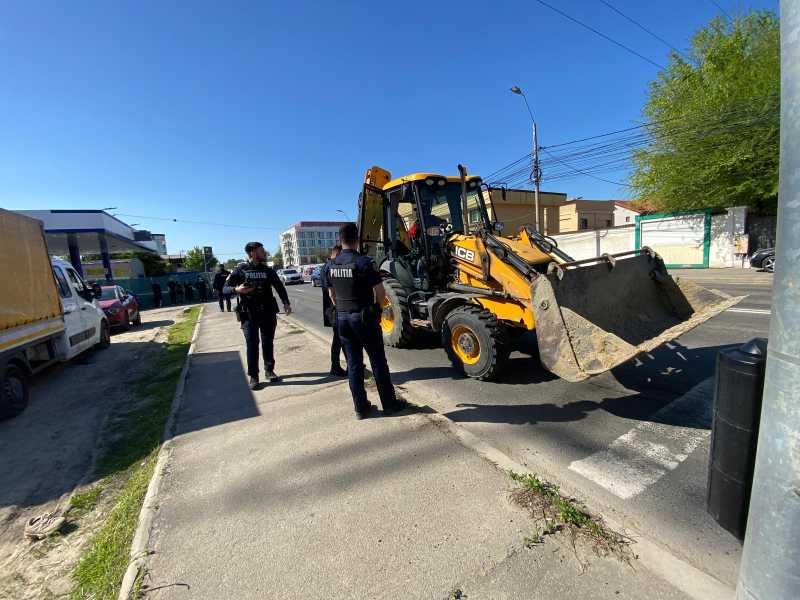
MApN: Fragments of Russian drone to be recovered and destroyed by specialists under controlled conditions
Fragments of the Russian drone that crashed in the Bariera Traian area of Galati will be recovered and transported by specialist teams to a safe area, where they will be destroyed under controlled conditions. 'A team of specialists from the Ministry of National Defence [MApN], the Ministry of Internal Affairs [MAI] and the Romanian Intelligence Service [SR