

CONTEMPORARY AUTHORS/Nadezhda Radulova: Literature doesn't save us, but it does explain things very well
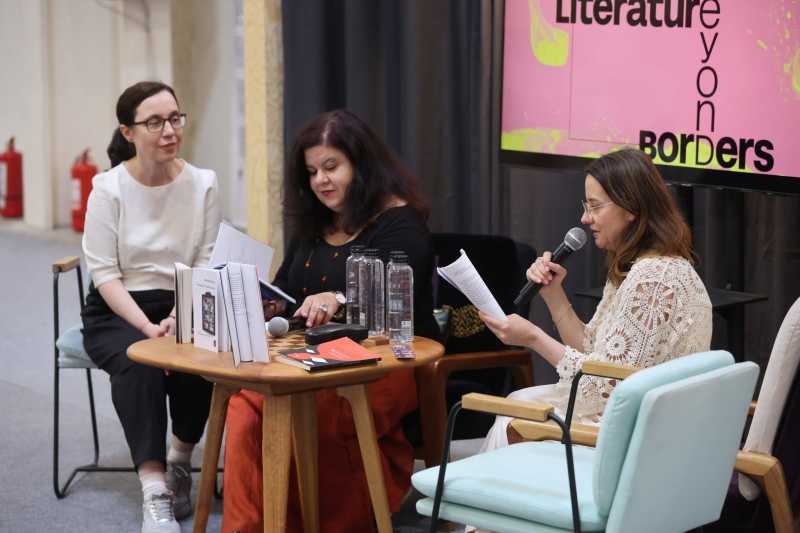
Poet Nadezhda Radulova recently visited Romania as one of the Bulgarian writers invited to take part in the 'Bulgaria - Guest of Honour Country' programme at the Bookfest International Book Fair, held in Bucharest from June 3 to 7.
During the fair, Radulova promoted her volume 'The Woman in the House on the Corner' (2022), an anthology of her poetic work and the only book by the author translated into Romanian to date, published by Max Blecher Publishing House.
The Romanian translation and selection of poems were prepared by Lora Nenkovska in collaboration with Claudiu Komartin, editor-in-chief of Max Blecher Publishing House.
On the occasion of her visit to Romania, Nadezhda Radulova gave an interview to AGERPRES in which she spoke about the volume, her poetic journey and the way in which the anthology functions as an overview of her writing. The author also provided details about her collaboration with translator Lora Nenkovska and Romanian editor Claudiu Komartin.
AGERPRES: How did your collaboration with the Max Blecher Publishing House come up?
Nadezhda Radulova: First of all, I should say that it's a great publisher, as far as I am able to tell. Their books look great - really great, actually. And they also have a great catalogue.
Second, Claudiu is himself a wonderful poet. He has been translated into Bulgarian, and his book was also published by a very good publishing house specializing in poetry, in the wonderful translation of the same Lora Nenkovska. That's how I was able to read him in Bulgarian, and I like what he is doing. And later on we also met.
And Lora is not just a great translator - very precise and very meticulous in every detail - but also like a bridge between these two literatures [Romanian and Bulgarian - editor's note]. And she's equally passionate about the Bulgarian side of the equation as she is about the Romanian one.
She also likes my poetry, which is another plus. You know that it's very important for a translator to love the work they do.
So, I have complete trust in her choice, in the selection [of poems] she made, and in the way she transferred the poetry, my poetry [into Romanian]. And it was wonderful to answer her questions throughout the translation process.
The entire process, really, was very smooth. Everything went smooth with Claudiu as well, who also had some questions for me. Everything was exactly as it should be. Unfortunately, it is not always like that, but in this case it was perfect.
AGERPRES: The publishing house we are talking about has published at least four Bulgarian poets in the past couple of years. Also, Bulgaria has been the guest of honour country at the Bucharest-based Bookfest book fair very recently. Would you say that the bridge between the two literatures - and between Southeastern European literatures more generally - has become stronger over the past 10-15 years than it was before?
Nadezhda Radulova: Yes, I think this process has intensified over the last decade. And again, I think that Lora's contribution has been very important in this relationship. Over the past ten years, many wonderful Romanian poets and writers have been translated into Bulgarian.
However, I do think that this is more of a global phenomenon. We can see a revival of literary exchange. So-called peripheral literatures are coming closer together, although I do not like to call these literatures peripheral at all. I do think, however, that we are no longer as interested in French, German, and English literature as we once were. Instead, we have become more interested in, let's put it this way, our neighbouring literatures and neighbouring languages.
And I do think that this shift is very important.
AGERPRES: Would you say that it would have been beneficial if we had been more interested in each other's literatures back in the 1990s, when we were all looking first and foremost to Western literature? Obviously, at that point, we felt the need to make up for lost time.
Nadezhda Radulova: Yes, indeed, we needed to recover what we had lost during that period. I mean, of course, the forbidden fruit is the sweetest, so we needed that period of devouring everything that had somehow been denied to us before. All that literature that had been inaccessible to us before, that had not been translated.
We were in the same situation [Romania and Bulgaria - editor's note]. We couldn't travel, and we couldn't read a large part of world literature. Many things were translated into our languages, but some of them were heavily censored, at least in Bulgaria. And, of course, there were many other books that were left aside.
So there was a focus on Western European literature. And now, slowly, things are becoming more balanced. I look at the global literary situation as a huge circulatory system, and every new translation, even every work that is written in its original language, is already included in this circulatory system. So, in order for it to function well and remain healthy, you need to put this blood, this literary blood, into it.
AGERPRES: Maybe it was a bit of an economic issue as well? At least in Romania, it is still much more expensive to translate from Bulgarian or another Southeastern European language into Romanian than it is to translate from English.
Nadezhda Radulova: Actually, in Bulgaria, the rates are often similar when it comes to translation. It costs roughly the same to translate from a less common language as it does from a language like English or French. I'm sure you have something similar, minimum fees that are somehow fixed?
AGERPRES: No, actually, we don't. We don't have that. Just as we don't have a fixed book price like they do in France, for instance, where the price is printed on the back cover and cannot be changed, excepted for a very limited margin. Do you have a fixed book price in Bulgaria?
Nadezhda Radulova: Yes, Bulgaria has a fixed book price, meaning that the price of a book should be the same in all bookstores. It's printed on the cover, and you cannot sell the book at a different price.
There are, of course, occasional promotions and discounts, such as a 'book of the month' campaign or something similar, but that's different. It's part of a marketing strategy, not a permanent pricing policy.
But you definitely beat us when it comes to bookstores. You have absolutely fascinating bookstores here. I saw them when I was in Bucharest last September. I visited a large bookstore downtown, as well as a small and wonderful bookstore that only sells books in English. The guy who runs that bookstore is amazing because he showcases books from a whole range of important European and American publishing houses. Never in my life had I seen so many books from Fitzcarraldo Editions in one place, even in a single bookstore. So I was really amazed. We don't have such good and well-stocked bookstores in Bulgaria.
AGERPRES: Besides being a poet, you are also a translator and a publisher. Can a Bulgarian writer survive without doing all these other things, without having different jobs, basically?
Nadezhda Radulova: No. Or at least I can't. But maybe there are a few authors [who can - editor's note] now. And I actually like it. Because otherwise, without gaining experience in neighbouring fields, at least, you become trapped in your own head, and that it is not a very interesting place to stay for too long. For me, being a translator is just as important as being a writer. I love it. Sometimes I even love it more.
AGERPRES: Do you feel like what you translate influences your own writing? Maybe at least a little?
Nadezhda Radulova: No. Because I usually translate things that I could never write myself, things that are very different from my own writing. As a writer, I often think that, as a reader, I probably wouldn't be entirely satisfied with my own work.
But [by translating other people's work - editor's note] I can live through things that I am not capable of writing, things for which I simply do not have the talent. And that's wonderful. So I'm very grateful for this opportunity I have to translate books.
AGERPRES: You are also interested in gender studies. How are things in Bulgaria in that area? Has the conversation become more normal, or is it still a highly controversial topic?
Nadezhda Radulova: For a while, it was normal, although not particularly intense. That was the case throughout the 1990s.
The same was true at the beginning of the new millennium. I graduated from the Central European University with an MA in Gender Studies and Literature. Then, suddenly, perhaps ten years ago, with the rise of nationalism, chauvinism, and right-wing politics, the conversation became very difficult, almost impossible.
The meaning of words changed. The word 'gender' itself turned into, how should I put it, an insult.
For example, if someone annoys you in a certain situation, you might call that person 'gender'. As in: 'You're a gender.' So it has become an insult.
AGERPRES: That's very unfortunate.
Nadezhda Radulova: It's very unfortunate. At the same time, I think this happened because... Well, in the 1990s, there was a fairly balanced relationship between the French school of thought, in which the concept of gender was approached through post-structuralist philosophy and theories of subjectivity, and, on the other hand, the identity politics that was being theorised in the United States.
Somehow, the American approach eventually prevailed, and I think not entirely for the better. The pendulum swung too far in the other direction and, are we are now seeing a rise in racism and other forms of exclusion.
In this sense, I am a universalist, and I feel more rooted in the French intellectual tradition than in the American one, particularly when it comes to identity politics.
AGERPRES: Going back to poetry, while still keeping theory in mind, your poetry seems quite aligned with these newer paradigms. For instance, you do not separate matter from spirit, or humanity from the natural world. Would you say that this is still a niche tendency in Bulgarian poetry today, or is it becoming more mainstream?
Nadezhda Radulova: It's again related to this collective cultural memory that comes from books, but not only from books. I think there is something beyond books that stays with us and is passed on from generation to generation, both biologically and intellectually.
So this metamorphosis of a human being into another human being, into part of nature, into part of the sky, the stars, is, again, both a metaphor and more than a metaphor. Because I can see not just the humanity that exists today, but humanity as a whole.
Everything is interconnected. I can feel that the different stages of humanity are all there. Memory is not just my own memory, from my childhood or from my own lifetime, but something that comes from before.
And in this sense, literature is quite important, because it gives us different snapshots of this process, almost like photographs. It also explains things in a very clear and wise way. It does not save us; it simply explains things.
When the war in Ukraine began, I went through a crisis. I became very depressed from constantly reading the news, and the more I read, the less I felt I understood.
At some point, I thought: 'This is the failure of humanity, and the failure of literature as well.' Because, after all, we have millennia of literature behind us, and yet nothing seems to have changed.
Then I stopped reading the news and started re-reading literature instead, especially modern classics. And I found that everything was already there. Literature explained the situation in Ukraine very clearly, and much better than any news report could.
So literature does not change us, unfortunately, and it does not save us. It does not make us better people. If we are open enough, it can help us see the world more clearly, but literature is not a saviour. We are the only saviours of ourselves.
AGERPRES: Imagination is another essential ingredient in your poetry, and it is a refined imagination, filtered through reading and study.
Nadezhda Radulova: I do not believe in the idea of the inspired poet who creates everything purely out of inspiration. I think a great deal as well, and in many cases my approach is quite rational.
And somehow these two aspects [irrational and rational thinking - editor's note] contribute to the authenticity of the whole thing. Because we are both. We have both elements within us: the rational and the irrational, inspiration and thought. And they're intertwined. You cannot simply separate them.
In other words, if I were to list the things that I am - a writer, a poet, a translator - I think the most important part of me is that I am, above all, a reader.
Because our existential position as reading beings, as creatures capable of reading, is somehow fundamental to our formation. It shapes our language, the way it evolves over the years. And I think it is also very important from a biographical perspective.
I say this quite often, but I'll say it again: we have a very short life as human beings. We are ephemeral. And the only thing that somehow extends our biographies and our experiences as human beings is reading. Because through reading we somehow extend the span of our existence. So, for me, one's formation as a reader is just as important as one's literal biography. The place I come from is very important, and also my childhood, my relatives. At the same time, I also have these authors and these books that somehow form part of my family.
If we remain encapsulated within our own lives, we cannot reach the depth and sublimity that become possible when we encounter different perspectives, which literature can bring into our lives.
And when it comes to childhood, early development, and poetry, I think there is something very similar about childhood, the language of childhood, and the language of poetry. Because both the child and the poet are playful.
And not only playful. In childhood, one experiences language for the first time. When you are a child, you use language to touch, to taste, to chew, to speak, to experience the world as if for the first time. And, of course, later in life, this gradually disappears and dissolves into the adult experience.
But this combination of the absolute freshness of childhood and poetry, together with the experience of reading and the idea of readership, is something I see as truly fundamental. It produces a very interesting symbiosis of rationality and irrationality, of freshness and longevity.
AGERPRES: Your poetry is also highly synaesthetic. Which sense most often draws you back into the past and evokes memories? Which sensory experience is the most powerful trigger of memory for you?
Nadezhda Radulova: I suppose that all the senses are involved, of course, and that is also typical of poetry.
But if I have to name one sense - and I do, because it is really important to me - it would be hearing, the vocal element, sound. For me, it has always come first. And I think that, in life, it is more or less the same.
Our first contact with the world is through hearing. Our mother's voice, the first sounds we encounter. I think this is very important. The formation of the human voice is important for poetry and for literature in general. Language is something that sounds; it is not merely something that we see written or printed on a page.
The first experience of a child, of a baby, of a newborn - and even of a child before birth - is shaped by sound. It is completely different if you are born in Africa, Europe, or Australia. It is different if your home is near a railway station, or by the sea, with the waves constantly coming and going.
Our voices are shaped by all of this as well. At first, there is only this amorphous sound that we hear, and then come articulation, intonation patterns, and the timbre of the voices around us.
So even now, one of my sources of inspiration - and this is completely unconscious, not something I do deliberately - is listening. Listening to the intonation of people talking in the tram, on the metro, or on an aeroplane. Listening to renovation work taking place somewhere nearby, without even seeing it. Listening to the breathing of people sleeping beside me.
And usually the meaning comes later; the ideas come afterwards. At first, there are only the tones and patterns of whatever surrounds me, something that emerges from the vocal and acoustic environment.
AGERPRES: Would you say that certain poetic formulas eventually become exhausted, that they have a kind of expiration date? Or is it simply a question of how good the poetry is?
Nadezhda Radulova: I think that every generation - or even every five or six years - produces its own fashions in poetry. These trends are especially visible among younger poets, before they somehow manage to move beyond what is fashionable. Partly because they still have limited experience, both in life and in poetry, they learn a great deal through the poetry of others.
And I think this also depends on the local context, not only on global trends. For example, in Bulgaria - I don't know whether it has been the same in Romania - over the past decade it became very popular to write very short, concise poems. Or, conversely, longer poems very much in the vein of, let's say, Mary Oliver.
AGERPRES: You also have a book for children, to change the atmosphere a little bit.
Nadezhda Radulova: Yes, I do have a book for children. It's actually a poetry book. It's intended for very young children, those in nursery school or preschool, who are just beginning to play with letters. It's called 'Wonderful Alphabet'.
It is a collection of short and amusing poems about letters, each paired with an animal. The book also features beautiful illustrations by a wonderful Bulgarian illustrator Svoboda Tzekova.
AGERPRES: And you have a novel, also, written after this book of poetry was translated into Romanian, isn't that right, called 'Yozhi Lives Here'? What is it about?
Nadezhda Radulova: It's about a girl whose life is followed from a very young age to many years after her death, when she is living among the stars. It is both autofictional and dystopian at the same time.
The perspective belongs to this narrator, Yozhi, who, in other stories within the book, is merely a character and sometimes not even that. It is a multifaceted perspective.
In fact, there are three versions of Yozhi in the narrative. One offers us a chronological perspective: she is first five years old, then twenty, then more than a hundred years old, and so on.
There is another Yozhi who is always a child, who offers us a perpetually fresh perspective on life - the eternal child, Yozhi.
And there is a third Yozhi, a kind of meta-narrator who transcends both the character and the narrative itself. I call her the anti-Euclidean Yozhi, because she narrates from the perspective of an alternative physics, an alternative way of perceiving reality.
Nadejda Radulova (born 24 April 1975, Pazardzhik) is a Bulgarian poet, translator and editor, holding a PhD in Comparative Literature. Between 1994 and 2020, she published eight volumes of poetry. Her work has been included in international anthologies of Central and South-East European poetry. She has translated into Bulgarian works by prominent contemporary American and European authors. AGERPRES (EN - writing by: Cristina Zaharia)
The content of the www.agerpres.ro website has the exclusive purpose of public informing.
All the information published on this website by AGERPRES is protected by relevant legal dispositions.
It is forbidden to copy, reproduce, recompile, decompile, distribute, publish, display, modify, create derived components or products or full services, as well as any exploitation of the site's content.
Details in the section Terms of Use. If you are interested in picking up AGERPRES news items, please contact the Marketing Department – marketing@agerpres.ro.
The use of the Comments section entails your obligation to respect the AGERPRES terms and conditions in regards to the publishing of comments on the www.agerpres.ro.
Other news in category
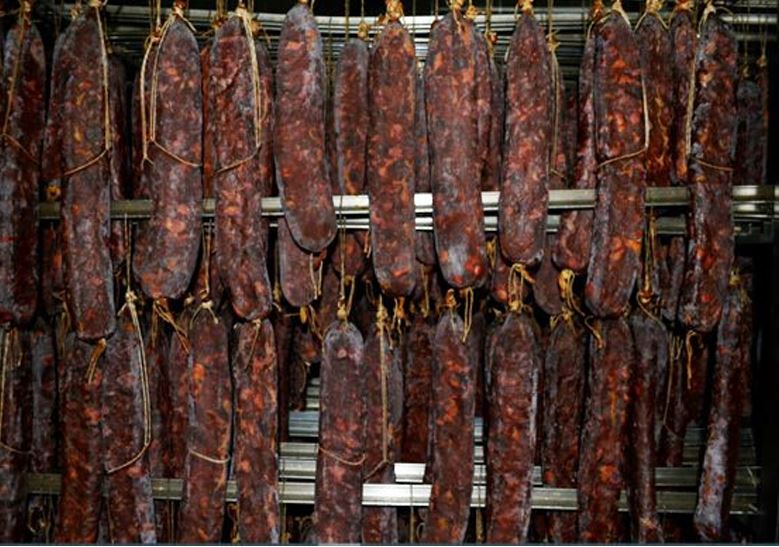
'Babic de Buzau' officially receives European PGI certification
'Babic de Buzau' (which is a spicy, raw-dried, pressed salami) has been granted Protected Geographical Indication (PGI) status following its registration in the Official Journal of the European Union, a release of the 'Babicul de Buzau' Association announced on Thursday. 'Buzau is a land of harmonious contrasts: from the sandy soils of its

Bolojan: PNL has decided not to support investiture of Tomac government
The National Liberal Party (PNL) decided not to support the investiture of the government proposed by Prime Minister-designate Eugen Tomac, party leader Ilie Bolojan announced on Thursday. 'Having analysed the political context, the PNL has decided not to support the investiture of this government. As a consequence of this decision, our parliamentary group

PM-designate Tomac: I want an integrated education system, essentially identical in Romania and the Republic of Moldova
Prime Minister-designate Eugen Tomac said that, should he become Romania's prime minister, he already has several priorities aimed at bringing Romanian and Moldovan citizens closer together, citing as an example his wish to see an integrated education system that is virtually identical in Romania and the Republic of Moldova. He was responding to a question

PM-designate Tomac: I will send political parties gov't programme and request new round of consultations
Prime Minister-designate Eugen Tomac announced that he will send on Thursday the political parties the government programme he intends to submit for parliamentary approval and that he will request a new round of consultations with them. 'My deadline is to present the government programme and the Cabinet list on Sunday. I have already presented the Cabinet
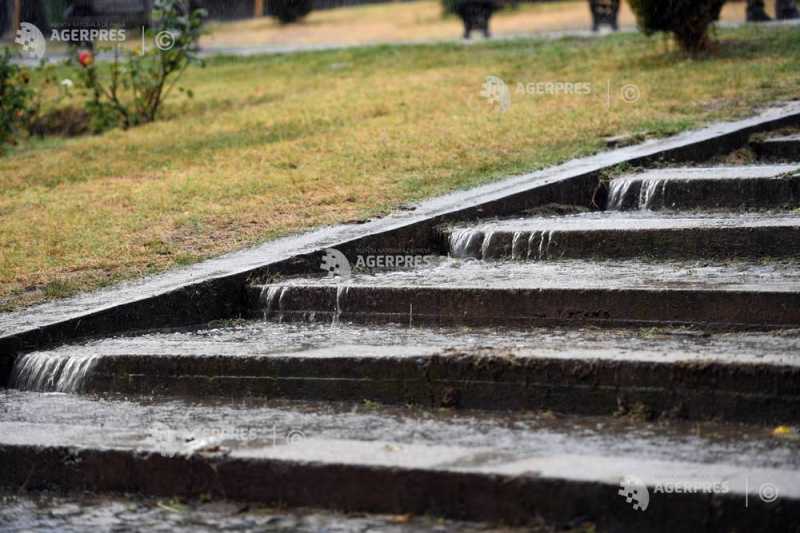
ANM issues Code Orange for torrential rain and squalls in 17 counties until Friday morning
The National Meteorological Administration (ANM) issued a Code Orange warning for torrential rainfall and significant precipitation amounts, valid from 12:00 on Thursday in 17 counties. According to meteorologists, until 10:00 on Friday, periods of severe atmospheric instability are expected in Cluj, Alba, Hunedoara, Valcea, Arges, Dambovita, Prahova, Buzau, V

Romania-Turkey Economic Cooperation Forum to take place at Chamber of Commerce headquarters on Thursday
The Chamber of Commerce and Industry of Romania (CCIR), in cooperation with the Samsun Chamber of Commerce and Industry and the Adana Chamber of Industry, from Turkey, will organise the Romania-Turkey Economic Cooperation Forum on Thursday: Carbon Border Adjustment Mechanism (CBAM), Sustainability and Green Transition. The event, which will take place at the C
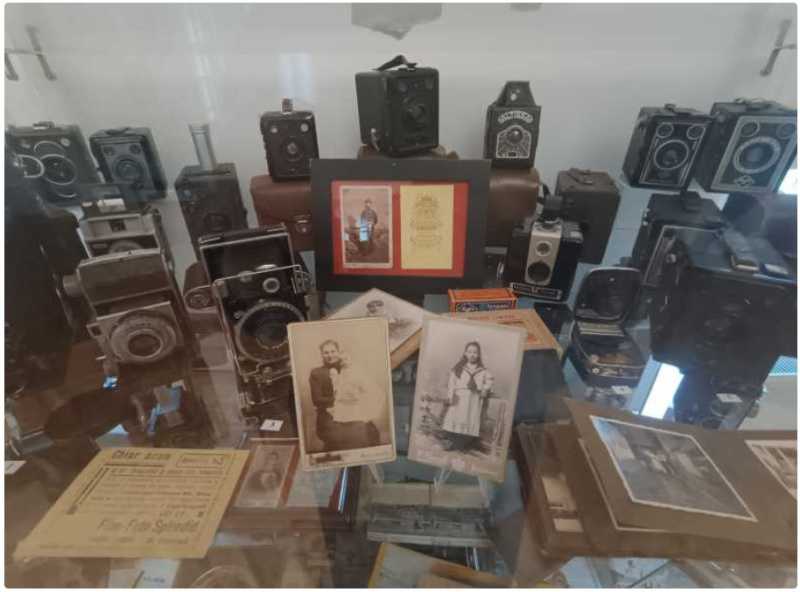
'1001 Cameras and Photo Accessories' exhibition opens in Miercurea-Ciuc, tracing a brief history of Romanian photography
An impressive exhibition dedicated to the history and evolution of photography opened on Wednesday at the Upper Olt and Mures Rivers Museum in Miercurea-Ciuc, offering visitors a chance to explore fascinating stories from the world of photographic art. Titled '1001 Cameras and Photo Accessories. A Brief History of Romanian Photography', the exhibition
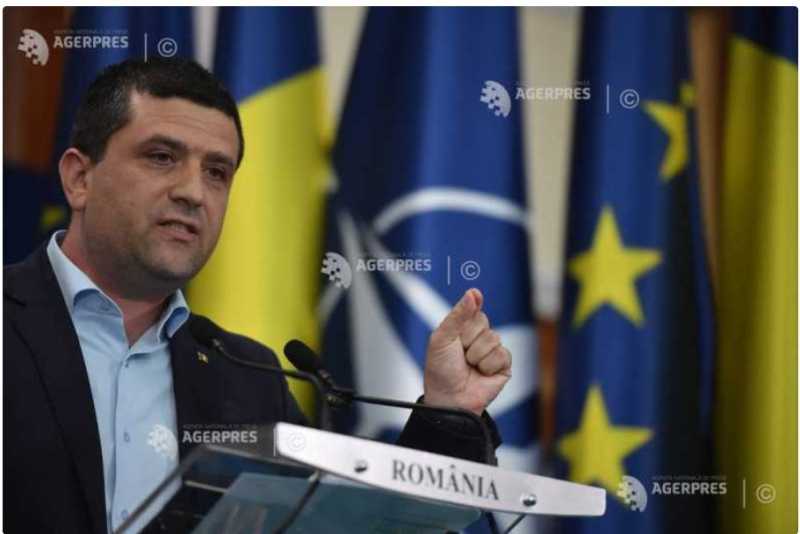
Defence Minister Miruta highlights allied solidarity with Romania at NATO's top decision-making level
Defence Minister Radu Miruta said on Wednesday that, during the Alliance's ministerial meeting, NATO allies sent 'a clear message' of solidarity with Romania and with the security of the Black Sea region. 'During today's NATO ministerial, Romania brought for the first time onto the Alliance's agenda the risks posed by the use of naval d
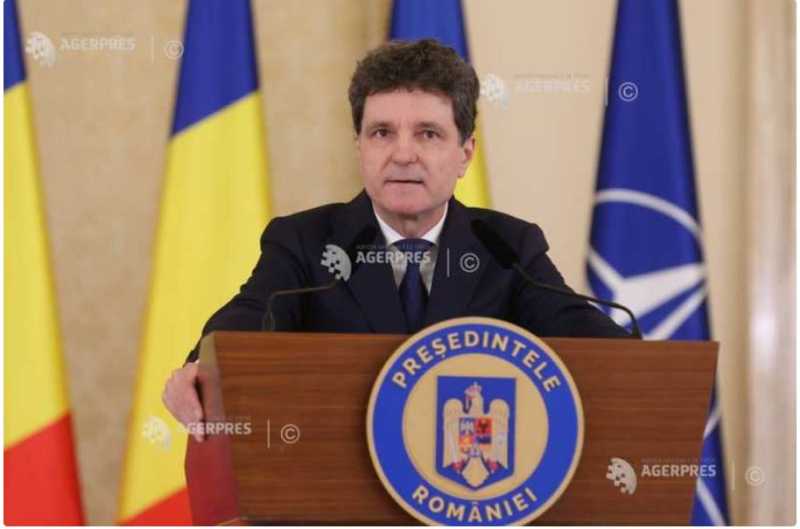
President Dan: Politicians focused on future elections, Romanians want governing formula
Romanians want a governing formula, President Nicusor Dan said on Wednesday. 'Ever since entering politics, I have seen politicians focused solely on calculating future elections - in this case, the 2028 parliamentary elections. I want to stress that Romanians care very little about our electoral debates and political posturing. What Romanians want is a go
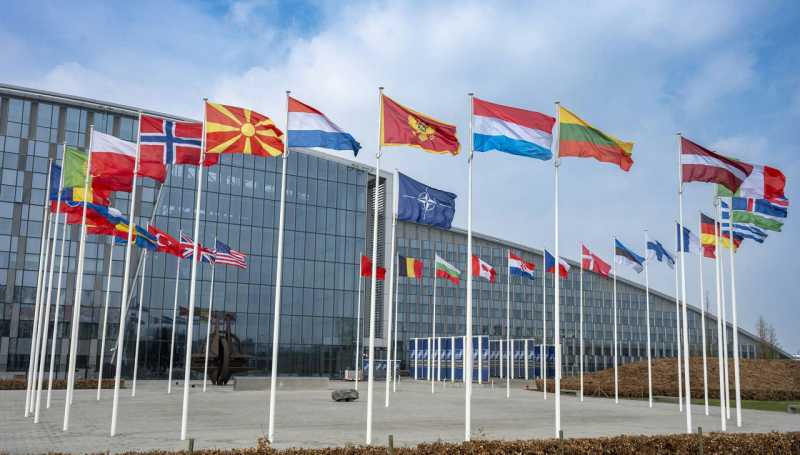
Romania highlights need to urgently strengthen NATO's air defence, drone combat capabilities
At a recent meeting of the North Atlantic Council, Romania highlighted the need to urgently strengthen the NATO capabilities deployed on the national soil, especially in the areas of air defence and drone combat, according to the Ministry of Foreign Affairs (MAE). The North Atlantic Council held a meeting on Wednesday at NATO headquarters in Brussels on Black
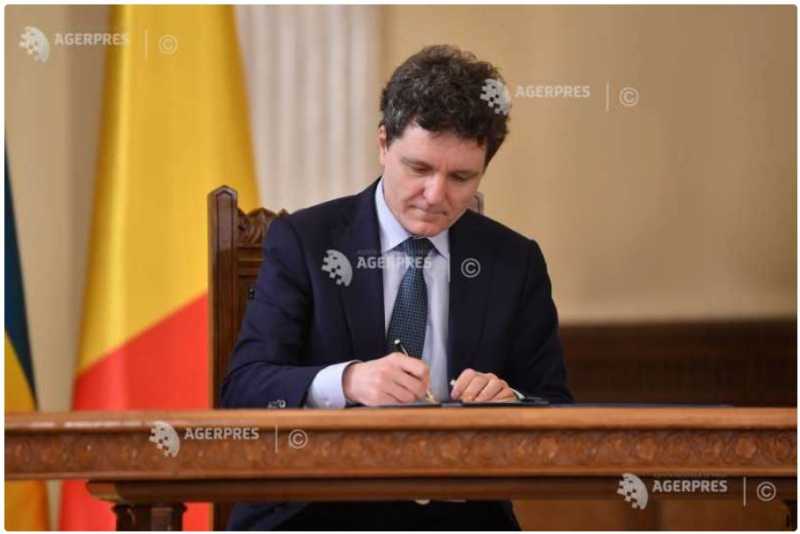
Promulgated law designates June 15 National Day for Victims of June 1990 Mineriad
President Nicusor Dan signed a decree on Wednesday establishing June 15 as the National Day of Remembrance for the Victims of the Mineriad of June 13-15, 1990 and Anti-Democratic Repression, with the aim of honouring the memory of those killed and injured during the violent crackdown, promoting civic education and preventing the recurrence of such atrocities.

Ministry of Foreign Affairs: Homes of three Romanian families vandalised during Belfast overnight unrest
The homes of three Romanian families were vandalised amid Tuesday night's unrest in Belfast, the Foreign Affairs Ministry said. According to the institution, representatives of the Romanian consular office in Edinburgh are in contact with three Romanian families whose homes were vandalised during the events of the night of 9 June. The Romanian nationals ar

La Francophonie is also a place for business promotion (expert)
La Francophonie is not only a common space of culture and civilisation, but also a space for the promotion of business, because a common language and its elements create the first step in terms of cooperation, Adrian-Victor Vevera, general director of the National Institute for Research and Development in Informatics - ICI Bucharest, said on Wednesday, at a specialist event.

ForMin Toiu: Europe's peace must be renewed daily; Romania, France uphold it together
Peace in Europe is not a given but a commitment that must be renewed every day, and Romania and France are upholding that commitment together, interim Foreign Affairs Minister Oana Toiu said on Wednesday at an event marking the centenary of the Treaty of Friendship between the two countries, the Ministry of Foreign Affairs (MAE) said. The MAE is marking the 10