

CONTEMPORARY AUTHORS/Alina Purcaru: Writing is meant to bring us together
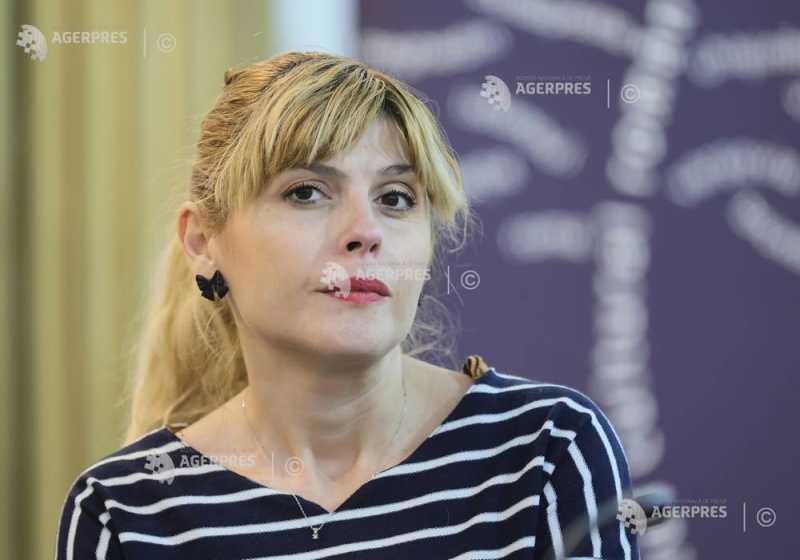
Writer and cultural journalist Alina Purcaru tells AGERPRES in an interview about the themes underpinning her most recent volume, 'Clivaj. Fidelitate'/'Split. Fidelity' (Cartier Publishing House), nominated for the Radio Romania Cultural Awards and the Observator Cultural magazine Awards for 2025, which are due to be presented in the coming period. The book explores a period of personal crisis, relying on introspection and tracing both the stages of the author's formation and the evolution of her writing.
Her previous volume, 'Tot mai multa splendoare'/'More and More Splendor', received four of the most important literary awards in Romania: the Poetry Book of the Year Award (Gala Tinerilor Scriitori/Young Writers' Gala), the Observator Universitas Award, the Z9 Poetry Award and the Leibniz Poetry Award.
In the interview, the author also discusses how writing has been, since childhood, a tool for exploring her most intimate feelings, as well as the recurring themes in her books - family, friendship, romantic relationships and the female experience - and her constant attention to the social and political dimension of literature.
AGERPRES: Did you always want to write poetry?
Alina Purcaru: Yes, but not only poetry, although I did start with poetry. I wanted to write everything. I've been writing poetry since I was very young, in primary school, as many children do, perhaps also because I had been taught that poetry is a valuable form of currency, beyond the fact that it can be beautiful: if I recited poems from memory when guests came over, or simply on request, I would receive something in return - a small 'well done', a peck on the chick, a coin.
My grandparents and parents would make me memorise poems, the longer the better. 'Scrisoarea III'/'The 3rd Letter' and 'Luceafarul'/'The Morning Star' by Eminescu were, of course, the peaks - they didn't bother with children's poetry. After memorising and reciting them on various occasions, the admiration I aroused made me feel like I was the centre of the universe. So perhaps that played a part as well.
I kept a diary - secretly, of course - written in the German I was learning at the age of 12-13. In the meantime, I have completely forgotten the language, so it would be impossible for me to read that diary now, although I remember how important it felt at the time. And there was another moment I remember when writing brought me real joy.
It was during a spring holiday, I was 13, and I wrote my friend a letter as long as an exercise book, in which I told her, day by day, every little thing I did in the countryside, in the south, at my grandparents'. I also remember how my maths teacher, a great reader, gave me 'Les Fleurs du mal' and other French poems at the beginning of a holiday around that same period and told me not to read only Cosbuc [Romanian poet from the late 19th century-early 20th century - editor's note]. I didn't understand very much of what I was reading then, but I did fell like something shifted in me. What is clear to me now is that I integrated writing, like reading, into my most intimate life from an early age, and later it found its path, however winding, through everything I experienced.
AGERPRES: You made your debut relatively late compared to your peers of the same generation, but you had already been active in the literary world in other roles. Which stage do you think left a stronger mark on the poetry you write - the earlier one, or the later context in which you made your debut?
Alina Purcaru: In terms of stylistic sensibility, I am far more immersed in and shaped by the period in which I made my debut. My first poetry book, 'rezistenta'/'resistance' (Cartea Romaneasca) came out in 2016. I had a small child, I had just separated from her father, a well-known writer with a completely different status and experience from mine. I felt utterly insecure, disoriented, fragile, but that book - my first - was like a small lighthouse in the turbulence of that period.
Before that, I had coordinated a volume of confessions by writer-mothers about continuing to write when children are very young and time vanishes at great speed, 'Povesti cu scriitoare si copii'/'Stories with Women Writers and their Children' (Polirom). I think both the meetings with the writers who contributed to the book and the feeling that I wasn't the only one finding it very difficult to complete anything accelerated things, in such a way that poetry became an urgency at that time. I had already written much of the poetry in that first collection, especially after meeting several poets at an edition of the Discutia secreta/Private Talks festival in Arad, where I spoke extensively about poetry with Ruxandra Novac, V. Leac, Cristina Ispas and Ioana Nicolaie, and where I also met David Berman, the American poet and musician.
Something shifted then - I quite literally breathed in the air of literature in all its forms: read, performed on stage, dissected in evening discussions, and that brought me back to writing poetry, which I had abandoned during university. At the time I was part of Simona Popescu's group at the Faculty of Letters; we all wrote a collective novel, 'Rubik' (Polirom). I had begun publishing criticism and reviews in literary journals and had become somewhat fixated on the idea of the great novel I was going to write, and poetry got lost along the way.
In any case, whatever my path may have been, I never felt a strong affinity with the abrasiveness of the 2000s literary movement, although there is a biographical vein there that resonates with me; similarly with the neo-expressionist atmosphere or the remnants of oneirism, but those are already directions that go beyond a generational mode of expression.
AGERPRES: Tell us about some of the titles that shaped you in those wild 1990s. Did they remain important later on?
Alina Purcaru: I was very chaotic as a reader back then, like many of us. Basically, I was reading whatever I found at home, and whatever I borrowed from public libraries, which have always been essential to me. However, those books that I was reading around the age of 12-13, a curious mix, opened my appetite for more and more. Back then I discovered 'Wuthering Heights', which left a lasting impression and remains one of my favourite books. I had borrowed it from a neighbour in the apartment block across the street, something that still felt safe at the time. We saw each other often, so there was little risk of books going missing.
I was reading 'Shogun' together with my best friend - another defining encounter of that period - along with Pavel Corut's works, like everyone else at the time, and romantic novels by Sandra Brown and Barbara Cartland, which we giggled over during breaks in school or at small get-togethers with TEC soft drinks and homemade layered cakes baked by our mothers. But I was also reading 'Jane Eyre' [by Charlotte Bronte - editor's note], 'Crime and Punishment' [by Fyodor Dostoevski - editor's note] , 'Maitreyi' [by Mircea Eliade - editor's note], 'La Medeleni'/'At Medeleni' -by Ionel Teodoreanu - editor's note], 'The Red and the Black' [by Stendhal - editor's note], everything I could find by Alexandre Dumas, Paul Feval and Michel Zevaco - a blend of Romanian classics, world mythology, books on raw food, astrology and obscure Victorian writers like A.J. Cronin, whom, to be honest, I'm not sure anyone still reads today.
I remember perfectly how I discovered Russian writers and began systematically working through them at around 13. I used to watch the American series 'Beverly Hills, 90210', and the female characters we were all obsessed with - Brenda, Kelly and Donna - were talking in their convertible about their favourite Russian writer. Suddenly I realised I had no idea what they were talking about (even though at that age I was certain I knew everything about all their other topics), so I decided to catch up.
By secondary school I had moved on to more substantial and structured reading, with a great deal of English and American literature - from Jane Austen to Henry Miller, John Fowles, Salinger and Richard Brautigan. I also discovered Steinbeck, D.H. Lawrence and Henry James around that time, whom I read extensively and who remain among my great favourites, as does Thomas Mann, whom I also encountered in adolescence.
A major role in this whole reading crusade was played by my English literature teacher in Craiova, Eduard Mossang, who didn't necessarily require us to read anything, but simply had that presence - much like the girls in that 'Beverly Hills, 90210' scene - that made you want to know everything he knew.
Some of the books I've mentioned remain extremely important to me, and from the way I approached reading in my teenage years - curious about everything - I've retained an openness to many genres, including some perhaps looked down upon by the literary world, such as popular fiction, with its countless offshoots.
AGERPRES: You have recently published a new poetry collection, 'Clivaj. Fidelitate'. Tells us how it all started.
Alina Purcaru: It is a book about a personal crisis - an auto-ethnography of a crucial period in my formation, and not only mine: the 1990s, when I was always moving between spaces, between homes, in a state of provisionality that was never named as such at the time. The middle section of the book, which includes prose poems, relates to that state. The opening and closing sections cover a saturated spectrum of states - from desire and indulgence towards the body to rupture and the stages of mourning. And here I am speaking both about the mourning of a relationship and the mourning following the death of someone dear.
I wanted to write about everything that can be felt most intensely, most formatively, and at the same time most destructively. It is a book that is as personally risky as it is aware of the political fabric that contains us. It saved me in several ways; it pulled me out of my own depths with its obsessive, repetitive, restless, imperfect energy. I welcomed it - I had no other choice.
AGERPRES: Your volume can also be read as a journey - through space, horizontally, across the places you visited, but also through time, vertically, through the recollection of various past experiences. It is a crossing - and an overlapping - that seems typical of a process of maturation. Is that the case? Can 'Clivaj. Fidelitate' also be seen as a book about maturing?
Alina Purcaru: Without a doubt, because at its core it is a contemplative, analytical book. That is how I feel it, beyond the sense of urgency it conveys. I spent a great deal of time looking back, all the more so because I wanted - and still want - to look forward. I had to name certain experiences in order to understand what brought me to certain painful breaking points, to understand why I experience what I do and, just as importantly, to understand how I can remain lucid, receptive, even optimistic.
It was important for me to write about moments that the child I once was experienced with anxiety - to describe, for instance, the journeys between a small town in the Jiu Valley and my grandparents' village, always carrying provisions, always surrounded by family, witnessing, together with my sister, all the changes they organised and that we followed, willingly or not - this constant movement, organisation and reorganisation.
Or about the feeling of being out of place in a big city whose customs you do not know, which can be aggressive, discriminatory, even harsh - especially towards young women, towards bodies that do not conform, towards a lack of resources, a lack of polish. Or about the less obvious ways in which a girl can be crushed or put at risk in the course of the most ordinary routines, under the eyes of loved ones - because that is how patriarchy and aggression against us function.
And, equally important for me, was writing about that kind of learning that we, as women, acquire over time, which sometimes helps us pull ourselves out of the abyss - and to help others do the same: the quiet formulas of feminism. It was vital to name and describe everything that was most painful - loneliness, suffering, lack of perspective, separation, the stages of grief - states that no one can ever experience on your behalf, states that may temporarily deform you but which it is essential to pass through, relying on all the gentleness you can find around you, in order to meet yourself again and again.
AGERPRES: There is, in this volume, a very fine balance between the personal/intimate space and the broader social and political one. How important is this socio-political dimension to your art?
Alina Purcaru: I think it instinctively shapes the way I look at things and what I choose to extract from reality. I no longer feel the need to name or theorise this perspective - it seems intrinsic to me, something that is refined daily, and to keep talking about it would be like speaking every day about the fact that I can breathe, for instance. That said, there are nuances here. We do not express our values, our anger or our criticism in the same way in poetry.
For me, it matters to remain honest with my inner world, not to falsify it, and always to find my own way of speaking about the social and the political, even if it is not always as overt as in the work of other writers who adopt this perspective. We may believe in the same things, but it is remarkable to realise that, at the level of expression and creativity, we can find such different, surprising and innovative ways of speaking about them.
AGERPRES: Do you think social and political engagement is essential today in all areas of art?
Alina Purcaru: I think you cannot really say anything meaningful for others if you lack such anchors. I also believe there are many ways of being engaged, and it is important to recognise that and not constantly go around with some highly precise instrument measuring other people's level of engagement - often just to push them aside for not conforming.
I also believe everyone has the right to disconnect from the surrounding chaos and to take care of themselves, and that it is even necessary to do so when we feel exhausted - and to hold on tightly to that right. We are not news agencies, however interested we may be in the world and its wider dynamics.
At the same time, I think we must remain informed, compassionate and vigilant, strive to learn as much as possible, constantly educate ourselves about the chaotic course of the world, and side with those who are dispossessed, harmed or subjected to forms of aggression from which most of us are spared. We must remain aware of the ways in which we are connected to others, and how a tragedy affecting some of us will, sooner or later - if we turn a blind eye - become a tragedy for even the most protected among us.
I believe you cannot even write about the geranium on the windowsill without it somehow revealing whether you are aware of what lies beyond your own window. Writing is meant to bring us together, I think, and I am not sure how many of us are still interested in reading page after page of purely individual obsessions while the world is falling apart before our eyes.
AGERPRES: Returning to your volume, it is divided into three parts. Did you structure it that way from the outset?
Alina Purcaru: All my books have this structure - it comes to me instinctively - but this time, initially, I wanted to write a continuous volume of prose poems. Things gathered momentum along the way, so I ended up returning to the old division that works for me.
It is as if I am reluctant to give up a way of organising the content of the poems according to the tonal direction they lean towards - as though, no matter how cohesive the volume may be, I still need to create distinct rooms for related emotional states. Three works for me as an optimal unit of balance: the drama is no longer polarised, it is distributed into smaller, more concentrated portions, and a rhythm of intensities is created that the book needs.
AGERPRES: Among the essential elements of this volume is 'desire', also present in your previous book alongside 'splendour', and my impression is that their role is somewhat subversive, especially in relation to a whole set of prejudices that label women's writing as concerned only with personal relationships, trivial matters, and so on. Is that the case?
Alina Purcaru: That was one of my main aims - to reclaim, through what I write, even by drawing on a kind of camp aesthetic, experiences, rituals and aspects of femininity that have been rejected, deemed inferior, ridiculed and marginalised.
I wrote with immense pleasure and great freedom about the cheapest melted candles, about the fruity smell in rooms where girls return at night - often with their hearts pounding because they hear footsteps behind them in the dark - about the history we carry in our clothes, and about how we can find, together, spaces where we can feel free.
I wrote repetitively, obsessively, like a broken mill, embracing everything that kitsch and melodrama can offer to poetry - the revolt, the defiance. I would read such books at any time, and I would write even more about the explosive potential hidden in what is dismissively labelled, in a chauvinistic way, as frivolity.
AGERPRES: Literary critic Mihnea Balici observed a common note of 'electro-glamour' between your previous volume, 'Tot mai multa splendoare', and Deniz Otay's debut collection, 'Fotocrom paradis', whereas in 'Clivaj. Fidelitate' I sensed a note more in common with Ruxandra Novac's poetry in 'alwarda'. How diverse do you find contemporary women's poetry, and what would you say are its main stakes?
Alina Purcaru: I think encountering common ground is the most natural thing, both as a writer and as a reader, wherever we come from. I have complete admiration for the two poets you mentioned. In our context, women's poetry would require its own map, because it cannot - and should not - be reduced to a single formula.
There is political poetry, feminist poetry, queer-feminist poetry, anti-speciesist poetry that incorporates a critique of capitalism in the Anthropocene; there is abstract, experimental, intimate poetry with a restrained tone, yet profound and impactful. There is playfulness, humour, revolt, social critique, irony, tenderness, autobiographical writing, disobedience, and a great deal of knowledge in the poetry that women write today. It is a complex territory, and I hope it continues to expand.
AGERPRES: In 'Tot mai multa splendoare' you had a cycle of poems/imaginary letters addressed to a Danish vlogger, Gitte. In this volume, you have an extensive poem dedicated to the goddess Venus. This made me think of the many examples in recent years of reclaiming myths from a feminist perspective, especially considering that myths are often part of our formative readings. Did you have this recuperative trend in mind when writing the poem?
Alina Purcaru: I am certainly familiar with this method of feminist reclamation. It spoke to me and gave me courage. But that poem also comes from a personal spiritual practice. For a long time, I had an elaborate altar dedicated to figures or female archetypes central to me. I think it is time to refresh it, but let's say that poem is also a kind of altar construction - only in a different medium, with a different type of offering and search.
I look for impulses and liberating springs in any kind of practice, however far it may deviate from what is considered spiritually, artistically, or epistemologically 'correct'. The achievements and explorations of other women writers are sources of energy, inspiration, and courage for me. I value them immensely and seek them out with passion.
AGERPRES: In the poetry of the 2000s, the body often appeared, following a neo-expressionist line, as an object under assault, whereas in post-2000s poetry, which includes your own, there is a strong concern for the body. Do you think this shift in perspective on the body is among the most important changes between these two stages in contemporary Romanian poetry?
Alina Purcaru: In my poetry, as in post-2000s poetry with which I feel a strong affinity, the body is reclaimed for what it represents: pleasure, legitimate forms of knowledge, ecstasy, and as a source of vision and creativity. It is no longer rejected by the old spirit/body dichotomy that has governed knowledge and artistic creation since Antiquity.
I feel we are witnessing a crucial mutation: a kind of hedonism with a rebellious, liberating potential, which challenges the very order of a patriarchal, normative, extractivist and disciplinarian world. Undisciplined bodies, bodies that reject categories, control - in short, revolutionary bodies - embrace pleasure, love, and tenderness as modes of transforming the world.
It is a vision I deeply embrace: a vision of revolutionary gentleness. It does not deny trauma or the violence experienced, but it no longer recognises them as a personal home. It encompasses them and tries to place them in broader, collective contexts, in order to understand, heal, overcome, and transform them into instruments of change and connection.
AGERPRES: Your most recent poetry volumes, two children's books, and the four volumes collected under 'Un secol de poezie scrisa de femei'/'A Century of Poetry Written by Women' - co-edited with Paula Erizanu - were published by Cartier in the Republic of Moldova. It seems a happy collaboration; how did it come about?
Alina Purcaru: It is a very happy collaboration, which has grown organically over time, much like the friendship between me, Paula Erizanu, and the people who make these books possible. I think it rests on a shared understanding of the life of books, their values, and the forces that carry them into the world. There is also a lot of trust, honesty, respect, and admiration for solid achievements.
Paula and I became friends eleven or twelve years ago at the Bistrita Poetry Festival; we resonated spontaneously and continued to talk, meet, and plan projects together. She invited me to write a children's book, then a second one, and things progressed smoothly. Later, we began working on anthologies, and eventually 'Tot mai multa splendoare' naturally found its way to Cartier. This is a collaboration spanning years of joint effort, and such work cannot happen without profound compatibility.
AGERPRES: You recently had a literary residency in Chisinau. Could you tell us a bit about that experience?
Alina Purcaru: It was a residency offered by the National Museum of Literature in Chisinau, which for me was a small miracle. I am writing my first novel, and progress is slow because my days are fragmented by various other jobs, as is the case for most of us. Entering the flow of prose writing under such conditions is very difficult, and I know I am saying nothing extraordinary here - most writers face the same challenges.
It was therefore a great privilege, a wonderful gift. I wrote, I moved the story out of a dead end, I was able to imagine it further, and I gained hope that I could finish it - all in a warm city, full of captivating things and generous people. It was a very good time with myself.
AGERPRES: You have written book reviews for a long time, but recently it seems you have done it less frequently. Why?
Alina Purcaru: I needed a break, partly to refresh my language and try to clear my vision. I have been writing reviews since 2007 - eighteen years of consistent practice. Not weekly, but consistently, and over time, if you are honest, you see your repetitions, your dead ends, your automatisms. I wanted to overcome them, to regain a fresh perspective, a new form of enthusiasm. I wanted to find new reasons to write reviews.
There were also conflicts, tensions, accusations over legitimacy in our literary space - scandals and small upheavals. Such debates probably needed to happen, but they drained a lot of my energy, massively demotivated me, and made me question my approach, perspective, and purpose even more. Now things are clearer for me, and I miss writing long reviews under tight deadlines.
This form of writing is something one I clearly miss, but there is another factor: there are very few magazines where one can still publish such book reviews. So it is a combination of factors, aside from the lack of compensation, in most cases, for this type of work. How motivating can that be? Certainly, I miss it; it is a form of writing that has become part of me, even if I set it aside for a while.
AGERPRES: You have conducted several interviews with foreign authors during the last few years of literary festival activity in Romania. Could you share a moment that remains particularly vivid in your memory from these interviews?
Alina Purcaru: Just one moment - what a challenge! It was meeting Kapka Kassabova at FILIT in 2024, a person of rare warmth and wisdom. We talked about war and destruction, but also about the possibility of healing. About the importance of becoming one with a place, listening, and how the other person will speak if you truly listen. We talked about encounters with foreigners and the moment when a foreigner is no longer a stranger.
I felt warmth and gentleness speaking with her - a person full of curiosity, honesty, and the desire to understand and love the world, day after day, despite violence, abuse, and disasters. She was confident that all this would end, and that we would be capable of living in harmony and healing.
AGERPRES: Returning to the four volumes 'Un secol de poezie romanească scrisa de femei', they clearly have immense value, but I imagine they required enormous work. What was it like working on this project?
Alina Purcaru: It was long-term work, spanning several years, requiring dedication. We stayed committed to the project, confident in its story, though it was far from easy. Some volumes were published during the pandemic, when access to libraries was restricted, and some poets' works could only be found in local libraries, far from us.
We hunted down everything we could, bought books from second-hand shops, anywhere we could find them. Gathering information about all the authors was not easy, but persistence pays off.
Additionally, there was distance - I was living in Bucharest, Paula in London. We could only meet rarely, but we communicated constantly. I think this is a project in which both of us invested enormous passion and trust. Somehow, we just knew it would work; we had the feeling that there was a treasure of overlooked women's poetry we would find. We initially planned one volume, but after the first round of exploration, it was clear it wouldn't suffice.
Cartier played a major role: they provided space, engaged in this recuperation project, which has stakes beyond the literary. It shows girls and women that poetry has been a terrain claimed and shaped by women poets, that there is a continuity of voices, a history of women's poetry, and that it is all the more valuable for those of us writing today, given how long it was denied.
I also think we succeeded simply because we were moving in the same direction, with a strong compatibility between us - otherwise, such a long-term, multi-year collaboration with a unified vision could not have happened.
AGERPRES: What comes next for Alina Purcaru?
Alina Purcaru: I hope for a new book. Above all, I want to finish my first novel. That is my main desire now in terms of writing. And if I can also write poetry in the meantime, that's already wonderful.
Alina Purcaru is a writer, journalist, and translator. She has published four poetry volumes: 'rezistenta'/'resistance' (Cartea Romaneasca, 2016), 'Indigo' (Tracus Arte, 2018), 'Tot mai multa splendoare'/'More and more splendour' (Cartier, 2022), and 'Clivaj. Fidelitate'/'Split. Fidelity' (Cartier, 2025). She is co-author of the collective novel 'Rubik' (Polirom, 2008) and editor of several collective volumes: 'Povesti cu scriitoare si copii'/'Stories with Women Writers and Their Children' (Polirom, 2014), '10.000 de semne'/'Otros 10.000 caracteres' (bilingual Romanian-Spanish prose anthology, ICR, 2017), and, together with Paula Erizanu, the three-volume poetry anthology 'Un secol de poezie romana scrisa de femei'/'A Century of Poetry Written by Women' (Cartier). She has also published two children's books, 'Catrina si marele Domn Somn'/' Catrina and the Big Mr Sleep' and 'Un unicorn in muzeul de oase'/'An Unicorn in the Bones Museum' (both published by Cartier, illustrated by Mihaela Paraschivu, 2017). She has participated in numerous national and international literary fairs and festivals, is a PEN member, and her poems have been translated into several languages (Hungarian, Spanish, English, Greek), appearing in various collective volumes. AGERPRES (RO, EN- writing by: Cristina Zaharia)
The content of the www.agerpres.ro website has the exclusive purpose of public informing.
All the information published on this website by AGERPRES is protected by relevant legal dispositions.
It is forbidden to copy, reproduce, recompile, decompile, distribute, publish, display, modify, create derived components or products or full services, as well as any exploitation of the site's content.
Details in the section Terms of Use. If you are interested in picking up AGERPRES news items, please contact the Marketing Department – marketing@agerpres.ro.
The use of the Comments section entails your obligation to respect the AGERPRES terms and conditions in regards to the publishing of comments on the www.agerpres.ro.
Other news in category

Bookfest International Book Fair to kick off on Wednesday; Bulgaria - Guest of Honour
The nineteenth edition of the Bookfest International Book Fair will take place Wednesday through Sunday at Romexpo, with book lovers invited to attend 455 events organised by 158 exhibitors, marking twenty years since the first edition launched by Gabriel Liiceanu in 2006. 'At this nineteenth edition we will have 158 exhibitors and 455 events taking place
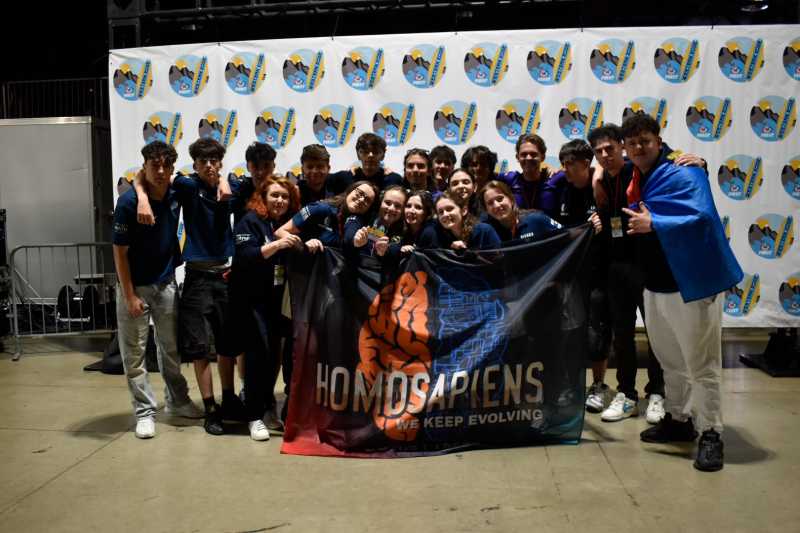
'Homosapiens' team from Buzau wins Inspire Award 2nd Place in global robotics competition in U.S.
The 'Homosapiens' robotics team from the B.P. Hasdeu National College in Buzau won the Inspire Award 2nd Place in the Sea Division, the most prestigious award in the FIRST Tech Challenge, at the Western Edge Premiere Event in Long Beach, California, United States. Following a series of qualification matches and several victories, the robotics team anno
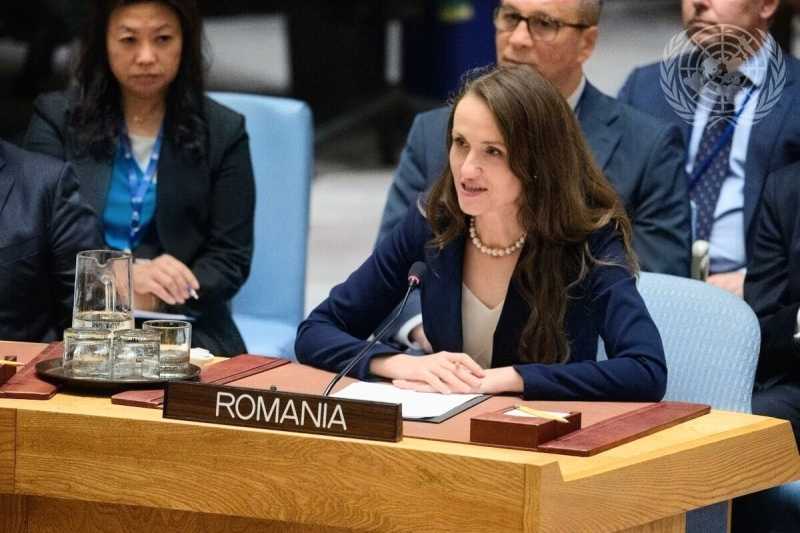
Interim ForMin Toiu says we must ensure the line is not moved, as some would like
Romania's interim Foreign Affairs Minister Oana Toiu told the UN Security Council on Monday that Romania has a shared responsibility to draw a line and not allow it to be moved, in the context of the incident in Galati, in which a Russian drone crashed into a residential building and injured two people. Oana Toiu underscored that this is the first time in
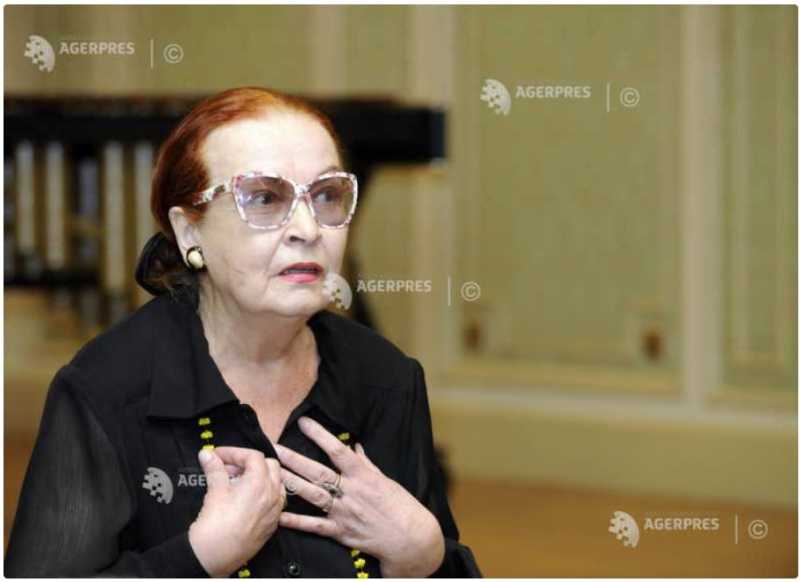
Former TV presenter Sanda Taranu dies at 87; UNITER praises her rare elegance and dignity
Sanda Taranu, former Romanian Television (TVR) presenter (1963-1998), actress, radio and TV host, journalist and translator, has died on May 29 at the age of 87. The National Union of Romania's Stage Performers - UNITER announced her passing on Saturday, calling her 'an emblematic figure of the Romanian Television - a calm, warm voice, a person of rare
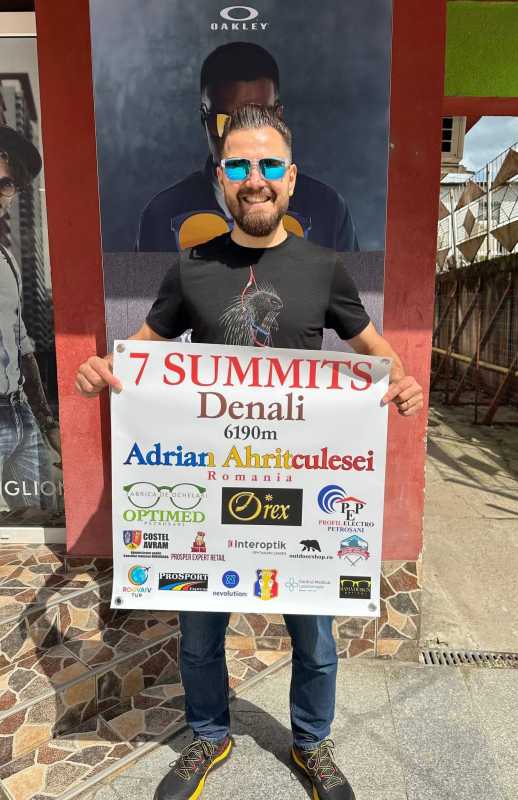
Climber Adrian Ahritculesei heads to Alaska to attempt Mount McKinley, his final Seven Summits peak
Romanian climber Adrian Ahritculesei from Petrosani left for Alaska on Monday to attempt Mount McKinley (Denali), the 6,194-metre peak that is the highest in North America and the last summit he needs to complete the Seven Summits challenge. The Seven Summits circuit includes the highest peaks on each of the seven continents, and Ahritculesei has already succe

Children's Day/Nicusor Dan:This celebration is a commitment to building a Romania where every child is protected and heard
President Nicusor Dan said on Monday, on the occasion of Children's Day, that the celebration represents more than a moment of joy - it is a commitment by society to create an environment in which every child is protected, respected and encouraged to follow their dreams.
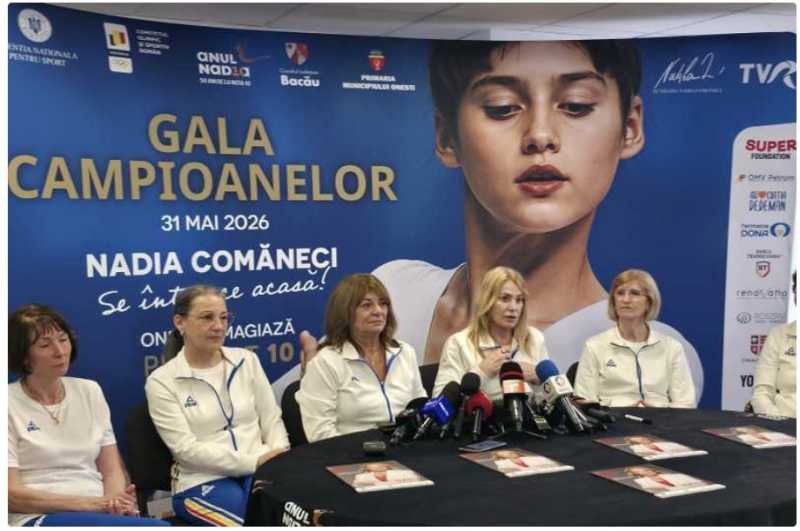
#NadiaYear/Comaneci urges sport boost, hopes children will thank parents for guiding them to gymnastics
Legendary gymnast Nadia Comaneci said on Sunday that she hopes the year marking the anniversary of her historic first perfect 10 in gymnastics at the 1976 Montreal Olympic Games will help children understand the importance of sport. At a press conference in her hometown of Onesti, Comaneci said: 'We hope this year will be a boost for all children to unders

#NadiaYear/ Nadia Comaneci urges restart for sports education, calls for investment in sport infrastructure
Legendary gymnast Nadia Comaneci was in her native town of Onesti on Sunday for the apparatus finals of the 'Nadia Comaneci - Perfect 10' International Gymnastics Competition. She was greeted outside the 'Nadia Comaneci' Sports Hall by dozens of children who chanted her name, offered her flowers and took photos with her. Before e
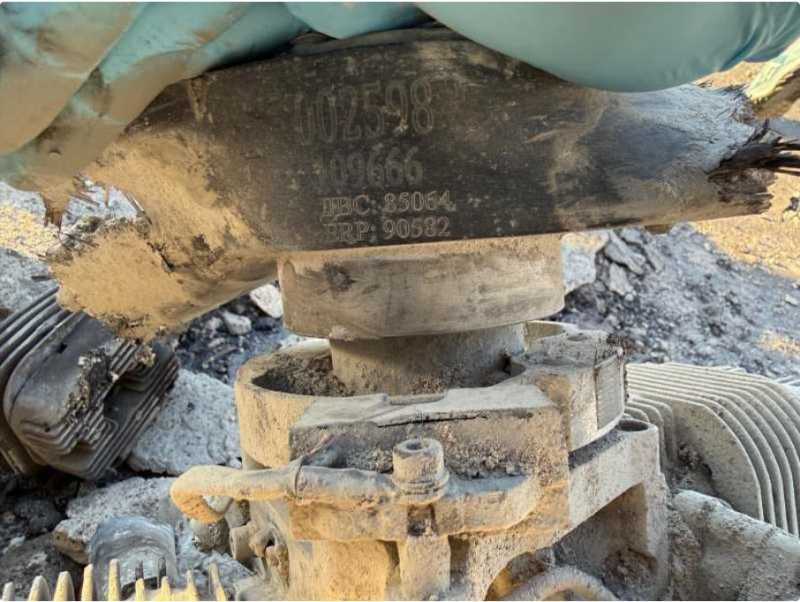
Defense Ministry: Drone that hit Galati block was kamikaze-type, GNSS-guided, carrying 30-kg explosive charge
The National Defense Ministry released on Sunday further technical details following the examination of the drone that crashed into a residential building in Galati in the early hours of Friday. According to the ministry, the object was a GERAN-2 aerial drone of Russian manufacture, with investigators identifying evidence to that effect, including a partially

President Dan confirms Galati-crash drone was Russian, vows no life-threatening incident will be downplayed
President Nicusor Dan announced that the drone which crashed in Galati in the early hours of Friday was a Geran-2 of Russian origin, stressing that Romania 'will neither ignore nor downplay' any incident that endangers the lives of its citizens, national security or the sovereignty of the Romanian state. 'This is the unequivocal conclusion of the t
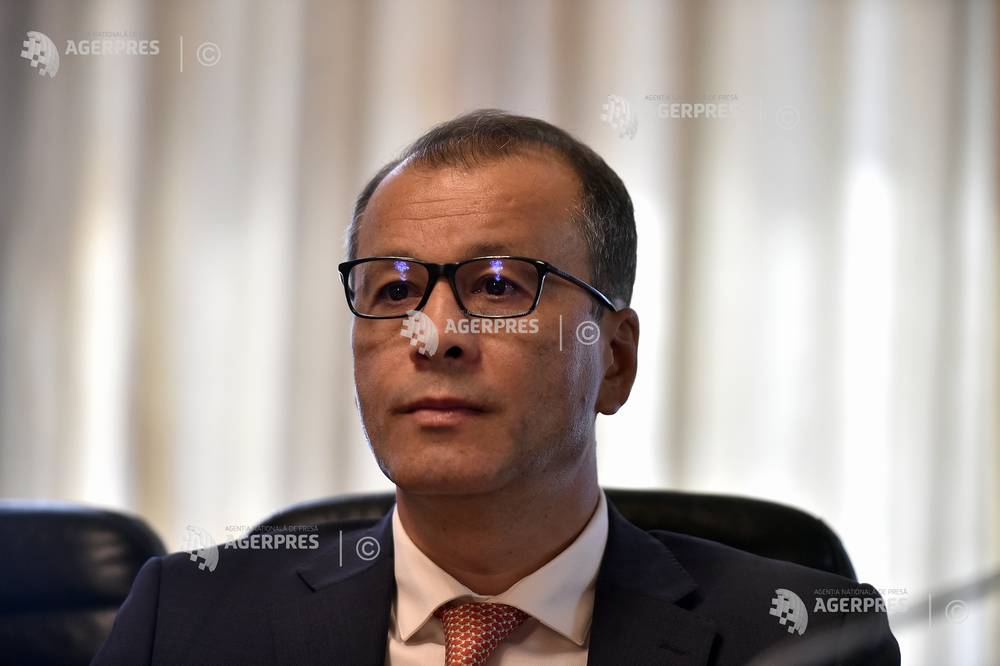
UN Security Council to meet in emergency session on Monday following Galati drone incident
Romania's Ambassador to the United Nations, Cornel Feruta, announced that an emergency session of the UN Security Council will take place on Monday at 3:00 p.m. local time at the UN Headquarters in New York, following Romania's request. 'Immediately after the incident involving the Russian drone that exploded on the apartment building in Galati, Ro

Children's Day/PM Bolojan:Romania's children deserve to grow in a society that offers them safety, education & care
The children of Romania deserve to grow up in a society that provides them with safety, education, care and the chance to follow their dreams, acting Prime Minister Ilie Bolojan said on Monday, on the occasion of Children's Day. He added that a country must be built for the young generation, that they can trust and where they will want to stay.

Drone crash in Galați/Dan tells BBC:Expulsion of Russian ambassador not ruled out over further incidents
Romanian President Nicușor Dan said in an interview with the BBC on Saturday, he has no doubt it was a Russian Geran-2 drone which entered his country's airspace and hit an apartment block in the east of the country, following an incident involving an attack on the Ukrainian port of Reni, in the Danube region. In the interview, President Dan did not rule out expelling th

Nadia Comaneci: I'm proud of the girl from Montreal; I always wanted to discover my limits
The great gymnast Nadia Comaneci, decorated on Saturday by President Nicușor Dan with the National Order of the Star of Romania in the Grand Cross degree, spoke about the moment she became Olympic champion at just 14 years old, saying that, looking back, she is proud of the child she was and of the courage she had back then. The distinction was offered to him

Nadia Comaneci - decorated with National Order of the Star of Romania in the rank of Grand Cross
The great gymnast Nadia Comaneci was decorated, on Saturday, by President Nicusor Dan, with the National Order of the Star of Romania in the rank of Grand Cross. The President said, before the decoration, that currently, the word 'exceptional' is perceived differently. 'If we look at the news, yesterday we see that 100 exceptional th