

CONTEMPORARY AUTHORS/Rachel Kushner: In novels, the protagonist has the first and last word
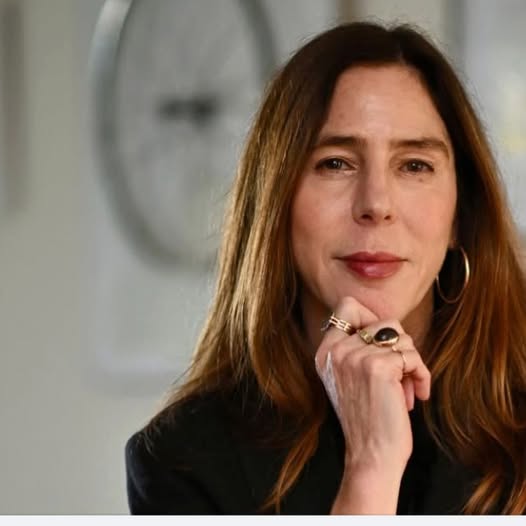
American author Rachel Kushner granted an interview to Agerpres, in which she talks about her most recent novel, 'Creation Lake', recently translated into Romanian, as well as her writing, how she builds her characters, and her themes of interest, such as, in this particular novel, eco-activism or small communities.
She is known for her novels 'Telex from Cuba' (2008), 'The Flamethrowers' (2013), 'The Mars Room' (2018), and 'Creation Lake' (2024).
Three of them were also translated into Romanian: 'The Flamethrowers' as 'Aruncatorii de flacari' (Vellant, 2022, translated by Deniz Otay), 'The Mars Room' as 'Clubul Mars Room' (Vellant, 2019, translated by Mihaela Buruiana), 'Lacul creatiei'/'Creation Lake' (Anansi, Trei, 2025, translated by Alexandra Coliban).
'Creation Lake' was shortlisted for 2024 Booker Prize, 2025 National Book Award and 2025 Pen Faulkner Award.
The novel focuses on notions such as loyalty, control mechanisms of the state or corporations, the tension between belonging to a community and remaining independent, climate change, from both a philosophical and political perspective.
AGERPRES: Your most recent novel - and also the most recently published into Romania - 'Creation Lake' - is an atypical spy novel involving a young, probably American, woman spy, an older French philosopher and an eco-anarchist collective in southwestern France. How did you come up with the idea for this novel? Did you start with the spy, the philosopher or the community?
Rachel Kushner: First was the idea of a commune of young Parisians decamping to a remote part of southwestern France, where they struggle to farm on rocky soil, and are watched by the police. This is a milieu that, how shall I put it, is not at all unfamiliar to me, and I always thought would make a great novel.
Next was the area itself, based on real places I know well, that are rich with ancient caves, with traces of life going back half a million years. For a minute I toyed with writing a novel set in prehistoric times. The dialogue would be challenging! It became a kind of joke, a self-taunt, to write cave people into fiction. I ended up setting the book in modern times (roughly 2013), but with one of the characters thinking kind of lavishly about the past. So I had a setting: rural France, a fictional place based on areas I know intimately. And I had a conflict: a group of activists who are on a collision course with French authorities. And I had some ideas and themes about nomadism and cave dwellers and subversion.
The spy came last. She was inspired in a way by real life. Several years back, a young environmental activist I didn't know personally, but who was connected to people I do know, was entrapped by a woman working undercover for the FBI. He ended up charged with arson and sabotage and got twenty years in federal prison. He served almost nine years before his lawyers were able to prove the entrapment and successfully overturn his conviction. The case, and the idea of this FBI informant, got under my skin and I thought: What kind of person ends up becoming an agent provocateur? Who is this sort of woman, and how does she think?
AGERPRES: So, the main character of this novel is a young, attractive woman who goes by the fake name of Sadie Smith. She is a disgraced former FBI agent, and she is currently working as a freelance spy hired by unknown private entities. Because she uses disguises and a different persona all the time, we know very little about her. Was it harder to shape this character compared to your other characters who have a well-defined background?
Rachel Kushner: It wasn't hard at all, strangely. The book was easy to write once I figured out her voice, and I wrote the whole novel in a manic and deeply pleasurable fourteen months. She's mean and remorseless, or seems so, at the outset at least, and these were unfamiliar qualities that gave her a lot of definition for me, as her creator, despite her not having a past, a family, 'feelings' of the normal type. She has a blunt sense of humor and I probably share that. She says things out loud that we're not supposed to, thinks things we normally repress, or that I do.
In terms of what the reader knows about her, she functions more as a protagonist would in a spy novel, where their role is either to cause chaos, or to solve a riddle, rather than to be known deeply, to be studied and psychologized. Though it's not a spy novel, per se, that I've written, and she is, ultimately, in an existential quandary, and worthy - I hope - of our curiosity and study as a character in crisis.
AGERPRES: There are two storytellers within one narrator in your book. The other narrator's voice belonging to a recluse French philosopher called Bruno Lacombe, an older man who lives in a cave and sometimes sends e-mails to the farming collective from his daughter's kitchen. Why did you choose to open the novel with his voice instead of Sadie's?
Rachel Kushner: Bruno is the heart of the book, its presiding spirit, in my opinion. Also I just liked that line, that Neanderthals were prone to depression. The idea of that moves me. But also, were they? How does Bruno know that? It hopefully alerts the reader that there's humor here, and a guy taking a few liberties in his arm chair anthropology.
AGERPRES: You said in another interview that Bruno Lacombe's character was inspired, very loosely, by a French philosopher called Jacques Camatte, but you must be aware that many of your readers will associate him with another, much more famous, French philosopher, Bruno Latour. Was it something that you intended or is this just a coincidence?
That thought never once occurred to me. I've never read anything by Bruno Latour. I think of him as an academic. There's nothing wrong with that, but my Bruno is not at all an academic. He's a former militant who has dedicated his life to the cause of revolution, and now has lost hope of ever changing the world, and yet he believes still in the holiness of human life on earth.
He's really been developed whole cloth from my imagination, but the vaguest outline of being a man of letters who lives in a cave is borrowed from Jacques Camatte. Some of his early biography, washing up on the streets of Paris, comes from the early life of Jean-Michel Mension, who was an associate of Guy Debord. Other people have mentioned Bruno Latour which I find confusing. But again, I've never read a word of him.
AGERPRES: Bruno Lacombe is basically preaching that we should all give up civilisation and look back towards prehistory to learn how to live a more authentic life. Is he, in other words, saying that we are all perverted by history, because we are obviously living inside of it? Now that 'disaster capitalism' (Klein, 2007) is here and seems inescapable.
Rachel Kushner: I'm not sure he's explicitly saying what other people should do. I think he himself is curious about the possibility that early forms of life on earth engaged in practices that we have forgotten, that we have lost, and he wonders if looking at the deep past can give us any clues about how to proceed, given that currently, as Bruno puts it, 'we are headed toward extinction while trapped in a shiny, driverless car.'
He's not really commenting on the way that history distorts people's perceptions, and instead that counter-histories can be imagined, ones that give us tools that might help us escape our own annihilation as a species. He's just thinking about whether there are clues that our ancestors left that we could pick up and examine. As if we humans had a parent, and we are now orphans, and we wonder, did our parent leave a note with instructions for our survival? It's rudimentary maybe, but I was genuinely asking these questions myself.
AGERPRES: It is again Bruno who says that ‘sleeping is revolutionary,' as an escape from the surrounding reality. I thought that perhaps this is another way of saying that sleep is subversive against capitalism, which promotes the idea that ‘time is money'. Am I wrong?
Rachel Kushner: He says sleep feels good, and it really does. I was actually thinking of the writer and filmmaker and Germany television personality Alexander Kluge. When I met him, he was 88 and he looked absolutely amazing, fresh and beautiful. (He's 94 now, and probably looks the same.) I asked him, 'What is your secret?' and he said, 'I sleep 12 hours a night!'
I was having fun with Bruno. To say that something so wholesome and pleasurable as sleep is also revolutionary is a way of saying to want a better life for everyone is also wholesome and instinctive. I'm not sure that's the case. But maybe Bruno would argue it. It's a certain leftist version of what Shakespeare says in Macbeth, about sleep knitting up 'the raveled sleeve of care.' Sleep as the work of deep repair, this is something our elders, the wisest, know. Who could argue against it? Only a fool ...
AGERPRES: There is another French philosopher mentioned in 'Creation Lake', one that appears with his real name this time, Guy Debord, and I was curious: who is your favourite French philosopher, after all?
Rachel Kushner: What a cool question. I don't think I have a favorite. One interesting thing about Debord, that I found out after I wrote this novel, is that in the late-1950s he went to Lascaux and looked at the cave art on the walls, and upon seeing this ancient art, he apparently stayed up arguing and drinking all night, convinced that his glimpse of ancient life would force him to rethink all of his theories. Of French philosophers, I love Deleuze's [Gilles Delezue - editor's note] book on Proust. And Alain Badiou's book 'The Century', and Althusser's [Louis Althusser - editor's note] very strange autobiography, 'The Future Lasts Forever'. I like Sartre's book on Genet, even if Genet didn't ['Saint Genet, Actor and Martyr' - editor's note]. These are just things popping into my mind ...
AGERPRES: Going back to Sadie, I noticed that all your female characters are very strong, tough women, challenging traditional gender roles. They are loners, they're on their own, they have habits that are rather associated with men (the heavy drinking, casual sex in Sadie's case, her profession and cynicism, the love for cars or motorcycles or both). Is this your own way of being a feminist rather than explicit activism?
Rachel Kushner: Honestly, no. I never think like that, that characters would be embodiments of politics or ideas that originate with me. Instead, characters emerge as believable people, I have to feel that they are real, and for them to be real, they have to be substantially different from me.
The protagonist of my novel 'The Flamethrowers' is young and impressionable, and while she has some agency and she's ambitious and rides motorcycles, she's also exploited and treated with real cruelty by most of the other characters in the novel. In the 'Mars Room', Romy is a wounded soul with a temper who is suffering the consequences. Sadie, if that's her name, in 'Creation Lake', is almost a kind of devil. To my mind, she's a kind of anti-feminist. Although not exactly on the side of men, she also seems no real friend of women. But maybe being a sort of James Bond who drinks and screws and leaves a mess behind her is against the grain of the patriarchy, in a way. But I just don't think about that while writing.
That said, I do have a gender, I am a woman, I love men, I also find them ridiculous, but some women are ridiculous also. The larger biases that shape our realities and why some women, like Sadie, are traitors to the cause, is part of painting a credible world inside a novel, more than the work of messaging. Sadie, again, is kind of inspired by these real spies who infiltrated leftists activists. And I've been exposed to heavy drinking up close, and so it's easy for me to write about it. So some of it is just, 'Write what you know.'
AGERPRES: Where do you have yourself this obvious passion for cars and motorcycles?
Rachel Kushner: I don't ride motorcycles anymore really, I gave them up some years back. I guess my book of essays, 'The Hard Crowd', is not translated into Romanian (yet!) but in it there's a long essay called 'Girl on a Motorcycle' about my history of riding bikes. Cars, I don't know. I always liked them. Now my son has caught the fever and he builds hot rods. Probably a lot of it comes from my father. This also goes some way to explain: https://harpers.org/archive/2024/12/in-the-rockets-red-glare-rachel-kushner/
AGERPRES: Could Sadie's mission of destroying the community from the inside be a metaphor for humanity's own destruction of the world?
Rachel Kushner: Yes, I think someone could argue that. But I don't know if we need metaphors. The world is definitely being destroyed. And it's us who are doing it. Not individual people, but global capitalism. And no can stop it, as far as I can tell. The thing is, human stories, situations, humor, literature, art, these things don't really function as symbols. They can't be contained into something so limited as a symbol. Our lives are real to us. That's the strange thing about heading toward extinction. Everything that normally matters to people still matters to them.
AGERPRES: In the end, Sadie seems to get very fond of Bruno, whom she believes only she understands, even though she never met him. In other words, she seems to be more innocent than we credited her. I get the feeling that she is, in fact us, that we are Sadie? Am I going too far?
Rachel Kushner: I saw her as moving along a trajectory that's a kind of reversal of the typical novel. Normally the character goes from innocence to experience. Sadie goes from experience to something like innocence, or as close as I get her to it. She seems almost to believe she's something like Bruno's adopted daughter, his spiritual daughter. I too, would like to be Bruno's spiritual daughter, and perhaps in authoring his existence, he will eventually claim me, and you, and anyone who reads about him with an open mind.
AGERPRES: You also have an obvious deep interest in small communities, like the one depicted in 'Creation Lake' - the Moulinards, as they are called - or the community of artists in 'The Flamethrowers', or the prison community in 'The Mars Room'. Can you tell us a bit about where that interest came from?
Rachel Kushner. I am not sure. But true thought happens as ideas that are woven between people. Many of the most interesting forms of intelligence are collective. We exist in a context of other people. I have recently been thinking about how important this was to Dostoyevsky and how clearly it comes through in his work. The older I get the more convinced I am that hell is not 'other people,' as Sartre claimed. Hell is not knowing that other people are actually heaven, that heaven exists on this earth, as community, if only we could find it.
AGERPRES: Sadie Smith is forced to hide everything about herself, because of her profession; Romy, from 'The Mars Room', is convinced by her lawyer to stay silent during her trial, and Reno, from 'The Flamethrowers', tends to keep to herself. In the end, all these main female characters are quiet. Do you feel that women regain some of their voice in our time?
Rachel Kushner: I push back a little on these summaries, even as I find you an amazing reader of my work and I'm thrilled at the level of your engagement, your curiosity. Sadie is a real bruiser, she's mean, she talks to the reader when she needs to blow off steam, like instead of telling Robert the uncle he looks 'not long for this world,' she tells us. She gets actual needs met in the guise of her persona, such as with her sexual affair with the resident hot guy on the commune. She brags to the reader that she never makes mistakes, but starts to seem like a colossal screw-up. She's no wilting flower! She has exploited herself, for money, and for perhaps the thrill of having chosen an immoral path through existence.
Romy in the 'The Mars Room' has lost control and axe murdered a guy, and kind of for no real reason. She doesn't get to testify at her trial, but that's typical and common in murder trials. A lawyer will almost never advise his client to give testimony. Especially if the client is guilty. She has quite a lot to say to the reader, but she is not reflective or vulnerable, in part because prison does not encourage that. It's a tough place where she is focused on surviving. She's a manipulator, also. If not unsympathetic for the skills she possesses for dealing with men.
The protagonist of 'The Flamethrowers' has the powers of perception but not the will nor the permission to act. That's partly due to the time she's living in, the 1970s, and the art world, which was very male-dominated, and also by what I remember, from my own years as a young person, of what it's like to be naïve and uncertain.
The thing about novels is that the protagonist has the first word and the final word - a protagonist says all they want and need to, to the reader of their book. About your final questions, of what women regain of their voice in our time, I'm not certain they ever lost it, but I also just can't generalize. I don't see women as lesser, or as victims. I just pay attention and make characters who exist in this world, with its limitations and its freedoms.
Rachel KUSHNER is the author of the novels 'Creation Lake', 'The Mars Room', 'The Flamethrowers', and 'Telex from Cuba', a book of short stories, 'The Strange Case of Rachel K.' and 'The Hard Crowd: Essays 2000-2020'. She has won the Prix Medicis in France and Germany's Der Spiegel Buchpreis, and has twice been a finalist for the Booker Prize, twice a finalist for the National Book Award, and a finalist for the National Book Critics Circle Award, the Folio Prize etc. She is a Guggenheim Foundation Fellow and the recipient of the Harold D. Vursell Memorial Award from the American Academy of Arts and Letters. Her books have been translated into twenty-nine languages. AGERPRES (EN - writing by: Cristina Zaharia)
The content of the www.agerpres.ro website has the exclusive purpose of public informing.
All the information published on this website by AGERPRES is protected by relevant legal dispositions.
It is forbidden to copy, reproduce, recompile, decompile, distribute, publish, display, modify, create derived components or products or full services, as well as any exploitation of the site's content.
Details in the section Terms of Use. If you are interested in picking up AGERPRES news items, please contact the Marketing Department – marketing@agerpres.ro.
The use of the Comments section entails your obligation to respect the AGERPRES terms and conditions in regards to the publishing of comments on the www.agerpres.ro.
Other news in category
Defence Ministry: Airlift mission carrying humanitarian aid for Venezuela
A C-17 Globemaster III aircraft took off on Thursday from the 'Comandor Aviator Gheorghe Banciulescu' 90th Airlift Base in Otopeni on a strategic airlift mission carrying humanitarian aid for Venezuela following the earthquakes on 24 June that severely affected the population and infrastructure in the Yaracuy region. 'Following a request for assist
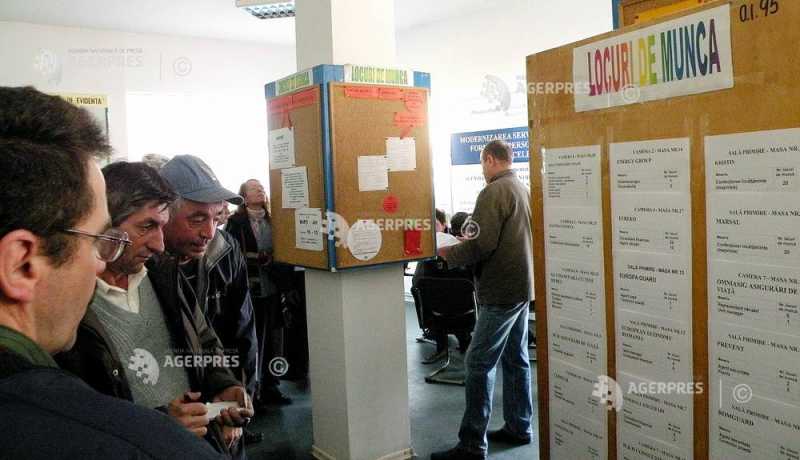
May unemployment rate increases to 6.4pct; youth unemployment still high, at 28.8pct
Romania's seasonally adjusted unemployment rate stood at 6.4% in May, up 0.1 percentage points from April 2026, while youth unemployment remained high at 28.8%, according to data the National Institute of Statistics (INS) published on Thursday. The estimated number of unemployed people aged 15 to 74 reached 522,100 in May, up from 512,100 in April 2026 and
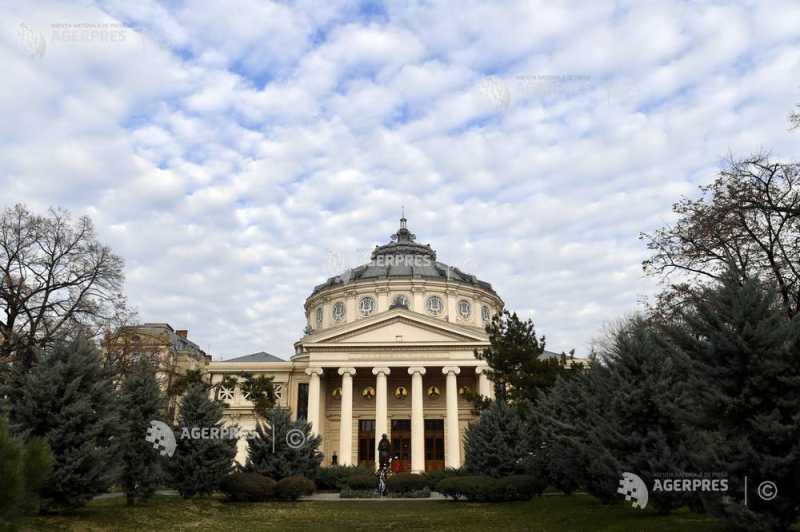
Romanian Red Cross celebrates its 150 anniversary
The Romanian Red Cross is marking 150 years of humanitarian service with an anniversary gala taking place on Thursday at the Romanian Athenaeum. The event will highlight the organisation's contribution to the development of Romanian society and its essential role in responding to emergencies, providing humanitarian assistance, promoting health education, a

Dacian Ciolos argues his Eastern European origin strengthens his bid for OIF Sec-Gen
Dacian Ciolos, Romania's candidate for the position of Secretary-General of the International Organisation of La Francophonie (OIF), told a press conference on Tuesday that his coming from Eastern Europe is an asset. Ciolos presented at the Romanian Embassy in Paris his manifesto 'Uniting to Build - A Vision for La Francophonie in 2030', for a more

Margareta, Custodian of the Romanian Crown receives Naval Forces Emblem of Honor
Her Majesty Margareta, Custodian of the Romanian Crown, received the Naval Forces Emblem of Honor on Wednesday in recognition of her contribution to supporting and promoting the country's navy. Her Majesty Margareta and Prince Radu visited the Romanian Naval Forces Headquarters, where they were welcomed by Vice Admiral Mihai Panait, Chief of the Romanian N

Romania's problem is not lack of people, but reduction of their participation in economic activity (CONAF)
The data published on Wednesday by the National Institute of Statistics (INS) regarding the population's participation in economic activity show that Romania's problem is not the lack of people, but the reduction of their participation in economic activity, believes the National Confederation for Women's Entrepreneurship (CONAF). 'Compared to 2
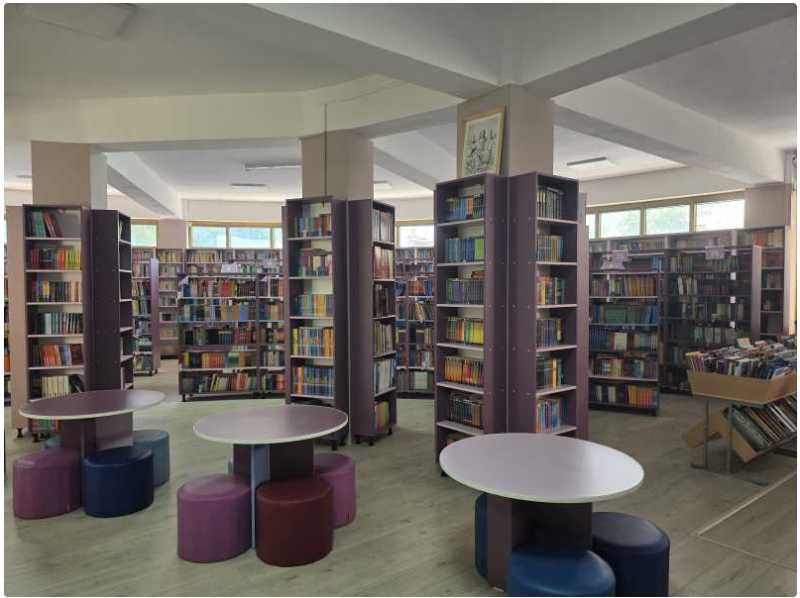
FEATURE STORY/ Neamt County libraries refuse to surrender to AI, use technology to reshape their services
In Neamt County, public libraries refuse to 'surrender' to artificial intelligence. Instead, they are adapting, integrating technology into their service menus and reshaping their role in communities that increasingly rely on digital tools. Neamt is, in fact, the only county in Romania to secure two projects for library modernisation and digitalisation through the Na
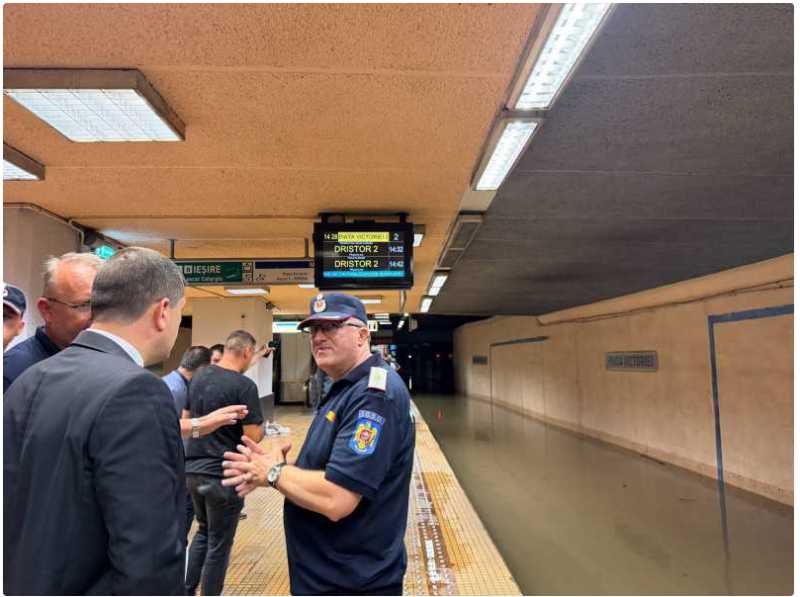
Seven million liters of stormwater from Victoriei 2 metro station to be cleared in a few hours
About seven million liters of stormwater still need to be removed from the Piata Victoriei 2 metro station, but the Army has sent four more high-capacity pumps, so that the entire amount of water will be cleared in a few hours, the interim Minister of Transport, Radu Miruta announced on Wednesday. 'I was at the Victoriei Square 2 metro station, where colle

Bucharest Tribunal suspends resolution convening PNL extraordinary congress
The Bucharest Tribunal on Wednesday provisionally suspended the implementation and effects of a resolution that convened the National Liberal Party's (PNL) extraordinary congress, pending a final ruling, in a decision that could affect the party's leadership during ongoing efforts to form a new Romanian government. The Bucharest Tribunal ruled to suspe

Romania-Bulgaria Friendship Bridge works to continue until autumn as two-way traffic resumes
Traffic on the Giurgiu-Ruse Friendship Bridge linking Romania and Bulgaria has resumed in both directions for all categories of vehicles after Bulgarian authorities completed work on the bridge's carriageway. Bulgarian authorities informed the Giurgiu Territorial Border Police Inspectorate, through the Joint Contact Centre in Giurgiu, that the rehabilitate
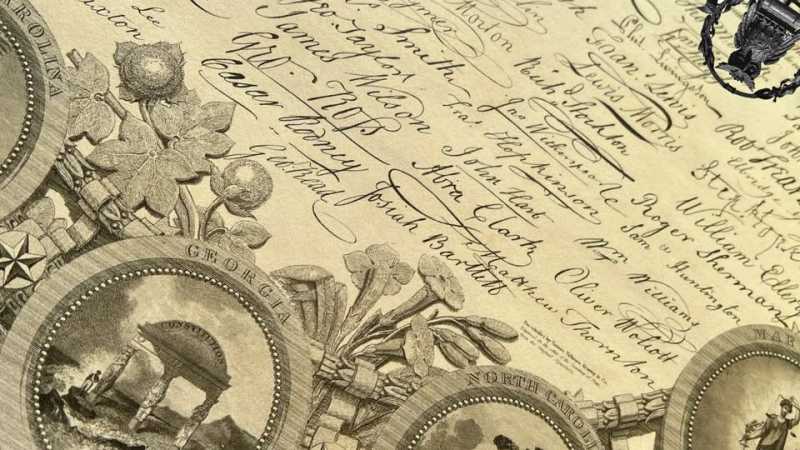
Rare 1819 edition of US Declaration of Independence to go on display at Romania's Teleki-Bolyai Library in Targu Mures
A rare 1819 engraved edition of the United States Declaration of Independence, believed to be the only known copy of its kind in Romania, will go on display at the Teleki-Bolyai Library in Targu Mures to mark the 250th anniversary of the historic document adopted in Philadelphia on July 4, 1776. According to the library, the exhibition will feature the luxury

MApN: Drone in the vicinity of national airspace; two fighter jets taken off the ground
The MApN radar surveillance system detected on Wednesday, at 1:20 p.m., an aerial target at a distance of approximately 30 kilometers from the town of Vylkove, Ukraine. According to a press release from the Ministry of National Defence, transmitted to AGERPRES, the National Military Command Center (core) notified the General Inspectorate for Emergency Situatio

AUR decides to begin process to suspend President Dan and to launch procedures for early elections
The Alliance for the Union of Romanians (AUR) decided on Wednesday to begin the process of suspending President Nicusor Dan and to launch procedures aimed at triggering early elections, according to a party press release. The decision was made by AUR's National Leadership Council (CNC) during an extraordinary meeting held in Alexandria, Teleorman County.
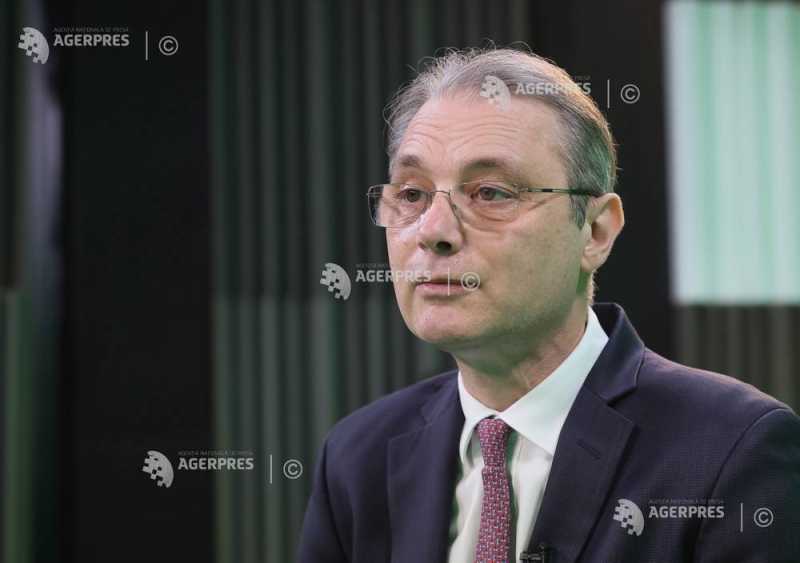
Niculescu: OECD is a very good school of governance in almost all areas
The Organisation for Economic Co-operation and Development (OECD) is a very good school of governance across almost all areas, including taxation, the labour market, investment, education, healthcare, the environment, public governance and social affairs, Ministry of Foreign Affairs (MAE) Secretary of State and national coordinator of Romania's OECD accession process Luc
National Trade Union Bloc: Minimum wage should reach 5,000 lei gross from 1 Jan.2027
The National Trade Union Bloc (BNS) said the increase in Romania's gross national minimum wage, which took effect on 1 July 2026, comes six months later than required, arguing that workers have lost more than 13% of their purchasing power and that the minimum wage should be raised to 5,000 lei gross from 1 January 2027 to make up for the erosion. 'The