

Privacy vs. child protection: EU's 'chat control' plans split member states

Why oppose plans to protect children from sexual abuse online? The EU's CSAR regulation seems dead in the water for now. Opponents cite privacy concerns.
If there's one thing all EU member states agree on, it's that children need to be protected from sexual abuse. But the Commission's plan of how to go about this with respect to abuse material online has led to strong divisions among the bloc's 27 countries.
The EU's Regulation to Prevent and Combat Child Sexual Abuse (CSAR), often referred to as the 'child sexual abuse regulation' or 'chat control', is at a pivotal stage in the legislative process - but seems to have hit a dead end due to fears of invasion of EU citizens' digital privacy.
The regulation aims to establish a harmonised legal framework across the EU to detect, report, and remove child sexual abuse material (CSAM) online, replacing the current interim measures that allow voluntary detection by service providers.
A report by the UK-based Internet Watch Foundation found that 62 percent of the child sexual abuse material identified internationally last year was hosted on servers within the EU.
Proponents of CSAR stress that child pornography is a very serious crime. They say that data protection authorities would closely monitor the regulation's implementation and point to successes over the last years in catching offenders due to voluntary CSAM detection.
It has to be agreed on by the European Parliament and the member states - and this is where the crux lies.
Despite several attempts by countries holding the EU Presidency over the years, the 27 members have not managed to agree to a deal. The latest attempt was made by the Danish Presidency last week, with the chat control aspect being a key sticking point.
The Danish Presidency said Monday that it was not yet at a stage to secure the necessary support for a vote in the Council of the EU. 'That's why we concluded that the discussions would be better to continue the weeks ahead bilaterally among countries and parties where we need to try to meet a compromise,' Justice Minister Peter Hummelgaard said, adding that Denmark had laid out a new compromise proposal.
What does the CSAR proposal entail?
The so-called chat control is based on the European Commission's 2022 proposal aimed at combating child sexual abuse. According to the proposal, online service providers, including chat apps, social networks and data storage, would have a legal obligation to search the content of messages and stored files using algorithms. Service providers would have to notify the relevant authorities of materials related to child pornography or the abuse of minors and remove the content.
The Commission's original proposal mandated that online service providers are to scan both encrypted and unencrypted private messages for CSAM material ('chat control'). Parliament proposed amendments aimed to protect encryption, scan public content and that online services have built-in features for child safety.
What was supposed to happen?
Originally introduced by the Commission in 2022, the European Parliament adopted its position in 2023. It focused on privacy protections and limiting the scope of scanning, especially in end-to-end encrypted environments. Since then, member states have tried (and failed) to reach an agreement.
The interim regulation allowing voluntary CSAM detection has been extended until April 3, 2026 to ensure continuity while the permanent regulation is being worked on.
Denmark had drafted the latest version of the proposal. It insisted that it includes necessary safeguards: Firstly, only images and links - not text messages - would be subject to scanning. Second, the system would only be activated following a decision by an independent judicial or administrative authority.
'We have to be very clear: under this proposal, there is no general monitoring of online communications. There will be no such thing as 'chat control',' said European Commission spokesperson Markus Lammert. 'This is about protecting our children against a terrible crime, a crime that happens more and more online.'
The Council was supposed to vote on the proposal on Tuesday with the idea for trilogue negotiations expected to begin in early 2026, meaning that it would be an informal interinstitutional discussion bringing together representatives of the European Parliament, the Council of the European Union and the European Commission. But with no compromise, the issue is back to bilateral discussions.
What's the issue?
Some member states have expressed opposition to aspects of the proposal, even as its purpose is to protect children. The proposal also faced broad opposition from law enforcement, data protection authorities, civil society groups as well as tech majors who are the main messaging service providers. Child protection groups found themselves on both sides of the debate.
A main concern is that the legislation would open the door to mass surveillance. 'This would spell the end of secrecy of correspondence, which is essential for whistleblowers,' German activist and former EU lawmaker Patrick Breyer said. Opponents have been flooding EU officials with messages aimed at swaying the debate as part of a campaign.
Elon Musk's social media platform X branded the proposal 'dangerous' and called on Germany and Poland, among the EU states most critical of the proposal, to continue to oppose it in order to 'avoid mass surveillance of their citizens by governments and serious violations of user security by malicious actors'.
The messaging app Signal also criticised the proposal, calling it 'the end of the right to privacy in Europe' and threatening to pack its bags and leave the EU if the proposal were to be approved.
Meta, the parent company of WhatsApp, said the proposal endangered privacy, freedom and digital safety.
Denmark's Justice Minister Hummelgaard stressed at a press conference on Monday: 'Much of the narrative has also been built up on an idea that the EU bodies or even national bodies would be able to conduct surveillance of private chats and that's not the case. The case has been that we would like to oblige private companies, private platforms of taking a responsibility to limit the levels of enormous sharing of child sexual abuse materials.'
Berlin says 'Nein'
A lot hinged on Germany. Without it there was no majority in the council, under the EU's qualified majority voting rules. But Germany hit the brakes and said it would not have approved the proposal in a vote. 'Unwarranted chat monitoring must be taboo in a constitutional state,' said Minister of Justice Stefanie Hubig.
In the Council of Member States, the approval of 15 of the 27 EU states, which together represent at least 65 per cent of the total population of the EU, is ultimately required for the regulation to be adopted.
Germany's governing coalition parties are opposed to indiscriminate chat control. 'That would be like opening all letters as a precautionary measure to see if there is anything illegal in them,' said parliamentary faction leader Jens Spahn of the conservative CDU. 'That is not acceptable, and we will not allow it.'
The Polish Ministry of Digital Affairs stated that Poland defends internet users' privacy and opposes the mass scanning of private correspondence. At the same time, it supports the introduction of measures within the European Union that will enable effective action against CSAM.
Polish representatives have repeatedly emphasised the need to maintain a balance between effectively combating the dissemination of CSAM and protecting users' fundamental rights, such as the right to privacy and online security (including the protection of end-to-end encryption integrity).
Slovenia does not support the current version of the EU's chat control proposal, the Interior Ministry said at the beginning of October. Slovenia considers the fight against sexual exploitation and abuse of children a priority, but at the same time advocates respect for fundamental human rights, including the right to privacy and personal data protection.
Digital Transformation Minister Ksenija Klampfer considers the proposal to be a disproportionate measure. 'We must absolutely ensure the protection of children with all possible measures. But to monitor the messages of all citizens merely on the probability of abuse is problematic and constitutes a disproportionate intrusion into the privacy of communication,' Klampfer said.
The Czech Republic had initially planned to abstain, but positions have hardened: 'I am glad that we have come to this change of position because I believe that we must protect the privacy and freedom of every citizen,' Prime Minister Petr Fiala said back in September. 'From the beginning, we did not support this plan. However, the proposal has undergone some changes over the last while, it is becoming an urgent vote. For this reason, it has also been reflected in the change of the Czech Republic's position,' he added.
In Portugal, the government considers it essential to combat child sexual abuse, but stresses that rights such as privacy should not be unjustifiably curtailed in the European chat control proposal, an official source from the Ministry of Justice told news agency Lusa. Portugal therefore advocates cautious involvement and internal political debate on the subject.
Spain says it has always supported all attempts to reach an agreement and supports the proposal of the Danish Presidency. For Spain, providing answers to victims is essential. The country is concerned about data from NGOs and institutions, which point to an increase in this type of content on the internet, and argues that more tools are needed to combat it. It also calls for access to data to be provided with full guarantees and in compliance with fundamental rights.
Other countries said to prefer stricter measures - or being on the fence - include France, Denmark and Sweden.
The Belgian government has not yet taken a position on the new proposal on chat control. However, during a debate in the federal parliament last week, no party appeared to be in favour of the proposal. Minister of the Interior Bernard Quintin emphasised that there must be a balance between protecting privacy on the one hand and combating the dissemination of such images on the other. 'A solution must be balanced and proportionate,' he said.
With debates between member states and within governments and societies set to continue, child protection activists warn that while this can is kicked down the road, children remain at risk: According to Children protection group Eurochild, over 100 million images or videos of children being sexually abused were found online in 2023 alone - that's roughly 270,000 every single day.
The content of this article is based on reporting by AFP, ANSA, CTK, Belga, dpa, EFE, LUSA, PAP, STA, as part of the European Newsroom (enr) project. AGERPRES (editing by: Simona Klodnischi)
The content of the www.agerpres.ro website has the exclusive purpose of public informing.
All the information published on this website by AGERPRES is protected by relevant legal dispositions.
It is forbidden to copy, reproduce, recompile, decompile, distribute, publish, display, modify, create derived components or products or full services, as well as any exploitation of the site's content.
Details in the section Terms of Use. If you are interested in picking up AGERPRES news items, please contact the Marketing Department – marketing@agerpres.ro.
The use of the Comments section entails your obligation to respect the AGERPRES terms and conditions in regards to the publishing of comments on the www.agerpres.ro.
Other news in category
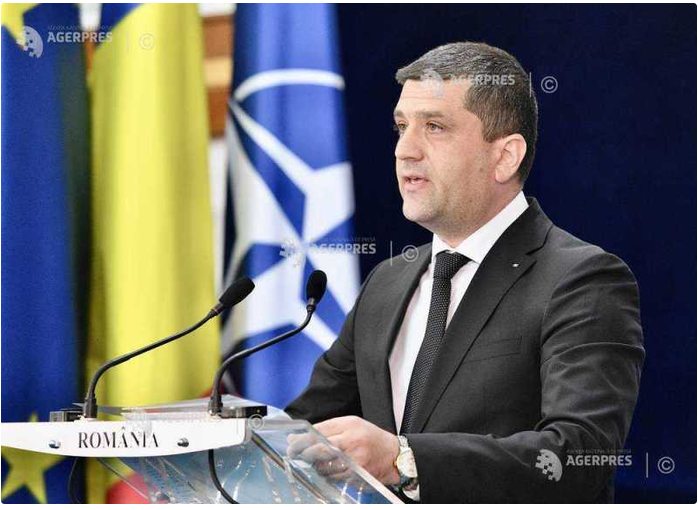
Defence Minister Miruta proposes joint Black Sea military command to Bulgarian counterpart
National Defence Minister Radu Miruta said on Wednesday that he had proposed to his Bulgarian counterpart the signing of a joint letter to NATO's leadership regarding the establishment of a military command in the Black Sea. 'The Black Sea needs a joint military command of NATO's littoral states, and we must take steps to achieve this. I proposed t
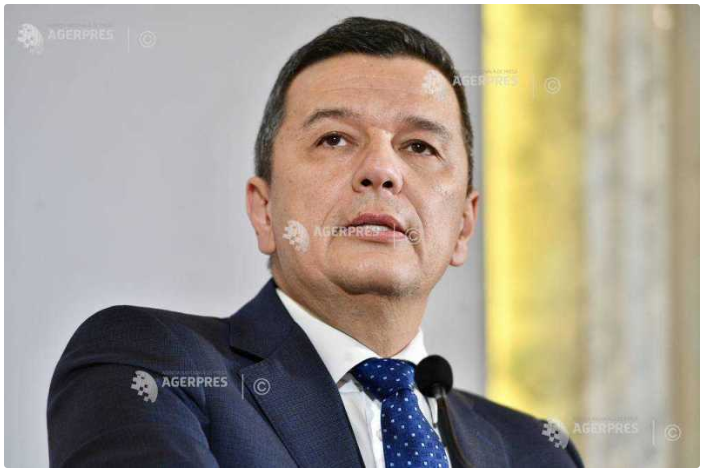
PSD's Grindeanu: The National Political Council greenlighted PSD's joining gov't
The National Political Council has greenlighted the Social Democratic Party (PSD) joining the government, because the priorities requested by the Social Democrats are found in the governing agenda of the Niculescu Cabinet, the party's national leader, Sorin Grindeanu, said on Wednesday. 'The PSD Political Council analysed today the critical situation R
PSD decides to be part of Niculescu Cabinet; list of social-democratic ministers (sources)
The National Political Council of the Social Democratic Party (PSD) on Wednesday decided that the Social Democrats will be part of the Luca Niculescu Cabinet. According to party sources, PSD has decided to enter the government and support the cabinet led by Prime Minister-designate Luca Niculescu in Parliament. According to the sources, PSD woul
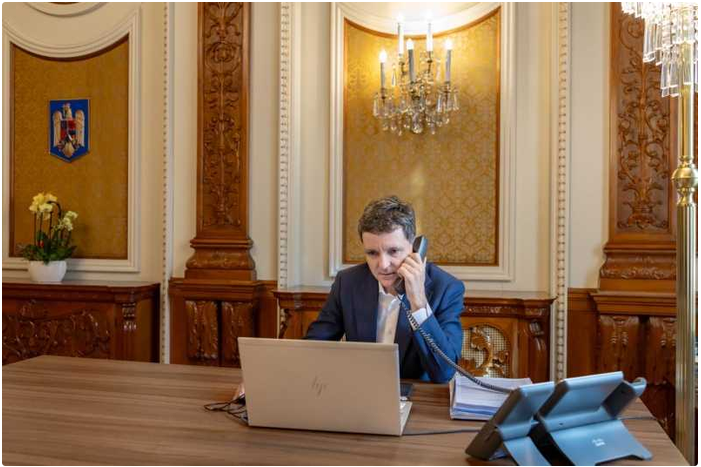
Nicusor Dan, conversation with Iliana Iotova; Romania and Bulgaria to cooperate on drone countermeasures
Romania and Bulgaria will collaborate closely to promote the adoption of firmer measures to counter drones at the European Union and NATO levels, with the aim of ensuring the safety of commercial navigation in the Black Sea. President Nicusor Dan held a telephone conversation on Wednesday with his Bulgarian counterpart, Iliana Iotova, regarding the recent dron
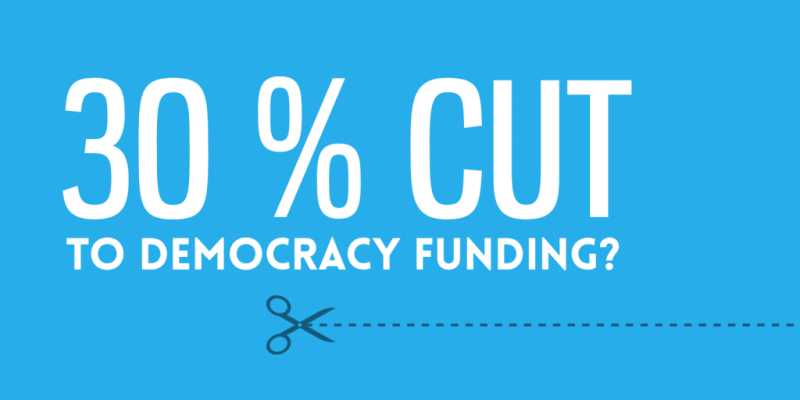
67 NGOs urge President Dan, foreign minister to support AgoraEU programme, oppose budget cuts
A total of 67 NGOs sent an open letter on Wednesday urging Romanian officials to support strengthening the AgoraEU programme and to oppose any cuts to its budget line. In the letter addressed to President Nicusor Dan and acting Foreign Minister Oana Toiu, the signatories note that, on October 10, the Irish presidency of the EU Council proposed a 30% cut (appro

Siemens Mobility-led consortium wins tender for procurement of 23 new electric locomotives
A consortium led by Siemens Mobility has been selected as the winner of a tender for the procurement of 23 new electric locomotives equipped with ERTMS systems, capable of operating at speeds of up to 160 km/h and hauling up to 16 passenger coaches, the Railway Reform Authority (ARF) announced on Wednesday on Facebook. 'The Railway Reform Authority announc

AAC: Romania risks losing over 5.1 billion euros in agricultural funding next financial exercise
Romania risks losing more than 5.1 billion euros in agricultural funding, a figure that could reach approximately 6.5 billion euros under a broader scenario in the next financial period, according to estimates the Alliance for Agriculture and Cooperation (AAC) published on Wednesday. The organisation announced the launch on its website of a dedicated page on t

Radu Jude's 'The Diary of a Chambermaid' shortlisted for the 2027 European Film Awards
The film 'The Diary of a Chambermaid', directed by Radu Jude, has been shortlisted for the 2027 European Film Awards. According to a press release sent to AGERPRES by Avanpost, the film production and post-production company, the announcement was made on Wednesday by the European Film Academy. 'Recognition from the European Film Acad
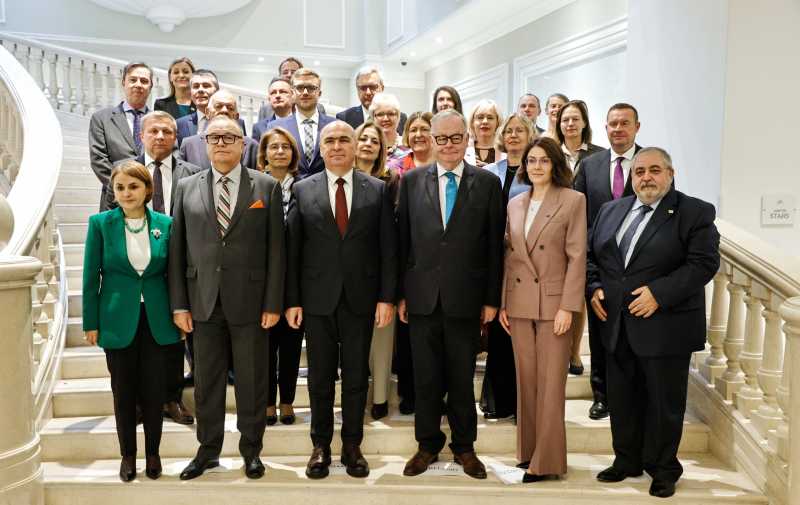
Interim PM Bolojan meets EU ambassadors, EC representative accredited to Bucharest
Interim Prime Minister Ilie Bolojan met with the ambassadors of European Union member states and the European Commission's representative accredited to Bucharest, thanking them for their cooperation and continued support for the Romanian Government. According to a government press release issued on Wednesday, during the meeting the prime minister congratul

Latest Romanian films to be screened at Les Films de Cannes a Bucarest in Autumn Previews section
The latest Romanian films will be screened ahead of their cinema premieres at Les Films de Cannes a Bucarest, in the Autumn Previews section, according to an organisers' release sent to AGERPRES on Wednesday. Winner of two major awards in 2026, the Golden Leopard at Locarno and the Heart of Sarajevo for Best Actor, awarded to Adrian Vancica, 'You don&#
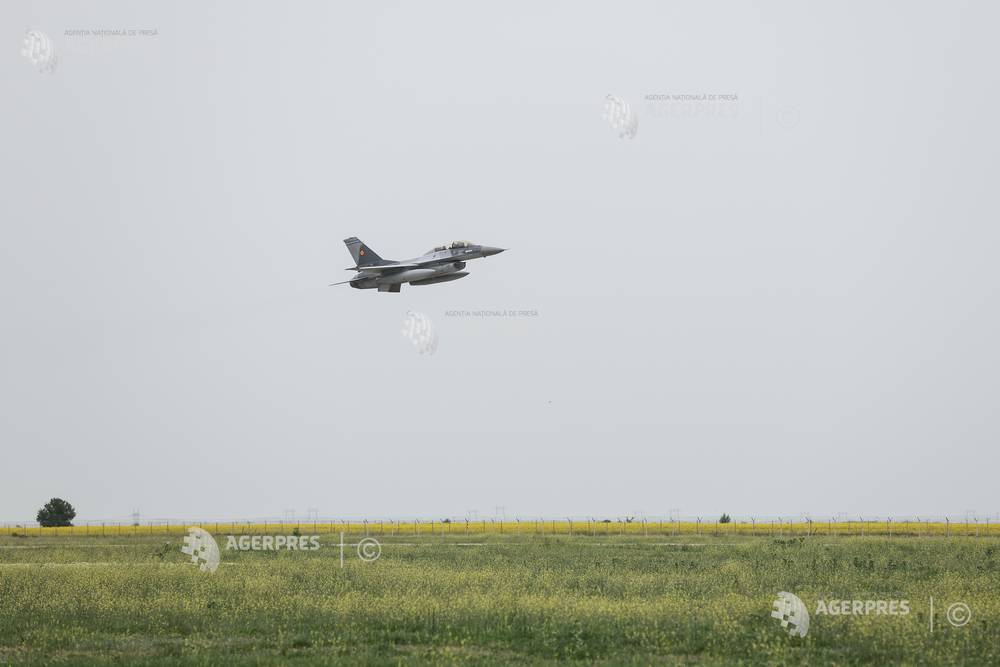
MApN: Drone enters national airspace near Sulina, two F-16 aicraft scrambled
A new aerial target flying near the Romanian border was detected on Wednesday by the radar surveillance system of the Ministry of National Defence (MApN), as it briefly entered Romanian airspace east of the town of Sulina, over the Black Sea. The National Military Command Centre notified the General Inspectorate for Emergency Situations to activate measures to

C-130H Hercules aircraft donated by US enters Romanian Armed Forces endowment
A C-130H Hercules aircraft donated by the United States entered the Romanian Armed Forces endowment and will be operated by the Air Force as of Wednesday. 'A new aircraft is being added to the Romanian Armed Forces' inventory. It is newer than many of the aircraft we still have and has undergone maintenance to ensure it has sufficient flight hours avai
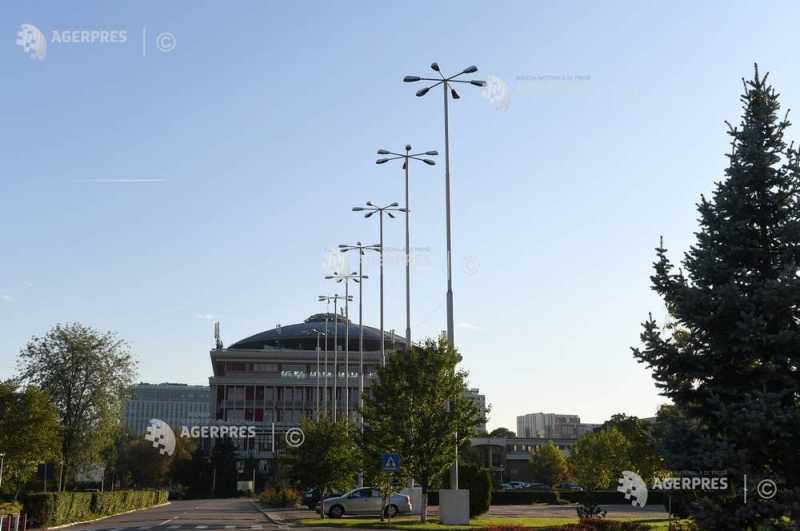
Politehnica University awarded at the 'Traian Vuia' International Exhibition of Inventions and Innovations Salon 2026
Seven research projects and patent applications presented by the National University of Science and Technology POLITEHNICA Bucharest were awarded gold medals at the 12th edition of the 'Traian Vuia' International Exhibition of Inventions and Innovations, held in Timisoara from October 8 to 10. POLITEHNICA Bucharest presented seven entries, comprising p
President Dan to hold phone call with Bulgarian counterpart on attacks on ships in Black Sea
President Nicusor Dan will hold a telephone conversation on Wednesday with his Bulgarian counterpart, Iliana Iotova, regarding the attacks on ships in the Black Sea and ensuring the safety of maritime navigation. According to the Presidential Administration, the conversation is scheduled for 15:00. On Tuesday, the general cargo ship 'Chelsea

President Dan: Protecting natural heritage is a priority that I want to see reflected in public policy
Protecting natural heritage is part of the state's responsibility towards its citizens, it is a priority that I support and want to see reflected in public policy, President Nicusor Dan said on Wednesday in a message read out by presidential adviser for environmental affairs Stefania Georgiana Simion at the Climate Change Summit 2026 in Bucharest. 'Dis