

EU urges smarter water use as climate change and poor management strain supplies (enr)
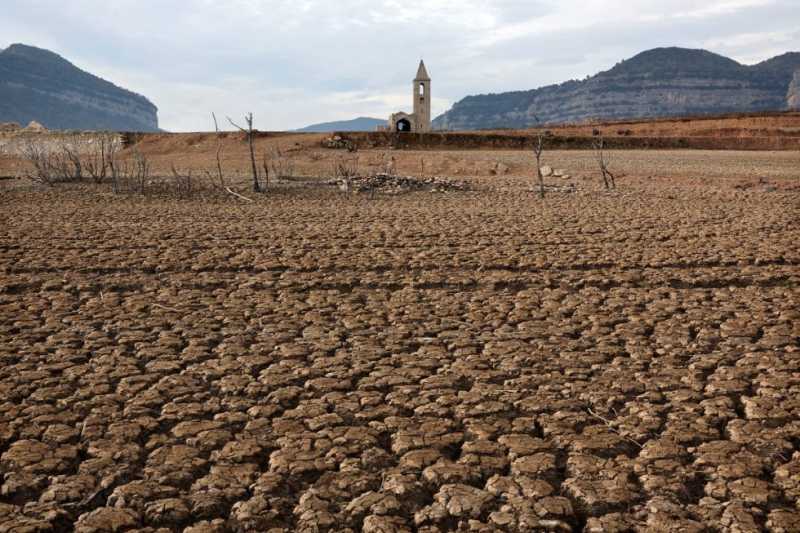
Brussels launches a new plan to protect water supplies, but its non-binding targets spark concern.
As climate change and overuse strain Europe's water systems, the European Commission on Wednesday unveiled a strategy to boost water resilience across the EU.
'Water is life,' European Commission President Ursula von der Leyen said. 'Water resilience is key for our citizens, farmers, environment, and businesses.'
With Europe increasingly feeling the effects of climate change, the push to secure water resources has become more urgent. Last year was the hottest on record, and drought is becoming more frequent and severe.
What does the new strategy propose?
The Commission is urging member states to 'enhance water efficiency by at least 10 percent by 2030'.
Depending on the country, this could involve reducing water extraction or upgrading infrastructure to prevent leaks, said Environment and Water Resilience Commissioner Jessika Roswall.
The European Investment Bank (EIB) will invest over 15 billion Euro between 2025 and 2027 to strengthen the resilience and competitiveness of Europe's water systems.
To combat pollution, the Commission also announced a public-private initiative to improve detection and elimination of PFAS - short for per- and polyfluoroalkyl substances, which are synthetic 'forever chemicals' - that persist in the environment and contaminate water. The initiative is slated for 2027.
However, the strategy has drawn criticism.
Environmental groups and some MEPs questioned the lack of legally binding commitments and dedicated funding.
'We are bringing floods, droughts, and polluted waters upon ourselves as a result of poor water management, and yet we expect the most effective solutions to require no investment - all while continuing to destroy nature?' Living Rivers Europe, an alliance of NGOs including the European Environmental Bureau, the European Rivers Network, the European Anglers Alliance, the Nature Conservancy, Wetlands International and WWF, said in a statement.
'This is a strategy that is too cautious in ambition and reliant on voluntary action,' said Maltese MEP Thomas Bajada, the European Parliament's rapporteur on a resolution passed last month calling for stronger EU water resilience measures.
'A 10 percent water efficiency target, with no binding methodology or a basin-level application, is simply not fit for a continent facing escalating droughts and water stress,' he added.
More than half (53 percent) of land in Europe and the Mediterranean basin were hit by drought in mid-May, according to an AFP analysis of data from the European Drought Observatory (EDO) from May 11-20, 2025.
It was the highest level recorded for that period of time in the year since monitoring began in 2012, and more than 20 percentage points higher than the average between 2012 and 2024.
Northern, eastern and central European countries were mainly affected, with high alert levels.
Earlier this year the EU warned Spain that 74 percent of its territory is today at risk of desertification.
Portugal has also been hit hard, especially in the South, where reservoirs are at critically low levels. Farmers are struggling to maintain crops and livestock due to the lack of water, and many are facing financial losses. The situation is further worsened by rising temperatures, which increase evaporation and make soil conditions even harsher.
In response, the agricultural sector is calling for urgent government support and long-term water management strategies. Farmers are asking for more efficient irrigation systems, improved infrastructure to store and distribute water, and financial aid to help cope with ongoing losses.
Prime Minister Luís Montenegro announced recently that the strategy for water management will have an estimated investment of 5 billion Euro by 2030, in what he considers 'a real transformation' for the country.
Drought extends beyond southern Europe
In the last 20 years there have been seven droughts that affected Slovenia on the scale of a natural disaster, with the most recent one in 2022 causing around 148 million Euro of direct damage to agriculture, a study by the Slovenian Environment Agency, Meteorology and Hydrology Office found.
Yet only between 2 and 3 percent of agricultural land is irrigated, which is one of the lowest shares in the EU.
Parts of northern Europe have seen their worst drought in decades this year.
From February 1 to April 13, Germany saw 40 litres of rainfall per square metre, its lowest level since records began in 1931, according to the German Weather Service (DWD).
And in early May, the Danish Meteorological Institute (DMI) warned that the previous three months had been exceptionally dry, with just 63 millimeters of rainfall in total.
Since 1874, there have only been seven times when less rain fell during the period from February to April, it said.
At the end of March 2025, the Bulgarian Agrarian Chamber (BAC) issued a stark warning about a looming agricultural crisis caused by severe irrigation water shortages. The BAC criticised the lack of a coherent water management policy and the excessive diversion of reservoir water for energy production, which it says threatens the 2025 irrigation season, farmers' livelihoods, and national food security.
At the same time, the Bulgarian Parliament and government ministries have acknowledged worsening water scarcity, accelerated by climate change, declining reservoir levels and deteriorating infrastructure.
Environment Minister Manol Genov reported that key reservoirs are at just 55 percent capacity - a result of three consecutive dry years. While no towns are yet under formal water restrictions, the forecast for 2025 points to a hot, dry season, prompting regulatory cuts in water usage for both energy and agriculture.
Where is our water going?
While much of the focus on water conservation has centred on household behavior, agriculture and industry remain the largest users. In the EU, water abstraction for cooling power plants for electricity production accounted for 36 percent of total water withdrawals between 2000 and 2022. Agriculture followed at 29 percent. Public water supply - which includes households, drinking water, and tourism - accounted for 19 percent, while manufacturing used 14 percent.
A substantial amount of water is also being lost through leaks. According to the European Commission, 23 percent of treated water is lost during distribution in the EU. National leakage levels vary from 8 percent to 57 percent in EU member states, with Italy and Ireland performing particularly poorly.
Water resilience is essential not only to safeguard supply during droughts, but also to protect supply against floods. Climate change is driving more extreme weather, with prolonged dry spells and increasingly intense rainfall both becoming more common in Europe.
In Romania, several areas were severely affected by flooding in the past month, with hundreds of households inundated and residents evacuated.
Environment Minister Mircea Fechet on June 1 said that it was time to treat climate change adaptation as a national priority. This, he said, means not just 'reacting to emergencies, but also prevention, education and investment in safe, resilient infrastructure'.
'In some cases, the water reached the rooftops, engulfing animals, gardens, cars, machinery and farmland. It is a wake-up call that climate change is starting to affect us more frequently and more severely,' Fechet said. 'Extreme weather is no longer rare, it is becoming normal, and people in vulnerable areas are suffering the most.'
The content of this article is based on reporting by AFP, Agerpres, ANSA, BTA, EFE, LUSA, STA, as part of the European Newsroom (enr) project. AGERPRES (editing by: Simona Klodnischi)
The content of the www.agerpres.ro website has the exclusive purpose of public informing.
All the information published on this website by AGERPRES is protected by relevant legal dispositions.
It is forbidden to copy, reproduce, recompile, decompile, distribute, publish, display, modify, create derived components or products or full services, as well as any exploitation of the site's content.
Details in the section Terms of Use. If you are interested in picking up AGERPRES news items, please contact the Marketing Department – marketing@agerpres.ro.
The use of the Comments section entails your obligation to respect the AGERPRES terms and conditions in regards to the publishing of comments on the www.agerpres.ro.
Other news in category

Macelaru:If we discover great talents at end of competition, we will have fulfilled one of our missions
The George Enescu International Competition is one of the most important classical music competitions in Europe and a benchmark for the emergence of new generations of performers, stated President Nicusor Dan in a message read by Diana Punga, a State Counselor within the Presidential Administration. The message was conveyed during the conference marking the op
Romania-tracked bearded vulture Boev, flagship of EU conservation effort, killed by poison in Bulgaria
'Milvus' Bird and Nature Protection Group in Targu Mures announced on Thursday that the bearded vulture (lammergeier) Boev, part of the European conservation programme 'Bearded Vulture LIFE', was found dead in Bulgaria, alongside four black vultures, two griffon vultures and a raven, all killed by poisoning. 'Boev, one of the greatest succe
Romania, Serbia agree on Danube-flow monitoring, advance cross-border road, rail and river transport projects
Romania and Serbia agreed on Friday to maintain a joint mechanism for consultation and information exchange on Danube water flows, amid persistently low river levels affecting both countries, acting Transport and Infrastructure Minister Radu Miruta said after talks in Timisoara with Serbian Construction, Transport and Infrastructure Minister Aleksandra Sofronijevic.
Bolojan: PNL parliamentary groups, mandated to support adoption of public sector pay bill
The National Liberal Party (PNL) parliamentary groups have been mandated to support the adoption of the public sector pay bill, party leader and interim Prime Minister Ilie Bolojan announced on Friday. At the end of a meeting of the party's Political Bureau, Bolojan said the PNL parliamentary groups had been mandated to support, during the extraordinary pa
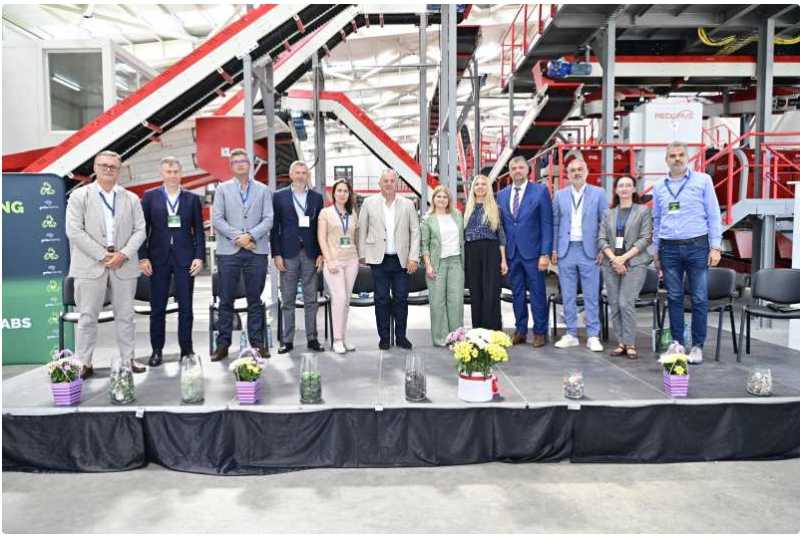
Large glass recycling factory opens in Buzau on EUR 7.4 million investment
A factory with a capacity of 80,000 tonnes per year, one of the largest investments in glass recycling in the region, of a value of approximately EUR 7.4 million has opened in Buzau. According to the investor, the project is a milestone for the circular economy infrastructure and one of the most important recent investments in the development of glass recyclin

Code Orange heatwave warning, in force in half Romania on Friday, to scale back to six counties on Saturday
The Code Orange heatwave warning, in force on Friday across more than half of the country, will be scaled back on Saturday and will cover the counties of Mehedinti, Dolj, Olt, Teleorman, Botosani and Iasi. According to the new warnings issued by the National Meteorological Administration (ANM), between 10:00 on 22 August and 10:00 on 23 August, the six countie

President Nicusor Dan to lead Romania's delegation to UN General Assembly high-level segment
President Nicusor Dan will lead Romania's delegation to the high-level segment of the 81st session of the United Nations General Assembly (UNGA), to be held in New York, the Presidential Administration announced on Friday. The central theme of the 81st session of the UN General Assembly will be 'Restoring trust, managing transformation: A United Nation
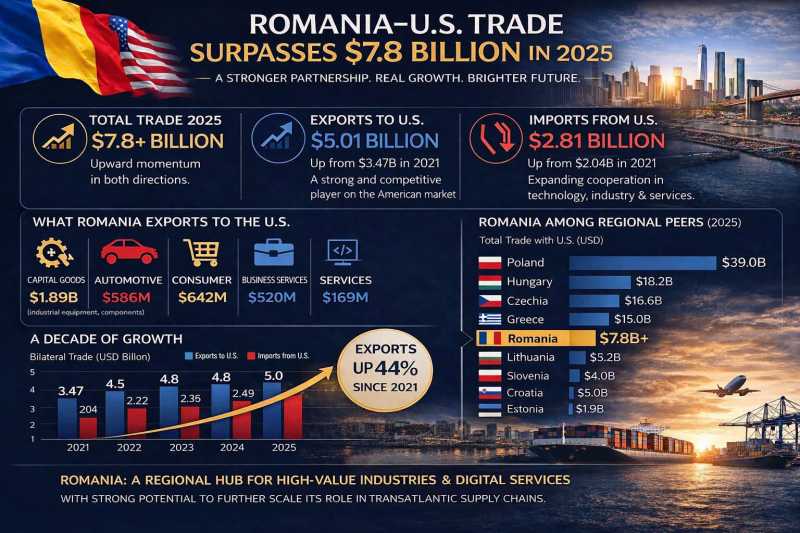
Romania - U.S. trade exchanges top USD 7.8 bln in 2025
Romania's trade exchanges with the United States exceeded USD 7.8 billion in 2025, continuing the upward trend of recent years, the Romanian Embassy in Washington said on Thursday in a Facebook post. The Embassy noted that Romanian exports to the U.S. reached USD 5 billion, compared with USD 3.4 billion in 2021, while imports totalled USD 2.8 billion, givi

Worldwide-acclaimed soprano Ileana Cotrubas dead at 87
Soprano Ileana Cotrubas has died at the age of 87, the Bucharest National Opera announced on Thursday. In a Facebook statement, the institution said it 'mourns the passing of Ileana Cotrubas, one of the most important Romanian voices of the 20th century and a landmark of the international operatic stage.'

Tech startup rolls out Romanian tool measuring websites' AI-readability and recommendability
Tech startup Human AI Labs has launched Blind Spot, a Romanian tool designed to assess whether websites are ready for the next stage of online search, in which artificial intelligence systems increasingly extract, summarize and recommend information directly to users rather than simply displaying links. According to the company, the platform evaluates a websit
Transport Minister says Romania's rail system currently twice as bad as a decade ago
Acting Transport Minister Radu Miruta said on Thursday in Buzau that Romania's rail system is currently 'twice as bad' as it was a decade ago, blaming the decline on the absence of a coherent, long-term maintenance plan for railway infrastructure. 'Compared with the last ten years, the situation now is twice as bad as it was then. This also sho
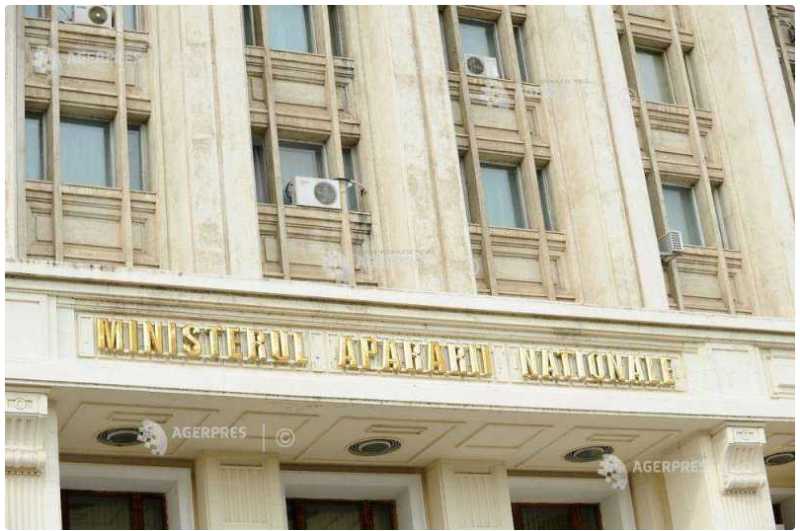
MApN: Naval Forces EOD team neutralized a marine drone in the Neptun Deep platform area
The Ministry of National Defence announced on Thursday that a marine drone discovered near the Neptun Deep platform in the Black Sea had been completely neutralized by a Romanian Naval Forces EOD team. According to a statement issued by the Ministry of National Defence to AGERPRES on Thursday, the analysis of data downloaded from the F-16 aircraft tracking sys
Drone destroyed in Romania: EC President vows swift, united EU response to emerging threats
European Commission President Ursula von der Leyen on Thursday denounced a 'hybrid-war campaign' targeting the European Union after a Romanian Air Force fighter jet destroyed a small marine drone in Romania's exclusive economic zone near the Neptun Alpha offshore platform, AFP and Reuters report. In a post on X, Von der Leyen said the EU can respon
President Dan congratulates Romanian Army for successful mission to destroy maritime drone
President Nicusor Dan on Thursday congratulated the Romanian Army and the pilots of the two F-16 fighter jets for the successful mission to destroy a maritime drone found near the Neptun Deep platform in the Black Sea. 'I also congratulate the Coast Guard for the promptness with which it reported the presence of the drone in the area. It was a race against
Marine drone destroyed in area of Neptun Deep platform - DefMin Miruta
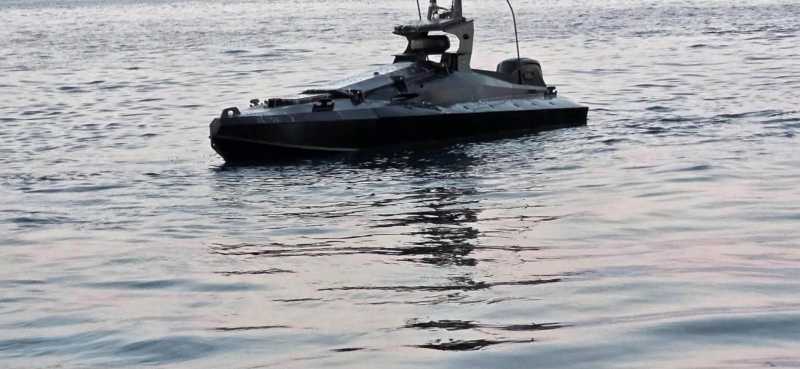
Minister of National Defence Radu Miruta announced on Thursday that a marine drone carrying explosives had been destroyed by the Romanian Army using the onboard gun of an F-16 fighter jet in the area of the Neptun Deep platform in the Black Sea. 'This morning [Thursday], we were informed by the Coast Guard about the presence of a marine drone a few hundred