

FEATURE/Military unit in Targoviste where Ceausescus were executed becomes museum drawing visitors worldwide
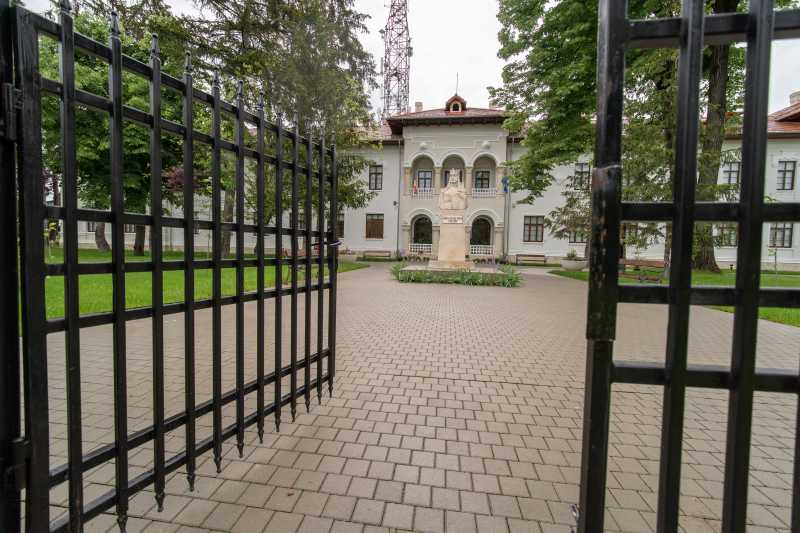
Tourists from around the world, from the United States, South America and across Europe, are increasingly drawn to the museum established on the site of the military unit in Targoviste where Nicolae and Elena Ceausescu were executed in 1989.
On the very day AGERPRES visited the former military unit near Targoviste railway station - now transformed into the Dambovita Military Traditions Museum - Cavalry School - on a rainy spring Friday, two groups of visitors were touring the site: one made up of foreign students from Bucharest and another of pupils from Turkey visiting Targoviste through an Erasmus project.
This is the first year the museum has joined the Night of Museums programme and it can be visited free of charge on Saturday, May 23.
'It is a museum for which it would be difficult to find anything similar not only in Romania. There is such an interesting and special blend within this building that we could almost discuss every day a different theme, subtheme, idea or personality, from before the time of Mircea the Elder right up to the 2000s and beyond. It is true, this is the first time the museum is taking part in the Night of Museums programme. So far, the museum has recorded a large number of visitors from outside Dambovita County and even from outside Romania. Therefore, it is a very good test for us as an institution to see how the people of Targoviste will react because, during Night of Museums, we expect to welcome local residents, and I am very interested to see their reaction because we all pass by this building and this building carries a special memory, as it is the place where Nicolae and Elena Ceausescu met their end,' Irina Cirstina, museographer at the Targoviste 'Curtea Domneasca' (Princely Court) National Museum Complex, told AGERPRES.
The museum is organised into two main sections. The ground floor recreates the atmosphere of the final years of communism. The original furniture has been preserved, as have the decorative elements and colour schemes from 1989. Visitors can tour the office of military unit commander Colonel Andrei Kemenici, the detention rooms where the Ceausescus were held, the trial room and reconstructed spaces depicting everyday life under communism. In the inner courtyard stands the wall against which Nicolae and Elena Ceausescu were executed, while archival footage from the December 25, 1989 trial is screened in the conference hall.
The upper floor focuses on Targoviste's military history and the legacy of the city's Cavalry School, displaying photographs, uniforms, weapons, medals, personal belongings of officers and military publications.
From the moment visitors enter the building, they are immersed in the atmosphere of an event that changed history. One of the museum's most striking sections is the reconstructed trial room, complete with mannequins dressed in military uniforms and carrying assault rifles. The reconstruction follows the original details closely, including the placement of judges, prosecutors and soldiers, as well as the paper airplane folded by General Victor Stanculescu during the proceedings.
'In the video footage, you can see that General Stanculescu had made himself a paper airplane and was playing with it while waiting for the trial to end. We recreated even this detail,' says Irina Cirstina.
The clothes worn by those present at the trial were recreated based on the original footage filmed on December 25, 1989. The military uniforms are authentic, while the clothes worn by Nicolae and Elena Ceausescu were reproduced by specialists in historical reenactments.
'Everything has been reconstructed rigorously. Prosecutor Voinea, for example, appears dressed exactly as in the footage, with blue jeans and a sweater. Everyone is seated exactly as in the original images,' explains Irina Cirstina.
Visitors are often surprised by the small size of the room.
'On television it looked like a large hall. In reality, it was an administrative office hastily adapted for the trial,' explains Irina Cirstina.
The museum also seeks to recreate the uncertainty and panic that marked those days. According to the museographer, soldiers and officers in the unit feared terrorist attacks and constantly moved the Ceausescus around the compound, often disguising them in military uniforms and transporting them in armoured vehicles through the courtyard during the day. Nicolae Ceausescu reportedly believed for a time that workers gathering outside the gates had come to rescue him and hoped he could still address them publicly.
The execution site itself has been preserved almost intact, with bullet marks still visible on the wall. The museum also recounts lesser-known stories from the dictator's final hours, including his treatment for diabetes and his expectation that loyalist forces would eventually intervene.
'They selected three paratroopers to fire, but in practice only one carried out the decisive shots. Soldiers from the unit itself were not used for the execution. Those paratroopers were brought in from outside. The man who fired is the one visitors can see in the trial room, behind the prosecution - there is a mannequin there, representing the paratrooper, and his name is displayed. He was the only one who fired. Nicolae and Elena Ceausescu had their hands tied, Elena protested, they were taken outside and led there. Three people had been assigned to shoot. One did not fire at all, one fired wildly, and this paratrooper, Boieru, he fired. It is known that it happened at 2:45 p.m.,' explains Irina Cirstina.
Beyond December 1989, the museum tells the broader story of the building and the city itself. The main hall preserves its original colours from the reign of King Ferdinand, while new technologies are being used to bring history closer to the public. For the first time in a museum in Dambovita County, holograms have been introduced, allowing visitors upstairs to see and hear figures such as Mircea the Elder, Vlad the Impaler, Matei Basarab and Constantin Brancoveanu.
According to museum representatives, around 70% of visitors are foreigners or tourists from other Romanian counties. Groups from France, Spain and Turkey have visited, along with individual tourists from South America.
'Someone from South America recently wrote to us saying they are coming specially to Europe and want to visit Targoviste. There is huge interest in this place,' says Irina Cirstina.
The museum is currently undergoing digitalisation, and future visitors will be able to use audio guides and access rare books about the 1989 Revolution and the beginnings of Romania's post-communist period.
'We want people to come here not only to visit, but also to stay, to read and to understand the historical context,' explains Irina Cirstina.
For her, the museum's mission is clear: to present history honestly.
'We must be as well prepared and as honest with the public as possible. History was written in this building and people want to understand what happened here,' the museographer concludes. AGERPRES (RO - writing by: Cornelia Dumitru; EN - writing by: Simona Iacob)
The content of the www.agerpres.ro website has the exclusive purpose of public informing.
All the information published on this website by AGERPRES is protected by relevant legal dispositions.
It is forbidden to copy, reproduce, recompile, decompile, distribute, publish, display, modify, create derived components or products or full services, as well as any exploitation of the site's content.
Details in the section Terms of Use. If you are interested in picking up AGERPRES news items, please contact the Marketing Department – marketing@agerpres.ro.
The use of the Comments section entails your obligation to respect the AGERPRES terms and conditions in regards to the publishing of comments on the www.agerpres.ro.
Other news in category
President Dan: Black Sea threat research, recognition missions to increase this summer
President Nicusor Dan on Saturday said that Romania's Defence Ministry (MApN) and the Ministry of Internal Affairs (MIA) will intensify, during the summer, the threat research and recognition missions so that the Romanian seaside is safe. He said, at the end of a working session in which the incident caused by Ukrainian sea drones that exploded in the port
President Dan says sea drone self-destructed in Constanta is new technology
President Nicusor Dan says that the Ukrainian sea drone that exploded on Friday in the Romanian Black Sea port of Constanta could not be intercepted as a result of the lack of equipment capable of detecting such threats. He said on Saturday, at the end of a working session in which the incident caused by the Ukrainian sea drones that exploded in the port of Co
Professor Mazzoni at Bookfest: I see an admirable effervescence in Romanian culture and literature
Professor Bruno Mazzoni, one of the greatest supporters of Romanian literature in Italy, said on Saturday that Romanian literature is witnessing an 'admirable effervescence', noting the very large number of translations of Romanian writers that appear abroad. 'I see an admirable effervescence in Romanian culture and literature, because, even after

#NadiaYear/ Nadia Comaneci kicks off Olympic Day National Cross
Retired legendary gymnast Nadia Comaneci on Saturday kicked off the Olympic Day National Cross, a competition organised by the Romanian Olympic Committee, through the Romanian Olympic Academy, as part of the Nadia Comaneci Year events, near the Arch of Triumph in Bucharest. The 39th edition of this event was attended by several thousand runners, in several age

Constanta drone explosion/SCOMAR is maritime surveillance system, not military anti-drone system (Interior Ministry)
Bucharest, June 5 /Agerpres/ - The Ministry of Internal Affairs (MAI) reports that the SCOMAR system was developed for maritime surveillance by the Coast Guard and is not a single radar or a military anti-drone system, and the unmanned maritime drone involved in Friday's incident in the Port of Constanta has other characteristics, different from the profile of the boats

Constanta drone explosion/Nicusor Dan says Ukraine warned Romania in time before drone self-detonated
Ukrainian authorities notified Romania before the drone that drifted toward the Black Sea shore self-detonated, and all people in the area had already been evacuated at that moment, President Nicusor Dan said Friday at a press conference after attending the EU - Western Balkans Summit in Montenegro. He said he would hold discussions on Saturday with the instit
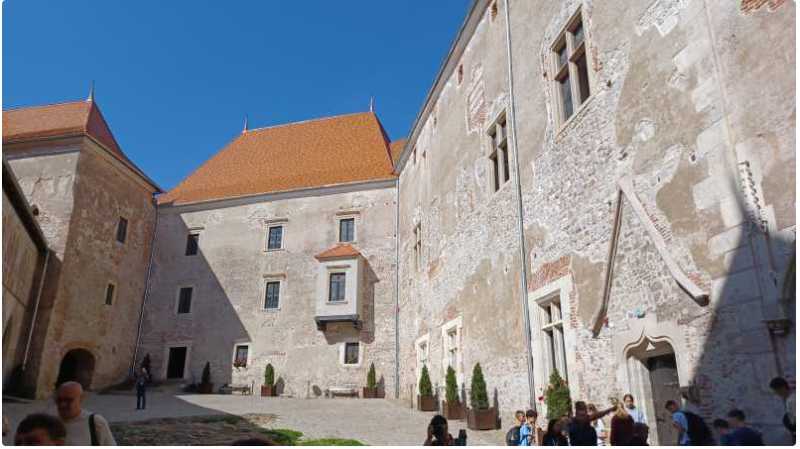
FEATURE STORY/ Castles Fair showcases leading museums and cultural institutions
Some of Romania's most important museums and cultural institutions are represented at this year's edition of the Castles Fair, held Friday and Saturday at Corvin Castle in Hunedoara, an event aimed at promoting significant historic monuments open to the public. This year's edition is organised under the banner 'The Year of Iancu de Hunedoara: H

MEP Siegfried Muresan: Russia is using hybrid aggression in Romania just as it did in Republic of Moldova
Russia is 'trying to intimidate Romania' and 'we are seeing drones sent by Russia or jammed by Russia precisely to fuel pressure for a rapid vote on a government, even if it is a weak one,' PNL MEP Siegfried Muresan wrote Friday on Facebook, after the explosion in Constanta Port of a Ukrainian maritime drone that, according to the Ukrainian Navy, veered off c
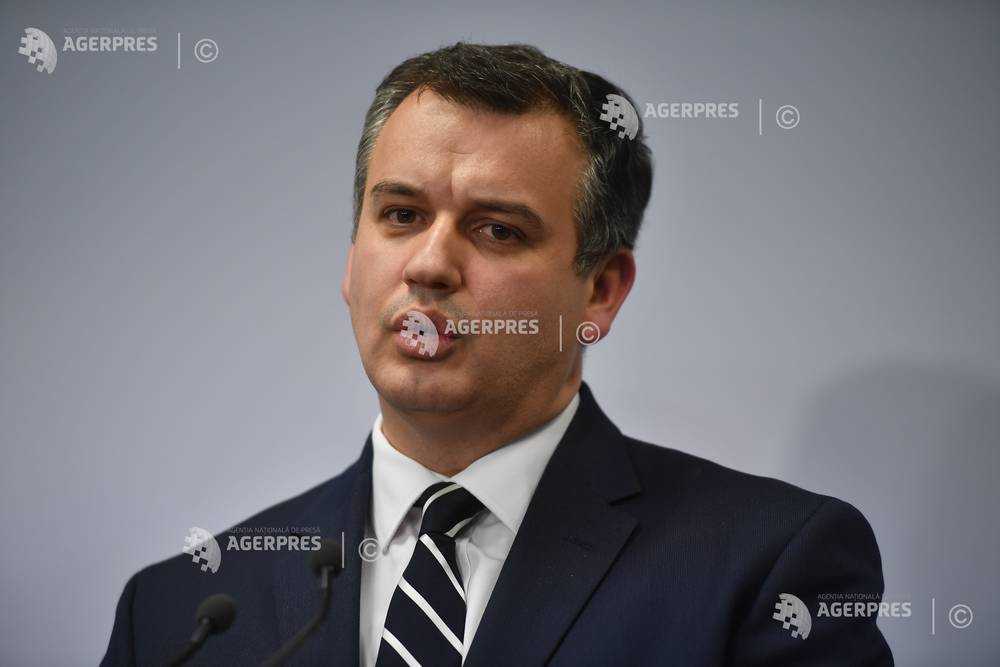
PM-designate Eugen Tomac urges greater vigilance, responsibility from institutions as security risks multiply
Prime minister-designate Eugen Tomac said on Friday that it is essential for state institutions to raise their vigilance alongside greater accountability from decision-makers, as security incidents are becoming more frequent. 'We are going through a period in which security incidents are starting to multiply. Naturally, they fuel a sense of uncertainty in

Constanta drone explosion/Ukraine says Navy drone was jammed; cooperation with Romania prevented casualties
The maritime drone that exploded Friday in the Civil Port of Constanta was a Ukrainian device that went out of control after being jammed by Russian electronic-warfare systems, the Ukrainian Navy said, as cited by Reuters and AFP. As a result of the jamming, the drone veered off course and drifted toward the Romanian coast, the Navy added in the same statement

Drone explosion/Nicusor Dan: Ukrainian forces lost control as a result of actions taken by Russia
The naval drone that exploded on Friday morning in the Port of Constanta was part, along with other similar means of combat, of a military operation led by Ukraine against Russian aggression, and Ukrainian forces lost control as a result of electronic warfare actions undertaken by Russia, President Nicusor Dan said on X on Friday. According to the head of stat

Drone exploded in Constanta/AUR: National security is not defended through sterile explanations, but through competence
Drone exploded in Constanta/AUR: National security is not defended through sterile explanations, but through competence 'After years of being told that Romania is prepared for any scenario, we find every week that the authorities are taken by surprise by each incident. Romania has reached an alarming situation. Just a few days after the Galati incident, we
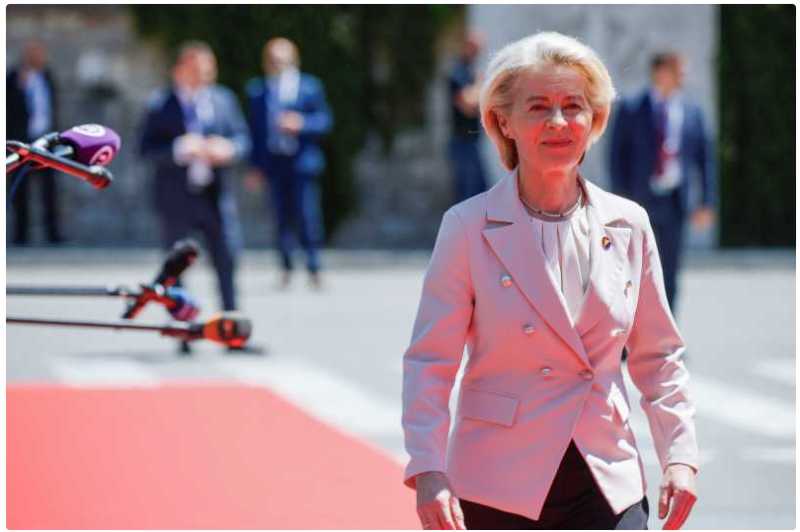
Ursula von der Leyen expresses solidarity with Romania after new drone incident
European Commission President Ursula von der Leyen expressed solidarity with Romania following Friday's incident in the Constanta Port, where a drone crashed and exploded. 'Solidaritate cu Romania! (Solidarity with Romania),' Ursula von der Leyen said in Romanian, in a post on the X social media platform. 'One week after a drone
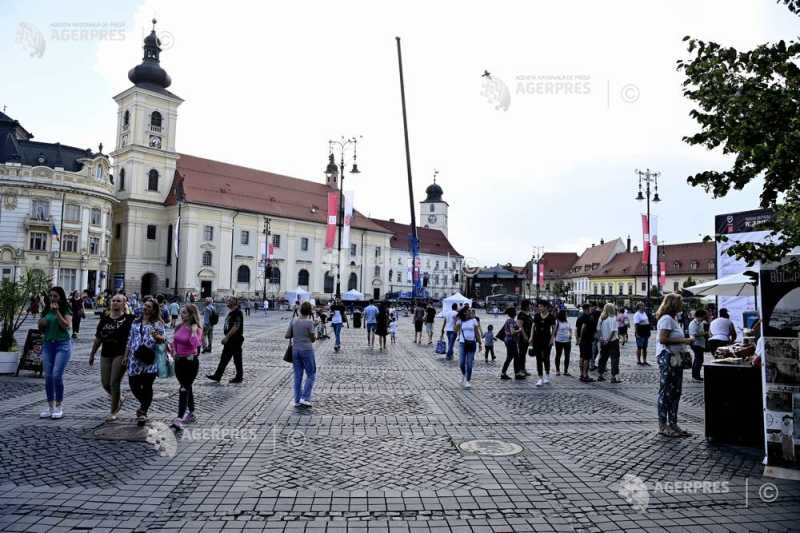
FITS 2026: 38 theatre, music, dance and circus performances to be available online
The Sibiu International Theatre Festival (FITS) announced on Friday that it will make 38 performances available to audiences in Romania and abroad for online viewing during this year's edition through the FITSonline platform. According to a press release from the organisers, access to each online performance is available through a ticket priced at 30 lei,
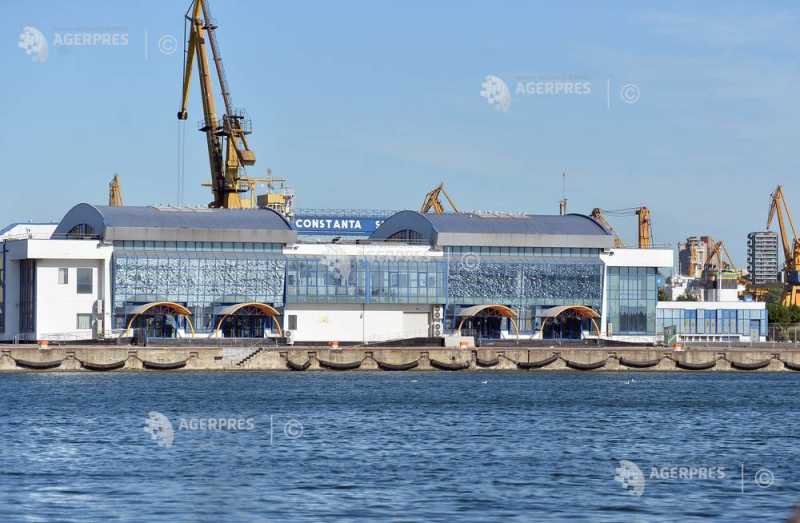
Drone explosion/ Industrial hall in maritime port destroyed by blast wave
An industrial hall in the area of berth 78 in the Constanta Port has been destroyed after a maritime drone exploded on Friday in the port. Sources in the maritime port told AGERPRES that the blast tore off parts of a hall belonging to a commercial company. Port workers also said that the authorities remain mobilised, as three other maritime dron