

#Bucharest560: Bucharest, throne citadel and capital of the country (historical landmarks)
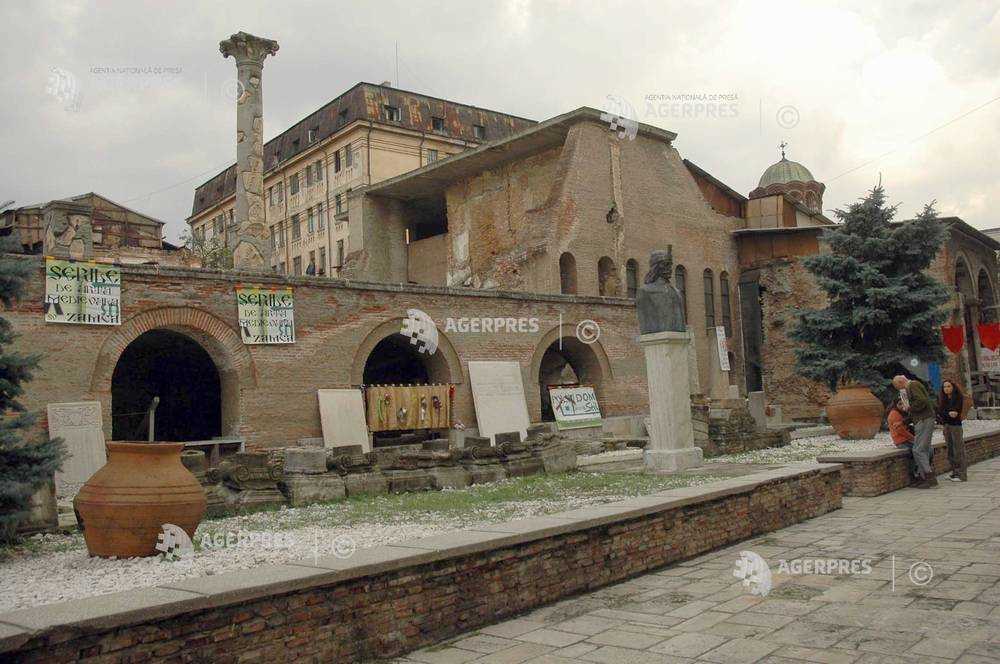
The first documented mention of the "citadel of Bucharest" as princely residence comes up in a document issued on 20 September 1459 by Vlad Tepes (Vlad the Impaler), ruler of Wallachia (1448, 1456-1462, 1476-1477).
***
In the present-day territory of Bucharest and its surroundings, life has continued without interruption from the Bronze Age to the end of the Iron Age in a series of settlements, such as those of Mihai-Voda and Radu-Voda. Dacian settlements existed in the Church of Bucur, Tei Lake, Pipera, Militari etc. Numerous treasures (in Herastrau, dating from the 2nd-1st centuries BC, Colentina, Fundeni, Popesti-Leordeni) have been discovered in the current area of the city, including Greek coins or their Dacian imitations, vessels and ornaments. From the period of Roman domination, the archaeological excavations revealed several objects of Roman style and coins (in the settlement of Tei Lake and in the settlement of Giulesti), reads the wide work titled "The History of Bucharest" by Constantin C. Giurescu (Bucharest, the Publishing House for Literature, 1966).
The archaeological researches of the past 50 years have proved the existence of some village hearths, some with uninterrupted continuity from the early Middle Ages to the present day, such as Chitila, Mogosoaia, Straulesti, Pantelimon, Cernica, Catelu, Popesti-Leordeni, Bragadiru and so on, according to "Bucharest. The story of a human geography" by Adrian Majuru (Bucharest, the Publishing House of the Romanian Cultural Institute, 2007).
"The tradition about Bucur, recorded in writing, in the first half of the nineteenth century, both by foreigners and Romanians, saw as the founder of the settlement the first master of the place, who would have been, according to some, a shepherd or a shepherd and fisherman, and, according to others, a rich merchant or boyar," historian Constantin C. Giurescu says, adding that, according to tradition, "the little church called the Church of Bucur, on Dambovita's shore, near Radu-Voda Monastery, would be owed to him." In his turn, historian Adrian Majuru mentions in his work "Bucharest of slums or periphery as a way of existence" (Bucharest, Compania Publishing House, 2003) that the little church of Bucur, built in the first half of the eighteenth century, is linked only by tradition to the legendary founder of the city.
Bucharest, along with other town and cities, has developed as such since the 14th century, even though the first documented mentions are from later times. Historians who place the beginning of the town in the first decades of the fourteenth century admit a "citadel of Dambovita" in Bucharest ever since that time, as shown in the work "The throne citadel of Bucharest," by Paul Simionescu and Paul Cernovodeanu (Bucharest, Albatros Publishing House, 1976). As for the original hearth of the city, it corresponds roughly to the area surrounding the old Princely Court.
Since the end of the fourteenth century, the significance of the settlement increases. Wallachia's Ruler Mircea cel Batran (Mircea the Elder) (1386-1418), whose main concern was the defense of the Danube line from the Turks, would often come to Bucharest. Vlad Tepes (Vlad the Impaler) stayed often in the citadel on the banks of Dambovita River, also for the continuous surveillance and defense of the country's border on the Danube. The document issued by him on 20 September 1459 in "the citadel of Bucharest" represents the first precise mention of the "citadel" here. The document is important not only because it accurately and certainly attests to the existence of the citadel, but also because it indicates, accurately and certainly, that Bucharest is a princely residence. ("The History of Bucharest," by Constantin C. Giurescu).
At the time when Vlad Tepes issued the said document, Bucharest was a seasonal princely residence, the capital of Wallachia being in the city of Targoviste ("Bucharest. The story of a human geography" by Adrian Majuru). "The year 1459 - the year when sending the tribute to the Sublime Porte ceases - is also the year of the documented mention of the presence of the Voivode (ruler) in the new citadel of Bucharest (...) As regards the erection of the citadel - of the Princely Court - around which the city as such develops, it is self-evident that this stone construction could have been built between the years 1458 and 1459, under the care of the same Vlad Tepes (...)," "The Throne Citadel of Bucharest" (authors Paul Simionescu and Paul Cernovodeanu) mentions.
As a throne citadel, however, Bucharest appears mentioned a little later, the first known document in this regard being that of 14 October 1465, during the first reign of Radu cel Frumos (1462-1473). After Vlad Tepes, Radu cel Frumos (Radu the Fair) prefers to stay more in Bucharest. Thus, of the 25 documents with the precise indication of the place of issuance, 18 are issued in Bucharest ("The History of Bucharest" by Constantin C. Giurescu).
The rulings of Mircea Ciobanul (Mircea the Shepherd) (1545-1552, 1553-1554 and 1558-1559) represent a decisive moment on the path of definitive establishment of the princely residence in Bucharest. "This one, appointed by the Porte [the Ottoman Empire Porte], fully subordinated to the Ottoman politics, feels much safer on the banks of Dambovita, in the citadel of Bucur. In this period, he enlarges and rebuilds the extensive Old Court settlement while also erecting the church near it, probably on the foundations of a smaller one, that had been built before." ("The Citadel of Bucharest," authors Paul Simionescu and Paul Cernovodeanu). Also during this voivode's rule, the first establishment of the city limits known to date is done, as shown in the work "Bucharest city. Residence and capital of Wallachia (1459-1862)," author Dan Berindei (Bucharest, 1963). Historian Dan Berindei also notes that in the second half of the 16th century "the political-administrative supremacy of Bucharest is categorical and obvious." Thus, compared to 991 known internal documents issued in Bucharest, only 12 documents were issued in Targoviste.
The rise of the throne citadel of Bucharest after the robberies of the Tatar and Turkish hordes during the short reign of Mihai Viteazul (Michael the Brave) is mainly owed to Radu Mihnea (1601-1602, 1611-1616, 1620-1623), who is believed to be, just like his ancestors Mircea Ciobanul (Mircea the Shepherd) and Alexandru II Mircea, a true founder of the settlement. Wallachian Voivode Matei Basarab (1632-1654) restored the princely court, which he "entirely" bricked up, as Syrian traveler and chronicler Paul de Alep recounted.
"With the enthronement of Gheorghe Ghica [George Ghica] as Ruler of Wallachia (1659-1660), a very important fact occurred, for both our country's history and the history of the throne citadel of Bucharest. The Sublime Porte, angered by the frequent uprisings of the voivodes, sometimes backed up by the princes of Transylvania, imposed the Wallachian voivodes that the high seat no longer be relocated from Bucharest." The citadel of Targoviste, burned and destroyed, is permanently abandoned by the reign. From now on, the voivodes of Wallachia will keep their high seat only in Bucharest (''The throne citadel of Bucharest,'' authors Paul Simionescu and Paul Cernovodeanu).
Florentine Anton-Maria Del Chiaro, Secretary of the Princely Court during Constantin Brancoveanu's rule (1688-1714) noted: "Bucharest is currently the common residence of the voivode and the most frequented city." During the Phanariot rulings, Alexandru Ipsilanti (1774-1782) builds a new Court on Dealul Spirii (Spirea's Hill), above the Mihai Voda Monastery.
1857 is a crucial year of the fight for the Union and Bucharest is at the center of these events. The headquarters of the International Commission of the Great Powers was in Bucharest, which started its activity in April 1857. After the double election of Alexandru Ioan Cuza (on 5 January, 24 January 1859, respectively), he made his first entry in Bucharest on 8 February 1859, in the midst of a huge enthusiasm. "The entire life of the new country is centered in Bucharest. Naturally, the ruler spends most of his time in the Wallachian capital and when the Central Commission discusses the issue of the Principalities' capital, Bucharest wins" ("The city of Bucharest. Residence and capital of Wallachia (1459-1862)," author Dan Berindei).
On 24 January / 5 February 1862, the first Parliament of Romania opens in Bucharest. Ruler Alexandru Ioan Cuza solemnly proclaims, in front of the Elective Assemblies of Moldavia and Wallachia, convened in a joint meeting "The definitive union of the Principalities" and the city of Bucharest is proclaimed the capital of Romania ("The History of Romania in data," Bucharest, the Encyclopedic Publishing House, 2003).
On 10 May 1866, Prince Karl of Hohenzollern-Sigmaringen arrived in Bucharest and became the ruler of Romania under the name of Carol I, then king, in 1881. "In the history of Bucharest, the reign of Carol I (1866-1914) corresponds to a stage of profound development, when the city reconfigured urbanistically, municipally and architecturally, according to the standards of Western Europe, without losing its unmistakable identity or charm, frequently remarked by foreign travelers," the preface of the album called "The Bucharest of Carol I" shows (Bucharest Library Publishing House, 2006), signed by Ana Maria Orasanu.
After the Greater Union in 1918, Bucharest becomes the capital of the unified Romania.
This article is part of the #Bucharest560 editorial project, launched by AGERPRES National News Agency, on the occasion of the 560th anniversary since the first documented mention of the city of Bucharest on 20 September 2019. AGERPRES (RO - documentary: Ruxandra Bratu, photo archive editor: Elena Balan, editor: Doina Lecea; EN - authors: Adina Panaitescu, Rodica State, editors: Adina Panaitescu, Rodica State)
The content of the www.agerpres.ro website has the exclusive purpose of public informing.
All the information published on this website by AGERPRES is protected by relevant legal dispositions.
It is forbidden to copy, reproduce, recompile, decompile, distribute, publish, display, modify, create derived components or products or full services, as well as any exploitation of the site's content.
Details in the section Terms of Use. If you are interested in picking up AGERPRES news items, please contact the Marketing Department – marketing@agerpres.ro.
The use of the Comments section entails your obligation to respect the AGERPRES terms and conditions in regards to the publishing of comments on the www.agerpres.ro.
Other news in category
CultMin Demeter on Romania attending Frankfurt Book Fair 2028: I am waiting for a Publishers' Association proposal
The interim Minister of Culture, Andras Istvan Demeter, on Monday said that he is waiting for a proposal from the Romanian Publishers' Association (AER) to deal with Romania's participation in the International Book Fair in Frankfurt 2028, as guest of honour, otherwise this responsibility will be entrusted to the Office of Film and Cultural Investments (OFIC).

Fifth TusnadEcoBear international conference on human-large carnivore coexistence set for Oct. 20 - 23
The fifth edition of the TusnadEcoBear international conference, dedicated to human coexistence with bears and other large carnivores, will take place in Baile Tusnad over October 20 - 23, bringing together researchers, wildlife managers, conservation experts, policymakers, NGOs and local community representatives. According to the organizers, the event is bas
Targu Mures selected by European Commission among first six municipalities to host Citizens' Energy Panel
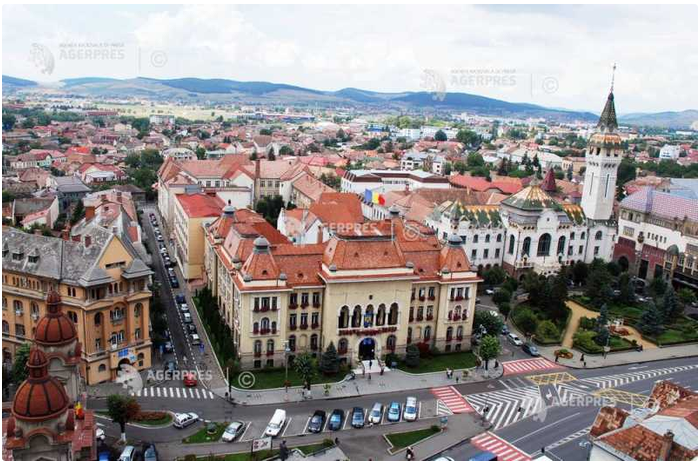
Targu Mures Municipality has been selected by the European Commission (EC), through the Citizen Energy Advisory Hub initiative, as one of the first six municipalities in Europe to organize a Citizens' Energy Panel. The local administration will host the launch event for the initiative on October 15, 2026, with the main objective of testing the 'Eco-Nei
Bucharest and Ankara aim to develop economic cooperation and business partnerships
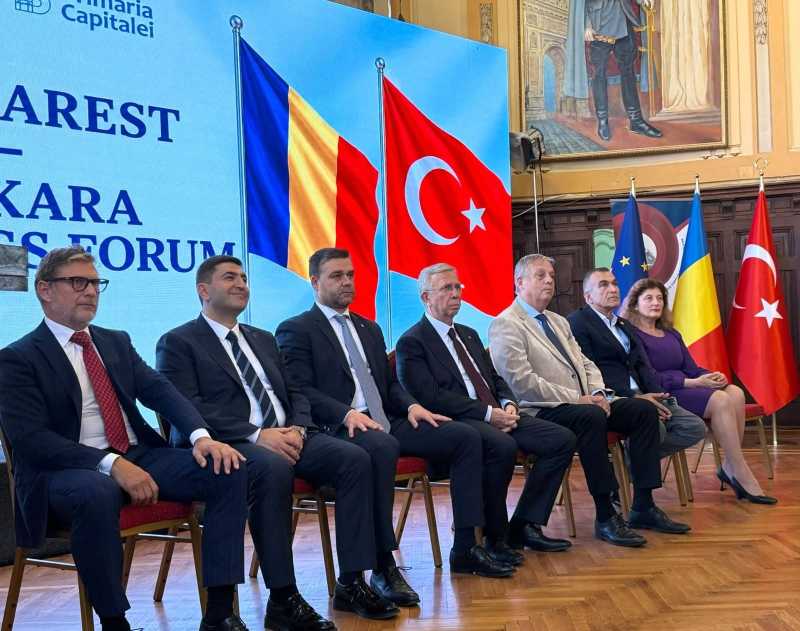
Representatives of public administration and the business community from Romania and Turkey discussed the development of bilateral economic cooperation and the identification of new business opportunities during the Bucharest-Ankara Business Forum, an event organized by the Bucharest Chamber of Commerce and Industry (CCIB) in partnership with the Bucharest City Hall, on the
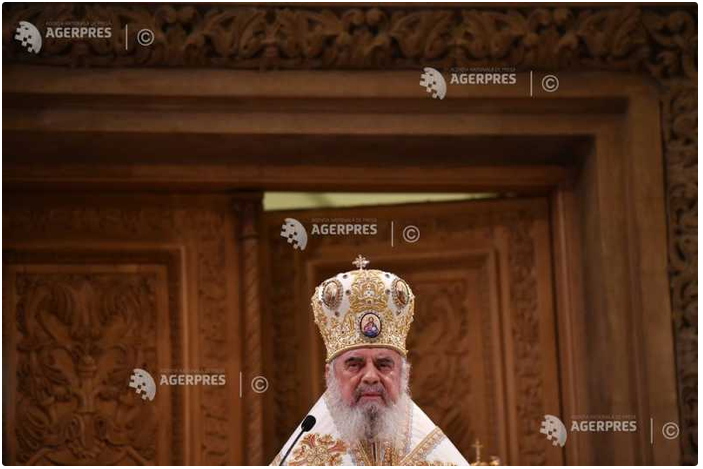
Patriarch Daniel sends well-wishes to Pope Leo XIV ahead of lung surgery
Patriarch Daniel of the Romanian Orthodox Church sent a message to Pope Leo XIV on Monday, wishing him 'plenty of help from God' with the health issues he faces. 'In this time of trial, we pray to our Lord Jesus Christ, the Healer of our souls and bodies, to relieve Your Holiness's suffering and grant you good health, so that you may continue y

Judge clears Crevedia explosion case for trial; EUR 53 mln in damages sought
A judge of the Racari Court in Dambovita County ruled on Monday to begin the trial on the merits in the case in which the two owners of the Crevedia LPG station, Ionut Doldurea and Cosmin Stanga, have been indicted in connection with the explosions of August 26, 2023, which left six people dead and 54 injured. The case was sent to court by the Prosecutor Gener
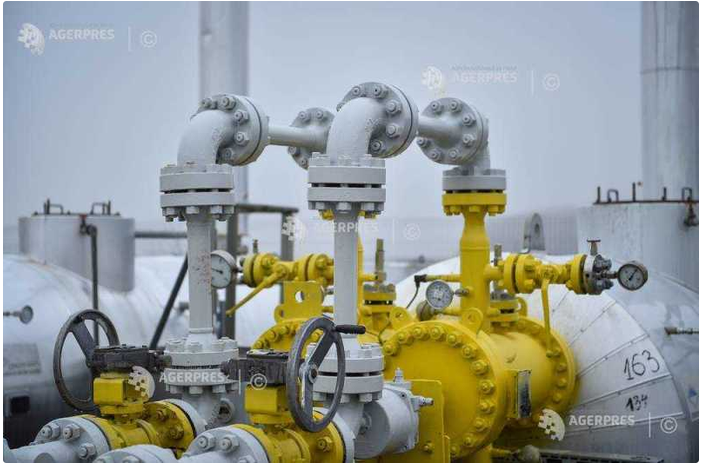
Re-liberalization of gas market, 'gas release' program, and Black Sea gas: Romania's chance to become an energy hub
The re-liberalization of the gas market, the resumption of the 'gas release' program, and gas extraction from the Black Sea could be Romania's opportunity to become a significant market—the energy hub that is constantly being discussed—Septimiu Stoica, Chairman of the General Meeting of Shareholders of the Romanian Commodities Exchange, stated on Mond

PSD rules out support for technocratic or hybrid gov't
National leader of the Social Democratic Party (PSD) Sorin Grindeanu said on Monday that he will not support a technocratic government or a hybrid government made up of social-democratic and technocrat ministers. At a news conference at the PSD headquarters, Grindeanu was asked if he excludes in any way PSD offering its support for a technocratic government or
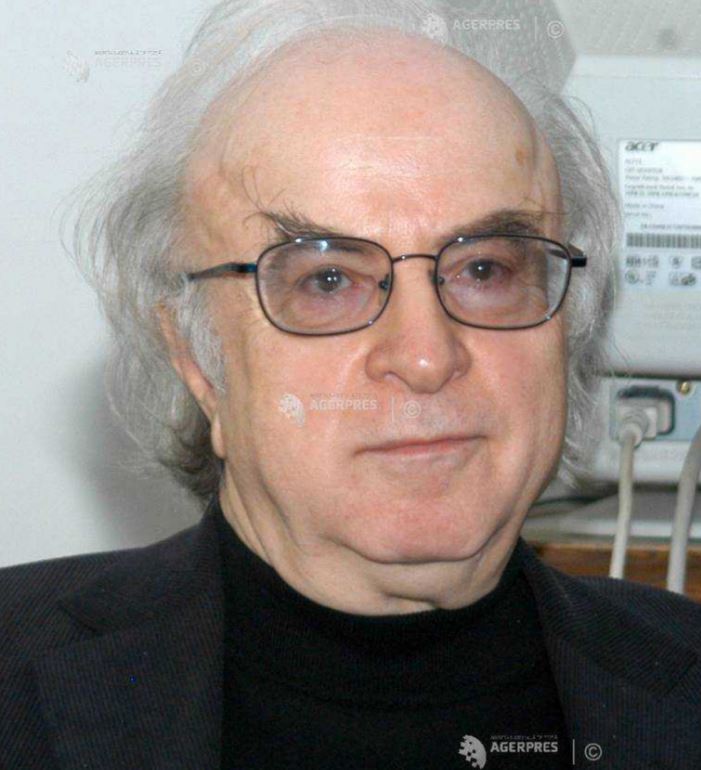
Writer Norman Manea celebrated in Bucharest on his 90th birthday
A wide-ranging series of events dedicated to writer Norman Manea, marking his 90th birthday, will be held in Bucharest on Thursday and Friday, the National Museum of Romanian Literature has announced. Organised by the National Museum of Romanian Literature in partnership with the Romanian Cultural Institute, the 'Carol I' Central University Library, th

USR's Fritz: We will not engage in backroom deals that would prolong the current agony
The Save Romania Union (USR) will not engage in 'backroom deals' that would prolong 'the current agony,' USR leader Dominic Fritz told Prime Minister-designate Luca Niculescu on Monday. The USR will no longer form a government with the Social Democratic Party (PSD), Fritz stressed at a press conference held at the party headquarters after his m

Interim ForMin: Ceasefire at Black Sea - a priority; Russia must not be allowed to use bread as weapon
Romania supports a ceasefire in the Black Sea region, interim Foreign Minister Oana Toiu said on Monday, stressing that Russia must not be allowed to use bread 'as a weapon.' 'Our priority, from Romania's perspective, is to support a ceasefire at the Black Sea. We have witnessed direct attacks on vessels in the Black Sea's exclusive economi

StateSec Busoi: Romania's gas storage levels - above European average and over 80% target
Romania's gas storage levels are above the European average and exceed the 80% target, with household consumers assured of both price stability and sufficient supplies, as are district heating systems, Secretary of State with the Ministry of Energy Cristian Busoi told the Natural Gas Forum on Monday. He also highlighted the need to continue reducing the bu
BrancusiYear/More than 30 rare photographs by Constantin Brancusi exhibited in Targu Jiu for the first time
More than 30 rare photographs taken by Constantin Brancusi will be exhibited for the first time in Targu Jiu on October 22, as Romania marks the Year of Brancusi and the 150th anniversary of the sculptor's birth, according to a press release issued on Monday by the Constantin Brancusi Research, Documentation and Promotion Centre in this city. The exhibitio
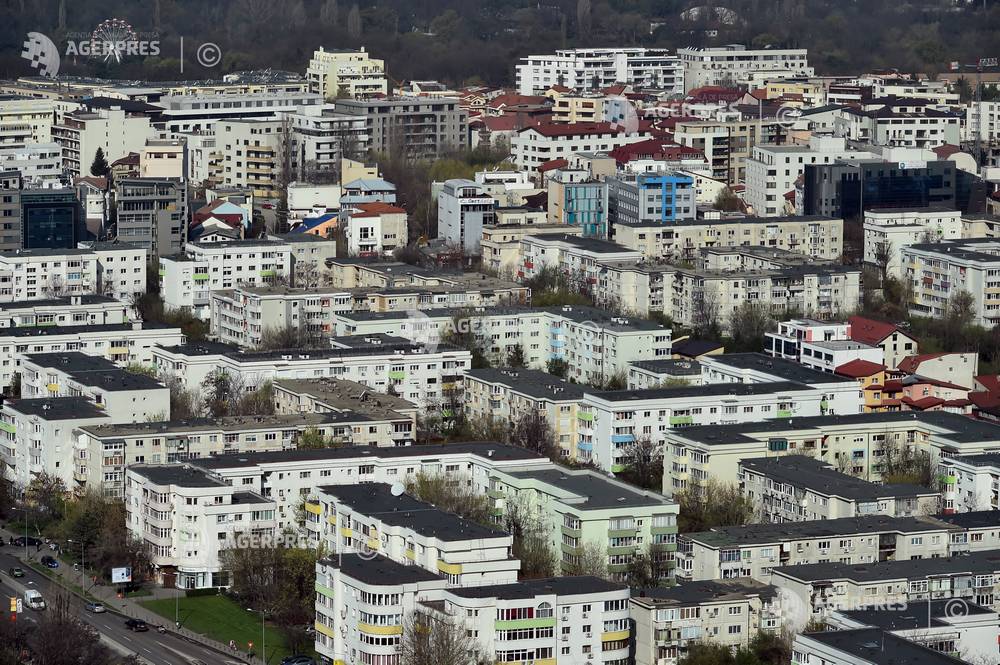
Housing prices in Romania rise 14.4% in 2025, largest increase among European countries assessed (study)
Housing prices in Romania rose 14.4% in 2025 compared with the previous year, the largest increase among the European countries assessed, with the average price reaching 1,917 euros per square metre, according to the Deloitte Property Index 2026 study. According to the study, Romania remains on the fourth place among European countries with the cheapest housin

PM-designate Niculescu:Romania can no longer afford political uncertainty, we urgently need gov' with full powers
Prime Minister-designate Luca Niculescu said on Monday that Romania urgently needed a fully empowered government, not to fill positions but because of concrete problems affecting Romanians' daily lives. In this context, he called on political parties to show an even greater willingness to engage in dialogue and reach a decision. 'We are