

INTERVIEW/ Energy minister: Plans afoot to extend household natural gas support scheme beyond April 1

Energy Minister Dumitru Chisalita intends to propose continuing the support scheme for household natural gas consumers beyond April 1, so as to avoid major price increases and ensure a smoother transition to a new stage.
In an interview with AGERPRES, he explained that he would review the scheme so that, by the end of the year, there would be a clear objective regarding what would happen next. In his view, the transition from an administratively regulated phase to a market-based one cannot take place without a transition period.
As regards vulnerable consumers, the minister said that mechanisms were needed to identify those who are genuinely vulnerable and ensure that assistance is targeted at those who need it, rather than continuing with a scheme under which small amounts of money were distributed to a very large number of people. All these aspects are being reviewed, with the aim of introducing a new support scheme for vulnerable consumers this year.
Referring to energy prices, Dumitru Chisalita stressed that the Ministry of Energy would introduce a series of measures within the limits of the law, and that very concrete proposals, with a chance of being approved, could be put forward this month.
In the interview, the Eergy minister also discussed energy supply during the coming winter, support schemes for storage and the project involving small modular reactors in Doicesti.
AGERPRES: There are voices saying that the current situation regarding energy supply is not very good. From your point of view, what risks lie ahead during the coming winter, and what could we do to avoid problems and prevent supply interruptions?
Dumitru Chisalita: We need to make it very clear that my main objective is precisely to get through this winter safely. I have made this a priority because of the situation we are facing. That is why I believe the most important thing is to focus on ensuring that we have enough energy, sufficient generation capacity, and that all these capacities are operational, given the current situation, which is far from rosy.
Based on everything I know about the history of the energy industry, this is one of the difficult situations, or among the most difficult, that the industry has faced. So, yes, the main concern, as part of these efforts, is first and foremost generation capacity. I believe I have held meetings almost daily, either with everyone or with representatives of various energy sectors, precisely to try to ensure that things move in a positive direction in preparation for the winter. At present, although there are many critical situations, we can say that the solutions indicate that there are elements we can build on and move forward.
At the same time, it is very important to understand that, in critical situations, you have to prepare for various worst-case scenarios. This does not mean that we should be worried or that we are in an unusual situation, or in a situation unlike those in previous years. But we must also understand that there are various ways of getting through a difficult winter, such as the one we currently anticipate.
An important element to take into account is the document extending the state of alert. This is precisely because, although we cannot say that there is a 100% probability that something will happen, the unusual situation we are facing makes it advisable to have mechanisms at our disposal that can be activated so that, at certain moments, we can deal with whatever those circumstances may bring.
Also, in the natural gas market, for example, emergency mechanisms have been in place since 2014. So, for 12 years. Even though there has never been a specific situation during these 12 years in which they had to be activated and applied, that does not mean we should not be prepared for absolutely anything that might happen.
We need to understand that energy requires continuity. What is consumed must equal the amount produced or stored at any given moment. If this equation is not maintained, disruptions can occur at any time. In practice, there are two ways of preventing such disruptions: increasing production, although this is limited by what is available at a given time; increasing imports, which are also limited by capacity and by the quantities available; or reducing consumption. There is effectively no third option. Either you increase the amount produced or imported, or you reduce consumption. We need to understand and assess future developments in light of these realities.
And, yes, the main concern is getting through this winter, because a considerable number of crises are overlapping. We can speak of a polycrisis in which we currently find ourselves.
AGERPRES: Last month, you estimated that natural gas prices would increase by around 22%. Suppliers have already started sending out new contracts, some of which include increases of more than 30%. Now that you are the helm of the Ministry, what increase do you estimate for electricity and natural gas prices, and is a new energy price cap being considered?
Dumitru Chisalita: First and foremost, data, regardless of the position from which you assess them, are based on statistics, on offers and on what is publicly available. Therefore, the increases I had estimated at somewhere between 16% and 27% at one point were based precisely on the offers available on the market. It is true that we were talking about average offers. In other words, there are cases in which some suppliers have increased prices, or even reduced them; some have introduced smaller increases, while others have introduced larger ones. Therefore, I do not think we should analyse things from the perspective of the positions we occupy, but rather in light of the realities we are facing.
When we talk about prices, we are dealing with three components. There is the commodity component, there are transmission and distribution tariffs, and there is taxation. In my current position, I can discuss only the commodity component. I cannot address the regulatory component or taxation; I could discuss them, but it would have no effect. They are simply matters that fall within the remit of other ministries. As regards the commodity component, we are currently analysing a number of elements and running various scenarios, taking into account the data we have received or are due to receive from other institutions. Once again, the Ministry of Energy does not have the contracts, the historical data or many other relevant elements. We are therefore asking various institutions to provide them so that we can run different scenarios and subsequently put forward potential solutions based on those scenarios.
But we need to understand that, at most, we can address one third of the problem. We cannot solve the other two thirds, so the solutions will only be partial in this respect. Of course, we will discuss this issue; we have already discussed it. However, we will focus on what the law allows us to address, namely this one third, and we will introduce a series of measures within the limits of the law. This is another important point, because everything we propose has to go before the Competition Council and the European Union, and we have to secure their approval. These are issues we are working hard to resolve. We hope that within a reasonable period of time, namely this month, we will be able to put forward very concrete proposals that also stand a chance of being approved by the relevant authorities.
AGERPRES: Is a price cap also being considered? Could it be reintroduced?
Dumitru Chisalita: We are currently considering many more elements. In a way, all the options we are assessing must, first and foremost, take into account whether they can actually be implemented. Let me give you a simple example: the amount of natural gas produced in Romania is lower than the amount consumed. This means that, at best, we can look at what is produced in Romania, but not at what is imported. That means we cannot approve or put forward solutions merely for the sake of proposing them. If we were, I don't know, at 120%, meaning that we produced everything we needed and had a surplus as well, it would be a different discussion. We are not in that position, so the measures we take must be consistent with this reality.
At present, we do not have all the data. I have asked the responsible institutions to provide them and am waiting to receive them so that, I repeat, the projects we develop can be tested against scenarios and can actually be implemented in practice.
AGERPRES: A year ago, there was talk of reducing VAT on energy to 9%. Would that be an option?
Dumitru Chisalita: As I was saying, in my current capacity, we are responsible for the first third, the commodity component. VAT falls within the last third, the taxation component. Of course, it would be very easy for me to come up with such a solution, but that is not within my remit. I do not think it would be right for me to take that approach or express opinions on the matter from my current position. Therefore, as I have said, we are currently considering a number of elements and trying to develop them in line with what we can actually do and what is feasible. It is very easy to task others with doing something.
AGERPRES: Has this idea been discussed again in any way?
Dumitru Chisalita: This is not an issue that falls within the Ministry of Energy's remit, so I cannot discuss it.
AGERPRES: The government programme provides for the continuation of support schemes for vulnerable consumers. Will the current scheme be amended? Will you come up with new solutions?
Dumitru Chisalita: My first priority is to get through this winter safely. That is number one. If we move on to the second most important issue, we need to look at vulnerable consumers. We have to be honest and acknowledge that energy poverty in Romania has increased in recent years. It has risen against the backdrop of economic problems and price developments, at least as regards electricity, because the natural gas support scheme is still in force and applicable. Therefore, we need to do something for vulnerable consumers. A meeting is currently taking place on the basis of some schemes that we have devised and submitted to the Ministry of Labour, with the aim of trying to harmonise our approaches, because the issue of vulnerable consumers actually falls under another ministry. We are therefore doing everything we can and have taken all the steps we considered necessary in this area.
First and foremost, we are trying to understand that mechanisms are needed to identify genuinely vulnerable consumers. The idea is to target assistance at those who need it, rather than rely on schemes under which small amounts of money were effectively distributed to a very large number of people, without really helping them.
Of course, this must also go hand in hand with a review of the income thresholds for those eligible for such assistance, because, once again, circumstances have changed and these income thresholds need to be reconsidered. Last but not least, a mechanism is needed that takes into account factors other than income, based on the experience of recent years.
This situation has prompted us to identify other potential factors that could be taken into consideration. However, they need to be verified with other institutions, because the relevant data are not held by the Ministry of Energy. They must therefore be provided, made available and be capable of being exchanged, modified and updated promptly. We are looking at all these issues at present, and we want to introduce a new support scheme for vulnerable consumers this month or, at the latest, by the end of this year.
AGERPRES: In the context of this cooperation with other ministries and institutions, when could the National Register of Vulnerable Consumers be ready? Communication between ministries, particularly in terms of digitalisation, is not exactly working very well at present.
Dumitru Chisalita: You are absolutely right, and this is an issue we are trying to overcome. Under an optimistic scenario, we could be talking about a period of around 12 months. That does not mean that we will do nothing for 12 months. We will devise, or try to introduce, an interim arrangement under which we can help vulnerable consumers based on the data currently available. But I believe it is extremely important to finalise and have this Register in place precisely so that we can work with concrete information.
I was discussing this issue with my colleagues yesterday, and someone gave me an example from Canada. They told me about someone who had been unemployed at one point and, as an unemployed person, received certain benefits as a vulnerable consumer. As soon as that person found a job, they received a letter at home the very next day informing them that they were no longer eligible for the benefits. We are talking about a very well-organised system in which information is updated across all levels whenever a change occurs. Here, at present, everything is based on a declaration on one's own responsibility. In other words, the person must be aware that they need to submit such a declaration, and a large number of people have to be deployed to carry out checks and validate the information. These are the realities, and we have to start from them.
AGERPRES: We were talking about energy poverty. Around 30-40% of households in Romania spend more than 10% of their income on their energy bills or energy consumption. How can we reduce energy poverty?
Dumitru Chisalita: There are around four indicators used at European level to measure energy poverty. One of them concerns how many people, or what percentage of Romania's population, are unable to pay their electricity bills. But, to be honest, we must acknowledge that this category also includes situations that are not necessarily related to genuine energy poverty. There are various factors that may be concealed. There is also another indicator covering people who, in good faith, pay their energy bills but then cannot afford to buy medicines, food or other necessities. Both aspects must be taken into account, and assistance must be targeted at those who genuinely need it, including people who pay their bills but, in fact, have to give up buying other essentials for their daily lives. Both aspects must be addressed, first and foremost, through support for vulnerable consumers.
On the other hand, we need to recognise that there is a European consensus on the factors that determine energy poverty. Income ranks first. In a country with the lowest incomes in the European Union, the main factor is the possibility of increasing incomes, if we are to talk about limiting poverty. According to European Union analyses, the second factor is waste, losses, the inefficiency of equipment and buildings, inefficient windows, doors and so on. Prices come only third, if we look at these European statistics.
Therefore, if we look back over the past 10 or 15 years, we have focused on prices every time, and it was very good that we did so. But, once again, that is only one part of the problem and, unfortunately, according to the structure of these European studies, it is the smallest part. If we genuinely want to eradicate or reduce energy poverty, we need to take all the factors into account. Likewise, if we really want to have lower prices, we need to look at the other two components as well, not just one. We need to take all the factors into account. Of course, these other areas do not fall within the Ministry's remit.
As regards prices, I have already mentioned the issue of vulnerable consumers. We have a natural gas support scheme in place until March 31. My intention is to review this scheme and establish a clear objective by the end of the year regarding everything that will happen next. At the same time, I do not believe we can talk about moving from an administratively regulated phase to a market-based one without a transition period. This has never happened overnight anywhere in the world. You always need time to restart the market. You cannot do this in the middle of winter, especially a winter that is far from easy, and then, at the end of winter, move from one market to another. In this respect, my proposal will most likely be to continue the natural gas support scheme beyond April 1, so as to avoid major price increases and, at the same time, ensure that the transition to a new stage takes place in a completely normal and natural way.
AGERPRES: Will such a scheme also cover large consumers? Will there be anything for them as well?
Dumitru Chisalita: We are considering this, but there are many issues concerning non-household consumers. While there is, in a way, an understanding at EU level regarding household consumers, there are many restrictions in this respect for non-household consumers. However, I have already held meetings with the Competition Council, and we have some schemes prepared. We need to identify a scheme that can actually be implemented. Once again, I come back to the need to have enough gas to supply everyone. The second issue is compliance with Romania's legal requirements. Any such scheme must be approved under Romanian legislation, by the Competition Council and subsequently by the European Commission. But, yes, I can say that we are working on such schemes.
AGERPRES: What would the scheme you are proposing after April 1 for household consumers involve? A price cap?
Dumitru Chisalita: For household consumers, the proposal, as things stand today, and subject to running these scenarios, is still based on setting an administratively determined price. So we will not be talking about a price cap or, at least at present, the idea of a price cap is not among the options we are considering. We are not ruling it out entirely, but it is not currently under consideration. We are talking about the idea of having an administratively determined price.
AGERPRES: Natural gas from Neptun Deep will also be pumped into the network next year. Wouldn't that help in finding a scheme for large consumers?
Dumitru Chisalita: We should expect gas from the Black Sea sometime in the second half of the year, or towards that period, if we want to be as certain as possible that it will be available. This means that we will have to manage as best we can this winter.
AGERPRES: When will the battery support schemes become operational, and what will they involve?
Dumitru Chisalita: What I can tell you is that we are currently working on these schemes. I do not have any details to share with you at this point. But, first and foremost, we believe we need a storage strategy. There are, in a way, two aspects to this. Between 2008 and 2025, we spent 17 years during which we were hardly interested in this subject at all. Then, when we found ourselves up against the wall, we suddenly started taking action and trying to make up for those lost years. That is a very good thing. From last year to this year, we have increased capacity enormously. We are champions in terms of the growth recorded over a single year, but it is still very little compared with what should have been in place.
Therefore, it is very important to have a strategy that prevents us from finding ourselves, a few years down the road, once again in a situation where things have not been aligned with generation capacity, future consumption, grid development and the location of installations. We are currently working on such a strategy, after which we will address, or try to introduce, the relevant support schemes. This does not mean that we have put a stop to development, but we need to be very careful and fully aware that things must be done differently from the way they were done in 2008.
The call for standalone battery storage installations is already open. It has a budget of 150 million euros from the Modernisation Fund, for a capacity of at least 2,174 MWh. Projects compete on the basis of the amount of aid requested for each installed MWh, subject to a ceiling of 69,000 euros/MWh and 15 million euros per company. The application deadline has been extended to November 15, 2026, at 23:59. Selection will be followed by contracting and implementation. For the system, the location of the batteries and the number of hours for which they can supply electricity when consumption is high are important.
AGERPRES: As regards pumped-storage facilities, such as the one at Tarnita-Lapustesti, which has been discussed for a very long time, how do you think such a project could eventually become operational?
Dumitru Chisalita: Let me go back to the need for this strategy. Ultimately, as I was saying, storage has become an area of interest only over the past year. Tarni?a-Lapu?te?ti is also a storage programme and project. At first glance, it is more expensive than battery storage, but it also entails other advantages in terms of Romania's energy safety and security. Therefore, in the context of this new strategy, we believe it will no longer be treated as a peripheral issue, as it has been for a long time, but will become part of the prioritisation process, taking into account the storage capacity Romania needs in the short, medium and longer term. I can also say that we are considering analysing other facilities that could be included in such a framework.
At Tarnita-Lapustesti, Hidroelectrica and EDF have prepared the framework for an equal-share partnership to develop the project. In the Bicaz area, the approximately 340 MW Frasin-Pangarati project uses the Izvorul Muntelui reservoir as its lower reservoir in the proposed configuration and has obtained environmental approval. For a separate project in Bicaz and for the order in which these facilities are to become operational, we need a timetable agreed upon by each project developer.
AGERPRES: When, with approximation, could the first such project become operational?
Dumitru Chisalita: It is very important to correlate this with the needs that will emerge from the strategy. I would not put forward a year for the first power plant at this point.
AGERPRES: Small modular reactors are not included in the government programme. Has the SMR project been abandoned in any way, and what is happening with the Doicesti? Is it financially viable?
Dumitru Chisalita: Nuclearelectrica is currently conducting an assessment of the Doicesti project. Last week, we approached the company through a resolution of its General Meeting of Shareholders, setting out specific actions and a timetable to ensure that a clear, realistic and effective conclusion can be reached regarding the project. Beyond this stage, depending on the findings of Nuclearelectrica's assessment, various other aspects may emerge and any approach may be considered. But, at present, until the analysis that Nuclearelectrica has been tasked with under the General Meeting of Shareholders' resolution is completed, it is premature to express a position.
For the Doicesti project, the public reference point is the Nuclearelectrica shareholders' resolution of October 29. Measures were approved to prioritise the activities of RoPower Nuclear and improve spending efficiency. At the time of reporting, more than 80% of the conditions associated with the final investment decision had not been met. The cost of electricity depends on construction costs, financing costs, the timetable and how risks are shared between the partners. These elements must be assessed for the specific project before we can talk about its competitiveness. The next decision on committing resources must be based on the fulfilment of the conditions and on a verifiable economic justification. AGERPRES (RO - writing by: Nicoleta Gherasi; EN - writing by: Simona Klodnischi)
The content of the www.agerpres.ro website has the exclusive purpose of public informing.
All the information published on this website by AGERPRES is protected by relevant legal dispositions.
It is forbidden to copy, reproduce, recompile, decompile, distribute, publish, display, modify, create derived components or products or full services, as well as any exploitation of the site's content.
Details in the section Terms of Use. If you are interested in picking up AGERPRES news items, please contact the Marketing Department – marketing@agerpres.ro.
The use of the Comments section entails your obligation to respect the AGERPRES terms and conditions in regards to the publishing of comments on the www.agerpres.ro.
Other news in category
Attack in Krakow/IntMin Neacsu: I convey my solidarity with Polish police officer, we are prepared to offer support
Minister of Internal Affairs Marian Neacsu issued a message following the armed attack that took place on Saturday in Kraków, which resulted in deaths and wounded, stating that Romania stands ready to provide support, should it be requested. 'During these difficult times for Poland, our thoughts are with the bereaved families affected by the attack
INTERVIEW/Ramona Miletic, Deputy Mayor of Simmering (Vienna): I am far from Romania but Romania is with me
Ramona Miletic is the Deputy District Head of Vienna's Simmering district but until 2009 she lived and worked in Pitesti, where her parents and brother still reside. At the age of 27, she was a purchasing manager at a major company in Pitesti, with a promising career already underway. Love, however, changed everything. She met her future husband, an Austri
Central European Initiative Action Plan for 2027-2030, adopted at ministerial meeting in Bucharest
The meeting of the Ministers of Foreign Affairs of the Central European Initiative (CEI) member states took place on Friday at Victoria Palace. During the event, the Bucharest Joint Declaration and the CEI Action Plan for 2027-2030 were adopted. The event marked the conclusion of Romania's Chairmanship-in-Office, the Ministry of Foreign Affairs (MAE) annou
Belarus's opposition leader receives award in Timisoara, calls to support Ukraine
Sviatlana Tsikhanouskaya, leader of the democratic opposition in Belarus, received the 'Timisoara for European Values' Award on Friday during the third edition of the forum bearing the same name. The honor was bestowed in recognition of her courage in peacefully resisting a repressive regime and for defending human freedom and dignity. In her speech at

Romania makes debut at China International Import Expo in Shanghai with two pavilions, 15 companies
Romania is taking part for the first time in the China International Import Expo (CIIE), held in Shanghai from November 5 to 10, 2026. Romania is participating in the event's ninth edition with two exhibition pavilions showcasing 15 companies, according to a press release from the Consulate General of Romania in Shanghai. Held annually, CIIE is the world&#
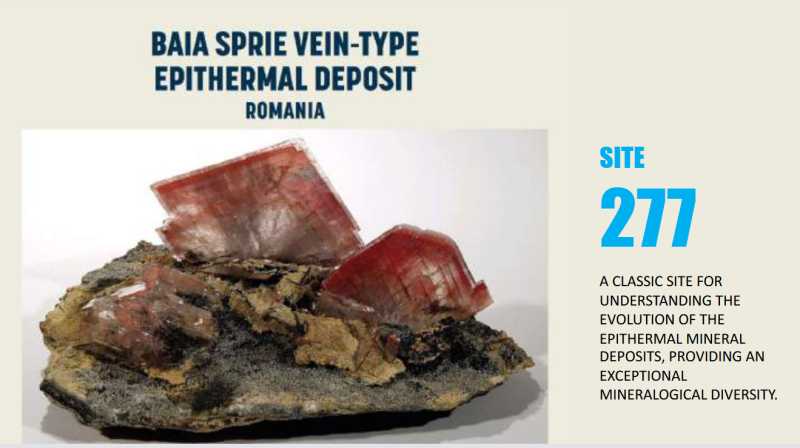
Baia Sprie hydrothermal deposit becomes Romania's first site on IUGS geological heritage list
The hydrothermal ore deposit in the former mining town of Baia Sprie has become the first site in Romania to be included on the geological heritage list recognized by the International Union of Geological Sciences (IUGS), the team behind the Gutai-Maramures UNESCO Geopark project announced on Friday. The international recognition was announced at an event held

Black Friday2026/Transaction volumes across all payment methods reached 763 million lei by Friday evening
The transaction volumes processed across all payment methods during 'Black Friday' 2026 reached 763 million lei, according to data presented on Friday evening by Elena Gheorghe, Country Manager for PayU Romania and Hungary. 'As of this moment (17:45, editor's note), we have reached 763 million lei in processed transaction volume across all paym
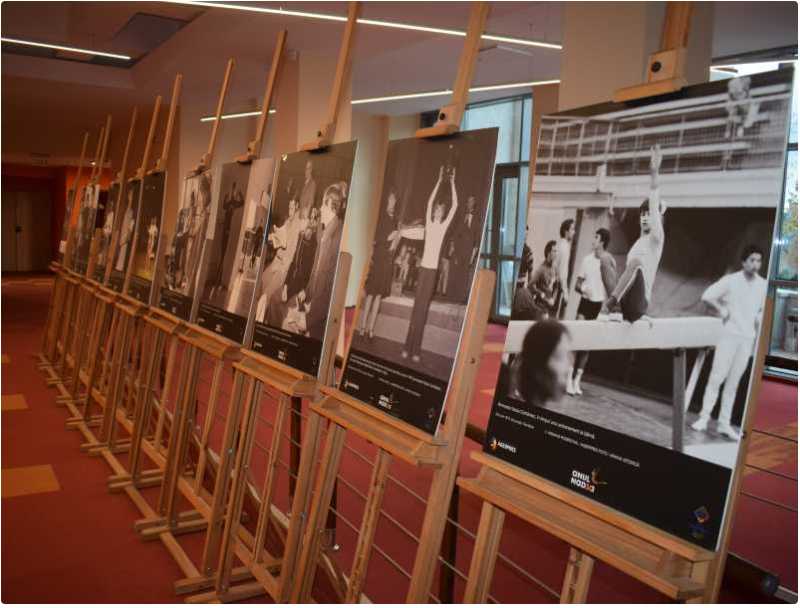
AGERPRES exhibition celebrating Nadia Comaneci's perfect 10 opens in Vaslui
The AGERPRES exhibition 'Nadia. Perfection Has a Story' opened on Friday at the Vaslui County Cultural Centre, marking the start of the Excellence in Education Gala. The mayor of Vaslui said he had been particularly keen to bring the exhibition to local audiences to celebrate the achievement of multiple gymnastics champion Nadia Comaneci 50 years ago,

Romanian president warns fake accounts, algorithms threaten citizens' voices in democracies
The danger to democracy is that citizens' legitimate voices may no longer be heard, drowned out by hundreds, thousands or tens of thousands of paid fake accounts or by algorithms, President Nicusor Dan said on Friday at a working meeting on 'Information Society and Constitutional Democracy', organised as part of the three-year programme of the Presidency of the A
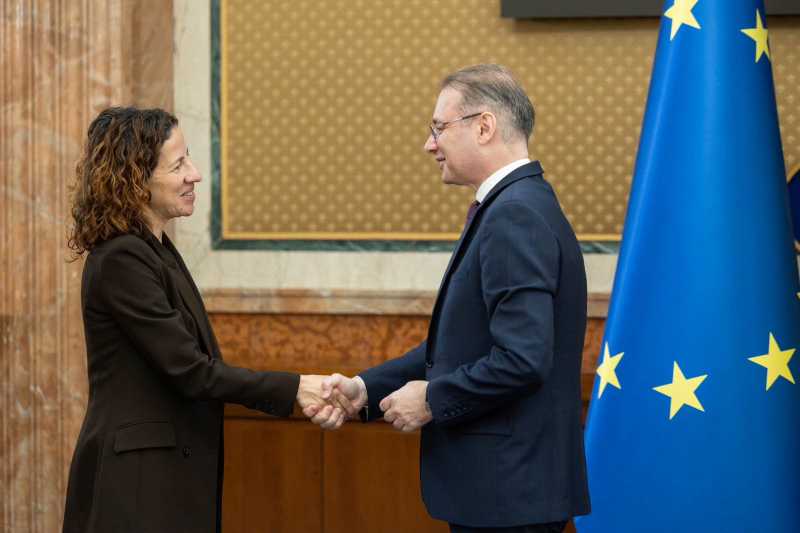
PM Niculescu, European Commission vice-president Minzatu discuss youth employment, skills development and EU funding
Prime Minister Luca Niculescu met on Friday at Victoria Palace with European Commission Executive Vice-President for Social Rights and Skills, Quality Jobs and Preparedness Roxana Minzatu to discuss the government's priorities in education, youth, skills development, employment and social policies, as well as opportunities to access EU funding in these areas.

Niculescu:Information Society and Constitutional Democracy,a theme that represents challenges of contemporary world
Luca Niculescu stated on Friday that engaging in a debate among constitutional jurisdictions on the topic of 'The Information Society and Constitutional Democracy' is a highly valuable endeavor, as it highlights the implications of a society's fundamental values, values upon which the daily lives of citizens also depend. The Head of the Executive p
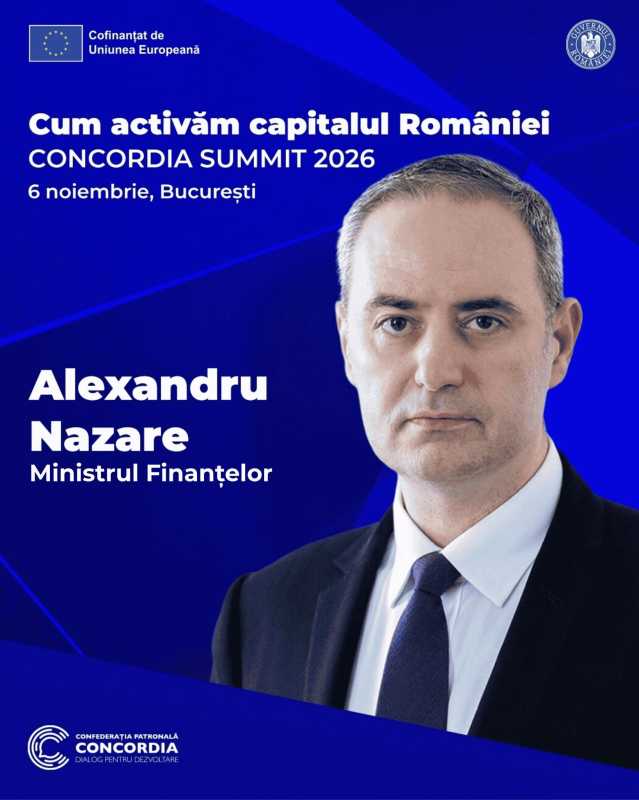
FinMin Nazare says Romania has two offers for the construction of an AI Gigafactory
Romania has received two bids for the construction of an AI Gigafactory, and the selection process is in its final stage, with authorities hoping to be able to announce the outcome by the end of this year, Finance Minister Alexandru Nazare stated on Friday at the Concordia Summit 2026. 'Following nearly a year of effort, Romania currently has two bids on t

Black Sea security, EU enlargement on agenda of President Dan's meeting with EC President von der Leyen
European defence and security, particularly security in the Black Sea region, European competitiveness, including current energy issues, EU enlargement, especially Romania's support for the Republic of Moldova, and negotiations on the EU's new multiannual financial framework are among the topics President Nicusor Dan will discuss with European Commission President Ur

BusinessEurope President: The Single Market is extremely important; it is the absolute priority
The European Single Market is extremely important, and we must promote this solution, which stands as an absolute priority, because it constitutes a major source of economic growth, stated Maciej Witucki, President of BusinessEurope (an organization representing the business community at the European level), on Friday, at the second edition of the Concordia Summit 2026.
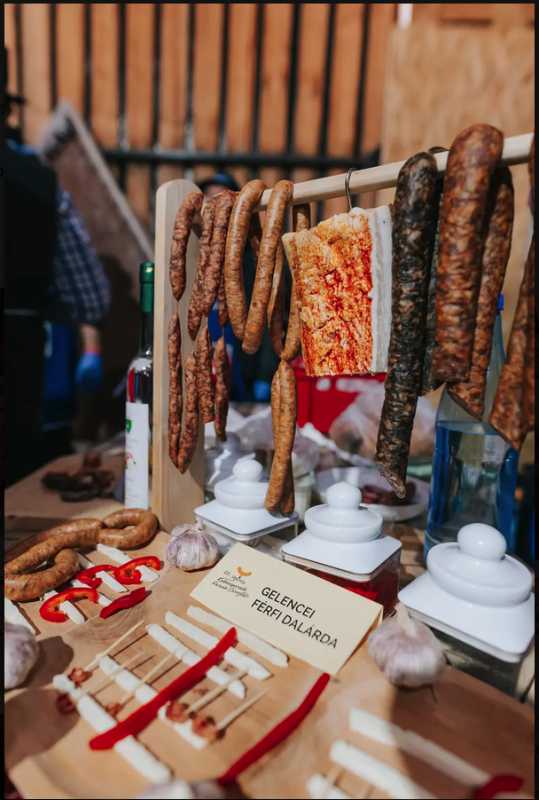
Mikes Castle in Zabala to host Sausage Festival 21st edition
A total of 23 teams from Romania and Hungary have registered for the 21st edition of the Sausage Festival, which will take place on Saturday, 7 November, at Mikes Castle in Zabala. The competition will be held in the castle's barn, as in previous years, and the event will include, among other activities, a sausage-making contest, a local produce fair and c