

INTERVIEW/ Ambassador Carmen-Ileana Mihalcescu: Romania, Greece can become hubs for energy, trade & digital connectivity
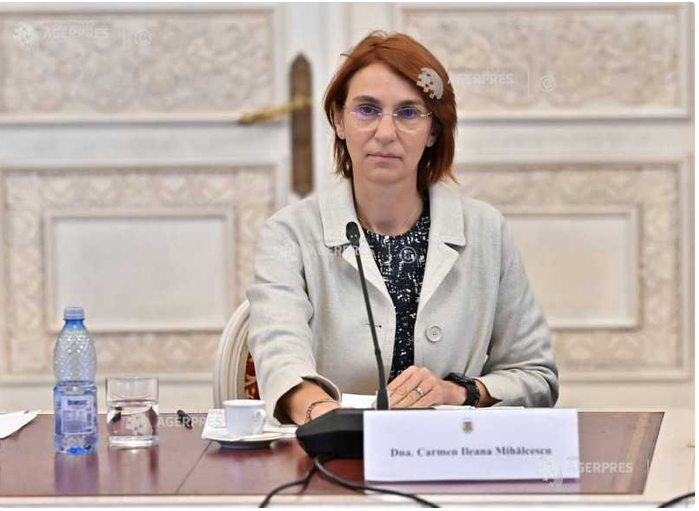
Greece ranks among the top ten most active foreign investors in Romania, with subscribed share capital totalling 2.45 billion euros, while Greek companies' investments in Romania's energy sector have exceeded 5.5 billion euros, Romania's Ambassador to Greece, Carmen-Ileana Mihalcescu, told AGERPRES in an interview.
The diplomat noted that bilateral trade reached a record 3.6 billion euros last year and was 15% higher in the first seven months of this year than in the same period of 2025. Supporting Romanian exports to the Greek market remains one of the Embassy's priorities.
Mihalcescu also discussed the Vertical Gas Corridor and the Black Sea-Aegean Sea Corridor, strategic projects developed by Romania, Greece and Bulgaria to strengthen regional connectivity and energy security.
As regards tourism, approximately 1.55 million Romanians visited Greece in 2025, while the number rose by around 60% in the first half of 2026 compared with the same period last year. Interest among Greek tourists in Romania is also growing, with spa, mountain, religious and culinary tourism offering significant potential.
Beyond economic and tourism cooperation, the ambassador said that one of the key objectives of her diplomatic mission is to establish a Romanian Cultural Institute in Athens, which would serve as a permanent platform for promoting Romanian literature, art, cinema and cultural heritage in Greece.
AGERPRES: Greece remains one of Romania's major investors, particularly in sectors such as energy, financial services, telecommunications and the food industry. Romanian investment in Greece, by contrast, is considerably lower. What is the current picture of investment in the two countries, and which sectors offer the greatest prospects for development? Are there any new projects at an advanced stage of preparation?
Carmen-Ileana Mihalcescu: Greece is an important economic and investment partner for Romania, and the interest shown by Greek investors confirms the attractiveness of the Romanian economy. With more than 9,000 companies registered in Greece operating between 1990 and 2026 and subscribed share capital amounting to 2.45 billion euros, according to data from the National Trade Register Office (ONRC), Greece remains among the top ten most active investors in Romania. This demonstrates confidence in the Romanian economy's growth potential.
I believe there are excellent prospects for development in energy, infrastructure and transport, information technology, tourism and the agri-food industry. Regional connectivity and infrastructure projects linking Greece and Romania, with Bulgaria's involvement and the support of the European Commission, can also create new investment and business partnership opportunities.
I would particularly highlight the strong momentum in the energy sector. Greek companies' investments in the Romanian energy sector have exceeded 5.5 billion euros, and major investments through 2030 have already been announced by Greek companies such as PPC and Helleniq Energy. These developments confirm the potential for cooperation in renewable energy, energy infrastructure and energy security.
We are equally keen to see a stronger presence of Romanian investment in Greece. In this respect, we are seeing encouraging signs of growing interest among Romanian investors in the Greek market. According to Bank of Greece data for 2025, the net flow of Romanian investment in Greece amounted to approximately 83 million euros, reflecting sustained interest among Romanian businesses, particularly in retail, real estate and services.
One of the Embassy's key objectives remains to facilitate contacts between the business communities, promote the opportunities offered by the two economies and help identify mutually beneficial investment projects.
AGERPRES: Romania recorded a trade deficit of almost 734 million euros with Greece in 2024, which rose to 757 million euros in the first ten months of 2025, as imports from Greece grew faster than Romanian exports. How do you explain this trend, and what concrete measures can the Embassy support to boost Romanian exports to the Greek market?
Carmen-Ileana Mihalcescu: Economic relations between Romania and Greece are strong and continue to develop. Bilateral trade reached a new record in 2025, totalling 3.6 billion euros. The upward trend has continued this year, with Romanian-Greek trade in the first seven months increasing by 15% compared with the same period last year. The trade deficit reflects a number of economic factors and the dynamics of bilateral trade. Our priority is to encourage a stronger presence of Romanian products and companies on the Greek market. The Romanian Embassy in Athens continues to actively support the identification of business opportunities, facilitate business contacts and promote Romanian exports, for the benefit of both economies.
AGERPRES: Romanian companies interested in the Greek market often cite difficulties in identifying local partners, bureaucracy and the particularities of the Greek business environment. What are the most common obstacles you encounter in your discussions with Romanian entrepreneurs, and what practical support can the Embassy provide to help them overcome these barriers?
Carmen-Ileana Mihalcescu: We maintain an ongoing dialogue with representatives of the Romanian business community and pay particular attention to the challenges they face when developing their activities on the Greek market. Our discussions with Romanian entrepreneurs indicate that the most frequently reported difficulties include finding reliable local partners, becoming familiar with the specific features of the Greek legal and tax framework, administrative procedures and the time required to obtain certain permits. Language barriers, differences in organisational culture and the need for a good understanding of local business practices can also pose challenges.
In this context, the Embassy can play an important role in providing guidance and facilitating contacts. We offer institutional support and put Romanian companies in touch with the relevant authorities, chambers of commerce, business associations and potential Greek business partners. We also promote business opportunities in Romania and Greece and support companies' participation in economic events and trade fairs. At the same time, we encourage entrepreneurs to get familiar in advance with the legislative and administrative requirements specific to the sectors in which they wish to invest or expand their activities. We want the Romanian Embassy in Athens to be more than just a point of contact for Romanian companies facing difficulties: we want it to be an active partner in identifying opportunities and preparing their entry into the Greek market.
AGERPRES: Greece is home to one of the largest Romanian communities in southern Europe. What is the latest estimate of the number of Romanian nationals living in Greece, and what kinds of problems are most frequently brought to the Embassy's attention? How many cases involving unpaid wages, labour disputes or other consular issues have you handled over the past year, and what were the outcomes of these interventions?
Carmen-Ileana Mihalcescu: We are regularly informed of situations involving both consular matters and various labour disputes. Each time, we seek to assist Romanian citizens and, within the limits of our remit, facilitate dialogue with the relevant Greek authorities.
According to data from the latest census conducted in Greece, there are 28,250 Romanian citizens with legal residence status, most of them registered in the Attica region, which includes Athens, with 14,105 people.
Based on our dialogue with local authorities, the Embassy estimates that around 35,000 Romanian nationals may be living in Greece. The difference compared with the number of legally registered residents generally consists of people working seasonally, particularly in agriculture. Most of our routine consular work involves requests for documents from Romanians living here. These include the renewal of identity cards and passports, the issuance and registration of civil-status documents (births, marriages and deaths, as well as the solemnisation of marriages), and various notarial procedures. During the summer season, however, our priority shifts to providing emergency consular assistance and protection to Romanian tourists in Greece.
The most frequent problem we encounter in summer is the theft of documents and personal belongings, particularly through car break-ins in tourist areas. In such cases, we issue emergency travel documents to enable Romanian tourists to return home safely.
During the summer, we are also on the front line in managing crises caused by wildfires. Our priority is to monitor developments and keep Romanian residents and tourists informed, based on information provided by the competent Greek authorities.
There is also a category of complex and sensitive cases that require attention throughout the year. These include consular assistance and protection for unaccompanied minors and children placed in Greek care institutions, support for homeless people, hospitalisation cases and complex repatriation or medical transfer procedures to Romania, as well as consular assistance for Romanian citizens held in Greek prisons.
In the field of employment and social protection, the main issues reported by Romanian citizens concern the recognition and crediting of periods of employment in Romania and Greece, delays in processing pension claims under EU legislation coordinating social security systems, and cases involving undeclared work. In such situations, we guide citizens towards the competent institutions, notify the relevant authorities and follow up on each case, maintaining contact with those concerned until the matter is clarified and resolved. We also provide information and assistance regarding workers' rights and obligations in the Greek labour market, organise meetings with relevant institutions and facilitate institutional communication, including by forwarding to the competent Romanian authorities the issues and difficulties reported by citizens.
We value the existing cooperation and believe that maintaining open dialogue and strengthening institutional collaboration between the Romanian and Greek authorities are essential to handling these cases as effectively as possible and finding practical solutions to support our citizens.
AGERPRES: Romanians continue to rank among the largest groups of foreign tourists choosing Greece for their summer holidays. How have the figures evolved in 2025 and 2026, and what do you think Romania needs to do to attract more Greek tourists, beyond traditional tourist itineraries?
Carmen-Ileana Mihalcescu: According to official statistics published by the Bank of Greece, approximately 1.55 million Romanian tourists visited Greece in 2025. For 2026, the available figures for the first half of the year indicate an increase of around 60% compared with the same period in 2025, maintaining the upward trend seen in previous years. The number of Greeks discovering Romania has also been steadily increasing in recent years. Together with Greece's Minister of Tourism, Olga Kefalogianni, we have managed to give fresh impetus to expanding cooperation in a field in which Romania has much to offer, but also much to learn from Greece.
Alongside city breaks, niche tourism segments such as spa, mountain, religious, culinary and ecotourism could appeal to Greek visitors. I can assure you that the Romanian Embassy in Athens is actively promoting all these opportunities to attract Greek tourists, by organising events to showcase Romanian wines and prestigious wine-producing regions, as well as participating in various trade fairs and events with European and other partners.
AGERPRES: In areas such as energy, maritime transport, regional connectivity and digitalisation, what concrete projects could Romania and Greece develop in the coming years? Are there already initiatives that have moved beyond the discussion stage and are being implemented?
Carmen-Ileana Mihalcescu: Romania and Greece have considerable potential for economic and sectoral cooperation. Developing regional connectivity in strategic areas of shared interest, such as energy, transport and digitalisation, which have a clear bearing on national and regional security, is a priority for both Romanian and Greek authorities and is also reflected in the mandate of the Romanian Embassy in Athens. As I recently stated in the Greek press, connectivity in our region, along the East-West and South-North axes, is an essential ingredient in fostering stronger trade links, industrial competitiveness and economic resilience, both within the EU and among our partners in the wider neighbourhood.
To this end, the Vertical Gas Corridor is a fundamental project aimed at strengthening long-term energy security. With Greece, Bulgaria, Romania, Hungary and Slovakia among its active members, and the possibility of extending it to Serbia and North Macedonia, while Ukraine and the Republic of Moldova are also partners, the Vertical Corridor creates a north-south route for transporting natural gas and liquefied natural gas (LNG). By connecting and modernising existing infrastructure, it helps diversify supply routes, mitigate market volatility and strengthen regional energy resilience.
Close cooperation and coordination between the regulatory authorities in Romania and Greece, together with major investments in both countries, are also helping advance joint projects in renewable energy and energy market integration.
In transport and connectivity, a landmark project is the Black Sea - Aegean Sea Corridor, developed by Romania, Greece and Bulgaria with strong support from the European Commission. Road, rail and multimodal infrastructure projects, including the construction of new bridges over the Danube, are part of the Action Plan signed last month in Brussels by officials from the three countries and European Commissioner for Sustainable Transport and Tourism Apostolos Tzitzikostas. These represent concrete steps towards better connecting the region's ports and transport networks. The aim is to make better use of the complementary strengths of Black Sea ports, such as Constanta, and Aegean Sea ports, including Alexandroupolis, Kavala and Thessaloniki, notably by developing integrated logistics chains.
Digitalisation also offers prospects for cooperation between IT companies, universities and innovation centres in the two countries in areas such as cybersecurity, artificial intelligence, digital services and smart solutions for transport and public administration. I would also point out that these three areas fall within the priority fields of action covered by the regional cooperation frameworks in which Romania and Greece participate, particularly the Three Seas Initiative, which Greece joined at the Bucharest Summit in September 2023. These platforms facilitate the coordination of priorities, the identification of shared interests and the mobilisation of the political and financial support needed to develop cross-border infrastructure.
We therefore already have initiatives that have moved beyond dialogue and are backed by concrete cooperation mechanisms. Our priority is to make the most of these opportunities, including through European funding instruments, and to turn Romania and Greece into genuine hubs of energy, trade and digital connectivity between the Black Sea, the Aegean Sea and the rest of Europe.
AGERPRES: Beyond bilateral cooperation, Romania and Greece also share interests at European level in areas such as infrastructure, energy and connectivity between the Black Sea and the Mediterranean. On which major policy files are the two countries coordinating their positions, and what benefits could this cooperation bring to their economies and citizens?
Carmen-Ileana Mihalcescu: Romania and Greece share a number of strategic interests at European level, and coordinating our positions is important both for strengthening regional connectivity and for improving the competitiveness of our two economies. European energy security is a key area. Romania and Greece support the diversification of supply sources and routes, the development of interconnections and the integration of energy markets. The Vertical Natural Gas Corridor and cooperation within the High-Level Group on Energy Connectivity in Central and South-Eastern Europe (CESEC) are relevant examples of regional coordination, with direct implications for energy security and economic stability.
Another priority is the development of transport infrastructure and the integration of European corridors, particularly along the Black Sea-Aegean Sea-Danube axis. As I mentioned earlier, trilateral cooperation between Romania, Greece and Bulgaria, embodied in the Black Sea-Aegean Sea Corridor Platform and the Action Plan for dual-use infrastructure projects - for civilian purposes and military mobility - demonstrates the political will to turn shared priorities into concrete projects.
The India-Middle East-Europe Economic Corridor (IMEC) also offers significant potential. This initiative is intended to reshape trade and logistics connectivity between Asia, the Middle East and Europe. Greece is emerging as a gateway to Europe for IMEC and is paying particular attention to the initiative, drawing on its geographical position, port infrastructure and maritime expertise.
For Romania, developing efficient connections between the Mediterranean, the Aegean Sea, the Danube and the Black Sea could create additional opportunities to integrate into Euro-Asian trade flows. We believe that IMEC and connectivity projects in South-Eastern Europe, supported by both the European Union and the United States, can complement one another, helping diversify trade routes and strengthen the resilience of supply chains.
Last but not least, we support a coordinated approach to negotiations on the EU's next Multiannual Financial Framework, so that cohesion policy and European infrastructure funding instruments continue to help reduce development gaps and connect European regions.
Ultimately, we want Romania and Greece to work together to transform South-Eastern Europe from a transit area into a space for connectivity, investment and economic development, bringing clear benefits to the citizens of both countries and beyond.
AGERPRES: If you were to name just one objective you would like to achieve by the end of your diplomatic mission in Athens, what would it be, and what concrete results would you like to see as a measure of success?
Carmen-Ileana Mihalcescu: If I were to choose a single strategic objective for my mission in Athens, it would be the establishment of a Romanian Cultural Institute in the capital of Greece. We are already making considerable efforts to bring this initiative to fruition, also responding to longstanding requests from Romanian and Greek cultural figures and members of the Romanian community in Greece.
I would like this project to become a landmark of Romanian cultural diplomacy in Greece, providing a permanent framework for promoting Romanian literature, art, cinema, music and cultural heritage, supporting translations and academic exchanges, and developing joint projects with Greek cultural and university institutions. We already have a solid foundation for cooperation, built through projects carried out by the Embassy in partnership with the Romanian Cultural Institute, universities, artists and cultural organisations in both countries. AGERPRES (RO - writing by: Mariana Nica; EN - writing by: Simona Klodnischi)
The content of the www.agerpres.ro website has the exclusive purpose of public informing.
All the information published on this website by AGERPRES is protected by relevant legal dispositions.
It is forbidden to copy, reproduce, recompile, decompile, distribute, publish, display, modify, create derived components or products or full services, as well as any exploitation of the site's content.
Details in the section Terms of Use. If you are interested in picking up AGERPRES news items, please contact the Marketing Department – marketing@agerpres.ro.
The use of the Comments section entails your obligation to respect the AGERPRES terms and conditions in regards to the publishing of comments on the www.agerpres.ro.
Other news in category

Coin dedicated to 160th anniversary of the founding of the Royal House of Romania, launched in Chisinau
AGERPRES special corespondent, Cristian Lupascu, reports: A coin dedicated to the 160th anniversary of the founding of the Royal House of Romania was launched on Monday afternoon in Chisinau, in the presence of representatives of the Royal Family, the Deputy Speaker of the Parliament of the Republic of Moldova, Doina Gherman, and the Governor of the National Bank of Moldova

Romania's anti-corruption agency: Over 270 people indicted in cases spanning customs to government
Romania's National Anti-Corruption Directorate (DNA) on Monday released an activity report covering the first months since Viorel Cerbu took over as chief prosecutor, highlighting investigations ranging 'from customs to the heart of government' and the indictment of more than 270 people. 'From customs to the heart of government: DNA has frozen

Nobel laureate Jon Fosse, choreographer Sasha Waltz among guests at ArtRefleX in Bucharest
ArtRefleX - Festival of Ideas on Stage, an event dedicated to dialogue between the arts, ideas and different perspectives on the world, conceived and moderated by professor and cultural promoter Octavian Saiu, will take place from December 2 to 4. With an innovative format combining conferences, discussions and performances, ArtRefleX will offer audiences thre

I CHOOSE ROMANIA/As long as people exist, actors will too - the Pancu family story
Behind the spotlights, where the applause fades and actors leave their characters behind in the dressing room, everyday life takes over. Yet for Romanian actors Liviu and Dana Pancu, the boundary between life and the stage has never truly existed. They share a home, a family and, above all, a passion for creating theatre. Their lives have been shaped by artist

PM Niculescu: We are in the final stage of preparing the 2027 budget
The 2027 budget is in the final stage of preparation and will be designed to support investment and economic recovery, alongside improved revenue collection and more efficient use of public funds, Prime Minister Luca Niculescu said on Monday in a video message to participants in a specialist event. 'We are in the final stage of preparing the 2027 budget. I

PM Niculescu: Estimates for 2027 give us reason for optimism and indicate that economy is returning to growth
The estimates for 2027 point to the Romanian economy returning to growth, as 2026 has been marked by budgetary pressures and a weaker-than-expected economic activity, Prime Minister Luca Niculescu said on Monday, in a video message sent to the participants in 7th edition of the ROINVEST event. 'Romania's economy is indeed going through a complicated pe

Code Yellow, Orange for snowfall, blizzards across more than half of country until Tuesday
The National Meteorological Administration (ANM) issued a series of Code Yellow and Code Orange warnings for snowfall and blizzards on Monday, valid until Tuesday evening across more than half of the country and in several mountainous areas. According to meteorologists, between 23 November, 10:00 and 24 November, 2:00, a Code Yellow warning for moderate amount

Romania's Constantin Popovici wins 2026 High Diving World Cup
Romanian athlete Constantin Popovici has won the 2026 High Diving World Cup (27 metres) after claiming victory in the final stage of the season in Zhaoqing, China, on Sunday. In China, the 38-year-old scored a total of 429.10 points from four dives, two performed on Saturday and two on Sunday, finishing ahead of American James Lichtenstein (428.55 points) and

Romania sets out culture and digital priorities at EU Council (minister)
Minister of Culture Ioana Ciocan presented Romania's priorities in the fields of culture and the digital environment at the meeting of the Education, Youth, Culture and Sport Council (EYCS) in Brussels. According to a press release sent by the Ministry of Culture (MC) on Saturday, the meeting of the Education, Youth, Culture and Sport Council of the Europe

Swimmer David Popovici named Athlete of the Year at Dinamo Sports Gala
Swimmer David Popovici, a double European champion in the 100m and 200m freestyle, was named Athlete of the Year at the Dinamo Sports Gala held at the National Opera House in Bucharest, where the club's top performers of the 2026 sporting season were honoured. Popovici thanked his team, family, Dinamo and the Ministry of the Interior, recalling how he join
FEATURE/ UK-based Romanian trainer introduces Romania's first safe restraint course for psychiatric patients
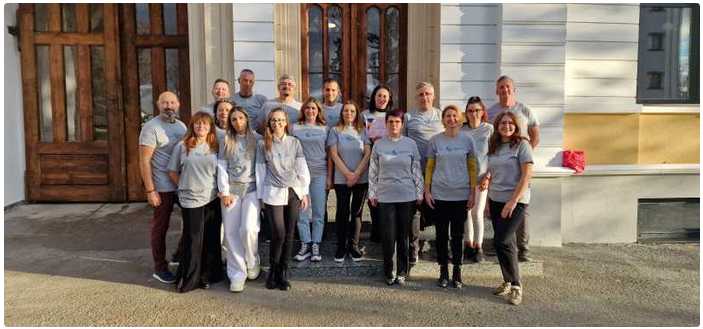
Gabriel Morostes, a Romanian trainer based in the UK, organised this year in a Romanian first courses on the safe restraint of psychiatric patients at hospitals in Bucharest and Sibiu, drawing attention to the lack of a national technical protocol governing how such patients should be physically restrained safely. 'How can a violent psychiatric patient be

Number of women partners or shareholders in active companies in Romania increases by 53.2% over the last 12 years
The number of women serving as associates or shareholders in active Romanian companies increased by 53.2% between 2013 and 2025, according to the 'Untapped Romania' [Romania Nevalorificata] study, authored by Cristina Chiriac, founding president of the National Confederation for Woman Entrepreneurship (CONAF). Statistics based on data from the Trade Re

David Popovici targets 2027 100m freestyle world record to join swimming's all-time greats
Star swimmer David Popovici said on Friday, ahead of the Dinamo Sports Gala held at the National Opera House, that his goal for 2027 is to reclaim the world record in the 100m freestyle, which could place him among the greatest swimmers in history. 'I would like to get back the world record in the 100m freestyle, because lately I've realised that, OK,

FEATURE/ Centuries-old manuscripts and rare books preserve Romania's cultural heritage in Targoviste
Manuscripts produced with a degree of painstaking care that is difficult to imagine today, books printed five centuries ago and volumes that travelled across several historical Romanian provinces are among the holdings of the Curtea Domneasca National Museum Complex in Targoviste. Some are genuine rarities, and preserving them requires years of specialist work