

FEATURE/ UK-based Romanian trainer introduces Romania's first safe restraint course for psychiatric patients
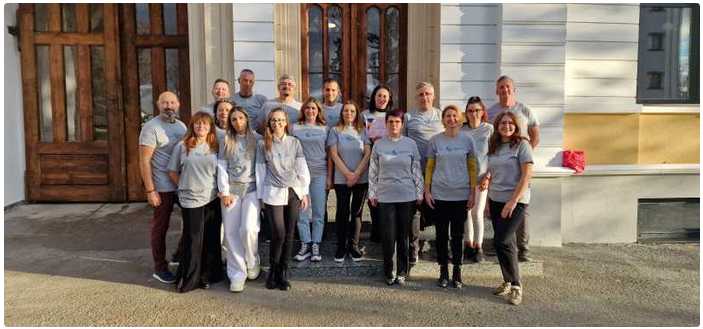
Gabriel Morostes, a Romanian trainer based in the UK, organised this year in a Romanian first courses on the safe restraint of psychiatric patients at hospitals in Bucharest and Sibiu, drawing attention to the lack of a national technical protocol governing how such patients should be physically restrained safely.
'How can a violent psychiatric patient be safely restrained? Who teaches nurses, healthcare assistants and doctors in psychiatric hospitals how to intervene without injuring themselves or the patient? How can you communicate effectively with a psychiatric patient, particularly when they are in imminent danger? And, above all, who talks to the patient afterwards, once they have recovered, about how they were tied up and restrained? These are questions to which Romanian legislation does not provide sufficient technical answers,' Gabriel Morostes argues.
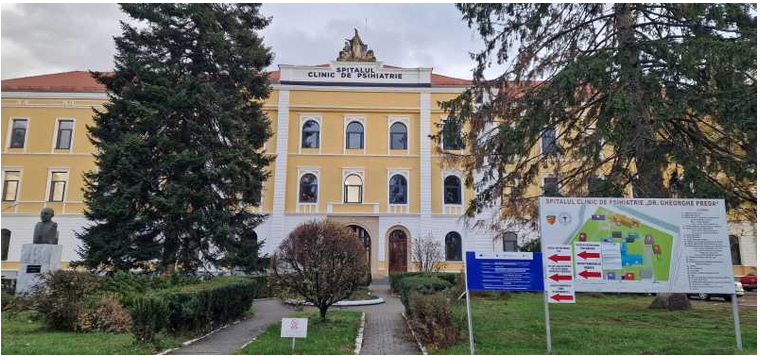
Together with British trainer Doug Melia and Corina Gagiu, Director of Nursing at the 'Prof. Dr. Alexandru Obregia' Clinical Psychiatric Hospital in Bucharest, he presented on Friday, at the Forensic Psychiatry Conference, the findings of a training course delivered in recent days for the first time at the 'Dr. Gheorghe Preda' Clinical Psychiatric Hospital in Sibiu.
'The law doesn't tell us, and neither do the procedures tell us; there is no protocol explaining how to carry out restraint, how to move a patient from point A to point B, how to intervene if a patient attacks another patient, or how to stop them. Of course, the law says we can restrain a patient, but how do we do it?' Morostes introduced the topic of his presentation on Friday morning at the Forensic Psychiatry Conference.
The trainer proposes that the implementing regulations for the Mental Health Law should include a national technical standard for physical interventions by medical teams, providing a basis for practical staff training.
From SMURD paramedic to British psychiatric care
Morostes left Brasov 12 years ago, having worked as a paramedic with the Mobile Emergency Resuscitation and Extrication Service - SMURD, and trained as a nurse. In the UK, while waiting for his qualifications to be recognised, he started working as a healthcare assistant in a psychiatric hospital. He subsequently went on to lead teams of British nurses.
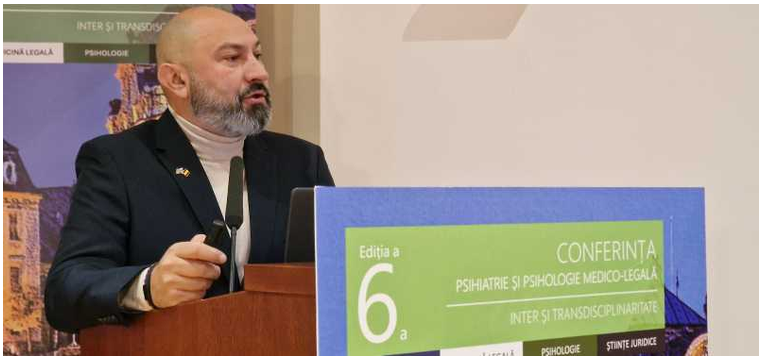
'Ever since I left, 12 years ago, I have worked exclusively in psychiatry,' he told AGERPRES.
He considers another question particularly important: 'Why do we learn how to perform resuscitation but not how to restrain a patient?' One of the main issues he has identified is the gap between the existence of legal provisions allowing restraint and the absence, in his view, of a national technical standard specifying exactly how such interventions should be carried out.
Morostes compared the situation with mandatory resuscitation training, which requires medical staff to attend practical courses regularly.
'Why do we need to learn how to perform resuscitation, but not how to properly de-escalate a patient and restrain them using techniques that are safe for both the patient and medical staff?' the trainer asked during his presentation.
He warned that the lack of clear technical procedures can also create problems when a patient is injured during restraint.
'We think about cases in which patients are injured during restraint, after which we start asking the nurse or the person who carried out the restraint to submit a written explanation: 'What happened? How did it happen?' But we will never be able to say: 'You didn't follow the protocol.' (...) 'I did it that way because that's how I knew to do it. Nobody told me, nobody taught me',' Gabriel Morostes explained the situation.
He believes a national technical standard for restraining psychiatric patients is needed so that staff know which techniques are permitted, the limits of intervention and how to minimise the risk of injury.
An important element is the discussion held after an intervention, both with the medical team and with the patient. The aim is not merely to identify possible mistakes, but also to determine what measures could prevent similar situations from recurring.
The course also addresses the trauma a patient may experience as a result of restraint, and trainers encourage staff to seek the patient's own views on how the intervention was handled.
The idea for the course took shape during discussions with Corina Gagiu, Director of Nursing at the 'Prof. Dr. Alexandru Obregia' Clinical Psychiatric Hospital in Bucharest.
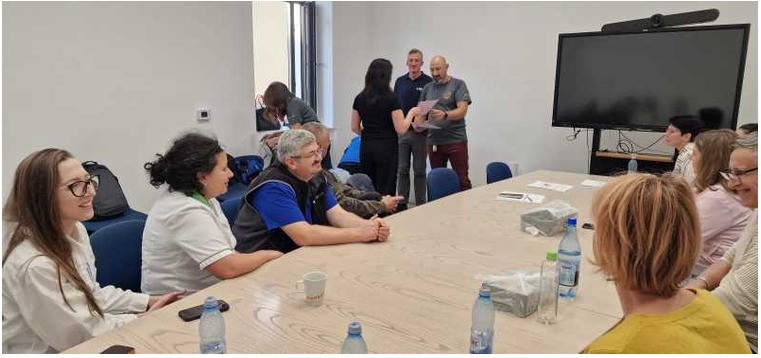
The programme, entitled 'Preventing and Managing Conflict Situations', is based on British standards and adapted to Romanian hospitals. According to its initiator, it was organised for the first time in this format in May at the Obregia Hospital in Bucharest. Trainers there have so far provided instruction to approximately 100 nurses. A second group was trained at the 'Dr. Gheorghe Preda' Clinical Psychiatric Hospital in Sibiu, with British trainer Doug Melia also taking part. At Friday's conference, he spoke about the role of equipment in risk assessment.
Five seconds before making a decision
During the course, participants learn to recognise the early signs of a crisis and identify words and attitudes that can either calm a patient or make the situation worse. Physical restraint is presented as a last resort. Part of the training focuses on the discussion following an incident, when the team reviews the intervention and asks the patient how they experienced it and what could have been done differently.
'The five seconds before making a decision make all the difference in our work,' Corina Gagiu, Director of Nursing, told AGERPRES.
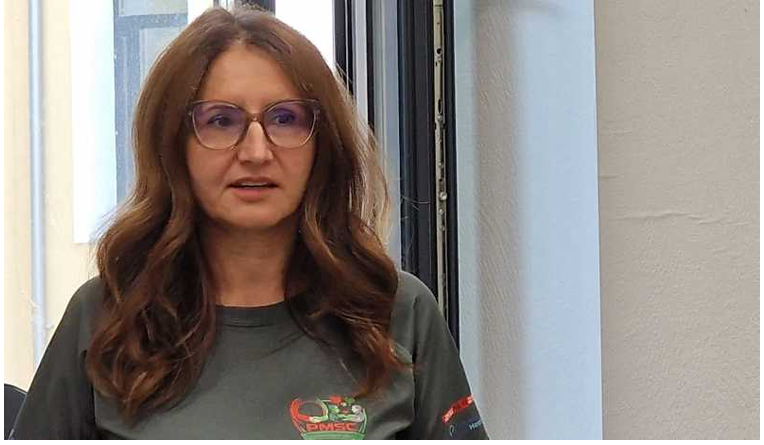
The first changes following the initial courses at Obregia Hospital are already visible in communication with patients and in relationships among staff members, Gagiu, a nurse with more than 25 years of experience, told AGERPRES.
'First and foremost, there has been a change in our attitude towards patients and towards one another as a team. In the theoretical part, we place considerable emphasis on therapeutic communication, which covers both communication between medical staff and patients and communication among members of the medical team. (...) Teams are more united,' Corina Gagiu said.
According to her, nurses are learning not to react impulsively in tense situations and to pay greater attention to communication.
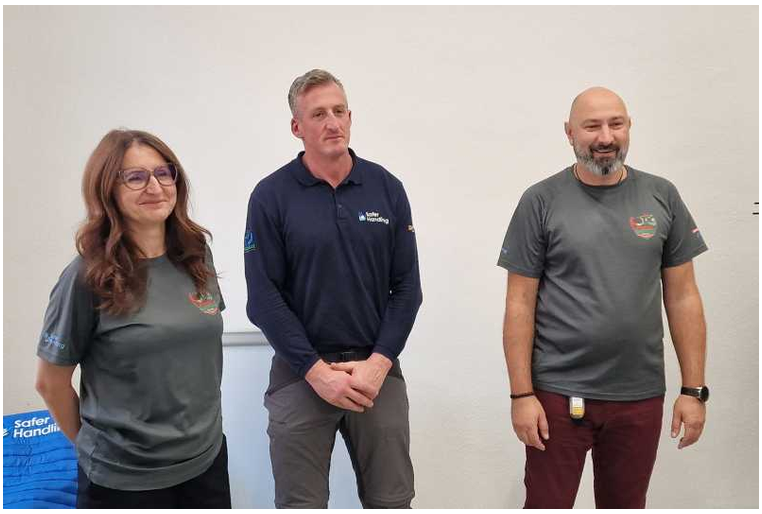
The trainers who have just completed their training stint at the psychiatric hospital in Sibiu are due to train their own teams, while Morostes hopes to extend the course to other hospitals as well. He says patients' feedback will be taken into account when the programme is revised.
'We ask patients whether there is anything we could change,' he explained at the conference.
Stigma surrounding psychiatric patients remains unresolved in Romania
Beyond medical techniques, both trainers believe Romania needs a change in attitudes towards people with mental health conditions.
Corina Gagiu explained that families may find it difficult to accept that a relative has been physically restrained in a psychiatric hospital, which makes communication with family members essential.
She believes the public should receive more information about mental health conditions, their symptoms and how people diagnosed with them can be helped.
Dr Ciprian Bacila, Medical Director of the 'Dr. Gheorghe Preda' Clinical Psychiatric Hospital in Sibiu and President of the Romanian Association of Psychiatry and Psychotherapy, told AGERPRES that, now that the hospital's main building has been renovated to meet the required standards, the priority is to improve staff training.
In his view, the Sibiu course can help the entire hospital team - from nurses and healthcare assistants to doctors - manage crisis situations more effectively. Bacila also supports extending the programme to other psychiatric hospitals. AGERPRES (RO - writing by: Isabela Paulescu; EN - writing by: Simona Klodnischi)
The content of the www.agerpres.ro website has the exclusive purpose of public informing.
All the information published on this website by AGERPRES is protected by relevant legal dispositions.
It is forbidden to copy, reproduce, recompile, decompile, distribute, publish, display, modify, create derived components or products or full services, as well as any exploitation of the site's content.
Details in the section Terms of Use. If you are interested in picking up AGERPRES news items, please contact the Marketing Department – marketing@agerpres.ro.
The use of the Comments section entails your obligation to respect the AGERPRES terms and conditions in regards to the publishing of comments on the www.agerpres.ro.
Other news in category

David Popovici targets 2027 100m freestyle world record to join swimming's all-time greats
Star swimmer David Popovici said on Friday, ahead of the Dinamo Sports Gala held at the National Opera House, that his goal for 2027 is to reclaim the world record in the 100m freestyle, which could place him among the greatest swimmers in history. 'I would like to get back the world record in the 100m freestyle, because lately I've realised that, OK,

FEATURE/ Centuries-old manuscripts and rare books preserve Romania's cultural heritage in Targoviste
Manuscripts produced with a degree of painstaking care that is difficult to imagine today, books printed five centuries ago and volumes that travelled across several historical Romanian provinces are among the holdings of the Curtea Domneasca National Museum Complex in Targoviste. Some are genuine rarities, and preserving them requires years of specialist work

Russia lodges protest with Romanian ambassador over visa refusal to taekwondo team
Romania's ambassador in Moscow, Cristian Istrate, was summoned to the Russian Foreign Ministry on Friday, where he was handed a formal note of protest over Bucharest's refusal to grant visas to the Russian athletes seeking to compete in the European Taekwondo Cadet Championships, TASS reports. 'We lodged a strong protest with Romania over its unexp
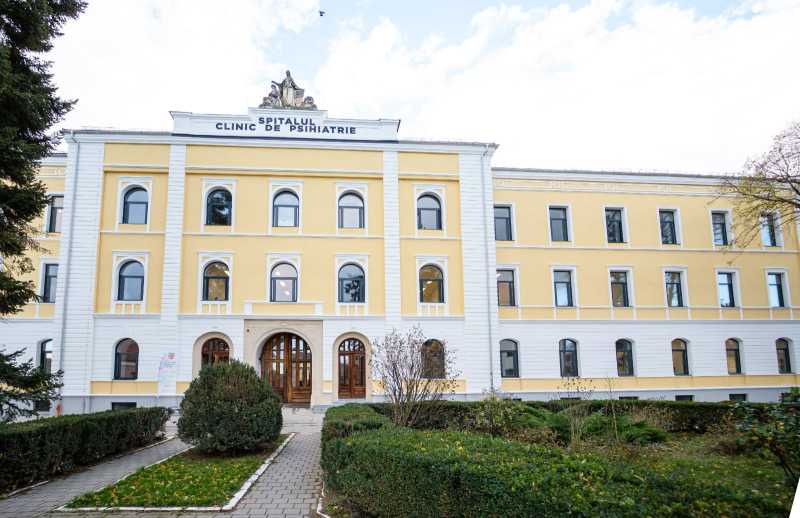
People with mental illness still marginalised in Romania, psychiatric hospitals association president says
People with mental illness continue to face marginalisation in Romania, where society prefers to ignore them, Lucian Paziuc, president of the Association of Public Psychiatric Hospitals in Romania (ASPP), said on Friday in Sibiu, praising the county's investment in mental healthcare as an example for other local authorities. 'Unfortunately, in Romania,

Romania releases EXCELY project on EUR 30 million investment in personalised medicine
The Carol Davila University of Medicine and Pharmacy in Bucharest, as coordinator, and the Institute for Research and Development in Genomics, a national partner, have announced the official release of the EXCELY project, a strategic research and innovation initiative in the field of personalised medicine, funded through the European Horizon Europe programme, WIDERA - Teamin

ASF's Avramescu: We will initiate discussions on a new capital market strategy
The Financial Supervisory Authority (ASF) will initiate debates on drawing up a new capital market strategy aimed at modernising and simplifying the regulatory framework, as well as adopting new technologies, ASF First Vice-President Gabriel-Ioan Avramescu said on Friday at the event marking the launch of the Bucharest Stock Exchange (BVB) Growth Market. '
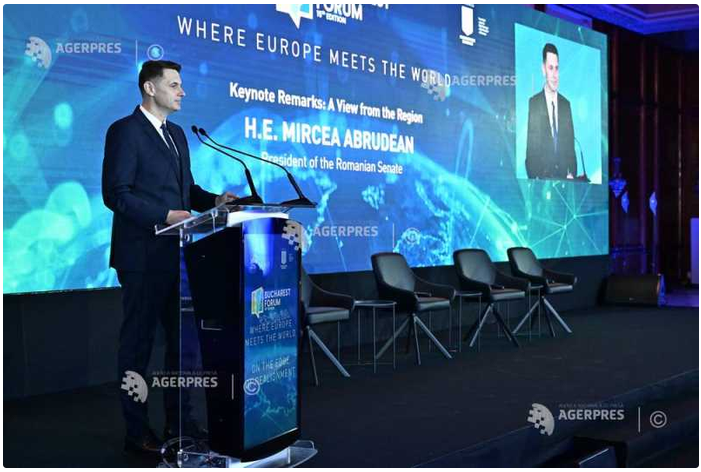
Cybersecurity is no longer just a simple IT technical issue; it is a legislative imperative (senator)
Senate Chairman Mircea Abrudean on Friday said that cybersecurity is no longer just a technical issue, but has become a 'legislative imperative,' as the region is targeted by sophisticated cyberattacks affecting public administration, energy infrastructure, financial institutions, and electoral processes. 'As chairman of the Romanian Senate, I view

Iasi 'Luceafarul' Theatre actors to perform 'The Selfish Giant' in Dublin, on Romania's National Day
Actors from the 'Luceafarul' Theatre for Children and Young People in Iasi will take to the stage at the Axis Ballymun Arts Centre in Dublin on Sunday to perform 'The Selfish Giant' as part of the events dedicated to Romania's National Day. Luceafarul Theatre Manager Oltita Cintec said the production was inspired by the story written by Osc

Harghita county among world's 20 recommended destinations for 2027 (Visit Harghita)
The Harghita Community Development Association (Visit Harghita) release informed on Friday that BBC Travel had published a selection of 20 recommended tourist destinations for 2027, which also includes Harghita county. The international selection features regions from around the world that deserve travellers' attention in the coming year for their cultural
AGERPRES Director General Claudia Nicolae warns about disinformation: Risk is we believe nothing anymore
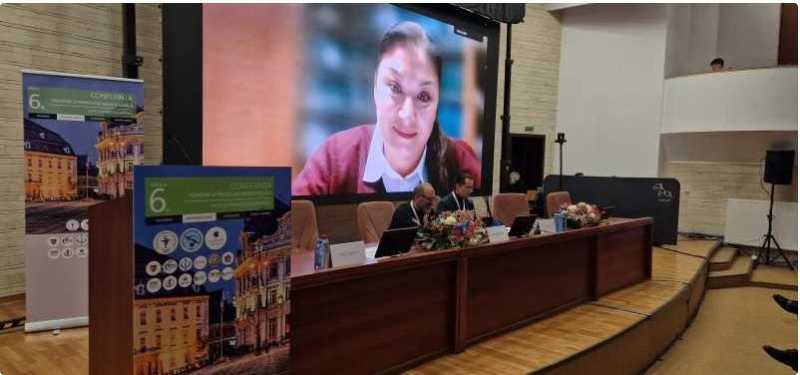
Claudia Nicolae, Director General of the national news agency AGERPRES, warned on Thursday, at the Conference on Psychiatry and Forensic Psychology in Sibiu, that the spread of fakes created using artificial intelligence could lead the public to question even authentic information. Claudia Nicolae showed participants four photographs, asking them to determine

President Dan:Europe must be at negotiating table on Ukraine war; Romania plans funding increase for Ukraine
President Nicusor Dan said on Thursday, following the Coalition of the Willing meeting in Berlin, that Europe must have a seat at the negotiating table, stressing that the outcome of the peace process must not be a weakened Ukraine or a weakened Europe. 'Discussions naturally focused on the ongoing negotiations concerning the war in Ukraine. Our position,

Niculescu Gov't stifles small entrepreneurs while protecting interests of the powerful (AUR's Simion)
The Niculescu Government favors major economic interests, while Romanian entrepreneurs are burdened by taxes, levies, and stifling regulations, states AUR president George Simion. The AUR leader criticizes the decision to eliminate the turnover-based tax for certain companies and announces that his party has prepared legislative initiatives aimed at reducing t
CONAF president Cristina Chiriac: Part-time employment taxation - one of the business community's main concerns
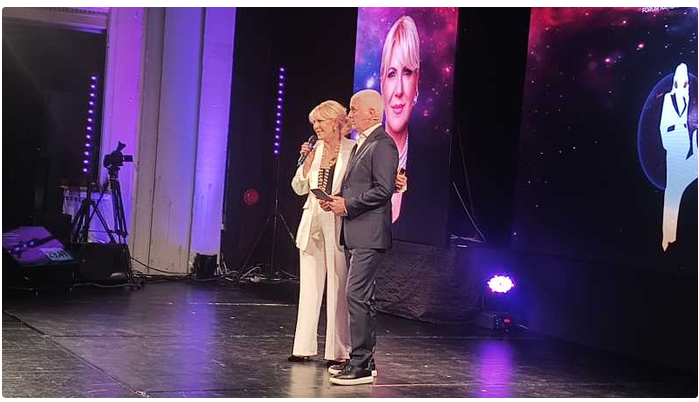
Part-time employment taxation is one of the main concerns of the business community and a major obstacle to bringing homemakers back into the workforce, Cristina Chiriac, founding president of the National Confederation for Women's Entrepreneurship (CONAF), said on Thursday in Arad, where CONAF organised the National Forum 'Entrepreneurship by Vocation', marking
ISF president: Romania closes income gap with EU, yet many households remain financially vulnerable
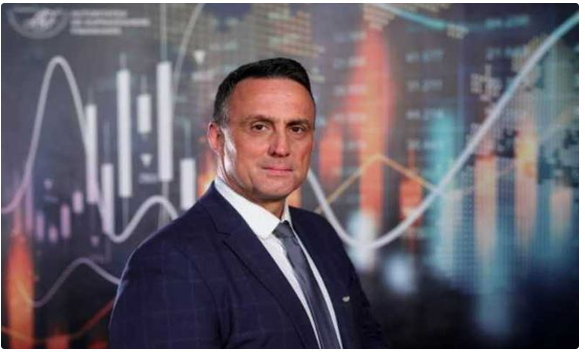
Romania's GDP per capita adjusted for purchasing power rose from about 44% of the European Union average in 2007 to around 78% in 2025, but the country's economic convergence has not translated into equivalent financial security for many citizens, according to Valentin Ionescu, president of the Financial Studies Institute (ISF). Speaking at the 12th IS