

ISF president: Romania closes income gap with EU, yet many households remain financially vulnerable
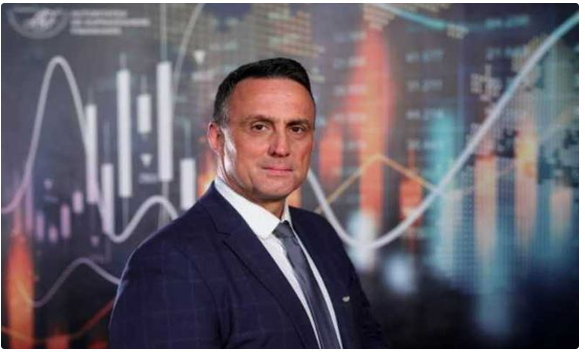
Romania's GDP per capita adjusted for purchasing power rose from about 44% of the European Union average in 2007 to around 78% in 2025, but the country's economic convergence has not translated into equivalent financial security for many citizens, according to Valentin Ionescu, president of the Financial Studies Institute (ISF).
Speaking at the 12th ISF International Conference, 'Financial Markets 2030 - Investments, Technology and Skills for a New Economy,' Ionescu argued that higher incomes, financial market development and technological progress do not automatically lead to greater economic independence.
Presenting the concept of Economic Autonomy Capital, first introduced at the OSEEC 2026 conference in Arad, Ionescu said traditional indicators such as income and wealth fail to fully capture people's ability to make independent financial decisions and withstand economic shocks.
Data cited from Eurostat showed that despite Romania's strong convergence with the EU, 37.8% of Romanians are unable to cover an unexpected expense, compared with 29.2% across the EU. At the same time, 27.4% of Romanians are at risk of poverty or social exclusion, versus 20.9% at EU level.
These figures suggest that rising incomes alone do not automatically produce financial resilience.
'We have made important economic progress, but we must ask to what extent it has been transformed into real freedom of choice for citizens,' Ionescu said. 'A person can earn more income and still remain vulnerable to an unexpected expense, job loss or a poor financial decision.'
According to ISF, Economic Autonomy Capital represents the combination of resources, skills, productive capacities and institutional mechanisms that allow individuals to maintain genuine freedom of choice, support their decisions over time and adapt to shocks without falling into excessive economic dependence.
The framework combines four forms of capital: financial, productive, human and institutional. Unlike approaches focused solely on income, wealth or financial literacy, it seeks to measure a person's ability to understand alternatives, assess risks, verify recommendations and adapt decisions over time.
As part of the concept, ISF proposed an analytical structure based on six dimensions: income generation, saving and asset accumulation, financial and digital literacy, access to financial services and investments, protection against risks, and long-term planning capacity.
Another finding highlighted a significant gap between perceived and actual financial knowledge. According to the European Commission's Flash Eurobarometer 525 (2023), 51% of Romanian respondents consider their financial knowledge to be high, yet only 13% achieved a high score in financial literacy testing, compared with 26% across the EU.
In addition, only 23% of Romanians say they could cover their expenses for at least six months if they lost their main source of income, compared with 33% at European level.
These results point to the need for financial education to move beyond simply transmitting information and focus more on developing critical thinking, comparison and decision-making skills.
'Financial education should not stop when people understand what a loan, an investment or an insurance policy is,' Ionescu said. 'The real outcome comes when they can use that information to make better decisions, avoid excessive risks and build long-term financial security.'
The presentation also underlined the role of insurance in protecting assets, preserving savings and reducing dependence on borrowing during difficult periods.
Insurance penetration in Romania stood at approximately 1.35% of GDP in 2024, compared with 2.2% in Poland, 2.7% in the Czech Republic and 5.7% in Germany, indicating that a significant share of the population and economy remains insufficiently protected against risk.
A simulation presented during the conference showed that a household with a monthly income of RON 7,000, facing both property damage and a temporary loss of income, would need almost two years to recover financially without savings or insurance coverage. With adequate savings and insurance, the recovery period would be reduced to around four months.
ISF also stressed the importance of long-term saving and investment in supporting wealth accumulation and expanding economic opportunities. In this context, capital market development and the European initiative for a Savings and Investments Union could play an important role in increasing financial participation.
A separate section of the presentation focused on the impact of digitalization and artificial intelligence. While new technologies make information more accessible, facilitate product comparison and allow personalized financial simulations, they can also increase the risks of fraud, manipulation, misinformation and excessive reliance on algorithmic recommendations.
Eurostat data show that in 2025, only 31.8% of Romanians aged 16-74 possessed at least basic digital skills, compared with 60.4% across the EU.
'An algorithm can quickly analyse thousands of pieces of information and formulate recommendations. But responsibility for the decision remains with people,' Ionescu said. 'In an increasingly digital economy, autonomy means not only access to technology but also the ability to understand, verify and, when necessary, reject a recommendation.'
The central message of the presentation was that financial market development should be assessed not only by economic growth but also by its contribution to citizens' welfare, resilience and economic independence.
Looking toward 2030, ISF argues that technological innovation, new financial products and the mobilisation of savings into investments will have a lasting impact only if accompanied by stronger financial education, consumer protection and improved individual decision-making capacity.
'A strong economy is not just one that creates more wealth, but one that gives people greater ability to determine their own future. One of the ambitions for Romania's financial markets should be to transform economic growth into real economic autonomy,' Ionescu concluded. AGERPRES (RO - writing by: Oana Tilica; EN - writing by: Simona Klodnischi)
The content of the www.agerpres.ro website has the exclusive purpose of public informing.
All the information published on this website by AGERPRES is protected by relevant legal dispositions.
It is forbidden to copy, reproduce, recompile, decompile, distribute, publish, display, modify, create derived components or products or full services, as well as any exploitation of the site's content.
Details in the section Terms of Use. If you are interested in picking up AGERPRES news items, please contact the Marketing Department – marketing@agerpres.ro.
The use of the Comments section entails your obligation to respect the AGERPRES terms and conditions in regards to the publishing of comments on the www.agerpres.ro.
Other news in category

President Dan:Europe must be at negotiating table on Ukraine war; Romania plans funding increase for Ukraine
President Nicusor Dan said on Thursday, following the Coalition of the Willing meeting in Berlin, that Europe must have a seat at the negotiating table, stressing that the outcome of the peace process must not be a weakened Ukraine or a weakened Europe. 'Discussions naturally focused on the ongoing negotiations concerning the war in Ukraine. Our position,

Niculescu Gov't stifles small entrepreneurs while protecting interests of the powerful (AUR's Simion)
The Niculescu Government favors major economic interests, while Romanian entrepreneurs are burdened by taxes, levies, and stifling regulations, states AUR president George Simion. The AUR leader criticizes the decision to eliminate the turnover-based tax for certain companies and announces that his party has prepared legislative initiatives aimed at reducing t
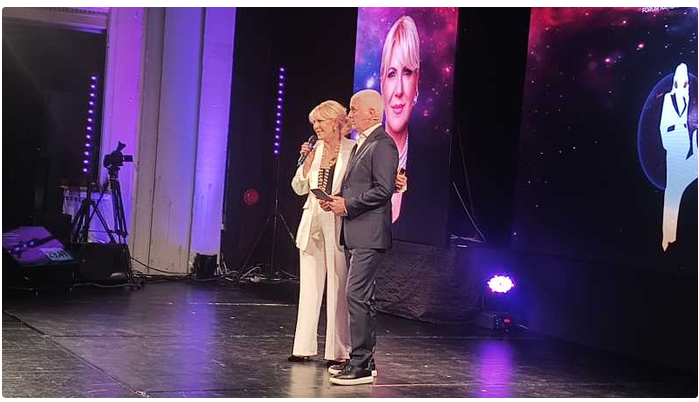
CONAF president Cristina Chiriac: Part-time employment taxation - one of the business community's main concerns
Part-time employment taxation is one of the main concerns of the business community and a major obstacle to bringing homemakers back into the workforce, Cristina Chiriac, founding president of the National Confederation for Women's Entrepreneurship (CONAF), said on Thursday in Arad, where CONAF organised the National Forum 'Entrepreneurship by Vocation', marking

GTA VI, celebrity voice actors take centre stage at Bucharest Gaming Week
The tenth edition of Bucharest Gaming Week, Romania's largest event of its kind, will take place on November 21 and 22 at Romexpo exhibition centre. According to a press release sent to AGERPRES on Thursday, visitors will have access to more than 50 stands and interactive areas over the two days, featuring hundreds of games and challenges, competitions, me

President Dan at Coalition of the Willing summit: Peace talks must preserve a strong Europe
AGERPRES special correspondent Daniel Florea reports: President Nicusor Dan arrived in Berlin on Thursday to attend the Coalition of the Willing summit on Ukraine, held under the motto 'United for Peace in Ukraine and European Security.' He was welcomed by German Chancellor Friedrich Merz, the event's main host, who organized the meeting together w
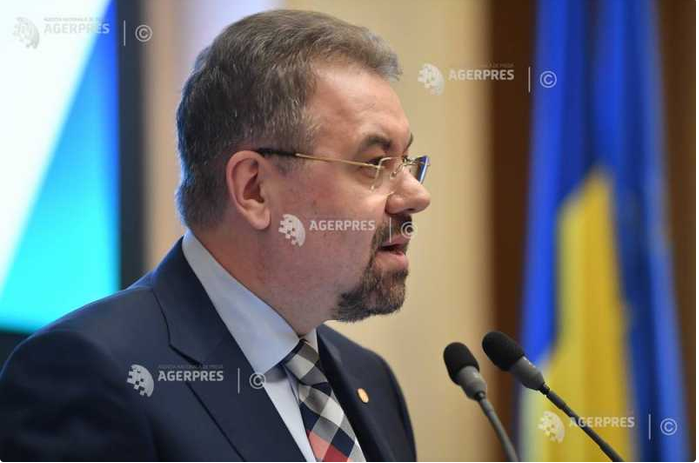
AI boom could pose systemic financial risks, Romanian central bank official warns
Artificial intelligence (AI) is becoming both a driver of economic growth and a potential source of systemic risk, as high stock market valuations, capital concentration and debt financing could increase market vulnerabilities, National Bank of Romania (BNR) First Deputy Governor Leonardo Badea warned at an international conference. 'Artificial intelligenc

ForMin Neculaescu: NATO protects Romania and will continue to do more in order to protect us
NATO protects Romania and will continue to do more, while our country is assuming a more substantial contribution to the security of the entire Eastern Flank, Foreign Affairs Minister Dan Neculaescu said on Thursday, warning that the Black Sea is currently a vulnerable point for European security. The minister attended the Bucharest Forum, organised by the Asp

President Dan: Romania needs a national AI strategy and automated document processing for diaspora services
President Nicusor Dan said on Thursday that Romania needs a national artificial intelligence strategy, and highlighted the benefits of automated document processing in dealing with Romanians living abroad. Speaking at the second edition of the Digital Governance Summit, the President said he uses an AI tool to prepare summaries. 'The AI tool
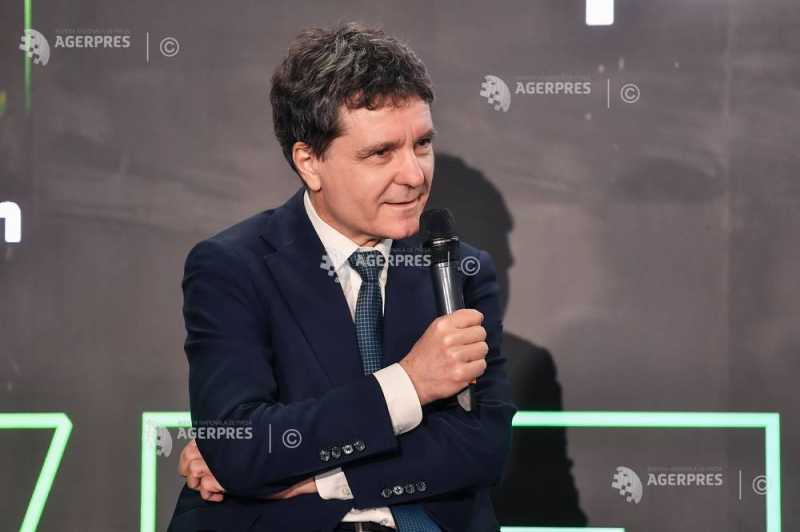
President Dan: Black Sea under major attack; Romania is acting correctly, strengthening its response capabilities
The Black Sea is under a major attack, with drone attacks, pressure on critical infrastructure, including on the Neptun Deep, and in response to these threats Romania is acting correctly, strengthening its response capabilities and being 'fair, firm and direct' in all bilateral and multilateral relations, President Nicusor Dan said on Thursday. Preside

PM Niculescu: Romania-France economic relation is doing very well; trade exceeds 13 billion euros
Prime Minister Luca Niculescu said on Thursday that economic relations between Romania and France were 'doing very well,' with bilateral trade exceeding 13 billion euros, 11,000 French companies registered in Romania and 125,000 direct jobs. 'We have a relationship, based, as I need hardly say, on a historic friendship and a strong strategic partne
INS: Number of job vacancies rises to 27,300 in Q3 of 2026
In the third quarter 2026, the number of job vacancies was 27,300, increasing by 800 as against the previous quarter, according to the National Institute of Statistics (INS) data released on Thursday. According to the quoted source, the job vacancy rate stood at 0.54%, up 0.02 percentage points from the previous quarter but down 0.08 percentage points compared
PM Niculescu: Deputy PM Neacsu is one of the most competent, meticulous and well-prepared people in the administration
Prime Minister Luca Niculescu said on Thursday, referring to the delegation of certain responsibilities to Deputy Prime Minister Marian Neacsu, that he is one of the most competent, meticulous and well-prepared people in the Romanian administration. Speaking at a French-Romanian business forum, Luca Niculescu was asked by journalists to comment on public specu

Buzau Forestry Directorate releases 500 pheasants for game population replenishing and insect control
The Buzau Forestry Directorate has released 500 pheasants into the wild in an effort to replenish game populations and restore ecosystems, as these birds help control harmful insects, including Colorado potato beetles and locusts. Foresters from the Buzau Forestry District have carried out restocking operations in the hunting grounds under their management by

CultMin Ciocan and EC Executive Vice-President Minzatu discuss protecting jobs in cultural sector
Funding culture in the 2028-2034 EU budget, protecting jobs in the cultural sector and more balanced access to European funds were the main topics of discussion between Executive Vice-President of the European Commission for Social Rights and Skills, Quality Jobs and Preparedness Roxana Minzatu and Culture Minister Ioana Ciocan. 'Romania supports maintaini