

FEATURE/Peasant - creator of civilised world in 'Tools of the Land. Agriculture and Crafts in Multicultural Banat' exhibition
The Banat Village Museum in Timisoara has opened a new permanent exhibition showcasing centuries of farming traditions and craftsmanship in Romania's multiethnic Banat region, highlighting the agricultural tools and techniques that shaped rural life.
Titled 'Tools of the Land. Agriculture and Crafts in Multicultural Banat', the exhibition brings together 56 objects illustrating the evolution of agriculture and traditional crafts in a region where different ethnic communities lived side by side and contributed to the development of a strong agricultural tradition.
From ploughs, harrows, sickles and scythes to threshing machines, seed drills, mechanical mowers and grape presses, the exhibits illustrate both the work of the traditional farmer and the gradual modernisation of agriculture in Banat.
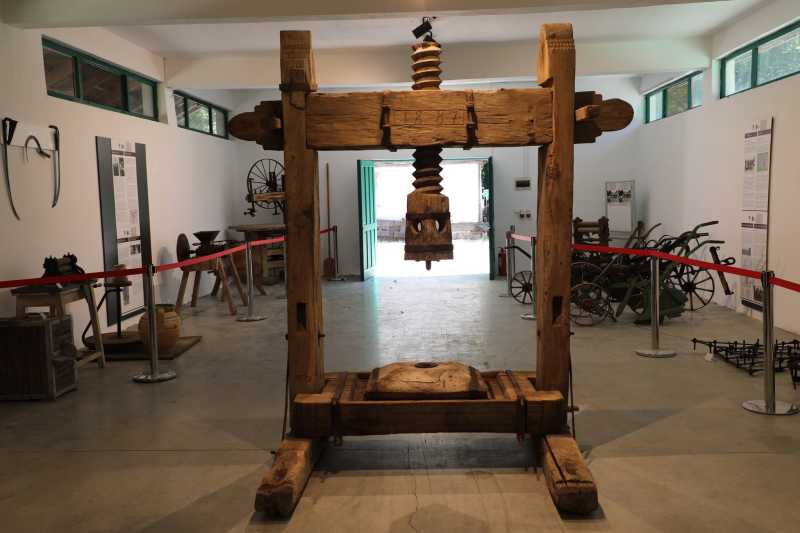
At the entrance to the exhibition, visitors are greeted by a monumental object: an oil press from the Arad area, bearing the year of its manufacture, 1877. Like a bell ready to announce the hours of prayer, the wooden oil press was once the pride of the family that owned it, holding the secret of the millions of pumpkin seeds it turned into the fine oil used by housewives on every occasion, from the midday meal eaten towards evening after returning home from work in the fields to fasting cabbage rolls and their meat-filled counterparts served at weddings, Christmas and Easter.
The exhibition's central message is summed up by Andrei Milin, a curator at the Banat Village Museum: the peasant was 'the creator of the civilised world'.
'There are 56 objects on display, but their number will grow, because we intend to keep the exhibition for a long time and display as many pieces from the museum's collection as possible, replacing some of them so that visitors can return and discover something new each time. (...) What does this exhibition reveal? The fact that the peasant was the creator of the civilised world. He invented everything that matters; cities emerged from the peasant's village because, 12,000 years ago, farmers had a surplus of produce and people began selling it at grain markets. Craftsmen joined them, and that is how cities emerged. But peasants were also the first geneticists, because they experimented with plants, organised the agricultural year, made countless innovations and adopted technological advances very quickly. The Banat peasant did not hesitate to spend his modest savings on bringing all kinds of machinery from the United States, including a very smart plough, and within 10 years these machines were ploughing the fields of Banat. We also have threshing machines and threshing implements. Basically, the modern world perfected and diversified what that peasant already had,' Andrei Milin told AGERPRES.
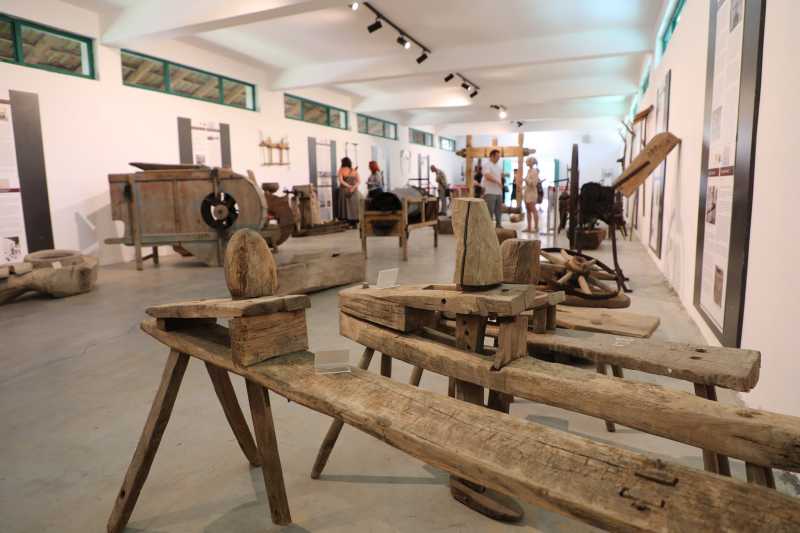
According to Milin, most of the exhibits come from the Ethnographic Collection of the Banat Museum, dating back to the museum's establishment, when it did not yet have separate sections.
'Some of the exhibits were also acquired. All the tools had their own importance at the time, as they were an important part of working the land,' the curator added.
We cannot leave the exhibition without taking another walk through the history contained in each corner, a small fragment of the world of the Banat village.
In Banat, the main traditional ploughing tool was for a long time the wooden plough with a broad iron share and a forged-iron coulter. A major change came in 1850, when the blacksmith Schultz of Comlosu Mare made the first ploughs with an iron share. Ridging ploughs also appeared in the final decades of the 19th century. Unlike other regions of Romania, Banat had developed an early mechanisation of agriculture as far back as the 18th century, encouraged by Habsburg rule, urban regulations, the development of nearby mining areas and commercial links with the European market.
The imperial colonisation patent of 1782 required every newly established household to have a basic set of tools: a plough, hoe, spade, pitchfork, harrow, scythe and sickle.
'Harvesting grain was one of the most demanding stages of the agricultural year on a Banat farm. Manual harvesting meant almost four weeks of strenuous work, with reapers getting up before three in the morning and going to bed after ten at night. For a long time after the Germans colonised Banat, sickles were also used during the harvest to ensure that none of the valuable ears of grain were lost. There were grinding tools that crushed the grain by rubbing it between two hard surfaces. Fruit processing, a tradition brought by the German colonists, was carried out using manual tools until the mechanisation of vineyards in the 20th century, alongside the traditional processing of fruit for making spirits, which has survived to this day. We also have tools used in cooperage for making barrels, because plum brandy production developed alongside fruit growing in the mountainous part of Banat. The choice of wood was crucial to the quality of a barrel. Acacia and oak were used mainly for vessels for spirits and wine, and less frequently mulberry or plum wood,' Andrei Milin explained.

Few subjects illustrate the technical diversity of traditional Banat better than milling, with almost every type of mill known in Central Europe, from the hand mill to the industrial mill powered by an electric motor.
A wooden washing machine and wooden clothes dryer testify to the ingenuity of rural households, where people, having relatively few clothes, had to wash what they wore very frequently.
In front of the pottery, used to make vessels for storing water, grain and other products, the curator reveals one of the potters' traditions: they would fast before beginning work, because food had to be kept in vessels that were spiritually clean.
'Potters worked with clay, but in a divine way. (...) You will not find a potter without arthrosis, because clay is very cold, regardless of how hot it is outside. Blacksmiths, by contrast, worked with fire, which is also a purifying element, but also evokes the world of hell,' the curator said.
In Banat, the production of agricultural tools and machinery developed from the second half of the 19th century and during the interwar period. One notable example was the factory in Bocsa, where a factory producing agricultural machinery and tools had been operating since 1898 and later became the Bocsa Metal Construction Enterprise. More than 20,000 ploughs were produced there annually during the interwar period. The factory is mentioned in works on the history of Romanian technology.
Until after the First World War, Banat grain — wheat, maize, barley, alfalfa and clover — became a 'brand' on the European market because of its superior quality, while flour made from locally grown wheat was known as 'Hungarian flour' and competed with bakery products from overseas. AGERPRES (RO - writing by: Otilia Halunga; EN - writing by: Simona Iacob)
The content of the www.agerpres.ro website has the exclusive purpose of public informing.
All the information published on this website by AGERPRES is protected by relevant legal dispositions.
It is forbidden to copy, reproduce, recompile, decompile, distribute, publish, display, modify, create derived components or products or full services, as well as any exploitation of the site's content.
Details in the section Terms of Use. If you are interested in picking up AGERPRES news items, please contact the Marketing Department – marketing@agerpres.ro.
The use of the Comments section entails your obligation to respect the AGERPRES terms and conditions in regards to the publishing of comments on the www.agerpres.ro.
Other news in category

European Commissioner for Crisis Management Hadja Lahbib welcomed at Cotroceni Palace
European Commissioner for Equality, Preparedness and Crisis Management Hadja Lahbib was welcomed by President Nicusor Dan at Cotroceni Palace on Thursday. Presidential adviser Valentin Naumescu said in a Facebook post that the meeting 'represented an opportunity to reaffirm the importance Romania attaches to the complex issues covered by the portfolio in q
Five-century-old medieval tower in Hotarani, restored on PNRR money
The medieval tower in Hotarani, in Farcasele commune, built around 500 years ago as a watch and observation post, has been consolidated and restored through a 1 million-euro project funded under the National Recovery and Resilience Plan (PNRR) and will be introduced in the tourist circuit, according to Mayor Leon - Viorel Vladu.
Annual Congress of the European Society for Artificial Organs held in Iasi for first time
The 52nd edition of the Annual Congress of the European Society for Artificial Organs (ESAO), organised for the first time in Romania, is taking place at the Palace of Culture and the 'Nicolae Leon' Building of the 'Grigore T. Popa' University of Medicine and Pharmacy (UMF) in Iasi from 9 to 12 September. Organised by the Creative Life Associat

ICDL Romania reminds teaching staff of guide on responsible integration of AI in education
ICDL Romania reminds teachers, headteachers and educational institutions of GhidAIEDU.ro, the practical and free resource launched this year for the responsible integration of artificial intelligence into education, amid findings that 40% of Romanian 15-year-old pupils use AI chatbots at least once a week to help them learn, while 57% perform below the benchmark level in sol

Cattle and pig slaughtering up in July; decreases reported for poultry, sheep and goats (INS)
The number of cattle and pigs slaughtered increased in July compared with the same period in 2025, while decreases were reported for poultry, sheep and goats, according to the National Institute of Statistics (INS) data published on Thursday. According to the quoted source, 44,000 cattle were slaughtered during the period under review, compared with 41,000 in

Romanian, Moldovan culture ministers highlight common European future as theatre festival opens in Chisinau
The 11th edition of the European Performing Arts Festival - Meeting of Romanian National Theatres has opened in Chisinau, with Romania's interim Culture Minister Demeter Andras Istvan highlighting the importance of ensuring the event's continuity. 'I have been coming to Chisinau with some regularity since 2010,' the minister said. 'And one
Parliament/IT committee hearings: National Cyberint Centre sent 1,300 notifications on vulnerabilities in public institutions
Romania's National Cyberint Centre has sent 1,304 notifications to various public institutions since 2021 concerning technical, procedural or human-related IT vulnerabilities within their systems, CNC head Anton Rog told a meeting of Parliament's information technology committees. The committees examined the 14 July 2026 cyberattack on the National Age
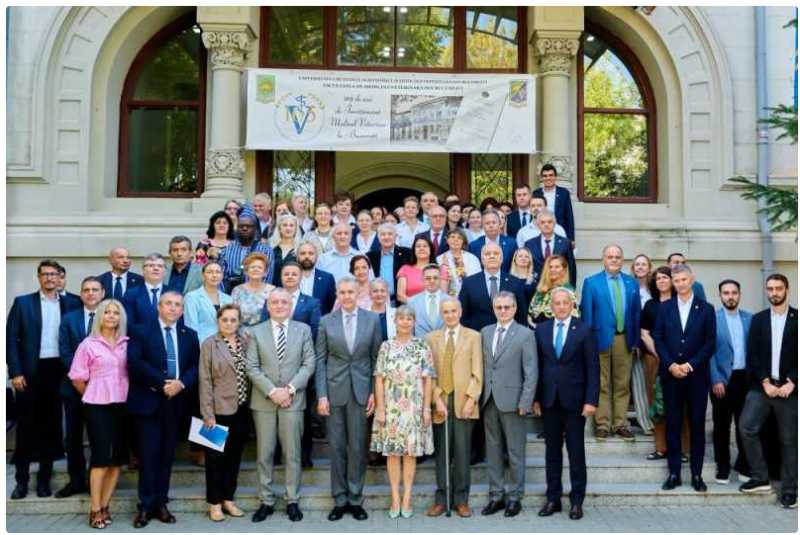
Prince Radu attends ceremony marking 165 years of veterinary medical education in Bucharest
Prince Radu took part in the anniversary ceremony marking 165 years of veterinary medical education in Bucharest, held in the Prof. Dr. Aurel Popoviciu Hall of the Faculty of Veterinary Medicine at the Bucharest University of Agronomic Sciences and Veterinary Medicine (USAMV). The event included the launch of the commemorative album '165 Years of Veterinar

26-year-old Dutch tourist airlifted from Retezat Massif after leg injury
A 26-year-old woman who was hiking in the Retezat Mountains with a group of Dutch tourists was airlifted by helicopter from the Zanoaga Lake area on Wednesday after falling and suffering a severe leg injury.

Presidential Administration:Romania is not sending combat troops to Ukraine;priority is protection of our citizens
Romania is not sending combat troops to Ukraine, and the priority is the protection of our citizens, the Presidential Administration stated on Wednesday in a Facebook post. According to the cited source, the message is a reaction to a false narrative recently circulating online, claiming that Romania intends to send troops to Ukraine to participate in the war.
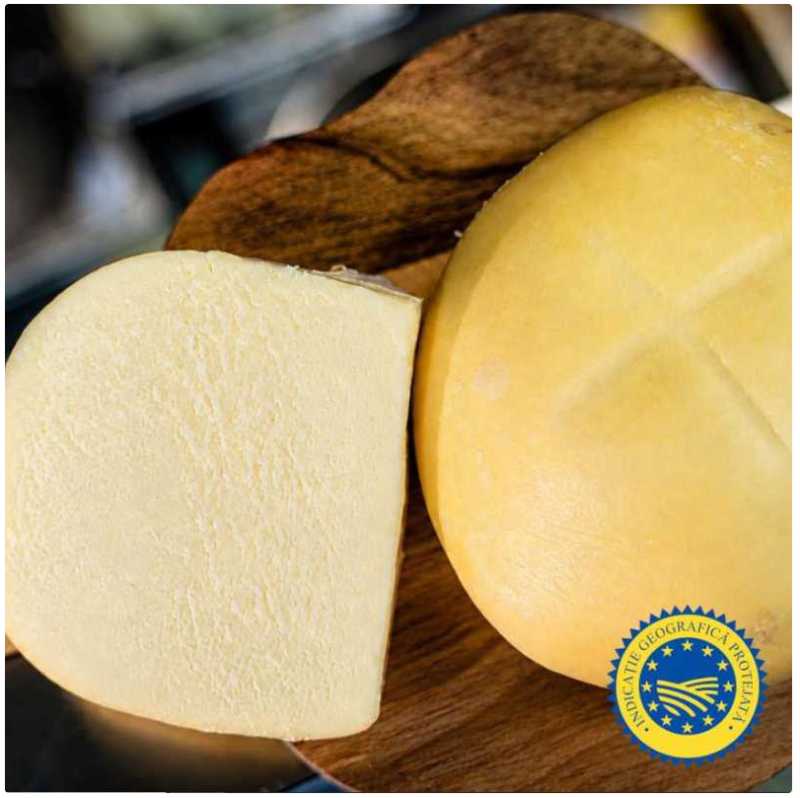
UPDATE/EC approves new Romanian product for Protected Geographical Indication status: 'Branza framantata de Teaca'
The European Commission on Wednesday approved the registration of Romania's 'Branza framantata de Teaca' as a Protected Geographical Indication (PGI), according to a statement by the EU executive. 'Branza framantata de Teaca' is a traditional kneaded cheese from Teaca, a village in northern Romania. It is made from raw, unpas

EU Commissioner Hadja Lahbib to visit Romania and Moldova for talks on EU civil-protection mechanisms
European Commissioner for Equality, Preparedness and Crisis Management Hadja Lahbib will arrive in Bucharest on Thursday, 10 September, for discussions with President Nicusor Dan, acting Prime Minister Ilie Bolojan, and Secretary of State Raed Arafat on Europe's crisis-preparedness agenda and Romania's contribution to EU civil-protection structures, the European Comm

Romania's Chief of Defence Staff, US officials discuss Romanian Army-US National Guard cooperation
The development of cooperation between the Romanian Army and the US National Guard was among the topics discussed at a meeting between Romania's Chief of Defence Staff, Gen. Gheorghita Vlad, and visiting US officials. Gen. Gheorghita Vlad met Tuesday at the headquarters of the National Defence Ministry with Gen. Thomas M. Carden, Vice Chief of the National
600 researchers and academics gather at National Congress of Romanian Historians at the University of Bucharest
The fifth edition of the National Congress of Romanian Historians, entitled '21st-Century Historiography: Developments, Challenges and Opportunities', opened on Wednesday in the Magna Hall of the Faculty of Law at the University of Bucharest. The prominent figures attending the event emphasised the importance of history and historical research in an international con
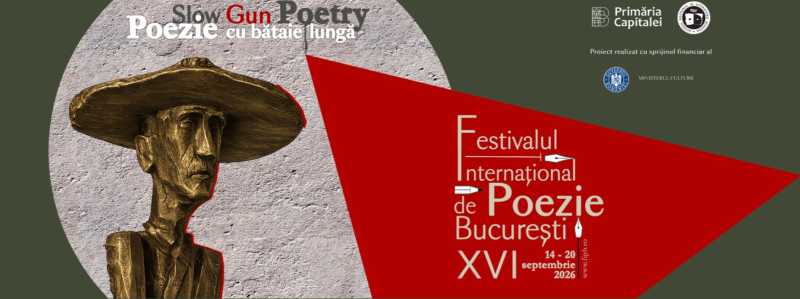
Bucharest International Poetry Festival - 14-20 September; more than 50 events on programme
The 16th edition of the Bucharest International Poetry Festival (FIPB), a popular event bringing together poets and artists from around the world in an extensive programme dedicated to poetry, intercultural dialogue and the power of words, will take place in Bucharest from 14 to 20 September. According to a release sent to AGERPRES on Wednesday, the festival w