

FEATURE/Salaj County: Bánffy Castle in Nusfalau restored after decades of deterioration
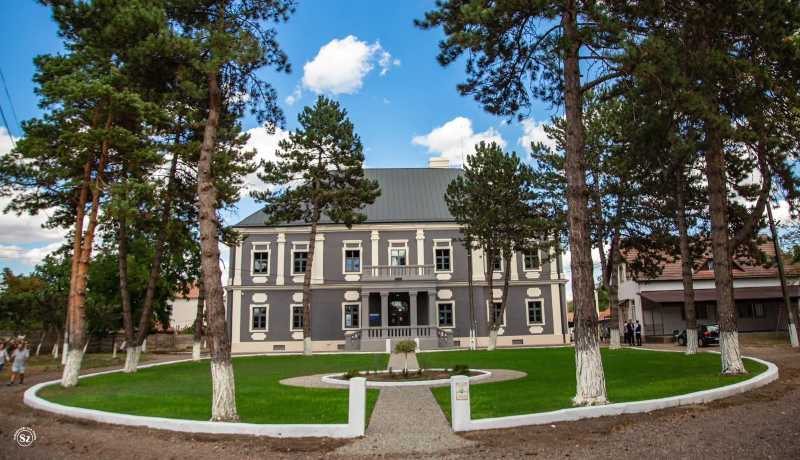
On the outskirts of Nusfalau village in Salaj County, the walls of Bánffy Castle still preserve the echoes of an era when noble residences in Transylvania were worlds in miniature.
Built most probably in the second half of the 18th century on an older property belonging to the Bánffy family, the castle was for generations an almost self-contained world, 'a village within the village,' as local residents describe it.
Today, after years in which the building bore the marks of deterioration and successive changes of use, Bánffy Castle in Nusfalau is reopening its doors to visitors. Its restoration, carried out as part of the Attractive Romania Programme with funding from the National Recovery and Resilience Plan (PNRR), is bringing back into the tourist circuit one of Salaj county's important heritage sites.
A legend passed down from generation to generation also explains the origin of an unofficial name that has survived among local residents. It is said that about two centuries ago, during a walk with Albert Bánffy, one of his friends crossed to the opposite bank of the Barcau River and, seeing the dense reeds, which looked like a real jungle, jokingly asked the baron: 'What's this? Brazil?' The name stuck and today locals call the area north of the Barcau 'Brazil,' while the village lies on the southern bank.
The history of the castle is closely linked to the Bánffy family, one of Transylvania's prominent noble families, which also owned the castles at Rascruci and Bontida in Cluj county as well as Bánffy Palace in Cluj-Napoca.
'If we go back a little in time, the castle in Nusfalau belonged to the same Bánffy family that owned the castles in Rascruci and Bontida in Cluj county and Bánffy Palace in Cluj-Napoca. The family had owned land in Nusfalau since 1372,' Szőnyi Levente, the Reformed priest in Nusfalau, told AGERPRES.
According to him, the history of the present residence is linked to Gyorgy Bánffy and his wife, Zsuzsanna Wesselényi, who came from the Wesselényi family of Jibou.
'At the end of the 18th century, Gyorgy Bánffy married Zsuzsanna, the sister of Baron Wesselényi Miklos of Jibou. Their grandson, Albert Bánffy, was prefect of Crasna County and lived in Nusfalau during the 1848 Revolution. He had two sons: Adam, who inherited the castle at Rascruci, and Gyorgy, who received the castle in Nusfalau and the palace in Cluj-Napoca. As Gyorgy had no sons, only two daughters, the castle in Nusfalau passed to his brother Adam's son, Albert Bánffy,' the Reformed priest explained.
The exact date when the present castle was built is unknown. An important landmark, however, is the late-Baroque urn on the entrance gate to the residence, decorated with the coats of arms of the two families - the griffin with a sword and the mermaid. These elements support the theory that Gyorgy Bánffy and Zsuzsanna Wesselényi built the Baroque residence most probably after their marriage in 1764.
At the height of its splendour, the Bánffy estate was more than just the castle itself. The complex had the character of a small self-contained world, with living quarters, gardens and outbuildings, while life within the estate unfolded almost independently of the rest of the village.
An inventory from 1887 provides an insight into its former grandeur. On the upper floor, the central reception area was occupied by the large drawing room, flanked by the dining room and the so-called men's drawing room, which contained a billiard table. The walls displayed a gallery of portraits of former owners and their ancestors, while the piano room completed the atmosphere of a residence where culture and music played an important role. Another notable feature was the library. Local literary and historical sources mention a collection of approximately 2,000 volumes, including rare titles. According to local tradition, Baron Gyorgy Bánffy composed one of his best-known songs, 'Kéknefelejcs,' in the piano room.
The exterior of the residence was equally impressive and reflected the family's status. The grounds were laid out as a park in the late 18th century, following the model of English gardens, while the arboretum included valuable tree species originating in East Asia.
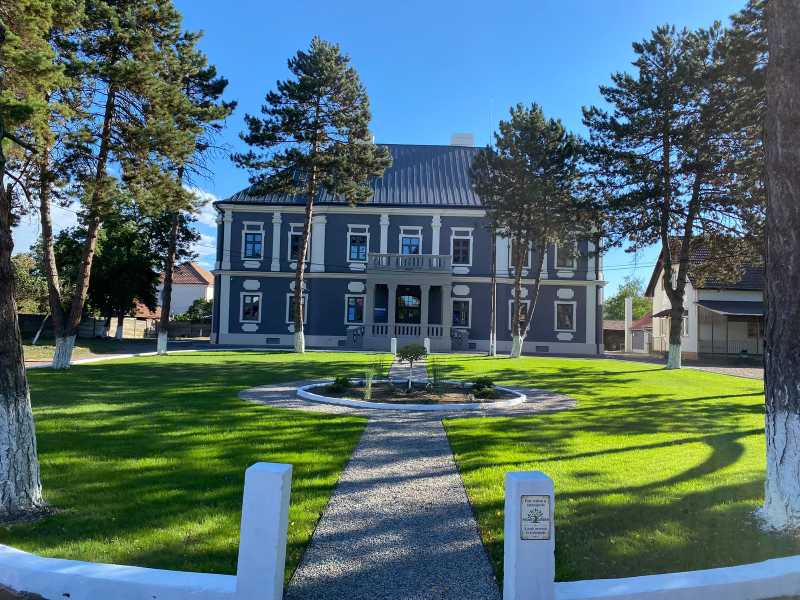
In 1936, Albert Bánffy sold the castle to the Reformed Church in Nusfalau. The decision came amid difficulties in maintaining the properties, which had been exacerbated following the 1921 agrarian reform.
'Following the 1921 agrarian reform, it became very difficult for Albert to maintain both the castle at Rascruci and the one in Nusfalau, so he sold the latter to the local Reformed Church in 1936,' Szőnyi Levente said.
The story of the purchase has also remained in the community's memory.
'It is said that at the time several families in the village sold their animals - pigs and calves - and donated the money to the Reformed Church to help purchase the castle,' the priest said.
After the purchase, the noble residence took on a new life. It became a cultural centre and cinema and was one of the places most frequently visited by young people from the village. After the Second World War, it successively housed a maternity unit, a medical practice and a special school for children with disabilities. The castle was nationalised in 1948.
'The Church owned it only until 1948, when it was nationalised and, over the years, it was used as a medical centre and a centre for children with disabilities. The Church regained ownership in 2008, when the building was in a very poor state,' Szőnyi Levente said.
For the community in Nusfalau, the restoration of the castle was a project that had been awaited for many years. Regained by the Reformed Church in 2008, the monument required extensive work before it could once again be opened to the public.
'We waited 20 years to be able to restore this castle and we have finally managed to do it. In 2023, we secured funding of 1.4 million euros through the Attractive Romania Programme, as part of the Manor Houses tourism route funded through the PNRR. The works actually began in 2025 and we finished them this August, in record time - just 16 months,' the Reformed priest in Nusfalau said.
The restoration is not only about recovering a historic building but also about reintegrating it into community life and the tourist circuit.
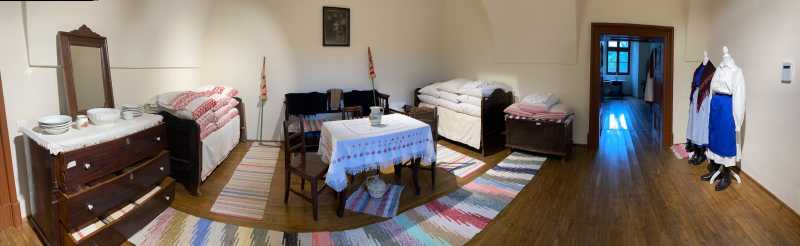
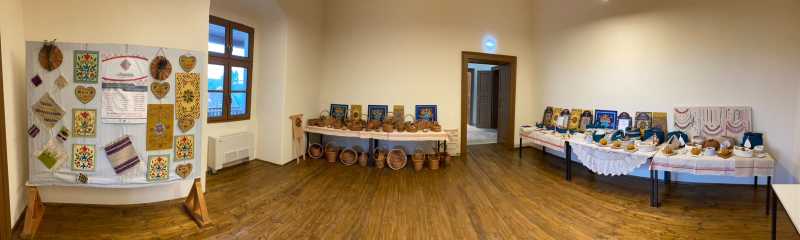
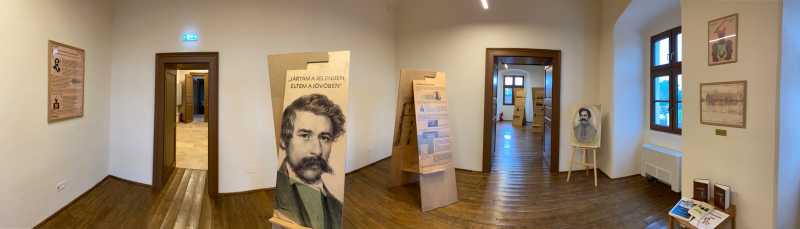
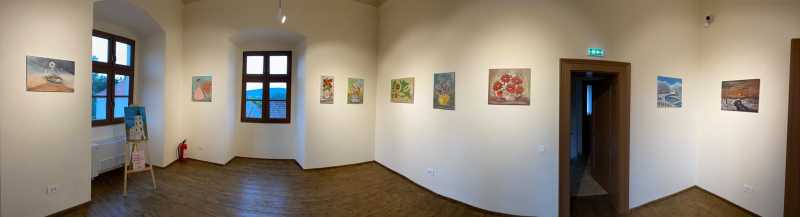
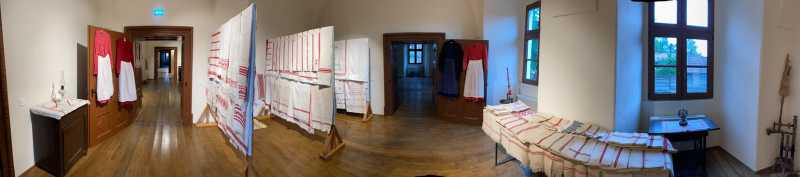
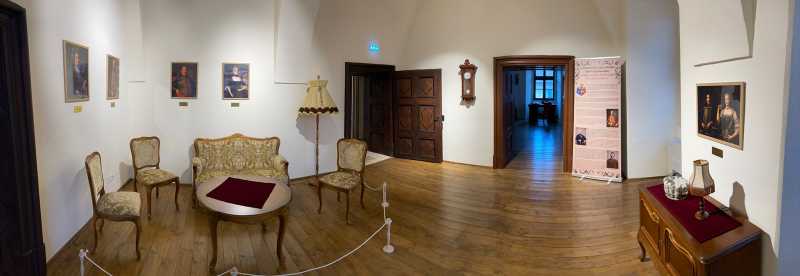
'The castle has now been returned to the tourist circuit. We have an ethnographic exhibition here, with items more than 100 years old, as well as a space dedicated to the Bánffy family, with a piano and a desk, because Gheorghe Bánffy was a musician and composer. We also have a painting exhibition and an exhibition dedicated to the Hungarian poet Arany Janos, who was born in Nusfalau. In the basement, in the castle cellars, there is an exhibition dedicated to viticulture,' Szőnyi Levente explained.
For local residents, the reopening of the monument has significance that goes beyond tourism.
'The restoration of the castle is a great joy, not only for the Hungarians in the area but for the entire community and even the whole county, because it is the only castle to have been completely restored,' the priest said.
The project benefited not only from PNRR funding but also from support from the Hungarian Government.
'It is a project financed through the PNRR as well as by the Hungarian Government, which contributed 400,000 euros. The total restoration costs exceeded two million euros,' Fórizs László, deputy mayor of Nusfalau, told AGERPRES.
Today, Bánffy Castle no longer has the grandeur of its former days and the traces left by the decades in which the building served a wide variety of purposes remain part of its story. Yet it is precisely this succession of lives that gives it its distinctive identity.
'The restoration of Bánffy Castle in Nusfalau is an important moment for the cultural heritage of Salaj county. From the perspective of the Salaj County Directorate for Culture, we particularly appreciate the fact that the project sought to recover and showcase a historic monument while respecting the specific requirements of such a restoration. A restoration project of this scale requires not only financial resources but also research, professional expertise, responsibility and, last but not least, patience. The successful completion of this project demonstrates what can be achieved when the owner, specialists, authorities and the community work towards the same goal. For Salaj, every monument restored represents a part of our collective memory saved. But restoration must not be the final step. Bánffy Castle must become a living space, open to culture, the community and the public, while the experience at Nusfalau could serve as a model and a starting point for a broader approach to the county's built heritage,' Doina Cocis, director of the Salaj County Directorate for Culture, said.
The old noble residence has preserved the stories of the Bánffy family, the legend of 'Brazil,' the memory of a library containing thousands of volumes, the piano room and the park of former times. They are now joined by exhibitions seeking to connect the history of the castle with that of the community.
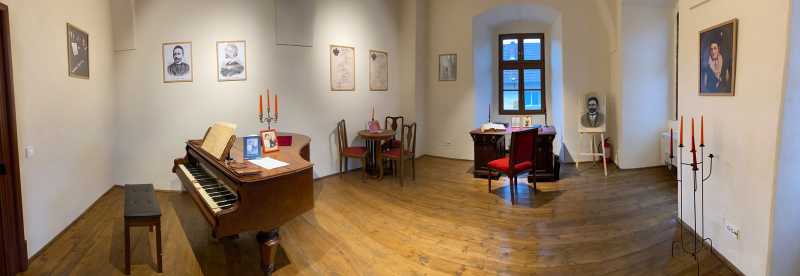
After a long period in which its walls bore witness to deterioration and neglect, the castle once again has a public role. Its doors are open to visitors from Tuesday to Saturday and guided tours are also available.
In a village where the area beyond the Barcau is still known as 'Brazil,' Bánffy Castle is thus coming back to life not only as a monument to a bygone noble era but also as a place where local memory, heritage and community life can meet once again. AGERPRES (RO - writing by: Sebastian Olaru; EN - writing by: Adina Panaitescu)
The content of the www.agerpres.ro website has the exclusive purpose of public informing.
All the information published on this website by AGERPRES is protected by relevant legal dispositions.
It is forbidden to copy, reproduce, recompile, decompile, distribute, publish, display, modify, create derived components or products or full services, as well as any exploitation of the site's content.
Details in the section Terms of Use. If you are interested in picking up AGERPRES news items, please contact the Marketing Department – marketing@agerpres.ro.
The use of the Comments section entails your obligation to respect the AGERPRES terms and conditions in regards to the publishing of comments on the www.agerpres.ro.
Other news in category

Incident at sea / Nine sailors rescued after vessel sinking brought to Port of Constanta
The nine sailors rescued from the water after the sinking of the 'Khoryv' vessel have been brought to the Port of Constanta aboard a rescue vessel and are being attended to by SMURD ambulance crews and border police officers. The sailors are undergoing medical assessments to determine whether they need to be taken to the County Emergency Clinical Hospi

CONTEMPORARY AUTHORS/Andreea Rasuceanu: Bucharest is an endless source of stories to explore in literature
Author Andreea Rasuceanu, one of Romania's contemporary prose writers whose work explores the relationship between literature, history and memory, has been awarded the Romanian Writers' Union's June 2026 Writer of the Month Award for her novel 'Hemiptera' (Polirom, 2026). In an interview with AGERPRES, the author discusses the award-winning book, her rese
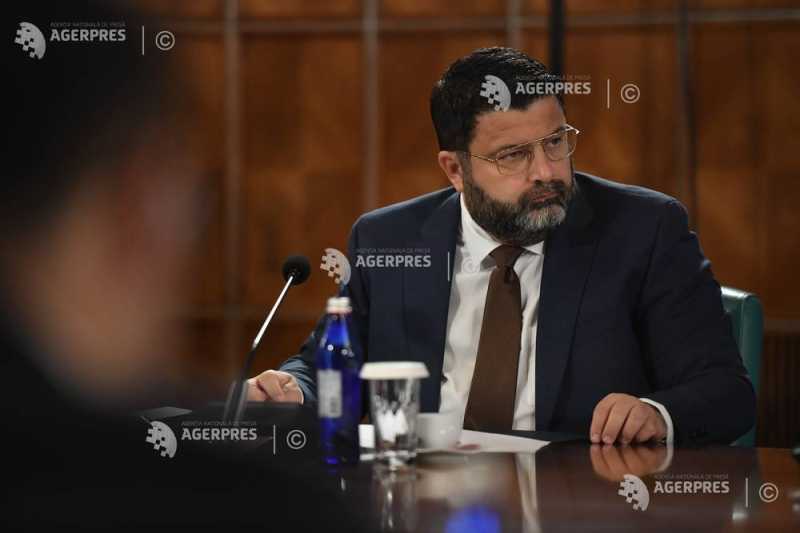
Incident at sea/ForMin Neculaescu: Attack on a commercial vessel - blatant violation of international law
Foreign Affairs Minister Dan Neculaescu condemned the attack on a commercial vessel located just 13 nautical miles off the coast of Constanta, in which one sailor was killed and others were injured, underscoring that Romania is working closely with NATO allies, including Bulgaria and Türkiye, to boost the implementation of additional surveillance capabilities agreed at
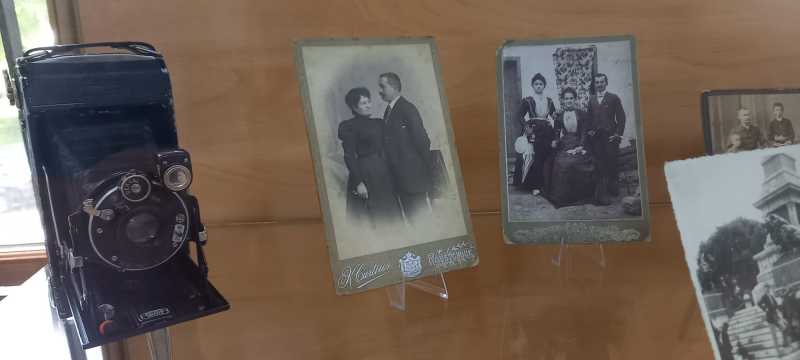
'Giurgiu-Ruse. Superangular' exhibition opens at Regional Museum of History in Ruse
The exhibition 'Giurgiu-Ruse. Superangular - Vintage Photography and Photographic Technique', which includes vintage photographs, cameras and images from the library of the National News Agency AGERPRES, opened this week at the Regional Museum of History in Ruse, Bulgaria, after being launched in May at the Teohari Antonescu County Museum in Giurgiu. T
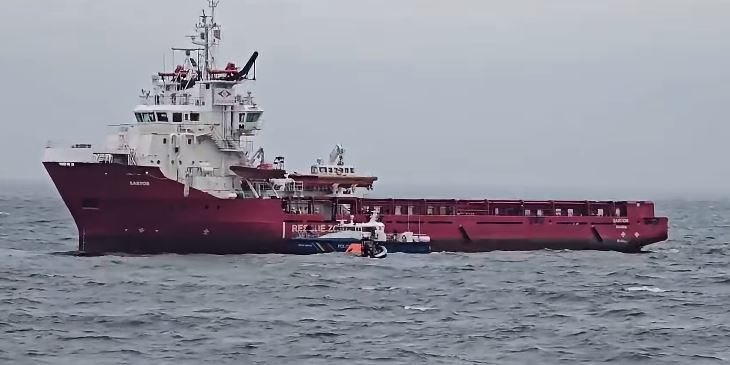
Incident at sea / Drone-hit vessel capsizes, with imminent risk of sinking
Structures of the Ministry of Internal Affairs (MAI) are participating on Friday in the search and rescue operation for people missing from a Comoros-flagged commercial vessel that was struck by a drone in the Black Sea, outside Romania's territorial waters. 'At around 10:00, border police officers from the Coast Guard were informed by the Constanta Ma
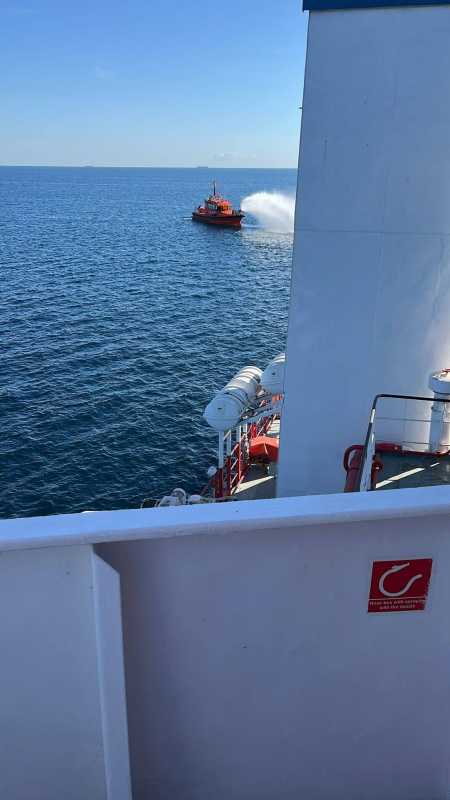

Major rescue operation offshore of Constanta for crew of vessel at risk of sinking; one dead
Authorities launched a search and rescue operation on Friday for the crew of a vessel reportedly at risk of sinking 13 nautical miles offshore from Constanta. One person has been found dead. According to the Romanian Naval Authority (ANR), a major search and rescue operation is currently under way in the Black Sea. The Maritime Coordination Cent
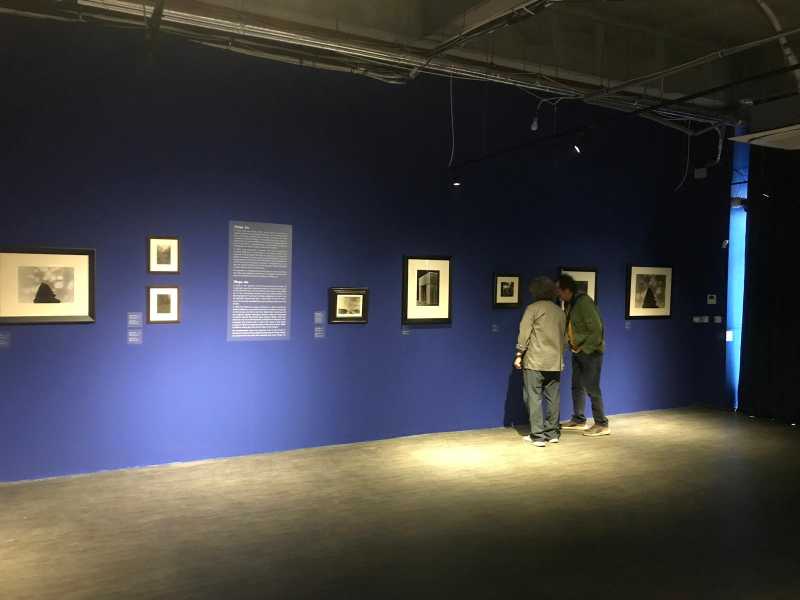
Constantin Brancusi celebrated in major exhibition at Museum of Modern Art (MoMA)
The Museum of Modern Art (MoMA) in New York is hosting the retrospective exhibition 'Brancusi: The Artist and His Studio' from 25 October to 27 February 2027, dedicated to one of the most influential artists of the 20th century. Organised with the support of the Romanian Cultural Institute (ICR) in New York, the exhibition marks the continuation and st
'Les Films de Cannes a Bucarest' opens on Friday, in Bucharest; 'Fjord' - gala screening at Romanian Athenaeum on Saturday
The 17th edition of Les Films de Cannes a Bucarest, one of the highlights of the autumn film season, opens in Bucharest on Friday. Between October 23 and November 1, the Cinema Elvire Popesco, the Peasant Museum Cinema, the Auditorium Hall of the National Museum of Art of Romania and Apollo 111 will host this special experience for festival audiences.
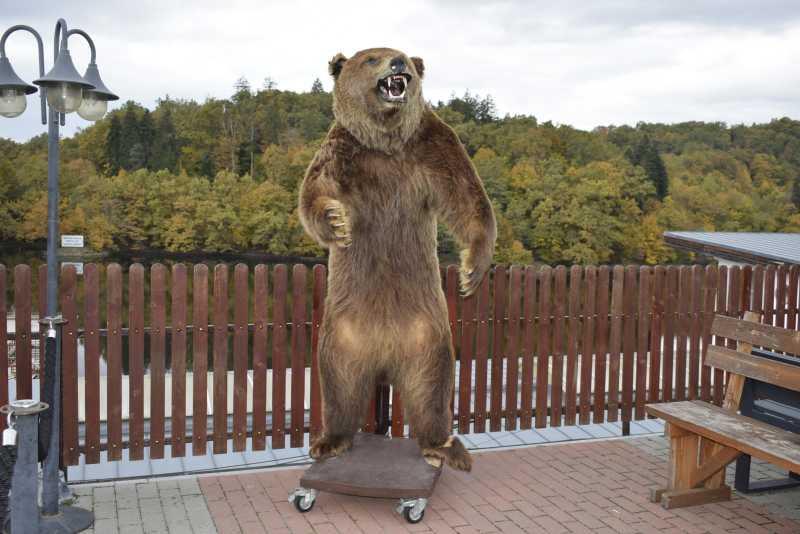
EUR 2.5-million theme park dedicated to bears from all over the world to open at Sovata
The City Hall of Sovata will build a theme park dedicated to bear species around the globe, an investment estimated at EUR 2.5 million euros that will get European funding. 'Where did the idea come from? Lately we still have problems with bears, but not only us. And then I said that, anyway, if we have bears in Targu Mure, and in Cluj-Napoca, we have alway
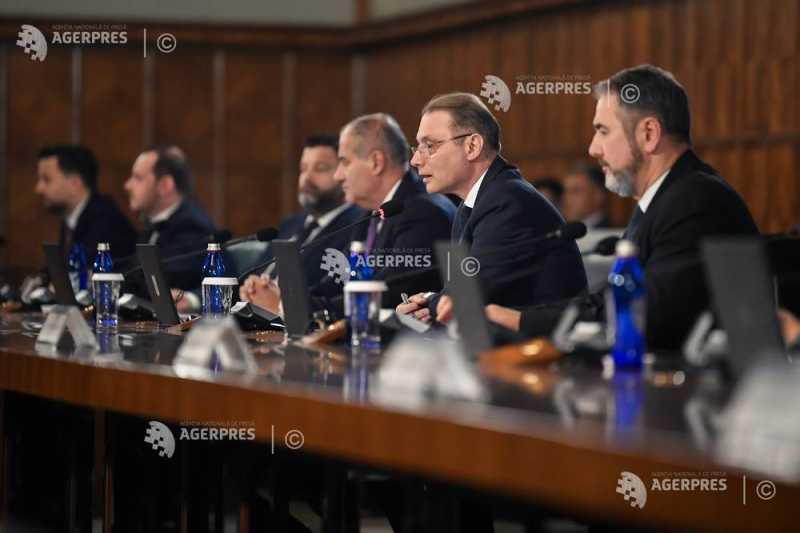
PM Niculescu: I want us to establish an integrated plan to improve safety in schools very quickly
Prime Minister Luca Niculescu announced at the start of the Government meeting that an integrated plan would be drafted to improve safety in schools, with clear responsibilities, prevention measures, rapid intervention and firm sanctions for acts of violence. On Friday, the prime minister will hold a working meeting with ministers and the relevant institutions

'Romania and the Republic of Moldova. The Partnership for the EU' volume launched in Bucharest
The tenth volume in the Documentary Notebooks series, entitled 'Romania and the Republic of Moldova: The Partnership for the EU', coordinated by Andrei Stoian and Victor Vevera, was launched on Thursday by Club Romania Publishing at the 'Carol I' Central University Library, in the presence of several of the contributors. The book brings togethe
President Dan to host meeting of Forum of Young Romanians Abroad
The Forum of Young Romanians Abroad (FTRP), now in its sixth edition, opens its works on Friday at the Cotroceni Presidential Palace, in the presence of President Nicusor Dan. Over 150 young people from Romania and the diaspora will participate, for six days, in activities dedicated to identifying concrete solutions to the problems that concern them. The event
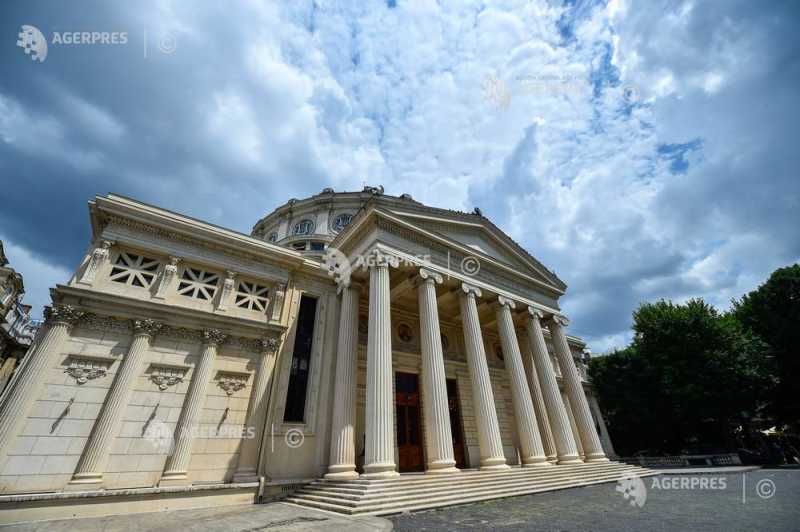
Royal Charity Concert to take place at Romanian Athenaeum on Sunday
The traditional Royal Charity Concert will take place at the Romanian Athenaeum on Sunday, in the presence of the Royal Family of Romania. According to a press release sent to AGERPRES on Thursday, the 17th edition of the gala, organised by the Margareta of Romania Royal Foundation, will bring together internationally renowned musicians, classical music enthus

Romania aims to contribute to Ukraine's reconstruction as a long-term partner, says Finance Minister Alexandru Nazare
Ukraine's recovery and reconstruction needs are estimated at almost 600 billion US dollars over the next decade, and Romania wants to contribute as a long-term partner through projects that create value on both sides of the border, Finance Minister Alexandru Nazare said on Thursday at an event dedicated to the reconstruction of the neighbouring country. &#
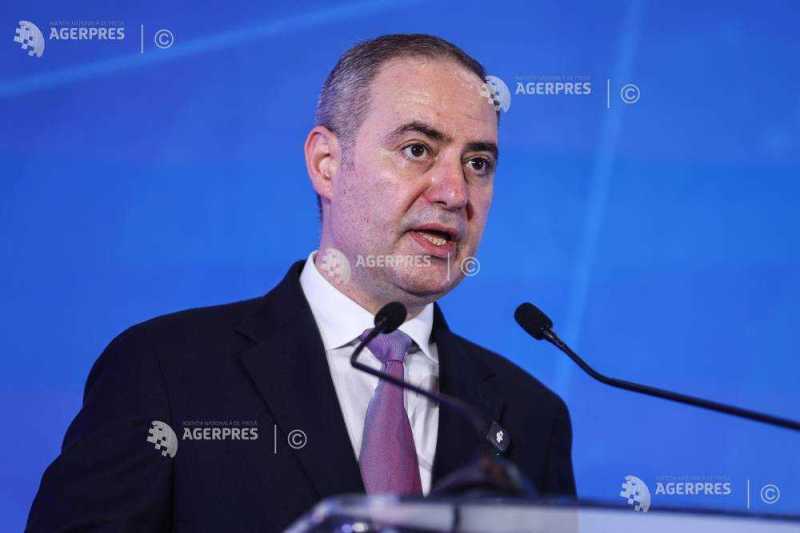
FinMin Nazare:We must create best real instruments to internationalise Romanian business in Ukraine and elsewhere
Romania must create best possibly real instruments to internationalise Romanian business in Ukraine and elsewhere, and the authorities must be more ambitious in this demarch, Finance Minister Alexandru Nazare told an event dedicated to the neighouring country's reconstruction. 'Beyond offering advice, I believe we need to take a much more conscientious