

INTERVIEW/Kadis: European Commission recognises Romania's Black Sea fishing fleet as emblematic of coastal communities' resilience
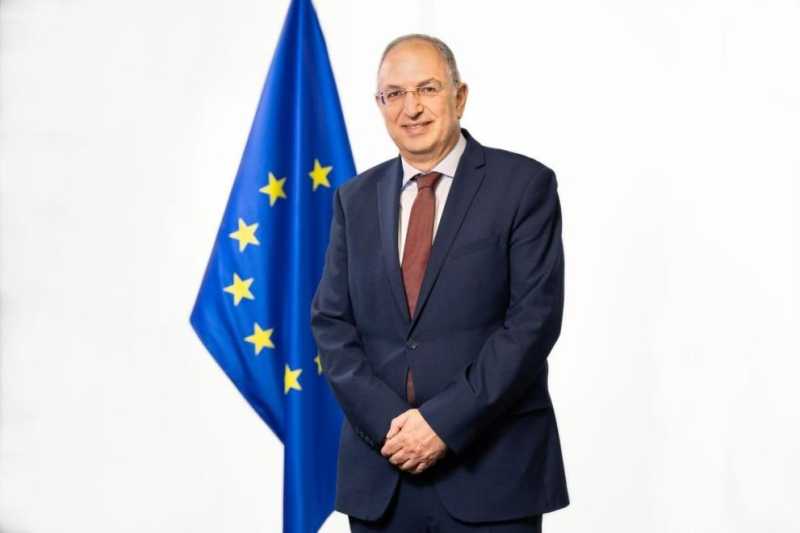
The European Commission recognises Romania's Black Sea fishing fleet as emblematic of the resilience of coastal communities, despite challenges like declining catches and limited infrastructure, European Commissioner for Fisheries and Oceans Costas Kadis said in a recent interview with AGERPRES.
According to him, the European Commission is proposing a redesigned EU budget for 2028-2034 that is more integrated, flexible, and impactful. Our proposal recognises fishery and aquaculture producers as vital to Europe's coastal communities and economies.
He also added that the European Commission is committed to simplifying access to EU funds for fishing communities, recognising administrative hurdles as a key barrier. This will be one of the characteristics of the 2028-2034 EU Budget.
The European commissioner pointed out that the fisheries and aquaculture sectors face a lack of attractiveness, affecting generational renewal. Young generations seek alternative incomes, even in families with strong fishing traditions. And this is not a challenge only for the Romanian fisheries sector. That is why the Common Fisheries Policy (CFP) Regulation is being currently scrutinised in all its aspects.
He also spoke in the interview about how the commission can support the modernisation of the fleet, fishing ports and increase the economic value of catches, and also about how the need to conserve marine resources can be balanced with supporting the economic activity of Romanian fishers.

AGERPRES: In the context of preparing the new EU financial framework after 2027 and the reform of the fisheries and aquaculture policy, what changes is the European Commission preparing in the funding programmes, and how will Member States that fear a reduction in funds be supported?
Costas Kadis: The European Commission is proposing a redesigned EU budget for 2028-2034 that is more integrated, flexible, and impactful. Our proposal recognises fishery and aquaculture producers as vital to Europe's coastal communities and economies. Fisheries are reflected across all three key pillars of the proposed budget: the National and Regional Partnerships (NRP) Fund, Competitiveness Fund, and Global Fund, supporting EU policies and the European Ocean Pact, with potential for funding exceeding 2021-2027 levels through coordinated ocean activities.
Member States will benefit from the budget's flexibility to address changing priorities, coherent programming for national/regional needs under the Common Fisheries Policy (CFP). This flexibility is of utmost importance, particularly in light of recent geopolitical developments and the ongoing emergence of new challenges. The Commission is committed to collaborate and support Member States in preparation and implementation of the NRP plans.

AGERPRES: How do you see the future of fisheries in the Black Sea, considering that the EU has only Romania and Bulgaria as Member States in the region, while cooperation with the other coastal countries is essential for the management of resources?
Costas Kadis: The EU- Romania and Bulgaria - may be a small fisheries player in the Black Sea in terms of landings, but it is driving the sustainability process at regional level, largely based on EU standards, targeting a level playing field. The EU has a leading role as an honest counterpart for the sustainable management of fisheries and a strong promoter of enhanced cooperation. Indeed, cooperation in the Black Sea was weak compared to the other sea basins in the past and did not allow a consistent and uniform approach in fisheries management, as well as a collective response to regional challenges.
Under the leadership of the EU, we have enhanced cooperation under the General Fisheries Commission for the Mediterranean and Black Sea (GFCM). The enhanced regional cooperation between riparian countries in the Black Sea was a fundamental principle of the 2016 Bucharest and 2018 Sofia Ministerial Declarations for the establishment of a new fisheries governance in the region. One of the most tangible results of the Sofia Ministerial declaration at regional level under the GFCM is the adoption of a comprehensive regional management framework for the entire sea basin. This framework promotes a level playing field through four multiannual management plans established for turbot, sprat, rapana and piked dogfish fisheries. These plans ensure fisheries sustainability, and several technical measures are adopted based on the scientific advice, supported by dedicated and management-oriented research, regional monitoring and scientific programmes.
And now, we clearly see the positive results of the collective efforts as key stocks show signs of recovery. For example turbot, a stock heavily overexploited, is now in a sustainable exploitation, ensuring the profitability of the sector.

AGERPRES: Fishing communities in Romania face low incomes, declining attractiveness and labour shortages. What measures is the Commission considering to support the development of these communities, particularly in the Danube Delta and along the Black Sea coast, and to make the sector more attractive to young people?
Costas Kadis: Indeed, our fisheries and aquaculture sectors face a lack of attractiveness, affecting generational renewal. Young generations seek alternative incomes, even in families with strong fishing traditions. And this is not a challenge only for the Romanian fisheries sector.
That is why we are currently evaluating the Common Fisheries Policy (CFP) Regulation in all its aspects. The evaluation will provide an evidence-based assessment of whether the Common Fisheries Policy Regulation is still fit for purpose or whether it would be scope for improvement, and which elements of the policy should get improved.
Moreover, based on the evaluation results we will develop the Vision for the fisheries and aquaculture sector with a 2040 perspective, which will focus on enhancing the competitiveness, sustainability and resilience of the fishing, aquaculture and processing sectors and making them more attractive.
In this context, we hope that the evaluation of the Common Fisheries Policy Regulation and the 2040 Vision for fisheries and aquaculture will tackle generational renewal challenges. Ensuring fisheries' economic and social viability is key to attract young generations. This is why the sustainable management of fisheries remains an imperative requirement for generational renewal.
Let me clarify that even under the current framework, the EU provides financial support to Romania's fishing communities, including the Danube Delta and Black Sea. Currently, the European Maritime Fisheries and Aquaculture Fund (EMFAF) offers 232 Million EUR of funding to support the fisheries and aquaculture sector in Romania. Meaningful and timely implementation of the fund is essential for the continuous support to these communities so I would encourage intensifying efforts to absorb the funds available under EMFAF.
EMFAF supports innovative projects to improve socio-economic attractiveness and working conditions in the fishing and aquaculture sectors. Community led local development (CLLD) is key in this sense. For example, Danube Delta always received consequent funding due to its large fishing communities. The Commission is ready to assist Romania in promoting generational renewal within the framework of the national EMFAF programme.

AGERPRES: Romanian fishers say that accessing EU funds is often complicated. How does the European Commission intend to simplify procedures and facilitate fishing communities' access to funding?
Costas Kadis: The European Commission is committed to simplifying access to EU funds for fishing communities, recognising administrative hurdles as a key barrier. This will be one of the characteristics of the 2028-2034 EU Budget. We are also looking to the possibility of proposing certain targeted changes to the EMFAF so that its procedures become simpler and less bureaucratic.
The European Commission supports the Romanian Managing Authority in accelerating the EMFAF programme implementation and in strengthening Romania's National Agency for Fisheries and Aquaculture (NAFA) for better control and data quality. It is commendable that Romania is advancing simplifications itself, including planning calls with simplified cost options to make funds more accessible, aligning with EU efforts to get money to fishers and aquaculture farmers faster. It is essential that the implementation advances to the next steps towards its operationalisation so that the sector can receive the much-needed financial support.
AGERPRES: Romania has one of the smallest and oldest fishing fleets in the EU, while port infrastructure and the processing chain remain limited. How can the Commission support the modernisation of the fleet, the muchrts and the increase of the economic value of catches?
Costas Kadis: The European Commission recognises Romania's Black Sea fishing fleet as emblematic of coastal communities' resilience, despite challenges like declining catches and limited infrastructure. We are supporting the resilience and green and digital transition of the sectors through the EUR 232 million EMFAF programme (of which EUR 162 million EU contribution). Of that amount, EUR 39 million of the EU contribution are pledged to foster sustainable fisheries and the restoration and conservation of aquatic biological resources including fleet upgrades, port improvements, and higher-value processing. EMFAF supports jobs while making space for innovation especially related to selectivity and digitalisation.
In addition, EUR 76 million of the EU contribution are pledged to foster sustainable aquaculture activities and processing and marketing of fishery and aquaculture products, including processing and marketing to boost landed value from species like high-price turbot, using simplified cost options for easier access. Post-2027 reforms promise even more possible blue economy support.

AGERPRES: In the context of pollution, climate change and restrictions aimed at protecting fish stocks, how can the European Commission balance the need to conserve marine resources with supporting the economic activity of Romanian fishers?
Costas Kadis: Restrictions to fishing operations, such as spatiotemporal closures, are based on the best available scientific advice and aim at protecting juveniles and/or spawners of fish stocks in support of the sustainability of fish stocks and the profitability and economic viability of the sector in the long run. Such measures driven by CFP are supported by EMFAF.
EMFAF supports investments in selective gear, energy efficiency, and marine litter removal to cut environmental impact without halting activity. Additionally, the Romanian national EMFAF programme allocated more than 400 thousand EUR of the EU contribution to temporary cessation, which provides compensation for fishers affected by conservation or emergency measures, ensuring economic viability during conservation periods.
One interesting approach for protecting the marine environment is that of co-management. In my visits across Member States, I have witnessed time and again that the most successful examples of Marine Protected Areas (MPAs), are those where all interested parties that have a stake are involved in the design of the MPAs from the outset and throughout the process including management and enforcement. This cultivates a sense of responsibility of protecting the marine areas together with ownership and pride in the local communities. And the fisheries sector can benefit from these MPAs in terms of spillover effects and the enrichment of the surrounding marine area.
****

Costas Kadis visited Romania on March 23- 24 2026, to discuss with the Romanian authorities and relevant representatives the implementation of the European Union's policies in fisheries, aquaculture and the blue economy, with a focus on sustainability, innovation and supporting local communities.

He toured several EU-funded projects in the fisheries sector, including fishery processing plants, a local development initiative supporting fishing communities, projects that improve access to essential services, and an ecosystem restoration project.

The European official also had meetings with high-level Romanian authorities and representatives in the areas. Meetings were held with the Minister of Agriculture and Rural Development, Florin Barbu, and with the Minister of the Environment, Water and Forestry, Diana Buzoianu, discussions on policy priorities, financing instruments and ongoing cooperation in areas such as fisheries management, biodiversity protection and sustainable use of marine and freshwater resources. AGERPRES (RO - editing by: Mariana Nica/Nicoleta Gherasi; EN - editing by: Corneliu-Aurelian Colceriu)
Photo source: audiovisual.ec.europa.eu
The content of the www.agerpres.ro website has the exclusive purpose of public informing.
All the information published on this website by AGERPRES is protected by relevant legal dispositions.
It is forbidden to copy, reproduce, recompile, decompile, distribute, publish, display, modify, create derived components or products or full services, as well as any exploitation of the site's content.
Details in the section Terms of Use. If you are interested in picking up AGERPRES news items, please contact the Marketing Department – marketing@agerpres.ro.
The use of the Comments section entails your obligation to respect the AGERPRES terms and conditions in regards to the publishing of comments on the www.agerpres.ro.
Other news in category
Romanian Embassy in the US concludes five-year '50 States, One Community' project
The Romanian Embassy in the United States announced on Thursday the completion of the '50 States, One Community' project, carried out over nearly five years across all 50 US states. Launched in October 2021, the initiative evolved from a programme aimed at strengthening ties with the Romanian diaspora into one of the most extensive public and economic diplomacy initi

Numismatic issue dedicated to Hortensia Papadat-Bengescu - 150 years since her birth
As of July 27, 2026, the National Bank of Romania (BNR) will put into circulation, for numismatic purposes, a silver coin dedicated to Hortensia Papadat-Bengescu - 150 years since her birth. According to a press release of the central bank, the coin will have on the observe a graphical composition inspired by the literary work 'Concert din muzica de Bach&#
Rise of ultra-identitarian and sovereignist currents is not attributed to manipulation, but to structural causes (presidential report)
The rise of ultra-identitarian and sovereignist currents cannot be explained exclusively by manipulation, but is based on structural causes - the crisis of democratic representation, inequalities, distrust in institutions and a European project that 'speaks the language of the administration' in an era of emotions, according to the Report of the Strategic Reflection
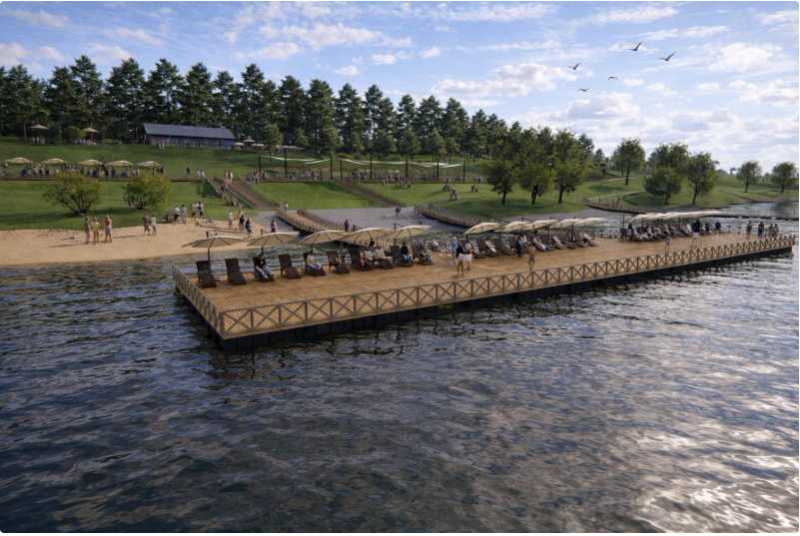
Cociuba Mare develops Tinca Baths and Lake Carasau into a wellness and leisure hub
The old Tinca Baths, recently purchased by Cociuba Mare commune, and Lake Carasau, located 15 kilometres away, could become the two main attractions of a new tourist hub in southeastern Bihor in the coming years. The Cociuba Mare administration is betting on a dual project it considers complementary: recovery and wellness at Tinca Baths, and leisure and nature

Bogdan Costas, dismissed as interim CEO of TAROM; Cristian Anghel takes over mandate
The Board of Directors of airline TAROM appointed on Wednesday Cristian Anghel as the company's interim CEO, after dismissing Bogdan Costas from the position. According to a company's release, this appointment occurred against the backdrop of the trust given to the young generation of managers formed within the company. 'The Board of

Darau:Tourism and HoReCa industries should not have to bear full brunt of drop in consumption
Romania's tourism and HoReCa sectors should not have to bear the full brunt of the drop in consumption, and I hope that next year we will once again grant the incoming tourism bonus, Irineu Darau—the interim Minister of Economy, Digitalization, Entrepreneurship, and Tourism—stated on Wednesday during a press conference reviewing his six-month term.
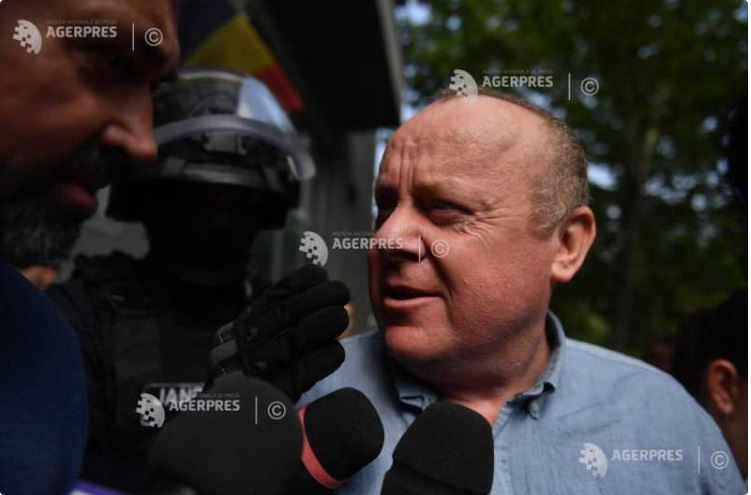
Pasca challenges CoE Human Rights Commissioner over alleged use of unverified information in Dumbrava case
Viorel Pasca, founder of the care facilities in Dumbrava, Bihor County - currently under DIICOT investigation - has published an open letter addressed to the Council of Europe Commissioner for Human Rights, Michael O'Flaherty, in which he challenges the statements made in the Commissioner's letter to the Romanian Prime Minister regarding the Dumbrava case and argues
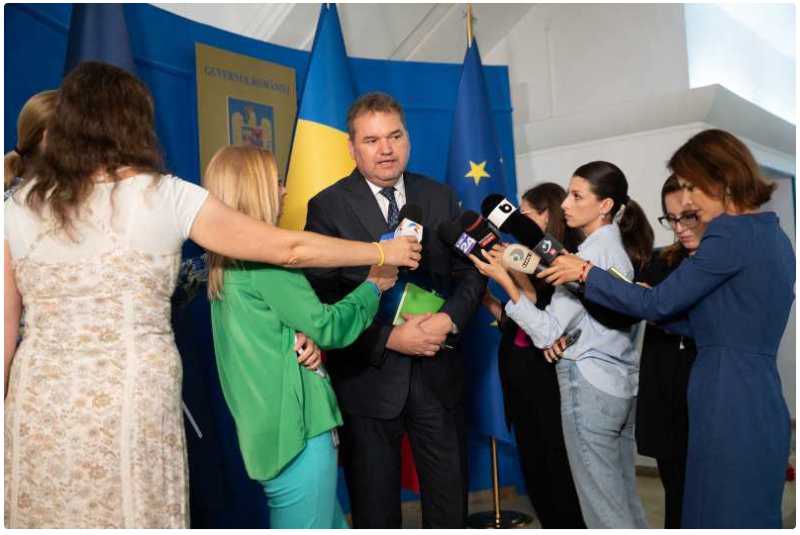
HealthMin Cseke Attila, after meeting with unionists: We have responsibility to build a fairer salary system
The acting Minister of Health, Cseke Attila, declared on Wednesday, after the meeting with representatives of the trade unions in the field regarding the draft of the new law on salaries in the public sector, that his objective is to find solutions by which the incomes of the personnel are not diminished, in parallel with the reform of the salary system. '

Oradea Arena to host Aerobic Gymnastics World Cup at the end of July
Oradea Arena will host the Aerobic Gymnastics World Cup and RomGym Trophy 2026 from July 31 to August 2, an international competition expected to attract athletes from 12 countries and marking the 50th anniversary of Nadia Comaneci's first perfect 10 at the 1976 Montreal Olympic Games. According to a press release issued by Oradea City Hall, the three-day

College of Physicians: We call upon all political decision-makers to treat healthcare as a strategic priority
The Romanian College of Physicians calls upon all political decision-makers, regardless of party affiliation, to treat healthcare as a strategic priority for the Romanian state and urges the authorities to develop a human resources policy based on genuine consultation. 'The healthcare system is currently going through another period of turmoil—partly

President Nicusor Dan to receive Indian President Droupadi Murmu on Thursday
President Nicusor Dan will receive Indian President Droupadi Murmu at the Cotroceni Presidential Palace on Thursday, as she begins a state visit to Romania lasting until Saturday at the invitation of the Romanian side. Official talks between the two heads of state will focus on strengthening the Extended Partnership between Romania and India ahead of the 80th
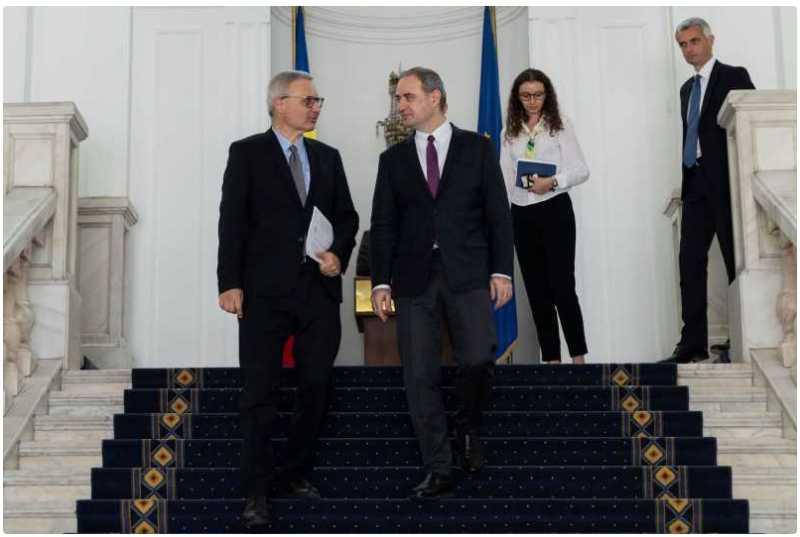
FinMinNazare: Romania should become a regional platform for large French companies
Romania should become a regional platform for large French companies and not only, not just a market, according to interim Finance Minister Alexandru Nazare. He welcomed at the headquarters of the Ministry of Finance French ambassador to Romania Nicolas Warnery. 'France is one of Romania's most important partners in the EU, a strategic a

Maramures rural traditions through foreign researchers' eyes - documentary shown at ASTRA Multicultural Centre
The documentary film 'Old New Villages', which captures the traditions of Maramures through the eyes of foreign researchers, was screened at the ASTRA Multicultural event, the 'Liviu Borlan' Maramures County Centre for the Preservation and Promotion of Traditional Culture informs on Wednesday. According to the same source, the film showcases tr

Romanian Naval Authority: Fire on board the Gas Lisbon vessel has decreased in intensity
The fire on board the Gas Lisbon vessel has decreased in intensity, and the situation is being closely monitored by the relevant authorities, the Romanian Naval Authority informs on Wednesday. 'The fire on board the Gas Lisbon vessel has decreased in intensity, and the evolution of the situation is being closely monitored by the relevant authorities. Given
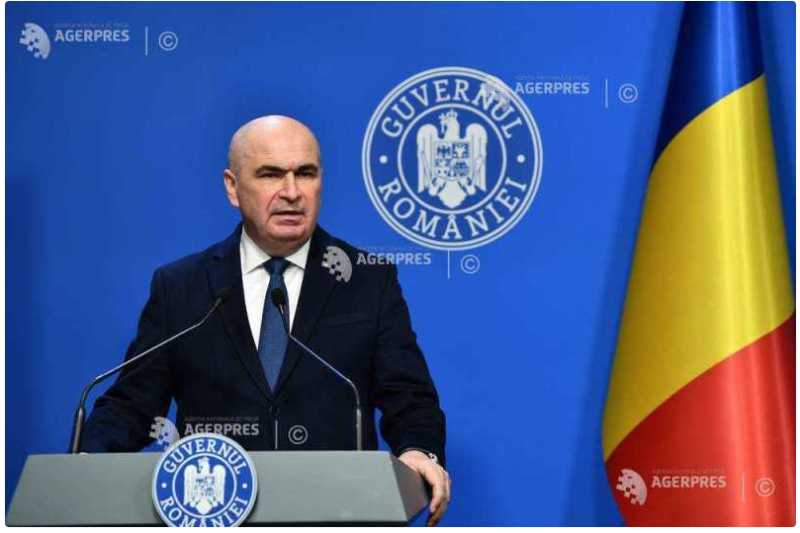
PM Bolojan congratulates Moldova's new PM Tofan on being voted in office
Romania's interim Prime Minister Ilie Bolojan on Tuesday sent a congratulatory message to Vasile Tofan, the new prime minister of Moldova, assuring him of full support and cooperation from the Romanian government. 'I want to congratulate and wish good luck to the new Prime Minister of the Republic of Moldova, Vasile Tofan, and assure him of all the sup