

FEATURE/Valuable archaelogical pieces, discovered by 18 metal detectorists in Mures, showcased in 'The Enigmas of Treasures' exhibition

A collection of valuable archaeological items discovered by 18 metal detectorists from Mures County, including a unique Roman gold ring with a red cameo, found on the eastern frontier of the Roman Empire in Deda-Bistra, can be admired in the exhibition 'Enigma Comorilor'/'The Enigmas of Treasures,' arranged in the building of the Mures County Museum within the Targu Mures Fortress.
'The collection displayed here consists of items supplied by 18 metal detectorists who, in accordance with the law, handed over the pieces they discovered to the relevant institutions (...). In Romania, the use of metal detecting instruments gained momentum in the mid-1990s. At present, according to 2023 figures published on politiaromana.ro, over 12,500 such instruments are owned by private individuals across the country, but the number of unlicensed detectors is probably much higher. In Mures County, approximately 400 metal detecting instruments had been licensed by 2025, which means 200 to 250 ‘treasure hunters.' The first metal detector in the county was registered in 2007 for the Mures County Museum. However, it is impossible to overlook the activity in the area of the approximately 250 active detectorists in the county who have so far deliberately avoided the museum institution,' director of the Mures County Museum and chief curator of the exhibition 'The Enigmas of Treasures' Rezi Botond told AGERPRES.
Over the past decade and especially in recent years, Rezi Botond said, the number of archaeological and historical discoveries has increased exponentially in Mures County due to the growing number of people engaging in metal detecting in their spare time.
'The collection of the Mures County Museum has grown in parallel with this process, as more and more metal detectorists have handed over their discoveries as required by law or, in more fortunate cases, left the objects in situ and excavated them together with archaeologists. The exhibition in the Fortress showcases these discoveries, highlighting the few commendable cases in which on-site documentation was possible and, on the other hand, also presenting those cases in which the archaeological context was destroyed,' Rezi Botond said.
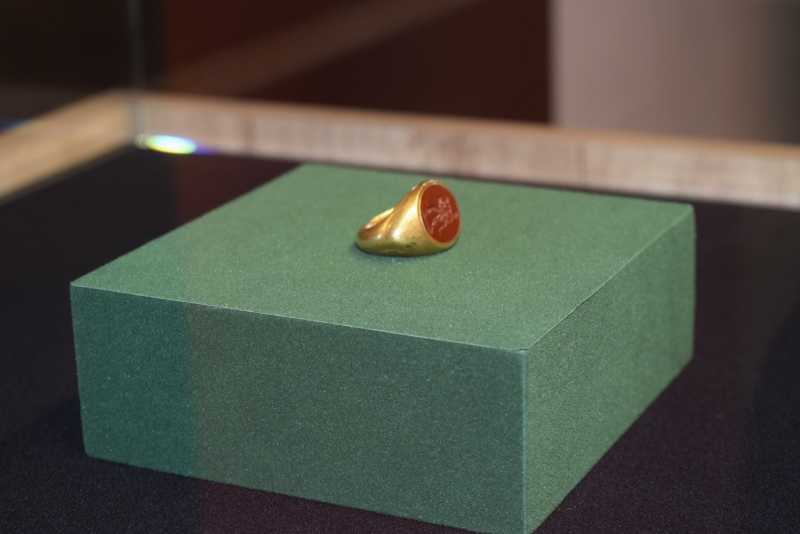
The star of the exhibition, the Roman gold ring with a red cameo, has also been included in the most important travelling exhibition in the country, 'Aurul si argintul antic al Romaniei'/'The Ancient Gold and Silver of Romania.'
It weighs almost 30 grams and specialists say there are very few similar pieces, its uniqueness being given both by its weight and by the way the cameo was crafted, considered 'a first-rate cameo, executed by a professional master.'
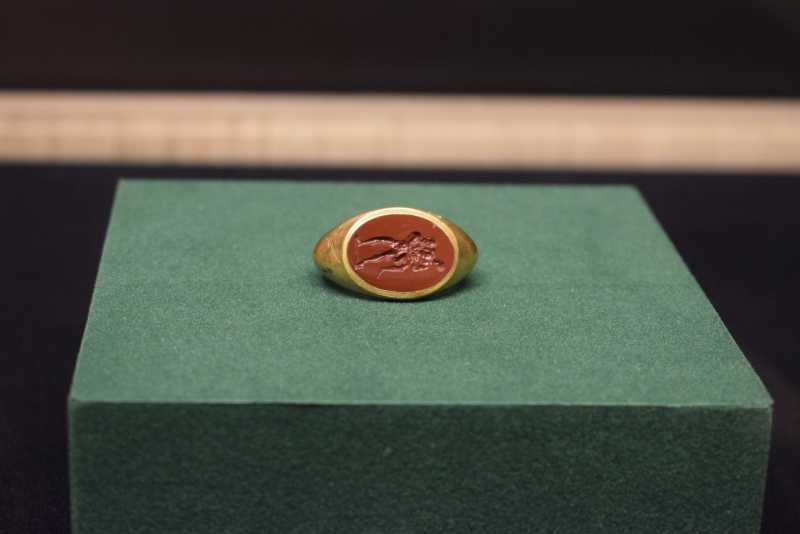
'Our specialists say that Roman rings are usually half the weight of this piece, between 10 and 15 grams of silver or gold. There are many silver rings of this type with cameos, but most of the cameos are rudimentarily polished, so they appear to be local productions or attempts. A piece of similar quality, at least for the time being in Romania, is not known to us, so it is the most important discovery of this kind,' communications representative of the Mures County Museum Iulia Vizi told AGERPRES.
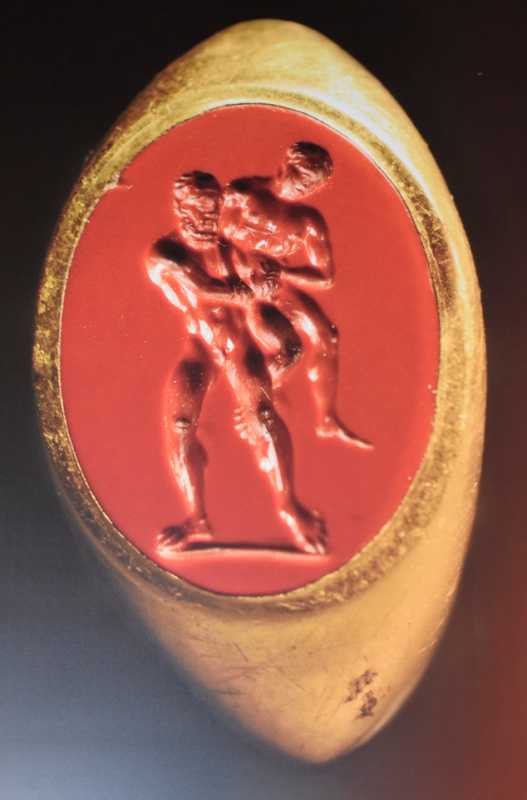
The red cameo of the ring depicts the fight between Antaeus and Hercules.
In the area where detectorists discovered the ring there were no trade routes, only the military road built along the boundary, used for troop movements, and from this point of view the discovery of the artefact is entirely accidental and not linked to anything concrete.
Alongside this unique piece, the exhibition 'The Enigmas of Treasures' also includes items recently entered into the collection of the Mures County Museum, such as the small hoard discovered at the edge of a forest in the territory of the village of Sanisor.
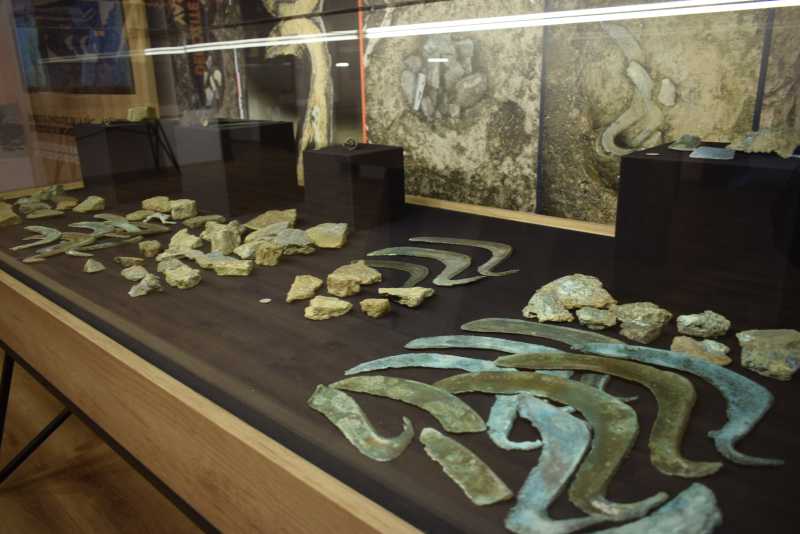
It contains three copper axes with crossed arms, one of them buried fragmentarily, an unusual practice for deposits from the 5th to the 3rd millennium BC, being the only Eneolithic hoard documented in situ in the past 100 years in Romania.
The collection also includes the sword discovered at Rastolita, typologically belonging to the category of slightly curved blades known from the early Avar period, the 7th to 8th centuries AD.
'In 2019, within the administrative boundaries of Rastolita commune, near Poiana Tiba Mare, artefacts belonging to the Avar period were found with a metal detector. Most were scattered over an area of approximately two to three square metres: fragments of sickles, a knife blade fragment, remains of a bucket, a spearhead, ceramic fragments and fragments probably from a buckle. Not far from this spot, a sword was also discovered. The association of most of the items, except for the sword, which was about 100 metres from the other artefacts, over an area of several square metres may indicate the presence of a modest habitation nearby. There are also no data to indicate that the discovery had a funerary character, which adds further uniqueness to the context. According to the analysis of the material, the dating would centre on the 7th century AD, possibly also the beginning of the 8th century AD. At present, the discovery is unique in the region,' reads the presentation of the Mures County Museum inside the exhibition.
The exhibition is also notable for presenting archaeological finds dating from the first period of coin use in the Dacian space, such as the four Thasos-type tetradrachms dated from the mid-2nd century to the first half of the 1st century BC, found at Ernei.
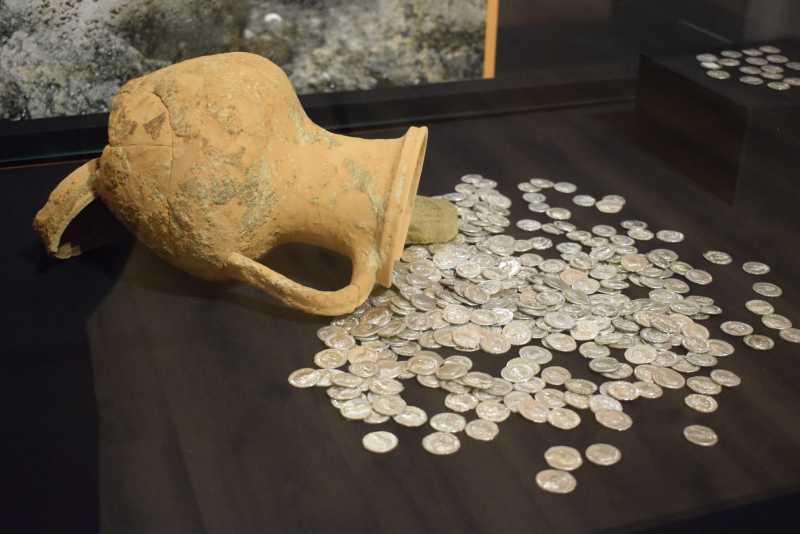
Also on display are three hoards of Roman Republican denarii found at Iernut and Cornesti, of 20, 15 and 73 coins respectively, as well as one of the largest hoards of Roman Imperial denarii discovered in Mures County, at Sangeru de Padure, comprising 774 pieces.
On the plateau of the Palaria Neamtului hill, on the administrative boundary between Targu Mures municipality and the commune of Sangeorgiu de Mures, detectorists also accidentally brought to light a hoard, although the exact circumstances and context of the discovery are not known.
'The categories of artefacts found are diverse: tools, jewellery, semi-finished pieces and rejects. The most significant artefacts of the hoard are the bronze moulds. A special category of medieval dress accessories consists of various lamellar pieces (plates/appliqués) which appear more frequently in hoards or treasures, as well as in grave inventories. Plates made of precious metals, especially silver, or non-ferrous metals are generally rectangular or circular in shape. The technique of producing them by casting or pressing has long been known to specialists, but the tools of the master craftsmen have come to light only in exceptional situations. Our pieces are likewise without parallel across the whole of Transylvania. With their help, appliqués and accessories were produced in series from silver plates or other copper-based alloys. One such piece is that executed using one of the moulds, namely a silver slab representing a pilgrim badge. Appliqués with various functions, produced in considerable numbers across Europe, spread especially in the 14th and 15th centuries. Valuable and unusual discoveries also include several iron tools: a punch, pliers, scissors and others. Worth mentioning are also several fragmentary ornaments, rings and slabs of silver and alloy, as well as a bronze crucifix preserved in impeccable condition,' museum specialists explain.
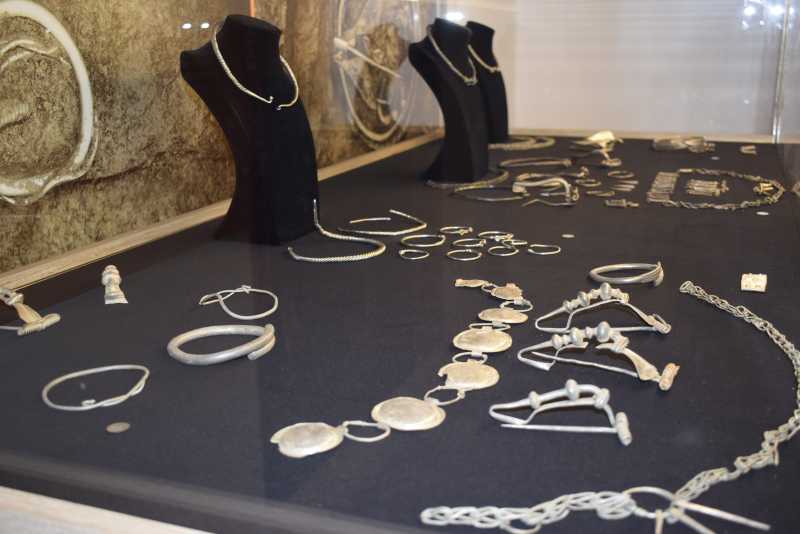
The artefacts most likely represent the hoard of a goldsmith, possibly from a Saxon urban centre in Transylvania, and were hidden during the medieval period, the 14th to 15th centuries, by the owner himself.
The director of the Mures County Museum maintains that historical treasures, whether buried intentionally or accidentally, are under constant threat, in addition to various natural phenomena and agricultural and forestry activities that can affect the preservation of archaeological objects.
'Deep ploughing of 40 to 50 centimetres, levelling of forest roads and logging can cause irreversible damage by destroying objects and disturbing archaeological sites. In the 1960s, 1970s and 1980s, hundreds of hoards were accidentally unearthed and often divided among the finders. A telling example is the hoard from Calugareni, discovered during ploughing in 1973, many of the objects disappearing without trace after the discovery. In 2014, the exact location of the hoard was identified using metal detectors and a further 42 objects were found. The surface distribution of the recently discovered artefacts was clearly caused by deep ploughing. In recent decades, metal objects discovered are increasingly corroded, partly due to the chlorine content of fertilisers used in agriculture and acid rain. The greatest threat, however, is the looting of cultural heritage, a phenomenon known since its earliest existence. Trade in archaeological and historical artefacts began thousands of years ago,' Rezi Botond said.
The greatest damage, he warns, can be caused by treasure hunters who fail to declare archaeological discoveries in accordance with the law.
Specialists say that, unfortunately, in recent decades the phenomenon of smuggling archaeological objects has also expanded, being highly organised and professionalised.
'The scale and profitability of the black market in looted, stolen and smuggled works of art and antiquities is estimated at billions of euros, making it one of the largest illegal businesses in the world. The phenomenon has not ignored the thousands of metal objects that ended up in the ground. Their large number, shallow burial, relatively large size and fairly predictable distribution make them easy prey for treasure hunters. In Romanian archaeological discourse in recent decades, the phenomenon has been a constant theme, giving rise to heated debates between two polarised camps. The intensification of this ‘hobby' has led to many objects being removed from the ground after hundreds or even thousands of years of in situ preservation. It is important to note that the aspect of greatest interest to archaeologists and researchers, namely the study of objects in their stratigraphic contexts, how they relate to one another within the same context and how the context itself relates to the surrounding environment, is destroyed forever or permanently altered. By removing objects from the ground, even through evaluation excavations, much data thus becomes impossible to reconstruct,' the Mures County Museum director also said. AGERPRES (RO - writing by: Dorina Matis; EN - writing by: Adina Panaitescu)
The content of the www.agerpres.ro website has the exclusive purpose of public informing.
All the information published on this website by AGERPRES is protected by relevant legal dispositions.
It is forbidden to copy, reproduce, recompile, decompile, distribute, publish, display, modify, create derived components or products or full services, as well as any exploitation of the site's content.
Details in the section Terms of Use. If you are interested in picking up AGERPRES news items, please contact the Marketing Department – marketing@agerpres.ro.
The use of the Comments section entails your obligation to respect the AGERPRES terms and conditions in regards to the publishing of comments on the www.agerpres.ro.
Other news in category
President Nicusor Dan meets former US ambassadors, thanks them for promoting Romania
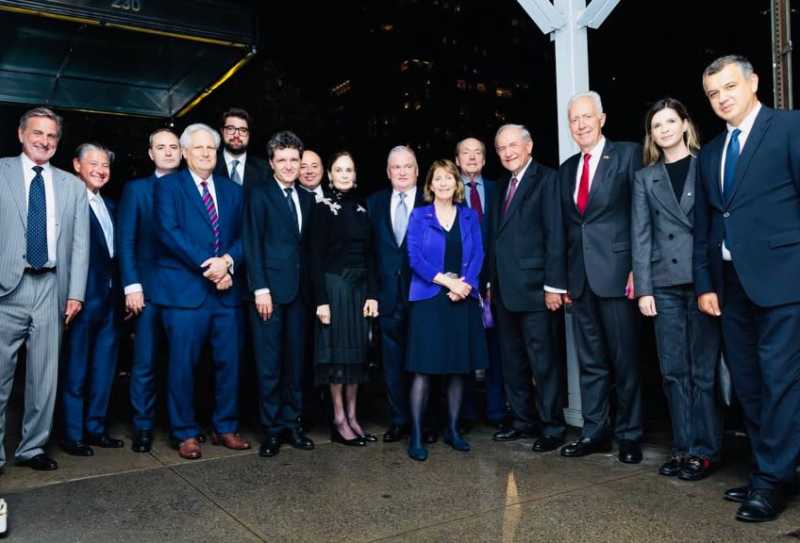
President Nicusor Dan met former US ambassadors to Romania in New York, thanking them for their contribution to promoting Romania and their work to strengthen and deepen bilateral relations. The president said the US-Romania partnership has been an 'enduring achievement' built on 'solid foundations'. 'I met in New York with f

PM-designate Siegfried Muresan: PSD leadership does not want an end to political crisis
Prime Minister-designate Siegfried Muresan on Monday criticised the Social Democratic Party (PSD) leadership for deciding not to support his proposed government before seeing its programme or holding talks, saying the move would prolong Romania's political crisis. Muresan said PSD has a choice between supporting his proposed government and breaking the pol

Alleged Order of Malta diplomatic ID bearing Calin Georgescu's name found - judicial sources
An alleged diplomatic ID bearing the name of Calin Georgescu, apparently issued by the Order of Malta, was found by investigators at his villa in Mogosoaia, judicial sources told AGERPRES. The alleged ID is headed 'DIPLOMATIC ID' - Order of Malta, Sovereign Order Hospitalliers of Saint John of Jerusalem - and bears the name of 'senator' Calin G
UPDATE Social Democratic Party National Standing Bureau decides not to support Siegfried Muresan government
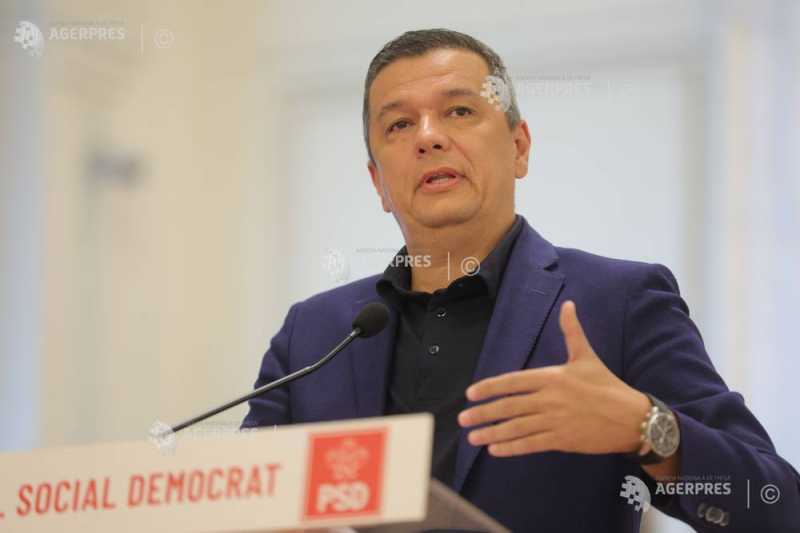
The Social Democratic Party (PSD) National Standing Bureau on Monday decided not to support the government to be formed by Prime Minister-designate Siegfried Muresan. 'The National Standing Bureau of the Social Democratic Party decided today not to vote for the Bolojan 2.0 Government. This recommendation from the National Standing Bureau will be submitted
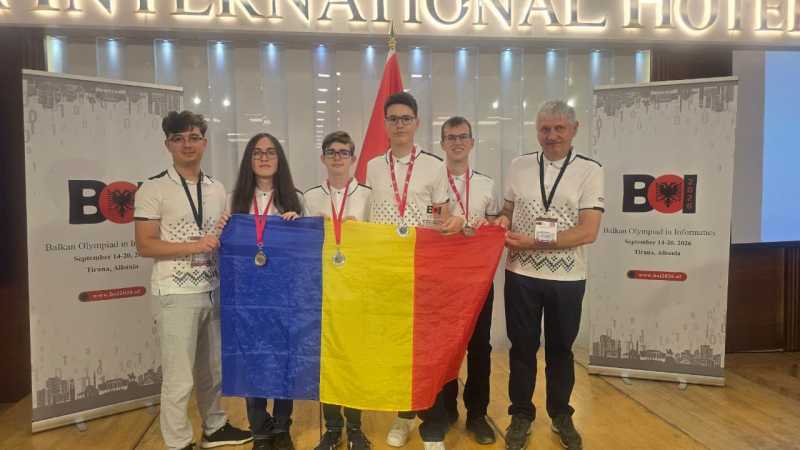
Romanian pupils win four medals at Balkan Olympiad in Informatics
Romanian pupils won four medals - one gold, two silver and one bronze - at the 33rd edition of the Balkan Olympiad in Informatics, which took place in Tirana, Albania, from 14 to 20 September. The medal winners were Stefan-Catalin Savu from Ion Luca Caragiale National College in Ploiesti, who won a gold medal; Matei Neacsu from the International Computer Scien
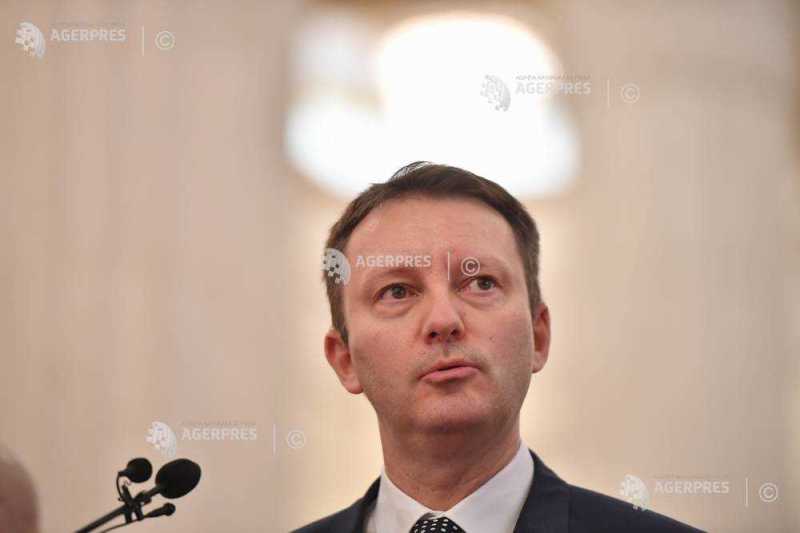
PM-designate Muresan: I will propose a voluntary merger of communes in Romania and a reform of state-owned companies
Prime Minister-designate Siegfried Muresan announced that he would propose in the governing programme a voluntary merger of communes, thus taking over the model implemented in the Republic of Moldova. 'Unfortunately, politicians in the past have always had a superiority complex in relation with the Republic of Moldova. However, today, after Maia Sandu has
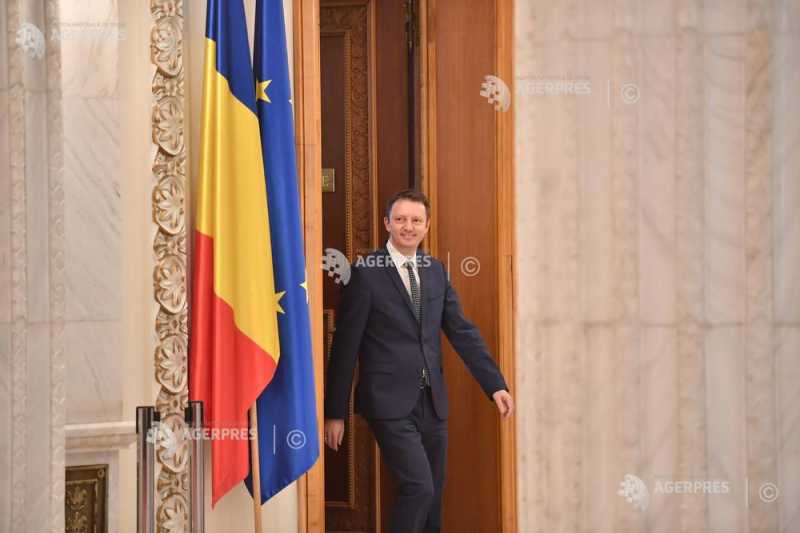
Decree appointing Siegfried Muresan as prime minister-designate published in Official Journal
The decree appointing Siegfried Muresan as prime minister-designate was published in the Official Journal of Romania on Monday. President Nicusor Dan designated MEP Siegried Muresan, as prime minister on Thursday, following consultations at the Cotroceni Palace with the leaders and representatives of the parties and political groups in Parliament.
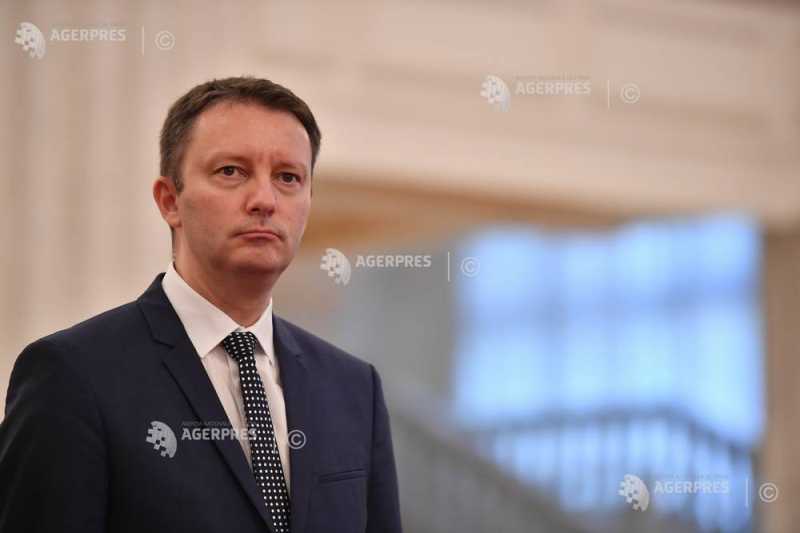
PM-designate Siegfried Muresan to ask Parliament for ministers' hearings to last at least an hour
Prime Minister-designate Siegfried Muresan said he would ask Parliament's leadership for the hearings of the proposed ministers to last at least 60 minutes. Muresan told RFI Romania on Monday that he had 'never' liked 'rush-through' hearings. He underscored that MPs must have the opportunity for a 'serious dialogue' with the candida

President Dan: Maryhill Museum of Art, a true cultural bridge between Romania, the United States
President Nicusor Dan sent a message on Sunday at an event held at the Maryhill Museum of Art in Goldendale, Washington State, marking the 100th anniversary of the museum's opening, highlighting the institution's role in promoting Romanian culture and strengthening cultural relations between Romania and the United States. The message from the head of s

Nicușor Dan meets UN Secretary-General Antonio Guterres and US Ambassador to the UN Mike Waltz
President Nicușor Dan met on Sunday in New York with United Nations Secretary-General Antonio Guterres, to whom he conveyed Romania's 'deep gratitude' for his tireless work to find solutions to conflicts around the world and for his steadfast commitment to peace, dialogue and respect for international law. The Romanian head of state also met with US Ambas

President Nicușor Dan to attend the High-Level Week of the UN General Assembly
President Nicușor Dan has several meetings and events scheduled in New York between 20 and 23 September, as part of his participation in the 81st session of the United Nations General Assembly, according to the agenda published by the Presidential Administration. The President is scheduled to deliver Romania's national statement during the High-Level Week of the session

President Dan says Foreign Ministry investigating Orlivka school case
President Nicusor Dan said on Friday that Romania's Foreign Ministry has opened an investigation into the case of the school in Orlivka, Odesa region, where a Year 1 class taught in Romanian was closed. Speaking at a news conference held after the Carpathian Integration Initiative 'Carpathian 8' Summit, he said that 'remarkable progress has bee

Bolojan: We will try, within our possibilities and depending on our electoral weight, to form a Government
President of the National Liberal Party (PNL) Ilie Bolojan said on Friday that, although Siegfried Muresan's nomination for prime minister came three months late, the party would deal with the situation 'responsibly' and seek to form a Government based on its electoral weight. 'Yesterday, about 30 minutes beforehand, I learned from the piece of

Siegfried Muresan: We will start work on a government programme; beginning of next week - discussion with MPs
Prime Minister-designate Siegfried Muresan announced on Friday that he was starting work on the government programme together with the National Liberal Party (PNL), Save Romania Union (USR) and the Hungarian Democratic Union of Romania (UDMR), mentioning that he would present the priorities at the beginning of next week and, based on these, would hold an "extremely tran

CCIR's Daraban: The diaspora is not a sentimental issue but a chapter in the national economy
The experience gained by Romanians in the diaspora in competitive markets must be transformed into investment, jobs and exports, believes Mihai Daraban, President of the Chamber of Commerce and Industry of Romania (CCIR). According to a press release from the organisation sent to AGERPRES, the institution is strengthening its partnership with ROUNIT - Reunited