

EU-US tariff deal: Total sellout or lesser evil? (enr)

The European Union and the United States have concluded a trade deal. Or have they? A number of details are still opaque. Who looks set to come out on top?
Only a few days ahead of the August 1 deadline EU Commission President Ursula von der Leyen and US President Donald Trump agreed on a trade deal to avert tariffs of 30 percent on imports to the US snapping into place, as they met on Sunday. Did von der Leyen avert a worse scenario or did Trump 'eat her for breakfast' as Hungary's ever-critical Prime Minister Viktor Orbán put it?
Known knowns and known unknowns
EU exports are now set to face single, all-inclusive tariffs of 15 percent on most products - higher than customs duties before Trump returned to the White House, but much lower than his threatened 30 percent. The tariffs are to go into effect on August 7 - one week later than the original deadline - according to an executive order signed by Trump on Thursday.
'The EU will remove significant tariffs, including the elimination of all EU tariffs on US industrial goods exported to the EU, creating enormous opportunities for American-made and American-grown goods to compete and win in Europe', a statement by the White House on the tariff agreement read.
The Commission on the other hand stressed in an explainer published after the meeting that the deal details struck were only 'key parameters' and the 'first step in a process'.
It said that the 15 percent tariffs applied to nearly all EU exports currently subject to reciprocal tariffs, also to cars and car parts. Those are currently hit with 25 percent tariffs. It also applies to potential future tariffs on pharmaceutical products and semiconductors.
However, tariffs on aircraft (and parts), some chemicals, drugs and raw materials will return to the levels before Trump's inauguration in January. The EU also promised better access to EU markets for US fishery products, and certain agriculture exports. Ketchup and biscuits get a mention here, for example.
Some of the finer details are still unclear. According to a White House statement, the EU also committed to significant purchases of American energy and military equipment. Only the first of those has been confirmed by the European Commission.
It said it intended to buy liquefied natural gas or oil valued at 700 billion Euro (750 billion Dollar) over the next three years, and to promote investment by European companies at a value of around 550 billion Euro (600 billion Dollar).
And while the White House maintains that tariffs on steel, aluminium and copper are to remain at 50 percent, the EU begs to differ: 'EU and the US will establish tariff rate quotas for EU exports at historic levels, cutting the current 50 percent tariffs,' according to the Commission.
The Commission said that the agreement is not legally binding and there would be further negotiations.
How bad is it?
EU leaders did not express great happiness about the deal, but most grudgingly admitted that it was probably the best deal to be had at the moment.
'I'm 100 percent sure that this deal is better than a trade war with the United States,' EU Trade Commissioner Maroš Šefcovic said.
France's President Emmanuel Macron said on Wednesday that the European Union had not been 'feared' enough in the trade negotiations, pledging to be 'firm' in follow-up talks.
'Europe does not see itself enough as a power yet. To be free, you have to be feared. We were not feared enough,' Macron told ministers during a cabinet meeting, according to participants, but admitted that the deal had preserved French and European interest in important export sectors.
In Germany, Chancellor Friedrich Merz warned that the compromise reached will severely impact Germany's export-oriented economy. 'The German economy will suffer significant damage from these tariffs,' Merz said on Monday. While he was not satisfied, it was 'the best that could be achieved under the given circumstances' he came to the defence of the Commission.
Italian Premier Giorgia Meloni welcomed the agreement. 'I always thought, and continue to think, that a trade escalation between Europe and the United States would have had unpredictable and potentially devastating consequences,' she said, but stressed that the details still had to be studied. Deputy Premier and Foreign Minister Antonio Tajani, meanwhile, promised that the government will help firms set to be hit by the tariffs.
Portugal's Prime Minister Luís Montenegro stated that the agreement 'brings predictability and stability, which are vital for Portuguese businesses and the economy'.
Slovenia has been tentative in its official response. The Economy Ministry is still analysing the content of the agreement, but also stressed the importance of predictability and stability, also for important sectors such as the automotive and pharmaceutical industries.
Winners, losers and everything in-between
Analysts agree that the US emerged mostly as a winner, as for example car exporters face no tariffs when selling into the EU. However, US consumers may face higher prices on imported goods as companies may pass on the extra cost to them.
Merz warned that for the US, not everything would come up trumps either. 'We will also see the consequences of this trade policy in America.' There will not only be higher inflation but also an overall disruption to trans-Atlantic trade, the chancellor added.
Time will prove this, Merz added.
In terms of value, Germany is by far the biggest exporter of goods to the US, which is a major outlet for its cars, steel and machine tools. These goods exports totalled 161.2 billion Euro in 2024.
Next in line are Ireland and Italy, whose exports last year were worth 72 billion Euro and 64 billion respectively, according to EU statistics office Eurostat.
France is less exposed, even if it does have aeronautics, agri-food, wine and luxury goods heavyweights that risk losing markets. According to Eurostat, the EU as a whole exports 20 percent of its goods to the United States.
The effects of the US tariffs vary greatly according to exposure to the US market:
On one end of the scale is Portugal, for example. Most of its exports are concentrated within the European Union, especially to Spain. Exports to the US account only for 5 percent of the total. Nonetheless, the Portuguese government has pledged full cooperation to mitigate the agreement's negative effects and to support national businesses, especially in the textile, footwear, wine, and metalworking sectors.
Germany, and in particular its huge car industry, is on the other side of the spectrum, it being the top exporter to the US. The Federation of German Industries (BDI) said even a 15 percent tariff would have an immense negative impact on Germany's export-oriented industry. According to the German Association of the Automotive Industry (VDA), the annual costs for companies in the German automotive industry alone are estimated to run into the billions.
Ireland holds a special position: The island has the largest trade surplus among the EU-27 and exports more than a quarter of its goods to the US. That is largely due to US pharmaceutical majors having set up shop there. Ireland also hosts most of the European headquarters of US tech giants such as Apple, Google and Meta, which are attracted by the favourable Irish tax system.
Overall, some sectors are more heavily exposed, notably the food and wine industries, as is the case for Spain, France's aeronautics and luxury goods sectors, as well as Italy's automotive sector. Franco-Italian manufacturer Stellantis, particularly Fiat and Peugeot, in April suspended its forecasts for the year due to these uncertainties.
As the EU works to iron out the terms of the tariff deal, Bulgarian exporters are already feeling the effects - and responding with a strategy of trade diversification. Caviar is a case in point: The country is now one of Europe's leading producers of black caviar.
According to Emil Arabadjiev, chairman of the Association of Black Caviar Traders in Bulgaria, the country exports more than 15 tons annually. He said he believed that higher prices will not change demand across the Atlantic, as there is a shortage of the product, but diversification into new destinations such as Australia, Canada, and Spain is bringing calm to the industry.
It could be worse
For EU candidate country Bosnia and Herzegovina, 30 percent tariffs on all products are in force as of August 7. The Foreign Trade Chamber of BiH assessed that the new tariffs will hit the country's defense industry the hardest, which accounts for over 60 percent of its exports to the US.
Although the US accounts for only about 1 percent of BiH's total foreign trade, the indirect effects could be significant. Particularly at risk are BiH companies whose products reach the US through European buyers, where increased prices may reduce demand. The hardest-hit sectors are expected to be the metal and automotive industries, with potential consequences for employment, costs, and inflation.
In the government there are initiatives to completely abolish tariffs on American products, primarily as an effort to curry favor with the Trump administration.
What other deals are out there?
The US may be the EU's largest trade partner, but Brussels is also pursuing a range of other deals. Getting those up and running, however, takes time.
* The EU currently negotiates deals or updated deals with (among others) India, Indonesia, Malaysia, the Philippines, the United Arab Emirates, Australia, Singapore or Thailand
* Economic partnership or association agreements are in the process of being adopted or ratified with: South American trade bloc Mercosur, Mexico and more than a dozen African states.
* An interim deal with Chile entered into force on February 1
The agreement with Mercosur, which includes Argentina, Brazil, Paraguay and Uruguay, is the biggest beast among them. Spain in particular is pushing for the adoption of this deal, despite fears from Europe's farming sector. 'We have no other option. We absolutely must reach an agreement between both trading blocs,' Spanish Premier Pedro Sánchez said during a visit to Uruguay in July.
And then there is China: Despite being each other's second-largest trading partners in goods, EU-China ties have become increasingly fraught. Brussels is alarmed by a record trade deficit of over 300 billion Euro in the last year and China's export controls on critical rare earths used in electric motors and sensors.
The content of this article is based on reporting by AFP, ANSA, BTA, dpa, EFE, FENA, LUSA, STA, as part of the European Newsroom (enr) project. AGERPRES (editing by: Simona Klodnischi)
The content of the www.agerpres.ro website has the exclusive purpose of public informing.
All the information published on this website by AGERPRES is protected by relevant legal dispositions.
It is forbidden to copy, reproduce, recompile, decompile, distribute, publish, display, modify, create derived components or products or full services, as well as any exploitation of the site's content.
Details in the section Terms of Use. If you are interested in picking up AGERPRES news items, please contact the Marketing Department – marketing@agerpres.ro.
The use of the Comments section entails your obligation to respect the AGERPRES terms and conditions in regards to the publishing of comments on the www.agerpres.ro.
Other news in category

Cybersecurity experts from over 40 organisations attend 2nd edition of 'Resilient Trident' cyber exercise
Cyber experts from 40 public and private organisations participated in the second edition of the 'Resilient Trident' cyber exercise, which took place in Bucharest, April 27-28. According to the Romanian National Cyber Security Directorate (DNSC), the exercise, organised within the framework of the 'Cyber Alliance for Regional Resilience', marke
CONTEMPORARY AUTHORS/Cecilia Stefanescu: An author needs freedom
Film director, screenwriter and novelist Cecilia Stefanescu made her feature film debut with Un loc sigur ('A Safe Place'), released in cinemas across Romania in March 2026. The project, which took her ten years to complete, is built around themes such as violence, migration and the fragility of relationships. Starring Marina Palii in the lead role, th
MAE: Romania's Embassy to Iran is monitoring situation of Romanian citizens on board MSC Francesca
The Romanian Ministry of Foreign Affairs (MAE) announced on Thursday that the Embassy of Romania to Iran is monitoring the situation of the four Romanian citizens on board the vessel MSC Francesca, which has been seized by the Iranian authorities. So far, no requests for consular assistance have been received from them. 'The Embassy of Romania to the Islam
MAE: Gradual return to normal operations of Consulate General in Odesa - objective desired by Romanian community
The Romanian Ministry of Foreign Affairs (MAE) announces that the gradual return to normal operations of the Consulate General of Romania in Odesa is 'an objective desired by the Romanian community,' according to a press release issued by the institution. On Wednesday, the Government approved the appointment of Doru Liciu as Consul General of Romania i
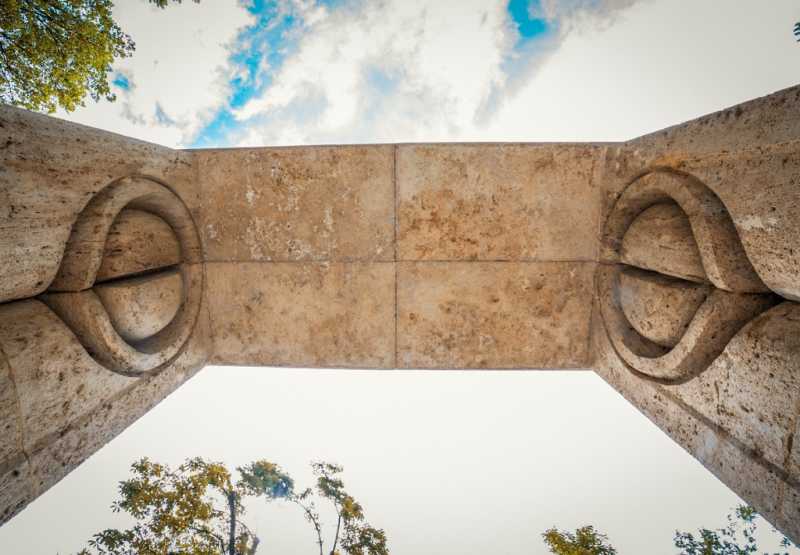
'Brancusi, the path to universality' exhibition opens at ICR Stockholm on Friday
The Romanian Cultural Institute (ICR) in Stockholm organized the event called 'Brancusi, the path to universality,' a programme dedicated to the 150th anniversary of the birth of sculptor Constantin Brancusi. The event gatherers a photo exhibition, movie screenings, a conference and a debate. According to the ICR, marking the Brancusi Year in Stockholm
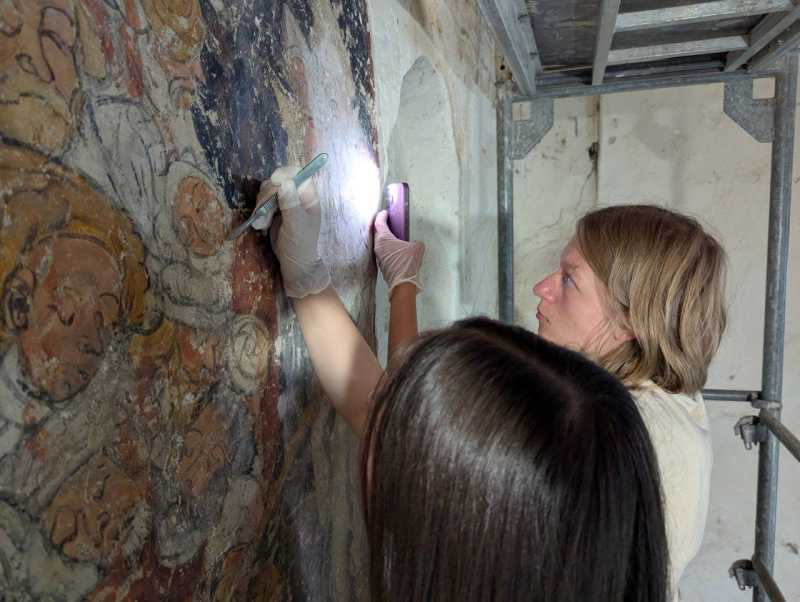
Largest medieval fresco in Transylvania, restaured with students from seven European countries
The largest medieval fresco in Transylvania, covering an area of 260 square metres, located in the village of Smig, Alma commune, is being restored with the support of students from seven European countries, the Sibiu County Council announced on its Facebook page on Thursday. 'For the first time this year, we will have three summer schools for students tra
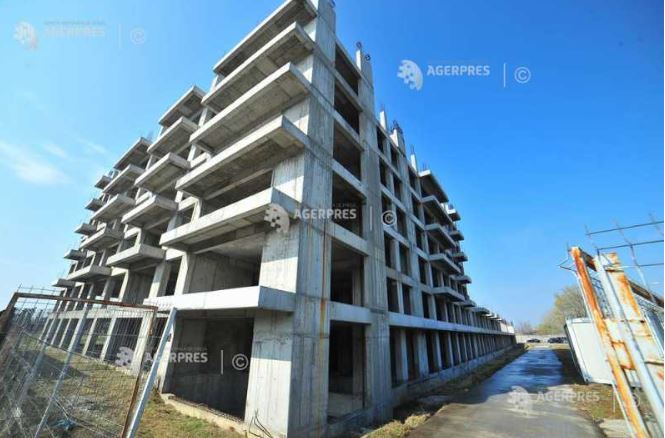
Construction permits for residential buildings down 4.8% in Q1
The number of construction permits issued for residential buildings fell by 4.8% in the first quarter to 7,266 compared with the same period last year, according to the National Institute of Statistics (INS) data published on Thursday. Declines were recorded in the following development regions: West (-176 permits), South-East (-105), North-West (-36), Centre
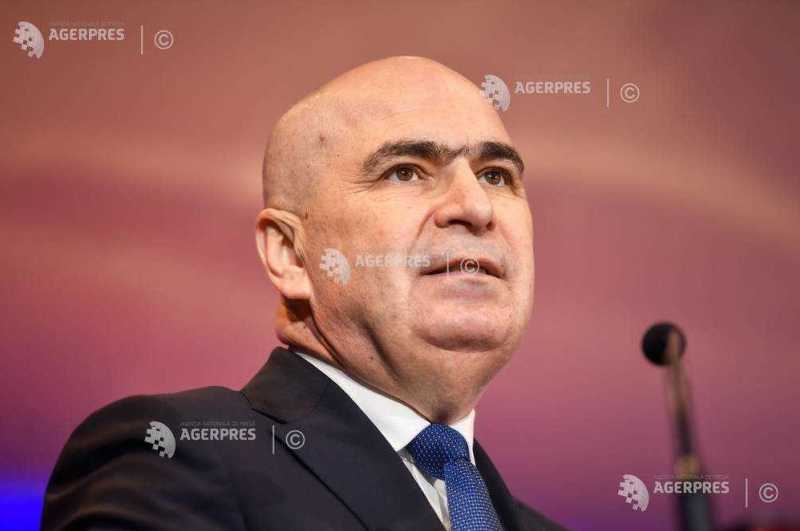
PM Bolojan on new parliamentary group to back minority Government: It is possible
Prime Minister Ilie Bolojan said on Wednesday, on TVR national television station, when asked about the possibility of a new group emerging in Parliament to support a minority Government, that he does not rule this out, underscoring that 'it is certain that many MPs who entered on various lists are beginning to understand Romania's problems.' '

President Dan: I'm convinced the pro-Western direction will continue even if motion of no confidence passes
AGERPRES special correspondent to Dubrovnik Oana Ghita reports: President Nicusor Dan stated on Wednesday that he is convinced that, in the event the motion of no confidence passes, the outcome will be a continuation of Romania's pro-Western direction. The president was asked by journalists whether he is considering the adoption of the motion of no confide

President Dan: In these turbulent times, we must be more united in promoting national interests
The moral strength of war veterans is a benchmark which brings us to mind that what unites us as a people matters more than any passing crisis, and in these turbulent times we must be more united in promoting national interests and values, President NicuSor Dan said on Wednesday in a message on the Day of War Veterans. 'Our thoughts of respect and gratitud
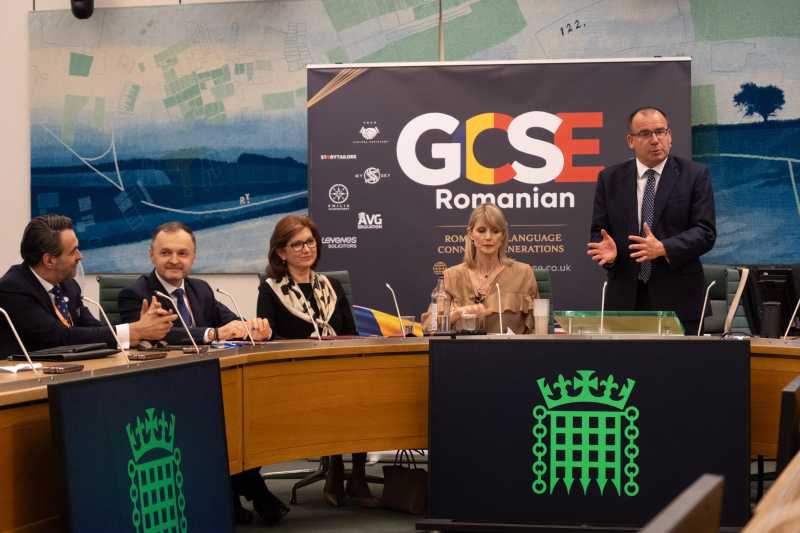
Conference at UK Parliament on introducing Romanian as a GCSE exam option
The introduction of Romanian as an option in the General Certificate of Secondary Education (GCSE) system was the focus of a conference held on Monday at the Palace of Westminster, amid growing recognition of Romanian as the second most widely spoken foreign language in England and Wales, the Embassy of Romania in the United Kingdom said in a Facebook post on Tuesday.
Weather administration to install nine new autonomous automatic weather stations to faster identify dangerous phenomena
The National Meteorological Administration (ANM) is set to install nine new autonomous automatic weather stations in Buzau County, thus increasing the number of meteorological measurement points to 14, with the aim of more rapidly identifying potentially dangerous weather phenomena. According to ANM, the financing contract has been signed for the project '

PNL first deputy chairman: No split; but a corrupt system versus a reformist movement
First deputy chairman of the National Liberal Party, Ciprian Ciucu, said that Romania does not face a real split within the pro-European camp, but rather a confrontation between what he described as a 'corrupt system' seeking to preserve its privileges and a reformist movement trying to keep the country afloat. 'We do not have a 'split'. We

Romanian cinema, at SEEfest in Los Angeles; Ioana Mischie and Daniela Nane participating
Romanian cinema will be present, starting on Wednesday and running until 6 May, at the 21st edition of the South-East European Film Festival in Los Angeles (SEEfest), one of the most important events in the United States dedicated to film productions from this region. This year's edition gives special attention to Romanian film, through a curated selection

Motion of no confidence against PM Bolojan submitted to Parliament
The parliamentary groups of PSD (Social Democratic Party), AUR (Alliance for the Union of Romania) and PACE - Intai Romania (Romania First) tabled a motion of no confidence against Prime Minister Ilie Bolojan in Parliament on Tuesday. The motion is signed by 251 MPs, AUR leader George Simion said. Former Social Democratic Deputy Prime Minister M