

CONTEMPORARY AUTHORS/Cecilia Stefanescu: An author needs freedom
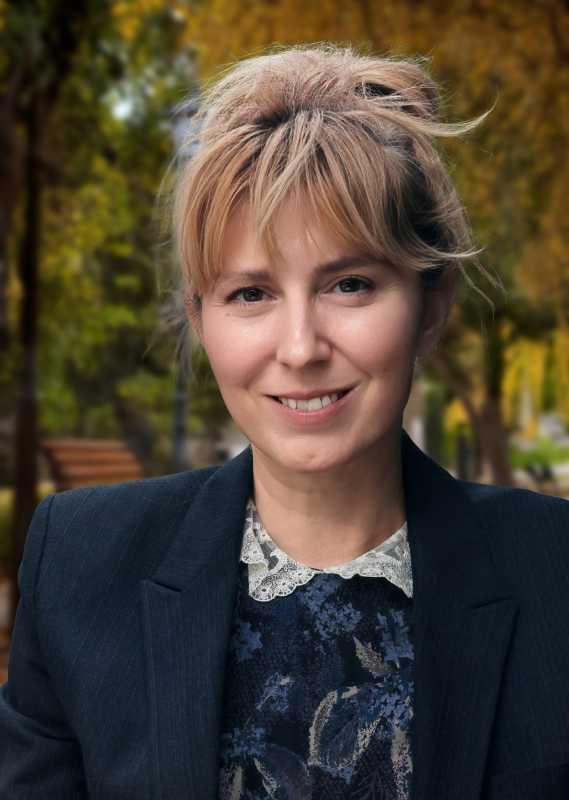
Film director, screenwriter and novelist Cecilia Stefanescu made her feature film debut with Un loc sigur ('A Safe Place'), released in cinemas across Romania in March 2026. The project, which took her ten years to complete, is built around themes such as violence, migration and the fragility of relationships.
Starring Marina Palii in the lead role, the film premiered in the First Feature competition at the Tallinn Black Nights Film Festival 2025. The story follows the interaction between four friends - two couples - on a seaside holiday in a village in Bulgaria at the end of the season, whose dynamic is disrupted by the appearance of a mysterious man.
In an interview with AGERPRES, Cecilia Stefanescu discusses the film's themes, the challenges of production and the differences between literary writing and screenwriting.
Cecilia Stefanescu is the author of the novel 'Legaturi bolnavicioase'/'Love Sick' (2002), which sparked numerous debates upon its release due to its LGBT-related topic. In 2005, the book was included in Les Belles Etrangères programme dedicated to Romania and translated into French, and was later adapted for the screen by Tudor Giurgiu. The film was selected for the 'Panorama' section of the Berlin International Film Festival and distributed in over 20 countries.
AGERPRES: When did you start writing this screenplay, and what inspired it?
Cecilia Stefanescu: It all started a long time ago, from my need to understand the world I live in and to find my place in it. There was a time when I felt that I did have some answers, yet I felt lost, because the answers I had reached as a novelist seemed rather to close off new perspectives than to open them.
First of all, it stemmed from my strong need to translate into a tangible visual form something that had always existed in my mind - a complement, but also a character in its own right, which I had always carried with me while writing my literary stories or screenplays.
To be more precise, the screenplay started from a story I heard somewhere by the seaside in Greece, when a tourist arriving from the west, from Lefkada, began complaining that the tranquillity of his holiday had been disturbed by a boat full of refugees that had run aground on the beautiful turquoise beaches. I experienced that episode as though I had lived it myself.
Because, while we were sitting on terraces, in restaurants and cafés, under umbrellas or swimming in crystal-clear waters where small colourful fish brushed past our feet, some people had left their homes behind, set out to sea in fragile boats and were desperately searching for a place to shelter.
At that moment, I realised that our world - the one we inhabit - is going through change, and I felt the need to depict it as much as possible in its new realities, especially visually. And there could only be a female character at its core.
I had also noticed a rather uniform representation of female characters as constructed by male authors who have produced film and literature over time. These figures remained somewhat emblematic, removed from what I had come to know from my own perspective as a woman.
For example, one of the most powerful characters in post-revolution Romanian cinema, Mioara Avram (the protagonist of 'The Death of Mr Lazarescu', directed by Cristi Puiu, 2005 - editor's note), remains in the shadow of the dying Lazarescu, which encapsulates the paradox of female characters: they remain in the background even when they are trying to save a dying man.
AGERPRES: How different is writing a screenplay from writing a novel? How do you separate them? Do you have different rules or routines depending on the type of writing you're engaged in?
Cecilia Stefanescu: I'll answer this in reverse order: Since I began writing professionally, I've always functioned better in the morning than in the evening. Perhaps that comes from my father, who told me throughout my childhood that the best learning curve is before 3-4 p.m.
That doesn't mean I stop working once the morning is over. On the contrary, I take a break and then return to my desk. In reality, our work in what are known as artistic professions goes on continuously, and sometimes it's difficult to draw a boundary between work and private life.
Of course, things became more complicated when I became a mother and took on the responsibilities of a family. I still go to bed thinking that the next day I'll start by making myself a coffee - a habit I could never give up - and, after everyone in the house has gone about their own businesses, I'll sit down at my desk to write, read and research. That's only part of my work, however. The other part involves actual documentation, which includes fieldwork. There, the dynamics change, and often I combine the useful with the pleasant, and we all set off on a kind of pseudo-holiday during which I also do research. On other occasions I simply go on my own.
Writing a screenplay is only one stage - the first - in a much longer process, which is the making of a film. Throughout this process, depending on many unknown factors, the story can undergo alterations, changes, even distortions. As a screenwriter, you need a certain stoicism: recognising and accepting an ungrateful position, and nevertheless continue building this important structure of the film, knowing that it will only be one part and that, along the way, it may be gradually chipped away at - and sometimes, in the end, even dismantled.
I've learned, as a writer too, to apply the same principle - to view the final object, the book, as just one part of a process. Perhaps the discussion about the 'open work' has not ended. Umberto Eco tried to close the debate in favour of his own argument, but I believe that even when a work is not necessarily open - meaning it does not lend itself to an infinite number of interpretations - it still remains open to interaction with the audience, who, despite a shared understanding, will each leave with their own version once they close the book or leave the cinema.
The encounter between a work of art and each individual who sees, hears or experiences it is unique and unrepeatable. In this sense, film - being an art that brings together many people during the production stage - is the best preparation for future encounters with audiences.
In the end, every person who joins a film crew and reads the script brings their own interpretation, and what you must do as a director is convince each of them to take part in this encounter by adopting your perspective, your vision. That's something you can no longer do once the work is finished. As a writer, however, at the stage of writing, you don't have to convince anyone of anything.
AGERPRES: How difficult was it for you to change your profession? Because that is what you did when you became a film director, especially as this is a field where it seems even harder for a woman to succeed than in literature, with higher stakes and larger budgets.
Cecilia Stefanescu: As in any other profession, you pursue it when you already have it in you. We often say that doctors are heroes. In reality, they are simply people who love what they do, and for them, spending hours on end, doing night shifts, witnessing illness and death - although all of this is difficult - becomes the norm if it comes naturally to them.
And I'm not comparing film directing to medicine. In fact, I believe that comparing one profession to another is a bad, counterproductive habit in general. What I mean is that, when we choose to do something, most of the time that 'something' already exists in us. That is probably how I came to direct.
This was combined with a naturally restless and curious disposition. When I bought my first car, I didn't think about the brand or the horsepower - it was simply a vehicle that would take me to new places and make distance accessible. I've viewed both directing and writing in the same way.
It's true that, for a long time, certain professions in the arts were considered - and perhaps still are - men's professions. I don't waste my energy arguing with such a flawed premise. I believe that, as women have begun to enter this field - still timidly, but more substantially - a different working dynamic has emerged, and the notion of the author as a kind of 'God' has somewhat been abandoned, even if the idea of authorship itself remains.
However, this does not lead to a loss of authority, respect or identity - on the contrary, I think these are now emphasised in different ways.
When I was filming, I counted the number of women on set, and realised there were very few of us. Someone from the crew even told me they weren't used to working with women directors. We still have a lot of ground to make up, and I believe that for women in this field it is much harder - they always have to prove themselves twice over.
Labels tend to stick more easily to women; you have to make twice the effort to prove anything you set out to do, regardless of your achievements.
AGERPRES: How long did it take, from the very beginning, to make this film, and what was the most difficult stage?
Cecilia Stefanescu: It took ten years. The most difficult part was waiting. Those ten years primarily meant submitting the script multiple times, over several years, to the screenplay competition organised by the CNC (Romania's Film Centre). While there is still very little funding allocated to cinema, with everyone struggling to build a budget for a film so that it can be produced in reasonably decent conditions and remain competitive on international markets, in each funding round the money are allocated to only a limited number of films.
So there is this option of giving money to more films but in smaller amounts - only that it would be as if you haven't given them anything at all - or give larger sums to a smaller number of projects. However, still, when I say 'larger sums', it doesn't mean that directors who set out to make films are basking in comfort. Very often we finish a film exhausted, not only physically but psychologically as well.
I've said it many times: I believe we should seriously talk not only about equal opportunities and gender quotas in cinema, and in the arts in general, but also about mental health, because many people working in this field push themselves to the point of exhaustion. What still amazes me is the state's blindness towards the entire cultural sector, which provides an invaluable service in representing the country abroad, but is also a form of education - perhaps one of the most pleasant and effective.
AGERPRES: Besides this film, which is your first feature-length production, you had previously directed three short films. Did you feel the same level of emotion now, making your feature debut, as you did when you made your first short film, 'Ferdinand 13'?
Cecilia Stefanescu: Every time I've set out to make a film, I've started with an extremely positive energy. That doesn't mean that this energy doesn't also include a tremendous amount of anxiety - the fear of not being able to carry the film through to the end, for all sorts of practical reasons. It doesn't mean there aren't moments of crisis, even significant ones, but these are tied to the physical and mental effort of functioning at maximum capacity and to the chance of seeing everyone align with you at that same level.
At one point, long before filming began, someone told me that the importance the film has for the director is not shared by anyone else in the team. I understood that, but I tried to make my own state of mind contagious on set. In a strange way, you can sense when things are going well right from the beginning.
With 'Ferdinand 13', my first short film, I started with a very small crew who worked voluntarily for me. I'm still grateful to them today, because without those people I wouldn't have had the chance to work later on. And I felt that even if any of them had doubts, they didn't show it to me - or at least I didn't notice it.
With 'Un loc sigur' ('A Safe Place'), I had the same kind of 'blindness', probably driven by the intense need I had built up inside me to make the film. But I also know there were moments of great tension. For example, we had a night shoot, there was a power outage in the Bulgarian village where we were filming, and we had to wait until we managed to get in touch with someone who could handle the situation. I was watching time pass without being able to film - I couldn't afford to lose even ten minutes, let alone an entire night - and in that moment I felt all my strength fading away.
I'm not a mystical person, but then I physically felt that the energy I had in the beginning was not there anymore. It was an important shot in the scene. But the crew held their ground, and when the power came back, we shot three or four takes, and we were lucky - thanks also to an extraordinary effort - that one of them was what we needed.
AGERPRES: The focus of the film is on a middle-class couple in Romania going through a crisis, in which sense the 'safe place' in the title - which is not safe at all - seems to be, first and foremost, the institution of marriage. In other words, the film is essentially about domestic violence, which takes many forms and is a huge problem in Romania. Were you always interested in this theme?
Cecilia Stefanescu: Beyond violence, the film speaks about a mismatch - about the inadequacy of this woman at the centre of my story in relation to the world she lives in. This inadequacy gives her a kind of restlessness that is incompatible with everyday life. And that makes you wonder whether she is ultimately the one who is inadequate, or whether the world around her is completely upside down. The violence in the film is the result of this incompatibility between the characters.
But yes, I was interested in violence for a long time. Violence comes with fear, and my generation grew up in a violent world, where private life concealed even more violence - verbal, physical, emotional, economic. We were raised in a culture of fear. Of course, this is an age-old form of education, but during the communist period, and generally in extreme political periods, fear is the main instrument of constraint.
If you want people not to ask questions, not to search, not to inquire, not to challenge certain certainties, rules, habits, prejudices - fill their minds with fear, paralyse them, and you will keep them under control. Fear of tomorrow, of freedom, of helplessness, of strangers, and so on. In our neighbourhood, we knew of families where there was physical abuse, violence, beatings, arguments. Moreover, communism also had this perverse component that emphasised the importance of the family unit, even though that 'importance' actually meant concealing unbearable truths. Divorce was a social stigma and could even affect your professional life.
Later on, constraints became more economic, or simply social or emotional. Women who were abused by their partners, especially if they had children, found it very difficult to leave home because they had nowhere to go - there were not, and still are not, enough centres to accommodate victims of domestic abuse. Then there's the law: although we do have such a law, it does not adequately protect victims, and we have seen - and will continue to see - extreme acts of domestic violence directed against women. But the solution lies in education, and one form of education - perhaps the most complex, in my view - is culture, especially in the form of narrative arts such as literature, cinema, opera or theatre.
AGERPRES: The dramas facing the middle class have been the topic of many Romanian films since the 2000s, and in this context what 'Un loc sigur' ('A Safe Place') primarily brings that is new is the centrality of the female character. However, the protagonist, Lucia, does not seem entirely free of 'fault' herself in this film. Was this intentional? I'm referring to the idea of exposing the double standard generally applied to men and women.
Cecilia Stefanescu: Leaving aside now the usefulness of socially and educationally oriented discussions sparked by works of art, such as my film, we are first and foremost creating an artistic object, and through it we want to express certain standpoints, our perspective as authors - standpoints that carry the value of observation, truth, or personal questioning.
And when these standpoints are articulated in the form of a book or a film or anything else, they meet the ears, eyes and senses of the audience, and a dialogue emerges, which in turn produces a revelation, greater or smaller.
Lucia's 'guilt' stems from my need to build a complex character - one that cannot be easily or fully read, one that must be pieced together from fragments, from substitutes for truth, and in which each of us can project ourselves, not only through her specific situation, but also through other situations that we have experienced or might experience, where honesty, morality, loyalty, steadfastness, fidelity, truth, and all the other moral values circulated by our society are put to the test.
At the same time, neither as a viewer, and even less as an author, am I fond of purely 'good' or purely 'bad' characters. As in life, a character can be both good and bad - not only in alternation, but even simultaneously. I am far more interested in paradox, which raises questions and generates doubt, than in certainty.
At the same time, I am interested in challenging social prejudices. In the case of this story, in which a woman who is both a wife and a mother has an extramarital relationship, society - no matter how evolved or progressive it claims to be (and Romanian society, though not only Romanian society, still has a great deal of ground to cover in this respect) - is unforgiving and applies completely different standards from those applied to a man in the same situation. In short, in our society, in our culture - ironically, a culture built on stories like Tristan and Isolde - women still carry their anxieties and questions like stigmas.
AGERPRES: Bulgaria at the end of the season is not exactly the ideal holiday for Romania's middle class, which suggests that things are not quite as they seem at first glance in the film. Beyond that, however, it seems to me that, given their complicated historical relationship and their constant association today within the EU, Bulgaria and Romania also reflect, to some extent, the power dynamics within the main couple. Am I overinterpreting?
Cecilia Stefanescu: Not at all. It's also about a lack of attention from our part with respect to our neighbours. This year Bulgaria is the guest of honour at Bookfest, and perhaps we should ask ourselves how many Bulgarian writers or filmmakers we actually know.
On the other hand, it seems to me that Bulgaria not only knows us much better, but also has a different attitude towards Romanian culture. I would even venture to predict that this attitude will give it a considerable advantage, on conditions that other factors too will work in favour of the Bulgarian artists. Our lack of attention and interest, inseparably linked to a superiority complex (which itself stems from an inferiority complex towards cultures that are stronger economically, linguistically and geopolitically), leads us to cultivate a kind of toxicity towards our own culture - either we ignore it completely or we glorify it in a way that is entirely counterproductive.
AGERPRES: At the same time, through its proximity to Greece and Turkey, Bulgaria is also a space crossed by today's refugees - those fleeing wars in the Middle East or ecological disasters. Was this a layer you had in mind from the beginning, when you started writing the script, or did you add this theme along the way?
Cecilia Stefanescu: It was there from the beginning - it was actually the starting point of the script. I came across an interpretation somewhere suggesting that the fact that the group of refugees is not given a specific identity is because I waited a long time to make the film, during which period the 'face' of the refugee kept changing in the world. I disagree with that, and I was taken aback by such interpretation. From the very beginning, the refugees did not have a specific identity due to an ethical restraint I had as a screenwriter. In my film, the people who arrive on the Bulgarian shores are always in the back - in the midground or even in the background. It is not their story, and my characters do not approach them or interact with them, which also led me to keep the camera at a distance.
I didn't want myself, as the author, or us as viewers, to know more about them than my characters did - that would have been completely unethical. I have always been irritated by that kind of suspense as a narrative technique in films where I, sitting in the audience, know more than the character on screen. I tried, as much as possible, to maintain an ethics of the story and of my relationship to my characters.
But in reality, we as a society remain just as distant - not only from Syrian, Ukrainian or Palestinian refugees, but more recently even from immigrant communities who have come here to work. We mobilise at most in moments of acute political crisis, such as immediately after the invasion of Ukraine, but afterwards we return to our own lives, and at times we turn our gaze towards the foreigner who has sought refuge here, identifying them as a scapegoat for our own problems - if we recall the rhetoric against the aid given by the Romanian state to Ukrainian refugees.
That is why the collective character of the refugees remains foreign and distant - and not because I waited ten years to make the film. And although the idea for the script began with the event I mentioned earlier, since I knew from the outset that my film would not be about them, I chose, for strictly ethical and narrative reasons, to keep the refugees unknown, just as they remain unknown to my central characters. I had hoped that the information about those ten years would draw attention instead to the problems of the film funding system; I never imagined it would become an occasion for speculation about an author's ethical flexibility in adapting to the times.
AGERPRES: On the other hand, the idea of the end of the season also somewhat evokes the idea of the end of the world, in the context of the many crises we are currently facing. How much does Cecilia Stefanescu feel this anxiety that we have all been learning to live with for years now?
Cecilia Stefanescu: I feel it very strongly. But not in the biblical sense of the apocalypse - rather in the sense of Götterdämmerung, the twilight of a cultural and political era, an end of the world as we once knew it. We cannot yet see what will come next - I think it is still too early - but not only the end of the season, the places themselves, from the moment I discovered them, spoke to me of an edge of the world, a kind of lost paradise fallen into decay.
AGERPRES: Who are your favourite film directors? Have they changed over time? A question to move us slightly away from the heavier political themes.
Cecilia Stefanescu: I remain deeply attached to Eric Rohmer, probably the director who has influenced me most. But I also very much like Claire Denis, Barbara Loden, some of Jarmusch's films - though not all - Miguel Gomes, Apichatpong Weerasethakul, Jia Zhang-ke. Kiarostami is another director who moves me profoundly, though mainly for his Iranian films, not his later work.
More recently, I greatly admired Georgian director Alexandre Koberidze's film 'Dry Leaf'. He shot it by only using an old Sony Ericsson phone from around 2005, yet he still managed to achieve a great cinematic effect with it. And I also saw a documentary based on home footage, featuring the writer Annie Ernaux, 'The Super-8 Years', about the flourishing - but also the loss - of certain ideals of the Western left that moved me deeply. It was also shoot by using modest technology.
From Romania, I would mention Mircea Daneliuc with 'Proba de microfon'/'Microphone Test', Pintilie with 'Balanta'/'The Oak', Tatos with 'Secvente'/'Sequences', and Iosif Demian. I also like 'Aurora' and 'Malmkrog' by Cristi Puiu, 'Metabolism' and 'La Gomera' by Corneliu Porumboiu. I appreciate Ana Lungu's work; I enjoyed 'Ivana the Terrible' by Ivana Mladenovich and the debut of Sara Tsorakidis. I was also deeply impressed by Catlina Tesar's and Dana Bunescu's documentary, 'The Chalice. Of Sons and Daughters'.
AGERPRES: Let us return now to your first profession, that of writer. You made your debut in 2002 (Paralela 45) with the novel 'Legaturi bolnavicioase' ('Love Sick'), which caused quite a stir at the time, particularly because it ventured into LGBT themes. How do you view its reception now? How do you think the same novel would be received if it were published today? Would the reception be very different?
Cecilia Stefanescu: I think it would spark different discussions today. That novel was written with a great deal of freedom and love for literature. I wrote it while I was at university, during my studies - a truly privileged time when all I did was read extensively, absorb diverse information about literature, visual art, and cinema, and begin my path towards professional writing.
I wrote it without fear, without preconceived ideas, with the courage and searching of a very young person in a world full of deep upheavals. I think it had a good reception and a great deal of luck - I benefited from wide exposure, especially because it was translated, and in that way I travelled with the book to other countries.
Today, the reception would certainly be different, both in a positive and in a negative sense. An author needs freedom, and in a strange way, back then there was a lack of constraints that made the landscape - although patriarchal and full of inertia, dominated largely by voices canonised through conservative means - still a good territory for exploration. Let no one be mistaken: freedom also comes with a great deal of responsibility and a considerable cost.
Paradoxically, today, although we seem to live in a more mentally educated society, I believe my debut novel would encounter more obtuse reactions.
AGERPRES: This novel, 'Legaturi bolnavicioase' / 'Love Sick', was also made into a film in 2006, directed by Tudor Giurgiu. You also collaborated with Razvan Radulescu on writing the screenplay. Was this the moment when you began to want to move into directing? How was the experience itself? Was it the first screenplay you had written?
Cecilia Stefanescu: Yes, the screenplay for 'Legaturi...' was also my debut as a screenwriter. At first I wrote a few drafts alone, but it was alienating, and I felt the difficulty coming from the novel's main character, who had been built on a type of direct confession at the edge of credibility - which was hard to translate into film.
Tudor had his own ideas. So I suggested bringing in Razvan and Cristi (Puiu), who were working together at the time and whom I already knew. I had known Razvan since high school; he was a few years older than me. We had a meeting as a group of four, but Cristi eventually withdrew to make his own films, and I remained only with Razvan. That was most likely the actual moment when I first took directing into consideration, although even earlier, while hanging up with my group at the Faculty of Letters - which included Sorin Ghergut, Teo Bobe, Ioana Nicolaie, Ana Maria Sandu, Marius Ianus, Mircea Cartarescu, the master figure there, and others - I was the one who introduced the video camera and photography into the writers' group. I have always been interested in both languages, the literary and the visual.
AGERPRES: The film 'Legaturi bolnavicioase' was a major event at the time (2006), also because film adaptations of novels written by contemporary Romanian authors were virtually non-existent. Even now, there are not many. What did that adaptation mean to you at the time?
Cecilia Stefanescu: In a way, the adaptation of my debut book both diverted and shortened my path toward cinema. I was not prepared for it, nor had I set out to adapt it myself. For me, at that time, it meant above all a great deal of work, meetings with new people, new ideas. I still believe adaptations are not meant for every director, nor for every novel or prose work. But it is the director who ultimately has the answer.
Often, writers who reach adaptations enter this path with perhaps distorted expectations. The most accurate way to understand it is as an improbable encounter between two worlds. It is like seeing Earth recently from the far side of the Moon. No matter how fascinating the images, the discoveries, the journey, they are ultimately two distinct planets that refuse to host one another.
AGERPRES: I read a review of your 2008 novel 'Intrarea soarelui'/'Sun Alley' (Polirom), in which the author reproached a kind of 'cinematic sensationalism' in some scenes, and I also read a recent review of the film 'Un loc sigur' in which the critic, on the contrary, reproached a cultivation of a certain 'literary prestige' through the strong themes proposed. Do you feel a bit caught between literature and film, like between Scylla and Charybdis, or is it more of a continuous, fluid experience?
Cecilia Stefanescu: With this kind of commentary, I feel more as if I'm in a rather predictable film. And I feel wronged. Unfortunately, the easiest thing is to say about an author who works in multiple languages that you 'feel' the other language in their art. If there is anything literary in my film, it is the presence in the set design of two books - one whose cover we can see, titled 'Nu vedeti nimic'/'You See Nothing' by Daniel Arasse, and the second whose cover we do not see, which I will keep to myself.
Often, these quickly used terms such as 'cinematic' in relation to a book or 'literary' in relation to a film reveal a kind of uncertainty, which the viewer - who is assumed to be trained - may feel when facing an artistic object they don't quite know how to approach or categorise. These are props used to express unknowns by translating them into something familiar. Often, the terms don't even hold up: a book is called 'cinematic' when it contains vivid visual descriptions, but I can say that the 'cinematic quality' of a book does not lie in the images it describes, but in its dramatic potential, its construction, its actions, its temporality and therefore its spatiality. Otherwise, poetry would be the most cinematic form of text. That does not mean it cannot become film in the eyes and hands of a talented director.
As for the 'robustness' of my themes, I contradict the critic: it does not come from literature, but from a modern approach to art. Today, with a few exceptions, this has disappeared, leaving room for a kind of formalism at screenplay level. The stories told in most valued films today are schematic, easy to understand, and preferably either directly critical of society or built as neat fiction with clearly defined characters and a clear division between good and evil, ending, ideally, with an optimistic, sunny, empowering message.
Literature, being an older art form, has had time to move beyond these attempts and reach - without necessarily limiting itself to them - characters and situations that do not immediately translate the ideological or political positions of their authors. That, I believe, is where this perception comes from: from the ambiguity of my character. But this situation can also be found in other contemporary Romanian and international filmmakers, although not many.
This modernism has to do with how the author relates to the purpose of their art and its echoes not only in space but also in time. My theory is that even postmodern authors who preached and 'made' postmodernism still had a modernist formation, which made them take a 'serious' stance toward their art. The peak of postmodernism - as it was theorized, and also its end - only happens now, in posthumanism, when canons are built - or dismantled - on social networks, when the center has dissolved into an infinity of micro-centers, as Lyotard once imagined. Every social media account is today a centre of a world while simultaneously a follower of others, where there is a kind of dialectical pragmatism in art, and where we feel that anyone can become an author, forgetting the second part - that only the brave can become great authors, to be postmodern and quote a famous animation.
AGERPRES: What comes next for Cecilia Stefanescu, a book or a film? What will it be about, if it is not a secret?
Cecilia Stefanescu: I hope both will follow. I have finished a novel I have been working on throughout this entire period, which I had to interrupt at some point because an unfortunate event occurred involving the woman who had inspired the story of the novel - namely, she died.
The novel initially began as a story about old age, but in the meantime it became a different story. It is about the journey through time and space of a woman who has crossed several historical eras. I have also finished writing the screenplay for my next film and I hope I will be able to make it, but at the moment I am looking for a producer. In contrast to the novel, the film is about a woman at the beginning of her life, but who lives in a world that constantly puts her life in danger. It is the Romanian world of localities whose connections to one another have been broken - it is a false road movie, let's say.
CECILIA STEFANESCU was born in 1975 in Bucharest. She was part of the group of 12 Romanian writers selected for Les Belles Etrangeres, organised by the Centre National du Livre in November 2005 in Paris. She has worked in journalism and publishing, taught seminars in literary theory at the Faculty of Letters of the University of Bucharest, and worked as a translator.
'Legaturi bolnavicioase' (2002, 2005, 2006) is her debut novel. The novel was translated into French and published by Phebus in 2006, translated by Laure Hinckel under the title 'Liaisons morbides', into Italian by Nikita in the translation of Anita Bernacchia and Maria Luisa Lombrado, and into Polish by Green Gallery, translated by Zdzislaw Hryhorowicz.
'Legaturi bolnavicioase' was also adapted into a film directed by Tudor Giurgiu, with a screenplay written by the author herself. It was selected in the 'Panorama' section of the Berlin International Film Festival and was sold in more than 20 countries.
Cecilia Stefanescu also published another novel 'Intrarea Soarelui' (2008), from which two excerpts appeared in the anthologies 'Les Belles Etrangeres. Douze ecrivains roumains' (L'Inventaire, 2005) and 'Des Soleils Differents' (L'Inventaire, 2005). AGERPRES (RO, EN - writing by: Cristina Zaharia)
The content of the www.agerpres.ro website has the exclusive purpose of public informing.
All the information published on this website by AGERPRES is protected by relevant legal dispositions.
It is forbidden to copy, reproduce, recompile, decompile, distribute, publish, display, modify, create derived components or products or full services, as well as any exploitation of the site's content.
Details in the section Terms of Use. If you are interested in picking up AGERPRES news items, please contact the Marketing Department – marketing@agerpres.ro.
The use of the Comments section entails your obligation to respect the AGERPRES terms and conditions in regards to the publishing of comments on the www.agerpres.ro.
Other news in category
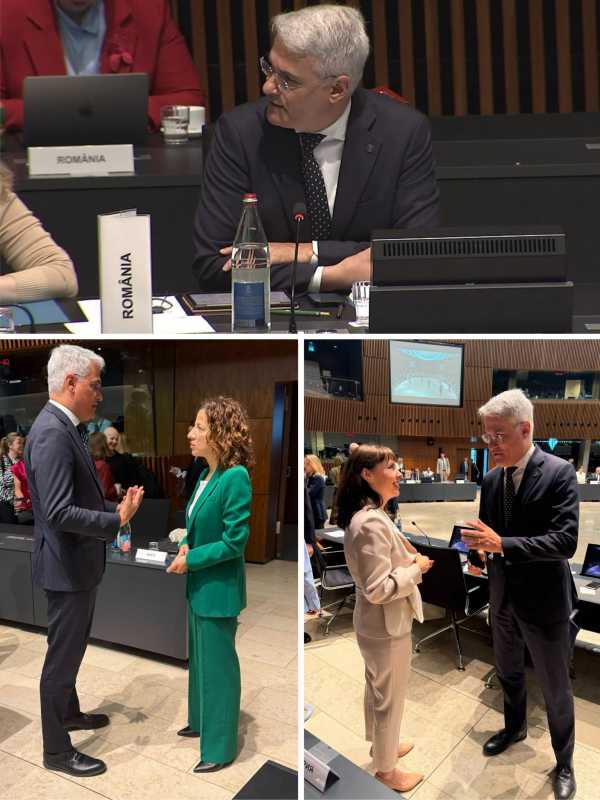
Social Europe must be a Europe of work, dignity and competitiveness (InvestMin Pislaru)
Social Europe must be, at the same time, a Europe of work, dignity and competitiveness, considers the interim Minister of Investments and European Projects, Dragos Pislaru. 'Today I represented Romania at the EPSCO Council meeting, dedicated to employment, social policies and housing, which took place in Luxembourg and was chaired by Cyprus, with the parti

Israeli President Isaac Herzog meets leaders of Romania's Parliament, addresses joint plenary
Israeli President Isaac Herzog, on an official visit to Romania, was in Parliament on Monday, where he met the heads of the two Chambers - Mircea Abrudean and Sorin Grindeanu - and delivered an address to the joint plenary. In talks with Senate President Mircea Abrudean, discussions focused on strengthening Romania - Israel relations. Abrudean underscored Roma

Moody's warns that political uncertainty may affect fiscal consolidation (Finance Ministry)
The major economic stake these days is avoiding a downgrade of the country's rating, Minister of Finance, Alexandru Nazare announced after, at the end of last week, the rating agency Moody's drew attention to the fact that the prolonged political uncertainty and the lack of a functional parliamentary majority may put pressure on the fiscal consolidation process and o

Museum dedicated to Cardinal Iuliu Hossu opens in Cluj-Napoca's Cathedral of 20th Century Martyrs and Confessors
Major Archbishop Claudiu Lucian Pop of the Romanian Greek-Catholic Church attended on Monday the inauguration of the 'Blessed Cardinal Iuliu Hossu' Museum in Cluj-Napoca, located inside the Cathedral of the 20th Century Martyrs and Confessors in Cipariu Square. The inauguration followed the Arch-hierarchical Divine Liturgy celebrated on the feast of Sa
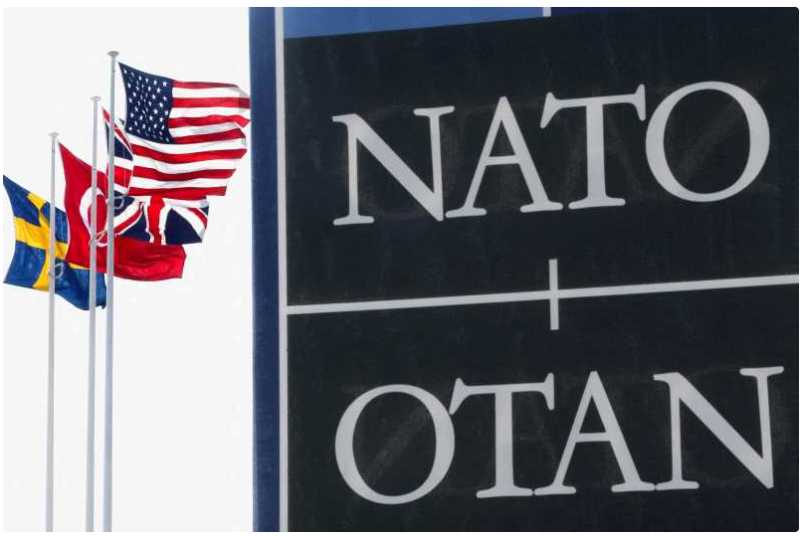
NATO Summit in Ankara - opportunity to remind allies of situation in Black Sea region (CSAT)
The NATO Summit in Ankara represents an opportunity to bring to the attention of allies at the highest level the complicated situation in the Black Sea region and the consequences that Russian aggression has at a regional level and on Romania, through incidents such as those with drones, reads a press release from the Presidential Administration sent on Monday, after the mee
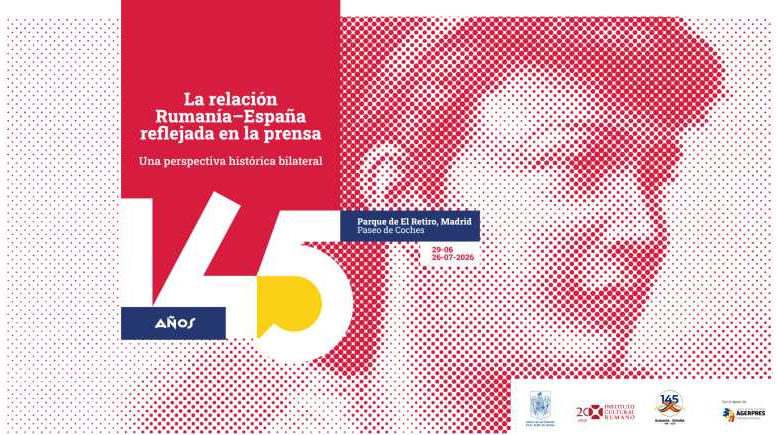
Exhibition dedicated to Romania - Spain historic ties reflected in the press opens in Madrid's El Retiro Park
The Embassy of Romania in the Kingdom of Spain and the Romanian Cultural Institute in Madrid, with the support of AGERPRES National News Agency, are organising the exhibition titled 'The Romania - Spain Relationship Reflected in the Press: A Bilateral Historical Perspective', open to the public from June 29 to July 26 on the Paseo de Coches avenue in El Retiro Park,
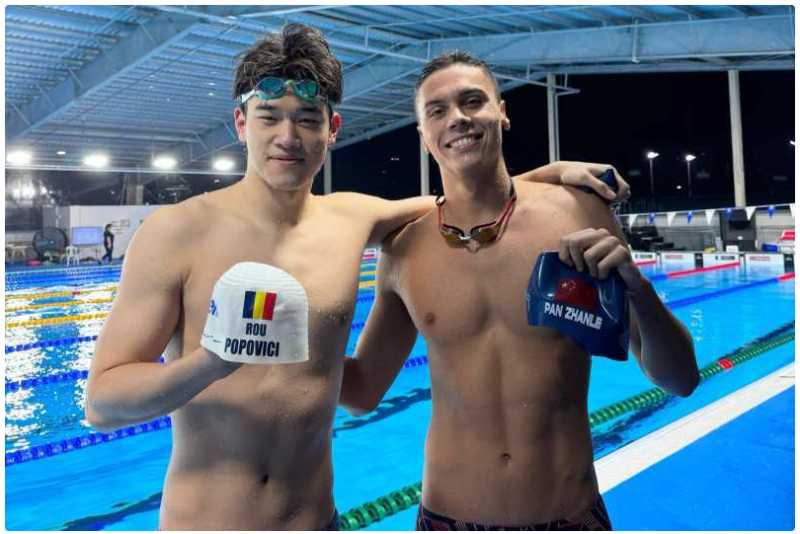
China's Pan Zhanle joins David Popovici for training camp in Romania
Olympic swimming champion David Popovici announced on Monday on his Facebook page that he will train in Romania alongside Pan Zhanle, one of the world's top swimmers and the holder of the 100-metre freestyle world record. Popovici is convinced the training camp will provide an important exchange of experience for both athletes. 'I am hap
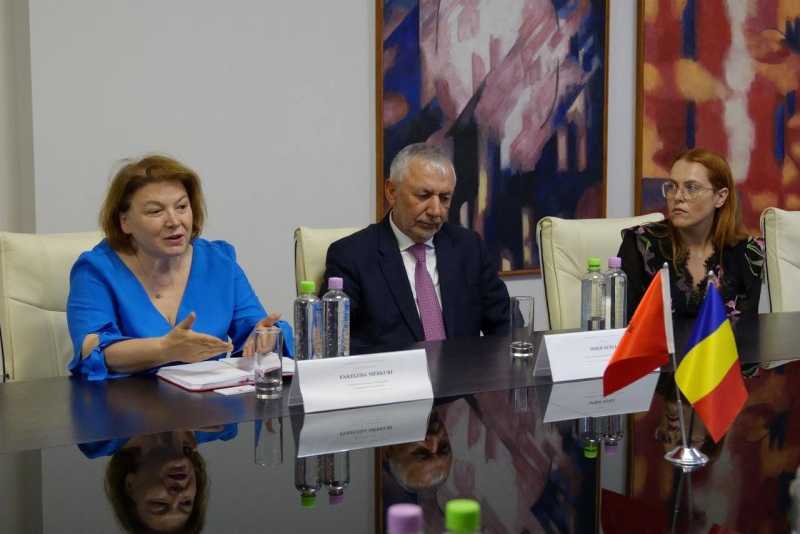
Constanta: Albanian Ambassador to Romania, talks with representatives of local authorities about economic cooperation opportunities
The Ambassador of the Republic of Albania to Romania, Enkeleda Merkuri, discussed on Monday with representatives of the administration of the county and municipality of Constanta about cooperation opportunities in various fields of activity, while highlighting the contribution of the Albanian community to the economic and cultural life of Constanta. According
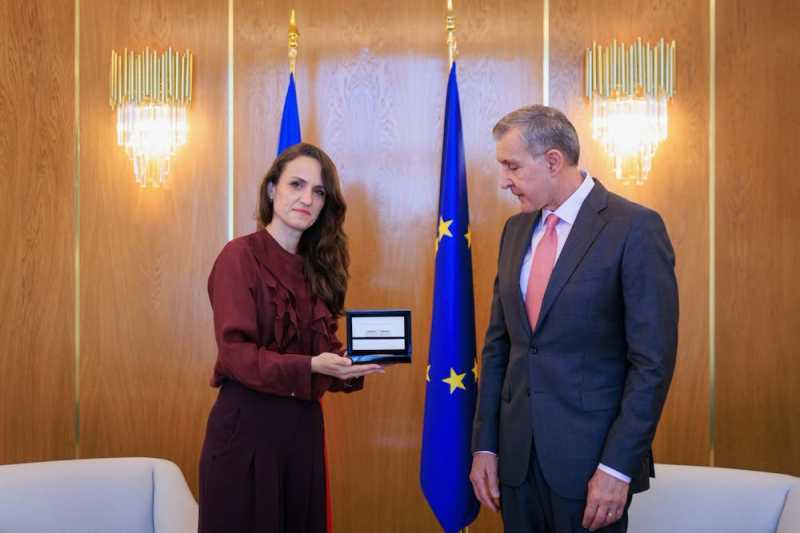
Prince Radu, meetings with ForMin Toiu and DefMin Mirută
Prince Radu met on Monday with the interim ministers of Foreign Affairs, Oana Toiu, and Defense, Radu Miruta, the discussions focused on the public actions of the Royal Family in the second half of 2026, to strengthen our country's position within the European Union and NATO. 'On behalf of His Majesty, Prince Radu held a dialogue with high dignitaries
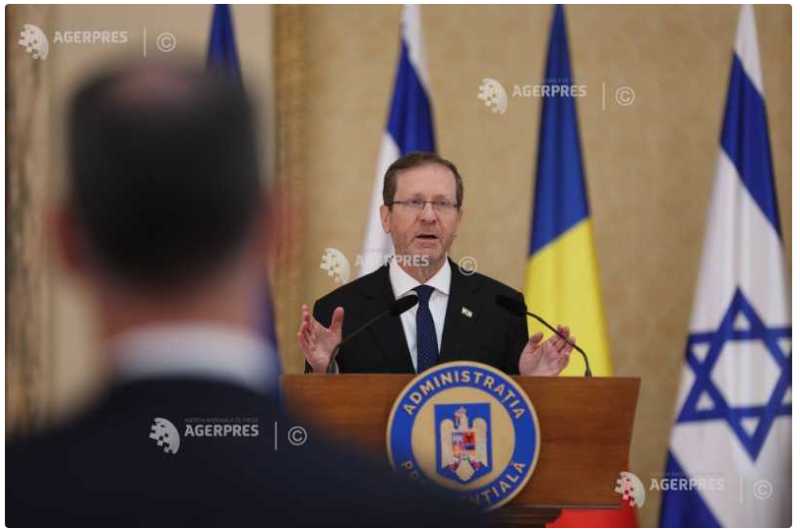
Isaac Herzog: Israel and Romania are not only partners but also friends
Israel and Romania are not only partners but also friends, Israeli President Isaac Herzog said on Monday during a joint press conference with Romanian President Nicusor Dan at the Cotroceni Presidential Palace. He said that his state visit represented a symbol of the special bond between the two nations, which he noted has roots in centuries of Jewish history
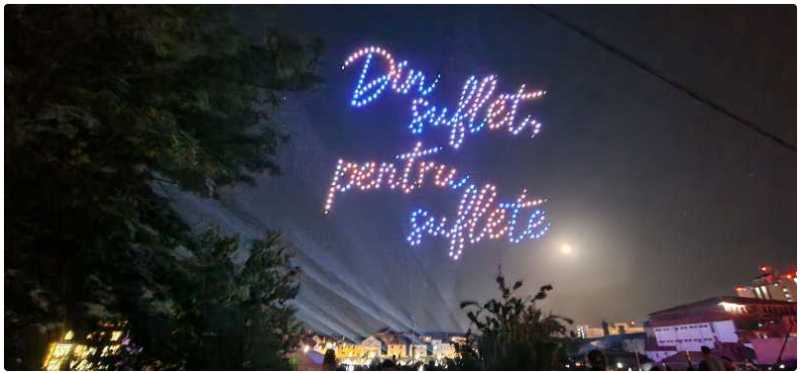
FITS 2026/ Multimedia show with over 400 drones attracts thousands of spectators
A multimedia show that closed on Sunday night the 33rd edition of the Sibiu International Theatre Festival (FITS) was the most complex so far in the city, with 420 drones synchronised with lights, music and stagecraft, gathering for a quarter of an hour thousands of Sibiu residents and visitors around the Radu Stanca National Theatre House in the city, show official Madalin
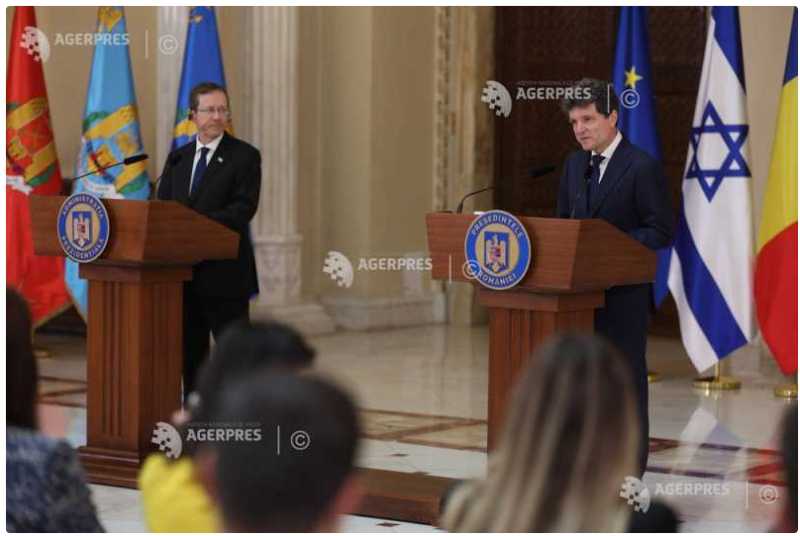
UPDATE/President Dan: The Romania-Israel relationship is strong at a political, economic, human level
The relationship between Romania and Israel is strong at the political, economic and human level, President Nicusor Dan said on Monday at a joint news conference with visiting Israeli President Isaac Herzog. He underlined the historical character of this relationship, emphasising that 'a binder is the community of Israelis who are originally from Romania,
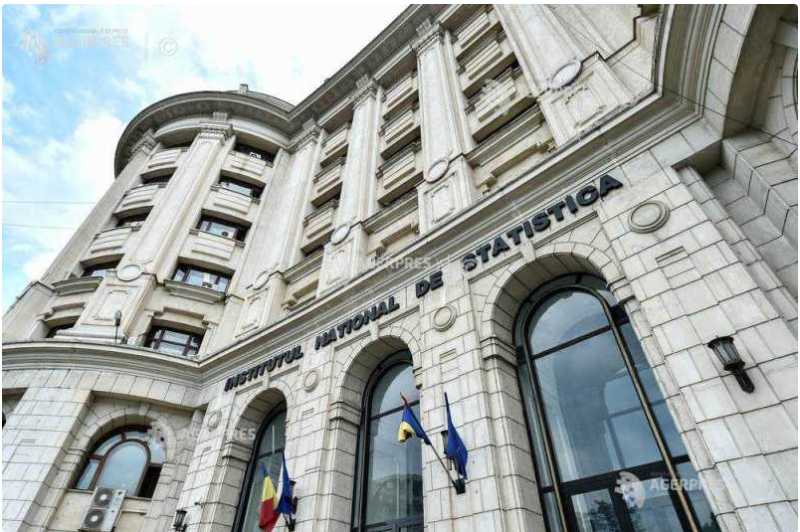
Number of people living in poverty down 3.5% in 2025 (statistics)
The number of people living in poverty in Romania stood at 3.468 million in 2025, down 3.5% from the previous year, while the at-risk-of-poverty rate (AROP) was 18.4%, 0.6 percentage points lower than the level reported a year earlier, according to data the National Institute of Statistics (INS) published on Monday. According to the institute, the poverty rate

President Dan welcomes Israel's Isaac Herzog
President Nicusor Dan on Monday welcomed at Cotroceni Palace the President of the State of Israel, Isaac Herzog, who was on a state visit to Romania together with Israel's First Lady, Michal Herzog. The Romanian head of state was accompanied by his partner, Mirabela Gradinaru, at the official ceremony on the Marinescu Plateau. The two offici
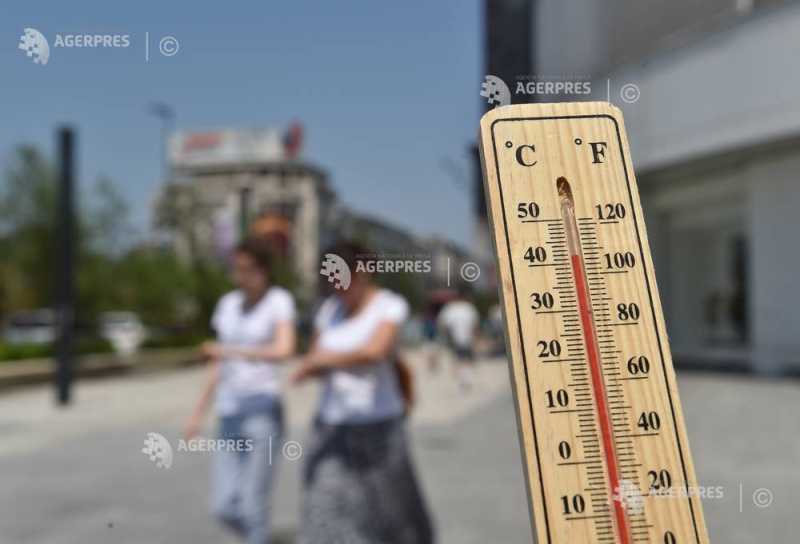
Three quarters of Romania, including Bucharest, under Code Red for scorching heat
Three quarters of Romania, including Bucharest, will be under a Code Red warning for scorching heat and severe thermal discomfort until Wednesday morning, with maximum temperatures expected to reach up to 41 degrees Celsius. According to the forecast issued by the National Meteorological Administration (ANM), between 10:00 on 29 June and 10:00 on 1 July, the r