

CONTEMPORARY AUTHORS/Gabriela Adamesteanu: Today is like you cannot write anything without touching migration topic

The debut novel "Drumul egal al fiecarei zile" [The Equal Way of Every Day] by Romanian writer Gabriela Adamesteanu, who is one of the most translated Romanian authors, is about to be translated into Danish this autumn. The novel was first published in 1975 and it's part of a trilogy that also includes "Provizorat" [Provisional], 2010, and "Fontana di Trevi", 2018.
In an interview with AGERPRES, the author spoke about what it meant to her to work on this trilogy, which documents more than four decades of history, two opposite political regimes and the violent rupture between them, about how she built the destiny of her character, Letitia Branea, a writer who published a successful novel in Romania before going into exile, and also about her own thoughts related to the idea of leaving the country, during the communist regime, both before starting her career as a writer, and after.
Moreover, ahead of the new translation of her novel into Danish, to be achieved through a French translator, Gabriela Adamesteanu tells the story of the many translations of her novels into different languages, and the manner in which these novels were received abroad.
She also explained that her renewed interest in the migration topic that she shows in her most recent book, "Voci la distanta" [Distant Voices], 2002, where the main character, a widowed retired medical doctor, recalls and reconsiders her entire life, by following the two otherwise tightly interwoven threads of history, the personal history - the story of the individual and the family - and the great history, the collective history. The novel also features Letitia Branea, as a secondary character this time, so that the migration topic, in which the author took an interest ever since her debut novel, it is resumed here, both from where she left it off, and from a new perspective, the one dictated by the recent history of Romania.
AGERPRES: What would you say now that meant to you writing this trilogy that took you no less than 43 to complete?
Gabriela Adamesteanu: My characters, including Letitia, are not me or a reflection of my own persona, even if I did borrowed some of my personal details to them, not that many, though. The way I see them is like they are complete human beings, with flesh and bones, who are totally different from me. I can even here their voices, like they were some kind of neighbours living in the same apartment block as myself, whom I meet in the elevator or in the street. Letitita, in my vision, was not a great, a successful writer, because, if she were, she wouldn't have even considered to abandon her writing and leave the country. For her, writing is more like a way to deal with the double treason of her lover and her friend: it's a form of revenge, the only one she can carry. She tells herself that she turned into someone else, that she is transformed and she is no longer the Letitia who was in love in "Provizorat', she tells herself that living in the West matured her, and, even more, transformed her into someone who is more pragmatic, into someone who has concrete projects to follow and plans her retirement money carefully. She has always been a little bit pragmatic, actually, which is also why she left the country and got back together with the man she cheated before, Petru. Now she is someone down to earth, although the past, which remains deeply buried in every one of us, still hits the surface now and then. On my part, however, I wasn't a writer back when, at 24, I told my husband and his parents that I wasn't going to leave the country or give them my child [to take him abroad with them - editor's note]. My father had died recently, and I wouldn't have left my mother and my brother abandoned here [in communist Romania - editor's note], I wouldn't have been able to deal with the uncertainty of our future, whether we could see each other again or not, because this is how things were back then. It was also a very lucid decision, in another line of thoughts, because I didn't have a good job for a capitalist country, given that I graduated from the Faculty of Letters, and I was not willing to do no matter what just to live and adapt there. Or losing my social status, for that matter. And, then, when I did become a writer later on, when I started to write, I was even less willing to lose my readers here for the hypothetical ones in the West. Of course, after 1990, I would have loved it to live for a couple of months, maybe years, in a foreign country, but I refused the only chance I've got, when the head of the Romanian Cultural Institute in Paris invited me for a residence there, in 1997, because this time I wasn't prepared to leave "Revista 22" [Gabriela Adamesteanu was the chief editor of this magazine back then - editor's note].
AGERPRES: You are among the Romanian authors with the largest number of books translated into other languages. Each of the three novels in this trilogy were translated into several languages, but "Dimineata pierduta" [A Lost Morning] remains your most translated book so far, having been translated into 15 languages, among which Hebrew, Swedish and Estonian. How would you explain the interest of the foreign publishing houses for your books and what can you tell us about the manner in which your books were received abroad by the respective book readers and specialists?
Gabriela Adamesteanu: Although my most recent books, "Provizorat" and "Fontana di Trevi, were translated into approximately the same number of languages compared to "Drumul egal al fiecarei zile" (1984), without communism being the central theme here, it's true that "Dimineata pierduta" remains my most translated book, so far, at a fair distance from my other books. And this autumn the same novel will be translated one more time, this time into Danish, although the publisher from the Danish publishing house Palomar did not find a convincing enough Danish translator, being forced to do the translation through a French translator. She could have chosen any other book of mine, like the most recent, for instance, but she insisted to be "Dimineata pierduta", because this book has already entered the European canon, having been listed in so many rankings etc. The very first time when a Western publisher, namely the French publishing house Gallimard, wanted to translate this book, the publisher's argument was precisely that, that it was an iconic book in Romania already. And I don't think that the topic of communism helped me that much. On the contrary. Eastern communism, the Romanian communism even more so, it's not being seen as something exotic, but as an oppressive, sad time. And the readers don't enjoy sad books that much, while the publishers are of course interested in sales. Even the important publishers are interested in the value of the books they publish, in the big names that are listed in their catalogues. In the case of "Dimineata pierduta", they also appreciated the amplitude of the story, the fact that it was not just about communism, but about the history of modern Romania, seen through the eyes of an old lady. Although it is not the kind of book that it is easy to translate, plus that it is a rather old book, published 41 years ago, the foreign publishers still want it. It was recently republished in Spain, Germany and France, in the well-known Poche collection, so it's a book that enjoys a fate not so many books enjoy. The "generic" Romanian writer wants to be translated as much as he/she wants to be published "at home", but the foreign publisher does not care about how well the book was received at home, how much it was commented upon, how much copies of it got sold, how many awards the book received etc.
AGERPRES: What can you tell us about the manner in which your books were received abroad, did you notice any differences in reception from one country to another?
Gabriela Adamesteanu: Yes, the manner in which my books are being received in different countries varies. For instance, "Provizorat" had a greater success abroad - in France, but especially in Germany and Spain - than in Romania, where I believe that the part with the adultery, and also the part related to Legionarism and the Antonescu government made people a little bit reserved and confused. My biggest surprise was to see that the great Spanish writer, Antonio Munoz Molina ["Vidas ocultas"/"Secret lives" - is the name of the book review - editor's note, wrote about "Provizorat" in El Pais; he found, I believe, many similitudes with his own books. Both the right-wing dictatorship and the prudishness and bigotry of the Francoist period were also of an even greater interest for the Spanish reader. "Fontana di Trevi", which received all the important prizes in Romania in 2018, although there were so many novels that year that were very good, did not have the same success abroad, and I think I know why: "Fonata di Trevi" is more about post-communist Romania, about the Revolution [ of 1989 - editor's note], the migration phenomenon, the relation between those who left and those who stayed - all of these themes that are very specific to Romania. But, leaving aside the differences, I was also able to see how there also similitudes in the reception of my books abroad: "Dimineata pierduta" was mainly appreciated for its main character, Vica Delca, which is also very popular in Romania. It is an uneducated women, with a tough life, who arouse the same interest in the Western world as in Romania. The great French translation Alain Paruit loved Vica and he told me that this type of woman exists in every country.
AGERPRES: In your most recent book, "Voci la distanta", 2022, you seem to become interested again in the migration topic. Why do you think that happened?
Gabriela Adamesteanu: The migration topic, the same as the introduction of my older character Letitia into the pictures happened rather late in the novel, which was actually supposed to be a short story. In fact, both the theme and the character are to be found in the second part of the novel, the one cold "Folderul Anei" [Anda's Folder]. My initial plan included only the story of waiter Ghita Trif, from the Amfiteatru Hotel and from the Neptun-based house of [Nicolae] Ceausescu. It also included the story of the castle in the small mountain village, as I wanted to look a little bit into the manner in which properties were transferred in post-communism [to the former/new owners - editor's note], and into the manner in which a new political-economic elite emerged after recovering their assets seized in communism. However, the book "got out of hand", as the pandemic came and demanded an unexpected part in the novel, and doctor Anda, instead of just sticking to her story about her life in the 1980s, when she was at the seaside, "went on" to cover her entire live, which included Letitia. Whom I left trying to recovery after getting infected with Covid, so I am not sure if we are going to see her again or not, after all. And, of course, these days is almost like you cannot write anything with touching the migration topic, especially when you have young characters to deal with.
Gabriela Adamesteanu is a graduate of the Faculty of Letters, Bucharest. He was an editor of dictionaries (1965-1984) and literature (1985-1989). He managed the magazine "Revista 22" (1991-2005) and its supplement, "Bucurestiul Cultural" (2005-2013). She was vice-president (2000-2004) and then president (2004-2006) of the Romanian PEN Centre. She was a member of the Jury of the Latin Union (2007-2009). She was also a honorary president of the first edition of the Romanian Goncourt Award (2013). Chevalier de l'Ordre des Arts et des Lettres (2014). She received the Excellence Award from Radio Romania Cultural (2024).
Her novels have been awarded multiple prizes: "Drumul egal al fiecarei zile" - the Romanian Writers' Union Debut Award; the Romanian Academy Award; "Dimineata pierduta" - the Romanian Writers' Union Award; "Intalnirea" - the Iasi Newspaper Award (ex aequo), the Ateneu Magazine Award; "Provizorat" - the Observator cultural magazine's award, nominated for the Romanian Writers' Union award; "Fontana di Trevi" - Romanian Writers' Union award, Observator cultural magazine's award, PEN Romania award, Radio Romania Cultural award, Sofia Nadejde award, Book Agency award; "Voci la distanta" - the Romanian Writers' Union award. Also, Gabriela Adamesteanu has published volumes of short stories, journalism, memoirs and translations. AGERPRES (RO - author: Cristina Zaharia, editor: Mariana Ionescu)
The content of the www.agerpres.ro website has the exclusive purpose of public informing.
All the information published on this website by AGERPRES is protected by relevant legal dispositions.
It is forbidden to copy, reproduce, recompile, decompile, distribute, publish, display, modify, create derived components or products or full services, as well as any exploitation of the site's content.
Details in the section Terms of Use. If you are interested in picking up AGERPRES news items, please contact the Marketing Department – marketing@agerpres.ro.
The use of the Comments section entails your obligation to respect the AGERPRES terms and conditions in regards to the publishing of comments on the www.agerpres.ro.
Other news in category
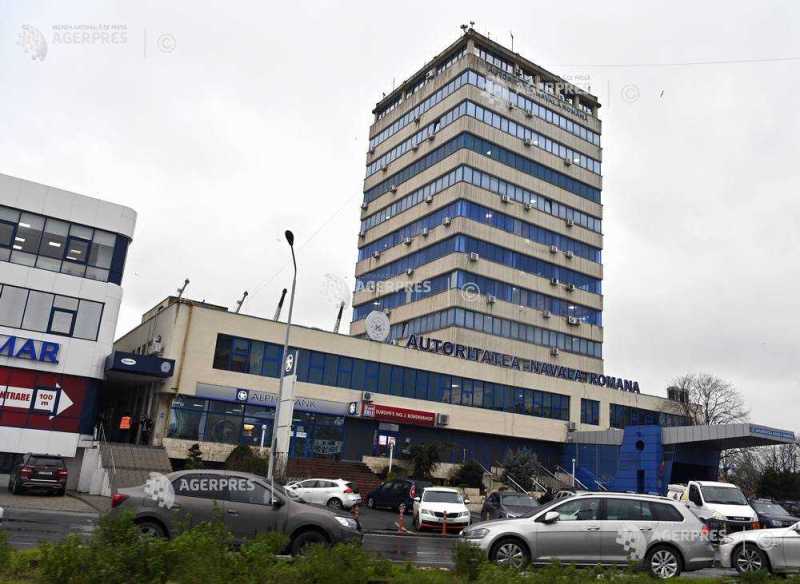
Romanian Naval Authority: Fire on board the Gas Lisbon vessel has decreased in intensity
The fire on board the Gas Lisbon vessel has decreased in intensity, and the situation is being closely monitored by the relevant authorities, the Romanian Naval Authority informs on Wednesday. 'The fire on board the Gas Lisbon vessel has decreased in intensity, and the evolution of the situation is being closely monitored by the relevant authorities. Given

Angela Merkel to launch volume 'Freedom. Memories 1954 - 2021' in September, in Bucharest
Former German Chancellor Angela Merkel will launch her book 'Freedom. Memories 1954 - 2021' in Bucharest on September 1. According to a press release from Litera Publishing House, sent to AGERPRES on Tuesday, the event will take place at the Romanian Athenaeum, from 7:00 p.m., in the form of a public dialogue between Angela Merkel and journalist and di

BraveX Aero and Romaero to roll out first airframe for unmanned platforms in September
The companies BraveX Aero and Romaero will produce in September this year the first aircraft structure for the BraveX-1, one of the company's unmanned platforms now in production, shows a press release sent on Tuesday. BraveX Aero is also expanding its own production capacity with a new hall that will allow the manufacture of up to seven aircraft per month
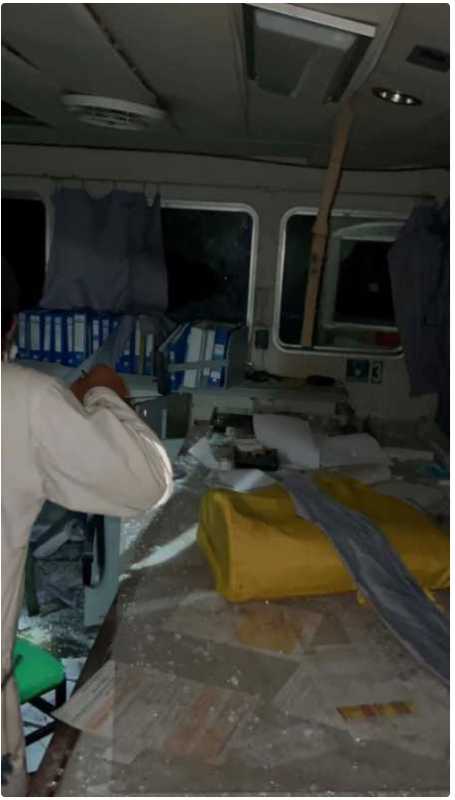
Seafarers are victims of wars they did not choose, they are not combatants
The Free Seafarers' Union (SLN) appeals to the United Nations (UN), the International Maritime Organization (IMO), the International Labor Organization (ILO) and all states involved to take urgent measures to guarantee the safety of civil navigation and protect seafarers in conflict zones. 'Seafarers are victims of wars they did not choose, they are no
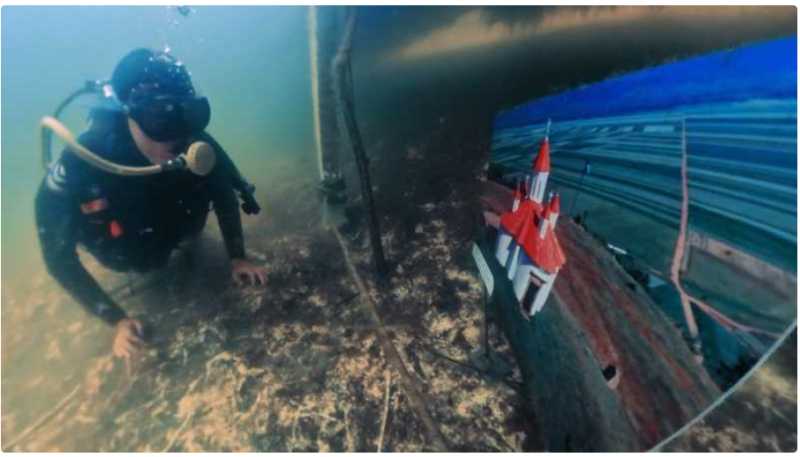
Dalnic lake hosts unique 3-metre-deep underwater exhibition of Covasna churches
An unusual art gallery can be visited this summer at the diving lake in Dalnic - Covasna County, where ten photographs of some of the local most representative churches have been placed underwater at a depth of about three metres. The project, created in collaboration by the My Lake and the Visit Covasna associations, aims to promote the county's cultural

SANITAS Federation obtains suspension of procedure on salary bill in court
The Bucharest Court of Appeal admitted on Tuesday a request by the SANITAS Federation [of healthcare staff] and ordered the suspension of the procedure of the draft law on the remuneration of personnel paid from public funds posted on the website of the Ministry of Labor. '[The court] admits the request. It suspends the procedure of the draft law on the re

International Congress for the History of Religions to be held in Bucharest in September; researchers from 58 countries
The International Congress for the History of Religions, which will bring together specialists from 315 academic institutions in 58 countries, will take place in Bucharest from September 20 to 25. According to a press release sent to AGERPRES on Tuesday, the official opening will be held on September 20 at the Romanian Athenaeum, with an event combining lectur

Romanian Naval Authority says Gas Lisbon fire under constant monitoring, no risk to coast
The fire aboard the Gas Lisbon tanker is under continuous monitoring and poses no risk to tourists, residents or activities along Romania's Black Sea coast, given the vessel's position about 14 nautical miles offshore and the current condition of the ship and its cargo, the Romanian Naval Authority (ANR) said on Tuesday. ANR stated that the incident is

EBRD grants 25 million euros for electrification of Constanta South Container Terminal
The UAE-owned multinational company DP World and the European Bank for Reconstruction and Development (EBRD) have signed a loan agreement of up to 25 million euros to support the electrification of operations at the Constanta South Container Terminal, owned by the Emirati company. The EBRD financing represents the first green loan dedicated to the terminal and
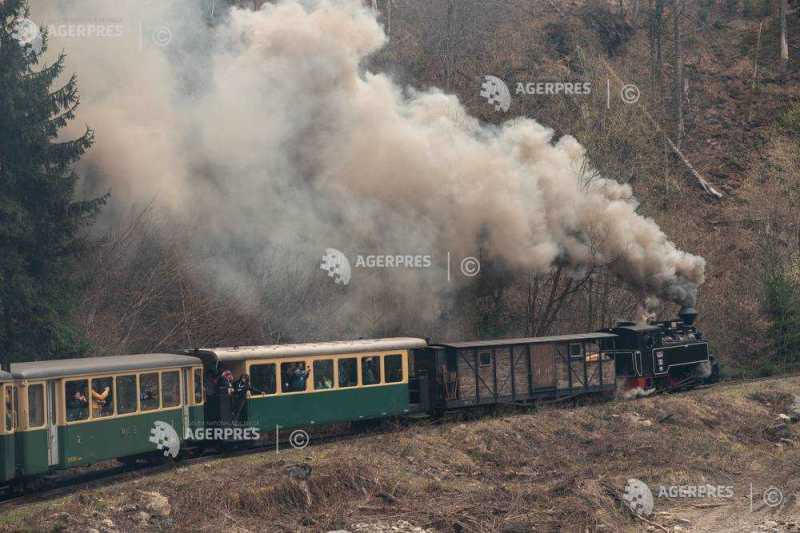
Mocanita train, cycling and wooden churches draw summer tourists to Maramures
Rural guesthouses, the Mocanita train and cycle tourism remain among the most attractive summer holiday options for Romanian and foreign visitors choosing Maramures as their destination, Livia Sima, president of the Maramures branch of the National Association for Rural, Ecological and Cultural Tourism (ANTREC), told AGERPRES on Tuesday. According to her, ther

Cadastre blockage comes at a time of recovery of the residential market (analysts)
The cyber-attack that took out of operation the systems of Romania's National Agency for Cadastre and Real Estate Advertising (ANCPI) occurred amidst a sustained recovery of the residential market, and the effects are spreading throughout the economy, real estate consultants believe. 'After a difficult start to the year, with a 16.6% drop in apartment

President Dan: State institutitions on alert to clarify circumstance of incident involving LPG tanker Gas Lisbon
State institutions will establish the circumstances surrounding the serious incident involving the LPG tanker Gas Lisbon, President Nicusor Dan said on Tuesday. In a Facebook post, the head of state said that during the night from Monday to Tuesday, the Liberia-flagged LPG tanker Gas Lisbon was struck outside Romania's territorial waters, approximately 20
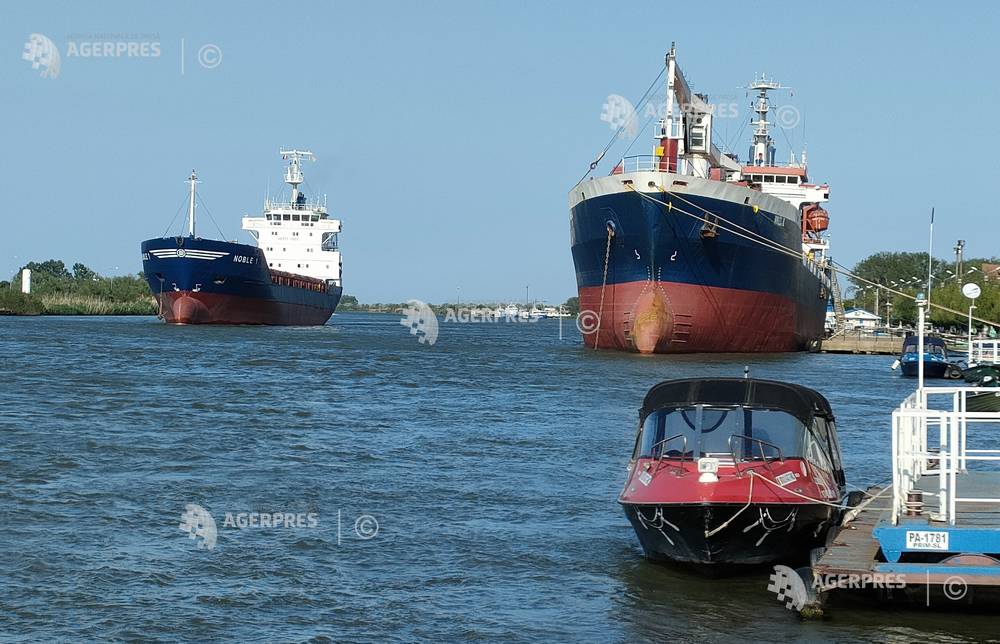
Fire breaks out aboard Liberia-flagged vessel 14 nautical miles off Sfantu Gheorghe;three people injured
Three people were injured after a fire broke out overnight from Monday to Tuesday aboard the Gas Lisbon, a Liberia-flagged vessel in the Black Sea, approximately 14 nautical miles off Sfantu Gheorghe, the Romanian Naval Authority (ANR) informs on Tuesday. According to the authority, all 17 crew members were safely evacuated into liferafts and rescued by the se
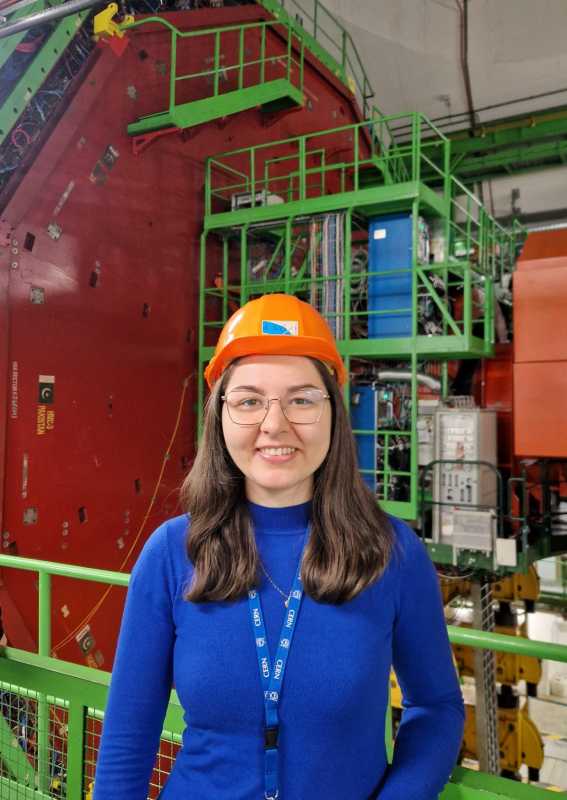
Romanian researcher joins CERN's CMS upgrade to study the Higgs boson and dark matter
A Romanian researcher is taking part in the refurbishment of the CMS (Compact Muon Solenoid) experiment and the construction of a component at the heart of the particle detector built for the Large Hadron Collider (LHC) at CERN. The detector functions as a gigantic 3D camera capable of capturing up to 40 million collisions per second, with the aim of studying fundamental phe
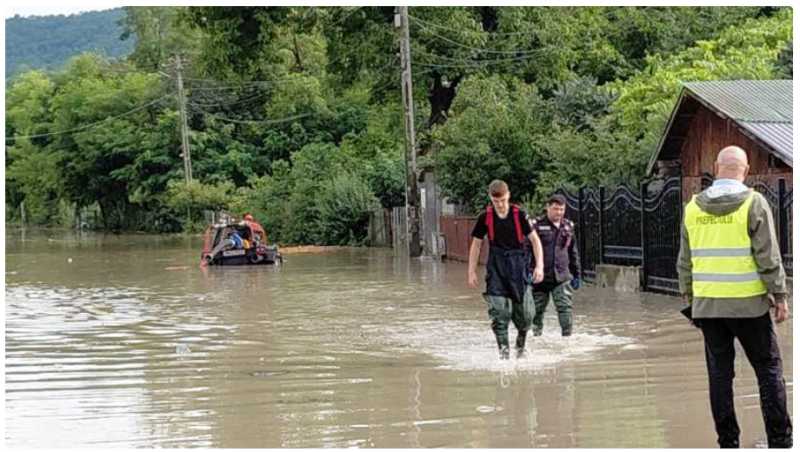
Storms wreak havoc in counties of Prahova, Bacau, Vaslui
Dangerous hydrometeorological phenomena caused damage on Monday in 14 settlements in three counties - Bacau, Prahova and Vaslui, and at the moment the intervention for pumping out water from households and removing alluvium in Prahova is still underway, according to the General Emergency Management Inspectorate (IGSU). 'First responders acted to evacuate w