

Romania's artisan food producers eye retail expansion amid funding and regulatory challenges
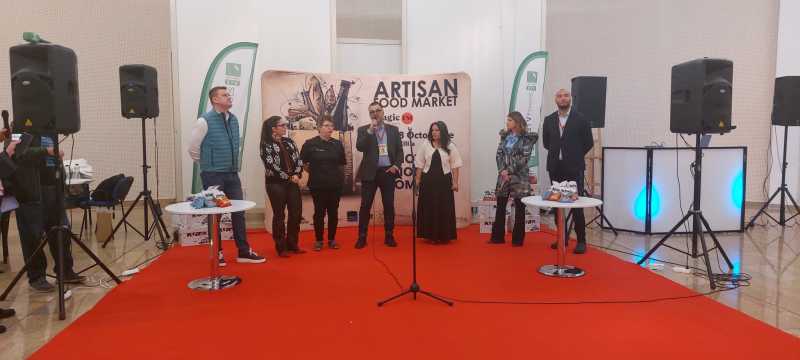
Romanian artisan producers are increasingly investing in processing facilities and making greater use of local resources to create higher-value products, positioning themselves to enter retail chains and supply restaurants. However, their business development also depends on access to financing, cooperation and a predictable legislative framework.
'After four years of experience and direct involvement with Romania's artisan food and drink sector, we have seen how the market for artisan products has evolved. Artisan producers are beginning to mature and make increasingly serious and beneficial use of local resources. Rather than exporting local raw materials only to import them again as finished, higher-value products, they are making extraordinary efforts to invest in processing facilities. At present, the only financing option available to them is European funding, so perhaps other financial institutions could introduce financing products for local producers,' said Ciprian Dinca, organiser of the 13th Artisan Food Market, held at the National Library of Romania.
Beyond the diversity of products on offer, ranging from traditional foods and recipes inspired by local gastronomy to delicacies and gourmet specialities, the event highlights both the potential of artisan production and the difficulties facing small businesses.
According to the organisers, closer relationships between producers and consumers, as well as cooperation with restaurants, could help this sector develop. Artisan products also incorporate elements of cultural identity and benefit from branding, which can increase their market value.
Against this backdrop, Dinca called for national regulations specifically addressing local and artisan products.
'We have noticed that local products need to be regulated at national level, because we do not have such legislation. It would be extremely beneficial in avoiding confusion and creating a predictable framework for producers to develop. Local producers have matured and are ready to enter and gain access to retail networks. They are also very keen to supply restaurants in Romania,' he said.
According to a sector study cited by the fair organiser, 90% of restaurant owners in Romania wanted to use local ingredients and incorporate them into their recipes and menus, while more than 60-70% of customers said they preferred restaurants offering local dishes and recipes.
Dinca also highlighted the success of Romanian products in international competitions, saying that local producers were beginning to win recognition abroad.
'We have remarkable cuisine and local products which, although still relatively little recognised in export markets, are beginning to win numerous international awards. We have award-winning wines, award-winning cheeses and truffle foie gras that won first place in a world competition held in France. We are beginning to win on foreign soil. Local products are beginning to succeed abroad, but they need support,' the organiser said.
He also highlighted the impact of VAT changes on certain products made by small producers, citing natural herbal teas, some of them certified organic, for which the VAT rate had reportedly risen from 9% to 21% on 1 August following their classification as food supplements. He also mentioned bee bread, a fermented mixture of pollen and nectar produced by bees, among the products affected by higher taxation.
'Legislative solutions are needed that take account of the specific characteristics of artisan products and the differences between them and industrially manufactured goods,' he said, adding that artisan products may be more expensive than mass-market alternatives, but that the difference can be justified by their quality and production methods.
Beyond the financing and regulatory difficulties identified by the organiser, producers attending the fair shared their experiences of developing businesses, making use of local ingredients and finding new markets.
The Csengo agricultural cooperative, whose name means 'little bell' in Romanian, is based in Frumoasa, Harghita County, and processes milk collected exclusively from local farmers in three communities within a radius of no more than 75 kilometres. Established in 2009 at the mayor's initiative, the cooperative enabled farmers to join forces to collect and process milk, including from small households with just two or three cows.
'The mayor's proposal also included potato growers in the area, but only those of us involved in dairy farming formed a cooperative in 2009. We process exclusively cow's milk from local farmers, whose animals are raised on pasture rather than kept in barns. We collect milk from Barzava, Nicolesti and Frumoasa, from farms located no more than 75 kilometres away, and then process it. Unfortunately, over the past two or three months, we have been left with unsold stocks because people are buying less amid high energy costs and rising prices. That is why we are trying to attend as many fairs as possible, meet people, tell them our story and hopefully sell our products,' the cooperative's sales director, Palyi Sandor, told AGERPRES.
According to Sandor, the cooperative recently processed approximately 5,400 litres of milk a day, compared with nearly 12,000 litres in June, when production was higher. The milk is used to make several varieties of cheese, including matured cheeses, Camembert-style cheese, grilling cheese and regional specialities, all sold under the Szepvizi brand, named after the locality.
The cooperative operates a processing plant and a showroom shop in Frumoasa, an area with tourism potential. Harghita County has also been officially awarded the title of European Region of Gastronomy for 2027.
In the view of the Csengo cooperative representative, joining forces is one of the ways farmers and local businesses can develop and reach more consumers.
A group of childhood friends working in the corporate sector decided to give up part of their professional careers to establish a goat farm and an artisan dairy and cheese brand in Tarlungeni, Brasov County, gradually turning the venture into a business.
'We have more than 250 French Alpine goats, and the herd is growing. Our little goat is quite demanding, a real lady. We looked for a breed that would produce milk with a milder, softer flavour, to appeal to both kinds of consumers. You know, there are people who would never touch goat's milk products and others who love them, so this flavour is somewhere in between. It is much milder,' farm representative Nicoleta Zbarcea told AGERPRES.
At peak production, milk output has reached approximately 500 litres a day, providing the raw material for the farm's artisan dairy products. These are distributed through delicatessens in Brasov and Bucharest, while some have also reached Carrefour stores selling products from small producers.
Sturgeon zacusca, alongside other fish-based specialities, is among nearly 80 products developed by a business in Blagesti, Bacau County, which began as a fish farm and subsequently expanded into food processing, gastronomy and tourism. Zacusca made with sturgeon, trout and carp recently received recognition at the international Great Taste Awards, offering a reinterpretation of the traditional Romanian vegetable spread.
'Before we got to zacusca, we built a small resort around a fish farm in Blagesti, between Bacau and Piatra Neamt. We got into fish farming by chance. We started raising trout, sturgeon and carp, and at one point decided to open a restaurant beside a lake. The fish proved very popular, so we decided to turn the small fish farm into a business and expand it,' explained Adelina Rusu, co-founder of Arca.
The business developed gradually over approximately 15 years around the fish farm, and three years ago a processing plant was built, initially to distribute products locally.
'We have already expanded nationwide and will soon reach international markets,' Rusu said.
The company sells fish specialities and other food products through its online shop and delicatessens. Its products are available in 11 counties, including Bucharest.
It has also recently launched a range of cured meat products made exclusively from natural ingredients, according to its representative.
The business has grown by integrating production, processing and tourism, while also placing an emphasis on sustainability.
'We have tried to build an integrated, self-sustaining ecosystem. We also have a resort with accommodation and a restaurant. Sustainability is very important to us, and we are currently 80% energy-independent thanks to wind turbines and solar panels. We are trying to make this place as well known as possible and offer people an integrated experience. We even grow our own vegetables. We have raspberry, blackberry and cornelian cherry plantations,' Rusu said.
A family in Bihor County has been cultivating saffron for approximately five years, having started with 1,000 bulbs purchased from England. The business has since expanded, and the family now produces its own bulbs, adapted to local conditions. Saffron cultivation, conceived as a long-term investment, requires considerable manual labour but can provide financial stability through the sale of a niche product.
'In the first year, 2021, we bought 1,000 bulbs, another 8,000 in the second year and another 15,000 in the third. Now we produce our own acclimatised bulbs, which grow here without any problems and which we can sell,' said Mircea Bront, who runs Gradina cu Sofran (The Saffron Garden).
Known as 'red gold', saffron is a high-value spice sold in small quantities. It is also vulnerable to counterfeiting because of its high price, according to the producer.
'Growing and harvesting it involves a great deal of manual labour. Each gram requires 40 hours of work,' the entrepreneur from Bihor explained.
The plant has no special soil requirements, although the land must allow water to drain away without becoming waterlogged. 'It is a crop for the future, given this drought and the lack of rainfall,' he added.
The business is run entirely by family members, who handle both cultivation and sales. On his 2,500-square-metre plot, the producer estimates that he can harvest approximately one kilogram of saffron. 'We do not produce a lot. We produce a little, but we do it well, and it gives us financial stability,' he said.
In addition to saffron for culinary use, the family sells bulbs for cultivation. Visitors can also tour the farm in Cociuba Mare, Bihor County.
Ion Scripcariu, a 25-year-old from Piscu, Ilfov County, has joined forces with his sister to develop a project called Lut Ars (Fired Clay), teaching children how to shape clay and turn ceramics into practical objects. Launched a few months ago with European funding, the initiative aims to introduce younger generations to the traditional craft of pottery.
'I grew up in a village of potters, Piscu, in Ilfov County. Everyone in the village used to make pottery, and I spent my childhood there, learning the craft from the older potters. My parents created a museum to preserve local ceramics, and I came up with the idea of bringing this activity into kindergartens and schools, focusing on education and creating more unusual designs on pottery rather than traditional ones, in a form adapted to children,' Scripcariu said, demonstrating his potter's wheel at the Artisan Food Market.
Although he studied graphic design, Scripcariu chose to pursue ceramics and carry forward the pottery tradition in a form accessible to children. He works on the project with his sister, who has also learned the craft, although her main professional activity is in music. Ceramic objects made by the young potter are available at the Artisan Food Market this weekend, priced between RON 35 and RON 100.
The Scoala de la Piscu museum-workshop, established by Adriana and Virgil Scripcariu, continues efforts to preserve traditional crafts and pass them on to younger generations. It is open to visitors interested in discovering the secrets of pottery.
The Sarmale Museum, presented this weekend at the Artisan Food Market at the National Library of Romania, is a project initiated by food historian Cosmin Dragomir. It brings together recipe books from four continents, tins of stuffed vine leaves or cabbage leaves containing unusual fillings such as coffee, mint or raisins, and objects associated with preparing the dish.
'The earliest known sarmale recipe appears to date back to 781 BC in Armenia. Sarmale come in numerous variations across different parts of the world. In Europe, they are known either as 'sarma' or 'dolma', a term of Ottoman origin meaning 'stuffing',' museum representative Cristian Cetateanu told AGERPRES.
He also pointed to the culinary connection between Sweden and the Ottoman Empire, explaining that Sweden's tradition of cabbage rolls is associated with King Charles XII's stay in Ottoman territory following Sweden's defeat by Russia at the Battle of Poltava. Sweden now celebrates a day dedicated to cabbage rolls, he added.
In Romania, alongside classic sarmale wrapped in cabbage or vine leaves, there are recipes using sorrel leaves or pumpkin blossoms, with fillings of rice and raisins inspired by Ottoman cuisine, as well as meat-based fillings associated with Romanian versions of the dish.
According to the museum representative, one of the oldest documented sarmale recipes in Romania dates from between 1550 and 1600 and comes from Transylvania.
'Sarmale do not appear in the cookbook from the time of Constantin Brancoveanu. There are two possible explanations: either they had not yet reached Wallachia, because they may have entered the country from the north, or they were not considered a luxury dish suitable for rulers at the time,' Cetateanu explained.
Although the dish has influences from the Ottoman world, sarmale have become part of Romanian gastronomy, with recipes passed down through generations.
'Why do I say that sarmale are also Romanian? Because sociologists say that, for a dish to become traditional, it must have been passed down through at least three generations. If we take 1600 as our starting point, quite a few generations have passed since then,' he said.
The Sarmale Museum belongs to Cosmin Dragomir, who began collecting cookbooks from around the world while developing the idea of writing an Encyclopaedia of Sarmale. His collection has since expanded to include related objects, such as tins of sarmale, spices and crocheted representations of plates of sarmale and mamaliga, Romania's traditional polenta.
Bucharest residents can visit the Artisan Food Market on Saturday and Sunday at the National Library of Romania, where 102 Romanian producers and eight international exhibitors are showcasing specialities, traditional recipes and culinary reinterpretations from Romania and other parts of the world. AGERPRES (RO - writing by: Mariana Nica, Nicoleta Gherasi; EN - writing by: Simona Iacob)
The content of the www.agerpres.ro website has the exclusive purpose of public informing.
All the information published on this website by AGERPRES is protected by relevant legal dispositions.
It is forbidden to copy, reproduce, recompile, decompile, distribute, publish, display, modify, create derived components or products or full services, as well as any exploitation of the site's content.
Details in the section Terms of Use. If you are interested in picking up AGERPRES news items, please contact the Marketing Department – marketing@agerpres.ro.
The use of the Comments section entails your obligation to respect the AGERPRES terms and conditions in regards to the publishing of comments on the www.agerpres.ro.
Other news in category
CONTEMPORARY AUTHORS/Kapka Kassabova: The Balkans are one of the heartlands of this funny old world
Bulgarian-born, Scotland-based author Kapka Kassabova has recently visited Romania, travelling first to Timisoara and then to Bucharest, where she launched her most recent book translated into Romanian, 'Elixir', and gave this interview to AGERPRES. She discusses her four multi-award-winning books about the Balkans, written in the narrative non-fiction genre. Three o

FinMin Nazare: This country cannot develop without fiscal discipline or amid chaos in investment spending
The budget cannot simply be a sum of all financing needs; it must be drawn up responsibly, and we are aware that this country cannot develop without fiscal discipline or amid chaos in investment spending, Finance Minister Alexandru Nazare said on Tuesday at a specialist event. 'After several months of discussions, we managed to secure a reduction in the IM

'Giselle' ballet new production to premiere at Bucharest Opera on 13 November
Adolphe Charles Adam's ballet 'Giselle,' in a new production conceived and directed by Razvan Ioan Dinca, with Daniel Jinga conducting, will premiere at the Bucharest National Opera on 13 November at 18:30. According to a press release the organisers sent to AGERPRES on Tuesday, one of the best-known works of Romantic ballet, 'Giselle,' ret
EU Black Sea maritime security hub to have headquarters in Romania, Bulgaria, former foreign minister says
Former foreign minister and Save Romania Union (USR) MP Oana Toiu said the European Black Sea security hub will have two complementary headquarters, in Constanta, Romania, and Varna, Bulgaria. 'Today's announcement by the European Commission, coinciding with Ursula von der Leyen's visit to Bucharest, of 50 million euros in funding for the European
Energy Ministry closely monitoring Cernavoda NPP after Unit 1 grid disconnection
The Energy Ministry is continuously monitoring the situation at the Cernavoda Nuclear Power Plant (NPP) following the disconnection of Unit 1 from the National Power Grid due to a malfunction in the plant's conventional, non-nuclear section, the institution announced on Monday. Energy Minister Dumitru Chisalita is in direct and constant contact with the ma
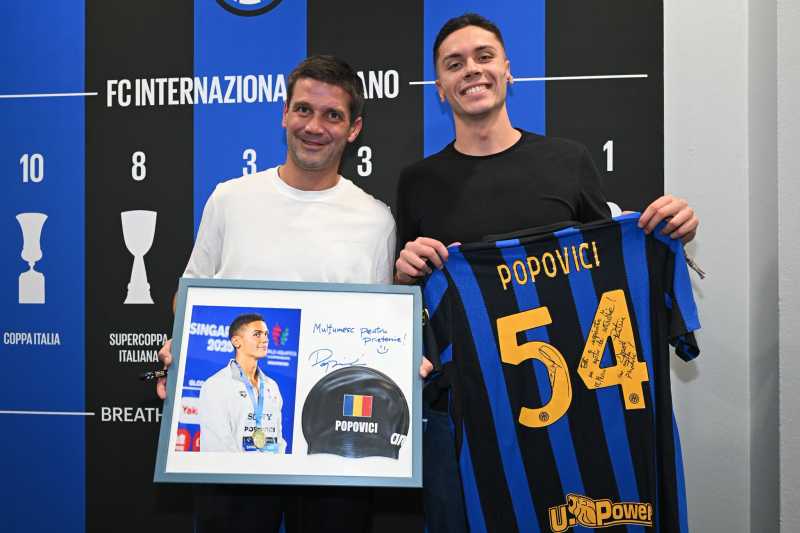
David Popovici finds inspiration beyond the pool in meeting with Cristian Chivu at San Siro
Romanian swimming star David Popovici returned from Milan with more than memories of his first visit to San Siro Stadium. The Olympic and world champion described his meeting with Cristian Chivu, head coach of Inter Milan, as one of the highlights of a trip that offered lessons in leadership, excellence and longevity at the highest level of sport. Popovici tra

BVB:New structure of Multilateral Trading Facility will become operational starting November 20, 2026
The new structure of the Multilateral Trading Facility (MTF) will become operational on November 20, 2026, and will be organized into three distinct markets: the SME Growth Market (PC), the Main Market (PB), and the International MTF (SMTI), the Bucharest Stock Exchange (BVB) announced on Monday. The new architecture of the Multilateral Trading Facility (MTF)
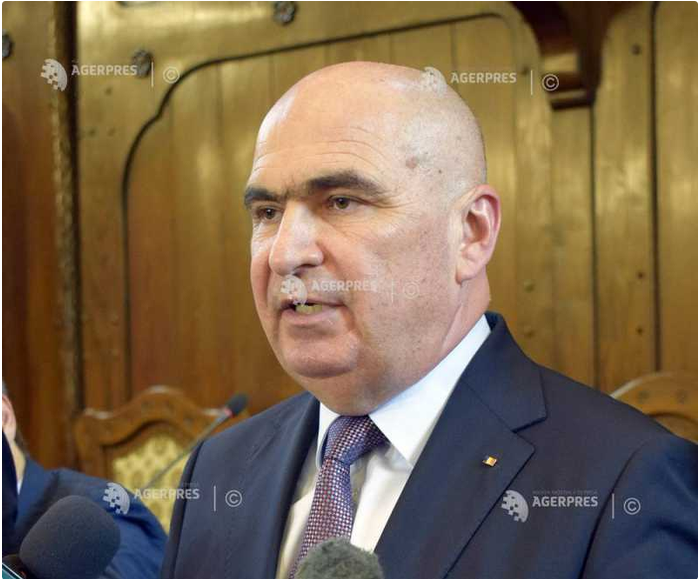
Bolojan: PNL to reschedule outstanding election campaign debts and seek accountability for unauthorised contracts
The National Liberal Party (PNL) has outstanding debts from the 2020 local elections, involving four local branches, as well as from the 2024 elections, which it needs to reschedule and repay, party leader Ilie Bolojan said on Monday. He said the party would make public details of all the spending, including amounts covered by members' donations and public

UPDATE/Von der Leyen:Additional EUR 10 mln allocated to Romania for Black Sea search & rescue operations
The European Commission is allocating an additional €10 million to the Romanian authorities for Black Sea search and rescue operations, Commission President Ursula von der Leyen said on Monday at a joint press conference with President Nicusor Dan. This initiative strengthens the European Union's capacity to respond to crises at its borders, the head
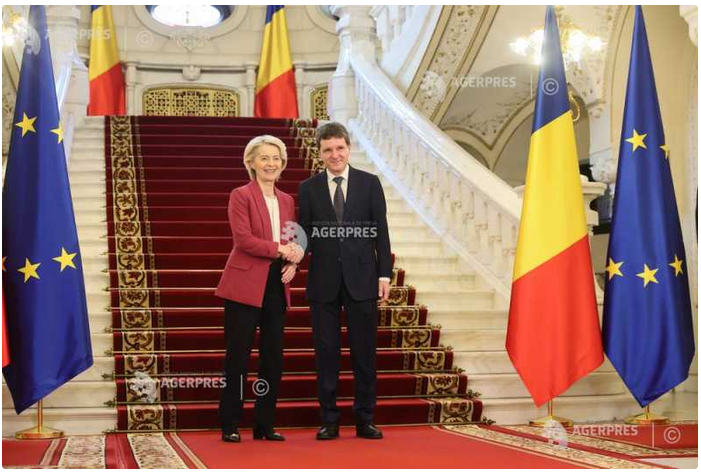
European Commission's von der Leyen welcomed by President Dan
President of the European Commission Ursula von der Leyen on Monday was welcomed at the Cotroceni Presidential Palace by President Nicusor Dan, with the two leaders expected to discuss security in the Black Sea area. The head of state and the president of the EC were scheduled to have one-on-one talks and hold a joint news conference afterwards. <
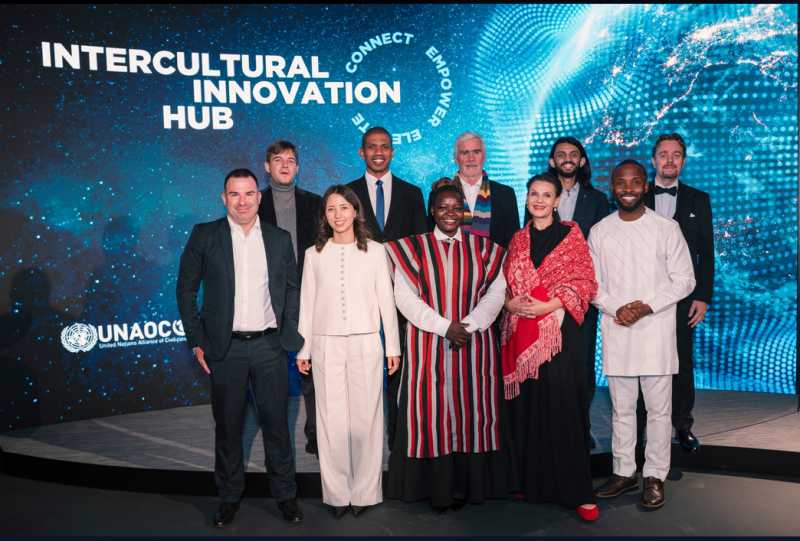
Suryam Association's Ukrainian refugee integration project wins global UN and BMW Group award
The Suryam Association (MuresHub), based in Targu Mures, has become the first organisation in Romania to receive a global award from the United Nations (UNAOC) and BMW Group for social innovation, at the Intercultural Innovation Hub (IIH) Gala in Milan. The award recognises a project launched in 2022 as an emergency response to support families fleeing the war in Ukraine.
Abrudean:Decision to recover campaign funds is not directed at specific individuals, nor is it a settling of scores
Senate President Mircea Abrudean stated on Monday that the PNL leadership's decision to recover funds from unpaid invoices or from contracts concluded in violation of statutory provisions is not directed against any specific individuals, nor is it an act of settling scores. 'This is not a decision directed against specific individuals, nor is it a sett
Film University to confer Doctor Honoris Causa title on British film historian Ian Christie
The National University of Theatre and Film 'I.L. Caragiale' (UNATC) will award British film historian Ian Christie the title of Doctor Honoris Causa at a ceremony to be held on November 19 in the university's Ileana Berlogea Hall. The British film historian will be in Bucharest from November 19 to 22, the organisers inform in a press release sent

Domestic natural gas production will exceed Romania's demand with Neptun Deep exploitation
Domestic production of natural gas is expected to exceed Romania's consumption demand once it reaches the plateau level of production in the Neptun Deep block in the Black Sea, estimated at approximately 8 billion cubic metres annually, to which about 8 billion cubic metres of onshore deposits are added, Aristotel Jude, member on the Board of Directors of Romgaz, said on
I CHOOSE ROMANIA/Former ICU nurse in Italy runs traditional gastronomic establishment in Racoasa, Vrancea
She left Romania in 2004, departing from the Jiu Valley, which she says was 'slowly but surely dying,' and went on to become a nurse in an intensive care unit in Italy. She had an indefinite employment contract and a system that offered her stability. More than a decade later, however, Marcela Pricop chose to make the journey in the opposite direction, back to Romani