

CONTEMPORARY AUTHORS/Kapka Kassabova: The Balkans are one of the heartlands of this funny old world
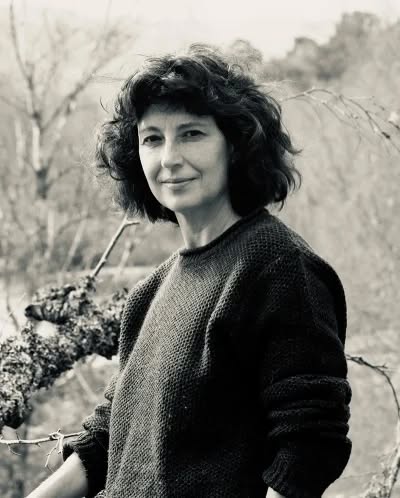
Bulgarian-born, Scotland-based author Kapka Kassabova has recently visited Romania, travelling first to Timisoara and then to Bucharest, where she launched her most recent book translated into Romanian, 'Elixir', and gave this interview to AGERPRES. She discusses her four multi-award-winning books about the Balkans, written in the narrative non-fiction genre. Three of them have already been translated into Romanian, with the fourth due to follow.
The books were published in Romanian by Trei Publishing House. The first one, 'Border'/'Granita' was translated by Ona Frantz, while the following two, 'To the Lake'/'Catre lac' and 'Elixir'/'Elixir' were translated by Iulia Anania.
In the interview she gave AGERPRES, the author reflects on her journey in writing these books, in both senses of the word: the physical journey and the inner, spiritual one. She regards the Balkans as a fascinating region, one of the heartlands, as she puts it, of our old world. Here, people's lives are deeply intertwined with the landscape, while the region's rich history has been shaped by the many peoples who have inhabited it, each leaving their mark, whether they settled for centuries or merely passed through.
Kassabova's works have received numerous prestigious awards, including a British Academy Prize and the Scottish Book of the Year Award.
AGERPRES: You've written four remarkable books, forming a tetralogy, about the Balkans, three of which have already been translated into Romanian. Has the whole journey of researching, traveling, and writing turned out to be anything like you expected?
Kapka Kassabova: That's a good question. Well, it's always best to start without expectations. Or at least, that's what I try to do. And then you have a rich experience, and I think the experience I had with each of these books was, in it's own way, epic and life-changing. And each time I felt like I had completed a journey. I felt I had reached the end of the road, but I hadn't. It was the beginning of another road. Or maybe it's all the same road.
And really, I think that what I've always wanted in this life, ever since I was a child, was to stay on the road. And I don't mean that in the sense of physically being on the road, but in the spiritual sense. Like a life journey or - better - like a life journey with a purpose. The road is also a term found in many spiritual traditions, particularly Sufism, which I write a little bit about in 'To the Lake'. The lake is the road. It's a vocation. But you are the one who follows the road of your dreams. And so the road for me is both geographical and spiritual.
AGERPRES: It brings you all kinds of different challenges...
Kapka Kassabova: It certainly does, yes, and it opens all sorts of magical doors for me. That is how it felt with each of these books, that I was given the right opportunities by meeting the right guides, because, you know, on a true journey, one needs guides. Whether it's a spiritual journey, or a geographical journey, or an intellectual journey, or simply the journey through life that we all have.
AGERPRES: And you need to embrace these guides, because it's not just a matter of finding the right guide, you also need to be open to being guided along the way...
Kapka Kassabova: Definitely, yeah.
AGERPRES: You live in Scotland now and write in English, but you've travelled extensively throughout the Balkans, meeting people who speak many different languages. Would you say that, despite the region's complicated history and ongoing or unresolved conflicts, there is also a common language among the Balkan peoples, like a way of understanding each other beyond their respective native languages?
Kapka Kassabova: Oh, for sure, without a doubt. It's the common air, or, you know, it's something - as you say - beyond language. And I think it's an emotional state. I think we all come from a similar background in the Balkans. I don't know whether to include Romania, maybe in part, because I know it's a question here. But we do come from a certain geographical and psychological lineage, you know, and that comes with the history, with the geographical location of our lands. It comes with the cultures that were mixed here.
And really, I think that wherever I am in the world, I can spot a person from the Balkans just through their body language, even if I can't always decipher the expression on their face. It's kind of funny. And also amazing, considering how many borders have been put up between us.
Over time, as you well know, we've been artificially separated from each other as tribes. For half a century, the Iron Curtain did it. Also, bad politics before that did it, the wars ... Balkan nations fought with each other, and you know they say these were the most vicious wars. And they're still fighting the most vicious wars, actually. There tend to be fratricidal conflicts between brothers. And that's something, of course, that I explore in 'To the Lake' and 'Border'. And, really, we can't get away from the question of war and peace at a deeper level, and, you know, conflict and harmony.
AGERPRES: After all, we're used to facing conflicts, even within our own families, to a certain extent...
Kapka Kassabova: ... and in ourselves.
AGERPRES: So, your books are deeply researched. You delved into archives and traveled extensively to the places you write about. They can also be read, at least in part, as travel journals. And alongside all the historical detail, there are wonderfully poetic passages, beautiful descriptions, and a great deal of humor. Did moving between these different registers come naturally to you?
Kapka Kassabova: Yes, thank you. Yeah, it came naturally, and it happened with 'Border' for the first time in my writing life. I think that's when I found my voice actually. I think that I found my voice because of the places I visited along the border, because they are symphonic places, you know. You hear different voices, different registers of different languages. But really it's a symphonic place. It's a labyrinthine place. So it's got this kind of almost orchestral quality around the border.
And, as I realised, nature itself speaks here, because these are great mountains and rivers, and so you have a non-human language as well. The land speaks to you if you tune in.
AGERPRES: There is the light, the sounds, the smell, everything.
Kapka Kassabova: We have everything, and we also have this accumulation in a border zone, or any other, as a matter of fact, like the lakes. They are like power points of geography. Power points in time, space. And, I would say, you have more than just the sensory experience or the voices of the land. You also have the sensation of what has happened, and how it has accumulated.
AGERPRES: Especially the lakes that are very, very old.
Kapka Kassabova: Yes, and the mountains as well. You feel like you're going down into history, very, very deep. I felt it with 'Border'. It is very much like going into the underworld, I was descending. Even when I was in the mountains, I was descending, and I think that's because of the psychological quality of the border zone. There is a darkness there. There is a density. When I was at the lakes, for instance, they had a very different quality. There was much more light and, of course, water. For clean water provides a different kind of element. It's a different element, and so you have a different relationship with it. When you are near clean water, it changes you. It lightens you. So the energy into the lake is much lighter. It's much more feminine as well.
AGERPRES: You feel your thoughts becoming more like the water, clear.
Kapka Kassabova: Yes, it cleanses. Especially if you touch the water and feel it. At least that's how I think.
AGERPRES: It's more direct than any other landscape, because of this very powerful sense of touch, because we immerse ourselves in the water with our entire bodies.
Kapka Kassabova: Yeah, absolutely. That's why, I guess, we get baptised. You know, traditionally, water has such an important role in ritual life. And I do believe that the first religion, you know, the earliest religions, or the earliest kind of relationship that humans had with the sacred it's related to water. Look at all Balkan traditions: they were to to do with water, the worship of water, springs, and fire. Yeah, and so the first religion was water, in a way, and I think so will be the last one. Clean water.
AGERPRES: In the introduction to 'Border,' the first book in the tetralogy, you write that you are the fourth generation in your family to have emigrated. Would you say that the experience of immigration changes significantly from one generation to the next? Is it different today than ever before? Now that technology allows us to stay in touch more, for instance. We can see each other while we talk; we can travel faster. But there is also the political context, because each generation emigrated for a different reason.
Kapka Kassabova: The experience of each generation is very different from that of the generation before. For sure, yeah. So I mean, the differences are very obvious. We are children of our time, you know, up to a point. But I think the differences are perhaps more superficial than profound, because I think at the deeper level, we are grappling with the same challenges and the same opportunities. When we talk about immigration or separation, I think that, deep downs the question remains the same. What am I carrying from the past? You know, the legacy, the heritage that we carry. It's invisible. It's in our bodies, it's in our minds, it's in our collective memory. Just like in Lake Ohrid, you know, Lake Ohrid carries all the objects that have been thrown into it. It's a repository of history in that sense. But I think it also carries the consciousness of the old, of ancient things and people.
And I think we are like the lake, in that sense. Well, especially because we're made up of so much water. That too, yes. We tend to, I think, even at the DNA level, carry cellular memories from our ancestors. I mean, there is research into that. And then there is, of course, this whole field of epigenetics. But also, you know, traumas and talents - they are passed on generationally, from one life to the next. That's why sometimes when we go to a place we feel we've been there before. You know, from our past lives, I believe, whether it's our ancestors or, you know, the soul is a great nomad, and we also have soul memories.
AGERPRES: Did you feel that you were discovering things you already knew, actually, but weren't aware at the time that you knew them?
Kapka Kassabova: Yeah. Yeah, I did. I think that's a very good way to put it, because increasingly I realised that this great road I was on, this great Balkan road, shall we say, was a road of self-discovery. It's a road of return, and that means including a return to ourselves, to myself, to who I am. And I don't just mean, you know, as a native of the Balkans, as a child of these lands. I mean it in a much more, kind of in a metaphysical way, actually, because who we really are is children of this Earth. And, increasingly, I felt like I was just looking for different ways of returning, each time going deeper, to who I really am, and who we really are, all of us. Because these are also, you know, obviously very personal journeys, but also collective journeys. And when I'm doing this, I feel I am doing it on behalf of others too. Maybe I didn't know who they were, but I felt it was like a collective exorcism or a collective pilgrimage of sorts.
And I never felt completely alone. You know, the ghosts of ancestors were there - not just my ancestors, the ancestors of the land. They are all around us, and you really feel their presence when you are in places that have more nature than industry. And that's why I always go to places like that for my books.
AGERPRES: Do you think that without writing you would still have discovered all these things about yourself and the world around you? You know, just by travelling and meeting people?
Kapka Kassabova: Not, it definitely wouldn't be the same. Because these are not travel logs to me; they are not travel journals. They are works of art, and in shaping these journeys and these voices into a work of art, each time, I became a better person - not just a better writer, but a better person. That's more important. And one couldn't happen without the other. So for me, life and art are inseparable. You know, everything that I experience, I experience it imaginatively and creatively through writing as well. So I can't separate them.
AGERPRES: In the introduction to 'To the Lake', you say this: 'Geography rewrites history'. Could the reverse be even more true today? I'm thinking of industrialisation, pollution, post-industrialisation, all these things that changed the earth so much.
Kapka Kassabova: Yeah, I do think that this is the biggest problem of our time. And I've seen that where I live in Scotland, the destruction, all around me. Even now, in the name of renewable energy sources, everything that our human industrial project does destroys more nature, more organic life, and that's why I've become so passionate. And with each book, you know, 'Elixir' and 'Anima', I've moved even further away from the human project. Though, of course, my writing is always about people, but I incline more towards the the inhuman world, which is so great, so great and has so much to teach us. And we need plants, and we need animals to remember who we are, and, actually, to save ourselves. Otherwise, we're lost.
And I think that our civilisation is already collapsing, the industrial civilisation. I don't think it has any future. Or at least not as a living civilisation. And by this I mean that, maybe, it has a future as a dead civilisation, or as a dead planet. You know, maybe there is some kind of future for that techno-military-industrial complex dominating a dead earth. But do you want to be a part of that? No, of course not. I don't. So that's, I think, is where the big fight it really is. In the coming years, I mean.
AGERPRES: Speaking of geography and travelling, do you remember what travel books did you enjoy as a child back in Bulgaria that stayed with you until today? And by travel books I mean, rather, adventure books for children.
Kapka Kassabova: That's actually a very lovely question. Pretty much everything that I read as a child was either poetry, because I was first of all a poet, or narratives about voyaging. From Jules Verne's, oh God, what's the English title? Because, you know, I've read it in Bulgarian. You know, the book about a voyage into the depth of the ocean, whatever it was called ['Twenty Thousand Leagues Under the Seas' - editor's note]. And also Jack London, the American writer, with 'The Call of the Wild'.
And I also read Bulgarian writers, of course. I've always loved short stories and I do think that the great Bulgarian literary form is the short story. So I loved stories set in villages and in nature with people who just go through difficult things. And there are always animals in these books. I love that. These are more modest kinds of journeys, which are closer to home.
I actually had this fantasy as a girl that I wanted to be a boy. And I even felt like I should have been a boy. So I was quite bitter about being born a girl, because boys had more freedom, and I was always a bit androgynous. Well, not quite androgynous, but always a bit tomboyish. I was thinking that what I would really want in life is to sail the world, to be a sailor. But what a shame, I was a girl. So that was it. But I overcame that.
And there are, of course, many children's books about discovering the ocean.
AGERPRES: Yeah. Because there were the eighteenth and nineteenth centuries with all those books about traveling across the ocean. For instance, we had 'Robinson Crusoe'.
Kapka Kassabova: 'Robinson Crusoe' was one of my favorites. And even 'The Little Prince' and 'Pippi Longstocking', because they are all adventure books. You know, they are stories of discovery. Again, about discovering yourself.
AGERPRES: You live in Scotland now. What's the most Balkan thing about Scotland, and what's the least Balkan thing about Scotland?
Kapka Kassabova: That's a great, great question. You know, I live in the Scottish Highlands, so that's the north of Scotland, and when I first went to the Scottish Highlands 20 years ago, I felt that there was something Balkan about them, but I couldn't explain what. It was like an emotional perception, a feeling of something deeply tragic. Obviously, the nature is beautiful there, but I also mean it in a cultural way. It was like a feeling of suffering. So this suffering and the beauty of the landscape struck me. And now I live there.
Actually, my new book is set there. It's called 'Borrowed Land'. And the most Balkan thing about the Scottish Highlands is that it has been through a tragic, kind of emptying of their people. This is known as the Highland Clearances, and it happened in the eighteenth and nineteenth centuries. And as a result, The Highlands are kind of seen as being empty. But of course, that was the loss of an indigenous culture, the Gaelic culture. So I feel there is something Balkan about that. because we are talking about a great treasure, a cultural and human treasure, being wasted and lost. And there are also the deep memories I mentioned earlier, buried in the land.
AGERPRES: First of all, thank you for revealing to us what your next book is about. So, going back to what we were discussing, each of the four books is rooted in a different landscape: a forest in 'Border', two lakes in 'To the Lake', a river valley in 'Elixir', and mountains in 'Anima' [which isn't translated into Romanian yet, but will be - editor's note]. Which of these landscapes made you feel most at home?
Kapka Kassabova: I think 'Elixir'. The books is set in a very majestic, a very beautiful place, which is the valley of the Mesta River. And this valley also has three mountains surrounding it. It's one of the most kind of soulful and I think creative landscapes I've ever been to. It makes you want to create things. It makes you want to experience things. It makes you fall in love, you know. And, at the same time, there is this deep suffering of the people of the Mesa Basin. All of them, but especially the Pomaks, the Muslim Pomaks.
So, again, you have this mix of sublime, kind of natural setting, with all its richness, which is relatively unspoilt, and then you've got the politics of destruction. And to me, as a writer, that's always attractive - this paradox. But I felt very much at home there, and I didn't want to leave. In fact, I even imagined staying there forever. I kept returning in the summer, in the winter. I just fell in love with the valley, like many people do.
There is this entrepreneur mentioned in the book who bought most houses in this empty village and started a project, which was successful for a while, with other enthusiasts. And he, too, fell in love with the place when he first visited it. I mean, he's a very wealthy sort of businessman, but he genuinely fell in love with the place and did something good about it. He said he fell in love with everything, even with the cows. You know, it's that kind of place where it's almost like you've drunk a potion. So it's a perfect place to explore the properties of plants. That's how it felt to me.
AGERPRES: In your first two books, there is a lot of history and politics and all that. I think that, maybe, you felt like turning even more towards nature. Although of course this part of history, politics and conflicts are still there.
Kapka Kassabova: Definitely, and the world of plants is infinite. You actually discover it's infinite. You can disappear in it.
AGERPRES: Which do you think has a stronger hold on people's imagination today: the Balkans, with their aura of mystery, or Eastern Europe, still shaped by the legacy of communism?
Kapka Kassabova: I can't say, because people are different. I do know that, for me, it's the Balkans, and I think I'm actually quite Eastern. I'm drawn to the Balkans because they are more interesting, whatever the Balkans are.
And I think I know them better now, or at least a part of the southern Balkans where these books are set - a small part of the Balkans. I know this part very well, while I don't feel that I know Eastern Europe. And I'm not even interested in this concept of Eastern Europe. I don't even know what that means anymore, because Eastern Europe is a political sort of product. In contrast, the Balkans are a product of deep, deep history and deep time, starting with their geology, which is you know prehistoric, and going through the various sort of peoples, tribes, cultures that have dwelled in the Balkans or just passed through, but left a seed.
And the Balkans have... Well... I think they will always feel like a heartland to me. And I think they are a heartland, one of the heartlands of this funny old world, as Slavche, the wife of the last head dervish of the tekke, tells me, in 'To the Lake'. They are keepers and she says, wherever you go, whatever you do, you know, you have to come back to the Balkans because they are the heart and soul of this funny old world. I think there are places like that in the world where you feel it's, again, like a power place, where almost like an an omphalos. You know the Greek word 'omphalos'. It means a belly button. It's it feels like a belly button of the world, at least.
These are areas where I've been, and I love places that stimulate my imagination. And also where I meet incredible people. These books are all about, really, the people I've met. Ok, there are lots of plants and animals in the last two, but really, it's about these people, who all feel that they are precious people because they have a deep relationship with something on the ground, and they are ...
AGERPRES: ... keepers.
Kapka Kassabova: Yes, because absolutely, when you say plants and animals, it's not just about them, but also about the people interacting with them over time. Yes, yes, the keepers. It's still about the people, to a certain extent.
AGERPRES: I read this line in one of your poems: 'The limitations of actually being there are many.' The poem was about a long-distance relationship, but would you say the same applies to returning to a place? Especially one you already know and have kept alive in your memory.
Kapka Kassabova: The limitations of actually being there are many. Yeah. Well... , it's about obstacles. The road throws obstacles in your way, and each time you overcome them, you grow a bit. As a person.
AGERPRES: It's like you are solving problems...
Kapka Kassabova: Yeah, especially when they're internal problems, like fear. And I have overcome many fears. I'm generally quite a fearless person, but I have overcome fears. I have overcome some wrong ideas. I have been humbled. Deeply humbled by the people I've met, these keepers of precious things, lighthouse keepers, rare breeds of sheep keepers, dog keepers in 'Anima', the keepers of the plant knowledge which is thousands of years old, all these keepers of things in a long lineage. We return to this thing of of the lineage. How precious a lineage is.
We need keepers.
Because extinction is when we lose our keepers. And then, first the shepherd disappears off the face of the earth, and then that breed of sheep, and then eventually all breeds of sheep, and then dogs disappear. This breed, and then that breed, and the buyer of plants like Rocky the Enchanter, who contains thousands of years of knowledge about. Edible and medicinal plants. When he dies, who's going to take his place? Where is that knowledge going to go?
AGERPRES: And the writer is also a keeper, isn't it?
Kapka Kassabova: The writer is a keeper, and it's very sad because books are not enough. Because you know what the philosopher [Chinese philosopher Confucius - editor's note] said: there are three ways to learn. One is through books, and that's the least rated one. The second one is through experience, and that can be very short-lived if you go off the path, and the third one is through both. You know. You need guides. You need living, breathing beings.
KAPKA KASSABOVA is a writer of narrative non-fiction, poetry, and fiction. 'Border', the first book in her Balkan quartet, won a British Academy Prize, the Scottish Book of the Year, the Stanford-Dolman Travel Book of the Year, and the Highland Book Prize. Kassabova grew up in Bulgaria and studied in New Zealand; today, she lives by a river in the Scottish Highlands. Her work has been translated into twenty languages, and she remains literarily bilingual with English being her primary literary language and Bulgarian a close second. AGERPRES (RO/EN - writing by: Cristina Zaharia)
The content of the www.agerpres.ro website has the exclusive purpose of public informing.
All the information published on this website by AGERPRES is protected by relevant legal dispositions.
It is forbidden to copy, reproduce, recompile, decompile, distribute, publish, display, modify, create derived components or products or full services, as well as any exploitation of the site's content.
Details in the section Terms of Use. If you are interested in picking up AGERPRES news items, please contact the Marketing Department – marketing@agerpres.ro.
The use of the Comments section entails your obligation to respect the AGERPRES terms and conditions in regards to the publishing of comments on the www.agerpres.ro.
Other news in category

FinMin Nazare: This country cannot develop without fiscal discipline or amid chaos in investment spending
The budget cannot simply be a sum of all financing needs; it must be drawn up responsibly, and we are aware that this country cannot develop without fiscal discipline or amid chaos in investment spending, Finance Minister Alexandru Nazare said on Tuesday at a specialist event. 'After several months of discussions, we managed to secure a reduction in the IM

'Giselle' ballet new production to premiere at Bucharest Opera on 13 November
Adolphe Charles Adam's ballet 'Giselle,' in a new production conceived and directed by Razvan Ioan Dinca, with Daniel Jinga conducting, will premiere at the Bucharest National Opera on 13 November at 18:30. According to a press release the organisers sent to AGERPRES on Tuesday, one of the best-known works of Romantic ballet, 'Giselle,' ret
Energy Ministry closely monitoring Cernavoda NPP after Unit 1 grid disconnection
The Energy Ministry is continuously monitoring the situation at the Cernavoda Nuclear Power Plant (NPP) following the disconnection of Unit 1 from the National Power Grid due to a malfunction in the plant's conventional, non-nuclear section, the institution announced on Monday. Energy Minister Dumitru Chisalita is in direct and constant contact with the ma
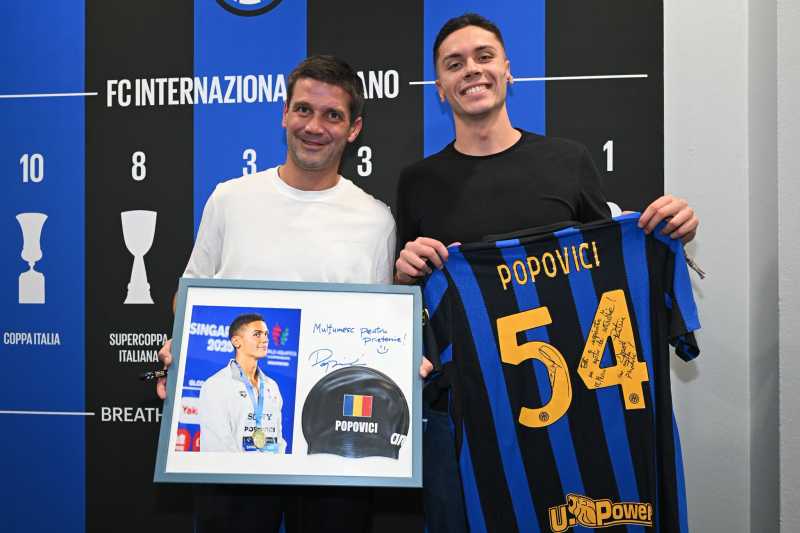
David Popovici finds inspiration beyond the pool in meeting with Cristian Chivu at San Siro
Romanian swimming star David Popovici returned from Milan with more than memories of his first visit to San Siro Stadium. The Olympic and world champion described his meeting with Cristian Chivu, head coach of Inter Milan, as one of the highlights of a trip that offered lessons in leadership, excellence and longevity at the highest level of sport. Popovici tra

BVB:New structure of Multilateral Trading Facility will become operational starting November 20, 2026
The new structure of the Multilateral Trading Facility (MTF) will become operational on November 20, 2026, and will be organized into three distinct markets: the SME Growth Market (PC), the Main Market (PB), and the International MTF (SMTI), the Bucharest Stock Exchange (BVB) announced on Monday. The new architecture of the Multilateral Trading Facility (MTF)
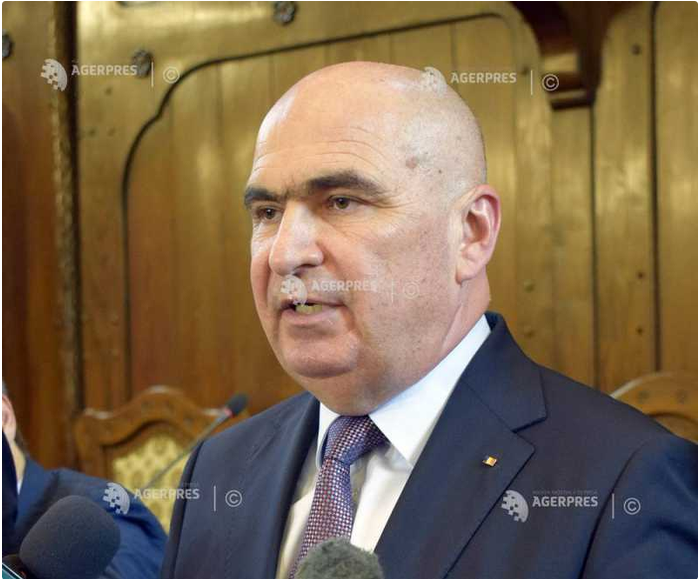
Bolojan: PNL to reschedule outstanding election campaign debts and seek accountability for unauthorised contracts
The National Liberal Party (PNL) has outstanding debts from the 2020 local elections, involving four local branches, as well as from the 2024 elections, which it needs to reschedule and repay, party leader Ilie Bolojan said on Monday. He said the party would make public details of all the spending, including amounts covered by members' donations and public

UPDATE/Von der Leyen:Additional EUR 10 mln allocated to Romania for Black Sea search & rescue operations
The European Commission is allocating an additional €10 million to the Romanian authorities for Black Sea search and rescue operations, Commission President Ursula von der Leyen said on Monday at a joint press conference with President Nicusor Dan. This initiative strengthens the European Union's capacity to respond to crises at its borders, the head
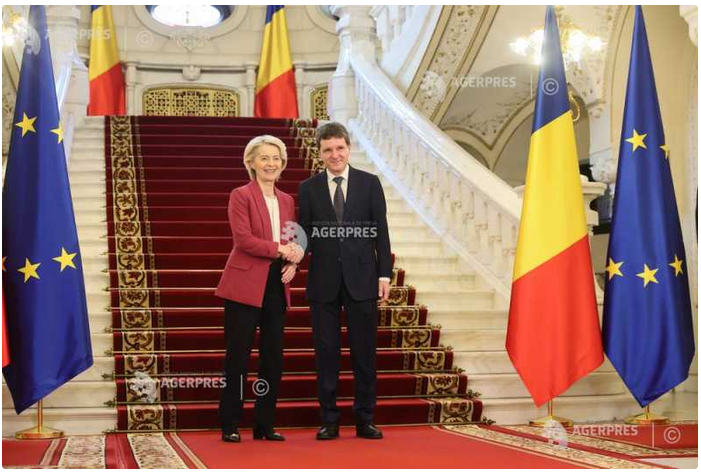
European Commission's von der Leyen welcomed by President Dan
President of the European Commission Ursula von der Leyen on Monday was welcomed at the Cotroceni Presidential Palace by President Nicusor Dan, with the two leaders expected to discuss security in the Black Sea area. The head of state and the president of the EC were scheduled to have one-on-one talks and hold a joint news conference afterwards. <
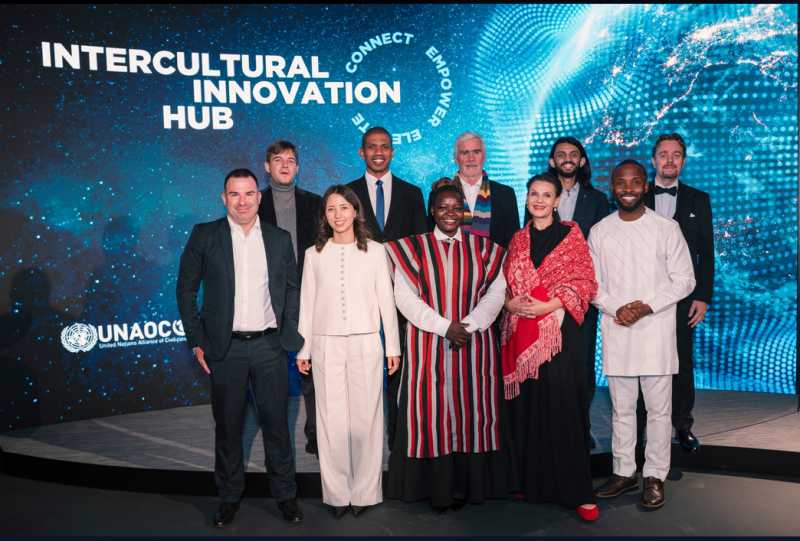
Suryam Association's Ukrainian refugee integration project wins global UN and BMW Group award
The Suryam Association (MuresHub), based in Targu Mures, has become the first organisation in Romania to receive a global award from the United Nations (UNAOC) and BMW Group for social innovation, at the Intercultural Innovation Hub (IIH) Gala in Milan. The award recognises a project launched in 2022 as an emergency response to support families fleeing the war in Ukraine.
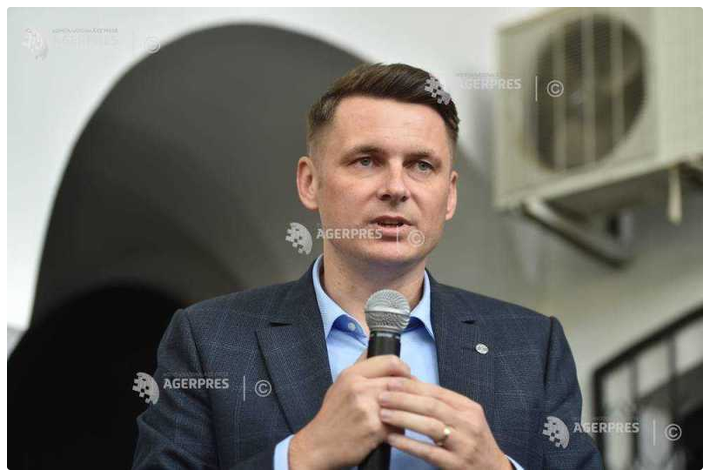
Abrudean:Decision to recover campaign funds is not directed at specific individuals, nor is it a settling of scores
Senate President Mircea Abrudean stated on Monday that the PNL leadership's decision to recover funds from unpaid invoices or from contracts concluded in violation of statutory provisions is not directed against any specific individuals, nor is it an act of settling scores. 'This is not a decision directed against specific individuals, nor is it a sett
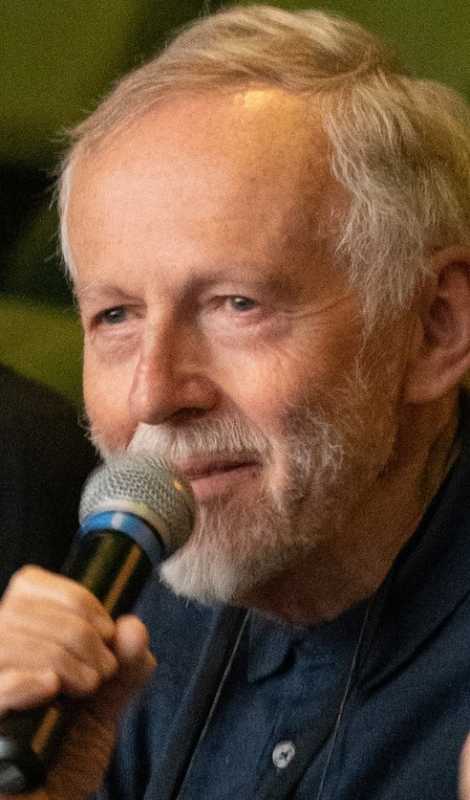
Film University to confer Doctor Honoris Causa title on British film historian Ian Christie
The National University of Theatre and Film 'I.L. Caragiale' (UNATC) will award British film historian Ian Christie the title of Doctor Honoris Causa at a ceremony to be held on November 19 in the university's Ileana Berlogea Hall. The British film historian will be in Bucharest from November 19 to 22, the organisers inform in a press release sent

Domestic natural gas production will exceed Romania's demand with Neptun Deep exploitation
Domestic production of natural gas is expected to exceed Romania's consumption demand once it reaches the plateau level of production in the Neptun Deep block in the Black Sea, estimated at approximately 8 billion cubic metres annually, to which about 8 billion cubic metres of onshore deposits are added, Aristotel Jude, member on the Board of Directors of Romgaz, said on
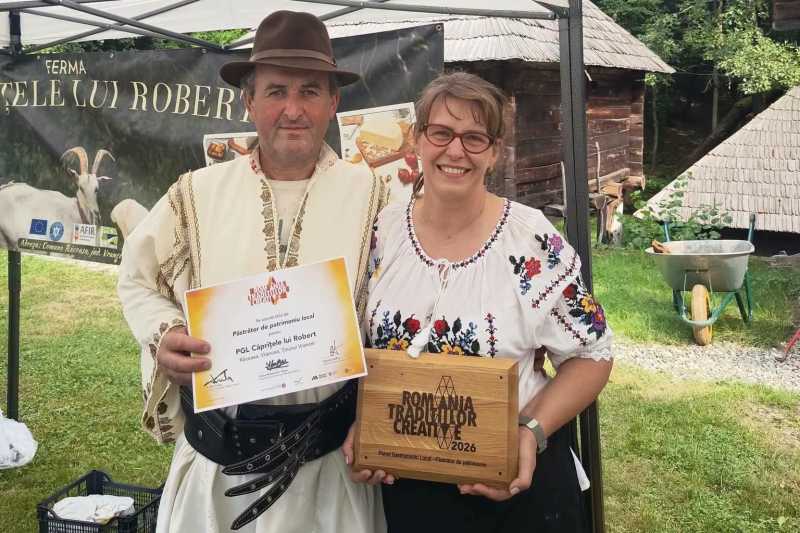
I CHOOSE ROMANIA/Former ICU nurse in Italy runs traditional gastronomic establishment in Racoasa, Vrancea
She left Romania in 2004, departing from the Jiu Valley, which she says was 'slowly but surely dying,' and went on to become a nurse in an intensive care unit in Italy. She had an indefinite employment contract and a system that offered her stability. More than a decade later, however, Marcela Pricop chose to make the journey in the opposite direction, back to Romani

Cernavoda Nuclear Power Plant Unit 2, expected to resume operation on Tuesday
Unit 2 of the Cernavoda Nuclear Power Plant is expected to resume operation on Tuesday, following the start-up sequence for the reactor, which was initiated on Monday at 00:42, the Ministry of Energy announced. Unit 1 of the Cernavoda power plant was resynchronised with the National Energy System on Friday afternoon. At 08:50 on Monday morning,