

I CHOOSE ROMANIA/Former ICU nurse in Italy runs traditional gastronomic establishment in Racoasa, Vrancea
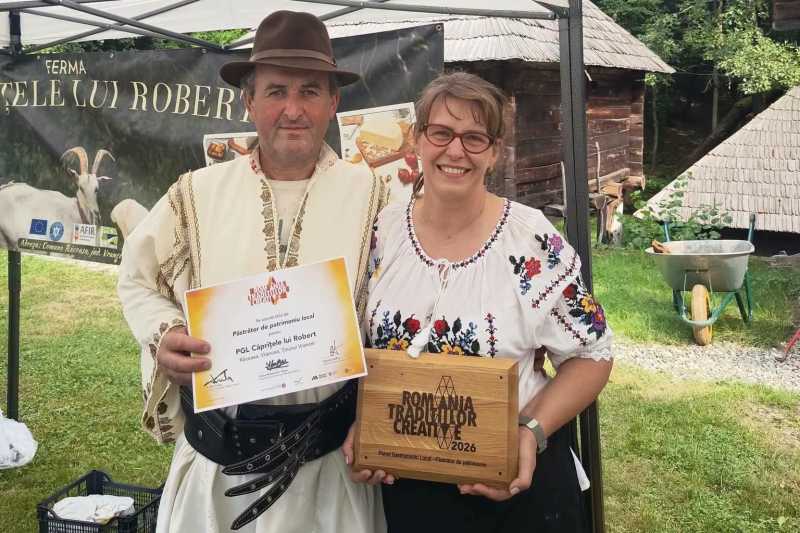
She left Romania in 2004, departing from the Jiu Valley, which she says was 'slowly but surely dying,' and went on to become a nurse in an intensive care unit in Italy. She had an indefinite employment contract and a system that offered her stability. More than a decade later, however, Marcela Pricop chose to make the journey in the opposite direction, back to Romania.
Here, together with her husband, she started almost from scratch, with a farm, a few animals and plenty of challenges. She taught herself how to turn milk into yoghurt, kefir and cheese and eventually took the idea a step further: bringing what she produced on the farm directly to the plate of those who came through her door. Today, the local gastronomic establishment she runs in Vrancea aims to offer more than just food: it seeks to recreate the taste of a genuine rural household.
***
The story begins long before the farm. In Romania, Marcela Pricop had worked in the healthcare system at a family doctor's practice. In 2004, the lack of prospects in the Jiu Valley prompted her to look for work in Italy. Having arrived there at the end of July, she was unable to start work immediately because Romania was not yet a member of the European Union and she had to complete the professional registration formalities and pass a language examination. However, she was not prepared to sit around doing nothing.
'I left because I was living in the Jiu Valley and it was already an area that was slowly but surely dying. When I arrived in Italy, I already had a job secured but I could not start until I had registered with the professional college and taken the language examination. I arrived at the end of July and had to wait until September because August was the holiday month. But I could not stay at home doing nothing, so I went to the hospital and asked whether I could volunteer, partly because that would also help me learn the language faster. I went straight from a family doctor's office to an intensive care unit. It was a complete change of environment, but it was a department where I learnt a great deal and I do not regret a single second of it,' Marcela Pricop recalls.
Her years in Italy brought her a profession, financial stability and a personal experience that would later weigh heavily in her decision to return home. The move back was not sudden. Between 2012 and 2014, following several miscarriages and then the birth of her son, the centre of her family's life gradually shifted towards Romania.
Marcela also remembers how the Italian system protected her when, while working in intensive care and facing a pregnancy considered high-risk, she was removed from a potentially hazardous working environment. Giving up a permanent employment contract was not, however, an easy decision.
***
'It was difficult to say 'that's it, I'm going back' when you were leaving a permanent job and had no certainty about what you would find at home. We went through quite a long period, between 2012 and 2014, until Robert was born. I worked in an intensive care unit where there were biological risks and, as soon as you became pregnant, you were removed from that environment. In my case, the pregnancy was already considered high-risk and they sent me home, telling me to complete all the necessary paperwork and try to carry the pregnancy to term. My contract in Italy ended in 2016 and that was when another chapter in our lives effectively began,' she says.
Back home, her husband, Marcel, had already taken the first steps towards establishing a farm. In 2013, the family secured funding through a 40,000-euro project for young farmers, which enabled them to purchase a tractor and expand the area of land they cultivated. For Marcela, however, farming and milk processing were still unfamiliar territory.
In 2017, after taking a closer look at the farm's figures, she concluded that simply producing milk and cheese was not enough. If the family was to make a living from what it produced, it needed to make better use of its raw materials.
She acknowledges that it was necessity, rather than a longstanding passion for cheese-making, that brought her to this point. She began reading, searching for information and experimenting. Unable to find the specialist courses she was looking for in Romania, she turned to materials in Italian and even to an online forum where the technical processes involved in transforming milk were explained. Her first attempts involved yoghurt and kefir. Some were successful, while others ended up as animal feed. The most challenging product proved to be hard cheese.
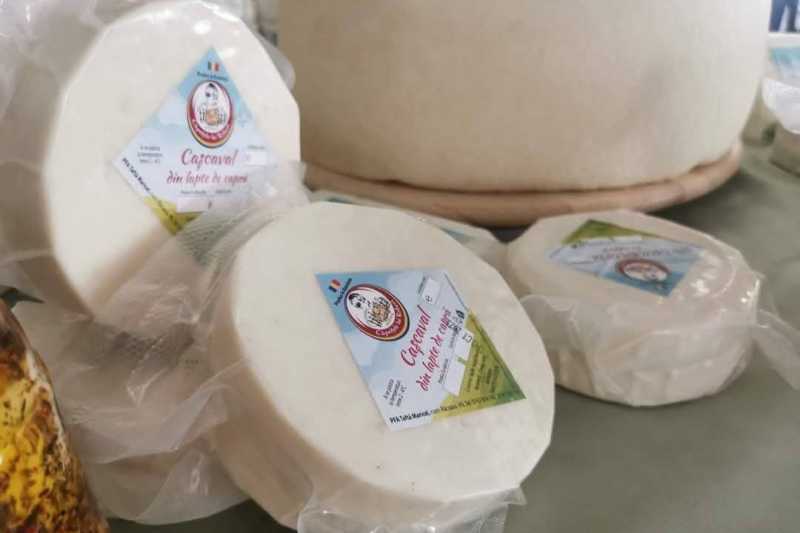
Photo source: Marcela Pricop / Personal archive
'In 2017, I took stock and told my husband that what we were producing was not enough and that we needed to do more with the milk we had. We started gradually, taking small steps, making a little yoghurt and a little kefir. I made mistakes too; not everything worked out from the beginning. The hardest thing was making cheese. It gave me the most trouble, but eventually I succeeded because I began to understand milk and what happens to it. I read extensively, looked for courses in Romania and, because I could not find what I needed, I started searching in Italian and studying the processes, cultures and every stage involved. At first, I experimented for our own consumption and, little by little, we arrived at the products we make today,' Marcela explains.
***
A new project, submitted in 2019 and approved the following year, with a value of 117,000 euros, enabled the family to purchase equipment for the farm and milk processing. But this was not the final destination either. Marcela Pricop wanted to complete the circle: from the animal raised on the farm, through the raw material and processed product, to the plate served to the customer.
This is how the local gastronomic establishment took shape. Its operating principle is simple: the chain between producer and consumer should be as short as possible. Not only so that the money stays with the producer, but also so that the person sitting at the table knows who made the cheese, where the milk comes from, who raised the poultry and what kind of maize was ground to make the polenta.
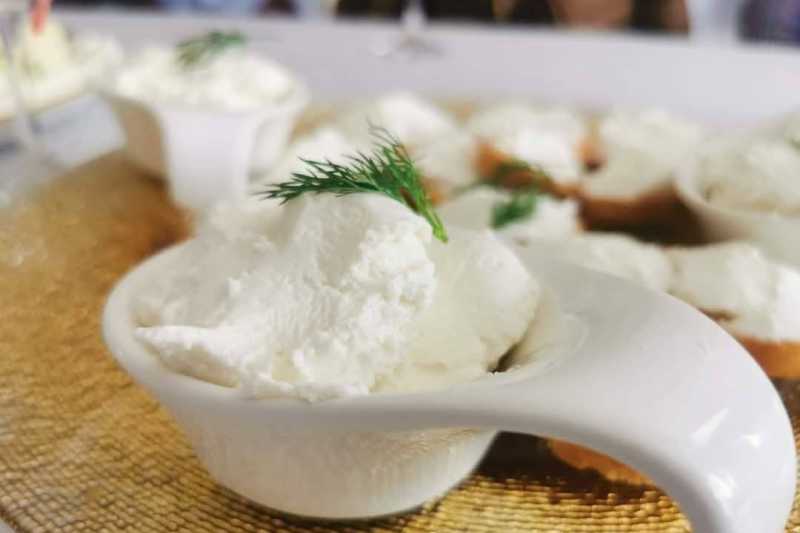
Photo source: Marcela Pricop / Personal archive
'I could not stop at farming and milk processing. My idea was to go from the farm directly to the finished product on the plate, shortening the chain as much as possible. I have never liked selling products I make myself through an intermediary. I believe that, if you want to grow, the person sitting in front of you needs to understand that you are the producer and that you know exactly what you are putting on their plate. Our dairy products contain milk, salt, cultures and natural rennet. I witnessed too much suffering during my years working in healthcare and, having chosen a different path, I thought I could at least try to offer food that is as simple and healthy as possible,' Marcela Pricop explains.
At the table, this philosophy is reflected in seemingly small details. The polenta is not made from maize flour bought off the shelf, but from maize taken to a mill and ground there. It takes longer to cook and requires more patience when stirring, but that is precisely the taste that, according to the host, city dwellers cannot easily recreate at home.
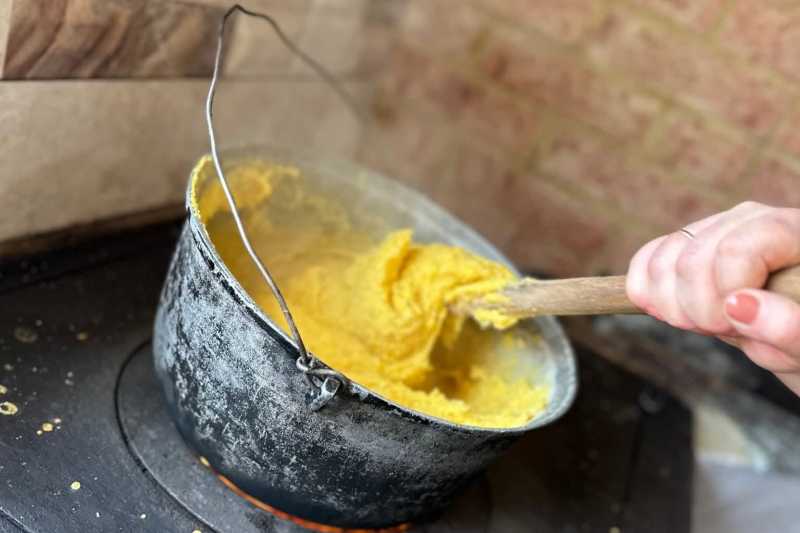
Photo source: Marcela Pricop / Personal archive
'I also tell others who run local gastronomic establishments: 'Do not serve people the same polenta they can make themselves in their flat using shop-bought flour.' We use maize flour made from corn that is taken to a mill and ground there. It is true that it takes longer, has to cook for longer and needs to be stirred, but the taste is different. People who visit a local gastronomic establishment are looking precisely for that taste from the past and for something they do not eat at home every day. It is easy to win a customer once; it is much harder to make them come back. To achieve that, you have to be honest about what you put on their plate,' she says.
Most of the raw ingredients used come from the family's own farm. Milk and cheese, eggs and meat are produced there, with the exception of veal, which is purchased from a livestock farmer in the commune. When they run short of eggs, they also source them locally from other households. The family's wheat is taken to the mill and returned as flour, while some aromatic herbs are grown and dried on the farm. Fruit is turned into jams and syrups, including blackberry, blackcurrant and elderflower varieties.
The experience Marcela wants to create around the table is not limited to lunch. She has also organised traditional family events, with food prepared on the farm and homemade syrups served instead of commercially available drinks. Her plan is to develop the offer in precisely this direction: visitors should come not only to eat, but also to spend time on a farm and understand where their food comes from.
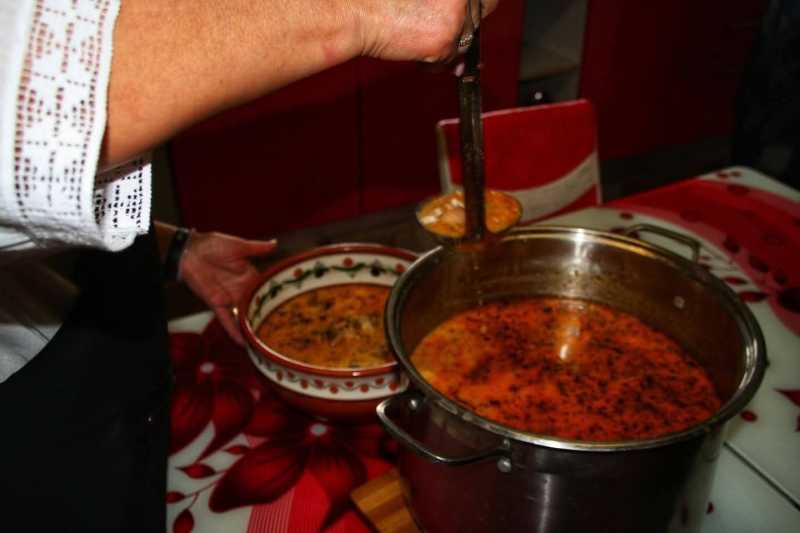
Photo source: Marcela Pricop / Personal archive
'Almost all our raw ingredients - meat, eggs, milk and cheese - come from our own farm. The exception is veal, which I buy from a livestock farmer in the commune. If we run out of eggs, I look among the people living nearby and ask who has fresh eggs for sale. We grow our own wheat, take it to the mill and have it ground, we grow and dry our own herbs and we make jams and syrups from fruit. We have made blackberry, blackcurrant and elderflower syrups and try to use as much as possible of what we have here. I believe that is what a local gastronomic establishment should offer: not just a meal cooked in a country kitchen, but something that genuinely comes from the household you have visited,' Marcela says.
For her, this is also the difference between a gastronomic establishment that exists only on paper and one that can become a small tourist destination. The meal needs to be connected to the place, its products and, as far as possible, other experiences. Visitors are no longer simply looking for attractions to tick off a list, she believes, but for reasons to spend several hours somewhere, to see, taste and take part in activities.
***
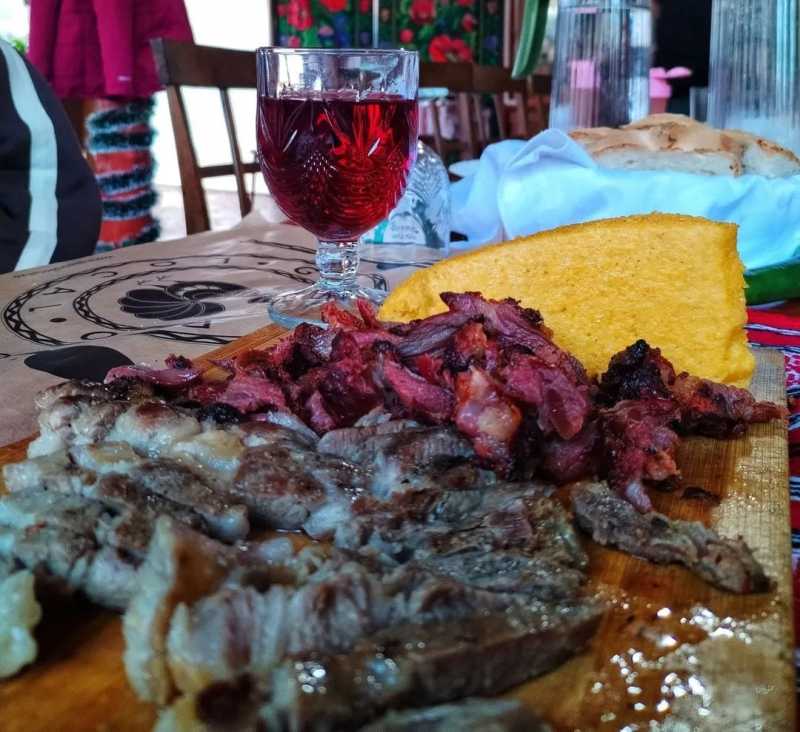
Photo source: Marcela Pricop / Personal archive
Several local gastronomic establishments have been set up in Vrancea in recent years, including through projects funded by the European Union. In practice, however, those operating consistently and attracting visibility among tourists can be counted on the fingers of one hand. For such a place, opening the door is only the beginning: maintaining operations requires raw materials, daily work, promotion, staff and the ability to create an experience authentic enough to bring visitors back.
However, returning to Romania did not bring satisfaction alone. While the work on the farm never frightened her, bureaucracy sometimes made her question whether staying had been the right choice. The paperwork required for projects, payment instalments, documents requested by institutions and the difficulty of making further investments became a burden.
Another setback came in 2024, when she submitted a project to install photovoltaic panels, an important investment for a business in which milk-processing equipment generates monthly electricity bills running into thousands of lei. According to Marcela Pricop, the project was declared non-compliant because of a single document which she believes could have been requested later through a clarification procedure. The experience prompted her to reconsider other options for the future.
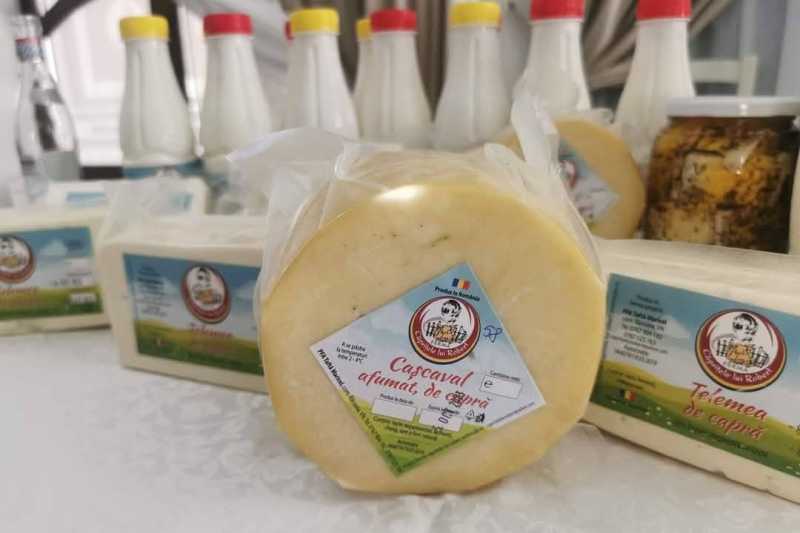
Photo source: Marcela Pricop / Personal archive
'There are times when you wonder whether it would not be easier to leave again. The bureaucracy is far too cumbersome. If I showed you how many files I have for the six payment instalments of a single project, you would understand what I mean. In 2024, I also submitted a project for photovoltaic panels because electricity had become a major expense since we acquired the milk-processing equipment, but the project was declared non-compliant over a single document. These things wear you down and make you think about alternatives, especially when all you want is to keep investing. But I have come to understand something about myself: I am the kind of person you throw out through the door and who comes back through the window. I do not give up,' she says.
Even so, the plans continue. After tourists visiting the gastronomic establishment asked where they could charge their electric cars, Marcela began taking steps to install a charging station. It may seem like a detail far removed from the world of polenta cooked in a traditional cauldron and homemade cheese, but it says something about how she sees the future of the business: tradition should not be preserved in a photograph, but made accessible to people today.
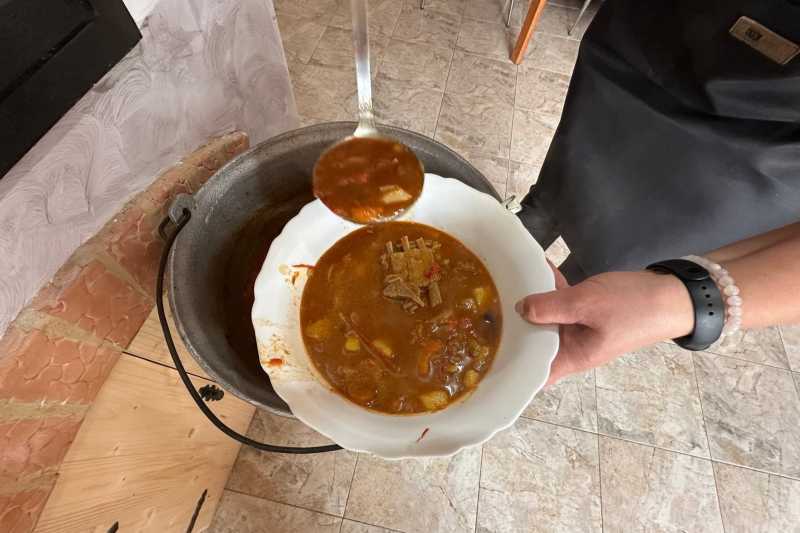
Photo source: Marcela Pricop / Personal archive
Marcela Pricop says that developing such a place cannot be separated from the development of tourism throughout the region. A local gastronomic establishment can provide lunch, but tourists also need attractions to visit and activities that will encourage them to stay. In her view, producers, local authorities and tourism promotion organisations should work together to link historical monuments, farms, local producers and rural experiences.
'I believe that when you run a local gastronomic establishment, you also need to think about other activities you can offer. People do not come to an area just to see a monument, eat and leave. They want an experience, something else to do, to see how things are produced and discover the place. But you cannot do all this on your own because it involves a great deal of logistics and you need people to help. I believe the authorities should also become more involved so that everything the area has to offer can be brought together into an experience for tourists,' Marcela Pricop says.
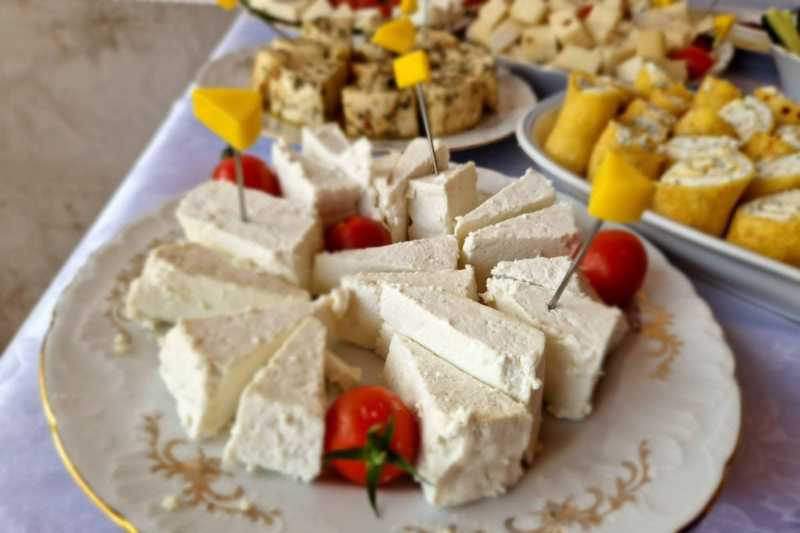
Photo source: Marcela Pricop / Personal archive
This summer, the family also participated in an event organised in Sibiu, where producers, craftspeople and local gastronomic establishments came together in a space dedicated to traditions. For Marcela, seeing people remain at the tables even in the rain to taste the food prepared there was further confirmation that there is an appetite for authentic products when they are properly showcased.
***
Perhaps this is the full circle of a story that began with a ticket to Italy. Marcela Pricop left because she could no longer see enough prospects at home and returned from a country where she had a secure job to learn an entirely new trade. She moved from intensive care to farming, from not knowing how to process milk to making the cheese that kept her experimenting for months, from the first investments to running a local gastronomic establishment where she tries to serve as much as possible of what her family produces.
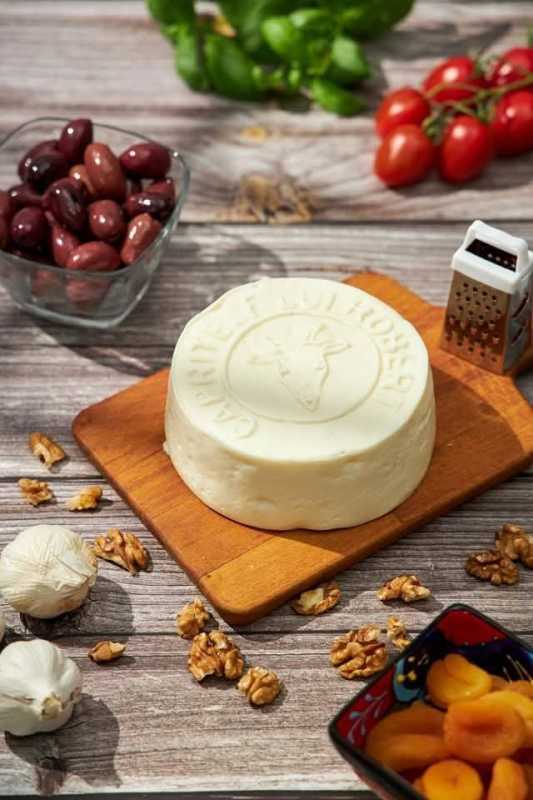
Photo source: Marcela Pricop / Personal archive
And although paperwork and obstacles have sometimes made her consider leaving again, for the time being her plans remain firmly rooted here: a charging station for tourists' electric cars, more activities on the farm, more products and an experience that will encourage people to return.
Because, two decades after first leaving Romania, the determination to carry on seems to have become part of the business itself: if you throw her out through the door, Marcela says, she comes back through the window. AGERPRES (RO - writing by: Dana Lepadatu; EN - writing by: Adina Panaitescu)
The content of the www.agerpres.ro website has the exclusive purpose of public informing.
All the information published on this website by AGERPRES is protected by relevant legal dispositions.
It is forbidden to copy, reproduce, recompile, decompile, distribute, publish, display, modify, create derived components or products or full services, as well as any exploitation of the site's content.
Details in the section Terms of Use. If you are interested in picking up AGERPRES news items, please contact the Marketing Department – marketing@agerpres.ro.
The use of the Comments section entails your obligation to respect the AGERPRES terms and conditions in regards to the publishing of comments on the www.agerpres.ro.
Other news in category

Cernavoda Nuclear Power Plant Unit 2, expected to resume operation on Tuesday
Unit 2 of the Cernavoda Nuclear Power Plant is expected to resume operation on Tuesday, following the start-up sequence for the reactor, which was initiated on Monday at 00:42, the Ministry of Energy announced. Unit 1 of the Cernavoda power plant was resynchronised with the National Energy System on Friday afternoon. At 08:50 on Monday morning,
EC President Ursula von der Leyen to meet President Nicusor Dan, PM Luca Niculescu on visit to Bucharest
President Nicusor Dan will welcome European Commission President Ursula von der Leyen to Cotroceni Palace on Monday, with the two officials going to discuss European defence and security, particularly security in the Black Sea region, European competitiveness, including the current energy dimension, EU enlargement, with a particular focus on Romania's support for the Rep
Attack in Krakow/IntMin Neacsu: I convey my solidarity with Polish police officer, we are prepared to offer support
Minister of Internal Affairs Marian Neacsu issued a message following the armed attack that took place on Saturday in Kraków, which resulted in deaths and wounded, stating that Romania stands ready to provide support, should it be requested. 'During these difficult times for Poland, our thoughts are with the bereaved families affected by the attack
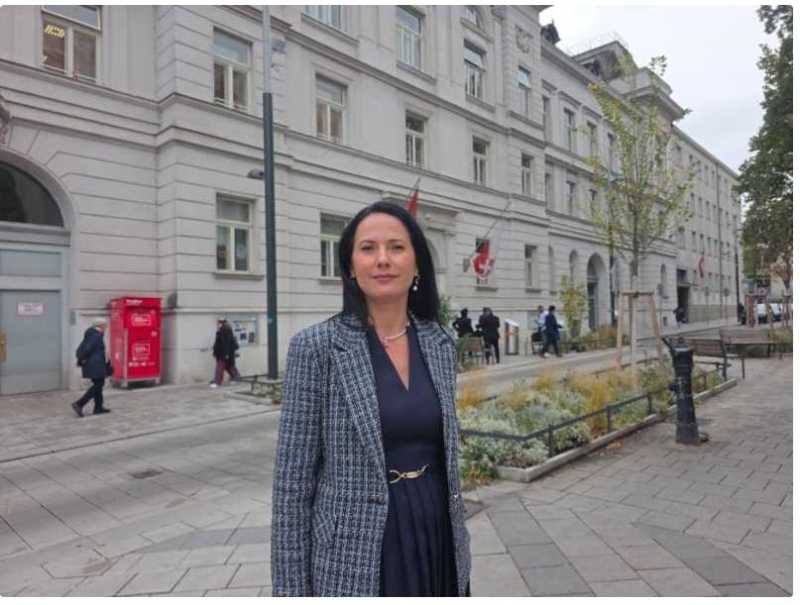
INTERVIEW/Ramona Miletic, Deputy Mayor of Simmering (Vienna): I am far from Romania but Romania is with me
Ramona Miletic is the Deputy District Head of Vienna's Simmering district but until 2009 she lived and worked in Pitesti, where her parents and brother still reside. At the age of 27, she was a purchasing manager at a major company in Pitesti, with a promising career already underway. Love, however, changed everything. She met her future husband, an Austri
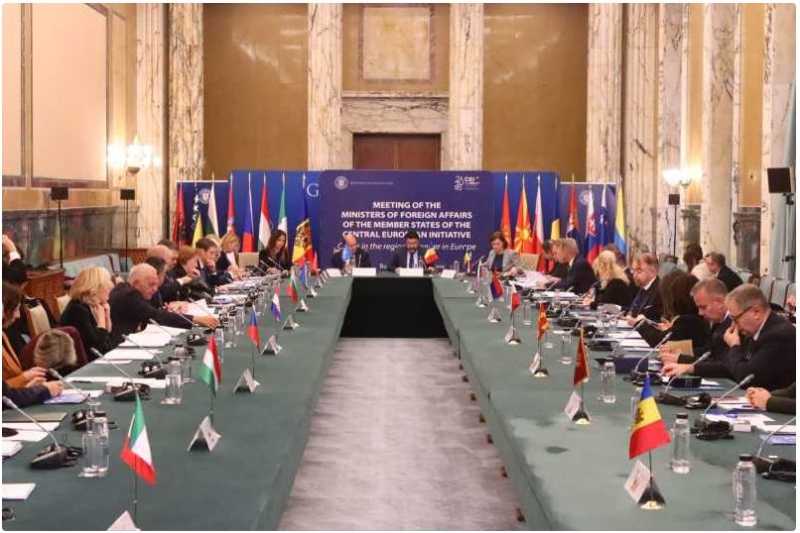
Central European Initiative Action Plan for 2027-2030, adopted at ministerial meeting in Bucharest
The meeting of the Ministers of Foreign Affairs of the Central European Initiative (CEI) member states took place on Friday at Victoria Palace. During the event, the Bucharest Joint Declaration and the CEI Action Plan for 2027-2030 were adopted. The event marked the conclusion of Romania's Chairmanship-in-Office, the Ministry of Foreign Affairs (MAE) annou
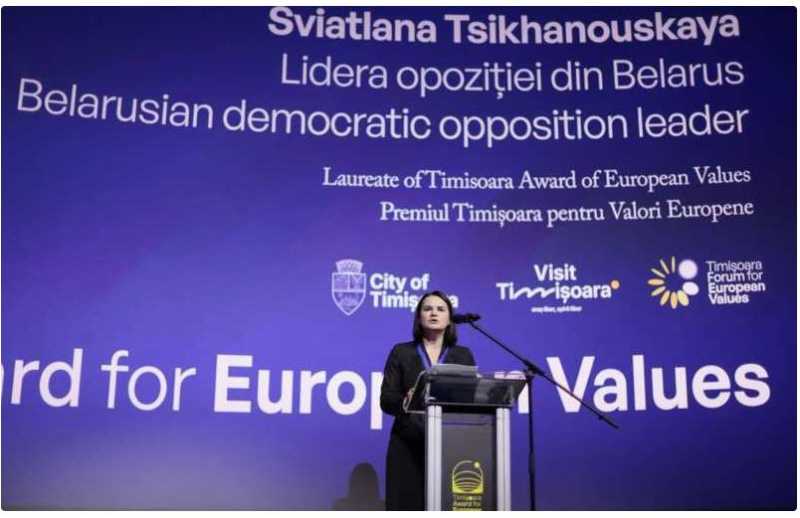
Belarus's opposition leader receives award in Timisoara, calls to support Ukraine
Sviatlana Tsikhanouskaya, leader of the democratic opposition in Belarus, received the 'Timisoara for European Values' Award on Friday during the third edition of the forum bearing the same name. The honor was bestowed in recognition of her courage in peacefully resisting a repressive regime and for defending human freedom and dignity. In her speech at

Romania makes debut at China International Import Expo in Shanghai with two pavilions, 15 companies
Romania is taking part for the first time in the China International Import Expo (CIIE), held in Shanghai from November 5 to 10, 2026. Romania is participating in the event's ninth edition with two exhibition pavilions showcasing 15 companies, according to a press release from the Consulate General of Romania in Shanghai. Held annually, CIIE is the world&#
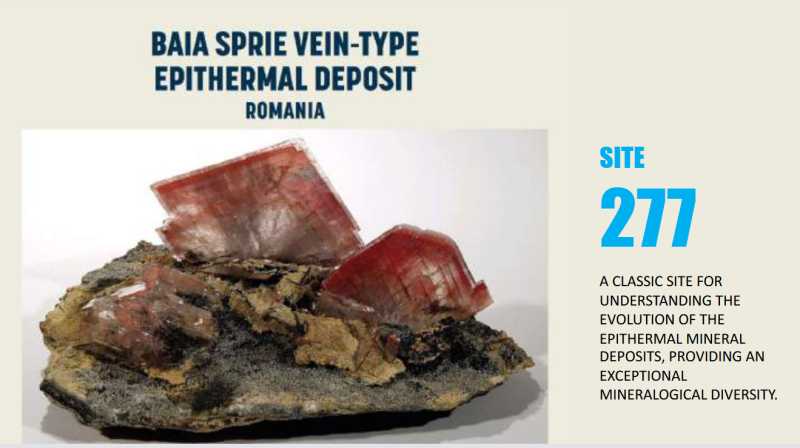
Baia Sprie hydrothermal deposit becomes Romania's first site on IUGS geological heritage list
The hydrothermal ore deposit in the former mining town of Baia Sprie has become the first site in Romania to be included on the geological heritage list recognized by the International Union of Geological Sciences (IUGS), the team behind the Gutai-Maramures UNESCO Geopark project announced on Friday. The international recognition was announced at an event held

Black Friday2026/Transaction volumes across all payment methods reached 763 million lei by Friday evening
The transaction volumes processed across all payment methods during 'Black Friday' 2026 reached 763 million lei, according to data presented on Friday evening by Elena Gheorghe, Country Manager for PayU Romania and Hungary. 'As of this moment (17:45, editor's note), we have reached 763 million lei in processed transaction volume across all paym
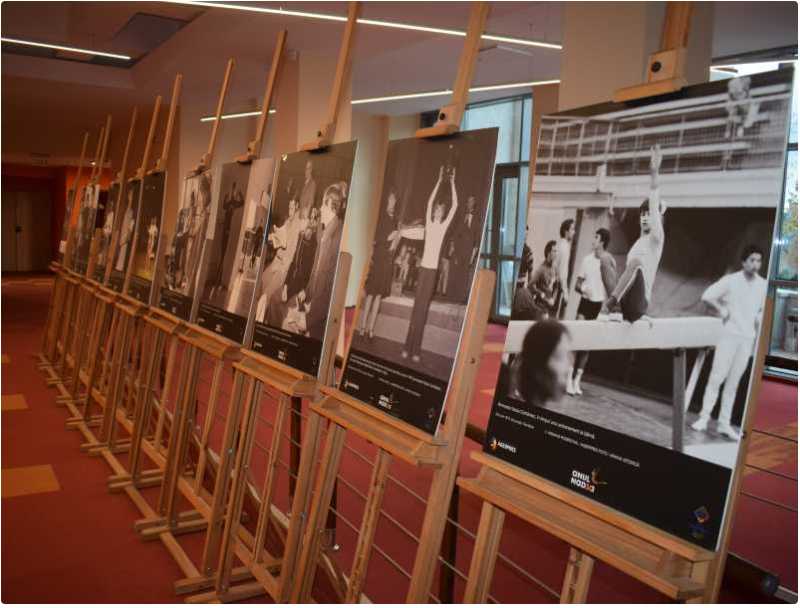
AGERPRES exhibition celebrating Nadia Comaneci's perfect 10 opens in Vaslui
The AGERPRES exhibition 'Nadia. Perfection Has a Story' opened on Friday at the Vaslui County Cultural Centre, marking the start of the Excellence in Education Gala. The mayor of Vaslui said he had been particularly keen to bring the exhibition to local audiences to celebrate the achievement of multiple gymnastics champion Nadia Comaneci 50 years ago,

Romanian president warns fake accounts, algorithms threaten citizens' voices in democracies
The danger to democracy is that citizens' legitimate voices may no longer be heard, drowned out by hundreds, thousands or tens of thousands of paid fake accounts or by algorithms, President Nicusor Dan said on Friday at a working meeting on 'Information Society and Constitutional Democracy', organised as part of the three-year programme of the Presidency of the A
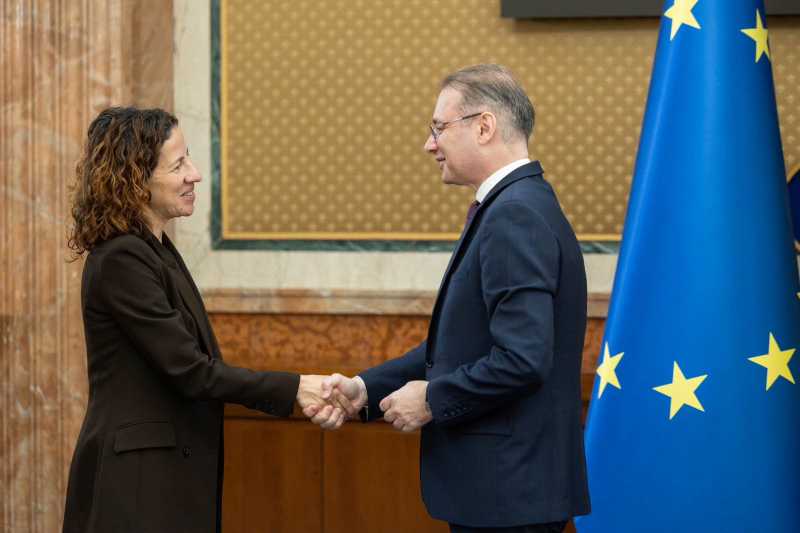
PM Niculescu, European Commission vice-president Minzatu discuss youth employment, skills development and EU funding
Prime Minister Luca Niculescu met on Friday at Victoria Palace with European Commission Executive Vice-President for Social Rights and Skills, Quality Jobs and Preparedness Roxana Minzatu to discuss the government's priorities in education, youth, skills development, employment and social policies, as well as opportunities to access EU funding in these areas.

Niculescu:Information Society and Constitutional Democracy,a theme that represents challenges of contemporary world
Luca Niculescu stated on Friday that engaging in a debate among constitutional jurisdictions on the topic of 'The Information Society and Constitutional Democracy' is a highly valuable endeavor, as it highlights the implications of a society's fundamental values, values upon which the daily lives of citizens also depend. The Head of the Executive p
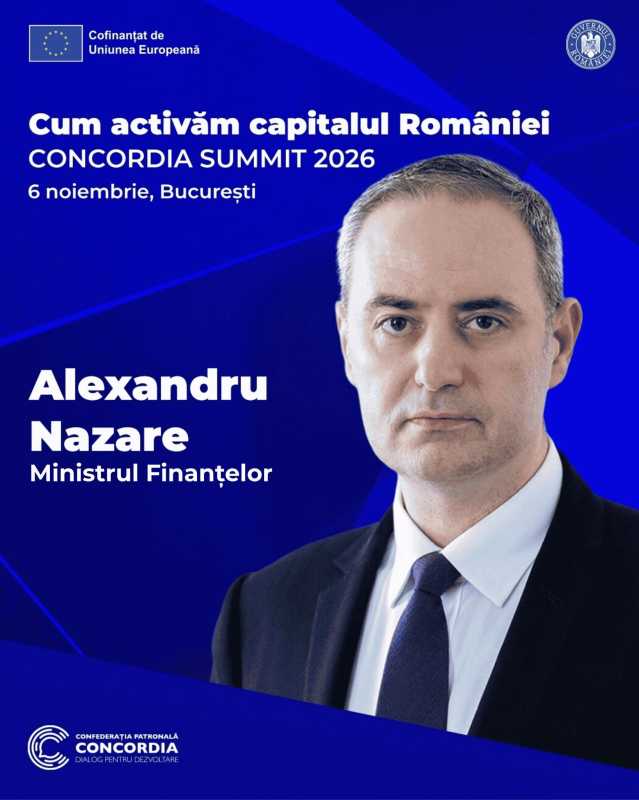
FinMin Nazare says Romania has two offers for the construction of an AI Gigafactory
Romania has received two bids for the construction of an AI Gigafactory, and the selection process is in its final stage, with authorities hoping to be able to announce the outcome by the end of this year, Finance Minister Alexandru Nazare stated on Friday at the Concordia Summit 2026. 'Following nearly a year of effort, Romania currently has two bids on t