

Japanese student explores Romania's iele, healing incantations and ancient superstitions in Buzau
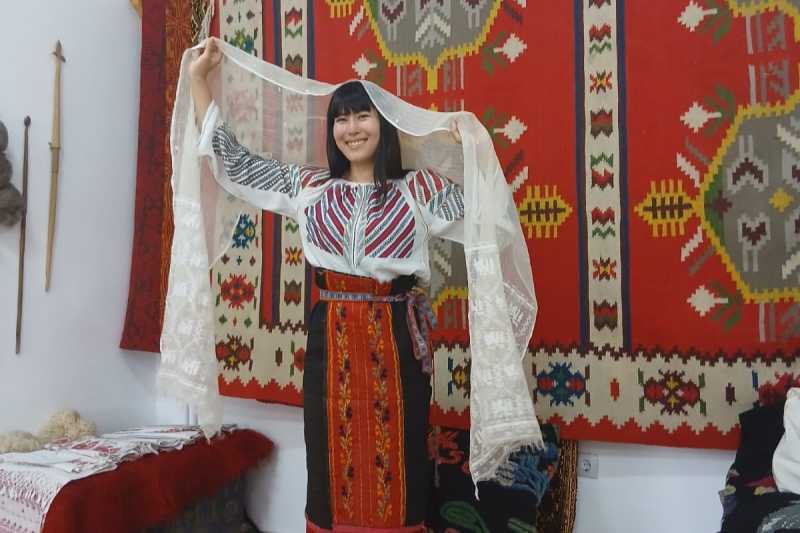
The evil eye, the iele and the Dragaice, superstitions surrounding death, birth and marriage, curses and healing incantations - all part of Buzau's living intangible heritage - have been the focus of research by a Japanese student seeking to explore the differences and similarities between Romanian and Japanese culture, as well as the lives of people whose traditions are rooted in a close relationship with nature, the land and mythical beings.
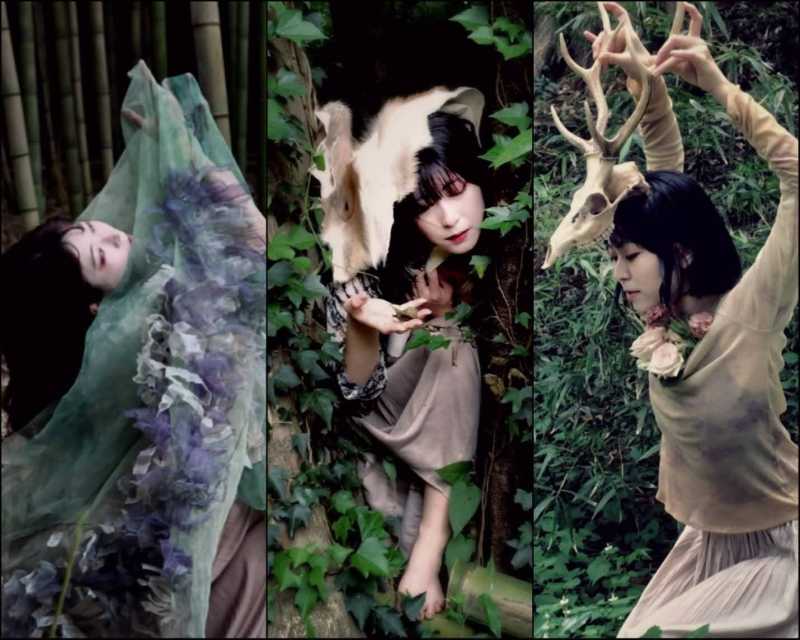
Suzuko Miyake is pursuing postgraduate studies in the Global Art Practice programme at the Graduate School of Fine Arts of Tokyo University of the Arts. She recently travelled to Romania and visited the Timpul Omului Museum in Manzalesti to learn more about local culture and mythology as part of a project exploring folk traditions associated with female healers and drawing parallels with Japanese traditions.
'What I initially wanted to understand was how these women live in relation to nature, the land and invisible beings such as spirits. I was interested in the ways in which they communicate, respond to and coexist with things that are not necessarily visible. Dance is also a way of entering into such a relationship. When I dance, I try to interact with and respond to my surroundings rather than simply looking at nature as something to admire. This led me to become interested in traditional ways of life that developed through a close relationship with the land and nature. I began to think that these traditions might contain practices and forms of knowledge passed down from generation to generation - ways of living with the land, listening to it, responding to it and maintaining a relationship with the natural world. That is precisely what I sought to discover through my research in Romania,' Suzuko Miyake told AGERPRES.
Miyake travelled to several regions of Romania but chose the Slanic Valley and the Timpul Omului Museum because of the wealth of information about traditions, myths and superstitions relevant to her research. She wore a traditional Romanian blouse from the Manzalesti area for the first time and was struck by the stories behind such garments.
'At the museum, I had the opportunity to discover not only rituals but also many aspects of local traditions and everyday culture. I had the chance to wear beautiful traditional costumes and even try my hand at the potter's wheel. One thing that made a particularly strong impression on me was the traditional blouse. Each blouse has its own story and has been passed down from generation to generation. I was particularly moved by one blouse embroidered by a mother who had lost her two daughters and which depicted their faces. I am certainly fascinated by Romanian rituals and culture, as well as by the people referred to as 'witches', but what captivates me even more is the individual story behind them: each person's life and the way those lives are revealed through clothing, through the accounts of people who sought the help of a healer and through oral traditions passed down over generations,' she said.
One aspect that particularly caught Miyake's attention during her research in Buzau was the survival of traditional healing practices - bodies of knowledge, beliefs, rituals and remedies used to prevent, diagnose and treat illness. Many of these practices were entirely new to her.
'What particularly caught my attention in Manzalesti was that various forms of traditional healing practices have been preserved there. Until now, in my research, I had only encountered healing practices associated with the evil eye. I had never seen practices for other ailments, such as abdominal pain, 'descantecul de aplecat' [incantation is used to ward off nausea and indigestion after someone has eaten too much or too eagerly, editor's note] or healing incantations against fright. It was also interesting to learn that healing incantations against the evil eye can vary from one region to another. Based on these experiences, I intend to create a performance installation as my graduation project. The incantations, body movements and forms of expression I learned here have been extremely important to my research,' Miyake said.
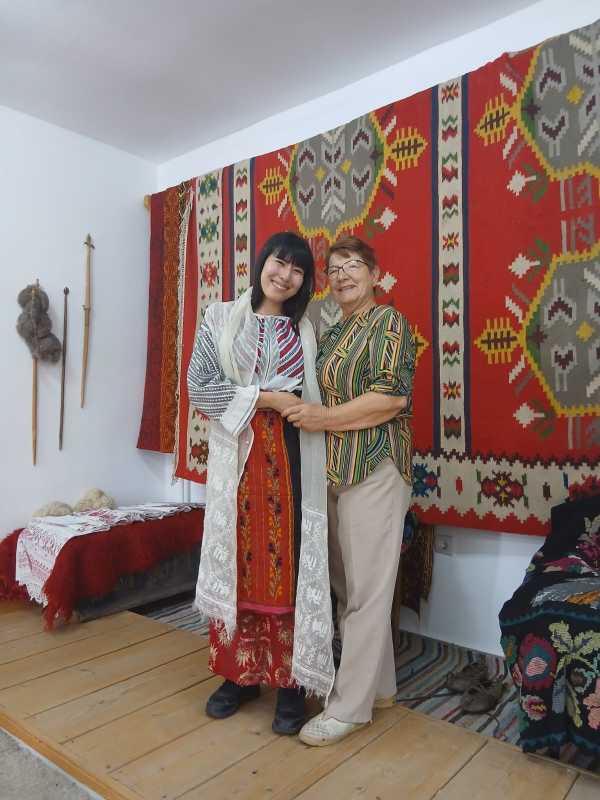
An important part of her research during the visit was comparing Japanese folk traditions and mythology with their Romanian counterparts, with the help of Cecilia Petrescu, curator of the Timpul Omului Museum in Manzalesti.
'She is a student at Tokyo University and has chosen a module in Balkan ethnography and cultural anthropology for her doctoral research. She is drawing parallels between Japanese traditions and those of our region. At the Timpul Omului Museum, she was particularly interested in objects once used in healing incantations, magic and rituals. All the wooden instruments - I don't mean string instruments - from the flute, caval and bucium to the bagpipes were used to break spells, and she was very impressed by that. I told her one of the local stories: for example, the most powerful spells are cast on Midsummer Night or St Andrew's Night; benevolent healing incantations are performed beside running water, while harmful ones are performed beside still water, near lakes or ponds. I know of a pond here in the area called the witches' pond, hidden in a forest and known to very few people. She went there and photographed it,' Cecilia Petrescu told AGERPRES.
In Japan, rituals involving musical instruments often carry very different associations from those Miyake encountered during her visit to Buzau.
'From what Cecilia told me, playing a wooden wind instrument between 11 p.m. and 1 a.m. can neutralise black magic, such as spells cast by witches. Interestingly, in Japan the belief is almost the opposite. There is a saying that if you play a flute or whistle at night, you may attract monsters or other sinister entities. In Japan, the sound of whistles and flutes was believed to summon sacred beings or spirits. Much of what in Romania is called 'white magic' is used to counteract black magic. In Japan, by contrast, many forms of folk magic are directed against spirits, yokai and other supernatural beings. I find it very easy to understand stories about the iele from a Japanese perspective. They feel very familiar to me because Japan also has many legends about spirits and supernatural beings associated with particular places, landscapes and forces of nature,' Miyake said.
Miyake also found intriguing differences and parallels in Romanian and Japanese beliefs surrounding blindness.
'I understand that in Romania there is a belief that blind people cannot cast the evil eye and are themselves protected against it (...) and I see a parallel with certain traditions in Japan. Historically, in Japan, blind people were often involved in shamanic practices and rituals for communicating with and commemorating the dead. Japan has a sacred mountain called Osorezan, which is said to be a place where the spirits of the dead gather. On this sacred mountain, blind female shamans known as 'itako' communicate with the spirits of the dead and convey their words to the living. About 800 years ago, a tradition emerged in which blind performers known as biwa-hoshi played the biwa, a Japanese lute, while reciting and singing The Tale of the Heike (Heike Monogatari), recounting the rise and fall of the clan. The biwa-hoshi became important transmitters of the story, and their performances were also associated with commemorating the spirits of the dead,' she said.
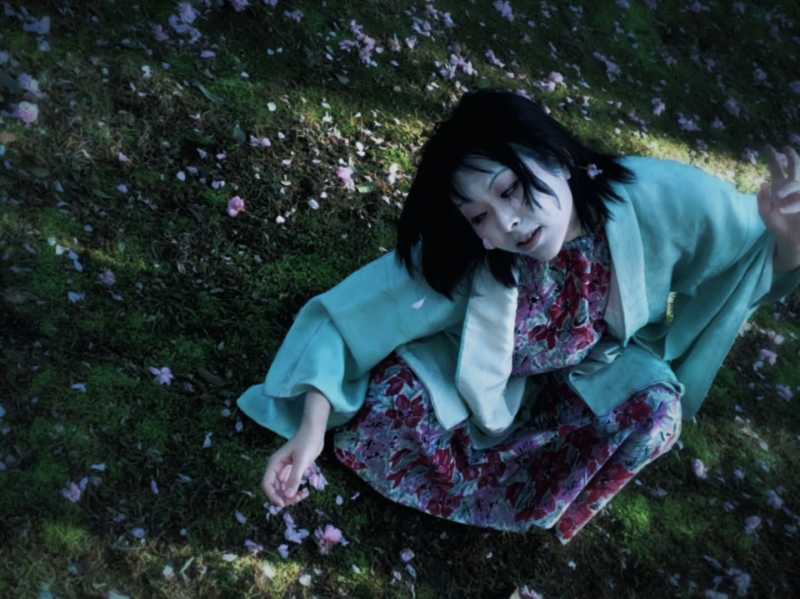
The iele (also known in folklore as Rusaliile, Soimanele, or The Holy Ones, editor's note) occupy an important place in Romanian folklore. Traditionally portrayed as extraordinarily beautiful but capricious and potentially dangerous supernatural beings of the air, they are most often described as young women dressed in white or wearing diaphanous veils, flying through the air or dancing. Alongside legends of the iele, northern Buzau abounds in superstitions passed down through generations.
'Most superstitions are connected with birth, marriage and death. There are some that people still will not disregard, and even some priests go along with them. They don't agree with them, but neither do they want to cause unrest among people. At a funeral, a hen is passed over the grave when the deceased is buried, the belief being that by scratching the ground it clears the dead person's path to heaven. At birth, a silver coin is put into the baby's bath, along with honey so that the child will be as sweet as honey. As for the iele, when I was a child, there was a perfectly circular patch of land in a hayfield belonging to my parents where no grass grew. I remember our parents forbidding us to cross it because people said the iele had danced there. It was one thing for girls, but boys were strictly forbidden because if the iele saw them, they would take away their minds. For us, the iele were the bad fairies, while the Dragaice were the good ones,' the museum curator said.
And the superstitions do not end there.
'At a funeral, great care is taken to make sure that no mouse or cat crosses the room where the wake is being held, because the dead person could then turn into a strigoi. There was also a custom here that, during wakes in the homes of people who had practised witchcraft, two masked men known as the baba and uncheasul would be brought in to keep the atmosphere cheerful throughout the night and drive away evil spirits so that they could not approach and take the soul. The household knew that the person who had died had done evil things,' Petrescu said.
Despite the thousands of kilometres separating Romania and Japan and their considerable cultural and social differences, the research also revealed striking similarities between some of their traditions and superstitions. Romania's Calus and Goat dances, for example, find echoes in the Japanese ritual performance tradition of kagura.
'The Calus ritual, for instance, involves forcefully stamping the ground, jumping and other bodily movements and is associated with healing and purification. Cecilia showed me the Goat dance, and I can still vividly remember the power of her voice, the sound of the bells and the noise of the staff striking the ground. The idea of stamping the earth to purify it and welcome spring also reminds me of kagura, a traditional form of ritual dance and performance in Japan. I myself play the flute in kagura performances. So although charms, religions and forms of magic may differ, I feel there are similarities in the way people understand the world through the body and use their bodies to establish a relationship with the world around them. For me, this is one of the most interesting points of comparison between Romania and Japan. The body is not merely a physical object. Through movement, sound, rhythm, touch and gesture, it becomes a means of perceiving and communicating with things that cannot always be seen,' Miyake said.
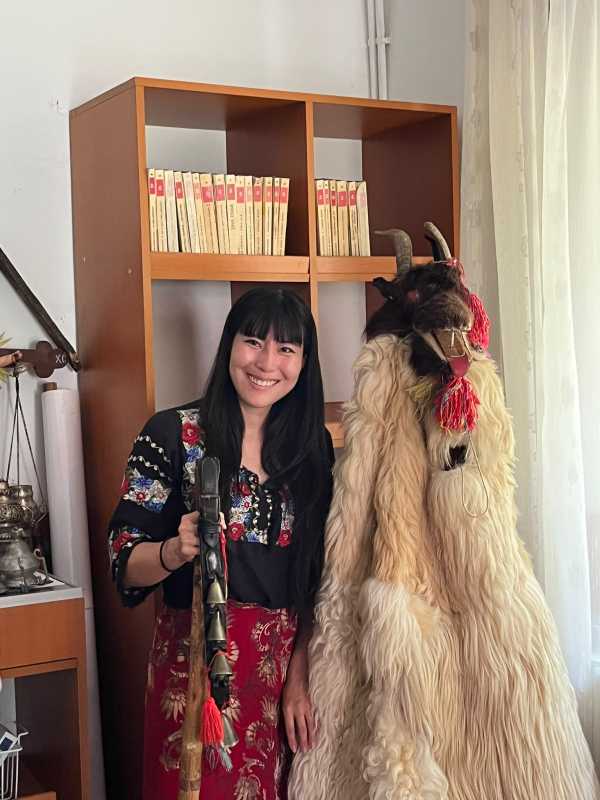
The two cultures also share similarities in superstitions surrounding numbers - age-old beliefs that attribute mysterious powers or hidden meanings to certain numbers despite having no scientific basis.
'We found similarities in their superstitions. For example, we have the number 13. They have the number four, one pronunciation of which in Japanese is the same as the word for death, so they avoid using it, much as we might use 12 bis instead of 13. Breaking a mirror - if you break one, you have seven years of bad luck - is the same there. And you shouldn't sleep with your feet towards the door because that's the way your coffin will be carried out when you die. Across thousands of kilometres, we found similarities between these ancestral superstitions,' Petrescu said.
Miyake said her visit to the Timpul Omului Museum and her conversations with Cecilia Petrescu had proved valuable to her research. She also spoke warmly of the welcome she received in Manzalesti and the generosity with which local people shared their stories and knowledge, recommending Romania for its beautiful landscapes and traditional cuisine, but above all for the hospitality of its people.
'In Iwate Prefecture in Japan, where I lived, there is a town called Tono. Tono had a tradition known as 'kataribe', storytellers who shared stories and folk tales with their grandchildren, often at night. I think Manzalesti, too, is a place with an extraordinarily rich culture and landscape. In Romania, I sometimes sense an atmosphere in which stories about magic, fairies and other supernatural beings are, to some extent, kept hidden or confined to the private sphere. At the same time, I think there are many people who would genuinely like to hear the stories local people carry within them. That is also why these traditions interest me. It is not just the stories of magic themselves that attract me; beyond them, I sense the presence and experience of people who actually lived those lives. Romania as a whole is undoubtedly a country extraordinarily rich in myths and traditions. I believe the traditions I encountered in Romania and Buzau are genuinely rare and precious, even on a global scale,' Miyake concluded.
For Cecilia Petrescu, the myths, rituals and superstitions preserved around Manzalesti form part of a living intangible heritage that continues to shape local traditions despite technological change and the realities of modern life.
'There are several Thursdays or Tuesdays after Easter or Pentecost when you are not supposed to work because the Rusalii become angry and punish you. I once did the laundry on a day during the Pentecost period. By chance, that same day I was walking my bicycle across a footbridge when one of the planks broke and I fell about three metres onto some sand. I was told it happened because I had worked during the Rusalii. You must not eat walnuts or other fruit bearing the sign of the cross on Holy Cross Day, and you must not eat apples before St Elijah's Day. During fasting periods, music at village gatherings could only be played on wooden instruments; those were the only ones allowed. We also have decorated eggs, whose shells were used for love spells or spells intended to make someone disliked. The blouse worn to the village dance was used in charms meant to bind the person you had set your sights on. We are talking about a living intangible heritage because these customs have existed for thousands of years and continue to survive,' Petrescu said.
Buzau Land is one of Romania's most fascinating regions, known for its remarkable concentration of myths, legends and unusual superstitions, many of them centred on the Buzau Mountains. AGERPRES (RO - writing by: Florin Zafiu; EN - writing by: Simona Iacob)
The content of the www.agerpres.ro website has the exclusive purpose of public informing.
All the information published on this website by AGERPRES is protected by relevant legal dispositions.
It is forbidden to copy, reproduce, recompile, decompile, distribute, publish, display, modify, create derived components or products or full services, as well as any exploitation of the site's content.
Details in the section Terms of Use. If you are interested in picking up AGERPRES news items, please contact the Marketing Department – marketing@agerpres.ro.
The use of the Comments section entails your obligation to respect the AGERPRES terms and conditions in regards to the publishing of comments on the www.agerpres.ro.
Other news in category

Former IntMin Predoiu: Romania secures SELEC Director-General position
Romania secured the Director-General position of the Southeast European Law Enforcement Center (SELEC), former Minister of Internal Affairs Catalin Predoiu announced on Wednesday. 'I am very glad that today, on the last day of my tenure, the MAI achieved a success that has been nearly a year in the making: Romania has won the position of Director-General o

BCC2026/Lupascu (ASC Moldova): Cybersecurity has no borders, and defence can only be collective
Cybersecurity has no borders and we must act with this in mind, because we cannot defend ourselves alone and defence can only be collective, Mihai Lupascu, head of the Cybersecurity Agency (ASC) of the Republic of Moldova, said on Wednesday at the Bucharest Cybersecurity Conference (BCC2026). 'We believe that the digital landscape and the cybersecurity lan
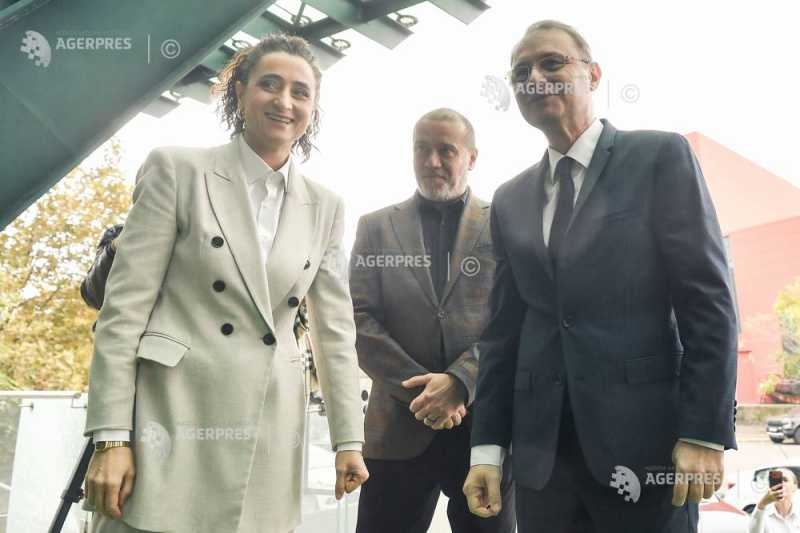
Ioana Ciocan takes over as Minister of Culture, with Prime Minister Luca Niculescu attending
Ioana-Ruxandra-Victoria Ciocan, an independent, took over as Minister of Culture on Wednesday in the presence of Prime Minister Luca Niculescu. The event took place at the Ministry of Culture headquarters. 'I would like to thank Minister Demeter Andras for all the work he has done for culture during his term in office. I know that conditions

PM Niculescu holds phone call with Moldovan counterpart Tofan: My first visit will be to Chisinau
Prime Minister Luca Niculescu held a telephone conversation with Moldovan Prime Minister Vasile Tofan on Wednesday, during which they agreed that his first visit as prime minister would be to Chisinau, in view of boosting joint projects between the two countries. 'I spoke by phone with Prime Minister Vasile Tofan, whom I thanked for his warm and friendly w

BCC2026/Ukraine Ambassador: Russia's threats do not stop at Ukraine's borders but affect everyone else
The security of Ukraine, Romania and the Republic of Moldova is closely interconnected, and threats emanating from the Russian Federation do not stop at Ukraine's borders but affect all the other countries as well, Ukraine's ambassador to Romania, Ihor Prokopchuk, said on Wednesday at the Bucharest Cybersecurity Conference (BCC2026). 'As we address

President Dan: Black Sea security - essential not only for Romania, but for the whole of Europe
The security of the Black Sea is essential not only for Romania and the littoral states, but also for the whole of Europe and for international trade, Romania's President Nicusor Dan said on Wednesday. He brought to mind in a post on social media that following last week's meeting in Brussels with NATO Secretary General Mark Rutte and Bulgarian Prime M

BCC2026/DNSC's Cimpean: We need solutions and reliable technology partners to manage cyber risks
We are living in extremely interesting times, in which we need solutions and strong, reliable technology partners to help us manage cyber risks and incidents,' Director of the Romanian National Cyber Security Directorate (DNSC) Dan Cimpean said on Wednesday at the Bucharest Cybersecurity Conference (BCC2026). 'We are living in extremely interesting tim

Paltinis Arena to host first skiing and snowboarding competition on wet grass
The first skiing and snowboarding competition on wet grass will be held on 7 November at the Paltinis resort. Participation will be free for enthusiasts aged at least 16 who have an intermediate or advanced level of ability, the organisers announced in a press release on Wednesday. Called 'SKI gone WILD,' the event will take place on Slope A ahead of t

MEP Siegfried Muresan is re-elected Vice President of the EPP Group in the European Parliament
Romanian MEP Siegfried Muresan (PNL - National Liberal Party) was re-elected vice-chairman of the European People's Party (EPP) Group on Tuesday evening, securing the second-highest number of votes among the ten vice-chairmen elected, with 152 votes. The EPP Group is the largest and most influential political group in the European Parliament.

PM Niculescu: 2027 Budget - major priority for Government
Prime Minister Luca Niculescu said on Tuesday evening that next year's budget is 'mandatory,' a major priority for the new Government and that 'all parties understand this.' At a news conference held at the Victoria Palace following the new Government's first meeting, he was asked whether his negotiating skills would be sufficient to dr
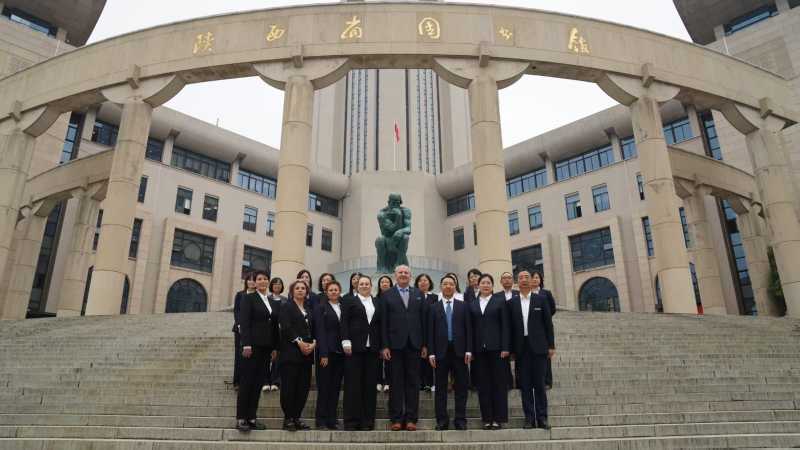
Romanian Corner book collection inaugurated at China's Shaanxi Provincial Library
A special section dedicated to Romanian books has been inaugurated at Shaanxi Provincial Library in China during a visit by the management of the Ovid Densusianu Hunedoara-Deva County Library, marking a new stage in the cooperation between the two cultural institutions that began 12 years ago. The collection in the new section, named the Romanian Corner, consi

Decree appointing Niculescu government published in Romania's Official Gazette
The decree appointing the Niculescu government, signed on Tuesday by President Nicusor Dan, has been published in Romania's Official Gazette. The members of the new government are due to be sworn in before President Nicusor Dan at a ceremony to be held at Cotroceni Palace. Luca Niculescu's Cabinet comprises 18 ministers, including two de

PNL spokesperson: Governing responsibility rests with PSD, PM; political dividing lines now clear
The National Liberal Party (PNL) will move into opposition and challenge every misstep by the Social Democratic Party (PSD), Liberal spokesperson Ionel Bogdan said on Tuesday, adding that Parliament's vote had brought the political crisis to an end and that responsibility for governing Romania now rested with the PSD and the prime minister. 'Today'

Venice Commission President Cartabia: Romania's annulled election prompted Venice Commission reflection
Venice Commission President Marta Cartabia said on Tuesday that Romania's experience with the annulment of the 2024 presidential election results had provided an important opportunity to reflect on new challenges to security and democracy. She drew particular attention to the influence of social media and new forms of power exercised through digital platforms and algorit

Parliament - Gov't investiture/Niculescu proposes Gov't that brings investment, creates jobs and protects Romanians
Prime Minister-designate Luca Niculescu told a joint sitting of Parliament on Tuesday that Romania no longer had time to lose and this is why he is proposing a Government that would bring money and investment into the country, create jobs and protect Romanians. 'I am standing before you today at a time when Romania no longer has time to lose. Today, we can