

Solidarity and deportation: EU moves to get a grip on migration as pressure mounts (enr)

The EU is tightening the screws on irregular immigration and on returns for migrants whose asylum claims are denied. To better share responsibilities, member states have agreed on solidarity measures - though some of the more restrictive governments are sceptical.
EU countries on Monday backed a significant tightening of Europe's immigration policy, including endorsing the concept of setting up 'return hubs' outside the 27-nation bloc for asylum-seekers who are without the right to stay.
Interior ministers meeting in Brussels greenlighted a package of measures, as European governments are under pressure to take a tougher stance amid a souring of public opinion on migration that has fuelled far-right gains at the ballot box.
A decline in irregular entries to Europe - down by around 20 percent in the first half of 2025, according to the EU's border management agency Frontex - has not eased the pressure to act on the hot-button issue.
'We have to speed up,' said EU Migration Commissioner Magnus Brunner, 'to give the people the feeling that we have control over what is happening.'
'Three in four irregular migrants who have been issued a return decision in the EU, continue to stay here instead of returning home,' said Danish Immigration Minister Rasmus Stoklund, who chaired the talks. 'I believe the new set of rules significantly can help improve these numbers,' he added.
The agreement was made in the framework of the EU's Migration and Asylum Pact, which was approved last year and will enter into force in June 2026. It is intended to enable a better management of migration, more effective controls and faster returns of failed asylum seekers.
The new initiatives have caused distress among activists working with migrants. More than 200 organisations had already criticised the European Commission's plans in advance.
'Instead of investing in safety, protection, and inclusion, the EU is choosing policies that will push more people into danger and legal limbo,' said Silvia Carta of PICUM, an NGO that helps undocumented migrants. Olivia Sundberg Diez of Amnesty International described the agreed positions as 'dehumanising' and the concept of return hubs as 'cruel and unworkable'.
Tougher rules
The stricter rules now backed by the member states would notably allow:
The opening of centres outside the European Union's borders to which migrants whose asylum applications have been rejected would be sent - the so-called 'return hubs'.
Harsher penalties for migrants who refuse to leave European territory, including through longer periods of detention.
Sending migrants to countries that are not their countries of origin, but which Europe considers 'safe'.
EU ministers agreed to designate Kosovo, Bangladesh, Colombia, Egypt, India, Morocco, and Tunisia as safe countries of origin throughout the EU.
All EU accession candidates also generally meet the criteria for classification as safe countries of origin. However, there are exceptions, such as when a country is at war - as is currently the case for Ukraine - or when sanctions are imposed on the country by the EU member states.
EU member states also agreed on changes to the concept for safe third countries. Contrary to previously agreed rules, a direct link between the applicant and the safe third country in question will no longer be required.
A third country is now considered safe when there's an agreement concluded with a nation that respects international human rights standards and principles of international law. This is intended to relieve the burden on the European asylum system by deporting people to non-EU countries where they can apply for protection.
EU member states also agreed on the figures for the 2026 solidarity pool. It aims to distribute asylum seekers more fairly among EU member states in the future with the objective of relieving the burden on particularly affected countries.
The solidarity pool requires EU member states to accept migrants being relocated to their country, contribute financially, or provide operational support. For 2026, the figures have been set at 21,000 relocations or 420 million Euro in financial contribution.
The European Commission has found Cyprus, Greece, Italy and Spain are under migratory pressure. These countries can benefit from the solidarity measures, and may be exempt from contributing to the solidarity pool.
The European Commission has also classified Austria, Bulgaria, Croatia, the Czech Republic, Estonia and Poland as facing significant migratory pressure due to cumulative flows in previous years. These countries may request a full or partial deduction from their mandatory contribution to the solidarity pool.
The Permanent Representation of the Czech Republic to the EU, for example, announced on the social media platform X on Monday that the country is exempted from contributions to the solidarity pool for 2026 because of a high number of refugees from Ukraine it has accepted.
The Chair of the State Agency for Refugees of Bulgaria, Ivan Ivanov, also said that his country has provided temporary protection to more than 221,000 Ukrainian citizens who remain in the country - but noted that there is no increased migratory pressure and no more than 20 percent of refugee centres are currently occupied.
Some countries have already signalled their readiness to contribute to the solidarity mechanism. On Monday Interior Ministry State Secretary Tina Heferle for example said Slovenia will contribute its fair share to the solidarity pool. She could however not give any detailed figures, as the documents are classified.
Italy-Albania migrant centres deal makes headway
The details of the new rules are to be finalised in negotiations with the European Parliament. If approved, they would make it possible for countries to set up repatriation centres outside the European Union. One such centre is already being prepared in EU candidate country Albania as part of a deal with Italy.
Italy's right-wing government hopes that EU plans will present a new opportunity for its controversial offshore migration facilities. Interior Minister Matteo Piantedosi has told the ll Messaggero newspaper that the reception centre in the port city of Shëngjin and the deportation centre in Gjadër should be 'fully operational' by mid-2026.
The green light for 'return hubs' was much to the satisfaction of Piantedosi. 'It is an agreement that we value greatly, and Italy has played an important role,' he said.
Italy established the facilities in 2023. The plan was to use the camps to process the asylum claims of migrants who were picked up in the Mediterranean by the Italian coastguard.
If their claims are accepted, people would be allowed to travel on to Italy, while those who were rejected would be sent back to countries deemed safe. However, the process has suffered a series of legal defeats in Italian and European courts, meaning the facilities have remained largely empty.
Contributors and beneficiaries
Some in the bloc have voiced strong scepticism to the new rules agreed on Monday.
Hungary will not implement the agreed solidarity mechanism and will accept 'not a single migrant', a senior government official said on Wednesday, according to Hungarian media. Hungarian Prime Minister Viktor Orbán has been at odds with the European Commission for years over his restrictive asylum policies.
Slovak Interior Minister Matúš Šutaj Eštok also said that his country rejected the mandatory solidarity mechanism in the redistribution of asylum seekers. The country should have an exemption due to the tens of thousands of refugees from Ukraine that it accepted after the outbreak of the war, the Slovak news agency TASR quoted him as saying.
The incoming Czech government of the ANO, Freedom and Direct Democracy (SPD) and Motorist parties plans to reject the EU migration pact. 'We will introduce a zero tolerance policy towards illegal migration. We will reject the EU migration pact and adopt a new law on migration and asylum,' the coalition's draft policy statement read.
EU member states decide on immigration and asylum policy by Qualified Majority Voting (QMV) in the Council of the EU. 55 percent of EU countries representing 65 percent of the EU's population need to vote in favour for new rules to pass.
Other countries broadly back the new rules, but highlight areas that may require adjustments.
France on its part questioned the legality and effectiveness of some of the proposals.
Poland sought to expand the list of safe countries of origin 'in order to reduce emigration pressure on the EU', said Deputy Interior Minister Maciej Duszczyk on Monday.
Following an interior ministers meeting in Brussels, German Interior Minister Alexander Dobrindt said Germany would not take in any additional asylum seekers and would also not provide financial aid.
However, according to an EU Commission analysis, Germany can argue that it is already taking care of a large number of asylum seekers for whom other EU states would actually be responsible under Dublin rules. The Dublin Regulation states that the first EU country an asylum seeker enters is generally responsible for processing their asylum application.
According to the EU Asylum Agency, the German authorities received 70,000 applications from new arrivals in the first half of the year. This puts Germany in third place within the EU behind France (78,000) and Spain (77,000).
In the process of the new rules being finalised by the European Parliament, no major changes are expected.
The content of this article is based on reporting by AFP, ANSA, APA, BTA, CTK, dpa, PAP, STA, TASR, as part of the European Newsroom (enr) project. AGERPRES (editing by: Mariana Ionescu)
The content of the www.agerpres.ro website has the exclusive purpose of public informing.
All the information published on this website by AGERPRES is protected by relevant legal dispositions.
It is forbidden to copy, reproduce, recompile, decompile, distribute, publish, display, modify, create derived components or products or full services, as well as any exploitation of the site's content.
Details in the section Terms of Use. If you are interested in picking up AGERPRES news items, please contact the Marketing Department – marketing@agerpres.ro.
The use of the Comments section entails your obligation to respect the AGERPRES terms and conditions in regards to the publishing of comments on the www.agerpres.ro.
Other news in category
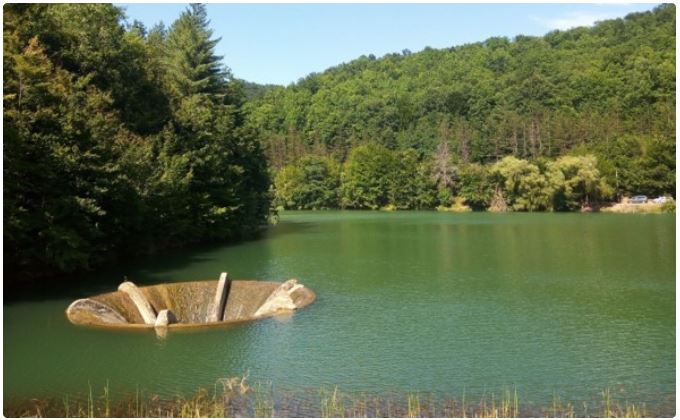
'Whirlpool' Vida Lake to turn into sustainable rural tourism site
The Dobresti local administration is preparing to turn Lake Vida - one of Romania's most spectacular and unique lakes - into a regional hub for active and sustainable rural tourism, through a project estimated at four million euros, following the completion of complex desilting works. Dobresti mayor Florin Copos recently told AGERPRES that the local author
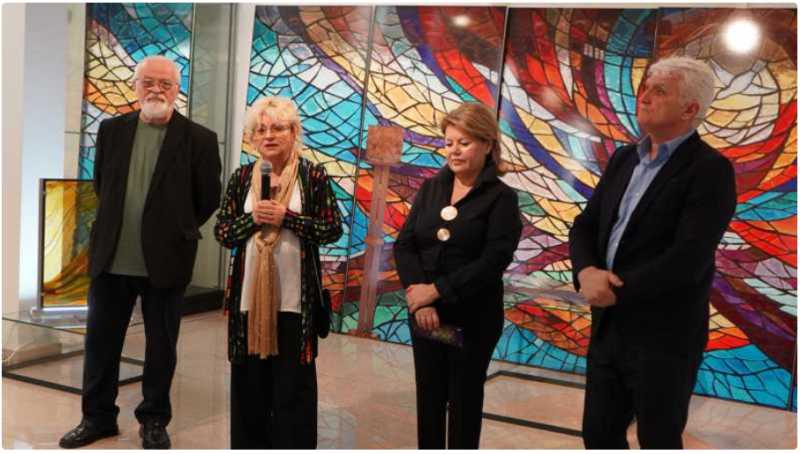
Amalia Verzea's 'The Art of Stained Glass at 360 Degrees' arrives in Oradea
After being presented in Bucharest, the personal exhibition 'The Art of Stained Glass at 360 Degrees' signed by internationally renowned Oradea artist Amalia Verzea, has arrived in her hometown, at the Cris Land Museum, where it can be visited until May 10. The exhibition will later travel to Rome. 'I have been making stained glass all my life. Sin
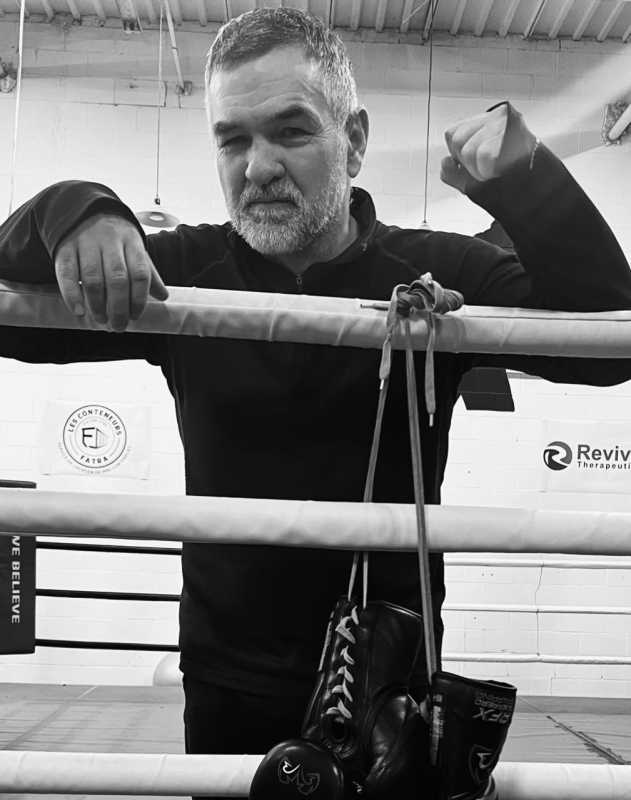
#BoxingCentenary/INTERVIEW Leonard Doroftei: Romanian boxing can rise again, but only with better coaching
Former boxing great Leonard Doroftei told AGERPRES in an interview that Romanian boxing is going through a rather challenging period, but he remains confident the sport will recover and once again produce athletes capable of winning medals at European, World and Olympic level. 'We're going through a tougher patch. I hope that one day we'll bounce b

#Nadia Year/International Day of Sport for Development and Peace celebrated with small gymnasts
The Romanian Olympic Committee (COSR), through the Romanian Olympic Academy on Friday organised an event at the Mariana Bitang Gymnastics Hall inside the Dinamo Sports Club, celebrating International Day of Sport for Development and Peace together with young gymnasts and legends of Romanian gymnastics. The event is part of the series of actions carried out by

Iasi equestrian wins first place at her debut at CSIO Ch Nations Cup Youth Belgium
Iasi equestrian Ilinca Rata, aged 14, brought Romania its first victory in the CSIO Ch Nations Cup Youth competition, held in Opglabbeek (Belgium). Registered with the Equester Sports Club Iasi, Ilinca won in the debut event for the Children category - Small Tour (1.15 m), after a penalty-free course, performed alongside the horse Innocence S/Ingo.

Ioana Dogioiu: Government approves ordinance on temporary reduction of excise duty on diesel fuel
Government spokesperson Ioana Dogioiu declared on Friday that the Executive adopted the normative act regarding the temporary reduction of the excise duty level for diesel and the establishment of the solidarity contribution on revenues from the marketing of crude oil and energy products obtained from the processing of crude oil extracted from the territory of Romania.

Jianu:Entrepreneurial index for 2026 fell to 43.25 points; only two macroeconomic indicators are increasing
The entrepreneurial index dropped this year to 43.25 points, from 49.5 points in 2025, in conditions in which most macroeconomic indicators stagnated or registered decreases, while the dynamics of turnover and foreign investments were on the rise, data from the third edition of the report show. 'We meet today at the launch of the Romanian Entrepreneurship

One of Romania's main challenges remains high level of energy prices during peak hours (StateSec)
One of Romania's main challenges remains the high level of energy prices during peak hours, and the solutions are increasing domestic production, investing in storage capacities and more efficient management of consumption, according to Energy Ministry Secretary of State Cristian Busoi. 'One of Romania's main challenges remains the high level of en
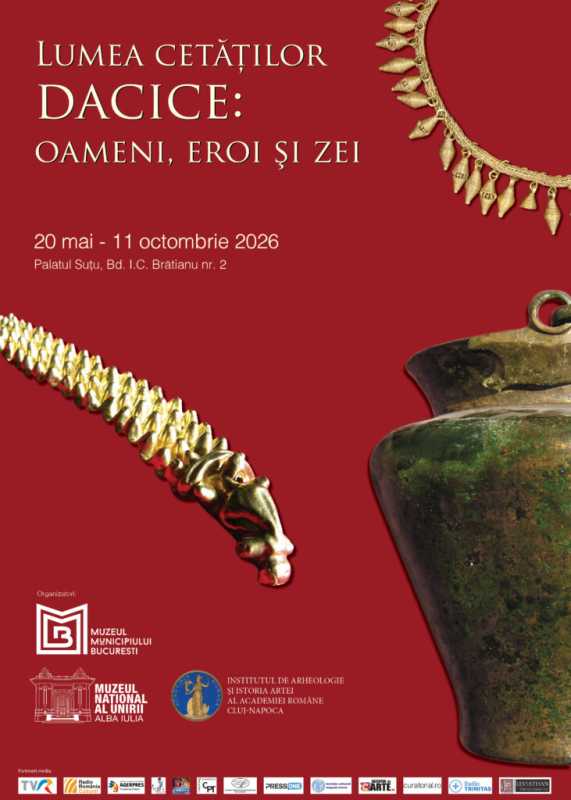
'The World of the Dacian Fortresses: People, Heroes and Gods' exhibtion to open at Sutu Palace
The thematic exhibition 'The World of the Dacian Fortresses: People, Heroes and Gods' will open on 20 May at the Sutu Palace. 'From 20 May, we invite you to the thematic exhibition ‘The World of the Dacian Fortresses: People, Heroes and Gods,' an opportunity to discover the fascinating world of the Dacians and their fortifications, viewed
Romania records tourist arrivals down 3.7% and overnight stays down 3% in February
Arrivals and overnight stays in the establishments of tourists' reception with functions of tourists' accommodation, including apartments and rooms for rent decreased by 3.7% and by 3%, respectively, in February 2026 compared to the same month last year, according to the National Institute of Statistics (INS) data published on Friday. The arriva

Exhibition dedicated to young artists, organised in partnership with Margareta of Romania Royal Foundation
The Buzau County Museum, in partnership with the Margareta of Romania Royal Foundation, is organizing the opening of the exhibition called 'The aspiration to fly' ('Nazuinta de zbor'), dedicated to young artists of the 2026 generation, an event which coincides with the 130th anniversary of the inauguration of the former 'I. C. Bratianu' hospital build

FEATURE/ Inter-institutional training on the Danube part of Sea Shield exercise
The Sfantu Gheorghe branch of the Danube on Thursday hosted an inter-institutional training exercise that dealt with the management of a refugee crisis in the Danube Delta area and prisoners of war, an event that was part of a wider Sea Shield exercise. The military exercise designed to secure the interoperability of the entities participating in a multination
Romania to start vaccine negotiation with Pfizer as ill-considered decisions backfire
Prime Minister Ilie Bolojan announced on Thursday that Romania will contact Pfizer, with which he will start a negotiation, considering that some 'thoughtless decisions turn against them in a longer or shorter time'. 'Unfortunately, we received the news of the sentence in the first instance, unfortunately enforceable by the Belgian Court, under whi
Ancient gold artifacts stolen in Drents Museum heist handed over to Romania
The Cotofenesti golden helmet and two of the three Dacian gold bracelets stolen last year from the Drents Museum in the Netherlands and subsequently recovered have been returned to Romania, the Dutch Prosecution Service announced on Thursday in a press release published on its website. Stan Rares-Petru and Daniela Buruiana, representatives of the Romanian Pros
Culture Minister Demeter hails Cotofenesti helmet recovery: It's a victory, it's what I hoped for
Culture Minister Demeter Andras expressed satisfaction at the recovery of the iconic Geto-Dacian Cotofenesti golden helmet and two gold bracelets, stressing that the amount to be returned to the Dutch side will be determined only after the restoration of the artifacts is completed. 'It's a victory, it's a joy. It's what I hoped for. From the fi