

Where in Europe still relies on Russian energy? (enr)
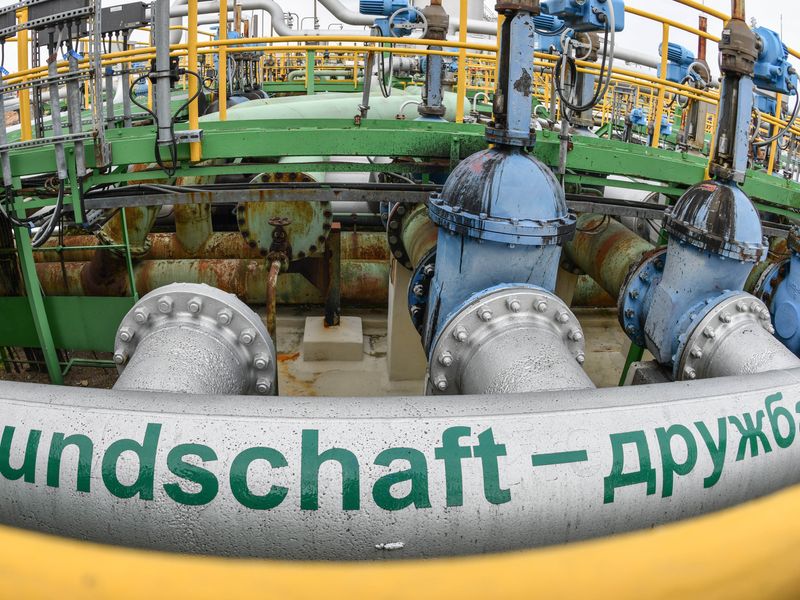
Europe has significantly reduced its dependence on Russian energy, yet there's still billions of Euros going to Russia every year. With a stricter ban looming, many member states have diversified their sources while others still rely on Russian pipelines and LNG.
Amid diplomatic efforts last month to pressure Russia into peace negotiations, Eurostat data revealed that the European Union imported Russian liquefied natural gas (LNG) worth around 4.48 billion Euro in the first half of 2025, up from 3.47 billion Euro over the same period last year.
The bloc has been pushing to end its energy dependence on Russia since the full-scale invasion of Ukraine in February 2022, aiming to reduce Russia's ability to finance the war.
Unlike Russian oil and coal, the EU has not imposed an outright ban on gas, due to ongoing dependencies among some member states. LNG and gas via pipelines, including the via TurkStream pipeline, continue to flow into the bloc, albeit at much lower levels than before 2022.
However, the European Commission has drawn up plans to phase out all Russian gas and oil imports by 2028. Under the proposal, new contracts would be prohibited from January 1, 2026. Existing short-term contracts would end by June 17, 2026, and long-term contracts would be banned from January 1, 2028.
These measures still require approval from the European Parliament and by at least 15 of the 27 EU member states representing 65 percent of the bloc's population.
Hungary and Slovakia rely heavily on Russian imports
Significant inroads have already been made. The share of petroleum oil imports from Russia fell from 29 percent in the first quarter of 2021 to just 2 percent in the second quarter of 2025, according to Eurostat.
However, Hungary and Slovakia remain outliers in the EU as they still import large amounts of Russian oil. The pair, alongside the Czech Republic, were given an exemption to an EU embargo on Russian oil. The Czech Republic made efforts to end its reliance and since April it has not imported Russian oil thanks to the expansion of the western TAL oil pipeline being completed.
Hungary and Slovakia on the other hand have not tried to wean themselves off Russian energy. Recent attacks by Ukraine on the Druzhba pipeline underlined their reliance and the instability of supply as a result. Ukraine regularly strikes Russian oil and gas infrastructure in response to attacks on its own territory since the start of Russia's full-scale assault.
There is a possible alternative, but the two countries are reluctant to rely on receiving their oil via the Adriatic.
'Since the capacity of the Croatian pipeline is smaller than Hungary's and Slovakia's demand for oil, if deliveries via the Druzhba pipeline become impossible for a long time, then the oil supply to Hungary and Slovakia will also become impossible,' Hungarian Foreign Minister Péter Szijjárto said last week.
'Not for political reasons, but because of physical reality. Energy supply is not a political or ideological issue, you need the pipeline and the oil in it,' he added.
Croatia disputes this, with Prime Minister Andrej Plenkovic and Economy Minister Ante Šušnjar stating that the Adria pipeline has sufficient capacity and that all Croatian infrastructure is available to support oil and gas transport. They added that transport costs would decrease with higher volumes. Despite these assurances, Hungary and Slovakia remain reluctant to rely more heavily on the Adria pipeline.
Slovakia has said it will consider legal action if it is not granted an exemption or compensated for ending natural gas imports from Russia.
Russian energy dependence has waned elsewhere in Eastern Europe
Bulgaria continues to allow Russian gas to pass through its territory via the Balkan Stream pipeline, an extension of TurkStream that runs from Turkiye to Serbia. This transit is permitted under EU rules because it crosses EU borders on its way to third countries. However, much of this gas ultimately reaches Hungary, an EU member state.
Bulgaria itself stopped importing Russian natural gas in April 2022 when the government refused Gazprom's demand to be paid in rubles. When it comes to Russian crude oil, the country received temporary derogation until the end of 2024 but officially halted the imports ahead of schedule in March of the same year.
France fuels Russian LNG imports
When it comes to Russian LNG, some European countries are more reliant than others. In 2024, France, Spain, and Belgium accounted for 85 percent of Europe's Russian LNG imports, and France and the Netherlands increased their Russian LNG imports by 81 percent compared to 2023, according to the Institute for Energy Economics and Financial Analysis.
By contrast, other countries have much lower exposure to Russian gas overall. Less than 2 percent of Italy's total gas imports come from Russia, while Slovenia has no direct supply contracts with Russia. Most of Slovenia's gas is imported via the Baumgarten hub in Austria, and over the past three years the country has also secured several alternative sources and supply routes.
With the comprehensive phase-out of Russian energy imports set for 2028, the bloc faces a complex task: balancing security of supply, market stability, and political consensus while continuing to diversify sources and infrastructure.
The content of this article is based on reporting by AFP, ANSA, BTA, CTK, dpa, HINA, TASR, STA, as part of the European Newsroom (enr) project. AGERPRES (editing by: Simona Klodnischi)
The content of the www.agerpres.ro website has the exclusive purpose of public informing.
All the information published on this website by AGERPRES is protected by relevant legal dispositions.
It is forbidden to copy, reproduce, recompile, decompile, distribute, publish, display, modify, create derived components or products or full services, as well as any exploitation of the site's content.
Details in the section Terms of Use. If you are interested in picking up AGERPRES news items, please contact the Marketing Department – marketing@agerpres.ro.
The use of the Comments section entails your obligation to respect the AGERPRES terms and conditions in regards to the publishing of comments on the www.agerpres.ro.
Other news in category
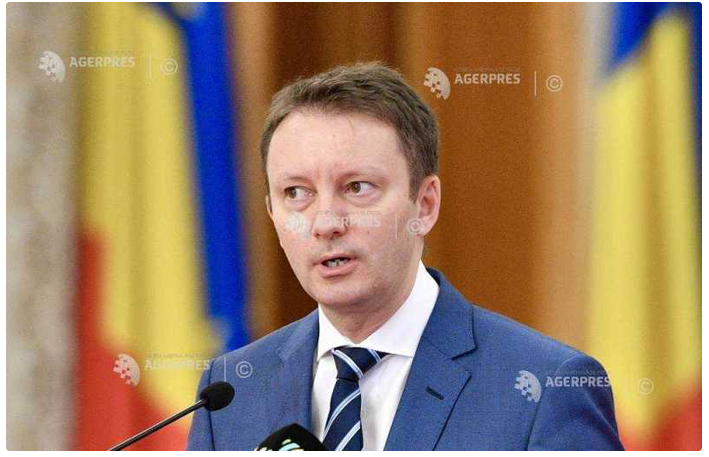
PM-designate counters President Dan: Early elections not desirable, but neither keeping Romania in crisis
Prime minister-designate Siegfried Muresan, responding on Tuesday to remarks made by President Nicusor Dan just one day ahead of the parliamentary investiture vote, said that early elections are not desirable, but keeping Romania in a prolonged political crisis out of fear of snap polls 'does not offer stability to citizens or confidence to investors who want to create j
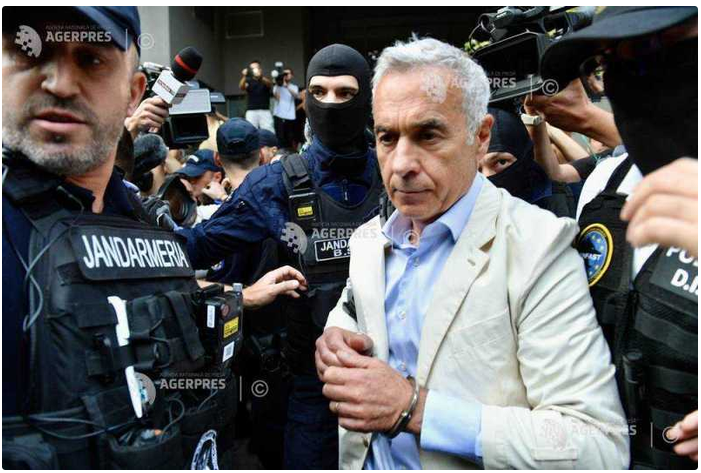
Court orders 30-day pre-trial detention for Calin Georgescu
The Bucharest Court of Appeal on Tuesday ordered former presidential candidate Calin Georgescu into 30-day pre-trial detention, admitting a challenge by the Directorate for Investigating Organised Crime and Terrorism (DIICOT) in the case in which he is accused of defrauding a businessman of €1.1 million. The same measure was imposed on businessman Ionel Rusen.
CES president: Francophone Economic and Social Councils serve as stability and crisis-prevention platforms
Economic and Social Councils and similar institutions across the Francophone world are genuine platforms for stability and crisis prevention, President of Romania's Economic and Social Council (CES) Sterica Fudulea said on Tuesday at the Francophone Social Dialogue Forum, dedicated to the role of representative social and civic dialogue partners in social, economic and c
Mures County's investor offer showcased at EXPO REAL Munich under joint 'Why Mures' identity
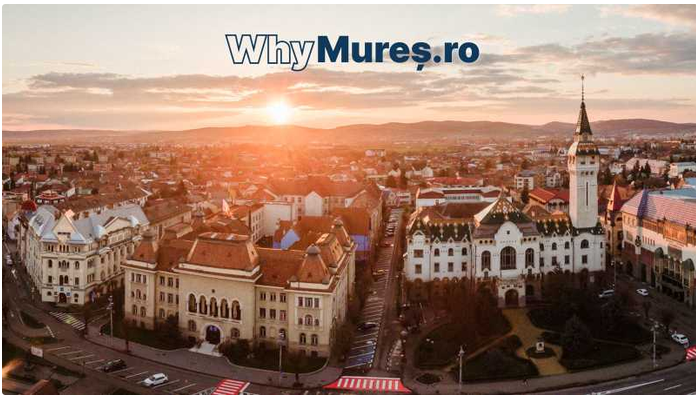
In a bid to present an integrated investment offer for Mures County to global investors, local and county authorities, the business community and academia will, for the first time, take part under a joint identity - 'Why Mures' in EXPO REAL Munich 2026, held between 5-7 October. According to the Targu Mures Municipality, Mures County is participating u
President Dan: It is time for this crisis to end; early elections are not a solution
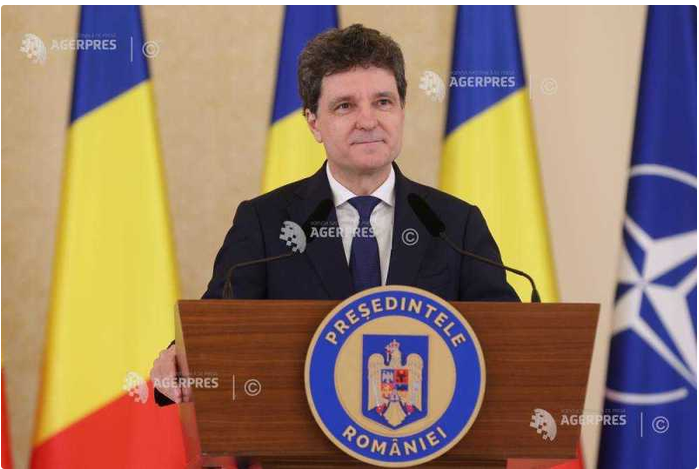
President Nicusor Dan said on Tuesday that it is time for the current political crisis to end, adding that early elections are not a solution.

Photographs, installations, sculpture, fashion design at Romanian Creative Week
Romanian Creative Week, the largest event dedicated to the creative industries in the European Union, returns between October 2 and 8 with the second edition of RCW X Bucharest, the autumn capsule of RCW. The event continues in Bucharest a consistent part of the projects presented in May in Iasi, reconfigured for other spaces and contexts, along with projects
INTERVIEW/Moldova's Economic Development Minister Nasui: There are many things where Chisinau surpasses Bucharest
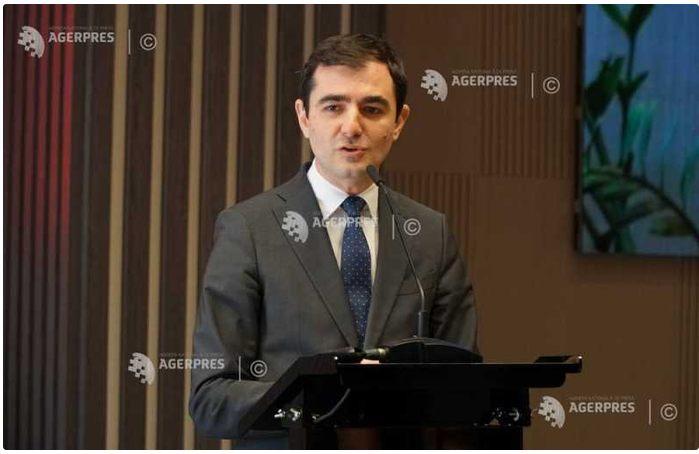
AGERPRES special correspondent to Chisinau, Moldova, Cristian Lupascu reports: There are areas of activity, such as digitalisation, where Moldova surpasses Romania, according to Moldova's Minister of Economic Development and Digitalisation Claudiu Nasui, a former economy ministry of Romania. In an interview to AGERPRES he says that the debureaucratiza
Japanese student explores Romania's iele, healing incantations and ancient superstitions in Buzau
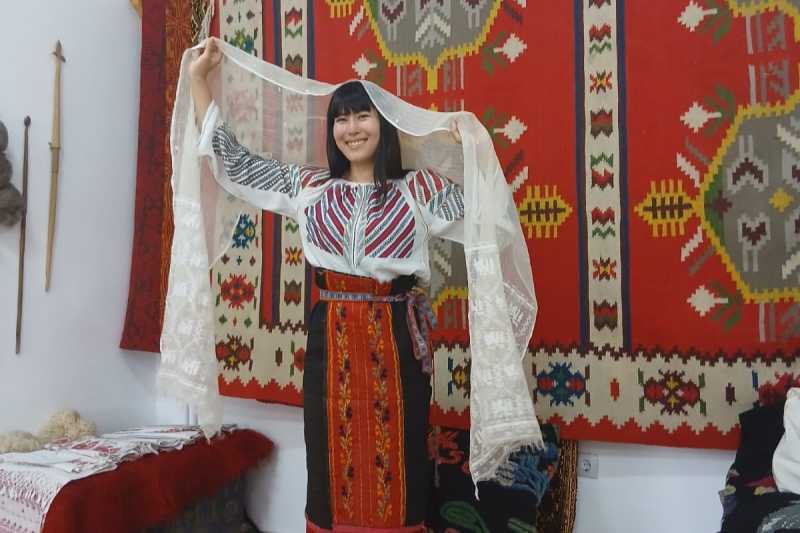
The evil eye, the iele and the Dragaice, superstitions surrounding death, birth and marriage, curses and healing incantations - all part of Buzau's living intangible heritage - have been the focus of research by a Japanese student seeking to explore the differences and similarities between Romanian and Japanese culture, as well as the lives of people whose traditions are

INTERVIEW/Siegfried Muresan: All my ministerial picks meet competence, ethics and integrity requirements
All the ministers I have nominated meet all the requirements of competence, ethics and integrity to implement the governing agenda and to contribute to Romania's reform, Prime Minister-designate Siegfried Muresan said on Tuesday in an interview to AGERPRES. Muresan presented the main measures he will take if his government wins the confidence of the parlia

OECD report: Romania lags behind in higher education graduates and education spending
Romania has one of the lowest shares of higher education graduates among OECD countries, while public investment in education remains below the organisation's average, according to the main findings of the Education at a Glance 2026 report, released on Tuesday by the Ministry of Education and Research and published by the Organisation for Economic Co-operation and Develo

AGERPRES obtains 7.5 million lei funding for historical archive digitisation
AGERPRES has announced the signing of a funding agreement for the project 'Digitisation of the archive of the National News Agency AGERPRES for the purpose of preserving and making it available as a public service for the benefit of citizens, research, public and private entities,' SMIS code 349517. The agreement was concluded with the Authority for th
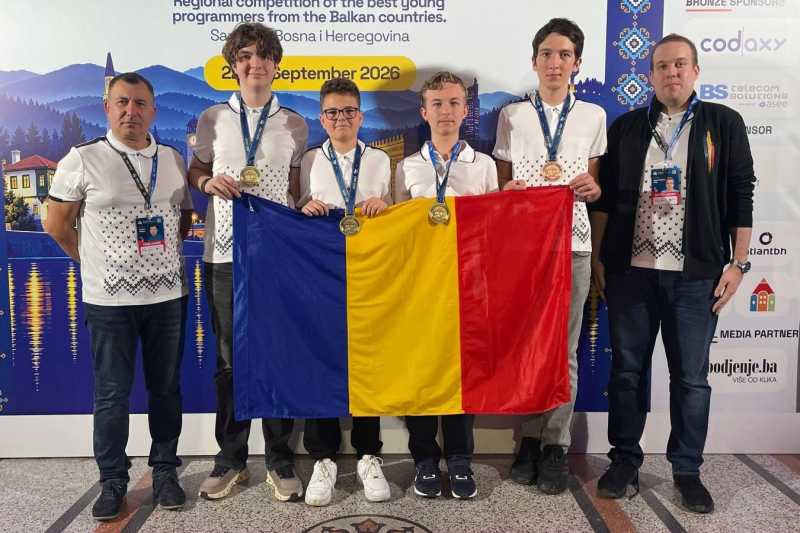
Romania - first place at 2026 Junior Balkan Olympiad in Informatics
Romanian students came first in the nations' ranking at the 2026 Junior Balkan Olympiad in Informatics (JBOI), winning three gold medals and one bronze, the Ministry of Education and Research reports. The medal winners were Andrei Nemtisor, Year 8, Costache Negruzzi National College, Iasi, absolute gold medal, with the highest score in the competition; Tra

INTERVIEW/Moldovan PM Tofan: We are major energy importers; every external shock makes the situation worse
Moldovan Prime Minister Vasile Tofan says that every shock on the international energy market has a serious impact on his country's economy, thus justifying the need to declare a state of emergency. In an interview with the AGERPRES National News Agency, he said that Moldova's energy imports account for 10% of Gross Domestic Product (GDP).
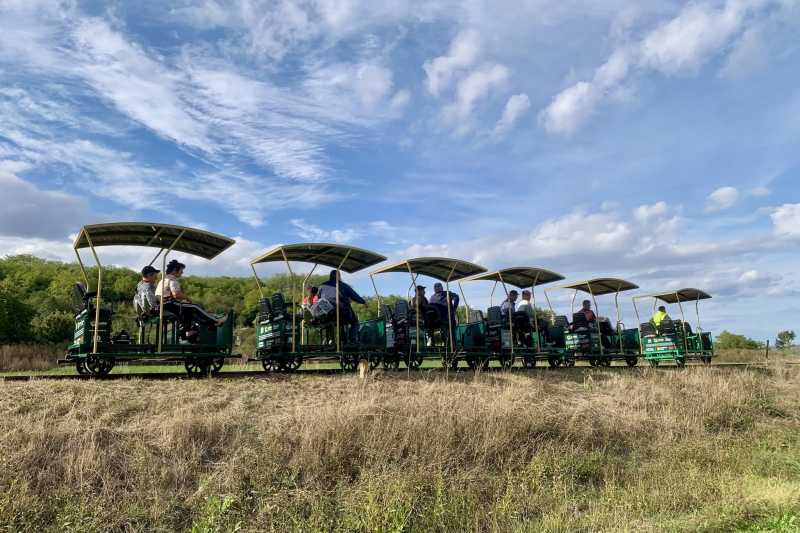
FEATURE/Mures: Long-abandoned railway, saved from scrappage and turned into first rail-cycle draisine circuit
The Transylvanian Plain, an area often overlooked by traditional tourist routes focusing on mountains or medieval fortresses, has officially become the site of an unprecedented national first with the opening of VeloRail, Romania's first rail-cycle draisine circuit, a 12-kilometre route connecting the communes of Raciu, Sanmartinu de Campie and Craiesti. T

Chronic patients organisation, Carol Davila University launch 'Heart Lab' project on cardiovascular diseases prevention
The Coalition of Organisations of Patients with Chronic Diseases (COPAC) and the Carol Davila University of Medicine and Pharmacy in Bucharest, through its Centre for Innovation and e-Health, announced on Tuesday the launch of the 'Heart Lab - a cardio-renal-metabolic prevention project in the community,' against the backdrop of cardiovascular diseases remaining the