

INTERVIEW/ Energy minister: Plans afoot to extend household natural gas support scheme beyond April 1

Energy Minister Dumitru Chisalita intends to propose continuing the support scheme for household natural gas consumers beyond April 1, so as to avoid major price increases and ensure a smoother transition to a new stage.
In an interview with AGERPRES, he explained that he would review the scheme so that, by the end of the year, there would be a clear objective regarding what would happen next. In his view, the transition from an administratively regulated phase to a market-based one cannot take place without a transition period.
As regards vulnerable consumers, the minister said that mechanisms were needed to identify those who are genuinely vulnerable and ensure that assistance is targeted at those who need it, rather than continuing with a scheme under which small amounts of money were distributed to a very large number of people. All these aspects are being reviewed, with the aim of introducing a new support scheme for vulnerable consumers this year.
Referring to energy prices, Dumitru Chisalita stressed that the Ministry of Energy would introduce a series of measures within the limits of the law, and that very concrete proposals, with a chance of being approved, could be put forward this month.
In the interview, the Eergy minister also discussed energy supply during the coming winter, support schemes for storage and the project involving small modular reactors in Doicesti.
AGERPRES: There are voices saying that the current situation regarding energy supply is not very good. From your point of view, what risks lie ahead during the coming winter, and what could we do to avoid problems and prevent supply interruptions?
Dumitru Chisalita: We need to make it very clear that my main objective is precisely to get through this winter safely. I have made this a priority because of the situation we are facing. That is why I believe the most important thing is to focus on ensuring that we have enough energy, sufficient generation capacity, and that all these capacities are operational, given the current situation, which is far from rosy.
Based on everything I know about the history of the energy industry, this is one of the difficult situations, or among the most difficult, that the industry has faced. So, yes, the main concern, as part of these efforts, is first and foremost generation capacity. I believe I have held meetings almost daily, either with everyone or with representatives of various energy sectors, precisely to try to ensure that things move in a positive direction in preparation for the winter. At present, although there are many critical situations, we can say that the solutions indicate that there are elements we can build on and move forward.
At the same time, it is very important to understand that, in critical situations, you have to prepare for various worst-case scenarios. This does not mean that we should be worried or that we are in an unusual situation, or in a situation unlike those in previous years. But we must also understand that there are various ways of getting through a difficult winter, such as the one we currently anticipate.
An important element to take into account is the document extending the state of alert. This is precisely because, although we cannot say that there is a 100% probability that something will happen, the unusual situation we are facing makes it advisable to have mechanisms at our disposal that can be activated so that, at certain moments, we can deal with whatever those circumstances may bring.
Also, in the natural gas market, for example, emergency mechanisms have been in place since 2014. So, for 12 years. Even though there has never been a specific situation during these 12 years in which they had to be activated and applied, that does not mean we should not be prepared for absolutely anything that might happen.
We need to understand that energy requires continuity. What is consumed must equal the amount produced or stored at any given moment. If this equation is not maintained, disruptions can occur at any time. In practice, there are two ways of preventing such disruptions: increasing production, although this is limited by what is available at a given time; increasing imports, which are also limited by capacity and by the quantities available; or reducing consumption. There is effectively no third option. Either you increase the amount produced or imported, or you reduce consumption. We need to understand and assess future developments in light of these realities.
And, yes, the main concern is getting through this winter, because a considerable number of crises are overlapping. We can speak of a polycrisis in which we currently find ourselves.
AGERPRES: Last month, you estimated that natural gas prices would increase by around 22%. Suppliers have already started sending out new contracts, some of which include increases of more than 30%. Now that you are the helm of the Ministry, what increase do you estimate for electricity and natural gas prices, and is a new energy price cap being considered?
Dumitru Chisalita: First and foremost, data, regardless of the position from which you assess them, are based on statistics, on offers and on what is publicly available. Therefore, the increases I had estimated at somewhere between 16% and 27% at one point were based precisely on the offers available on the market. It is true that we were talking about average offers. In other words, there are cases in which some suppliers have increased prices, or even reduced them; some have introduced smaller increases, while others have introduced larger ones. Therefore, I do not think we should analyse things from the perspective of the positions we occupy, but rather in light of the realities we are facing.
When we talk about prices, we are dealing with three components. There is the commodity component, there are transmission and distribution tariffs, and there is taxation. In my current position, I can discuss only the commodity component. I cannot address the regulatory component or taxation; I could discuss them, but it would have no effect. They are simply matters that fall within the remit of other ministries. As regards the commodity component, we are currently analysing a number of elements and running various scenarios, taking into account the data we have received or are due to receive from other institutions. Once again, the Ministry of Energy does not have the contracts, the historical data or many other relevant elements. We are therefore asking various institutions to provide them so that we can run different scenarios and subsequently put forward potential solutions based on those scenarios.
But we need to understand that, at most, we can address one third of the problem. We cannot solve the other two thirds, so the solutions will only be partial in this respect. Of course, we will discuss this issue; we have already discussed it. However, we will focus on what the law allows us to address, namely this one third, and we will introduce a series of measures within the limits of the law. This is another important point, because everything we propose has to go before the Competition Council and the European Union, and we have to secure their approval. These are issues we are working hard to resolve. We hope that within a reasonable period of time, namely this month, we will be able to put forward very concrete proposals that also stand a chance of being approved by the relevant authorities.
AGERPRES: Is a price cap also being considered? Could it be reintroduced?
Dumitru Chisalita: We are currently considering many more elements. In a way, all the options we are assessing must, first and foremost, take into account whether they can actually be implemented. Let me give you a simple example: the amount of natural gas produced in Romania is lower than the amount consumed. This means that, at best, we can look at what is produced in Romania, but not at what is imported. That means we cannot approve or put forward solutions merely for the sake of proposing them. If we were, I don't know, at 120%, meaning that we produced everything we needed and had a surplus as well, it would be a different discussion. We are not in that position, so the measures we take must be consistent with this reality.
At present, we do not have all the data. I have asked the responsible institutions to provide them and am waiting to receive them so that, I repeat, the projects we develop can be tested against scenarios and can actually be implemented in practice.
AGERPRES: A year ago, there was talk of reducing VAT on energy to 9%. Would that be an option?
Dumitru Chisalita: As I was saying, in my current capacity, we are responsible for the first third, the commodity component. VAT falls within the last third, the taxation component. Of course, it would be very easy for me to come up with such a solution, but that is not within my remit. I do not think it would be right for me to take that approach or express opinions on the matter from my current position. Therefore, as I have said, we are currently considering a number of elements and trying to develop them in line with what we can actually do and what is feasible. It is very easy to task others with doing something.
AGERPRES: Has this idea been discussed again in any way?
Dumitru Chisalita: This is not an issue that falls within the Ministry of Energy's remit, so I cannot discuss it.
AGERPRES: The government programme provides for the continuation of support schemes for vulnerable consumers. Will the current scheme be amended? Will you come up with new solutions?
Dumitru Chisalita: My first priority is to get through this winter safely. That is number one. If we move on to the second most important issue, we need to look at vulnerable consumers. We have to be honest and acknowledge that energy poverty in Romania has increased in recent years. It has risen against the backdrop of economic problems and price developments, at least as regards electricity, because the natural gas support scheme is still in force and applicable. Therefore, we need to do something for vulnerable consumers. A meeting is currently taking place on the basis of some schemes that we have devised and submitted to the Ministry of Labour, with the aim of trying to harmonise our approaches, because the issue of vulnerable consumers actually falls under another ministry. We are therefore doing everything we can and have taken all the steps we considered necessary in this area.
First and foremost, we are trying to understand that mechanisms are needed to identify genuinely vulnerable consumers. The idea is to target assistance at those who need it, rather than rely on schemes under which small amounts of money were effectively distributed to a very large number of people, without really helping them.
Of course, this must also go hand in hand with a review of the income thresholds for those eligible for such assistance, because, once again, circumstances have changed and these income thresholds need to be reconsidered. Last but not least, a mechanism is needed that takes into account factors other than income, based on the experience of recent years.
This situation has prompted us to identify other potential factors that could be taken into consideration. However, they need to be verified with other institutions, because the relevant data are not held by the Ministry of Energy. They must therefore be provided, made available and be capable of being exchanged, modified and updated promptly. We are looking at all these issues at present, and we want to introduce a new support scheme for vulnerable consumers this month or, at the latest, by the end of this year.
AGERPRES: In the context of this cooperation with other ministries and institutions, when could the National Register of Vulnerable Consumers be ready? Communication between ministries, particularly in terms of digitalisation, is not exactly working very well at present.
Dumitru Chisalita: You are absolutely right, and this is an issue we are trying to overcome. Under an optimistic scenario, we could be talking about a period of around 12 months. That does not mean that we will do nothing for 12 months. We will devise, or try to introduce, an interim arrangement under which we can help vulnerable consumers based on the data currently available. But I believe it is extremely important to finalise and have this Register in place precisely so that we can work with concrete information.
I was discussing this issue with my colleagues yesterday, and someone gave me an example from Canada. They told me about someone who had been unemployed at one point and, as an unemployed person, received certain benefits as a vulnerable consumer. As soon as that person found a job, they received a letter at home the very next day informing them that they were no longer eligible for the benefits. We are talking about a very well-organised system in which information is updated across all levels whenever a change occurs. Here, at present, everything is based on a declaration on one's own responsibility. In other words, the person must be aware that they need to submit such a declaration, and a large number of people have to be deployed to carry out checks and validate the information. These are the realities, and we have to start from them.
AGERPRES: We were talking about energy poverty. Around 30-40% of households in Romania spend more than 10% of their income on their energy bills or energy consumption. How can we reduce energy poverty?
Dumitru Chisalita: There are around four indicators used at European level to measure energy poverty. One of them concerns how many people, or what percentage of Romania's population, are unable to pay their electricity bills. But, to be honest, we must acknowledge that this category also includes situations that are not necessarily related to genuine energy poverty. There are various factors that may be concealed. There is also another indicator covering people who, in good faith, pay their energy bills but then cannot afford to buy medicines, food or other necessities. Both aspects must be taken into account, and assistance must be targeted at those who genuinely need it, including people who pay their bills but, in fact, have to give up buying other essentials for their daily lives. Both aspects must be addressed, first and foremost, through support for vulnerable consumers.
On the other hand, we need to recognise that there is a European consensus on the factors that determine energy poverty. Income ranks first. In a country with the lowest incomes in the European Union, the main factor is the possibility of increasing incomes, if we are to talk about limiting poverty. According to European Union analyses, the second factor is waste, losses, the inefficiency of equipment and buildings, inefficient windows, doors and so on. Prices come only third, if we look at these European statistics.
Therefore, if we look back over the past 10 or 15 years, we have focused on prices every time, and it was very good that we did so. But, once again, that is only one part of the problem and, unfortunately, according to the structure of these European studies, it is the smallest part. If we genuinely want to eradicate or reduce energy poverty, we need to take all the factors into account. Likewise, if we really want to have lower prices, we need to look at the other two components as well, not just one. We need to take all the factors into account. Of course, these other areas do not fall within the Ministry's remit.
As regards prices, I have already mentioned the issue of vulnerable consumers. We have a natural gas support scheme in place until March 31. My intention is to review this scheme and establish a clear objective by the end of the year regarding everything that will happen next. At the same time, I do not believe we can talk about moving from an administratively regulated phase to a market-based one without a transition period. This has never happened overnight anywhere in the world. You always need time to restart the market. You cannot do this in the middle of winter, especially a winter that is far from easy, and then, at the end of winter, move from one market to another. In this respect, my proposal will most likely be to continue the natural gas support scheme beyond April 1, so as to avoid major price increases and, at the same time, ensure that the transition to a new stage takes place in a completely normal and natural way.
AGERPRES: Will such a scheme also cover large consumers? Will there be anything for them as well?
Dumitru Chisalita: We are considering this, but there are many issues concerning non-household consumers. While there is, in a way, an understanding at EU level regarding household consumers, there are many restrictions in this respect for non-household consumers. However, I have already held meetings with the Competition Council, and we have some schemes prepared. We need to identify a scheme that can actually be implemented. Once again, I come back to the need to have enough gas to supply everyone. The second issue is compliance with Romania's legal requirements. Any such scheme must be approved under Romanian legislation, by the Competition Council and subsequently by the European Commission. But, yes, I can say that we are working on such schemes.
AGERPRES: What would the scheme you are proposing after April 1 for household consumers involve? A price cap?
Dumitru Chisalita: For household consumers, the proposal, as things stand today, and subject to running these scenarios, is still based on setting an administratively determined price. So we will not be talking about a price cap or, at least at present, the idea of a price cap is not among the options we are considering. We are not ruling it out entirely, but it is not currently under consideration. We are talking about the idea of having an administratively determined price.
AGERPRES: Natural gas from Neptun Deep will also be pumped into the network next year. Wouldn't that help in finding a scheme for large consumers?
Dumitru Chisalita: We should expect gas from the Black Sea sometime in the second half of the year, or towards that period, if we want to be as certain as possible that it will be available. This means that we will have to manage as best we can this winter.
AGERPRES: When will the battery support schemes become operational, and what will they involve?
Dumitru Chisalita: What I can tell you is that we are currently working on these schemes. I do not have any details to share with you at this point. But, first and foremost, we believe we need a storage strategy. There are, in a way, two aspects to this. Between 2008 and 2025, we spent 17 years during which we were hardly interested in this subject at all. Then, when we found ourselves up against the wall, we suddenly started taking action and trying to make up for those lost years. That is a very good thing. From last year to this year, we have increased capacity enormously. We are champions in terms of the growth recorded over a single year, but it is still very little compared with what should have been in place.
Therefore, it is very important to have a strategy that prevents us from finding ourselves, a few years down the road, once again in a situation where things have not been aligned with generation capacity, future consumption, grid development and the location of installations. We are currently working on such a strategy, after which we will address, or try to introduce, the relevant support schemes. This does not mean that we have put a stop to development, but we need to be very careful and fully aware that things must be done differently from the way they were done in 2008.
The call for standalone battery storage installations is already open. It has a budget of 150 million euros from the Modernisation Fund, for a capacity of at least 2,174 MWh. Projects compete on the basis of the amount of aid requested for each installed MWh, subject to a ceiling of 69,000 euros/MWh and 15 million euros per company. The application deadline has been extended to November 15, 2026, at 23:59. Selection will be followed by contracting and implementation. For the system, the location of the batteries and the number of hours for which they can supply electricity when consumption is high are important.
AGERPRES: As regards pumped-storage facilities, such as the one at Tarnita-Lapustesti, which has been discussed for a very long time, how do you think such a project could eventually become operational?
Dumitru Chisalita: Let me go back to the need for this strategy. Ultimately, as I was saying, storage has become an area of interest only over the past year. Tarni?a-Lapu?te?ti is also a storage programme and project. At first glance, it is more expensive than battery storage, but it also entails other advantages in terms of Romania's energy safety and security. Therefore, in the context of this new strategy, we believe it will no longer be treated as a peripheral issue, as it has been for a long time, but will become part of the prioritisation process, taking into account the storage capacity Romania needs in the short, medium and longer term. I can also say that we are considering analysing other facilities that could be included in such a framework.
At Tarnita-Lapustesti, Hidroelectrica and EDF have prepared the framework for an equal-share partnership to develop the project. In the Bicaz area, the approximately 340 MW Frasin-Pangarati project uses the Izvorul Muntelui reservoir as its lower reservoir in the proposed configuration and has obtained environmental approval. For a separate project in Bicaz and for the order in which these facilities are to become operational, we need a timetable agreed upon by each project developer.
AGERPRES: When, with approximation, could the first such project become operational?
Dumitru Chisalita: It is very important to correlate this with the needs that will emerge from the strategy. I would not put forward a year for the first power plant at this point.
AGERPRES: Small modular reactors are not included in the government programme. Has the SMR project been abandoned in any way, and what is happening with the Doicesti? Is it financially viable?
Dumitru Chisalita: Nuclearelectrica is currently conducting an assessment of the Doicesti project. Last week, we approached the company through a resolution of its General Meeting of Shareholders, setting out specific actions and a timetable to ensure that a clear, realistic and effective conclusion can be reached regarding the project. Beyond this stage, depending on the findings of Nuclearelectrica's assessment, various other aspects may emerge and any approach may be considered. But, at present, until the analysis that Nuclearelectrica has been tasked with under the General Meeting of Shareholders' resolution is completed, it is premature to express a position.
For the Doicesti project, the public reference point is the Nuclearelectrica shareholders' resolution of October 29. Measures were approved to prioritise the activities of RoPower Nuclear and improve spending efficiency. At the time of reporting, more than 80% of the conditions associated with the final investment decision had not been met. The cost of electricity depends on construction costs, financing costs, the timetable and how risks are shared between the partners. These elements must be assessed for the specific project before we can talk about its competitiveness. The next decision on committing resources must be based on the fulfilment of the conditions and on a verifiable economic justification. AGERPRES (RO - writing by: Nicoleta Gherasi; EN - writing by: Simona Klodnischi)
The content of the www.agerpres.ro website has the exclusive purpose of public informing.
All the information published on this website by AGERPRES is protected by relevant legal dispositions.
It is forbidden to copy, reproduce, recompile, decompile, distribute, publish, display, modify, create derived components or products or full services, as well as any exploitation of the site's content.
Details in the section Terms of Use. If you are interested in picking up AGERPRES news items, please contact the Marketing Department – marketing@agerpres.ro.
The use of the Comments section entails your obligation to respect the AGERPRES terms and conditions in regards to the publishing of comments on the www.agerpres.ro.
Other news in category

Four employees and two companies, including Distrigaz, indicted in Rahova apartment block explosion case
The Prosecutor's Office attached to the Bucharest Court of Appeal has indicted four employees and two companies, including gas distributor Distrigaz, on charges of negligent destruction resulting in a disaster in connection with an October 2025 apartment block explosion in Bucharest's Rahova district that killed four people. The defendants include two

Romanian Cultural Institute in London celebrates 20 years with photography exhibition, concert
The Romanian Cultural Institute (ICR) in London is celebrating 20 years of promoting Romanian culture in the United Kingdom with a special event featuring the photography exhibition 'PAST FORWARD: 20 Years of Romanian Culture in London' and a concert by Unicorn Frequency, an international ensemble led by Romanian-British violinist Bogdan Vacarescu. The

Moldovan PM says reunification with Romania cannot be treated as 'Plan B'
The Republic of Moldova and Romania share the same history, language and culture, and relations between the two countries go beyond a strategic partnership, being genuinely fraternal, Prime Minister Vasile Tofan said at the Euronews Enlargement Summit 2026, stressing that reunification with Romania is a fundamental issue for Moldova's future and cannot be treated as a me

Societies must anticipate change through education, cooperation and dialogue, central bank governor says
Societies must be able to anticipate change and prepare for it through education, cooperation and dialogue, as economic uncertainty, technological transformations and environmental pressures make today's challenges increasingly difficult to manage, National Bank of Romania (BNR) Governor Mugur Isarescu said on Wednesday. 'The importance of bringing the

University of Oradea to host over 400 specialists at EU GREEN coference
More than 400 researchers, academics, social work specialists and representatives of public institutions and non-governmental organisations from Romania and abroad are expected in Oradea on 5-6 November for the third edition of the international conference 'Current Challenges in Social Work and Opportunities for Development,' held under the auspices of the EU GREEN E

Pitesti University Centre to host SIAR International Congress - CAR 2026 from 5 to 7 November
The Pitesti University Centre, part of the National University of Science and Technology Politehnica of Bucharest, will host the SIAR International Congress - CAR 2026 from 5 to 7 November 2026. According to a release issued by the Pitesti University Centre on Wednesday, this is the 12th edition of the CAR Congress and also the 36th edition of the Society of A

Bitdefender experts detect hybrid ransomware attack in which attackers work with AI agents
Cybersecurity researchers at Bitdefender detected, for the first time in Europe, a ransomware attack displaying behavioural indicators of the use of artificial intelligence (AI) agents during the infiltration and operation stages within the victim's network. According to a company release sent to AGERPRES on Wednesday, the attack, attributed to an affiliat
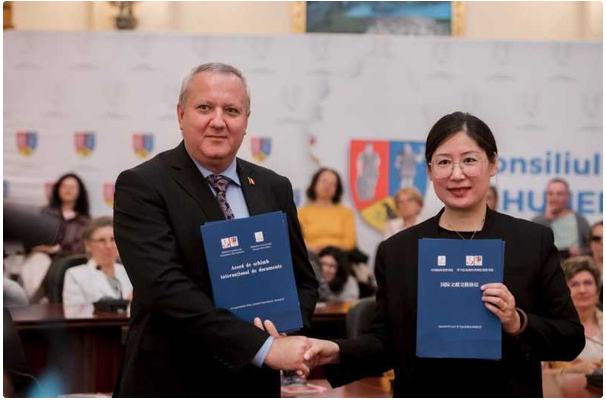
'Ovid Densusianu' Hunedoara-Deva County Library becomes full member of Silk Road International Library Alliance
The 'Ovid Densusianu' Hunedoara-Deva County Library has become a full member of the Silk Road International Library Alliance, a professional association bringing together similar cultural institutions from China and 41 countries and regions around the world. The invitation to join was extended by the National Library of the People's Republic of Chi
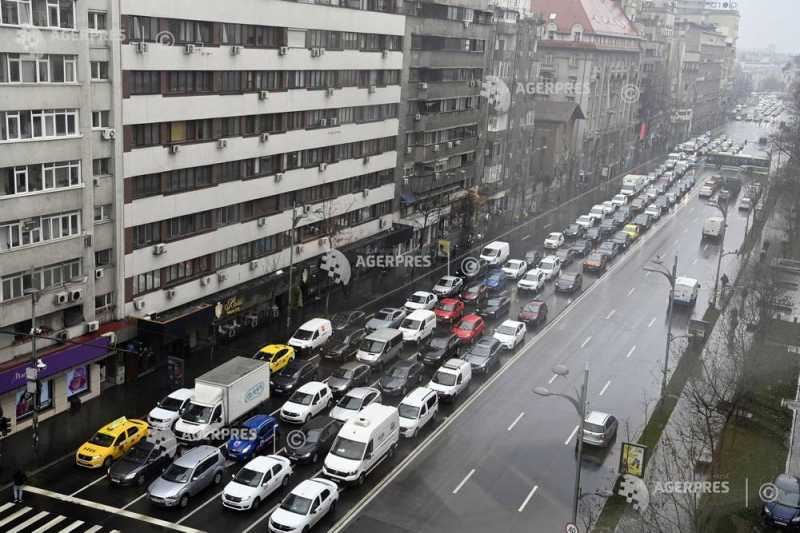
Romania's new car registrations decline by 26.4% in Q3 of 2026
New car registrations in Romania fell by 26.4% in the third quarter of this year compared with the same period in 2025, while, at the opposite end of the scale, registrations of mopeds and motorcycles increased by 20.4%, according to the National Institute of Statistics (INS) data released on Wednesday. Over the same reference period, registrations of buses an
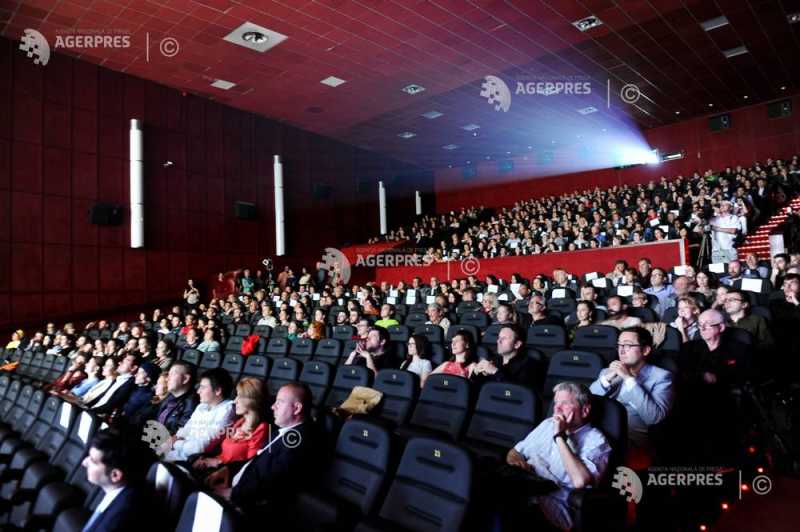
Olga Lucovnicova's debut documentary 'Last Letters from my Grandma' in cinemas across Romania as of Friday
The film 'Last Letters from my Grandma,' the debut documentary by Moldova-born director Olga Lucovnicova, will be released in cinemas across Romania as of Friday. The film will be screened in Bucharest (Elvire Popesco Cinema, Union Cinema), Botosani (Unirea Cinema), Cluj-Napoca (Arta Cinema, Victoria Cinema), Pitesti (Trivale Cinema) and Timisoara (Stu
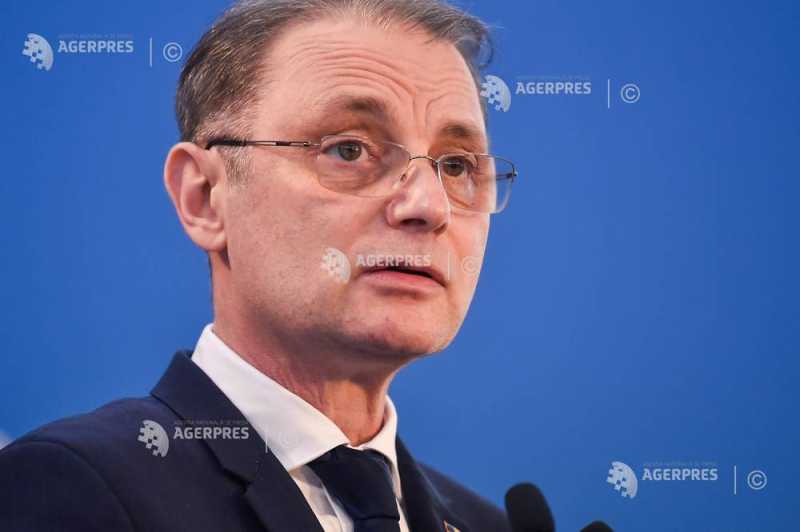
PM Niculescu says relationship with President Dan is one of mutual trust and respect
Prime Minister Luca Niculescu said on Tuesday that he has a constant dialogue with President Nicusor Dan, based on 'a relationship of mutual trust and respect,' starting from the constitutional remits of each office. He was asked at the TVR 1 public television station about his relation with the head of state and whether there are specific important si

Works by Henri Matisse go on display at Palace of Culture in Iasi
Lithographs, paintings and other works by Henri Matisse, one of the most important artists of the 20th century, are on display until January 10, 2027, as part of the exhibition 'Matisse la Palat' ('Matisse at the Palace'), held in the Treasury Hall of the Art Museum at the Palace of Culture in Iasi. The exhibition opened on Tuesday, marking the

Romania remains fully committed to joining OECD as soon as possible, PM Niculescu says
Prime Minister Luca Niculescu held a telephone conversation on Tuesday with Organisation for Economic Co-operation and Development (OECD) Secretary-General Mathias Cormann, after which he said Romania remained fully committed to its goal of joining the OECD as soon as possible. 'An excellent discussion with OECD Secretary-General Mathias Cormann, a friend

Timisoara exhibition 'Traditional Costume - A World Woven with Symbols' showcases dozens of historic textile pieces
The Banat Village Museum (MSB) in Timisoara will open an exhibition on Thursday featuring more than 80 items of traditional clothing and accessories, including shirts and traditional wraparound skirts dating from the late 19th century, offering visitors a glimpse into the traditional dress of Banat's communities. The exhibition, entitled 'Adornments fr