

From Ukraine to AI: The EU's big challenges for 2026 (enr)
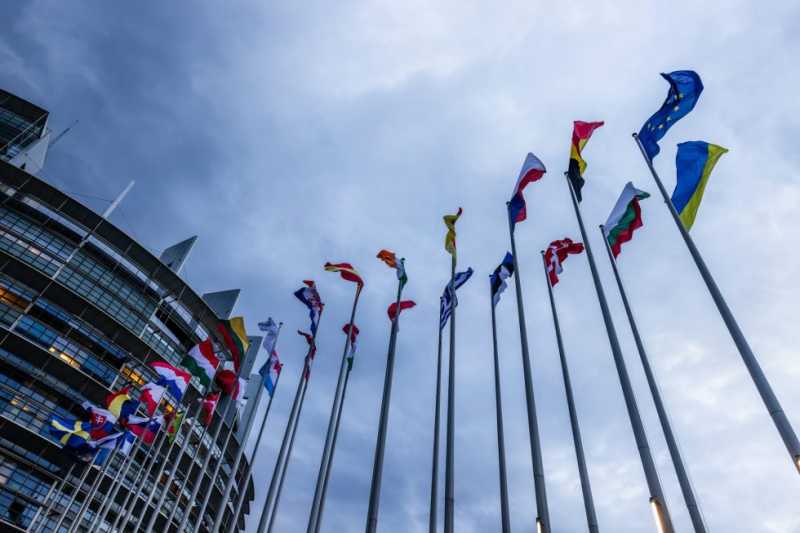
From global diplomacy and trade to defence and rapid technological development, the EU has its work cut out as it navigates the transition into a year of high-stakes challenges.
As the year approaches its end, the European Union and its 27 member states look back at a turbulent 12 months of (geo)politics and policymaking. From the war in Ukraine to strained transatlantic relations, some major challenges driving the debates appear to be here to stay.
The stakes are high for 2026 as Russia's war of aggression shows no sign of easing, the EU finds itself in an unprecedented relationship with the United States, the bloc grapples to keep its economy afloat, while technology continues to develop rapidly.
The prospect of war with Russia has raised the need to rearm the European nations, shifting priorities away from the green transition to increased spending on defence.
The EU seeks to continue its drive to simplify its regulation for the benefit of competitiveness. Observers and critics however fear key rulebooks - such as pioneering climate laws and digital regulation - may dash further to the background amid pressure from member states and across the Atlantic.
Ukraine: EU agrees financing as peace talks drag on
Ukrainian President Volodymyr Zelenskyy said in mid-December that Russia was preparing to wage a new 'year of war' on his country in 2026, after his counterpart Vladimir Putin said Moscow would 'certainly' achieve its objectives.
Moscow's troops have been steadily advancing at the eastern front in recent months, with Putin on Friday hailing the Russian army's territorial gains - and threatening more in the coming weeks.
EU leaders on Thursday (December 18) agreed to provide Ukraine with 90 billion Euro for the years 2026 and 2027 to finance its defence against Russia. Without new funding, Ukraine was at risk of running a deficit of 45 to 50 billion Euro next year and of having to scale back its military production, European Council President António Costa said.
The EU has long been sidelined in talks with Russia to end the war, with US President Donald Trump coordinating efforts to get Kyiv and Moscow to the table. Washington last month stunned Ukraine and its European allies by presenting a 28-point plan to end the war widely seen as caving in to the Kremlin's key demands, which has since been redrafted following Ukraine and Europe's involvement.
However, the prospect of direct talks between Europe and Russia has now come into view.
Kremlin spokesman Dmitry Peskov said Putin had 'expressed readiness to engage in dialogue' with his French counterpart, President Emmanuel Macron, in an interview published on Sunday by state news agency RIA Novosti.
The French presidency as a consequence welcomed that Putin was ready to speak with Macron, after the French leader said Europe should reach out to Russia again over ending the war rather than leaving the US alone to take the lead.
The Kremlin on Sunday however denied that three-way talks between Ukraine, Russia and the United States were on the cards, as Russian, Ukrainian and European diplomats were in Miami for separate talks with the US.
The EU - and especially members on the eastern flank, such as Poland - is also expecting further tests to its resilience to hybrid pressure, including disinformation, cyberattacks, and potential acts of sabotage.
Western security services blame Russia for a spate of drone flights, acts of sabotage, cyberattacks and online disinformation campaigns in Europe, which have escalated since its 2022 full-scale invasion of Ukraine.
Germany's domestic spy chief warned early December that Russia could step up sabotage, cyberattacks and disinformation campaigns next year when the EU's top economy, a strong backer of Ukraine, holds several regional elections.
Germany next year holds five regional elections, including in the ex-communist East, where the far-right and Moscow-friendly Alternative for Germany (AfD) party hopes to gain more support yet again.
No trade, no gain
The EU's trade relations with major partners have also shifted this year, as links with the United States, China, and the prospect of a trade deal with countries in South America remain key sticking points.
2026 forecast: If current projections hold, global trade in 2025 will exceed 35 trillion Dollar, the United Nations has said. This marks an increase of around 2.2 trillion Dollar - roughly seven percent - compared to 2024, it said in its final update of the year.
But the outlook for 2026 is more subdued, the United Nations said in early December. In November, the European Commission also said the eurozone economy will grow less than expected next year, as risks from international trade and geopolitical tensions weigh on the single currency area.
Since returning to office in January, US President Trump has for example slapped several waves of new tariffs on imports entering the United States. His administration has imposed a basic tariff of 10 percent on all countries since April, with much higher rates for some economies.
Aimed at averting an all-out trade war, European Commission President Ursula von der Leyen and Trump in July reached a deal that imposes 15 percent tariffs for most EU exports, including cars, semiconductors, pharmaceuticals or lumber.
The Commission forecast the single currency area to grow by 1.2 percent in 2026, down from a previous forecast of 1.4 percent. For the entire 27-country EU, Brussels expects growth of 1.4 percent in 2026, slightly lower than the 1.5 percent predicted in May.
The EU's data is based on the implementation of the tariffs as agreed. The Commission said the Eurozone economy was more resilient this year despite the turmoil caused by Trump's tariffs.
Eurozone family expands: The Eurozone will welcome a new member. On January 1, Bulgaria will join the single currency area, marking a major milestone in its EU integration, despite some domestic opposition.
The self-proclaimed 'only patriotic party in Bulgaria' Vazrazhdane has organised protests against adopting the Euro, arguing that it would undermine national sovereignty and harm living standards. A Commission spokesman however confirmed that Bulgaria's Eurozone accession decisions are final and cannot be reversed before January 1.
In mid-December, Bulgaria's government led by Prime Minister Rossen Jeliazkov resigned amid public anger over its economic policies and perceived failure to tackle widespread corruption - ushering in a period of prolonged political instability days before the nation gets a new currency.
EU-China trade: Trade tensions between China and the EU have been growing for several years.
In 2023, Brussels launched an investigation against electric cars manufactured in China, accusing Beijing of helping the industry with excessive state subsidies. Beijing subsequently responded with its own investigations and tariffs on imports from the EU, including spirits, pork and dairy products.
The trade clash intensified on Monday as China slapped provisional import tariffs of 21.9 percent to 42.7 percent on certain European dairy products, according to a statement of China's Ministry of Commerce.
China accuses the EU of significantly subsidising its dairy industry. Imports from Europe had noticeably harmed Chinese producers, the ministry said. The investigation into dairy products is to continue until a final decision is made, it said.
Cracking down on the small parcel wave: The EU on its part also seeks to tackle a flood of small parcels from China ordered via the likes of Shein and Temu. Last year, 4.6 billion small retail packages entered the European Union - more than 145 per second - with 91 percent originating in China, and their numbers are expected to keep rising.
European retailers argue they face unfair competition from overseas platforms, such as AliExpress, Shein and Temu, which they claim do not always comply with the EU's stringent rules on products.
Earlier this month, EU finance ministers agreed to impose a three-Euro duty on low-value imports into the bloc. The levy will be introduced on a temporary basis starting July 1 next year, staying in place until the bloc can settle on a permanent solution for taxing such imports.
The European Commission in May also proposed a small package handling fee worth two Euro. EU member states have yet to agree on the actual amount of that fee, but hope it will be applicable from late 2026.
EU-Mercosur, 25 years and counting: The EU last week said the signing of a trade deal between the EU and four Mercosur countries - Brazil, Argentina, Uruguay and Paraguay - will be postponed to January, after farmers staged a show of force against the pact outside an EU leaders' summit in Brussels.
At the same time, firm opposition from France and setbacks from Italy and other member states stalled the agreement.
The EU-Mercosur deal would create the world's biggest free-trade area and help the 27-nation bloc to export more vehicles, machinery, wines and spirits to Latin America at a time of global trade tensions.
AI boost and big tech battle
In view of the EU's drive to slash red tape in the name of competitiveness, a key question for next year is whether the EU's efforts to deregulate will help the bloc keep pace with technological powerhouses - in particular on rising technologies such as Artificial Intelligence (AI).
After three years of breakneck growth and soaring valuations, the AI industry enters 2026 with some of the euphoria giving way to tough questions. Money is pouring into AI, with spending expected to reach more than 2 trillion Dollar (1.7 trillion Euro) worldwide in 2026, according to the consulting firm Gartner.
The EU raced to pass its sweeping AI law that entered into force last year, but dozens of Europe's biggest companies, including Airbus and Mercedes-Benz, called for a pause on aspects they said risked stifling innovation.
Meanwhile, the EU's clash with big tech giants also rages on as Brussels rethinks its pioneering digital rulebooks. The landmark EU tech rules have faced powerful pushback from the US administration under Trump - but also from businesses and other governments.
Brussels denies bowing to outside pressure, but it has vowed to make businesses' lives easier in the 27-nation bloc and has unveiled proposals to change its rules on data protection and delay parts of the AI law.
After cheering the so-called 'Brussels effect' whereby EU laws were seen as influencing jurisdictions around the world, rights defenders increasingly fear the EU is withdrawing from its role as Big Tech's watchdog.
The content of this article is based on reporting by AFP, ANSA, ATA, BTA, dpa, PAP, as part of the European Newsroom (enr) project. AGERPRES (editing by: Mariana Ionescu)
The content of the www.agerpres.ro website has the exclusive purpose of public informing.
All the information published on this website by AGERPRES is protected by relevant legal dispositions.
It is forbidden to copy, reproduce, recompile, decompile, distribute, publish, display, modify, create derived components or products or full services, as well as any exploitation of the site's content.
Details in the section Terms of Use. If you are interested in picking up AGERPRES news items, please contact the Marketing Department – marketing@agerpres.ro.
The use of the Comments section entails your obligation to respect the AGERPRES terms and conditions in regards to the publishing of comments on the www.agerpres.ro.
Other news in category
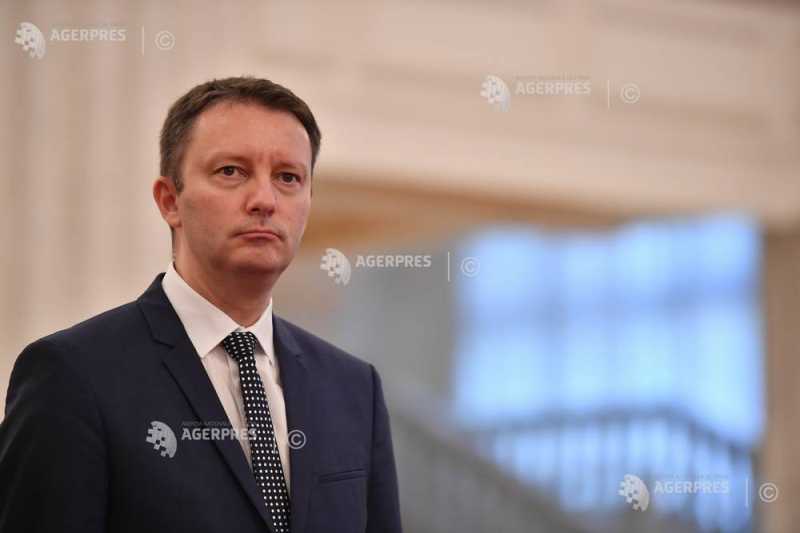
PM-designate Siegfried Muresan to ask Parliament for ministers' hearings to last at least an hour
Prime Minister-designate Siegfried Muresan said he would ask Parliament's leadership for the hearings of the proposed ministers to last at least 60 minutes. Muresan told RFI Romania on Monday that he had 'never' liked 'rush-through' hearings. He underscored that MPs must have the opportunity for a 'serious dialogue' with the candida

President Dan: Maryhill Museum of Art, a true cultural bridge between Romania, the United States
President Nicusor Dan sent a message on Sunday at an event held at the Maryhill Museum of Art in Goldendale, Washington State, marking the 100th anniversary of the museum's opening, highlighting the institution's role in promoting Romanian culture and strengthening cultural relations between Romania and the United States. The message from the head of s
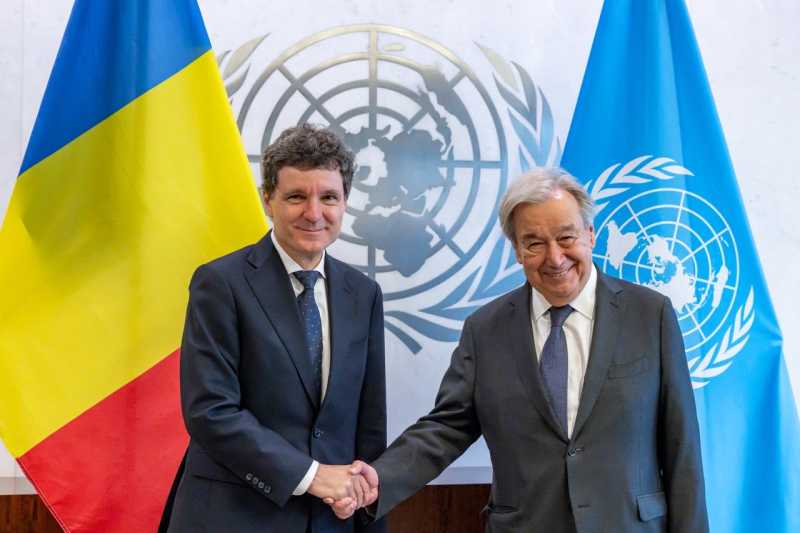
Nicușor Dan meets UN Secretary-General Antonio Guterres and US Ambassador to the UN Mike Waltz
President Nicușor Dan met on Sunday in New York with United Nations Secretary-General Antonio Guterres, to whom he conveyed Romania's 'deep gratitude' for his tireless work to find solutions to conflicts around the world and for his steadfast commitment to peace, dialogue and respect for international law. The Romanian head of state also met with US Ambas
President Nicușor Dan to attend the High-Level Week of the UN General Assembly
President Nicușor Dan has several meetings and events scheduled in New York between 20 and 23 September, as part of his participation in the 81st session of the United Nations General Assembly, according to the agenda published by the Presidential Administration. The President is scheduled to deliver Romania's national statement during the High-Level Week of the session

President Dan says Foreign Ministry investigating Orlivka school case
President Nicusor Dan said on Friday that Romania's Foreign Ministry has opened an investigation into the case of the school in Orlivka, Odesa region, where a Year 1 class taught in Romanian was closed. Speaking at a news conference held after the Carpathian Integration Initiative 'Carpathian 8' Summit, he said that 'remarkable progress has bee

Bolojan: We will try, within our possibilities and depending on our electoral weight, to form a Government
President of the National Liberal Party (PNL) Ilie Bolojan said on Friday that, although Siegfried Muresan's nomination for prime minister came three months late, the party would deal with the situation 'responsibly' and seek to form a Government based on its electoral weight. 'Yesterday, about 30 minutes beforehand, I learned from the piece of

Siegfried Muresan: We will start work on a government programme; beginning of next week - discussion with MPs
Prime Minister-designate Siegfried Muresan announced on Friday that he was starting work on the government programme together with the National Liberal Party (PNL), Save Romania Union (USR) and the Hungarian Democratic Union of Romania (UDMR), mentioning that he would present the priorities at the beginning of next week and, based on these, would hold an "extremely tran

CCIR's Daraban: The diaspora is not a sentimental issue but a chapter in the national economy
The experience gained by Romanians in the diaspora in competitive markets must be transformed into investment, jobs and exports, believes Mihai Daraban, President of the Chamber of Commerce and Industry of Romania (CCIR). According to a press release from the organisation sent to AGERPRES, the institution is strengthening its partnership with ROUNIT - Reunited
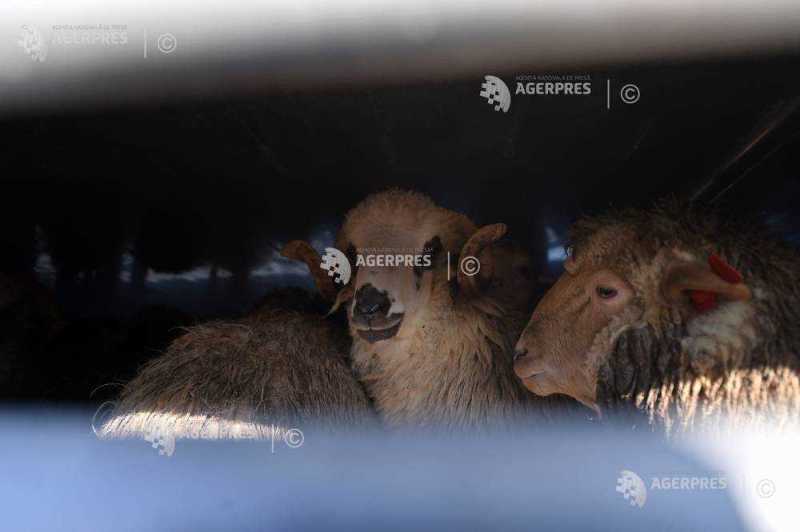
European Commission approves ANSVSA's Action Plan to unblock sheep and goat exports
The Action Plan of the National Veterinary Sanitary and Food Safety Authority (ANSVSA) for unblocking exports of sheep and goats has been approved by the European Commission, allowing exports of carcasses and products to resume under the differentiated vaccination scheme. According to an ANSVSA release sent to AGERPRES on Friday, the approved solution protects
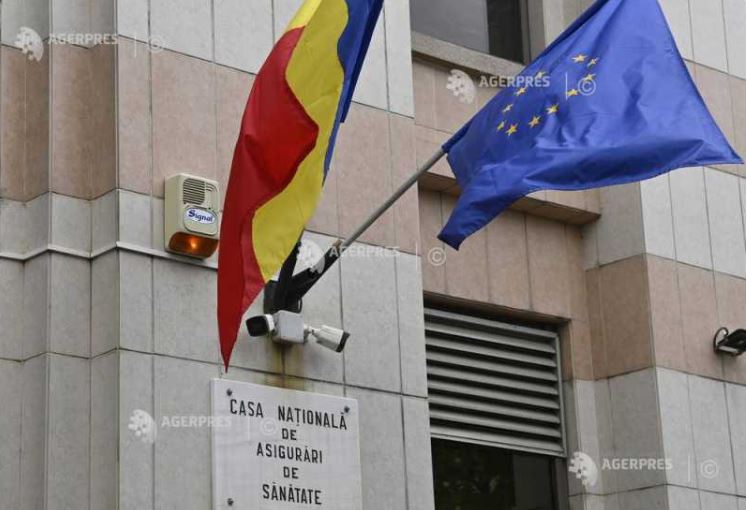
Health Insurance House launches project on cross-border exchange of medical images, laboratory results, discharge reports
The National Health Insurance House (CNAS) announced on Friday the launch of the European project 'Romanian Medical Images, Laboratory Results and Discharge Reports' (RO-MI-LR-DR), for the cross-border exchange of medical images, laboratory results and discharge reports. The project is funded through the EU4Health programme, with the European Health an
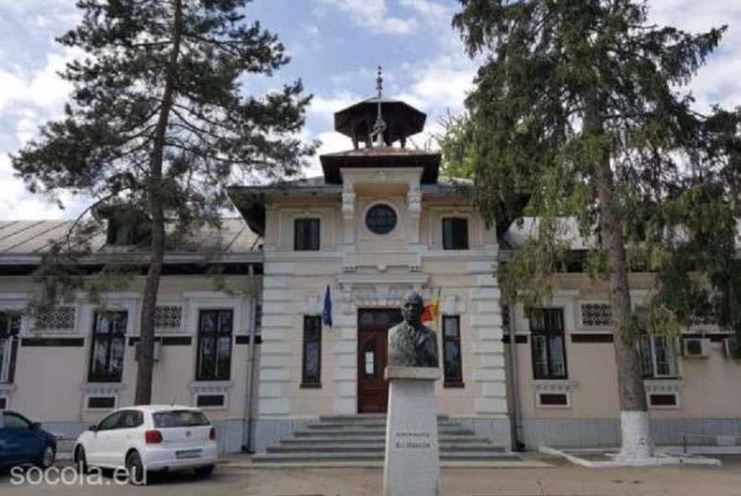
'Socola' Institute of Psychiatry in Iasi to hold new memory testing campaign at weekend
The 'Socola' Institute of Psychiatry in Iasi has announced that it will hold the third edition of its 'Memory Testing Campaign' on Saturday and Sunday, a campaign addressing people of all ages and aimed to identify individual risk factors that may predispose people to memory disorders, while also providing participants with specialist counselling.

'Brancusi and His Muses' exhibition opens at Art Safari
'Brancusi and His Muses', the largest exhibition dedicated to the great sculptor to be held in Romania during Brancusi Year, opened on Thursday evening at the Art Safari New Museum. Curator Doina Lemny said she wanted the initiative to be different, allowing the public to enter the artist's studio atmosphere. 'It is true that Brancusi's wor
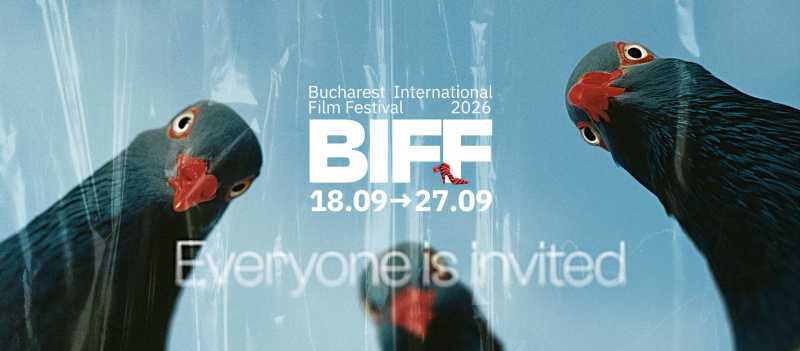
Bucharest International Film Festival - BIFF 2026 begins; eight films from Europe and Asia
Bucharest's only international feature film competition, which will run from Friday until 27 September, brings together eight films from Europe and Asia this year, seven of which will be screened in Romania for the first time. 'The selection brings to Bucharest productions that have won awards or been presented at major international festivals such as
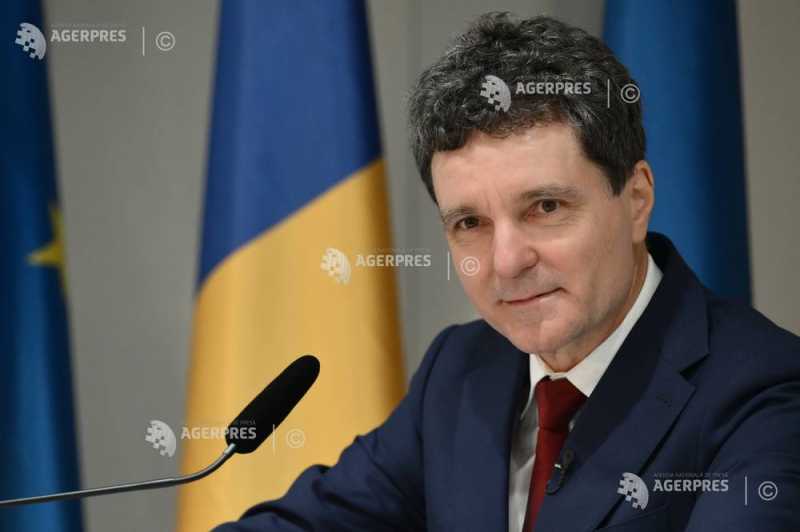
President Dan attending inaugural Summit of Carpathian Integration Initiative, in Ukraine
President Nicusor Dan on Friday is attending the inaugural Summit of the Carpathian Integration Initiative, in Ukraine's Ivano-Frankivsk region, at the invitation of Ukrainian President Volodymyr Zelenskyy. The Presidential Administration said that a series of related events will take place on the sidelines of the Summit, including the Carpathian Economic
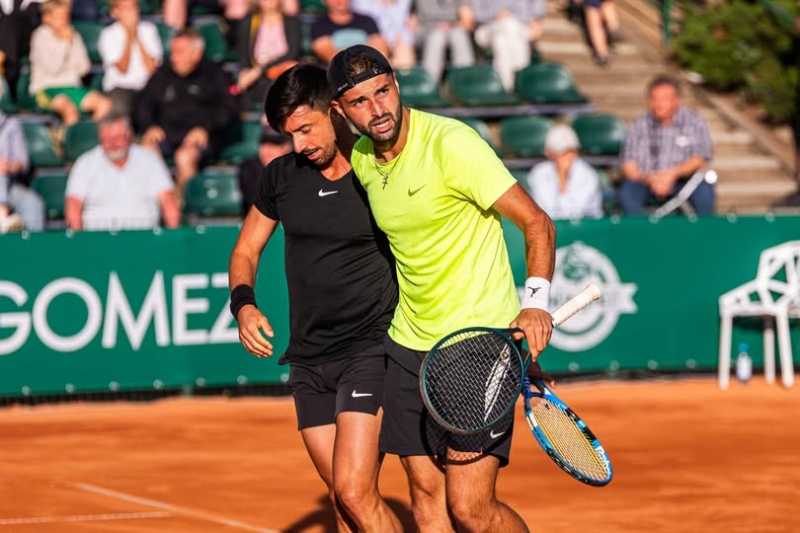
Romania's Alexandru Jecan and Bogdan Pavel reach doubles semi-finals at Szczecin Open
Romanian pair Alexandru Jecan/Bogdan Pavel reached the semi-finals of the doubles event at the challenger tournament in Szczecin (Poland) - Szczecin Open, on Thursday evening, with total prizes worth 203,900 euros, after defeating Polish duo Piotr Matuszewski/Filip Pieczonka 6-1, 3-6, 10-6. Jecan and Pavel prevailed after one hour and 10 minutes against the se