

MEP Voiculescu on Critical Medicines Act: Romania wants to be part of strategic drug production projects

AGERPRES special correspondent Florin Stefan reports: Romania wants to be part of strategic drug production projects that will be facilitated by the adoption of the Critical Medicines Act and would like a fair distribution mechanism in the event of a pharmaceutical crisis, Save Romania Union (USR) MEP Vlad Voiculescu, Renew Group shadow rapporteur for this legislation, declared in Strasbourg.
Voiculescu says that the new legislation, on which the EU legislature is to present its negotiating position on December 2, is based on several realities, including 'the disappearance of certain drugs from the market almost constantly and not only from countries like Romania or Bulgaria or Hungary, but also from countries that can afford a little more'.
In a briefing for Romanian journalists, the MEP explained that these are 'very cheap drugs, which have been on the market for 30, 40, 50 years and which cannot be replaced'.
'The effect is that you can suddenly have hundreds or thousands of children or adults suffering from cancer, from other pathologies, who cannot be treated. The World Health Organization calls these essential drugs. (...) The effects are dramatic,' stated the former Romanian health minister.
Another category of problems is related to the fact that the production of generic drugs, for which the profit margin is generally much lower and which are produced by more companies compared to innovative ones, 'has moved in the last 15 years to a great extent towards China, India'.
In addition, Voiculescu said, 80% of the active ingredients in generic drugs, which represent 80% of the total, 'are again produced in China or India'.
'Basically, if a trade war or any kind of conflict were to erupt between the US and China, and Europe had to choose sides - and we imagine which side it would take - there is a major risk that 80% of the active ingredients for 80% of medicines would suddenly become unavailable. That is another major vulnerability,' Voiculescu warned.
A third type of problem that the law tries to address is the tendency of states to stockpile drugs.
'(...) In recent years, countries such as Germany have imposed strategic supply reserves. More precisely, if a pharmaceutical company wanted to sell in Germany, it had to set aside half of its annual contracted quantity - equivalent to six months' supply - in a warehouse designated for Germany, unavailable for other markets. In this way, Germany guarantees six months of medicine consumption at all times. France, Finland, and other countries have adopted similar measures,' explained the USR MEP.
The answer that the law in question gives to this problem is 'to have a common cabinet to which the Commission must have the key', based on a pre-established mechanism that is fair for everyone. 'So we need 100,000 medicines, (but) we have (only) 60,000, let's divide them fairly according to population, so that every country has access to those medicines.'
On the other hand, Voiculescu noted that legislation on critical medicines offers partial solutions to these vulnerabilities.
'We are talking about European strategic projects that could benefit from EU funding. At the level of the Union, we have already acknowledged the existence of problems and vulnerabilities. Some must therefore be addressed collectively - for example, the fact that most active substances are produced in China and India. Part of that production, or at least the capacity to produce it, should be relocated to Europe. But such production capacities cannot be built without funding and other forms of support,' Voiculescu explained.
The new legislation talks about funds that could go towards strategic projects initiated by several member states and also about various facilities, such as relaxing the rules for state aid or giving priority to energy supply.
Also, the new legislation regulates, in addition to the possible solution of strategic projects, that of centralized procurement.
'The Commission said that if at least nine countries join forces to buy a medicine, they can do so voluntarily, not as a mandate. In that case, the Commission provides the technical secretariat, which is crucial. Negotiating together is always more effective - you can secure a lower price or reach a better deal. Some companies avoid markets like Bulgaria or Romania because our prices must be lower, which undermines pricing in richer countries,' the official explained.
After the Commission initially proposed that nine countries would be required for a joint medicine purchase, Vlad Voiculescu said he suggested lowering the threshold to three.
'It seems we are moving toward a compromise of at least five countries. I also proposed including candidate states, with Moldova in mind, and this was accepted. A bilateral agreement will probably still be needed, but it is merely a formality. In practice, when Romania and four other countries decide to buy a medicine together, Moldova will be able to join the package and benefit from lower prices and better conditions,' the Renew MEP explained.
'It would be great if Romania were part of these strategic projects sooner or later. If we could bring production to Romania. It would be great for Romania to have that mechanism for equitable distribution in case of a crisis of available medicines, that key to the cabinet that I was talking about, and that is a matter for negotiation (...),' said Voiculescu.
Voiculescu added that Romania's potential partners in projects under the new legislation would likely be 'eastern countries and smaller states.'
'Countries like France, Germany or Sweden have very strict regulations and essentially prioritize their own populations, having already taken safety measures. They generally prefer not to have European-level regulation, since they manage their own needs. By contrast, many smaller and poorer countries argue that 'we are a family, we need a common mechanism',' Voiculescu explained. AGERPRES (RO - editing by: Gabriela Ionescu; EN - writing by: Simona Klodnischi)
The content of the www.agerpres.ro website has the exclusive purpose of public informing.
All the information published on this website by AGERPRES is protected by relevant legal dispositions.
It is forbidden to copy, reproduce, recompile, decompile, distribute, publish, display, modify, create derived components or products or full services, as well as any exploitation of the site's content.
Details in the section Terms of Use. If you are interested in picking up AGERPRES news items, please contact the Marketing Department – marketing@agerpres.ro.
The use of the Comments section entails your obligation to respect the AGERPRES terms and conditions in regards to the publishing of comments on the www.agerpres.ro.
Other news in category
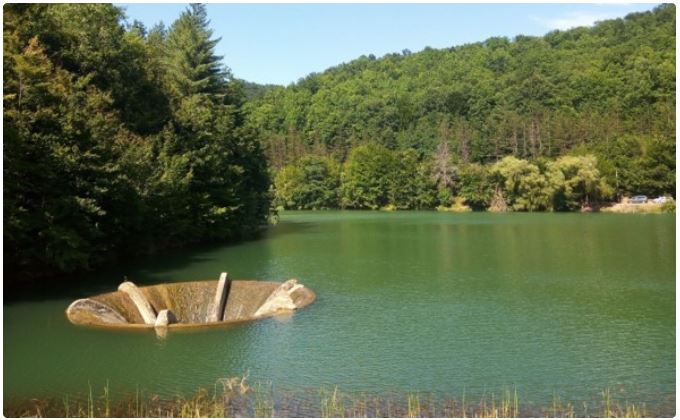
'Whirlpool' Vida Lake to turn into sustainable rural tourism site
The Dobresti local administration is preparing to turn Lake Vida - one of Romania's most spectacular and unique lakes - into a regional hub for active and sustainable rural tourism, through a project estimated at four million euros, following the completion of complex desilting works. Dobresti mayor Florin Copos recently told AGERPRES that the local author
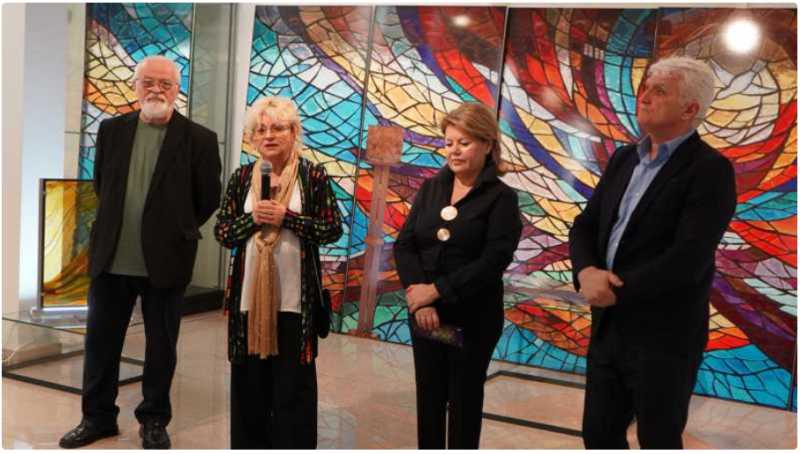
Amalia Verzea's 'The Art of Stained Glass at 360 Degrees' arrives in Oradea
After being presented in Bucharest, the personal exhibition 'The Art of Stained Glass at 360 Degrees' signed by internationally renowned Oradea artist Amalia Verzea, has arrived in her hometown, at the Cris Land Museum, where it can be visited until May 10. The exhibition will later travel to Rome. 'I have been making stained glass all my life. Sin
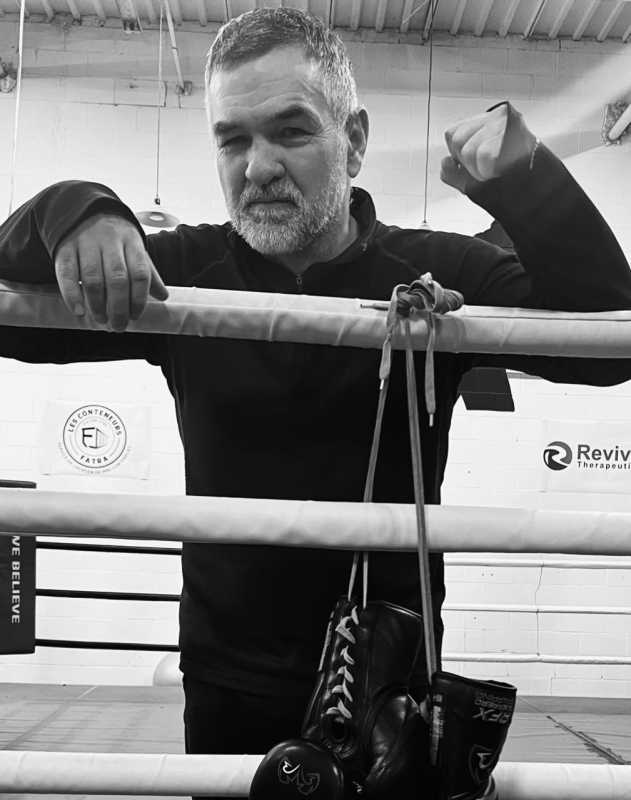
#BoxingCentenary/INTERVIEW Leonard Doroftei: Romanian boxing can rise again, but only with better coaching
Former boxing great Leonard Doroftei told AGERPRES in an interview that Romanian boxing is going through a rather challenging period, but he remains confident the sport will recover and once again produce athletes capable of winning medals at European, World and Olympic level. 'We're going through a tougher patch. I hope that one day we'll bounce b

#Nadia Year/International Day of Sport for Development and Peace celebrated with small gymnasts
The Romanian Olympic Committee (COSR), through the Romanian Olympic Academy on Friday organised an event at the Mariana Bitang Gymnastics Hall inside the Dinamo Sports Club, celebrating International Day of Sport for Development and Peace together with young gymnasts and legends of Romanian gymnastics. The event is part of the series of actions carried out by

Iasi equestrian wins first place at her debut at CSIO Ch Nations Cup Youth Belgium
Iasi equestrian Ilinca Rata, aged 14, brought Romania its first victory in the CSIO Ch Nations Cup Youth competition, held in Opglabbeek (Belgium). Registered with the Equester Sports Club Iasi, Ilinca won in the debut event for the Children category - Small Tour (1.15 m), after a penalty-free course, performed alongside the horse Innocence S/Ingo.

Ioana Dogioiu: Government approves ordinance on temporary reduction of excise duty on diesel fuel
Government spokesperson Ioana Dogioiu declared on Friday that the Executive adopted the normative act regarding the temporary reduction of the excise duty level for diesel and the establishment of the solidarity contribution on revenues from the marketing of crude oil and energy products obtained from the processing of crude oil extracted from the territory of Romania.

Jianu:Entrepreneurial index for 2026 fell to 43.25 points; only two macroeconomic indicators are increasing
The entrepreneurial index dropped this year to 43.25 points, from 49.5 points in 2025, in conditions in which most macroeconomic indicators stagnated or registered decreases, while the dynamics of turnover and foreign investments were on the rise, data from the third edition of the report show. 'We meet today at the launch of the Romanian Entrepreneurship

One of Romania's main challenges remains high level of energy prices during peak hours (StateSec)
One of Romania's main challenges remains the high level of energy prices during peak hours, and the solutions are increasing domestic production, investing in storage capacities and more efficient management of consumption, according to Energy Ministry Secretary of State Cristian Busoi. 'One of Romania's main challenges remains the high level of en
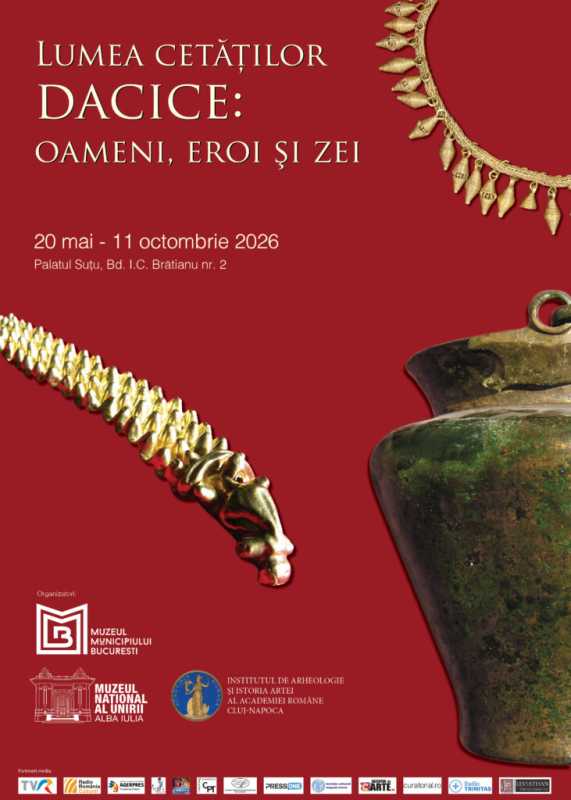
'The World of the Dacian Fortresses: People, Heroes and Gods' exhibtion to open at Sutu Palace
The thematic exhibition 'The World of the Dacian Fortresses: People, Heroes and Gods' will open on 20 May at the Sutu Palace. 'From 20 May, we invite you to the thematic exhibition ‘The World of the Dacian Fortresses: People, Heroes and Gods,' an opportunity to discover the fascinating world of the Dacians and their fortifications, viewed
Romania records tourist arrivals down 3.7% and overnight stays down 3% in February
Arrivals and overnight stays in the establishments of tourists' reception with functions of tourists' accommodation, including apartments and rooms for rent decreased by 3.7% and by 3%, respectively, in February 2026 compared to the same month last year, according to the National Institute of Statistics (INS) data published on Friday. The arriva

Exhibition dedicated to young artists, organised in partnership with Margareta of Romania Royal Foundation
The Buzau County Museum, in partnership with the Margareta of Romania Royal Foundation, is organizing the opening of the exhibition called 'The aspiration to fly' ('Nazuinta de zbor'), dedicated to young artists of the 2026 generation, an event which coincides with the 130th anniversary of the inauguration of the former 'I. C. Bratianu' hospital build

FEATURE/ Inter-institutional training on the Danube part of Sea Shield exercise
The Sfantu Gheorghe branch of the Danube on Thursday hosted an inter-institutional training exercise that dealt with the management of a refugee crisis in the Danube Delta area and prisoners of war, an event that was part of a wider Sea Shield exercise. The military exercise designed to secure the interoperability of the entities participating in a multination
Romania to start vaccine negotiation with Pfizer as ill-considered decisions backfire
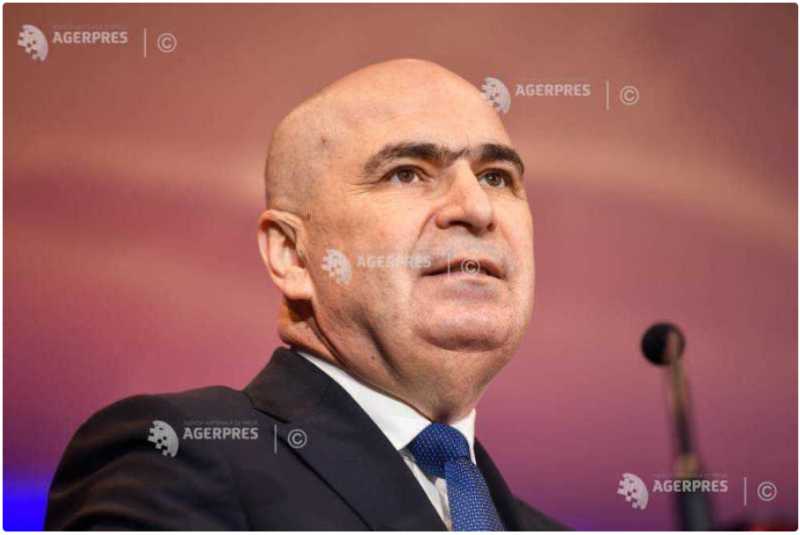
Prime Minister Ilie Bolojan announced on Thursday that Romania will contact Pfizer, with which he will start a negotiation, considering that some 'thoughtless decisions turn against them in a longer or shorter time'. 'Unfortunately, we received the news of the sentence in the first instance, unfortunately enforceable by the Belgian Court, under whi
Ancient gold artifacts stolen in Drents Museum heist handed over to Romania
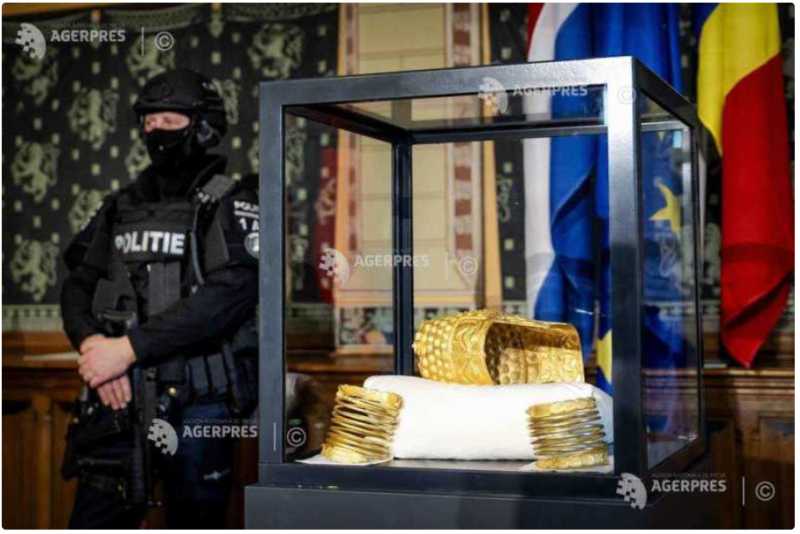
The Cotofenesti golden helmet and two of the three Dacian gold bracelets stolen last year from the Drents Museum in the Netherlands and subsequently recovered have been returned to Romania, the Dutch Prosecution Service announced on Thursday in a press release published on its website. Stan Rares-Petru and Daniela Buruiana, representatives of the Romanian Pros
Culture Minister Demeter hails Cotofenesti helmet recovery: It's a victory, it's what I hoped for
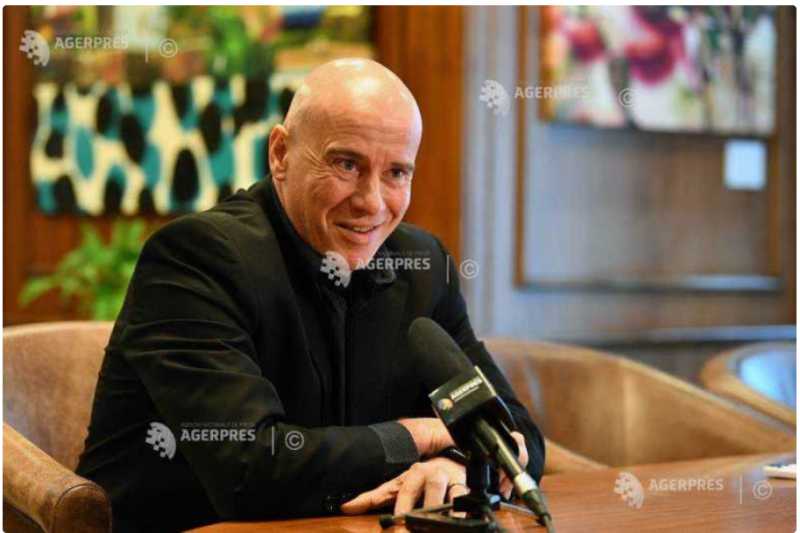
Culture Minister Demeter Andras expressed satisfaction at the recovery of the iconic Geto-Dacian Cotofenesti golden helmet and two gold bracelets, stressing that the amount to be returned to the Dutch side will be determined only after the restoration of the artifacts is completed. 'It's a victory, it's a joy. It's what I hoped for. From the fi