

Buzau Plant Genetic Resources Bank includes 20 chrysanthemum varieties, two of which edible

The Buzau Plant Genetic Resources Bank (BRGV) holds in its collection 20 chrysanthemum varieties of different sizes and colours, two of which are edible and currently undergoing approval, according to the institution's representatives.
In November, a period that coincides with lower temperatures and rainfall, dozens of colourful mound-shaped bushes can be seen at BRGV. The chrysanthemum collection includes varieties with white, bicoloured, red or orange flowers of various sizes.
'We have a rich chrysanthemum collection. More than 20 varieties are now stabilised. Popularly known as tufanele, these are improved chrysanthemum varieties, many of which were recovered or found in household gardens. Over time we are considering expanding the space allocated to this species because it has multiple uses, from the edible varieties appreciated for their medicinal benefits to those grown as ornamentals, and of course they have many other properties, being repellents for certain pests. These traditional varieties that form a globular bush generally do not require special care, only timely watering and clearing of weeds. Otherwise they do not need chemical treatments, they are hardy plants. Chrysanthemums have long been cultivated in Romania, mainly in household gardens. Improved varieties have been cultivated since the 1950s more intensively, generally in greenhouses or protected spaces, to obtain attractive flowers for sale,' Buzau BRGV Director Costel Vinatoru told AGERPRES.
The chrysanthemum, the queen of autumn flowers, also widely used in the perfume industry, can be grown both outdoors and indoors in pots, with varying sizes and high resistance to low temperatures and pests.
'This charm of colours is attractive in this species and it deserves work. In the floricultural sector we are trying to save as many of these varieties as possible. This species can express itself in various ways, shapes and sizes. It has great biodiversity in terms of colours, flower types and height. There are also varieties that can be grown dwarf, with small bushy forms, double flowers, suitable for pots or window boxes,' explained the BRGV researcher.
Among the chrysanthemum varieties at Buzau BRGV are two edible ones prepared for approval. According to specialists, the European catalogue of vegetable plants does not list any chrysanthemum variety, nor does Romania. The edible chrysanthemum is used as a vegetable, for both leaves and flowers, in salads or for tea making.
'The edible chrysanthemum was a first for us and we have two varieties. One is in the process of approval, the other is being prepared. The varieties differ in flower colour. One has yellow flowers and the other yellow with white at the tips of the petals, creating a beautiful mix of white and yellow. This type of chrysanthemum has not existed in Romania. The vegetative parts are consumed, the leaves, young sprouts and even young flowers. It has a special taste and can be used in culinary dishes, salads or combinations. Its taste is similar to carrot, unsurprisingly, as it is rich in carotene which the body assimilates easily. Just as we enjoy the taste and aroma of carrot, chrysanthemum also has a specific flavour reminiscent of carrot. It is a first for Romania because it is an edible plant, a medicinal plant, an ornamental plant and, importantly, it reproduces by seed. This is a major achievement because chrysanthemums are not usually propagated vegetatively, so the seeds can be easily preserved and crops can be easily established,' revealed Costel Vinatoru.
According to BRGV management, the development of Romania's floricultural sector could contribute to economic growth in the context of massive flower imports.
'These are valuable genetic resources. Many of them are not sufficiently explored or known. We are trying to explore them genetically, to stabilise and genetically profile these varieties. If we look at old Romanian catalogues, yes, many varieties in this field have been lost. Now, of course, we are trying to rebuild this heritage and hope to soon have these resources safeguarded for future generations. It is a sector that has been neglected and one that could be said to bring losses to the national economy. Why? Because Romania is a major flower importer. If we were to calculate how much money leaves Romania through flower imports, we would certainly see the need to act. Climatic conditions in Romania are suitable for many floricultural species, such as chrysanthemum, which can be grown in Romania without difficulty, both in protected spaces and in the area. The important thing is the willingness to do so,' the Buzau BRGV director said.
The Plant Genetic Resources Bank for vegetable growing, floriculture, aromatic and medicinal plants Buzau is a public research institution under the coordination of the Ministry of Agriculture and Rural Development. Its main activity is the exploration, inventory, collection, research, development and conservation of plant genetic resources. AGERPRES (RO - writing by: Florin Zafiu; EN - writing by: Adina Panaitescu)
The content of the www.agerpres.ro website has the exclusive purpose of public informing.
All the information published on this website by AGERPRES is protected by relevant legal dispositions.
It is forbidden to copy, reproduce, recompile, decompile, distribute, publish, display, modify, create derived components or products or full services, as well as any exploitation of the site's content.
Details in the section Terms of Use. If you are interested in picking up AGERPRES news items, please contact the Marketing Department – marketing@agerpres.ro.
The use of the Comments section entails your obligation to respect the AGERPRES terms and conditions in regards to the publishing of comments on the www.agerpres.ro.
Other news in category
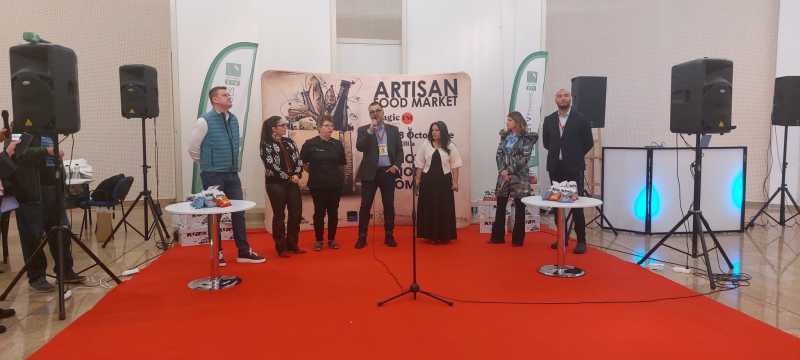
Romania's artisan food producers eye retail expansion amid funding and regulatory challenges
Romanian artisan producers are increasingly investing in processing facilities and making greater use of local resources to create higher-value products, positioning themselves to enter retail chains and supply restaurants. However, their business development also depends on access to financing, cooperation and a predictable legislative framework. 'After f
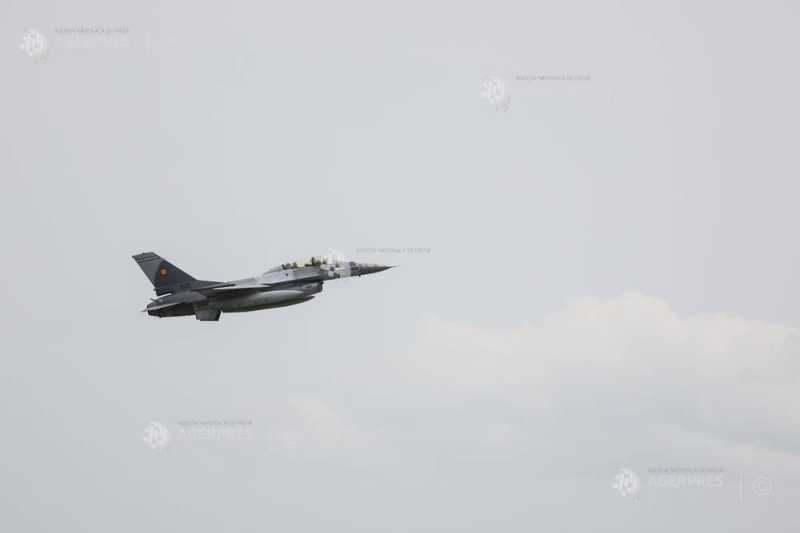
Romanian fighter pilots shoot down two drones over Black Sea, defence minister says
Acting Defence Minister Radu Miruta announced on Saturday evening that Romanian military pilots had engaged and shot down two drones over the Black Sea. The first drone entered Romanian airspace at 17:59 and was shot down within two minutes, while the second, detected in the same area, was engaged and shot down at 18:05, two kilometres inside Romanian airspace

PNL to back investiture of Niculescu government in conditional, one-off vote, Bolojan says
National Liberal Party (PNL) leader Ilie Bolojan announced on Saturday that the Liberals would go into opposition and provide 'a necessary, conditional and one-off vote' in favour of the investiture of the Niculescu government. 'We concluded a meeting of the National Political Bureau of the National Liberal Party just a few minutes ago, at which we

Romania highlights UNESCO-listed living traditions on Intangible Cultural Heritage Day
Romania's Ministry of Culture marked the International Day of the Intangible Cultural Heritage on Saturday by highlighting the people whose knowledge and skills are essential to preserving and passing down the traditions and practices that shape the country's cultural identity. 'Proclaimed by UNESCO's General Conference in November 2023 and fir

Knights and royal feasts bring medieval history to life at Timisoara's Huniade Castle
The eighth edition of the Huniade Castle Medieval Festival is in full swing in Timisoara, inviting residents and visitors alike to step back into a long-vanished world of kings, knights, noble families and medieval traditions. Huniade Castle stands at the historic heart of Timisoara, and the National Museum of Banat, housed in the monumental building, dedicate
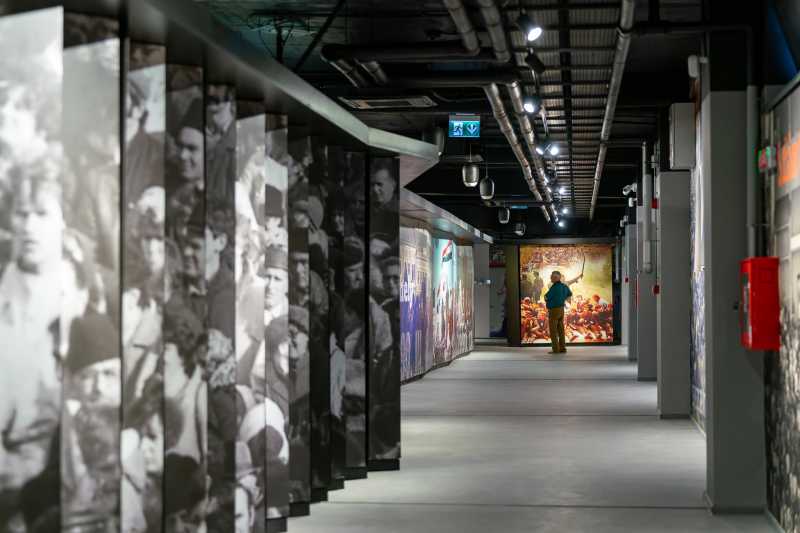
The Steaua Rosie Museum of Communism to open on 21 October, with former President Emil Constantinescu attending
The Steaua Rosie (Red Star) Museum of Communism in Sfantu Gheorghe, central Romania, will be officially inaugurated on 21 October, with former Romanian President Emil Constantinescu among the guests attending the ceremony, local authorities announced on Saturday. Other guests will include human rights activist Gabriel Andreescu, historian Madalin Hodor, vice-p

Romanian, French presidents discuss Black Sea security, bilateral cooperation in Brussels
The strategic partnership between Romania and France is a key pillar of their shared security and bilateral cooperation, President Nicusor Dan said on Saturday following talks in Brussels with his French counterpart, Emmanuel Macron. 'I had a very good discussion yesterday [Friday] with French President Emmanuel Macron. The strategic partnership between Ro

President Dan: France offers Romania equipment support for Black Sea security
President Nicusor Dan said on Friday in Brussels that requested assistance to strengthen security in the Black Sea until the equipment ordered through the SAFE programme is delivered to Romania, adding that France has already offered to help with the necessary equipment.

International rowing medallist Simona Radis - thrilled to compete on Mill Lake, in heart of Bucharest
Multiple Olympic, world and European rowing medallist Simona Radis said on Friday that she is delighted to have the opportunity to compete on the Mill Lake, 'in the middle of the capital,' stressing that it is important for people to be able to watch Romania's top-performing athletes in competition. 'This is the first time we have come here. We

Romanian Red Cross organises flash mob to mark World Restart a Heart Day
More than 70 volunteers took part in the fourth edition of a flash mob aimed at raising awareness of the importance of medical first aid, organised by the Romanian Red Cross near the Arch of Triumph to mark World Restart a Heart Day. According to a statement sent by the organisers, the event featured two simultaneous activities: a resuscitation demonstration i

Toiu: Claim Romania would waive its veto right in European Council is false; minister cannot do that
Acting Minister of Foreign Affairs Oana Toiu described reports on Friday that Romania might relinquish its veto power within the European Council as 'false.' She emphasized that a Foreign Minister cannot initiate such a move, and that the decision rests with the leaders of the member states, the European Parliament, and national parliaments.
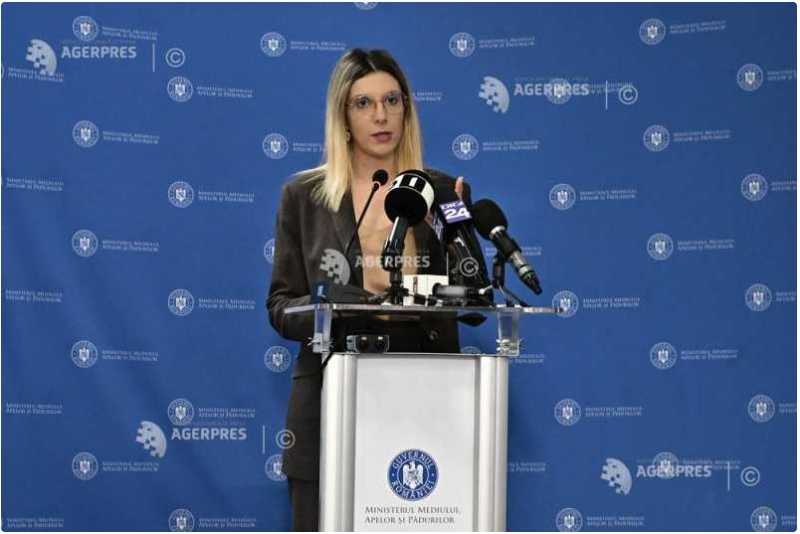
Environment minister: Gravel Pit Radar system to be launched on Oct. 26, currently 95 pct complete
Romania's long-awaited Gravel Pit Radar monitoring system will be officially accepted on Oct. 26 and is now 95% complete, following months of work to overhaul a project that had been stripped of its key control functions, acting Environment Minister Diana Buzoianu said on Friday. Speaking at a review conference, Buzoianu said the system, discussed since 20
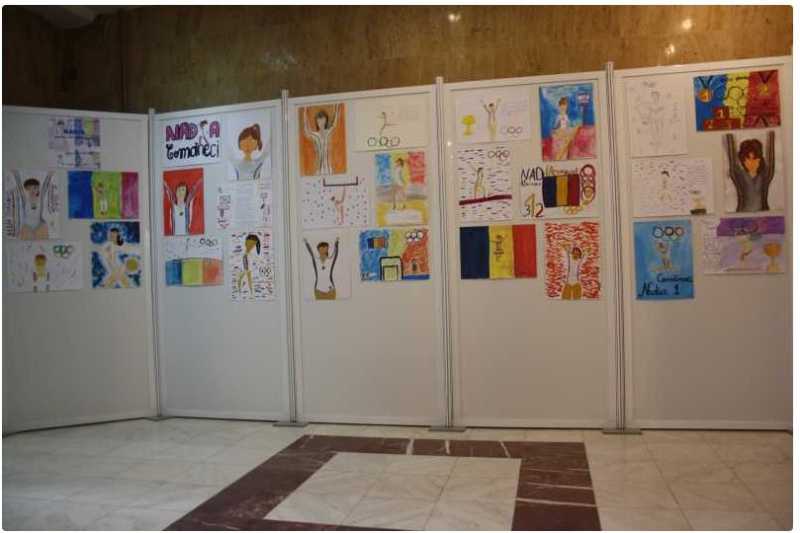
NadiaYear/Teleorman: Mini-exhibition 'Nadia - the gymnast who inspired the students,' opens at county museum
The mini-exhibition 'Nadia - the gymnast who inspired the students', which presents works made by children of the fifth and sixth grades from a school in the town of Alexandria, has opened at the Teleorman County Museum. The mini-exhibition, dedicated to the sports performance and personality of the legendary gymnast Nadia Comaneci, opened on Thursday

Digital Governance Summit to discuss Artificial Intelligence, Romania's Strategic Compass
The Digital Governance Summit, now in its second edition, organised by the Edge Institute and under the High Patronage of the President of Romania, will take place on Monday at the Cotroceni Presidential Palace. The conference 'Digital identity and AI in administration' -provides a strategic reflection on Romania in the digital age and artificial intel

President Dan to Bloomberg: We will continue to support Ukraine as Russia increases pressure
Romania and Europe will continue to support Ukraine in the war with Russia, which is exerting increasing pressure, trying to create tension in relations inside the European societies, Romanian President Nicusor Dan said in an interview to Bloomberg published on Friday. Asked what Europe can do to help Ukrainian President Volodymyr Zelenskiy amid the deteriorat