

Consecration of National Cathedral's iconography - some key moments and design insights

The painting of the National Cathedral will be consecrated on Sunday by Ecumenical Patriarch Bartholomew I of Constantinople and Patriarch Daniel of the Romanian Orthodox Church, accompanied by an assembly of 65 hierarchs, 70 priests and 12 deacons.
President Nicusor Dan, Senate President Mircea Abrudean, Prime Minister Ilie Bolojan, dignitaries and officials, as well as guests from abroad will attend the consecration service.
Over one hundred thousand people are expected to witness in person the event which marks the Centennial of the Romanian Patriarchate. Also, in 2025 there are 140 years since the Romanian Orthodox Church was recognized as autocephalous.
The liturgical program of the consecration of the painting of the National Cathedral will unfold as follows:
* starting at 7:30 until 10:00 - celebration of the Divine Liturgy Service, with three hierarchs from Bucharest and an extended group of priests and deacons officiating;
* 10:15 - arrival at the National Cathedral of His All-Holiness, the Ecumenical Patriarch Bartholomew of Constantinople, and His Beatitude Patriarch Daniel;
* 10:30 - 12:30 - the consecration service of the painting of the National Cathedral, with the participation of 65 hierarchs, 70 priests and 12 deacons. The Act of Consecration will be read at the end of the service.
During the Holy Liturgy and the consecration service, only the 2,500 official guests will have access to the interior of the Cathedral, while over 8,000 faithful, organized in groups from the the dioceses across the country, will participate from the esplanade in front of the National Cathedral, following the service on large screens placed near the Cathedral steps. The other faithful present will be able to watch the service from outside the fence of the National Cathedral, on other screens installed for this purpose.
Access for worshipping inside the Holy Altar will begin in an organized manner after the conclusion of the Divine Service, but the National Cathedral will be open day and night until October 31, for the faithful to show their reverence.
***
The idea of building a cathedral representative of the Romanian spiritual space emerged immediately after Romania gained its state independence, following the war of 1877 - 1878, when no church in Bucharest proved spacious enough to accommodate all those who participated in Te Deum services held on special occasions or other solemn moments, informs the basilica.ro website.
The first intellectuals who supported the idea of having the Cathedral of the Salvation of the Nation built in Bucharest, as a thanksgiving to God for the nation's independence, were writers Mihai Eminescu and Ioan Slavici.
After the proclamation of Romania as a kingdom, King Carol I referred to the Legislative Chamber a bill regarding the construction of a cathedral in the capital city. The law was voted on May 20, 1882 in the Senate, this being considered the starting day of the project. Law 1750 was thus born, promulgated by King Carol I on June 5, 1884 and published in the Official Journal No. 49 of June 6 (June 18) 1884, which set forth the need to build an Orthodox cathedral in Bucharest.
However, the works were considerably delayed, and immediately after the Great Union, Metropolitan Primate Miron Cristea, who became Patriarch in 1925, went to an audience with King Ferdinand to ask him to support the project. After examining the proposals, Patriarch Miron decided that the site of the building should be at the base of the Metropolitan Hill (currently Unirii Square), which was consecrated on May 11, 1929. The activities were halted due to the economic crisis, World War II and then due to the communist regime taking over in Romania.
Patriarch Teoctist was the one who relaunched the project of erecting a National Cathedral, blessing a cross on February 5, 1999 as the cornerstone of the future sacred building, at the same location in Unirii Square that Patriarch Miron Cristea had previously consecrated.
However, the location was changed, being established in 2005 on Arsenal Hill, in memory of the five 'martyred' churches, three of which (Alba Postavari, Spirea Veche and The Life-giving Spring) were demolished, and two (the Nuns' Skete and Mihai Voda) were translated by the communist regime to build the People's House in their place.
The project was also committed to by the state through Law 376/2007 which stipulated: 'The funds intended for the construction of the Architectural Ensemble of the Cathedral of the Nation's Salvation shall be provided by the Patriarchate of the Romanian Orthodox Church, by the Government of Romania, within the amounts allocated annually for this purpose through the budget of the Ministry of Culture and Religious Affairs, as well as by the local public administration authorities'.
The ceremony for the laying of the foundation stone and consecration of the site of the future National Cathedral - on a plot in Calea 13 Septembrie took place on November 29, 2007, officiated by His Beatitude Daniel, the sixth Patriarch of the Romanian Orthodox Church. The construction works for the Cathedral of the Nation's Salvation began at the end of 2010.
The consecration of the Cathedral's altar took place on November 25, 2018, the Centennial Year of the Great Union. A list with over 350,000 names of known Romanian heroes and fragments of the relics of the Holy Brancoveanu Martyrs and the Martyrs of Niculitel is placed at the foot of the Holy Table.
Approximately 150,000 people came to offer prayers at the altar between November 25 and December 2, 2018.
Pope Francis visited the National Cathedral on May 31, 2019.
***
The National Cathedral is 120 meters high, with the bells weighing a total of 33 tons and standing at a height of 60 meters.
From a bird's eye view, the outline of the area on which the National Cathedral stands is shaped like a chalice to refer to the Holy Eucharist, the central Sacrament of the Church and the Sacrament that will be most often celebrated in this Cathedral.
The entrance to the holy place is through 27 bronze doors on which the Savior Jesus Christ, the Mother of God, the Holy Apostles, and Romanian saints are represented. The doors are a special feature of the building - weighing approximately 800 kilograms each, they are operated by an automatic opening and closing system.
***
The architecture of the National Cathedral is a synthesis between tradition and contemporaneity, harmonizing architectural elements from various areas of Romania (Moldavian niches, Brancovenesc-style porches and slender Transylvanian towers), as well as monumental elements from some Western cathedrals, taking into account that nowadays, a large part of the Romanian diaspora lives in the West.
The main access to the Cathedral is through an imposing porch with arcades, located on the west side, which, together with the lateral porticoes and those that outline the esplanade, constitute a distinguishing part of the architectural ensemble of the Cathedral.
The porch at the main entrance impresses through its dimensions and the elegance of the arcades. It has not only the functional role of protecting the entrance, but also a symbolic one, welcoming and preparing the faithful for entering the holy space of the church.
The median exonarthex, vestibule or foyer, is conceived as an extension of the porch in the form of an enclosed perimeter, symbolizing liturgical communion and the hospitality characteristic of Romanian spirituality. Three other open porches sit in the eastern, southern and northern parts of the National Cathedral.
The lateral, northern and southern porticoes are annexed structures, delineated by rows of columns, intended to delimit the external liturgical space, involving a built area of 5,159.20 square meters and a volume of 28,712 cubic meters.
These buildings mark the contour of the Holy Summer Altar of the National Cathedral. The curved porticoes from on the southwest and northwest, which total 2,079.60 sqm and a built volume of 15,285.60 cubic meters, mark the main entrance to the Cathedral ensemble.
The typology of the columns in the cathedral's porches pays homage to one of the most remarkable architectural creations of national art: the Neo-Romanian architectural style. It represents a reinterpretation of the Brancoveanu-style architecture, through the column bases adorned with vegetal ornaments, the organic stylization of the stone folds that drape the columns and the delicate structure of the sculpture of volutes and acanthus leaves of the capital.
The acanthus leaves, chosen as a decorative pattern, are a symbol of eternal life, as the plant has become over time a fundamental element in the representation of rebirth and Resurrection, so it's not by coincidence that it is featured at the base and upper part of the columns, as a defining motif that upholds the entire building.
***
The mosaics of the National Cathedral, created between 2019 and 2025, cover an area of approximately 25,000 square meters; through their iconographic conception, stylistic manner and ornamental repertoire, they capitalize on inspiration sources from both Byzantine and medieval Romanian art.
According to the iconographic plan, the mosaics of the Cathedral depict scenes from the Old and New Testaments, events from the life of the Savior, the Blessed Virgin Mary, the Holy Apostle Andrew - the Protector of Romania, and icons of the holy angels, prophets and righteous of the Old Testament, apostles, hierarchs, martyrs and confessors from all eras of the history of the Church.
The materials used for the icons inside the National Cathedral were purchased from Venice and Carrara, from one of the most prestigious suppliers of stone and mosaic in the world, Orsoni.
***
The iconostasis spans an area of 406.98 square meters, with a length of 23.8 meters and a height of 17.1 meters; it integrates 45 icons arranged in four registers, while the 16 m high icon of the Theotokos Platytera, in the apse of the altar, is the largest representation of the Virgin Mary in mosaic in Romania and one of the largest in the Orthodox world.
The Pantocrator icon in the central dome of the Cathedral measures 12 meters in diameter; the face of the Savior is 4.5 meters in size and was created by using 2,400 kilograms of pieces.
***
Crafted by a technique that combined traditional methods with modern high-quality materials, the stained glass windows of the National Cathedral represent a special project in themselves.
They are the result of the craftsmanship of a team of Romanian artisans coordinated by Lucian Butucariu, a professor at the National University of Art, specializing in the art of glass and stained glass.
An exceptional element of the project is the stained glass on the facade of the Cathedral, which illustrates the Ascension of the Lord. With a height of 15 meters and a width of 5.5 meters, this impressive work consists of 29 panels and was completed in a record time of three months.
***
The silhouette of the Cathedral is defined by its eight towers which combine architectural elements from various regions of Romania, such as the slender Transylvanian steeples, with the monumentality specific to some Western cathedrals. The central ensemble is formed by the main dome and four flanking cupolas and to the west - three more towers.
The main dome (the Pantocrator) reaches a height of 120 meters to the base of the cross. Inside, the dome houses a representation of Christ Pantocrator (the All-Powerful) made in mosaic. This monumental iconographic representation has a diameter of 12 meters and an area of over 150 square meters.
The large cross, seven meters high and weighing seven tons, was mounted on the main tower of the Cathedral on April 8, 2025 with a special crane; this marked an important stage in the completion of the project, with the building reaching its final height of 127 meters.
The bell tower, located on the western side, above the exonarthex, houses the six bells of the cathedral, cast in Innsbruck by the renowned company Grassmayr. They weigh a combined 33 tons and are placed at a height of 60 meters; the free-swinging main bell weighs 25 tons.
The six bells are inscribed (from left to right) with the coat of arms of the Romanian Patriarchate, the effigy of the Patriarch of Romania and the patriarchal cross, as well as the inscription: Blessing of Patriarch Daniel of Romania for the National Cathedral - Centenary 1918 - 2018.
***
The main patronal feast of the National Cathedral is the Ascension of the Lord, a day on which Romanian heroes of all times are commemorated, the second patron being Saint Andrew the Apostle. AGERPRES (RO - writing by: Daniel Popescu; EN - writing by: Simona Klodnischi)
The content of the www.agerpres.ro website has the exclusive purpose of public informing.
All the information published on this website by AGERPRES is protected by relevant legal dispositions.
It is forbidden to copy, reproduce, recompile, decompile, distribute, publish, display, modify, create derived components or products or full services, as well as any exploitation of the site's content.
Details in the section Terms of Use. If you are interested in picking up AGERPRES news items, please contact the Marketing Department – marketing@agerpres.ro.
The use of the Comments section entails your obligation to respect the AGERPRES terms and conditions in regards to the publishing of comments on the www.agerpres.ro.
Other news in category

Bolojan says he inherited crisis-hit Romania, leaves country on path to recovery
Interim Prime Minister Ilie Bolojan says he inherited a country with its back against the wall when he took office at Victoria Palace, but will hand over to the next government a Romania on the path to sound recovery, 'with the experience of a government that did not lie, did not resort to populism and treated people with respect'. 'After almost 16
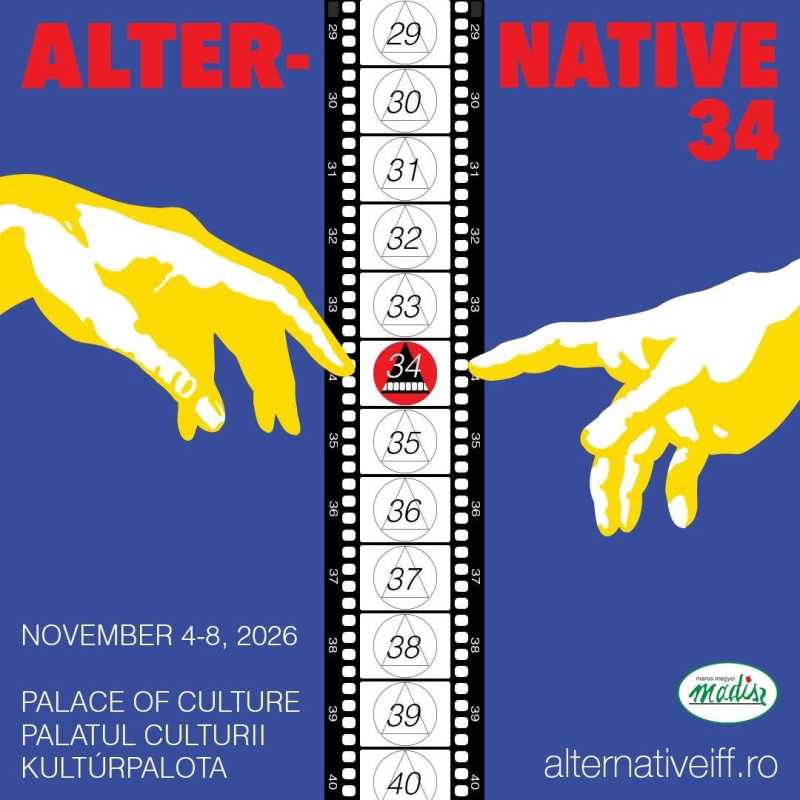
Alter-Native International Short Film Festival to present major premieres and internationally award-winning productions
The 34th edition of the Alter-Native International Short Film Festival, which will take place from 4 to 8 November at the Palace of Culture in Targu Mures, will present audiences with major premieres and internationally award-winning productions. The event offers audiences a diverse programme which, alongside the traditional short film competition, includes &#

Alexandra Capitanescu releases 'Choke Me,' her first album in English
Alexandra Capitanescu, Romania's representative at Eurovision 2026, where she won third place, has released her first album in English, 'Choke Me', Universal Music Romania reported on Monday. Capitanescu and her band, consisting of Bogdan Stoican (guitar), Matei Cohal (bass), Luca Sofron (drums) and Thomas Circota (keyboards), propose a sound that
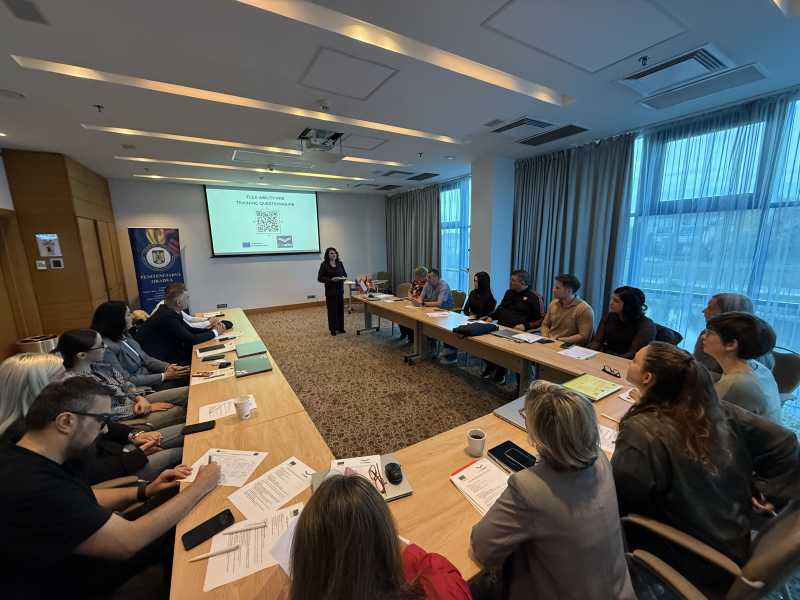
Oradea Penitentiary hosts international training on support for inmates with learning difficulties
Oradea Penitentiary is hosting an international training course for specialists from four European countries from 19 to 23 October, as part of the European Erasmus+ FLEX-ability project, initiated by senior prison commissioner Laura Opris. 'The project is primarily aimed at prison officers who work directly with people deprived of their liberty. FLEX-abili
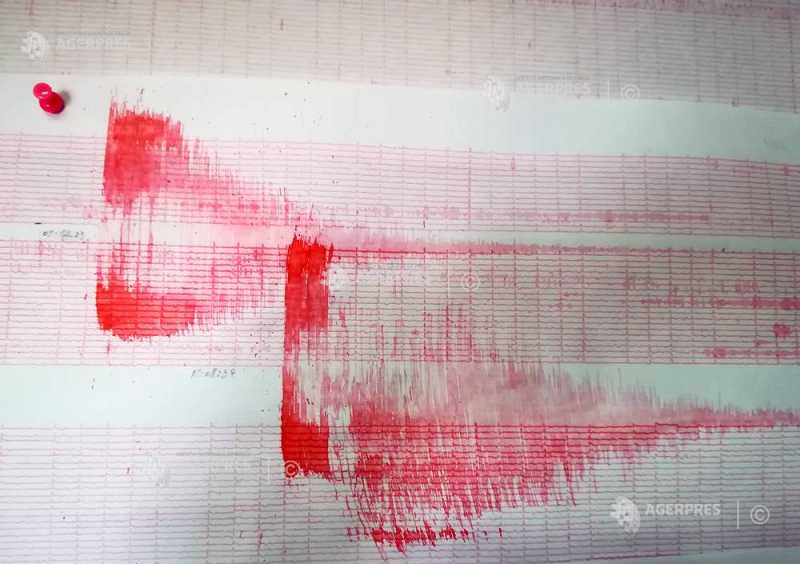
Magnitude 4.8 earthquake detected in Vrancea seismic zone on Monday
An earthquake with an estimated magnitude of 4.8 and an estimated depth of 76.5 km was detected in the Vrancea seismic zone on Monday, the National Institute for Earth Physics (NIEP) announced on its Facebook page. 'An earthquake has been detected in the Vrancea seismic zone, with an estimated magnitude of 4.8 and an estimated depth of 76.5 km. The effects
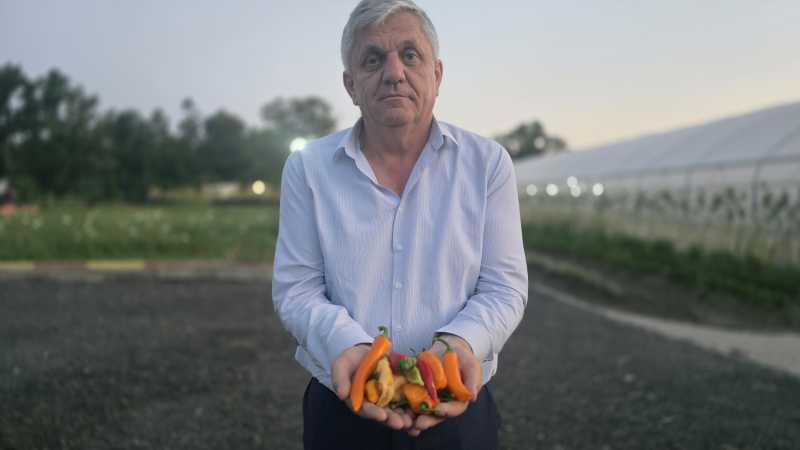
I CHOOSE ROMANIA/Horticulturist Costel Vinatoru chose to stay in Romania despite receiving many offers from abroad
Awarded the Romanian Academy Prize and the Sanctus Stephanus Magnus Order of the Romanian Patriarchate, horticultural researcher Costel Vinatoru chose to remain in Romania despite receiving offers from the United States and France, believing that he should leave behind a treasure in his homeland, as a testament to the place where 'God sowed him'.
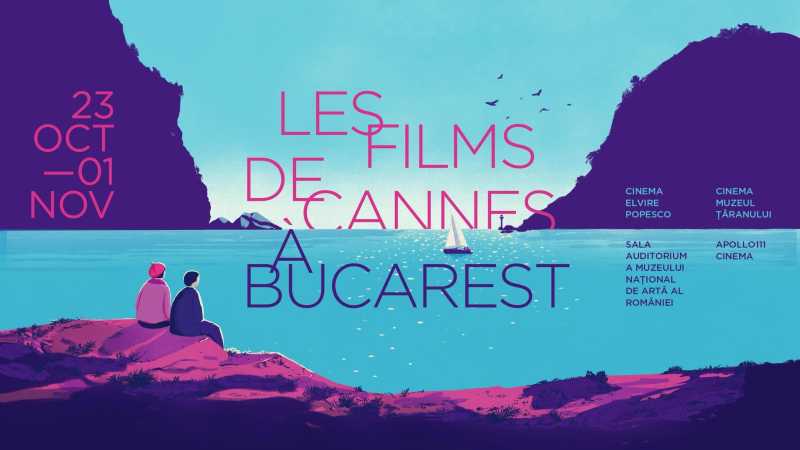
Directors Rakan Mayasi and Eivind Landsvik, Les Films de Cannes a Bucarest festival's guests
Directors Rakan Mayasi ('Yesterday the Eye Didn't Sleep') and Eivind Landsvik ('Low Expectations') are guests at the Les Films de Cannes a Bucarest festival and will meet audiences in Bucharest at Cinema Elvire Popesco, Cinema Muzeul Taranului and the Auditorium Hall of the National Museum of Art of Romania, the organisers said in a press release sent to
Interim DefMin Miruta: Ministry of National Defence records three firsts in Saturday evening's drone shoot-downs
Interim National Defence Minister Radu Miruta told a news conference on Sunday in Targu Jiu that three firsts had been recorded in connection with the two drones shot down by Romanian military pilots in the country's airspace on Saturday evening. 'I can tell you what was unprecedented about the two drones shot down last night in Romanian airspace. The
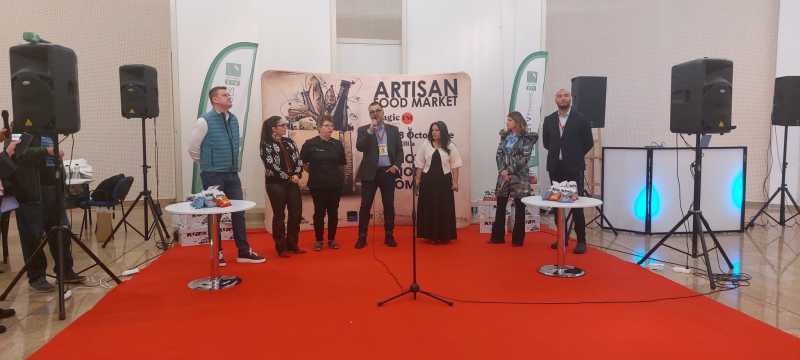
Romania's artisan food producers eye retail expansion amid funding and regulatory challenges
Romanian artisan producers are increasingly investing in processing facilities and making greater use of local resources to create higher-value products, positioning themselves to enter retail chains and supply restaurants. However, their business development also depends on access to financing, cooperation and a predictable legislative framework. 'After f
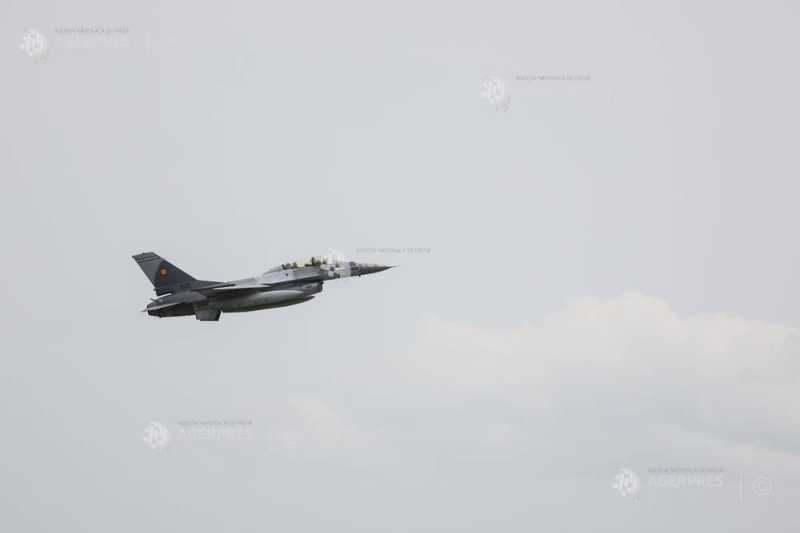
Romanian fighter pilots shoot down two drones over Black Sea, defence minister says
Acting Defence Minister Radu Miruta announced on Saturday evening that Romanian military pilots had engaged and shot down two drones over the Black Sea. The first drone entered Romanian airspace at 17:59 and was shot down within two minutes, while the second, detected in the same area, was engaged and shot down at 18:05, two kilometres inside Romanian airspace

PNL to back investiture of Niculescu government in conditional, one-off vote, Bolojan says
National Liberal Party (PNL) leader Ilie Bolojan announced on Saturday that the Liberals would go into opposition and provide 'a necessary, conditional and one-off vote' in favour of the investiture of the Niculescu government. 'We concluded a meeting of the National Political Bureau of the National Liberal Party just a few minutes ago, at which we

Romania highlights UNESCO-listed living traditions on Intangible Cultural Heritage Day
Romania's Ministry of Culture marked the International Day of the Intangible Cultural Heritage on Saturday by highlighting the people whose knowledge and skills are essential to preserving and passing down the traditions and practices that shape the country's cultural identity. 'Proclaimed by UNESCO's General Conference in November 2023 and fir
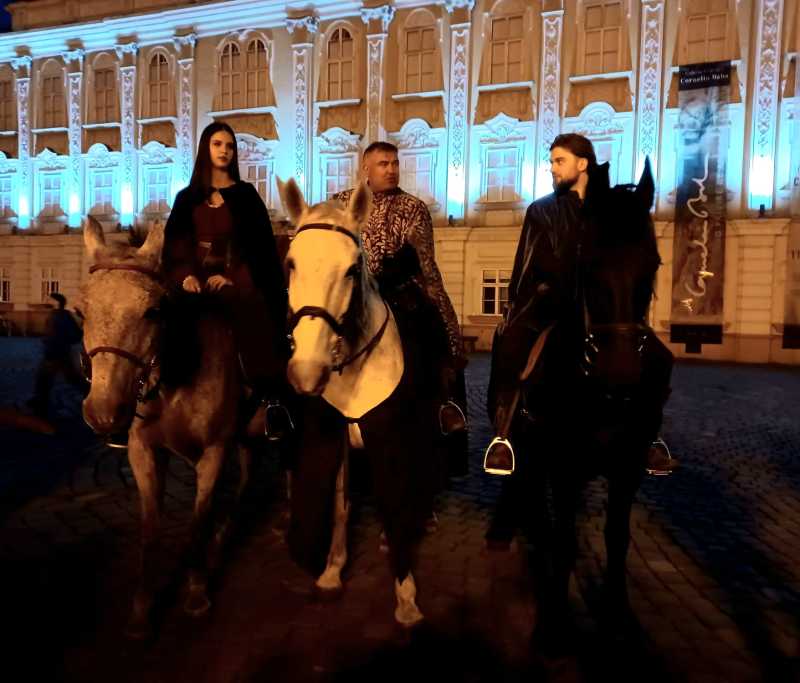
Knights and royal feasts bring medieval history to life at Timisoara's Huniade Castle
The eighth edition of the Huniade Castle Medieval Festival is in full swing in Timisoara, inviting residents and visitors alike to step back into a long-vanished world of kings, knights, noble families and medieval traditions. Huniade Castle stands at the historic heart of Timisoara, and the National Museum of Banat, housed in the monumental building, dedicate
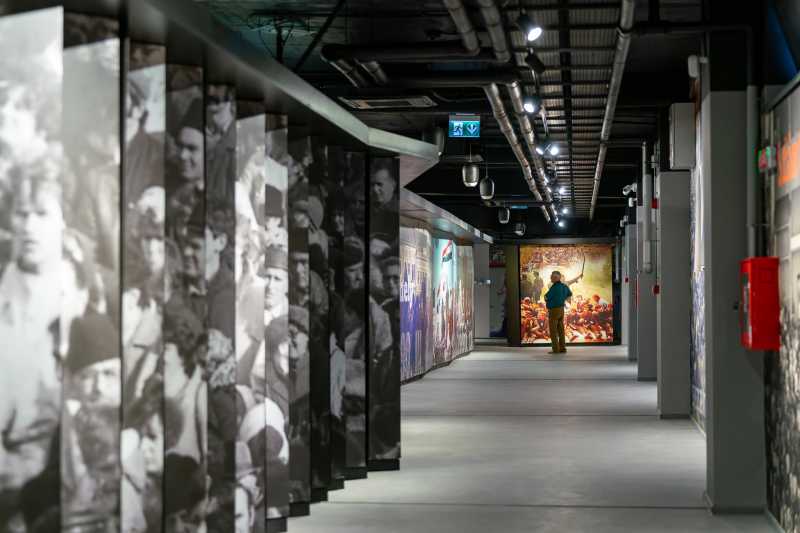
The Steaua Rosie Museum of Communism to open on 21 October, with former President Emil Constantinescu attending
The Steaua Rosie (Red Star) Museum of Communism in Sfantu Gheorghe, central Romania, will be officially inaugurated on 21 October, with former Romanian President Emil Constantinescu among the guests attending the ceremony, local authorities announced on Saturday. Other guests will include human rights activist Gabriel Andreescu, historian Madalin Hodor, vice-p
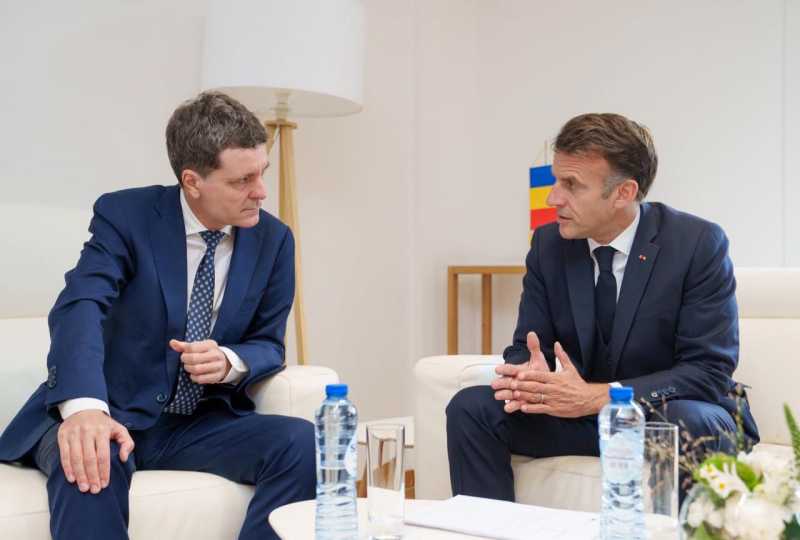
Romanian, French presidents discuss Black Sea security, bilateral cooperation in Brussels
The strategic partnership between Romania and France is a key pillar of their shared security and bilateral cooperation, President Nicusor Dan said on Saturday following talks in Brussels with his French counterpart, Emmanuel Macron. 'I had a very good discussion yesterday [Friday] with French President Emmanuel Macron. The strategic partnership between Ro