

Housing: Europe's Dilemma (enr)
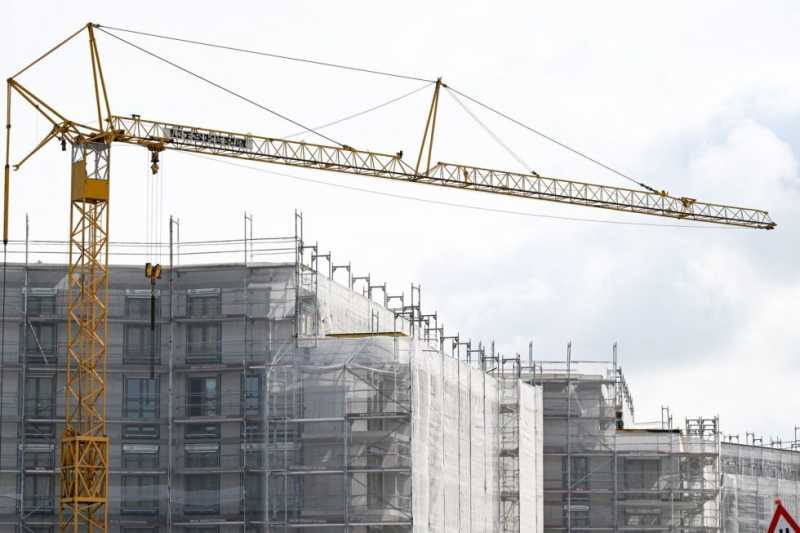
Across the European Union, housing has moved from a background concern to a central policy and social issue.
Any European who has had to move in recent years has probably lived this nightmare: Rising house prices, rents and utility bills, lack of housing supply and having to find ever more outlandish ways to secure that elusive rental contract.
Europe has a housing problem. And while the European Union has no direct competency, Brussels has realised trouble is on the horizon. In a speech on September 29, the bloc's first ever Housing Commissioner Dan Jørgensen, said that when talking about housing, 'we are talking about the very heart of our democracy in Europe'.
'It's more than bricks and mortar. It's more than supply and demand. Really, we are talking about the basic rights and dignity of our people. About the cohesion of our communities, the building blocks of our society, the competitiveness of our economy.'
He added: 'Across Europe, there is a palpable feeling of injustice especially among our young people.'
Data snapshot: divergent fortunes across EU member states
No matter which statistic one looks at, the indicators are pointing towards a crisis:
- Over the past 15 years, house prices rose by 60.5 percent, according to Eurostat data released on Friday. Hungary leads with a 277-percent increase, followed by Estonia (250 percent).
- Only in Italy have house prices decreased between 2010 and the second quarter of 2025 - by 1 percent.
- It's the same for rents: They increased in 26 of the 27 member states, on average by 28.8 percent and up to 218 percent (Estonia). Only in Greece rents decreased by 9 percent.
- In the second quarter of 2025, house prices were up by 5.4 percent in the EU, Eurostat said. The rents increased by 3.2 percent year-on-year.
- Bulgaria for example registered one of the steepest increases in house prices, with 15.5 percent (down slightly from the record 18.3-percent-rise in the last quarter of 2024). Housing loans have also reached record levels in the country. As of August 2025, their volume stood at 30.2 billion Lev (15.4 billion Euro), a 27.4 percent increase year-on-year, according to Bulgarian National Bank data.
- In Germany students are particularly hard hit by rising rents, with prices for rooms in shared flats rising by 6.2 percent year-on-year, according to 2023 figures.
Working to live
An increasing number of households are facing unaffordable housing costs, which the European Parliament defines as spending more than 40 percent of disposable income on housing.
- According to the latest Eurostat figures available, in 2023, 8.8 percent of people in the EU spent more than 40 percent of their disposable income on housing. The highest in Greece with 28.5 percent, the lowest in Cyprus with 2.6 percent.
- In Berlin, a third of households cannot afford an apartment on the open rental market.
- Close to 70 percent of citizens own their home. Home ownership rates remain high in Eastern Europe, but affordability gaps widen in western urban centres.
- In the Czech Republic and Hungary for example, the average apartment now costs around 13.6 times the average annual wage, only in Portugal, the figure is higher. On the other hand, compared to other EU countries, rental housing is the fifth most affordable, according to an index compiled by the Ceská sporitelna bank and the Europe in Data portal.
Demand-side dynamics: demographics, migration, and urbanisation
How did we get here? A number of factors have contributed to today's pressure on the housing market.
- Population shifts: Urbanisation is putting pressure on cities. Migration to cities picked up again after the Covid-19 pandemic.
- Migration flows: Both intra-EU migration and third-country arrivals fuel demand.
- Demographic trends: Ageing populations and shrinking household sizes (rise in single-person households) further squeeze supply.
- Costs: Rising energy costs also shift demands towards smaller flats. Rising interest rates also shift the demand towards rental units.
- Tourism: In tourist centres, short-term tourist rental platforms such as Airbnb are driving out residents.
Supply-side constraints: construction bottlenecks and regulations
Some countries spend a significant amount of their GDP on construction, but the results are mixed.
- Planning bottlenecks: Stringent zoning and lengthy permitting processes and NIMBYism ('Not In My Backyard') are cited as barriers. In France, mayors say they find it increasingly difficult to find that balance: 'There's this paradox of being approached almost every day by residents who need housing, while at the same time being taken to court by opponents of urban sprawl, even when it's about building student housing,' said Strasbourg mayor Jeanne Barseghian.
- Construction sector: Labour shortages and rising material costs slow down the construction process. New construction in France has been facing a severe crisis for nearly three years due to rising construction costs, higher interest rates that have blocked many households' real estate purchase projects, and the end of support measures for rental investment. Cumulatively, 365,179 housing units were authorised for construction between September 2024 and August 2025, 'which is 14 percent less than the average of the previous five years', according to data from the Ministry of Regional Planning.
- Empty rural areas: Paradoxically, some regions face surpluses, but with little demand. Depopulated towns in Germany's ex-communist East for example have come up with a novel scheme to bring back life: offering people several weeks of super-cheap housing to give would-be residents a taste of the place. Eastern Germany could lose between eight and 16 percent of its population over the next 20 years, according to the statistics institute Destatis.
- Dated housing stock: Half of Europe's housing stock was built before 1980, and much of it needs to be renovated. Many buildings are energy inefficient and bringing those homes and apartments up to new EU standards will be expensive and take a long time, according to a report from the European Investment baked (EiB) from June.
Policy Patchwork
EU members are trying to find their own solutions by increasing social housing, introducing tax incentives or keeping rents in check.
In the Austrian capital Vienna for example, about a third of the population lives in some kind of subsidised housing. In Germany, however, a policy to cap rents in Berlin was struck down by the country's top court in 2024.
The Portuguese government in late September approved a series of measures to tackle the housing crisis, including an increase of tax reductions for residents, and an increase of tax for house purchases by citizens not resident in Portugal. Other measures include an increase in tax deductions for rent and a reduction in the tax for landlords who charge moderate rents. There will also be a lower VAT rate of 6 percent for the construction of housing with a sale value of around 648,000 Euro and also a VAT rate of 6 percent for rentals with a ceiling of up to 2,300 Euro. This tax regime will be in force until 2029.
The government also said it was working with banks to find new products that make access to housing loans and construction capital more flexible. 'It's a shock policy, we want to shake up the construction and rental market,' Prime Minister Luis Montenegro said.
Italy launched a housing plan last year, with a particular focus on supporting young families. At age 30 young people in Italy are among those who leave the nest latest in the EU. According to Eurostat, the average age is 26.3. Deputy Premier Matteo Salvini said a multi-year funding of 660 million Euro has been allocated to combat housing hardship, relaunch housing policies, and reorganise the existing offer. He also expected more funds in the next budget. A second pillar of the policy is public guarantees for first-home mortgages, as families in major cities are increasingly unable to afford buying a home.
In August, Slovenia's parliament passed a law on the financing of public rental housing, which aims to build 20,000 public rental apartments over the next ten years with the help of 1 billion Euro in state funds. It also recently passed a law restricting short-term rentals, which should at least partially increase the supply of rental housing.
Affordable Housing Plan for Europe
At the EU level, Commissioner Jørgensen plans to launch an 'Affordable Housing Plan for Europe' in which he aims to combine EU action with national, regional and local efforts to ensure sustainable housing.
It envisages:
- A new wave of investment: This includes doubling EU support for housing under the Cohesion Policy and making it easier for member states, cities, and regions to direct more EU funds toward affordable housing.
- Revisiting state aid rules to make it easier for national governments to support housing projects, thus loosening restrictions on national spending.
- Mobilising private investment.
- New financing models and deeper collaboration between public and private investments, including via a pan-European Investment Platform to support social housing, student residences, and sustainable homes.
- Cutting red tape: reduce bureaucratic barriers in planning, permitting, and procurement, both at the EU and national levels.
- Mobilising Europe's construction resources, innovation, and workforce.
- Support for cities and regions under pressure.
- Focus on vulnerable groups: young people, families, and the homeless.
- Exchange of best practices.
- Energy efficiency: modernise and insulate residential buildings, reducing energy waste and lowering living costs for residents.
- Stakeholder engagement: The plan is being developed with input from experts, stakeholders, public representatives, and citizens, with an open invitation for further contributions.
With housing, no one simple solution will solve the problem. A lot of factors have to come together and even with the EU's plan fully implemented it will likely take years for results to show. Until then, the pressure on Europe's renters, mortgage-holders or apartment-hunters stays on.
The content of this article is based on reporting by AFP, ANSA, BTA, CTK, dpa, Lusa, STA, as part of the European Newsroom (enr) project. AGERPRES (editing by: Simona Klodnischi)
The content of the www.agerpres.ro website has the exclusive purpose of public informing.
All the information published on this website by AGERPRES is protected by relevant legal dispositions.
It is forbidden to copy, reproduce, recompile, decompile, distribute, publish, display, modify, create derived components or products or full services, as well as any exploitation of the site's content.
Details in the section Terms of Use. If you are interested in picking up AGERPRES news items, please contact the Marketing Department – marketing@agerpres.ro.
The use of the Comments section entails your obligation to respect the AGERPRES terms and conditions in regards to the publishing of comments on the www.agerpres.ro.
Other news in category
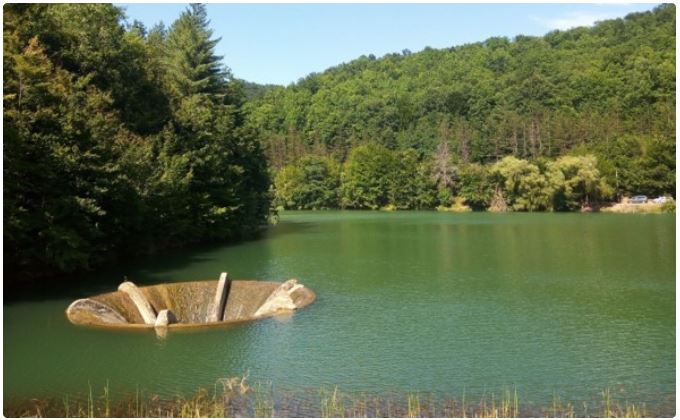
'Whirlpool' Vida Lake to turn into sustainable rural tourism site
The Dobresti local administration is preparing to turn Lake Vida - one of Romania's most spectacular and unique lakes - into a regional hub for active and sustainable rural tourism, through a project estimated at four million euros, following the completion of complex desilting works. Dobresti mayor Florin Copos recently told AGERPRES that the local author
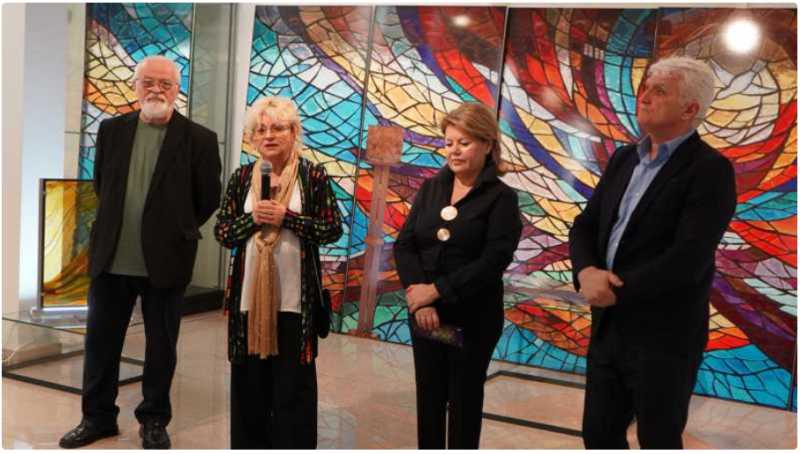
Amalia Verzea's 'The Art of Stained Glass at 360 Degrees' arrives in Oradea
After being presented in Bucharest, the personal exhibition 'The Art of Stained Glass at 360 Degrees' signed by internationally renowned Oradea artist Amalia Verzea, has arrived in her hometown, at the Cris Land Museum, where it can be visited until May 10. The exhibition will later travel to Rome. 'I have been making stained glass all my life. Sin
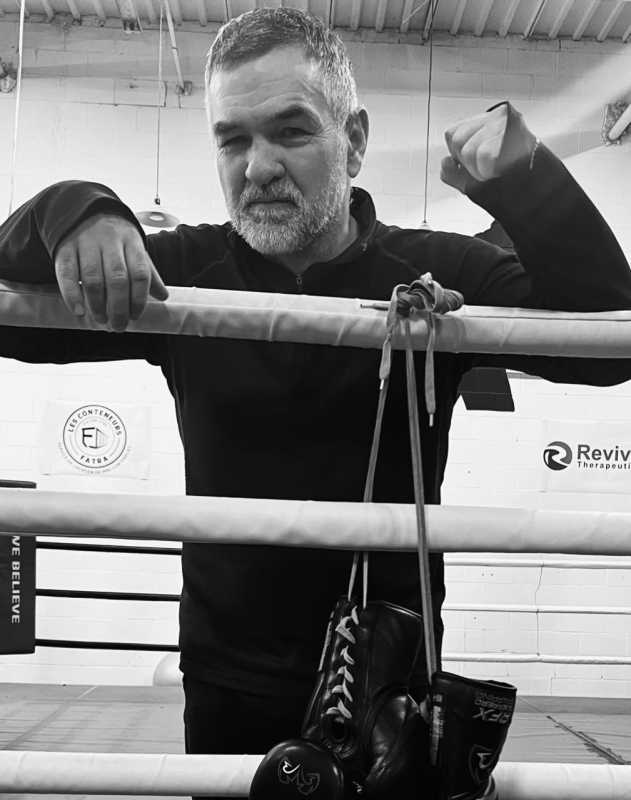
#BoxingCentenary/INTERVIEW Leonard Doroftei: Romanian boxing can rise again, but only with better coaching
Former boxing great Leonard Doroftei told AGERPRES in an interview that Romanian boxing is going through a rather challenging period, but he remains confident the sport will recover and once again produce athletes capable of winning medals at European, World and Olympic level. 'We're going through a tougher patch. I hope that one day we'll bounce b

#Nadia Year/International Day of Sport for Development and Peace celebrated with small gymnasts
The Romanian Olympic Committee (COSR), through the Romanian Olympic Academy on Friday organised an event at the Mariana Bitang Gymnastics Hall inside the Dinamo Sports Club, celebrating International Day of Sport for Development and Peace together with young gymnasts and legends of Romanian gymnastics. The event is part of the series of actions carried out by

Iasi equestrian wins first place at her debut at CSIO Ch Nations Cup Youth Belgium
Iasi equestrian Ilinca Rata, aged 14, brought Romania its first victory in the CSIO Ch Nations Cup Youth competition, held in Opglabbeek (Belgium). Registered with the Equester Sports Club Iasi, Ilinca won in the debut event for the Children category - Small Tour (1.15 m), after a penalty-free course, performed alongside the horse Innocence S/Ingo.

Ioana Dogioiu: Government approves ordinance on temporary reduction of excise duty on diesel fuel
Government spokesperson Ioana Dogioiu declared on Friday that the Executive adopted the normative act regarding the temporary reduction of the excise duty level for diesel and the establishment of the solidarity contribution on revenues from the marketing of crude oil and energy products obtained from the processing of crude oil extracted from the territory of Romania.

Jianu:Entrepreneurial index for 2026 fell to 43.25 points; only two macroeconomic indicators are increasing
The entrepreneurial index dropped this year to 43.25 points, from 49.5 points in 2025, in conditions in which most macroeconomic indicators stagnated or registered decreases, while the dynamics of turnover and foreign investments were on the rise, data from the third edition of the report show. 'We meet today at the launch of the Romanian Entrepreneurship

One of Romania's main challenges remains high level of energy prices during peak hours (StateSec)
One of Romania's main challenges remains the high level of energy prices during peak hours, and the solutions are increasing domestic production, investing in storage capacities and more efficient management of consumption, according to Energy Ministry Secretary of State Cristian Busoi. 'One of Romania's main challenges remains the high level of en

'The World of the Dacian Fortresses: People, Heroes and Gods' exhibtion to open at Sutu Palace
The thematic exhibition 'The World of the Dacian Fortresses: People, Heroes and Gods' will open on 20 May at the Sutu Palace. 'From 20 May, we invite you to the thematic exhibition ‘The World of the Dacian Fortresses: People, Heroes and Gods,' an opportunity to discover the fascinating world of the Dacians and their fortifications, viewed
Romania records tourist arrivals down 3.7% and overnight stays down 3% in February
Arrivals and overnight stays in the establishments of tourists' reception with functions of tourists' accommodation, including apartments and rooms for rent decreased by 3.7% and by 3%, respectively, in February 2026 compared to the same month last year, according to the National Institute of Statistics (INS) data published on Friday. The arriva

Exhibition dedicated to young artists, organised in partnership with Margareta of Romania Royal Foundation
The Buzau County Museum, in partnership with the Margareta of Romania Royal Foundation, is organizing the opening of the exhibition called 'The aspiration to fly' ('Nazuinta de zbor'), dedicated to young artists of the 2026 generation, an event which coincides with the 130th anniversary of the inauguration of the former 'I. C. Bratianu' hospital build

FEATURE/ Inter-institutional training on the Danube part of Sea Shield exercise
The Sfantu Gheorghe branch of the Danube on Thursday hosted an inter-institutional training exercise that dealt with the management of a refugee crisis in the Danube Delta area and prisoners of war, an event that was part of a wider Sea Shield exercise. The military exercise designed to secure the interoperability of the entities participating in a multination
Romania to start vaccine negotiation with Pfizer as ill-considered decisions backfire
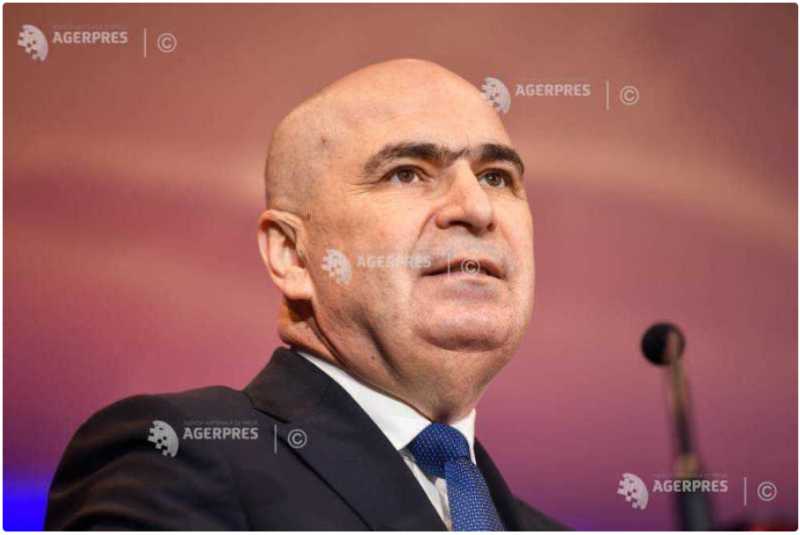
Prime Minister Ilie Bolojan announced on Thursday that Romania will contact Pfizer, with which he will start a negotiation, considering that some 'thoughtless decisions turn against them in a longer or shorter time'. 'Unfortunately, we received the news of the sentence in the first instance, unfortunately enforceable by the Belgian Court, under whi
Ancient gold artifacts stolen in Drents Museum heist handed over to Romania
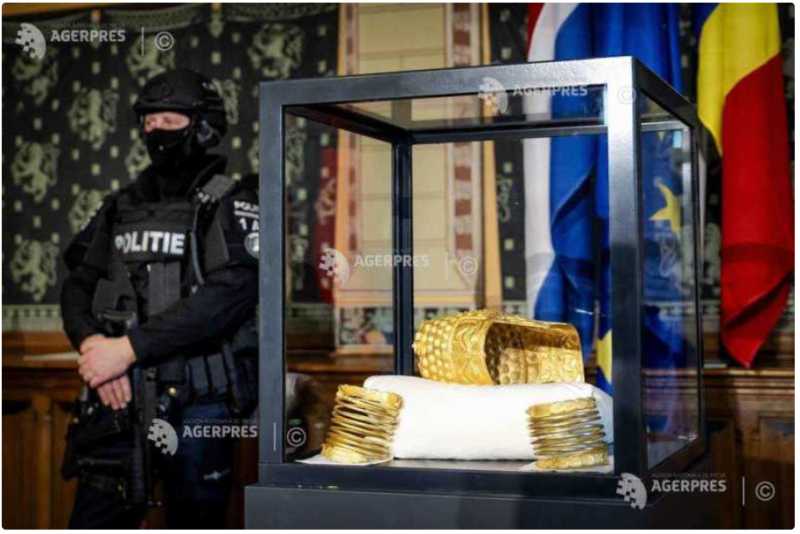
The Cotofenesti golden helmet and two of the three Dacian gold bracelets stolen last year from the Drents Museum in the Netherlands and subsequently recovered have been returned to Romania, the Dutch Prosecution Service announced on Thursday in a press release published on its website. Stan Rares-Petru and Daniela Buruiana, representatives of the Romanian Pros
Culture Minister Demeter hails Cotofenesti helmet recovery: It's a victory, it's what I hoped for
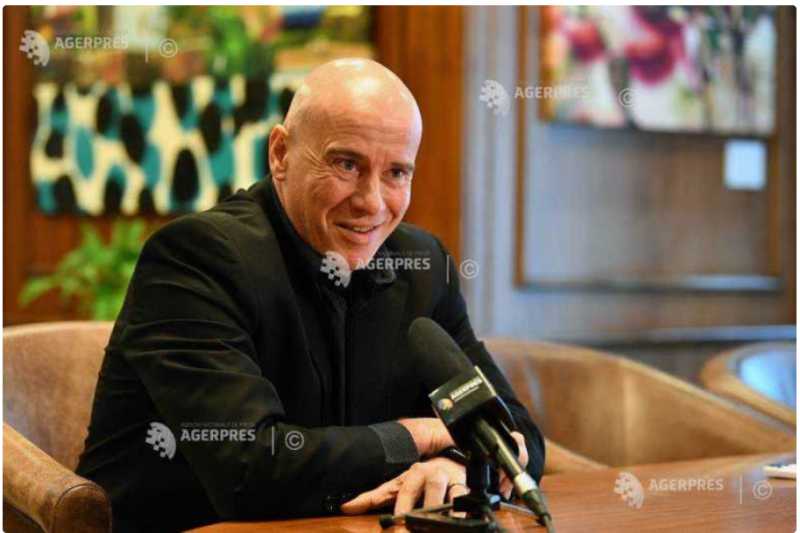
Culture Minister Demeter Andras expressed satisfaction at the recovery of the iconic Geto-Dacian Cotofenesti golden helmet and two gold bracelets, stressing that the amount to be returned to the Dutch side will be determined only after the restoration of the artifacts is completed. 'It's a victory, it's a joy. It's what I hoped for. From the fi