

CONTEMPORARY AUTHORS/Ana Maria Sandu: 'I've always paid attention to my own life stories and the others' ''
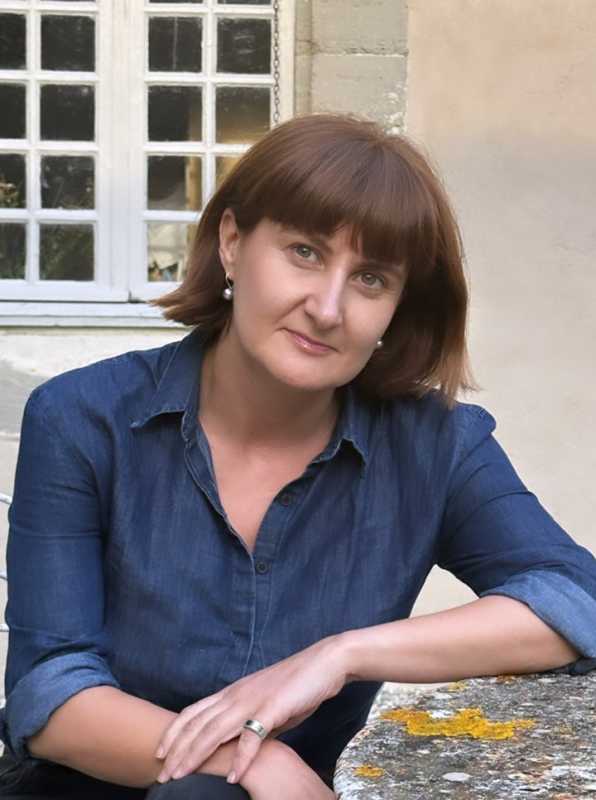
Author Ana Maria Sandu, one of the most important Romanian contemporary novelists, tells AGERPRES in an interview that she based her latest book, 'Salvatorii'/'The Rescuers', published in 2024, on a personal experience, while also being inspired by the parable 'Good Samaritan' from the Bible. The book is a short story collection that builds on topical issues such as: relationships mediated by technology or emigration, and also on chance encounters between strangers.
Ana Maria Sandu also talks about her other recent works, such as the biographical novel dedicated to inter-war author Hortensia Papadat-Bengescu, and also about her books for children or the dramatizations of her novels 'Alearga'/'Run' and 'Fata din casa Vagon'/'The Girl from the Wagon-House'. She reflects upon the condition of women during the communist regime and nowadays, and upon the manner in which personal experiences turn into literature.
The author revealed that she has been working on a new novel, placed in the 60s-70s Romania, inspired by the tough social realities of that time, like the orphanages in the communist era. At the same time, she continues to hold creative writing workshops for children and adults, as she believes literature can remain a space for dialogue, empathy and self-growth.
AGERPRES: Your most recent short story collection, 'Salvatorii'/'The Rescuers' is built around topical issues such as online relationships during pandemic lockdown and emigration. Which of the stories in here was the first that you wrote and what was the main idea behind the whole book?
Ana Maria Sandu: Chronologically, the first story I wrote is actually the last one in the book, the one that also gives the book's title. It all started from something that happened long ago and stayed with me for many years. A piece of life, which kept growing in my head. I had recently moved in the apartment block I still live in today, near Gradina Icoanei. It is a four-storey building, without an elevator. It was already dark outside, and a bad weather too, when we found a stranger sitting on our building's main entrance steps. He looked clean, he said 'hello' and we asked him what was he doing there. He said he only wanted to stay alone for a bit, to think, after he had a quarrel with someone. We went into our home and later we went to bed, but I never forgot how anxious I was that night. It was a brief, but very intense moment for me. A moment that made me ask myself many questions related to these types of interactions.
I reread the 'Good Samaritan' parable and I realized that I remembered it wrong, as many people probably do. The Samaritan does not take the man who was robbed and beaten home, he does something else: 'He went to him and bandaged his wounds, pouring on oil and wine. Then he put the man on his own donkey, brought him to an inn and took care of him. The next day he took out two denarii and gave them to the innkeeper. ‘Look after him,' he said, ‘and when I return, I will reimburse you for any extra expense you may have.'' Help can take many forms, and mercy the same.
There were people who told me, after reading the story, that they would never take a stranger home. But I remember too well that was my first impulse. I didn't do it, but I was able to change that precise fact in my story, to change the reality of that evening from long ago. And I was also able, by doing that, to raise some questions of a moral nature related to this topic, which never gets old, no matter how much the world around us changes. And I also remember that, while I was working on this text, I saw two movies, which also dealt with pretty much the same topic of rescuers. The two movies were 'Parazit'/'Parasite', by Bong Joon-ho, and 'Synonyms', by Badav Lapid. And once I wrote that first text, the rest came out easily. Because the stories are different, but the main theme remains the same: who is saving whom and how.
AGERPRES: Leaving aside the wider themes, all these stories tell about an encounter between strangers, which usually ends good, except for the last story, the one that gives the book's title, can you tell us more about this?
Ana Maria Sandu: While we were discussing the book, someone got the title wrong and said 'The Strangers' instead of 'The Rescuers'. I found that funny, because I realized that this title was also good. I wanted hope to be like a thread that travels through all the texts, connects them. Some kind of an underground spring that in the end comes out to the surface. Because we all need hope. At every age and in any situation. And I want my characters to be like us. No matter how much complicated their life gets, the situations that they are in, as I describe them, I want them to keep going, keep trying, hoping.
I have always paid attention to my own life stories and the others' around me. Some people choose to give up, others to start over, but my heroes, my characters will always been among those who will never say 'What's the point?'. Love can take so many shapes, and it's never to far for us to reach or to late for it to happen. Projections, illusions can indeed be painful. And I mean now especially my story that it's called 'K.', the one with the online relationship between a Romanian woman and a French man, taking place during the pandemic. Yes, projections and illusions can be painful, but without them we have nothing, without them there is a void that scares me.
AGERPRES: While reading 'Salvatorii'/'The Rescuers', I remembered another one of your books, 'Pereti subtiri'/'Thin Walls', from 2013, where you focus your attention on the people who live in the same apartment building, on the entangled relationships between them, and I thought that the block can also be like a metaphor for the enclosed society we had in communism, while your new book sees your characters traveling throughout the world, and also offline and online. Did you ever placed the two books in a mirror like this?
Ana Maria Sandu: I never thought of this parallel, but one thing I can tell you for sure: I have always been fascinated about how people relate to each other. And no matter how much I write about this intimacy, about that intimate space that is so hard to build, like the laborious nests birds build for themselves, in the spring, no matter how much I write about people getting close to each other, I still feel like something is missing, like I have more to learn about this. The others are strangers to us in the beginning, but then they grow on us and they become familiar.
In 'Thin Walls', the idea of an apartment block helped me to make the destinies of my characters more fluid. The life stories of these people go through the walls, like water, when a building gets flooded. And yes, in 'The Rescuers' people do travel a lot, to Italy, to Switzerland, online to Paris, to the mountains, the world moves on and, sometimes, we actually see it on the move. These characters, who are not that young anymore, are in search for something, they are restless, they didn't lose their curiosity and their power to look for new beginnings, even if they just went through some situation that didn't turn out well.
AGERPRES: You wrote one of the books in Polirom's collections of biographical novels, one that is dedicated to inter-war author Hortensia Papadat-Bengescu, that it's called 'The Stranger'. What did you find the most striking about this author, during documentation?
Ana Maria Sandu: I wrote about Hortensia during the pandemic, so this is the book I will show every time when someone asks me about that time. And I am not sure if I would have written it if it wasn't for the pandemic, in a normal situation of life, let's say. I don't know if I would have gotten that necessary time for documentation. I have always admired Hortensia, and both my Baccalaureate exam and the one for admission to the Faculty of Letters were about her books, the Romanian modern novel and the authors who contributed to its development. My fascination with her must have something to do with the fact that she was the only important woman author in our textbooks. In the meantime they don't study her works in high school anymore, she is only mentioned.
I felt intimidated when I read her books for the first time. She seemed cold, distant. And this is what attracted me, this inaccessibility. When I started the research about her, I realized that I knew a lot about her writing, but not so much about her life, like she wanted to keep the two separated. Her heirs never published her journals, so many parts of her life remain blurred, and I needed to improvise, to imagine how it was for her.
Hortensia Papadat-Bengescu's relationship with Eugen Lovinescu lasted many years, influenced her and provided her a huge moral support. I didn't know, for example, about her experience as a nurse, in the Focsani train station, during the First World War, which she later used in her novel 'Balaurul'/'The Dragon'. And I never though about her daily life with her five children and a husband who was a magistrate and pretty self-important, who ridiculed her and her intellectual concerns.
AGERPRES: How difficult was the research for this book? How it went?
Ana Maria Sandu: I started to read, to look for trails, to build an existential thread and then a narrative one, a plot. I felt a different type of responsibility than I felt with the other of my characters. This time it was about someone who was real, someone who lived and wrote, had connections, joys, sufferings, illnesses. Someone who, above all, has never lost her faith in literature, despite the obstacles. In the first month of doing the research I had a moment of real panic, because it was almost impossible for me to stop from searching for more information.
I even prepared a wall in my house, where I posted fragments from texts I found, pictures, testimonies, which I thought I might use later. I kept adding things, like a detective, and in the end, after a couple of months, I felt that the story I was about to tell about Hortensia was finally clear in my head. I would have given anything to be able to read her journal, after I saw a couple of pages published by Camil Baltazar, a good friend of the author, in a memoir book.
AGERPRES: You chose to divide this book about the inter-war author into two parts: 'E.L.'/'He' [In Romanian, 'el' means 'he', but 'E.L.' are also the initials of literary critic Eugen Lovinescu - editor's note], and 'She', can you tell us why?
Ana Maria Sandu: I learnt a lot from Lovinescu's letters to Hortensia. As I've already said, there were many blank spaces left in the posthumous inheritance of the author, which I filled with my own imagination. However, since writing was the most important engine of the author's life, meeting Eugen Lovinescu and having his support and trust mattered enormously in her life.
And I am not saying that she wouldn't have continued to write if she didn't go to the 'Sburatorul' Literary Circle, with all the effervescence surrounding it, I only say that, definitively, things wouldn't have been the same for her. The admiration and support she received from Lovinescu influenced her a great deal. In fact, her writing started to sound differently and became stronger after meeting him. And it was also a love story going on there, and not just intellectually speaking, and I thought that this could help us understand the character more, see it more like a human person, for she can be quite intimidating otherwise.
AGERPRES: Thinking about the two critics who helped Hortensia Papadat-Bengescu in her career, Ibraileanu and Lovinescu, and especially the latter, who also urged her to write 'an objective fiction', I couldn't help myself but wondering whether there could be a chance that we would have been even more enchanted by Hortensia Papadat-Bengescu's work today had she written more in her initial fragmentary, subjective style, wouldn't you say so?
Ana Maria Sandu: I rather think that she would have come to write as she did in the end anyway, and I mean now objective fiction. It would have probably happened later, though. I think that the fragmentary style was more like an exercise, something she did as a young author. Because she was too ambitious not to play in the big league of the moment. She for sure would have wanted to write in the same style the important men authors wrote at that time. Hortensia was a strong woman and very determined, and I believe that this type of novel suited her best.
Actually, she had every chance to go back to her initial style, but she didn't. She wasn't a kid who was just starting to publish, but a 40 years old woman, her children were already grown, so she was able to return to her old passion.
AGERPRES: In 'Mama imi spune ca am o viata frumoasa'/'Mother Tells Me I Have a Beautiful Life', the autobiographical essay where you explore the relation to your mother, you make an inevitable parallel between generations, and I want to ask you not about what changed in the women's life in the meantime, but about what didn't change?
Ana Maria Sandu: In my mind, this essay continued a story about identity that I wrote earlier, first of all in my epic poem 'Din amintirile unui Chelbasan'/'From the Memories of a Chelbasan' and then in 'The Girl from the Wagon-House'. I was born during the communist regime, and I lived my adolescence and then my years as a young woman in a world that is very different from my mother's. Of course, the first big difference between me and my mother and my grandmother has to do with the possibility of traveling, of moving freely. And I am still obsessed with the idea that my grandmother died without ever seeing the sea, the same as I find it troubling that my mother's first travel abroad happened when she was the age I am now.
But the main idea is not this. It is about lives that were built in a completely different way than ours. And I believe that it was harder for women during the communist regime than it was for men, the same as it is harder for them now, in the new world. They suffered enormously, they went through traumas that are hard to understand by the newer generations, which are used to use the word 'trauma' at every step, while confronted with the smallest of bothers. Illegal abortions killed many women, destroyed many families and traumatized children. Abandonment as well. Women had to manage one way or the other. In communism, political pressure to make as many children as possible affected them the most. However, the new world came with new demands: career, performance, well-paid jobs, while also staying involved in the education of the children and in the family life. It's a crazy race I also wrote about in 'Alearga'/'Run'.
There is a different type of pressure now and sometimes I ask myself how do the women who are artists and also raise children manage with all they have on their plate. Where do they find the time for jobs, obligations, 'take the kids from school, feed them, dress them in clean clothes'. For the men artists is much easier. They can move more freely, they can create, for there is always a mother who stays home with the children. Do what you like and never lose faith, despite difficulties, would be a good lesson to learn from Hortensia.
AGERPRES: In your novel 'Run', you write this at some point: 'It smells like the end of the world, of old, moldy walls'. But doesn't it seem a little bit utopian today to imagine the apocalypse like this? How does Ana Maria Sandu imagine the apocalypse today?
Ana Maria Sandu: I guess I no longer think about the end of the world that much. Not because I am not interested, but because a small apocalypse seems to happen every day now, so I imagine the great dystopia can wait. However, if it comes, I believe it will be like in the SF style, with Elon Musk playing an important part. What I pay more attention to, in exchange, is the end of the world as I knew it, the different kinds of changes we are witnessing. I pay attention to the suffering and the injustice we are getting used to, about which we read and we know that it continues somewhere, in the background, like an old TV series. We are sensitive and insensitive at the same time, informed and helpless.
AGERPRES: Your novel 'Omoara-ma!'/'Kill Me!' was translated into Italian and then Hungarian, and it's your only novel that was translated, besides your poetry book 'Din amintirile unui Chelbasan'/'From the Memories of a Chelbasan', why do you thing it was precisely this one?
Ana Maria Sandu: I wouldn't say a poetry book but rather an epic poem, but yes, that is true. Translations are a separate chapter. They have to do with luck, cultural policies, enthusiastic and passionate translators, who many times play the role of a literary agent too. The short story collections are less translated, in general. Publishers prefer to bet on novels. And maybe this is a possible answer. And a possible explanation.
However, translation is a much more complex phenomenon. It requires time and resources. And, obviously, a publishing policy. As far as I understand this phenomenon, with few exceptions, and we are now talking about very famous authors - I am thinking, for instance, Mircea Cartarescu - for the others it is quite difficult in that particular area, no matter how good they are. An authors needs a favourable context, continuity and visibility. And if a publisher decides to publish a Romanian author no one heard about that means that the respective publisher really likes that author and the money are no longer important to him/her, and the only thing important is to have that title in her/his portfolio. Or, there is another possibility that the author benefits from some translation grants, of the type the Romanian Cultural Institute used to offer, when Horia Patapievici was at helm. After that, even if the ICR continued to support the translation of the Romanian authors, it did it at a much slower pace. And then there are just those books that are lucky enough.
With 'Kill Me!' it might be the fact that it resembles a crime novel, its strangeness, as the book is about a quasi-romantic friendship between two women, a kind of sentimental vampirism, and maybe that was it. I am glad, however, that after 15 years the novel was republished by the Polirom publishing house.
AGERPRES: Your novels 'Fata din casa vagon' and 'Alearga' were both dramatized. What did these two experiences mean to you?
Ana Maria Sandu: Actress Nicoleta Lefter, together with choreographer Silvia Calin, adapted the novel 'Alearga'/'Run' for a one woman show. I was a little afraid in the beginning, because I didn't know what was going to happen. We discussed the script and we agreed from the very beginning that what happens on stage is different from what happens in the book. It is and it is not about me, at the same time. And I believe it was a true tour de force in terms of the performance. The show had a long life and maybe that says it all, in fact. I remember how enthusiastic I got in the beginning when Nicoleta running in the dark and I could only hear her voice, because it was like the text gained a palpable weight. And then we also became very good friends, which makes the whole experience even more precious.
In what concerns 'The Girl in a Wagon-House', the whole process took much more time. Actress Lorena Zabrautanu read the book, we met and I could tell that she was really touched by the story. It took her several years to be able to make the show, but my greatest joy was that she didn't forget about the text, she didn't abandon it. Together with actress Eliza Paun they created a show that did not exhaust the text. On the contrary, the dramatization continued the tough story in the novel, which started from the question 'But what if I was never born?' It questions, in other words, an anguish that has to do with identity, with the epoch, with its dramas, with the families I was born and raised in.
AGERPRES: You also wrote two children's books, 'In tara vacilor fericite'/'In the Land of Happy Cows' and 'Vacanta in Portocalia'/'Holiday in Portocalia', both with illustrations by Oana Ispir, which narrate about two travel experiences to a foreign country. Was this your manner of recovering the travels you were not able to make during your own childhood? I am also thinking about that episode you narrate in 'Mother Tells Me I Have a Beautiful Life' and 'Run', where you remember about that one trip that you were able to make abroad as a child, when you were tasked with buying all kinds of things that were hard to find in Romania back then, or were of a lower quality, like bras.
Ana Maria Sandu: The third book in this children's series published by Frontiera Publishing House will appear at the Gaudeamus Book Fair, this autumn, and will be called 'A Cruise to the Skyscrapers'. So, I continued to travel with my characters: the cat Vadu, the fly Gina and the little girl Sophie. Perhaps, unconsciously, it was a compensation. But, more than that, I wanted to revisit places I've been to and give them another life, in writing. I have worked and continue to work with children in creative writing workshops and I realize that, for most people, travel is no longer something extraordinary, but part of normality. Of the banality of today's life. Almost everyone has relatives abroad and, at least once, they have visited them.
So, geography is changing. The idea of foreignness, of distances, too. I was also interested in the phenomenon of emigration, which is a part of our lives, and including of the children's lives. So the destinations in my children's books are good pretexts to talk about cultural differences, life experiences, about what it's like to try to live in a country where a different language is spoken and adapt to culinary and behavioral habits. And, last but not least, I wanted to give myself this gift, to smile and feel sad at some stories, like in childhood. Only this time not as a reader, but as a writer.
AGERPRES: In recent years you have held several creative writing workshops for children, as you mentioned above. What is it like to work with little ones?
Ana Maria Sandu: I constantly do workshops with children, and more recently with adults, who want to write children's literature. When I started, together with writer Svetlana Carstean, we started from the question: 'Why don't children read today?' The answers are multiple and the causes are the same. But what we noticed was that, if you propose texts that intrigue them, that talk to them about things that interests them, they will become extremely attentive.
Creative writing workshops give me the feeling that I can help by sharing my knowledge, and what I know is how to create an environment in which people can find courage, and I can give them tools to be able to translate into language what they feel or have already formulated in their heads. Writing is a construction, a text must stand on its own. We need to know what we are writing about and, above all, to be able to do it clearly and efficiently. In other words, stories combine both art and craft.
AGERPRES: What projects does Ana Maria Sandu have on her desk right now?
Ana Maria Sandu: I am waiting for the publication of the children's book that closes my travel series and I am reading and trying to solve the puzzle of a story that takes place in the 60s-70s of the last century. But, beyond the historical period in which the action of my novel is placed, I am interested in the decision of some people to do good, in a world in which there were real extermination camps for abandoned children, as we discovered in the 90s, from TV reports.
ANA MARIA SANDU debuted in 2003 with the volume 'Din amintirile unui Chelbasan' ('From the Memories of a Chelbasan', Paralela 45 Publishing House), republished in 2013 by Art Publishing House. The book was translated into French in 2010 with the title 'L'ecorchure'. In 2006, she published at the Polirom Publishing House, in the collection 'Ego. Proza', the novel 'Fata din casa vagon'/'The Girl from the Wagon-House', a text that was dramatized in 2019, and in 2010 the novel 'Omoara-ma!'/'Kill Me!'. The latter was translated into Italian ('Uccidimi!', Aisara, 2012), and into Hungarian, in 2018, published by the Vince Kiado Kft publishing house. In 2013, she published 'Alearga'/'Run', also dramatized, and in 2017 the short story collection 'Pereti subtiri'/'Thin Walls'. This was followed by the volume of essays 'Mama imi spune ca am o viata frumoasa'/'Mother Tells Me I have a Beautiful Life' (2019) and the fictionalized biography 'Hortensia Papadat-Bengescu. Straina'/'Hortensia Papadat-Bengescu. The Stranger' (2021), all published by Polirom Publishing House, which also published the novel 'Salvatorii'/'The Rescuers' in 2024. She also published two books for children, 'In tara vacilor fericite'/'In the Land of Happy Cows' (2023) and 'Vacanta in Portocalia'/'Holiday in Portocalia' (2024), at the Frontiera Publishing House. AGERPRES (EN - writing by: Cristina Zaharia)
The content of the www.agerpres.ro website has the exclusive purpose of public informing.
All the information published on this website by AGERPRES is protected by relevant legal dispositions.
It is forbidden to copy, reproduce, recompile, decompile, distribute, publish, display, modify, create derived components or products or full services, as well as any exploitation of the site's content.
Details in the section Terms of Use. If you are interested in picking up AGERPRES news items, please contact the Marketing Department – marketing@agerpres.ro.
The use of the Comments section entails your obligation to respect the AGERPRES terms and conditions in regards to the publishing of comments on the www.agerpres.ro.
Other news in category
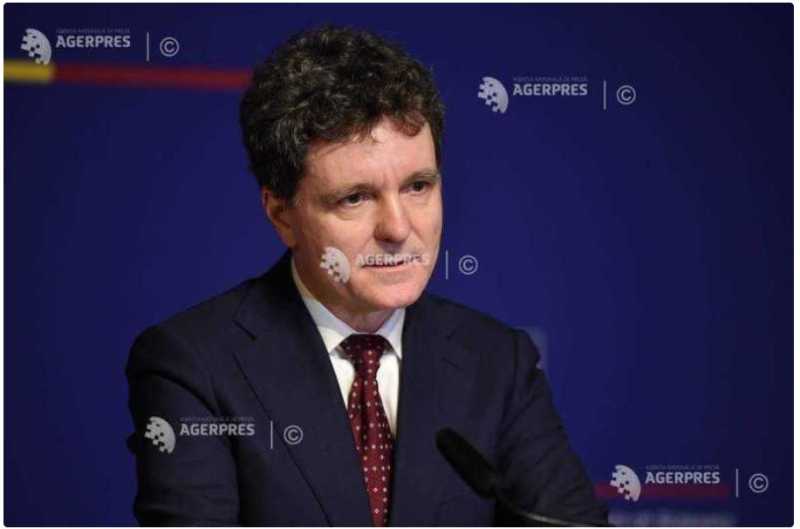
President Dan: Black Sea threat research, recognition missions to increase this summer
President Nicusor Dan on Saturday said that Romania's Defence Ministry (MApN) and the Ministry of Internal Affairs (MIA) will intensify, during the summer, the threat research and recognition missions so that the Romanian seaside is safe. He said, at the end of a working session in which the incident caused by Ukrainian sea drones that exploded in the port
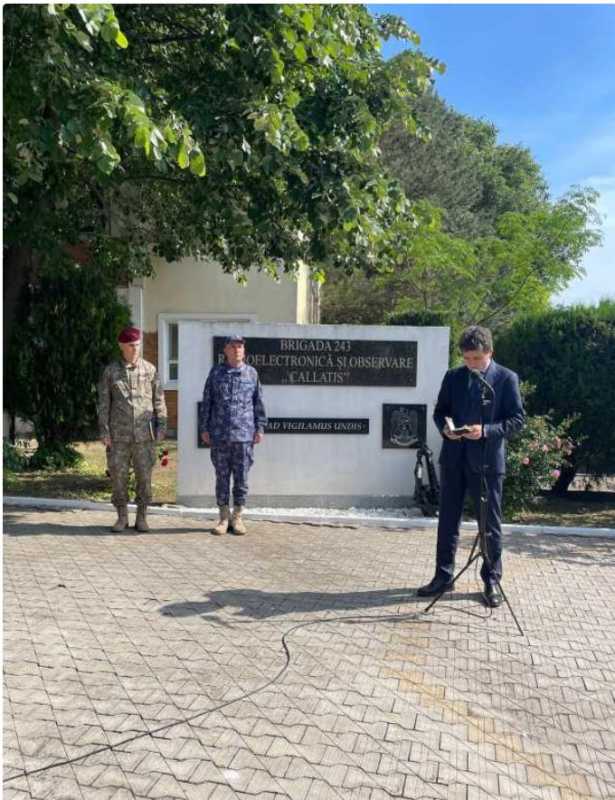
President Dan says sea drone self-destructed in Constanta is new technology
President Nicusor Dan says that the Ukrainian sea drone that exploded on Friday in the Romanian Black Sea port of Constanta could not be intercepted as a result of the lack of equipment capable of detecting such threats. He said on Saturday, at the end of a working session in which the incident caused by the Ukrainian sea drones that exploded in the port of Co
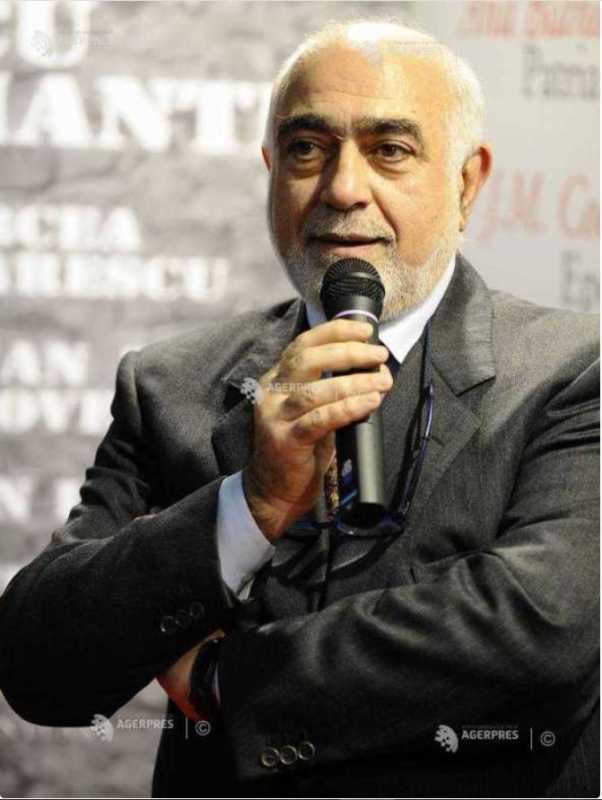
Professor Mazzoni at Bookfest: I see an admirable effervescence in Romanian culture and literature
Professor Bruno Mazzoni, one of the greatest supporters of Romanian literature in Italy, said on Saturday that Romanian literature is witnessing an 'admirable effervescence', noting the very large number of translations of Romanian writers that appear abroad. 'I see an admirable effervescence in Romanian culture and literature, because, even after

#NadiaYear/ Nadia Comaneci kicks off Olympic Day National Cross
Retired legendary gymnast Nadia Comaneci on Saturday kicked off the Olympic Day National Cross, a competition organised by the Romanian Olympic Committee, through the Romanian Olympic Academy, as part of the Nadia Comaneci Year events, near the Arch of Triumph in Bucharest. The 39th edition of this event was attended by several thousand runners, in several age

Constanta drone explosion/SCOMAR is maritime surveillance system, not military anti-drone system (Interior Ministry)
Bucharest, June 5 /Agerpres/ - The Ministry of Internal Affairs (MAI) reports that the SCOMAR system was developed for maritime surveillance by the Coast Guard and is not a single radar or a military anti-drone system, and the unmanned maritime drone involved in Friday's incident in the Port of Constanta has other characteristics, different from the profile of the boats

Constanta drone explosion/Nicusor Dan says Ukraine warned Romania in time before drone self-detonated
Ukrainian authorities notified Romania before the drone that drifted toward the Black Sea shore self-detonated, and all people in the area had already been evacuated at that moment, President Nicusor Dan said Friday at a press conference after attending the EU - Western Balkans Summit in Montenegro. He said he would hold discussions on Saturday with the instit
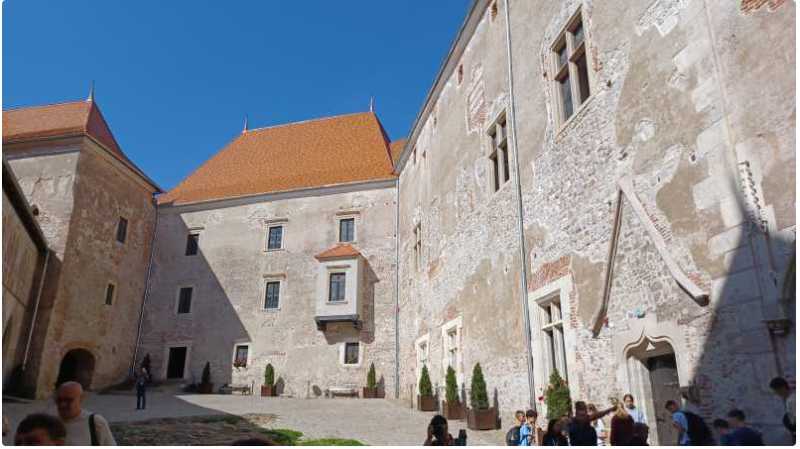
FEATURE STORY/ Castles Fair showcases leading museums and cultural institutions
Some of Romania's most important museums and cultural institutions are represented at this year's edition of the Castles Fair, held Friday and Saturday at Corvin Castle in Hunedoara, an event aimed at promoting significant historic monuments open to the public. This year's edition is organised under the banner 'The Year of Iancu de Hunedoara: H

MEP Siegfried Muresan: Russia is using hybrid aggression in Romania just as it did in Republic of Moldova
Russia is 'trying to intimidate Romania' and 'we are seeing drones sent by Russia or jammed by Russia precisely to fuel pressure for a rapid vote on a government, even if it is a weak one,' PNL MEP Siegfried Muresan wrote Friday on Facebook, after the explosion in Constanta Port of a Ukrainian maritime drone that, according to the Ukrainian Navy, veered off c
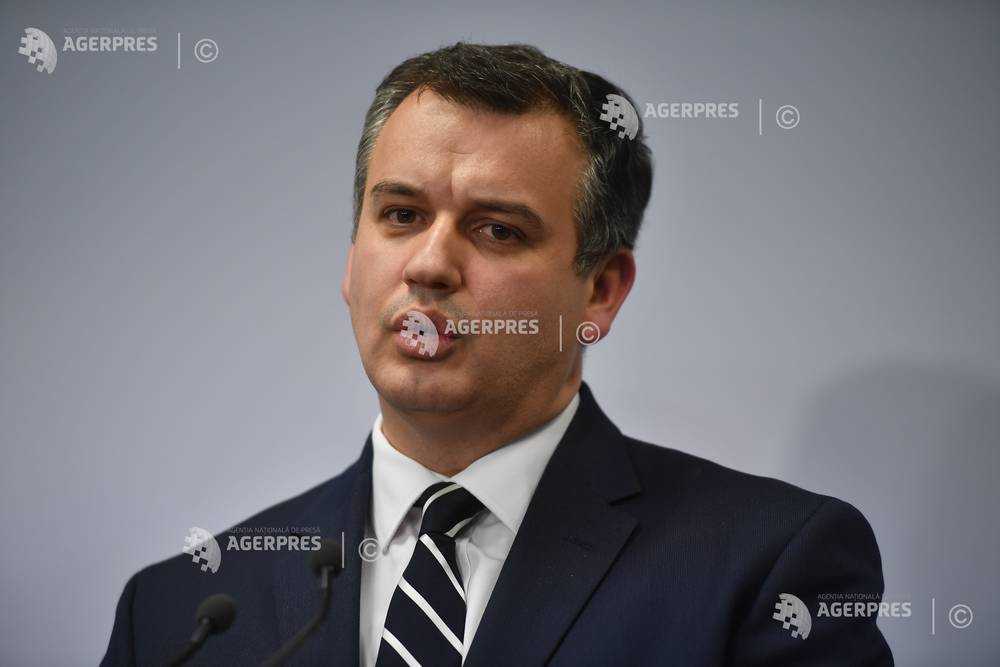
PM-designate Eugen Tomac urges greater vigilance, responsibility from institutions as security risks multiply
Prime minister-designate Eugen Tomac said on Friday that it is essential for state institutions to raise their vigilance alongside greater accountability from decision-makers, as security incidents are becoming more frequent. 'We are going through a period in which security incidents are starting to multiply. Naturally, they fuel a sense of uncertainty in

Constanta drone explosion/Ukraine says Navy drone was jammed; cooperation with Romania prevented casualties
The maritime drone that exploded Friday in the Civil Port of Constanta was a Ukrainian device that went out of control after being jammed by Russian electronic-warfare systems, the Ukrainian Navy said, as cited by Reuters and AFP. As a result of the jamming, the drone veered off course and drifted toward the Romanian coast, the Navy added in the same statement

Drone explosion/Nicusor Dan: Ukrainian forces lost control as a result of actions taken by Russia
The naval drone that exploded on Friday morning in the Port of Constanta was part, along with other similar means of combat, of a military operation led by Ukraine against Russian aggression, and Ukrainian forces lost control as a result of electronic warfare actions undertaken by Russia, President Nicusor Dan said on X on Friday. According to the head of stat

Drone exploded in Constanta/AUR: National security is not defended through sterile explanations, but through competence
Drone exploded in Constanta/AUR: National security is not defended through sterile explanations, but through competence 'After years of being told that Romania is prepared for any scenario, we find every week that the authorities are taken by surprise by each incident. Romania has reached an alarming situation. Just a few days after the Galati incident, we
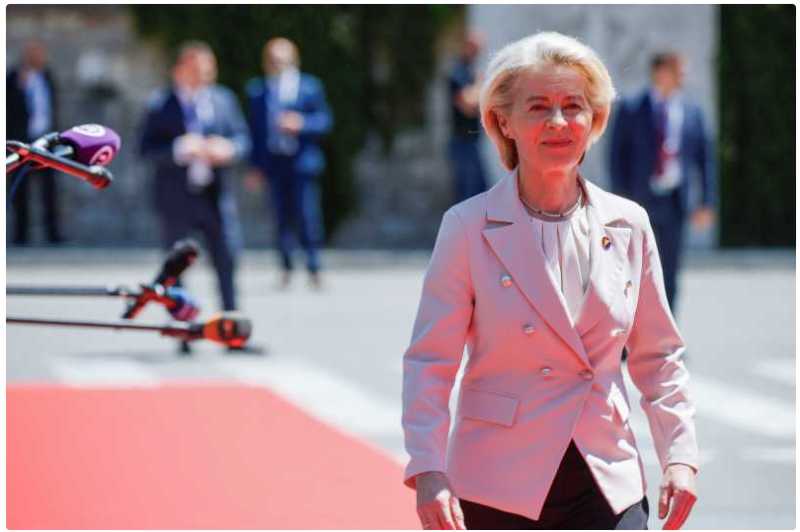
Ursula von der Leyen expresses solidarity with Romania after new drone incident
European Commission President Ursula von der Leyen expressed solidarity with Romania following Friday's incident in the Constanta Port, where a drone crashed and exploded. 'Solidaritate cu Romania! (Solidarity with Romania),' Ursula von der Leyen said in Romanian, in a post on the X social media platform. 'One week after a drone
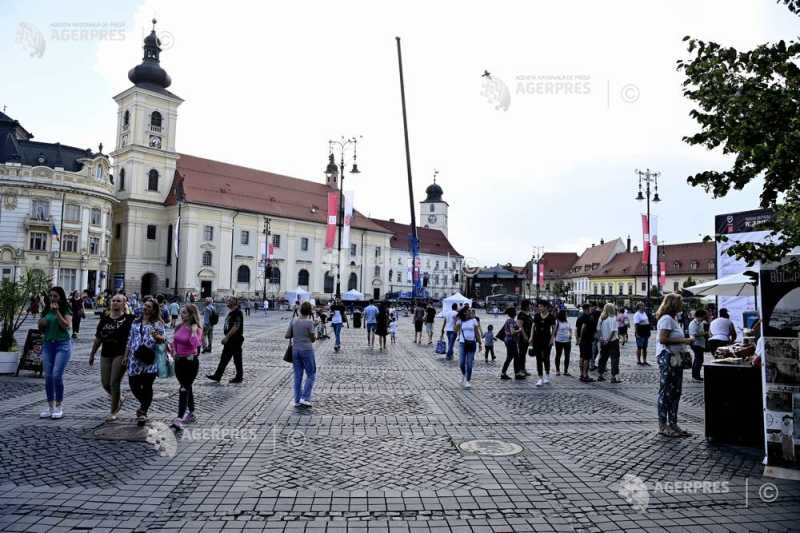
FITS 2026: 38 theatre, music, dance and circus performances to be available online
The Sibiu International Theatre Festival (FITS) announced on Friday that it will make 38 performances available to audiences in Romania and abroad for online viewing during this year's edition through the FITSonline platform. According to a press release from the organisers, access to each online performance is available through a ticket priced at 30 lei,
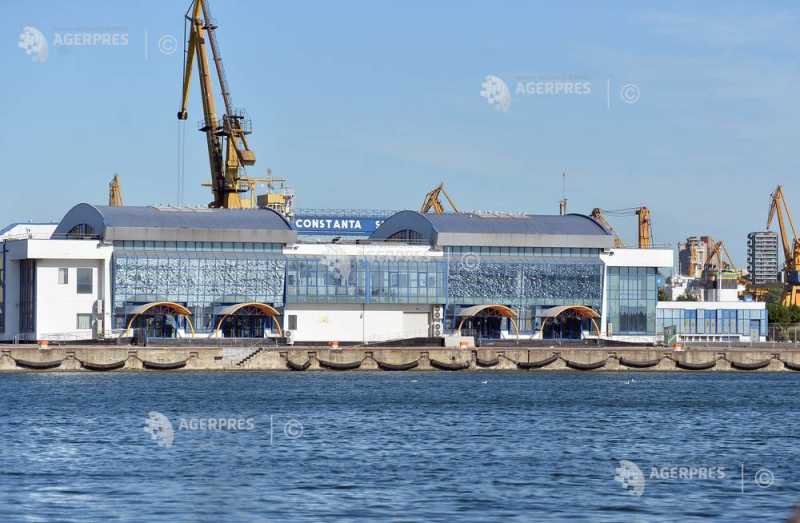
Drone explosion/ Industrial hall in maritime port destroyed by blast wave
An industrial hall in the area of berth 78 in the Constanta Port has been destroyed after a maritime drone exploded on Friday in the port. Sources in the maritime port told AGERPRES that the blast tore off parts of a hall belonging to a commercial company. Port workers also said that the authorities remain mobilised, as three other maritime dron