

INTERVIEW/ Foreign Minister Toiu: Witnessing organised effort by Russian Federation to render EU's functioning model vulnerable

Romanian Minister of Foreign Affairs Oana Toiu draws attention in an interview with AGERPRES to the Russian Federation's long-standing ''organized effort" to render the European Union's functioning model vulnerable. The top diplomat emphasized that, through hybrid attacks, Russia undermines the fundamental idea that the European Union and NATO are peace-committed organizations and projects and 'tries to push an opposite, totally unjustified narrative'. 'And we, on our part as the responsible institutions, politicians and social actors, must make sure that we constantly bring to mind the stakes we pursue together,' she pointed out.
The Romanian foreign minister also speaks in the interview about the Visa Waiver Program, Romania's relationship with the Republic of Moldova and Ukraine, but also about the reform within the ministry she leads.
Here are extensive excerpts from the interview:
AGERPRES: Madam Minister, a topic that you have been repeatedly approaching was the organization of the bilateral meeting between President Nicusor Dan and U.S. President Donald Trump. Can you provide more details about this? You said that in September you will travel to the U.S. for talks to arrange this meeting. The UN General Assembly meeting is also due in September. Do these schedule events overlap?
Oana Toiu: I will participate in the upcoming UN General Assembly meeting and, together with our team at governmental, parliamentary level, and also with the team of the Romanian Embassy in the U.S. we will hold meetings with the community. We have a strong community of Romanian entrepreneurs in the United States of America, professionals, a specific community, because there are several generations of Romanians who left the country even before the '90s and these generations are very important for our bilateral relationship. The major component of the discussions is, of course, related to defense, both for me and for President Nicusor Dan and Prime Minister Ilie Bolojan. During this period, the primary goal is to maintain security, especially given the regional context. It thus follows that joint plans within NATO, defense acquisitions, collaboration under the Strategic Partnership on this component are absolutely critical for us.
We want to increase trade cooperation. At this moment, it is below its potential and we say this also in the context of the ongoing negotiations taking place in Brussels regarding the trade tariffs between the European Union and the United States of America.
At first glance, looking at the figures, Romania's exposure is considered small. We account for just 0.1% of U.S. exports, they represent 2.3% of Romania's exports, but there is also an indirect impact, for example in the automotive industry, because we are a country where suppliers of automotive components have developed extensively, they did so on the German market too, of course, we also have an automotive industry in its own right. And this is where we expect an impact, even indirect, but significant, depending on how the negotiations evolve.
AGERPRES: Regarding the relationship with the United States of America, there are currently two, let's say, 'elephants in the room'...
Oana Toiu: The Visa Waiver...
AGERPRES: And there is also the cancellation of the presidential election, because between the rerun and the cancellation there were certain speeches by U.S. officials with quite... mixed views. Was this cancellation of the election thoroughly explained? Do you feel that the reasons why the election was canceled were well enough explained to the American side and did they understand?
Oana Toiu: First of all, Romania must make an effort to better explain the respective decision to its own citizens. This is important and the main thing we must ensure - the relationship between the Romanian state and the citizens, rebuilding dialogue, trust. President Nicusor Dan has set himself as a priority of his term the reconstruction of dialogue to bridge the faults in society and those between the state and the citizens.
And of course, in this period when measures are also being taken to reduce the budget deficit, this is a difficult task, but even more so a necessary one. Returning to the subject you raised, namely the way the international community relates to the decision Romania took in 2024 to cancel elections by ruling of the Constitutional Court, I believe that at that time, especially in the bilateral relationship with the United States of America, as a country, we could have put in a more organized effort to make sure, via several official channels and in the community, that Romania's point of view is better explained.
I believe that back then it would have helped to provide more transparent information, so that there would be less vulnerability to the counter-narratives that were also pushed in the United States of America, regrettably, in certain cases even by one or two Romanian politicians who pose as patriots at home, but who admitted that they went to the United States of America to promote things other than Romania's interests.
But now we are at a different stage. Last week official statements were issued, both within NATO and within the European Union, which acknowledge the cyber attacks and hybrid warfare, including interference with the democratic culture of certain countries, and Romania is nominated in both statements, and is not the only country nominated. There is an increasingly growing awareness and an official admission by several countries that on the territory of the European Union, actually in quite a number of countries, there is this activity going on, organized and supported by the Russian Federation in the area of hybrid warfare, which also has this component of disinformation, of propagating malignant narratives on social networks.
We see this happening in the Republic of Moldova as well, and it will probably get more intense as we draw nearer to the parliamentary elections on September 28. We cannot be naive when it comes to this. It is very clear that there is an attempt to destabilize Moldova's European course on the one hand, and on the other hand to associate the two essential projects Romania is a party to, the peace and prosperity projects: NATO, the European Union, so to associate these projects with the opposite of what they really are. We see malignant narratives that attempt to associate... NATO, for example, or more recently even the European Union, with elements of risk regarding a future war. Or, they are exactly the opposite of this, they are the main elements that, alongside our own army and our own institutions, ensure security in our region and make us a stable destination and a desirable destination for investments too. And this is also vital for our economy.
AGERPRES: Regarding the Visa Waiver, firstly: there have been debates about the fact that we may have been excluded from the Visa Waiver Program also because of this ambiguity regarding the cancellation of the election - media narratives.
Oana Toiu: I don't think it helped. It didn't help, for sure. At the same time, we are talking about a paradigm shift, with the change of administrations from President Joe Biden to President Donald Trump. The way the U.S. administration perceives and acts regarding the access of non-U.S. citizens to the territory of the United States of America has also changed. This is not specific to the U.S. - Romania relationship, but is a change of paradigm of the administration. For example, we see that no further than these days they have decided to introduce an additional fee of $250 for visitors who practically come from countries that are not part of the Visa Waiver.
Romania's priority remains access to Visa Waiver and we are making efforts, holding bilateral discussions, taking technical steps in this direction. The decision at this moment, however, lies with the American side and it's not a decision that concerns Romania separately - although technically it is definitely related to Romania, but they view it through this changed political paradigm, which is why the diplomatic efforts and political steps we take are also very important. I am working on this together with [Interior] Minister Catalin Predoiu, because the Ministry of the Interior shares the responsibility with us and this is actually an effort we all contribute to, including at the level of the prime minister and the president.
AGERPRES: In a potential meeting between Presidents Nicusor Dan and Donald Trump, apart from the Visa Waiver, the military relationship, what other priorities would be? The economic aspect, but what can be done in this direction?
Oana Toiu: A lot can be done in this direction. We have a much greater potential for trade exchanges. We are also in an interesting situation, in the sense that Romanian exports to the United States of America exceed our imports from there. At a macro scale, looking at 2024, we see that imports increased by 3%, exports went down 3%. So we want, even if on that component we stand a little better, to continue to develop it, especially in the line of technology, components, automotive components. But when we talk about the elements of interest in our trade with the United States of America, these are definitely related to defense, aircraft and the energy area, especially nuclear energy. These remain important elements, but we also want to explore together joint investment partnerships on defense production, because now there's a much larger market following each NATO member state's decision to allocate significantly larger budgets, and with the emergence of financing instruments under the EU's SAFE umbrella; of course, the U.S. cannot participate directly, given that there is no agreement in this regard between the European Union and the U.S., although we as a country backed the idea that the U.S. should also be included under this umbrella. But we can collaborate on the supply side, meaning joint investments that would also accelerate the modernization part, which, let's be honest, our defense industry also needs.
AGERPRES: President Nicusor Dan recently said that an evaluation of the diplomatic corps is needed, that he supports such a move and announced that it will definitely take place. You too spoke in favor of this. Is there a deadline?
Oana Toiu: In the medium and long term, after Romania puts behind this difficult patch, with this record-high budget deficit, we will have to allocate resources proportionally to the goals we are working on. At this moment the Foreign Affairs Ministry is essential not only in Romania, but in all EU countries and in the U.S. because, beyond the traditional objectives of diplomacy, so to speak, we now have an increasingly strong component in bilateral, trilateral and multilateral relations in the area of defense, and this exceeds by far the NATO framework, on the one hand. And for Romania, again, in the medium and long term, we must step up the economic diplomacy component. Because so far, after almost every crisis, through the hard work of employees, through the innovative spirit of entrepreneurs, Romania has managed to be a truly pleasant surprise. /.../ At this moment Romania is a very interesting destination for investments. The future reconstruction project for Ukraine is also an important element, because it positions Romania not only as a logistics hub, but also as a platform where capabilities can be created through joint investments, and this is crucial.
We have a technology sector that can develop a lot, construction, renewable energy, even in the area of agriculture, food, organic products, again there's a tremendous potential here. Auto, obviously, because we are already doing well there. So we have something to work with, including in the area of economic diplomacy. /.../
AGERPRES: This evaluation of the diplomatic corps President Nicusor Dan was talking about, will it - and again I will ask you for a deadline, perhaps at the Meeting of Romanian Diplomacy - will it also result in ambassadors being reassigned or recalled?
Oana Toiu: By the end of this year there will surely be some reassignments and decisions regarding some of the ambassadors, yes. But this is, again, an expected flow of ambassadors.
AGERPRES: You also brought up a hot topic - that of consular fees, because there were protests by certain political parties related to this. My question would also be how could you explain to the diaspora, which is already quite fragmented after the election, why are consular fees needed?
Oana Toiu: /.../ Romania is the country that offers the most consular services in the world. Not necessarily because we have the largest diaspora, although we have a large community of expats, but because we have a diaspora community that maintains contact with the Romanian state. This is a good thing, even if it sometimes comes together with revolt or negative emotions, when you feel that the Romanian state is not up to the standard you expect, either directly in the services it offers to the diaspora, or in general, because especially as regards the clampdown on corruption, the diaspora has been vocal and this is very good. We must ensure, in this period when the national budget is grappling with the issues Prime Minister Ilie Bolojan has clearly explained, that we manage to keep certain essential services free of charge. /.../ But this free service cannot be maintained if there are no resources. And the resources can be allocated from the general state budget, which is currently facing significant issues, or we can return to what is a decent practice, namely both on the territory of Romania and outside country borders, if you have some optional services that you need, which involve specialized assistance, legalized translations, authorized translations, there are all kinds of commercial documents, purchases, contracts, certain documents that are required through consulates from other institutions. There must be unhindered access to such services, but the human resource needed to prevent a six-month queue for appointments also requires proportional financial resources.
And this is why [fees] will be reintroduced in these areas, and what we are doing now is to ensure that part of the resources thus acquired are invested back in increasing the quality of these services and especially in cutting waiting times. Many of the Romanians I spoke to in the diaspora want quick access, they are often willing to allocate resources for this, but lack the instrument for now./.../
AGERPRES: When do these new consular fees come into force?
Oana Toiu: It also depends on the governing coalition. We secured the political agreement of the governing coalition in the sense that this measure is included, in agreement with all the other political parties, in the governing program that was voted on in Parliament. /.../
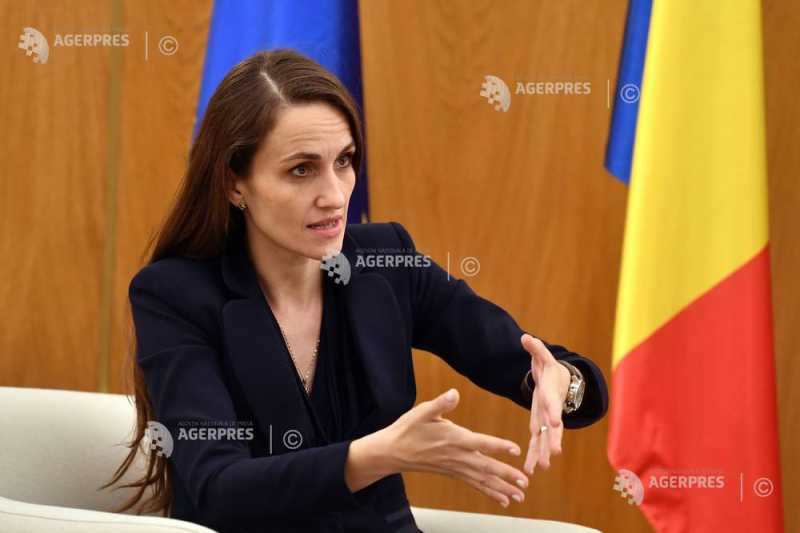
AGERPRES: You were recently in the Republic of Moldova, and there you sent out the message that Romania and the Republic of Moldova are joining hands to counter the ongoing hybrid attacks. The Republic of Moldova relates to Romania as an older sister. The question is whether Romania has learned anything from the Republic of Moldova regarding hybrid attacks, because Moldova's presidential election was held before Romania's.
Oana Toiu: And the referendum, yes.
AGERPRES: And the referendum, and it acted very clearly, I mean, it was very transparent.
Oana Toiu: Yes. My full statement was: 'Romania, together with its European partners, stands by the Republic of Moldova to counter Russia's cyber attacks and hybrid warfare'. Let me repeat this sentence: 'Romania, together with its European and international partners, stands by the Republic of Moldova to help it counter the cyber and hybrid attacks'. Why do I repeat this sentence in full? Because, at how intense these organized efforts are, an intensity that will increase, it would be naive on our part to believe that a standalone country, or even two countries could handle this by themselves, or that Romania can handle it because it once managed to narrowly avoid a bullet. We are not omniscient. We have good teams, we help the Republic of Moldova as much as we can, we have these conversations and joint actions to exchange best practices, to ensure that we have a common understanding within the EU and within NATO and in bilateral relations, but we must be ever better prepared, on the one hand, on the other hand we must increase the resilience component in society.
We are not talking just technical tools, we must make sure that we invest in the medium and long term in critical thinking, because otherwise everything propaganda, false information, will be very difficult to counteract only at official level. People must develop and we must develop this skill through better education, through clearer dialogue and adequate tools, so that they grow their own antibodies to propaganda, fake news, false information, even to more and more organized attempts to scam people out of their money.
And more than that, beyond this individual financial aspect, we mustn't be naive and understand that at this moment, there has been a long-standing organized effort by the Russian Federation to try to make the European Union's functioning model vulnerable, the fundamental idea that the European Union and NATO are peace-committed organizations and projects, and Russia tries to push an opposite, totally unjustified narrative. Unfortunately, anxiety and fear are the elements they are trying to exploit. And we, on our part as the responsible institutions, politicians and social actors, must make sure that we constantly bring to mind the stakes we pursue together.
AGERPRES: And you also stated that you are confident in the opening of negotiation clusters for EU accession by the end of the year.
Oana Toiu: Yes. And I am not only confident in terms of hope or expectation from others, it is something Romania is actively working on. It is very important for us in the discussions we have regarding accession to the European Union, to ensure our support, especially since Romania is a success story when we look at transition and economic growth. It's a success story, without being perfect, but precisely because we had and have our imperfections and still have things we need to build, we can be a good partner, including in the area of technical assistance, in the area of pre-accession and accession, because there is not such a big distance between us in the way we understand things.
AGERPRES: Regarding the relationship with Ukraine, the question that repeatedly comes up for the President and probably for you too is: 'Will Romania be more transparent and will it better explain this support to the citizens who are averse to support to Ukraine?' That is, will Romania talk more about how and why it supports Ukraine?
Oana Toiu: I think this is already happening, and I have to say that we have recently taken it upon ourselves to talk more clearly about this, even if, of course, this also generates a reaction.
AGERPRES: Fear of war, for example. There is this narrative, that we are entering war.
Oana Toiu: Okay, but the war is at our border and this is so without being in any way caused by the actions, responsibility or fault of anyone in Romania. We have a war on the border and I think it is very important, again, that the citizens look carefully at the politicians who claim that they do not want war, but don't even whisper about the bombs that hit Chernivtsi, for example, and the ethnic Romanian communities there. No one can say that they are genuinely seeking or working for peace, but praise an aggressor. These two things are incompatible. And yes, we must speak more and more clearly about the fact that Romania's security, both in the medium and long term, depends on our collective capacity within NATO, within the European Union, to achieve peace in this region. The more the war on our border continues, the higher the risks for our country get.
It is not the other way around, as some propagandists of the Russian Federation are trying to make believe. I have seen propagandists of the Russian Federation who try to accredit the idea that Romania being part of the European Union effort, part of NATO, or that other countries are investing increasingly more in defense systems and armaments, all these things that are the lifelines for Romania's peace and security, support that region and the security of Romania, they describe them as risks.
I will allow myself an analogy that simplifies the situation much more than it should, but perhaps it is helpful for those who still look with a shred of trust or openness to the Russian Federation's propaganda messages according to which NATO's rearmament increases the risk of war. It is the equivalent of someone saying that when many burglars appear in a neighborhood, who break into the people's homes, if the neighbors put locks on their doors, this is a provocation for the burglars. No! It's the opposite. With a heightened risk, it is necessary that the investment in protecting yourself against that risk is proportional.
AGERPRES: On Wednesday, Hungarian Prime Minister Viktor Orban was welcomed by his Romanian counterpart, Ilie Bolojan, as Mr. Viktor Orban will attend the traditional Summer School in Baile Tusnad. Some rather delicate messages were conveyed there in the past years, which affected the Ministry of Foreign Affairs. Can you speak in general about Romania's current relationship with Hungary and can you send a message before this event?
Oana Toiu: It is Mr. Viktor Orban's choice what he says every year. Romania does not control this, just as no other country could ever control what our president says, to clarify this, if there is still any doubt on that. However, it is a sign of necessary respect to have an official meeting beforehand and it is very good that this happened yesterday, courtesy of Prime Minister Ilie Bolojan.
We have common files in the works with Hungary. We are after all neighbor countries with many common issues, especially in the area of interconnected commercial infrastructure; certainly, there is the Hungarian minority in Romania, which is also part of the governing coalition. Viktor Orban has said more than once, recently, that for him too, the relationship with Romania and communication with both President Nicusor Dan and Prime Minister Ilie Bolojan are very important. Of course, it is broadly known that we also have our disagreements on several files at EU level and on several domestic policy issues. But our stake is to continue building, because the relationship between Romania and Hungary is not only a historical relationship, with all its episodes, but especially a relationship that will always matter a lot in the future. Particularly because we are neighbors. AGERPRES (RO - writing by: Oana Ghita; EN - writing by: Simona Klodnischi)
The content of the www.agerpres.ro website has the exclusive purpose of public informing.
All the information published on this website by AGERPRES is protected by relevant legal dispositions.
It is forbidden to copy, reproduce, recompile, decompile, distribute, publish, display, modify, create derived components or products or full services, as well as any exploitation of the site's content.
Details in the section Terms of Use. If you are interested in picking up AGERPRES news items, please contact the Marketing Department – marketing@agerpres.ro.
The use of the Comments section entails your obligation to respect the AGERPRES terms and conditions in regards to the publishing of comments on the www.agerpres.ro.
Other news in category
Miruta:Another drone that illegally entered Romania has been shot down by Romanian military personnel
Acting Defense Minister Radu Miruta confirmed on Saturday that another drone that had illegally entered Romanian airspace was shot down by Romanian military personnel. Acting Defense Minister Radu Miruta confirmed on Saturday that another drone that had illegally entered Romanian airspace was shot down by Romanian military personnel. 'Anothe
Nicusor Dan: A new drone shot down 10 kilometers west of Sfântu Gheorghe
A new drone was shot down 10 kilometers west of the locality of Sfântu Gheorghe, Mayor Nicusor Dan announced. 'This morning, at 8:30, a new drone was shot down in Romanian airspace, 10 km west of the locality of Sfântu Gheorghe (Delta). The drone was shot down by a Romanian pilot flying an F-16 aircraft,' the President wrote on Facebook. AG
Chief of General Staff: When airspace is violated, the military is there to defend it
The Chief of the Defence Staff, General Gheorghita Vlad, stated on Saturday that whenever the country's airspace is violated, military personnel are already there to defend it, noting that the mission to shoot down the drone near Sfântu Gheorghe was carried out with calm, precision, and respect for what matters most: the safety of the people. 'Ro

Romania joins Treaty of Amity and Cooperation in Southeast Asia
Romania on Friday joined the Treaty of Amity and Cooperation in Southeast Asia, after the diplomatic steps of the Ministry of Foreign Affairs with the Association of Southeast Asian Nations (ASEAN) member states in the last two years. According to the Ministry of Foreign Affairs (MAE), the Minister of Education and Research, Mihai Dimian, signed the instrument

PM Bolojan, India's President Murmu discus economic and trade cooperation
Interim Prime Minister Ilie Bolojan and President of the Republic of India Droupadi Murmu discussed bilateral economic and trade cooperation as the foundation of Romanian-Indian relations during their meeting on Friday at Victoria Palace. According to a Government press release, deepening bilateral economic cooperation is the main objective of the Indian offic

President Dan: The ambition is to double Romania-India trade volume
Romania and India have the ambition of doubling bilateral trade in the coming years, President Nicusor Dan said on Friday at a business forum held in the context of Indian President Droupadi Murmu's state visit to Romania. He underscored that the visit represented an important moment in bilateral relations. 'After a long time, there is h
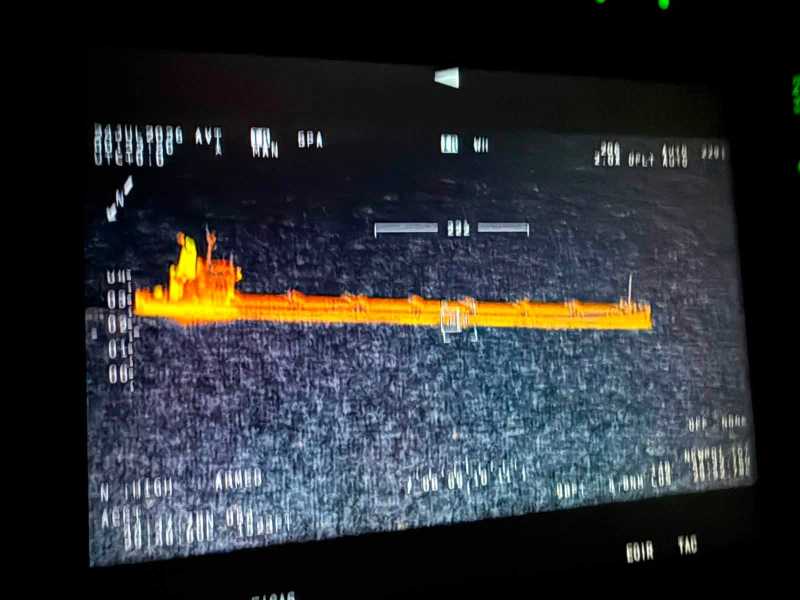
New Black Sea incident: Liberia-flagged vessel damaged, possibly by drone
A Liberia-flagged bulk carrier transporting coal from Norfolk, United States, to Ukraine reported damage during the night from Thursday to Friday while sailing approximately 22 nautical miles south-east of Sfantu Gheorghe. The damage was most likely caused either by the impact of a maritime drone or by the explosion of a naval mine. According to information pr

Indian President Droupardi Murmu's visit to Romania continues on Friday
President of the Republic of India Droupadi Murmu continues her state visit to Romania on Friday. In the morning, the Indian official will be received at Victoria Palace by acting Prime Minister Ilie Bolojan. Afterwards, President Droupadi Murmu and President Nicusor Dan will attend the Romania-India Business Forum together. Later
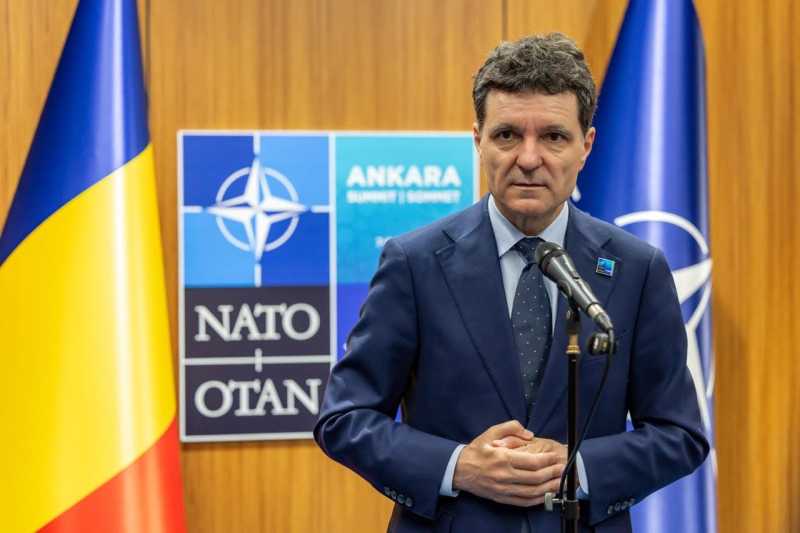
Romania achieves an important strategic result within NATO (Nicusor Dan)
Romania achieves an important strategic result within NATO, given that, after more than five years of negotiations, the Alliance has approved the eastward expansion of NATO's fuel pipeline network, an essential project for strengthening security and military mobility on the Eastern Flank, President Nicusor Dan announced on Thursday. According to the presid
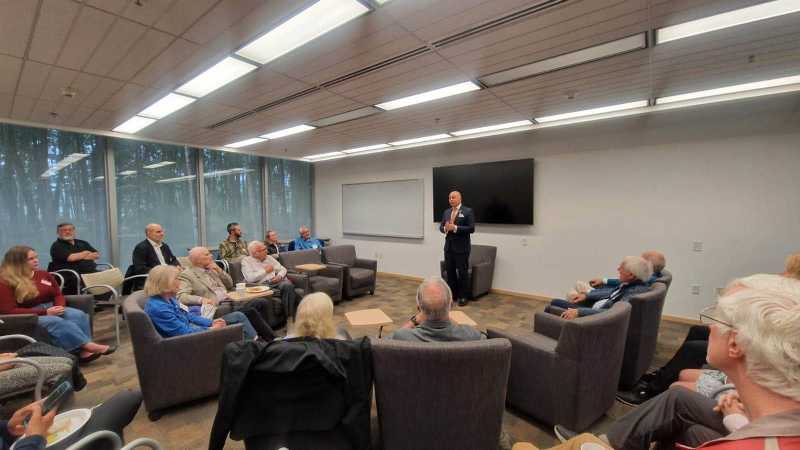
Romanian Embassy in the US concludes five-year '50 States, One Community' project
The Romanian Embassy in the United States announced on Thursday the completion of the '50 States, One Community' project, carried out over nearly five years across all 50 US states. Launched in October 2021, the initiative evolved from a programme aimed at strengthening ties with the Romanian diaspora into one of the most extensive public and economic diplomacy initi
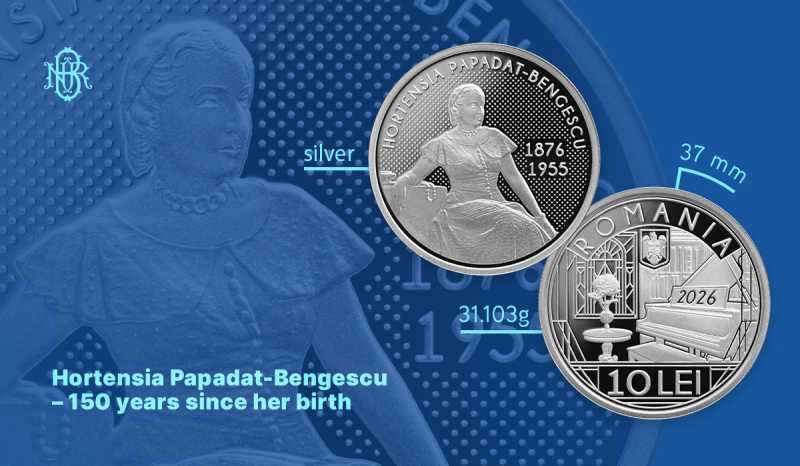
Numismatic issue dedicated to Hortensia Papadat-Bengescu - 150 years since her birth
As of July 27, 2026, the National Bank of Romania (BNR) will put into circulation, for numismatic purposes, a silver coin dedicated to Hortensia Papadat-Bengescu - 150 years since her birth. According to a press release of the central bank, the coin will have on the observe a graphical composition inspired by the literary work 'Concert din muzica de Bach&#
Rise of ultra-identitarian and sovereignist currents is not attributed to manipulation, but to structural causes (presidential report)
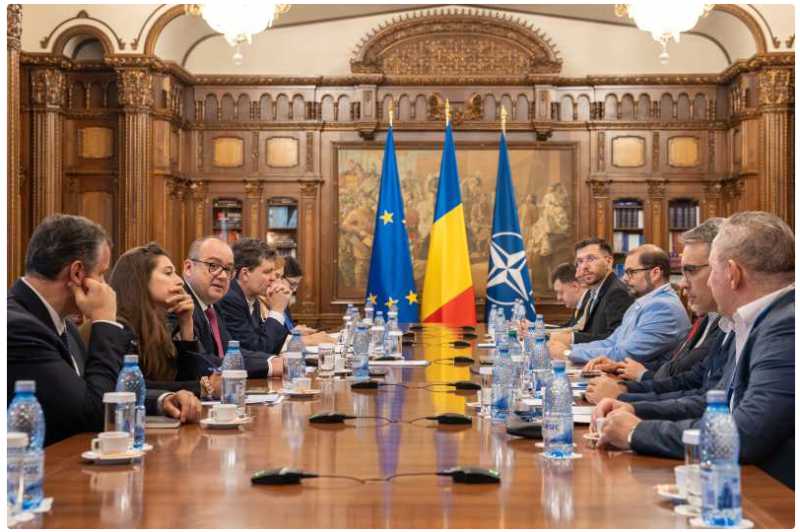
The rise of ultra-identitarian and sovereignist currents cannot be explained exclusively by manipulation, but is based on structural causes - the crisis of democratic representation, inequalities, distrust in institutions and a European project that 'speaks the language of the administration' in an era of emotions, according to the Report of the Strategic Reflection
Cociuba Mare develops Tinca Baths and Lake Carasau into a wellness and leisure hub
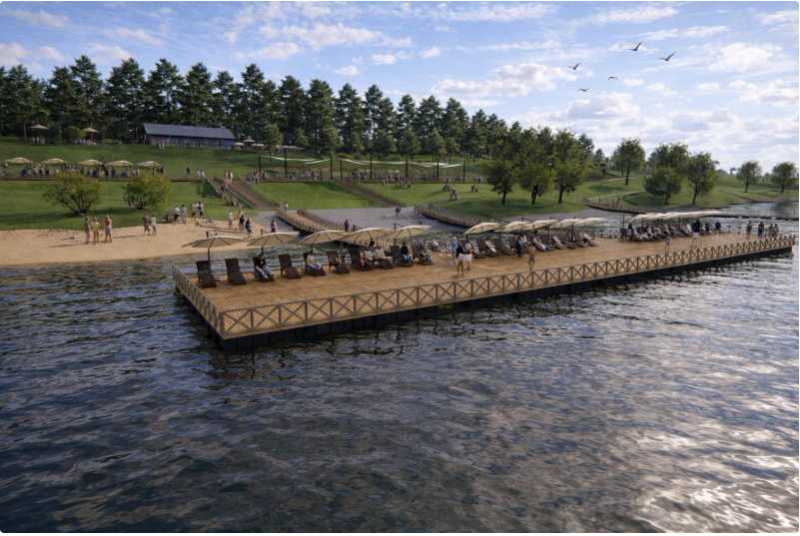
The old Tinca Baths, recently purchased by Cociuba Mare commune, and Lake Carasau, located 15 kilometres away, could become the two main attractions of a new tourist hub in southeastern Bihor in the coming years. The Cociuba Mare administration is betting on a dual project it considers complementary: recovery and wellness at Tinca Baths, and leisure and nature
Bogdan Costas, dismissed as interim CEO of TAROM; Cristian Anghel takes over mandate
The Board of Directors of airline TAROM appointed on Wednesday Cristian Anghel as the company's interim CEO, after dismissing Bogdan Costas from the position. According to a company's release, this appointment occurred against the backdrop of the trust given to the young generation of managers formed within the company. 'The Board of

Darau:Tourism and HoReCa industries should not have to bear full brunt of drop in consumption
Romania's tourism and HoReCa sectors should not have to bear the full brunt of the drop in consumption, and I hope that next year we will once again grant the incoming tourism bonus, Irineu Darau—the interim Minister of Economy, Digitalization, Entrepreneurship, and Tourism—stated on Wednesday during a press conference reviewing his six-month term.