

#DiplomaticCentennial Sergey Minasyan: I've noticed that the Armenian community in Romania enjoys a priviliged position

Ambassador of Armenia to Romania Sergey Minasyan states in an interview granted to AGERPRES that, in his opinion, the Armenian community in Romania enjoys a "privileged position" and is integrated within the society, the Romanian people's tolerance can set "a good example for many other countries."
"I have always noticed with great pleasure the privileged position the Armenian community enjoys in Romania, not just as an ethnic and religious minority of your country but also as an integral part of the Romanian society, which has had an important role throughout centuries, in Romania's social-political, economic, cultural and educational life," the diplomat says.
Thus, he underscores, "the opportunities to keep their linguistic, cultural, religious and ethnic identity which are granted to them by Constitution, both to Armenians and all other national minorities of Romania, as well as the tolerance characteristic to the Romanian people can set a good example not just in Europe but throughout the world."
Sergey Minasyan also talks about the perspectives on the two countries' cooperation but also about the challenges his country is facing on the international stage.
"The conceptual approach of Armenia's foreign affairs policy consists in the fact that we have always tried not only not to focus on existing contradictions and issues between the main countries that have political influence in the region, be it the United States, Russia, Iran and other countries, or the political-military, political and economic organisations (NATO and OTSC, the European Union and the Eurasian Economic Union), but to work together with them," Sergey Minasyan points out.
AGERPRES: The Armenians are one of the most ancient peoples in Asia, they have their own alphabet, which marked this civilisation. What should Romanians know about Armenia and the Armenian people?
Sergey Minasyan: Indeed, the historical process of the Armenian people's formation started thousands of years ago, on the territory of the Armenian plateau, part of the Near East. For centuries, the Armenians have developed their statehood on this historical territory, closely interacting with various peoples, nations, and empires and forming a cultural bridge between the East and the West, between Europe and Asia. As the most ancient Christian nation and sharing all along, historically, religiously and culturally the values of the European civilization, the Armenians have also adopted several traditions from the neighbouring countries, constituting an unique example of living together in the spirit of tolerance and interaction with the Muslim countries and peoples in the region.
However, it was impossible for the presence in this important geographical region, at the crossway of various states' and empires' political interests, of the migration flows, the fight for resources, the religious and ideological rivalries not to carry consequences, including negatives ones for Armenia and the Armenians. Following the historical and political cataclysms, Armenia fought against the Assyrians and Babylonians, the Medes and the Parthians, against Great Alexander's empire and the Hellenistic states on the territory of Asia Minor. Throughout several historical periods, Armenia was divided among empires such as: the Roman, Persian, Arab, Byzantine, Ottoman and Russian ones, it was subjected to the invasions of the nomadic peoples and conquerors, from the Scythians and Cimmerians, to the Mongolian troops of Genghis Han, Tamerlan or the Seljuq Turks' hordes and other nomadic peoples in Central Asia and the remote Altai. Hence, the Armenians have repeatedly fallen victim to wars and deportations, and at the beginning of the 20th century they were subject to the Ottoman Empire genocide.
Because of this, a significant part of historical Armenia, currently situated on modern Turkey's territory, has remained without an indigenous population of Armenian descent, and the cultural and historical heritage of the Armenian people, accumulated on these shores for thousands of years, was intentionally destroyed. Nonetheless, despite these historical difficulties, the Armenian people, with its rich culture, continues to live and create, hoping for a better future, whose symbol is the current Armenian republic, which rightfully takes its place on the international arena.
AGERPRES: The Armenians are the first Christian people in the world. At the beginning of the 4th century, the Armenian people become the first Christian people in the world and in the 5th century they translate the Bible in the Armenian language. Moreover, there is "an Armenian neighbourhood" in Jerusalem. What role does religion currently play in your country?
Sergey Minasyan: Indeed, the Armenian Apostolic Church has always played an important role in Armenia's history. The role of the Church was all the more important at a time when the Armenian people lacked statehood and the Church represented, in many aspects, the Armenian people's social and political interests, being at the same time an institution that contributed to the preservation of their cultural, linguistic and ethnic identity. Priceless is also the role of the Armenian Church in preserving the ethnic identity and culture in Armenian communities in the Diaspora around the world, including in Romania. At the same time, according to the Republic of Armenia's constitution, the Church is separated from the state but enjoys great authority in the Armenian society, based on its rich history and traditions. The Armenian Apostolic Church maintains close relations with other Christian Churches, including the Romanian Orthodox Church.
AGERPRES: According to some data, the Armenians were the founders of Gherla town and there still, the first Armenian museum in the world was set up in 1907. Romania has an important Armenian community, with distinguished representatives in the cultural life, even in political life, but also in other domains. How do they contribute to the development of the relations between the two states?
Sergey Minasyan: As a matter of fact, the Armenians not only founded Gherla town (Armenopolis), they also lived there for centuries and had an important role in the economic and cultural life of Transylvania, Tara Romaneasca, Moldova and many other regions in Romania and of the capital, Bucharest. The Armenian presence on the Romanian hospitable land counts several centuries, if not millennia, and the Armenian community in Romania is one of the most ancient Armenian communities throughout the entire Europe. The Armenian presence in Romania has increased especially following the refugee wave from the Ottoman Empire, arrived after the 1915 genocide and the Romania's Kingdom was one of the first in the world, which at state level, provided shelter to survivors of this terrible tragedy and many of these later settled here too. Their descendants represent the basis of the current Armenian community in today's Romania. Undoubtedly, the Armenian community creates the best tie and is the promoter of sincere and profound respect between the two states - Armenia and Romania. In many regards, given the special role of the Armenian community, Romania was the first country in the world which, on 17 December 1991, officially established diplomatic relations with the newly founded Republic of Armenia.
AGERPRES: Romania celebrates 100 years since the Great Union. What does the concept of union represent to today's Europe?
Sergey Minasyan: Romania marks this year a highly important anniversary - the Centennial of the Great Union. It is very significant that Armenia marks this year too its own centennial since the establishment of the First Republic of Armenia (1918-1920). The fact that through the various cultural activities that we are organising this year in Romania, with the support of the Armenians' Union in Romania and the Armenian Archdiocese, we manage to join the marking of these important anniversaries, represents a symbolic confirmation of the closeness of many pages of our history and our likemindedness with regard to future, on the entire European continent, included.
AGERPRES: Define in one word the relation Armenia - Azerbaijan.
Sergey Minasyan: In autumn this year, Armenia's capital, one of the most ancient cities in the world, Yerevan will mark 2800 years since its establishment. The moment the President of Azerbaijan, Ilham Aliyev, by reiterating military threats, already a tradition, and the anti-Armenian rhetoric against Armenia and Nagorno-Karabakh, has recently talked, in an official speech, about Azerbaijan's territorial claims against the very capital of Armenia, it is very difficult to define in one word the relation between Armenia and Azerbaijan. I will leave this definition to your professional judgment.
AGERPRES: What do you consider to be the least understood thing from those outside Armenia's region regarding the Nagorno-Karabakh conflict?
Sergey Minasyan: The origins of the Nagorno-Karabakh conflict come, largely, from the unilateral decision of the Caucasian Bureau of the Bolshevik Party of July 1921. Without taking into consideration the historical, geographical and political context, the Nagorno-Karabakh region (historically named Artsakh), inhabited for thousands of years by Armenians, because of the personal involvement of and pressure from Joseph Stalin, through the decision of the party members of the Bolshevik communists, was transferred as a component part of the Azerbaijan Soviet Socialist Republic. The Stalin factor and the artificial administrative boundaries of Nagorno-Karabakh, personally carried out by him, determined to a great extent the future confrontations in the region, aggravated by permanent ethnic, cultural, linguistic and economic discriminations to which the Armenian population was subjected during all the decades of the Soviet power, by the communist authorities of the Soviet Azerbaijan. For those outside our region, less familiarised with the true history of the Nagorno-Karabakh conflict, it is important to become aware that in fact, this conflict is a good example of the legitimate fight of the Artsakh's people for self-determination, in agreement with the fundamental principles of international right and the UN Chart and declaring the independence of the Nagorno-Karabakh Republic is fully consistent with international law, as well as in the spirit and letter of existent laws at the time in the Soviet Union, when, at the place of the former Azerbaijan Soviet Socialist Republic two state entities appeared - the Azerbaijan Republic and the Nagorno-Karabakh Republic.
AGERPRES: Does the European Union need Armenia or Armenia the European Union?
Sergey Minasyan: Undeniably, both the EU needs Armenia but Armenia also needs the EU. And the best proof in that regard is the fact the recently, only two months ago, on 24 November 2017, Armenia signed in Brussels a framework-document with the EU - Comprehensive and Enhanced Partnership Agreement. In the upcoming weeks, the Armenian Parliament will ratify this agreement, and subsequently the document, in agreement with its provisions, could be implemented even before all the member states of the EU conclude their internal procedures for the ratification of this agreement. This document will open new interaction domains between Armenia and the EU concerning the largest cooperation range, from political and economic contacts to humanities and science.
AGERPRES: Relationships between Romania and Armenia are tight and traditional. What are the privileged sectors of this bilateral cooperation?
Sergey Minasyan: Political dialogue and interaction between our countries on the world stage represents one of the key areas of our bilateral cooperation. We are successfully developing our cooperation with Bucharest officials, especially taking into consideration the active role and affiliation of your country to the European Union, NATO, OSCE, European Council, UN, and other international and regional organizations. Especially, given the context of the active role that Romania has, as a member of the EU, I would like to point out, with a certain satisfaction, that I have already received assurance from our colleagues from Bucharest that the Romanian side decided to apply the accelerated and simplified procedure to ratify in the Romanian Parliament the new framework document, signed by Armenia and the EU, taking into consideration the Romanian law.
Another important part of our cooperation is represented by Francophonie, especially given the active participation that it has both in Romania and Armenia, and in Bucharest they have their regional Francophone headquarters from Central and Eastern Europe. In the month of October, this year, the capital of Armenia, Yerevan, will host the 17th Summit of Francophonie, where delegates and world leaders of over 80 countries will be present. Key members of the Francophone world have already confirmed their presence, such as France, Canada, Belgium, Switzerland and, hopefully, Romania, which has an important role in the Francophone sector and in our region, will be, as well, represented at the Yerevan Summit at the highest political level. Naturally, our bilateral cooperation includes other areas in which we can identify, with great joy, the similarity of positions and our approach.
AGERPRES: What measures have you identified in order to make the economic bilateral cooperation for dynamic?
Sergey Minasyan: We are currently in talks with the Romanian side about the possibility of organizing a new session of the Joint Intergovernmental Romanian-Armenian Committee for Economic and Scientific Cooperation. In the following period, I am to have a meeting with the Prime Minister of Romania, Viorica Dancila, and with this occasion, I can tackle this topic once again, among other things that aim to stimulate the economic and technical cooperation. For example, the area of digital technologies, as well as granting a better decentralized economic orientation, existing in the counties and cities of Armenia and Romania.
AGERPRES: The Armenian community in Romania enjoys, as well all the other national minorities, from considerable rights, guaranteed through the Constitution. In what way are you collaborating with Bucharest authorities in order to better preserve the national identity of the Armenian community?
Sergey Minasyan: During the meetings and talks which I had the pleasure of carrying out with Romania's president Klaus Iohannis, Foreign Minister Teodor Melescanu, Defense Minister Mihai Viorel Fifor, Education Minister Valentin Popa, and other high ranking officials, represented by the political force and local authorities, I have always noticed, with great pleasure, the privileged position that the Armenian community benefits from, and not only as an ethnical and religious minority, but also as an integrated part of Romanian society, which has had, for centuries, an important role in the social, political, economical, cultural, educational life. The opportunity to preserve their cultural, linguistic, religious and ethnical identity, which are offered, through the Constitution, both Armenians and all the other national minorities of Romania, as well as the typical tolerance of the Romanian people, this can be a good example for many other countries, not just in Europe, but around the world.
The Armenian community also actively gets involved in the economic and social political life of Romania. For example, currently, the Romanian Parliament is successfully undergoing the activity of three Armenian deputies (the oldest member, when it comes to terms held in the Romanian Parliament was the former minister of Economy and chairman of the Armenian Union in Romania and vice chairman of the ALDE [Alliance of Liberals and Democrats] party Varujan Vosganian; the leader of the Parliamentary group of the national monitory, Varujan Pambuccian, PSD [Social Democratic Party] deputy, Lucian Eduard Simion). Also, in Parliament, there is the Friendship Group with Armenia, who's chairman is also Varujan Vosganian.
Taking all of this into consideration, our cooperation when it comes to preserving the ethnic identity of the Armenian community is at its highest level and we are grateful to Romania and the Romanian people for the constant support given.
AGERPRES: There is a long lasting friendship between Armenian and Romanian churches, given the Christian tradition of the two nations. Plus, the Catholicos of all Armenians, Vasken the First, is born in Bucharest. How do you see this collaboration to the benefit, not just of the Armenian minorities of our country, but of both nations?
Sergey Minasyan: During the first meeting that we had, on February 27 2018, with the Romanian Orthodox Church Patriarch, HB Daniel, and the primate of the Armenian Apostolic Church in Bucharest, Datev Hagopian, both parties noticed, with great satisfaction, the very honest and deep cooperation between the two churches. This cooperation refers to the interaction between theological educational institutions of our churches, organizing pilgrimages for Romanian and Armenian clerics, and cooperation between all international Christian churches and many other.
The Armenian church in Romania is enjoying the full support of Romanian authorities when it comes to Church Affairs. Given the context, I would like to point out the activities of the state secretary for Church Affairs, Victor Opaschi, and of the presidential counselor, Sergiu Nistor, who are in constant contact with the Armenians' Union of Romania and the Archdiocese of Romania.
I am delighted to say that this cooperation, extremely tight and deep between our churches, creates a favorable spiritual base and political cooperation between our two nations. And, as you said, Catholicos Vasken I was one of the founding fathers of the Armenian Church, soaring the Armenian people, giving them hope and consolidating the faith in God, in times of need.
AGEPRRES: One of the goals of foreign policy of Yerevan is that to ensure the understanding and support of Armenian position by the international community. What are the more pressing matters where Armenia is seeking understanding and support and where do you expect Romania's contribution to be?
Sergey Minasyan: The approaches of Romania and Armenia in various matters concerning regional and international policy are similar in many regards. The Armenian side especially appreciates the unhindered support of Bucharest officials, through mediation efforts of the three co-chairmen of the Minsk Group of OSCE (France, USA, Russia) - the only format of negotiation for a peaceful solution of the Nagorno-Karabagh conflict. Also, we are grateful to the Romanian side for the balanced approach, especially as of late, of the topic concerning the peaceful solution of the Nagorno-Karabagh conflict, respecting the fundamental principles of international law, supported by Romania in various international platforms, fact which was confirmed by the public statements of Romanian officials. Armenia hopes that in the future, Romania, in its active member status and responsible for the international community, to continue this balanced approach of the Nagorno-Karabagh conflict.
AGERPRES: Armenia is a participant in the Eastern EU Partnership, and last year negotiations were finished concerning the EU-Armenia Comprehensive and Enhanced Partnership Agreement. At the same time, Russia is a key ally of Armenia in numerous fields, including military, the Russian forces consolidating their presence in the Southern Armenian territory. Do you consider a potential cooperation, with the same success of Armenia in both directions? Both East and West?
Sergey Minasyan: In all these years since reclaiming its independence, in 1991, the Armenian Republic looked to maintain frienships with all countries and organizations, despite the problems and disagreements that exist between them. The conceptual approach of foreign policy of Armenia lies in the fact that we have always tried not just to focus on the contradictions and existing problems between the main countries that have political influence in the region, be it USA, Russia, Iran and other countries or political, economical, military organizations (NATO and OTSC, EU, Economic Euro-Asian Union), but to work together.
We could say, overall, that we managed to blend the cooperation and balanced interaction with our partners in terms of foreign policy, for all these decades since regaining our independence. We hope that this balanced approach will be successful and, in the future, despite the international context, that is far more complex and the confrontation between top key political actors. The most obvious example of this sort is the activity, in our region, of our three co-chairmen of the Minsk Group of OSCE, so that we can obtain, exclusively peaceful and based on mutual compromise, a solution to the Nagorno - Karabah conflict.
* The translation in and from Armenian was provided by the embassy. AGERPRES (RO - author: Oana Ghita editor: Mirela Barbulescu EN - authors: Simona Iacob, Catalin Cristian Trandafir, editor: Adina Panaitescu)
The content of the www.agerpres.ro website has the exclusive purpose of public informing.
All the information published on this website by AGERPRES is protected by relevant legal dispositions.
It is forbidden to copy, reproduce, recompile, decompile, distribute, publish, display, modify, create derived components or products or full services, as well as any exploitation of the site's content.
Details in the section Terms of Use. If you are interested in picking up AGERPRES news items, please contact the Marketing Department – marketing@agerpres.ro.
The use of the Comments section entails your obligation to respect the AGERPRES terms and conditions in regards to the publishing of comments on the www.agerpres.ro.
Other news in category
Archpriest Zaharia Peres: Easter Radiance breaks the darkness and restores eternal Light
In Banat villages, Holy Week blends humility, prayer and fasting, but Maundy Thursday remains the moment when the sacred meets profane practices: while in churches the priests prepare the Holy Communion for the whole year, the young people light fires on the hills or in cemeteries, bringing light to the departed, and the women paint eggs because Black Friday is a day of pray

AGERPRES wishes you a blessed Easter!
National News Agency AGERPRES wishes you a blessed Easter! May the Feast of the Resurrection bring you light and peace! May it be an occasion for rediscovery, hope and moments of true meaning! Happy Easter!
Metropolitan Irineu: Through His Resurrection Christ offers the world fear-conquering peace and love
In this year's Easter Pastoral Letter, the Metropolitan of Oltenia, His Eminence Irineu, Archbishop of Craiova, conveys a profound message on love, sacrifice and hope, underscoring that the Resurrection of Christ the Savior is the foundation of peace and communion among people. Addressing the clergy, monastics and faithful of the Archdiocese of Craiova, Hi
Defense Minister Miruta, CoD Vlad on working visit to Sarajevo amid EUFOR Althea commitments
National Defense Minister Radu Miruta and Chief of the Defense Staff, General Gheorghita Vlad, were on a working visit to Sarajevo, Bosnia and Herzegovina, on Friday, in the context of Romania's participation in the EUFOR Althea mission. According to a release by the Ministry of National Defense, the visit included an official meeting with the EUFOR Comman
Cardinal Claudiu in Easter Pastoral Letter:Church teaches the power of light cannot be wiped out by darkness
In his Easter Pastoral Letter, Cardinal Claudiu, Major Archbishop of the Romanian Greek Catholic Church United with Rome, delivered a strong message of hope, light and faith, noting that 'a litany of despair unfolds every day before our eyes', but the Church reminds us that light cannot be defeated by darkness. 'Let us, therefore, follow the exhort

Patriarch Daniel's Easter message calls for peace, compassion and good deeds
Patriarch Daniel of the Romanian Orthodox Church (BOR) has released his Easter message, calling for peace, brotherly love and good deeds within families and across society. 'The Feast of the Resurrection of our Lord Jesus Christ, or Holy Easter, is the greatest feast of the Church, because the Resurrection of Christ is the beginning or the pledge of the re
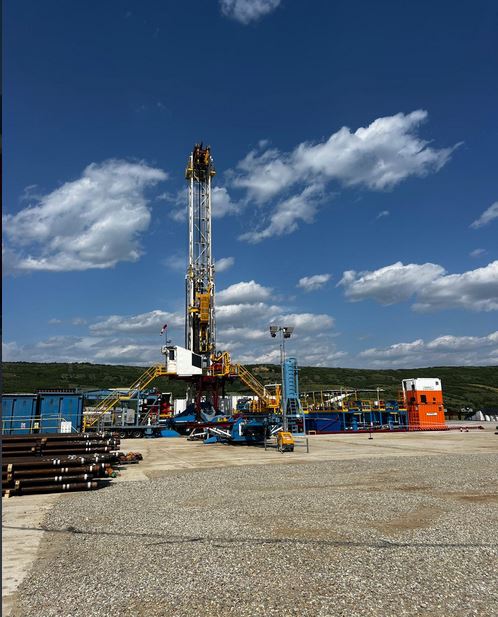
Foraj Sonde Videle acquires Raffles Energy and Zenith Resources; deal expected to close by end-August
Onshore drilling company Foraj Sonde Videle has acquired 100% of the share capital of Raffles Energy Ltd., a UK holding company that owns Raffles Energy SRL and Zenith Resources SRL, two Romanian energy firms active mainly in natural gas and electricity production. The transaction is expected to be completed by August 31, 2026. According to a report submitted

Football icon Mircea Lucescu laid to rest with military honors
Former football great and national team coach Mircea Lucescu, who died on Tuesday at the age of 80, was laid to rest on Friday with military honors at Bucharest's Bellu Cemetery. Around 200 people attended the funeral, including coaches, players, club officials and supporters. The funeral service was held in the morning at the Church of Saint Eleftherios,

Shakhtar's Akhmetov bids farewell to Lucescu, remembers their shared lessons in wine and karaoke
Billionaire Rinat Akhmetov, owner of Ukrainian football club Shakhtar Donetsk, bid farewell to national football manager Mircea Lucescu on Thursday evening at the National Arena. Upon leaving, he said that his friend had taught him to drink wine, and in his turn he had taught the former coach to sing karaoke. 'I'm here today to bid goodbye to my friend

SpaceFEST returns to Politehnica Bucharest May 7 - 9, featuring world-famous astronauts
The National University of Science and Technology Politehnica Bucharest, through its Faculty of Aerospace Engineering, will organize the 4th edition of SpaceFEST between May 7 - 9, in partnership with the Romanian Space Agency (ROSA) and the European Space Agency (ESA). This is the largest event dedicated to space exploration in Central and Eastern Europe. Acc
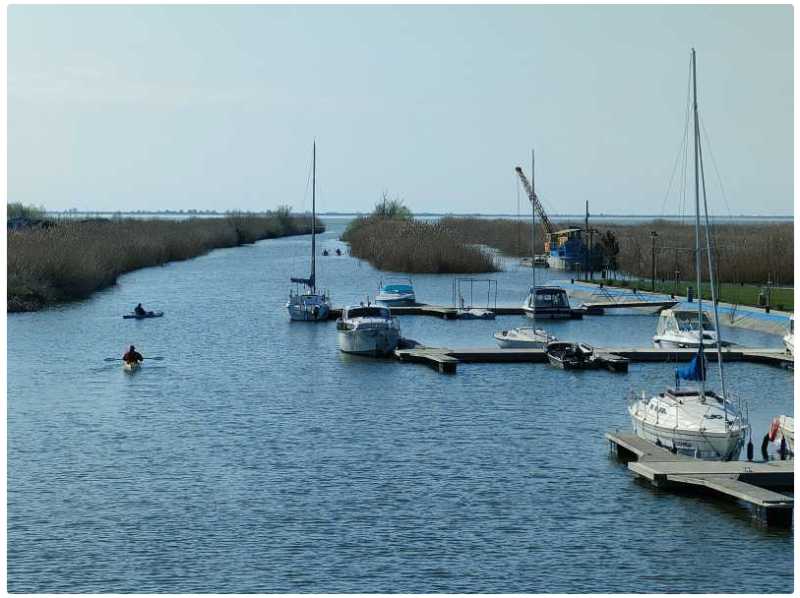
FEATURE Tulcea: Kayaking trips open the tourist season in the Delta
Tourism operators in the Danube Delta Biosphere Reserve have opened the new season with kayaking trips in the Razim-Sinoe lagoon complex and are preparing to welcome visitors over the Easter mini-break with traditional dishes as well as fish-based specialities. The first kayaking trips in the Razim-Sinoe lagoon complex began as early as last month, with Ion Gh
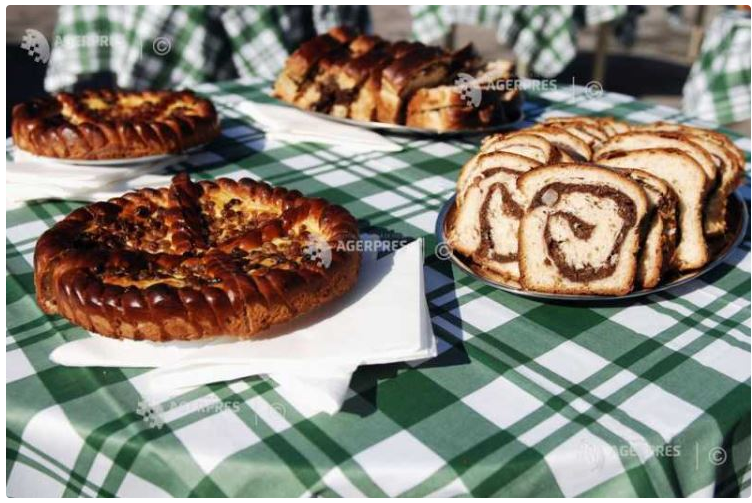
Around 85% of Romanians spend Easter at home; growing numbers are adjusting their budgets (study)
Most Romanians (85%) will spend Easter 2026 at home with their families, the highest share in the past three years, as inflationary pressures continue to reshape household budgets, according to a study by Reveal Marketing Research. According to the survey, 31% of respondents intend to cut spending, while 42% plan to allocate larger budgets. East

Former President Basescu pays last respects to football manager Mircea Lucescu
Former Romanian President Traian Basescu on Thursday paid his last respects to national football manager Mircea Lucescu. Basescu arrived at the National Arena, where Lucescu's coffin is laid in state, with a wreath of white flowers, which he placed at the base of the bier. The wreath was brought in by two representatives of the Romanian Gendarmerie, who also stand guard

Ascendia launches AI-powered teaching assistant Livresq Companion with support from Google
The daily work of teachers in Romania could be streamlined with the help of Livresq Companion, an AI-powered teaching assistant developed with the support of Google. The assistant was launched by Ascendia, according to a pres release sent to the Bucharest Stock Exchange (BVB) on Thursday. The new tool has already seen strong uptake: under a rece

Space exploration must remain domain of human cooperation, lucidity and dignity, says cosmonaut Prunariu
Space exploration must remain a field of human cooperation, lucidity and the dignity of civilisation, cosmonaut Dumitru-Dorin Prunariu said on Thursday, in the context of the International Day of Human Space Flight, established on 12 April by the United Nations. '12 April commemorates the 1961 flight of Yuri Gagarin, the first human to move beyond the limi