

INTERVIEW/Ramona Miletic, Deputy Mayor of Simmering (Vienna): I am far from Romania but Romania is with me
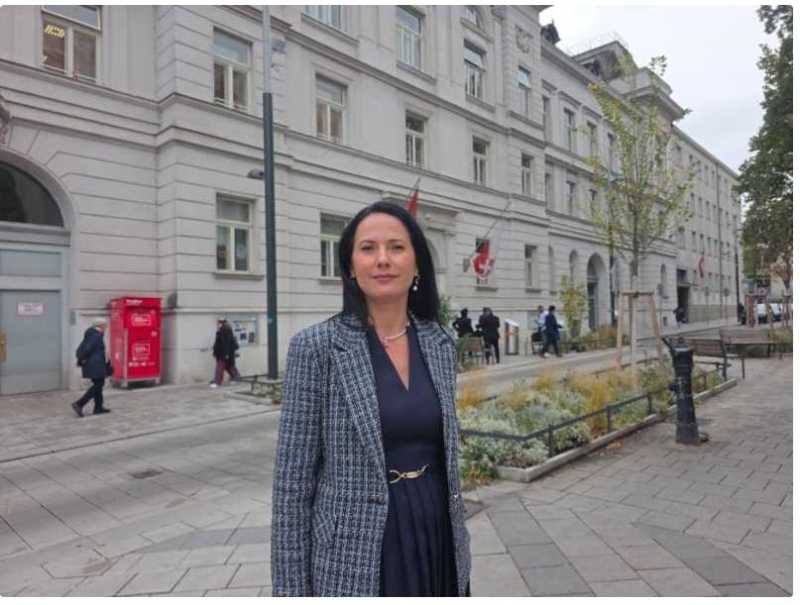
Ramona Miletic is the Deputy District Head of Vienna's Simmering district but until 2009 she lived and worked in Pitesti, where her parents and brother still reside.
At the age of 27, she was a purchasing manager at a major company in Pitesti, with a promising career already underway. Love, however, changed everything. She met her future husband, an Austrian national, in Pitesti, where he was working on a contract for the Austrian company he represented.
After a two-year relationship, they got married, and the natural question arose: 'What do we do now?' This was especially pertinent as her husband's contract in Romania was coming to an end.
She told herself, 'If I succeeded here, I can start over in a foreign country, too.' And so, she arrived in Vienna in 2009.
It was by no means easy, but she took it one step at a time: she found a job and gradually learned German.
Even so, she felt a lack of belonging to a community. In 2012, she attended an open house event organized by the Austrian Parliament, where various political parties introduced themselves to interested individuals. Although she had never been involved in politics in Romania, she decided to take this step in Vienna, not with the intention of building a career, but rather to meet new people and support the community where she lived.
Due to her consistent involvement, in 2020, the Social Democratic Party (SPO) of Austria, of which she is a member, invited her to run as a candidate for the local council in Simmering.
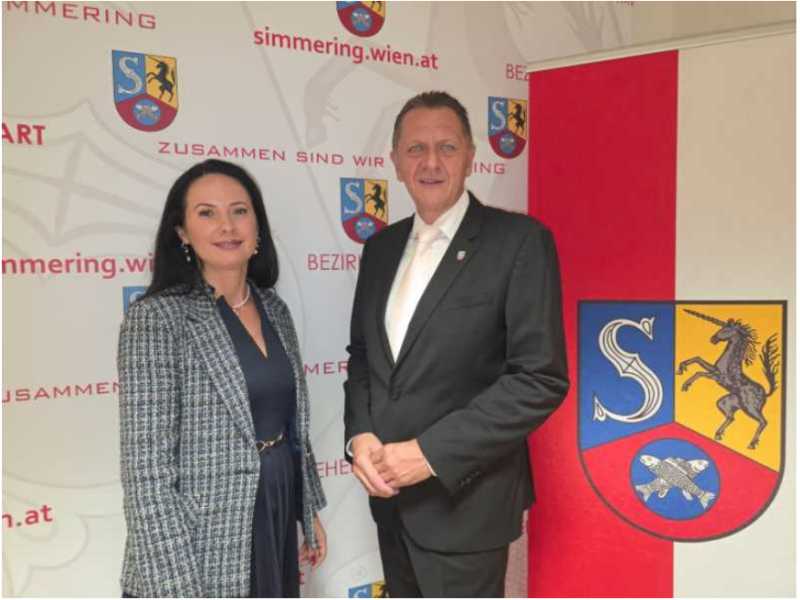
The SPO won the election and secured the district mayoralty; Ramona Miletic was then offered the position of deputy mayor. In doing so, she became the first Romanian woman to be elected to such a position in a foreign country.
She is currently serving her second term as deputy mayor of the 11th District, Simmering, an area that is also home to a Romanian community of approximately 3,800 families.
AGERPRES: You are the first Romanian woman to be elected deputy mayor in a foreign country. When did you first realize the historical significance of this achievement, and what did it mean to you personally?
Ramona Miletic: I realized it quite late, only when people began writing to me to offer their congratulations. I hadn't been aware that I was the first woman to hold such a position in Vienna. How did I feel? I felt a great sense of responsibility. This role carries a significant responsibility. I wasn't very proficient in German at the time. I was born and raised in Romania; I arrived here at the age of 28, and I had to start my life over from scratch in a foreign country. And it's not just about being responsible for yourself, in this role, you are also responsible for the lives of the 110,000 people living in Simmering, who come from various nationalities.
AGERPRES: You left Pitesti and settled in Vienna in 2009. What was the turning point when you stopped feeling like an 'immigrant just passing through' and realized you had the power to shape the future of your adopted community?
Ramona Miletic: I think you're always an immigrant, in a sense. I'm not sure when that transition happens, when you've fully integrated and feel 100% Austrian. Perhaps you never truly do, because your accent remains, and the Romanian language stays in your soul. But the moment I got involved in politics, taking on various political roles and positions at the municipal level, that was the moment I said to myself, 'Okay, I've made it; now I can fight not just for myself, but for those around me as well.'
AGERPRES: How did your family back home in Romania react when they found out you had taken on such a high-ranking position in the Austrian capital? What did your parents or childhood friends say during those first phone calls?
Ramona Miletic: My parents were overjoyed. They are the ones who supported me. I can share a little secret with you: when I was asked internally if I wanted to take on this role, I hesitated and had some doubts. I wasn't sure if I could handle the responsibility. It was my father who encouraged me, saying, 'No, Ramona, you can do this. Give it a try, I'm convinced you'll succeed.' Thanks to my family, I was able to move forward. My friends, too, they have always supported me.
AGERPRES: Behind a high-level political career, there are often unseen sacrifices. How difficult was it for your family life to adapt to the demands of Viennese politics, and what had to take a back seat?
Ramona Miletic: Indeed, there are significant sacrifices that no one else can see. Generally speaking, the family ends up bearing the brunt of it. Without strong support at home, it's nearly impossible. You're almost never home. While an average person goes to work, following a schedule from 8:00 to 17:00 or 18:00, here, you cannot really speak of a regular schedule. There are many events in the evenings, during the week, or on weekends. Unfortunately, family life suffers as a result.
AGERPRES: Longing for home is a constant for any Romanian in the diaspora. How often do you manage to physically return to Romania, to your family, and how do you perceive the changes in the country from one visit to the next?
Ramona Miletic: I am far from Romania, but Romania is here with me, too. We have a wonderful community in Vienna, in the Simmering district. We have a Romanian church where many of us Romanians gather. Furthermore, the Romanian Embassy also hosts a great number of events. (...) You meet such wonderful people, and there are various cultural events where I can also lend a hand, I can be a source of support for them. I also travel to Romania quite frequently, perhaps 6 or 7 times a year, to visit my parents. They live in Pitesti; I also have a brother and a niece there. (...) But life is very difficult. My parents are ordinary, everyday people. My mother worked in a factory, my father was a driver, and they have quite small pensions. I often find myself wondering: how do they manage to get by under the current circumstances?
AGERPRES: How did the local Austrian community in Simmering react when a Romanian woman took charge of their district? Did it take time to earn their full trust?
Ramona Miletic: They reacted very well! I received a great many congratulations and a lot of support. I even received coverage in a Romanian newspaper here in Austria; I was supported by colleagues there, as well as by ordinary people. Many tell me they are proud that someone born in Romania has managed to reach such a high position here in Austria, and that we are perceived differently here than in some other places.
AGERPRES: We know that the diaspora sometimes encounters prejudice in Europe. What myths or stereotypes about Romanians have you had to directly dispel behind the scenes of Austrian politics?
Ramona Miletic: I would say that, from my perspective, Romanians are viewed quite positively, especially when compared to other communities. There aren't any major issues; Romanians tend to integrate quite easily into life here in Austria. Of course, some individuals do face certain challenges, but we - through state institutions- strive to assist and support them in various ways. If not us, then the Romanian Consulate or the Romanian Embassy can help. There are many such institutions, and at the City Hall, we hold regular public consultation hours. There is also a department known as 'Magistrat 17,' which focuses on integration; it includes Romanian staff who provide guidance in the Romanian language on virtually any matter, from housing and official documentation to social benefits for children or other specific concerns.
AGERPRES: Your name on the ballot paper doesn't sound Austrian, at least your first name, Ramona. During election campaigns, have you ever felt that your Romanian origin was used as a political weapon by your opponents?
Ramona Miletic: Yes, it hasn't always been easy. Many people have congratulated and supported me precisely because I wasn't born here; however, there were also those who took the opposite view, hinting, in a roundabout way: 'You're a foreigner; what are you doing here, telling us what we should be doing?' But this is why I mentioned the aspect of responsibility earlier. Okay, I wasn't born here, you learn the language, but ultimately, we are all human beings, and we all want the same things from our society. Here in Simmering, we want everything to function well.
AGERPRES: You receive messages from Romanians in Italy, Spain, or Great Britain who see you as a role model. What would you say to those who believe that foreigners in their countries only allow us to perform menial, low-skilled jobs?
Ramona Miletic: Thank you for that question! What I haven't mentioned yet is that, among other things, I am also an 'integration ambassador.' What does that mean? For instance, I visit schools, places with children born in other countries, or schools for learning German, where I interact exclusively with immigrants, people who come to learn the German language later in life, just as I did. I offer them a positive example, showing them that it is possible, provided you have a goal and work toward it, which includes learning German. Of course, simply attending school isn't enough; you also need to engage with the outside world, perhaps through associations, by pursuing activities you genuinely enjoy. I believe that's how you can grow over time, rather than remaining stuck in entry-level, manual, or low-skilled jobs. And what does 'low-skilled work' even mean? I believe we are a rather intelligent people. I know we are capable of many things, but I think it's best to focus on what we do exceptionally well, to hone in on our greatest strengths. We don't have to do everything. Furthermore, social engagement, here in Austria, as in any other country, is important; we shouldn't always expect to be paid for everything we do. That's how it started for me, too. Through my political involvement, my true intention was to contribute something positive to the community where I lived; success came later, as a direct result of the work I had put in.
AGERPRES: Beyond the historic title of being the 'first Romanian woman to serve as a deputy mayor,' what is the major achievement in Simmering for which you would like both the people of Vienna and Romanians to remember your term in office?
Ramona Miletic: There is one project very close to my heart that I had the opportunity to lead: the 'Wiener Klimateam' (Vienna Climate Team). It began in 2022 and involved three districts; it was a pilot project. We had a budget of 2 million euros at our disposal. It was a participatory project, meaning that the entire district of Simmering could take part. What did this entail? We gathered ideas, asking residents what could be done to improve the climate in Simmering. We received 304 environmental project proposals online, as well as others submitted via mail. We held various workshops and also collaborated with experts. A jury, composed of 20 randomly selected local residents, sat down with these experts and chose 11 winning ideas. Out of those 11, we managed to implement nine. I am particularly proud of one of them: a park. It cost over 200,000 euros. We created a park for children that offers a variety of activities, including features specifically designed for children with disabilities, we acquired equipment tailored for them. And in one corner of the park, there is also a space where an association can carry out gardening activities. People from the nearby apartment blocks plant tomatoes and onions they garden, and the children learn. It's a sort of return to one's roots.
AGERPRES: Do you have a message for Romanians back home, as well as for those in the diaspora?
Ramona Miletic: I wish them all the very best! To me, every person living abroad is someone special. Everyone has their own story, and, as far as I know, it's not an easy one. Life abroad, in general, is not easy, though I know it's much the same in Romania when you are far away from your loved ones. I wish you all the best! The holidays are just around the corner, so 'd like to wish you a happy holiday season! And, of course, if you ever need me, I am here for you. AGERPRES(RO - writing by: Gabriel Apetrii; EN - writing by: Bogdan Gabaroi)
The content of the www.agerpres.ro website has the exclusive purpose of public informing.
All the information published on this website by AGERPRES is protected by relevant legal dispositions.
It is forbidden to copy, reproduce, recompile, decompile, distribute, publish, display, modify, create derived components or products or full services, as well as any exploitation of the site's content.
Details in the section Terms of Use. If you are interested in picking up AGERPRES news items, please contact the Marketing Department – marketing@agerpres.ro.
The use of the Comments section entails your obligation to respect the AGERPRES terms and conditions in regards to the publishing of comments on the www.agerpres.ro.
Other news in category
PM Niculescu, EU ambassadors discuss Gov't priorities, Romania's contribution to stronger Europe
Prime Minister Luca Niculescu met on Wednesday with the ambassadors of EU member states and the European Commission's representative in Bucharest to discuss the new Government's priorities and how Romania can contribute to a safer, stronger Europe that is better prepared to face current challenges. 'This morning, I met with the ambassadors of EU me

Veterans of Theatres of Operations Day/Niculescu: State must honour its obligations to veterans
The respect and gratitude owed to veterans of theatres of operations must also be reflected in the way the Romanian state fulfils its obligations towards them, Prime Minister Luca Niculescu stressed on Wednesday. 'Today we pay tribute to Romanian servicemen who took part in missions in theatres of operations, far from their country and families, in places

ActiveWatch says president's ban on journalist Ovidiu Vanghele breaches constitutional rights
Dozens of associations, non-governmental organizations and media outlets have signed an open letter alleging that President Nicusor Dan is violating constitutional provisions guaranteeing freedom of expression and the right to information by banning journalist Ovidiu Vanghele from attending press conferences at the Cotroceni Palace. 'In the press conferenc

Veterans of Theatres of Operations Day/Oprea: Professionalism - the foundation of military cooperation with allies
The professionalism demonstrated by Romanian servicemen in theatres of operations over the years has been the foundation of military trust and cooperation with NATO allies, Minister of National Defence Radu Oprea said on Wednesday. He attended a military and religious ceremony organised by the Ministry of National Defence (MApN) at the Monument to the Heroes w
Romanian audiovisual council members debate president's decision to bar journalist from press conferences
President Nicusor Dan's statement that journalist Ovidiu Vanghele would be barred from attending his press conferences was discussed on Wednesday at a meeting of the National Audiovisual Council (CNA). CNA member Dorina Rusu said that 'the law expressly stipulates that no authority may prohibit journalists from attending presidential events and press c

FinMin Nazare: Romania is halfway through fiscal consolidation process; remaining half, much more difficult
Romania is halfway through its fiscal consolidation process and the remaining half will be much more difficult, as public tolerance for further measures to reduce the budget deficit is declining, as such, what lies ahead will be harder than what has been achieved so far, Finance Minister Alexandru Nazare said on Wednesday during a plenary session of the Senate.
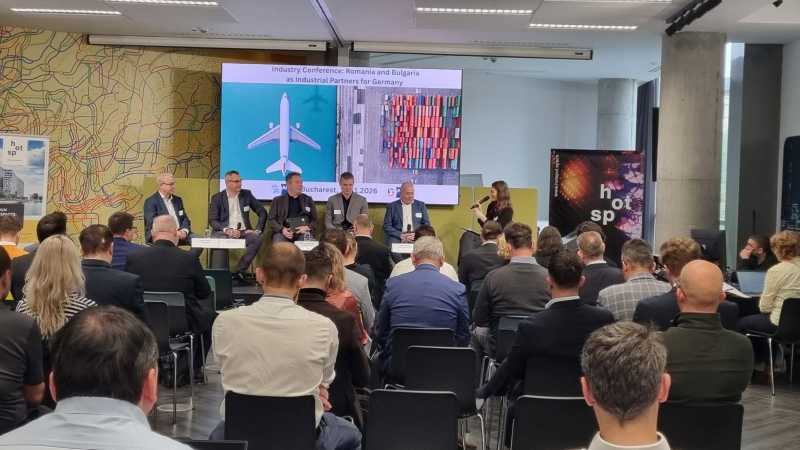
AHK Romania: Romania and Bulgaria can become important suppliers for German companies
Romania and Bulgaria can benefit from the reorientation of German companies towards geographically closer suppliers amid geopolitical changes and risks affecting global supply chains, due to industrial capacities, investments in modern technologies and specialised workforce, according to the Romanian-German Chamber of Commerce and Industry (AHK Romania). '

British-Romanian filmmaker Rachel Taparjan's 'Something Familiar' documentary to premiere in Bucharest on 13 November
'Something Familiar' documentary, directed by British-Romanian filmmaker Rachel Taparjan, will have its official premiere in Bucharest on 13 November, with screenings at Cinema Elvire Popesco at 6.30 pm and Cinema Apollo111 at 8.00 pm. According to a press release sent to AGERPRES on Wednesday, the screening at Cinema Apollo111 will be followed by a di

Romanian judge challenges President Dan's claims, says she sent him disciplinary case file
Judge Sorina Marinas of the Craiova Court of Appeal says she sent President Nicusor Dan the case file opened against her by the Judicial Inspection in October, contradicting the head of state's assertion that he had not seen any magistrate come forward with an extract from a Judicial Inspection decision. 'I too heard the Romanian president say (...) th

Dobrujan multi-ethnic cuisine, promoted through special menus 14 to 23 November
The RESTO Constanta Employers' Association is launching the third edition of its 'RESTO 50 Lei Menu' programme, dedicated to celebrating Dobruja Days, which will take place from 14 to 23 November 2026. The programme aims to promote Dobrujan cuisine, encourage spending at HoReCa establishments and turn the region's culinary diversity into a stro
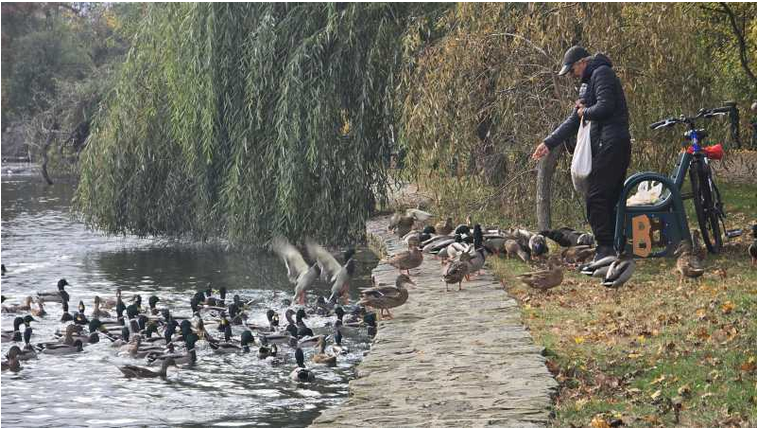
FEATURE/ Romanian pensioner cycles 15 kilometres daily to feed wild ducks he calls his children
A man who travels from Vadu Pasii to Buzau to feed dozens of wild ducks has turned the lakeside in Crang Park into a stage for a daily spectacle enjoyed by passers-by and appreciated even by the local authorities, who have announced plans to help purchase food to see the birds safely through the cold season. For almost 10 years, Costel Popa has cycled around 1

Politehnica Bucharest to host ElectroFEST 2nd edition on Thursday and Friday
Politehnica Bucharest National University of Science and Technology organises the second edition of ElectroFEST on Thursday and Friday, an event dedicated to innovations in electrical engineering, electromobility and smart solutions for the future. According to the organisers, ElectroFEST brings together academia, industry, school pupils, students and the gene

Nicusor Dan on AfD leader's statements: It is an absolutely unfortunate generalization
Nicusor Dan considers the statements made by the leader of the AfD in Germany to be an 'absolutely unfortunate generalization' regarding the entire Romanian community living in that country, based on 'potential abuses' committed by a few individuals concerning the social welfare system. During a press conference held at Cotroceni Palace, the he

President Dan: There is interesting information regarding Calin Georgescu's background
Nicusor Dan stated that the report regarding the annulment of the presidential elections in Romania will be made public but he emphasized that he is avoiding providing any further timelines for its release, noting that the document is expected to include 'interesting' information concerning Calin Georgescu's background. He was asked when and whethe
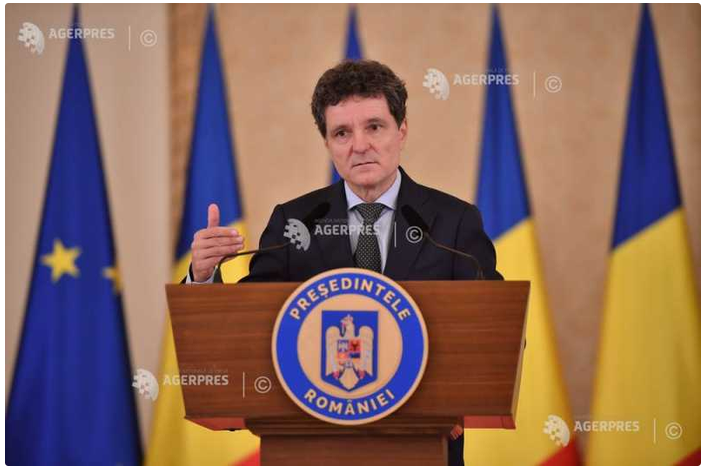
Romania's financial situation should be viewed calmly; meeting deficit-reduction targets is mandatory (President Dan)
Nicusor Dan stated on Tuesday, at Cotroceni Palace, that Romania's financial situation should be viewed calmly, but meeting the committed deficit-reduction targets is mandatory.