

CONTEMPORARY AUTHORS/Andreea Rasuceanu: Bucharest is an endless source of stories to explore in literature

Author Andreea Rasuceanu, one of Romania's contemporary prose writers whose work explores the relationship between literature, history and memory, has been awarded the Romanian Writers' Union's June 2026 Writer of the Month Award for her novel 'Hemiptera' (Polirom, 2026). In an interview with AGERPRES, the author discusses the award-winning book, her research methods before writing and the relationship between history and fiction.
The interview also explores the C. village trilogy, comprising the novels 'An Unknown Form of Life', 'Wind, Spirit, Breath' and 'The Karman Line', as well as the author's interest in the history of places and the stories of the people who have inhabited them. Andreea Rasuceanu also discusses archival research, Bucharest past and present, and how similar experiences recur across different historical periods.
A literary scholar and former editor of a contemporary fiction series, Andreea Rasuceanu has published, alongside her novels, studies exploring the relationship between literature and the urban space. Her books have been translated into Bulgarian, French and Spanish.
AGERPRES: Which came first, the book or the title? I ask because Hemiptera is a very intriguing metaphor, and I imagine it could be a source of inspiration in its own right, perhaps even providing the basis for an entire novel, or at least shaping its structure and suggesting some ideas to start with.
Andreea Rasuceanu: As you rightly guessed, it is one of the central metaphors in the novel, as well as one of its vanishing points. Although I almost always struggle to find a title, usually settling on one towards the end of writing a book, this time it was actually the starting point.
As I have said on other occasions, the process through which the initial material for a novel begins to take shape in the actual text is something you can control only partially. Somehow, everything you experience, everything that becomes part of your daily thoughts, begins to interact and take shape within the plot of the novel you are going to write. In this case, everything started with a central idea that began to emerge during the pandemic: the idea that the end of the world does not actually arrive as an isolated, catastrophic event, but is instead a permanent state of the world, one of slow disintegration and continual decay.
The feeling of the apocalypse, if you like, the sense that the world is slowly coming to an end right before our unwitting eyes, began to generate various metaphors that formed the book's structural framework. One of them is the 'hemiptera', a member of the insect order that includes cicadas. Their sound, which for some people might evoke the sunlit image of a summer holiday, gradually becomes threatening in the novel, carrying a warning.
Yet, according to the myth recounted by Plato in 'Phaedrus', cicadas are also the creatures who, when the Muses were born, became so absorbed in music and dancing that they lost themselves. Depriving themselves of food and water, they eventually died and were subsequently transformed into cicadas.
AGERPRES: The novel's timeline alternates between a present strongly shaped by the recent past and a more distant past, rooted in the nineteenth century. How difficult was it to move between these different registers and juggle the three time periods? We are essentially talking about three distinct historical eras: the one we are living through now, the period before 1989, and the nineteenth century.
Andreea Rasuceanu: For me, moving between these different registers has never been a challenge, because I only begin writing a novel once I have done enough research. By that stage, I already have a clear picture of the events in each narrative strand, the precise settings in which they unfold and the characters themselves. I know what they look like, how they dress and how they speak.
Of course, research never really ends. Sometimes it continues even after a book is finished, because there are always things that spark my curiosity about one period or another. Research is an essential part of the writing process, not simply because it provides the information I need, but also because it immerses me in the atmosphere of the period, brings me closer to my characters and allows me to visualise the world I am writing about in detail. I think this is particularly important when writing novels that span several historical periods.
I often read historical novels, or novels set in a specific period, and get the feeling that something is not quite right: the setting feels unconvincing, or there are inconsistencies and factual errors. It is all too easy to make a fool of yourself if you do not have a solid grasp of the historical facts.
Of course, many readers will not notice such things. They may overlook these nuances and details, be unfamiliar with the relevant facts, or simply be looking for entertainment, which is perfectly legitimate. But there are also highly perceptive, discerning readers, not to mention professionals, who will immediately pick up on anything that rings false. These are the readers I always have in mind when I write.
AGERPRES: Bucharest, as depicted here, in three distinct historical guises, almost becomes a character in its own right: complex and capricious. Where does your passion for the history of the city, which you have researched in several of your books, and for history in general come from?
Andreea Rasuceanu: I never liked history at school. I found it the dullest subject, equivalent, in my mind, to memorising endless dates and reciting them by heart. I was not fortunate enough to have a teacher who could spark my interest in it, as happened with Romanian and world literature subject matters. Gradually, however, I realised that you cannot read literature, or really anything else, without knowing the historical context, without being able to picture the identity and atmosphere of a particular era in your mind.
So I discovered the beauty of history quite late, in the final years of high school, particularly through reading the work of scholars associated with the Annales School. I came to understand that history was much more than what we were taught in textbooks, and that, arranged in a particular way, the events and chronologies we had memorised actually told a fascinating story. I soon realised that the past does not truly reveal itself as it was if you read books and textbooks, which present the official version of history. You have to go to the original documents; that is where the real life of an era can be found, in the lives of the ordinary, unremarkable people who lived through it.
I became fascinated by the lives of these people from the past, who could suddenly feel very close to me through documents in which they told their stories, sometimes unintentionally.
I am referring to official documents, petitions, deeds of donation and so on. Most of them reveal someone's hidden desire, some personal revelation. This discovery subsequently became intertwined with my passion for the history and literature of the city. Bucharest - and, in fact, any city - is an endless source of stories to be explored in literature. I am fascinated by the forms that emerge when people share a common space. As literary critics have observed, space becomes a genuine character in my writing. But I think that in my own life, too, or in my everyday experience, I see Bucharest as a character with an identity of its own, a kind of elusive being poised between two forms of existence, between two worlds.
AGERPRES: What did you feel changed when you began exploring Bucharest's history through fiction, compared with the way you approached it earlier in your research books dedicated to the same city: 'Cele doua Mantulese'/'The Two Mantuleasa Streets' (2009), 'Bucurestiul lui Mircea Eliade. Elemente de geografie literara'/'Mircea Eliade's Bucharest: Elements of Literary Geography' (2022), 'Dictionar de locuri literare bucurestene'/'Dictionary of Literary Places in Bucharest' (2019) and 'Bucurestiul literar. Sase lecturi posibile ale orasului'/'Literary Bucharest: Six Possible Readings of the City' (2016)?
Andreea Rasuceanu: I am not sure what I did can be described as exploring the history of Bucharest through fiction. In any case, it is not the defining feature of my prose. Space has always mattered, though, sometimes becoming almost a character in its own right. Writing fiction is completely different from writing scholarly books; it requires an entirely different discipline. Nevertheless, it is certainly useful to have experience in constructing a book, whatever its type. I acquired that experience through the years I worked with Sorin Alexandrescu, who supervised my master's dissertation, doctoral thesis and postdoctoral research in succession. These works subsequently became books.
Returning to the city and fiction, Bucharest is not the only setting that occupies a privileged place in my prose, as critics have noted. They have described the trilogy comprising 'An Unknown Form of Life', 'Wind, Spirit, Breath' and 'The Karman Line' as the 'C. village trilogy'. In these novels, as in my latest book, 'Hemiptera', everything began with an idea, with characters and their stories.
In 'Hemiptera', the theme is the slow apocalypse engulfing the world, while nobody is aware of the subtle ways in which this gradual process of decay affects everything around us. I wanted the historical sections of 'Hemipter'a to be presented through the eyes and experiences of characters from different social backgrounds, so that readers could get a glimpse of society and everyday life in that period.
AGERPRES: Could you explain to our readers the concept of 'literary geography' as you use it? The term, of course, has several meanings. How does your approach differ from other concepts, such as 'geocriticism' (Westphal), 'psychogeography' (Debord) or even the older and much better-known 'flaneur'?
Andreea Rasuceanu: I would say that my work has involved more of a combination of literary geography and geocriticism. I have been interested both in the way literature represents and reconstructs real spaces and, conversely, in how space generates meaning within a text and contributes to its construction. Psychogeography and the flaneur primarily involve the individual experience of the city, whereas I have been more concerned with its historical dimension and its memory, formed by all its successive layers - its stratigraphic dimension, as Bertrand Westphal called it - which determine its identity.
AGERPRES: In the introduction to 'To the Lak'e, the second volume of her Balkan tetralogy, Bulgarian-born writer Kapka Kassabova makes the following observation: 'Geography shapes history.' Is that true? Does geography shape history, or are we talking more about an intersection between the two?
Andreea Rasuceanu: Yes, I think Kapka Kassabova's observation comes very close to the truth. Geographical context determines much of what happens in a country's history. If we think about the Romanian Principalities, this becomes even more evident, and I believe 'Hemiptera' almost brings Kassabova's statement to life.
I think geography plays a much more important role than we tend to believe. Places are not merely backdrops to history. The terrain, waterways and surroundings of a city determine how people live, move around and meet, and consequently how history unfolds - but also how literature develops. At the same time, a place retains traces of those who have passed through it, of violence and of the different stages of its development. I believe that this layered memory of a place is precisely one of the richest sources of inspiration for literature.
AGERPRES: As I have already noted, 'Hemiptera' moves back and forth between past and present. One particularly interesting parallel is the one you draw between the pandemic we all experienced and Caragea's Plague. Could you tell us about your research routine? It is clear from everything we have discussed so far, and not just from this example, that you carry out extensive research.
Andreea Rasuceanu: As I have already said, research is an essential stage in working on a novel. The more you read about a particular era or historical moment, the closer you get to its atmosphere. What matters is not only a thorough understanding of the period, but also the ability to reconstruct it in detail: an entire world in motion, with its characteristic sounds, smells and images. Although my novels are not strictly historical fiction, as they also explore other themes - metaphysical, psychological and social - I believe it is very important to know the period you are writing about in detail.
So I read extensively beforehand, including original documents whenever I can find them. I listen to the music of the period and make notes of significant details I discover, relating to the setting in which the action takes place, as well as clothing, physical appearance, language and other features typical of the era. I do not use all the material I accumulate, but it is there to help me understand and visualise what is happening beyond the depiction of a scene in the book. If I mention the Dambovita River, for instance, I also picture its mills, the homes built in the city's flood-prone areas and its muddy waters carrying the city's waste.
Another important part of the research process involves returning repeatedly to the places I write about. Even when they no longer look as they did during the period I am writing about, there are always small revelations, details that can provide the starting point for entire episodes. In other words, I try to spend a little time living in the world I am about to write about, so that I can make it my own and then transform it into a fictional world.
AGERPRES: Shall we return to the idea that history repeats itself? I am not referring, of course, to epidemics themselves, but to the behaviour of those involved in managing them and to human behaviour more generally.
Andreea Rasuceanu: Yes. When you work with documents and read about the historical context of events that have changed or influenced the course of things, you realise that certain behavioural patterns, gestures and attitudes recur. Caragea's Plague, which features in 'Hemiptera', provides a starting point for reflecting on human nature and on the way health crises bring to the surface social, moral and psychological mechanisms that manifest themselves regardless of the historical period. These include fear of the unknown, the spread of conspiracy theories, distrust of the authorities and, sometimes, the exploitation of other people's vulnerability for personal gain.
Nevertheless, a moment of crisis does not reveal only the negative aspects of human behaviour. On the contrary, it can also bring solidarity, altruism, courage and a willingness to make sacrifices to the fore. In such circumstances, a tension emerges between the instinct for self-preservation and moral responsibility towards others. It is precisely this tension that makes people's responses to epidemics relevant beyond the historical context in which they occur; it is the constant element that defines them.
To give just a few examples, in 'Hemipter'a, in the chapter entitled 'The Venetian Woman', a female doctor is one of the few physicians who agree to remain in plague-hit Bucharest, refusing to flee to somewhere safe. She struggles against a system in which both the sick and those who have been in contact with infected people must be quarantined together, even if the latter have not yet developed symptoms.
She helps a woman give birth and then anxiously waits for morning to discover whether the mother is carrying the plague bacillus and whether the newborn baby girl will survive. Yet even worse things were happening at the time, and some of them found their way into the novel: people became extremely vulnerable; they were robbed, abandoned in fields alongside corpses and sometimes even murdered by plague-cart drivers, while the authorities confiscated the estates of the deceased, leaving their heirs destitute.
In 'The Dead Woman', the book's final chapter, the spirit of a woman from the princely court accompanies the man she loved on his final journey. He has died of the plague, and his relatives secretly bury him somewhere at Dealu Monastery, in defiance of the authorities' orders.
AGERPRES: Since we have spoken so much about Bucharest, a few years ago, in 2021, you coordinated a short-story anthology entitled 'Cartea oraselor'/'The Book of Cities' (Humanitas), to which you also contributed a story about Bucharest. In it, several writers explore their own cities, whether their birthplaces or places they adopted later in life. Could you tell us more about this project?
Andreea Rasuceanu: It was a time when I wanted to broaden my geographical horizons a little and move beyond Bucharest, the city where I was born. I was interested in seeing what kind of relationship other writers had with the cities where they were born or where they had spent a significant part of their lives. It was a very interesting experiment that once again demonstrated the diversity of narrative forms in contemporary Romanian literature. My story was subsequently incorporated, in a modified version, into my novel 'Wind, Spirit, Breath'. It describes a walk along the banks of the Dambovita, past the former Bucharest Tribunal building.
AGERPRES: Which feeling is stronger: that we are irrevocably shaped by the city in which we live, or that each of us makes the city our own, appropriating it as a personal space?
Andreea Rasuceanu: It is a reciprocal relationship, of course. Pierre Sansot discusses how the atmosphere of a city is influenced by those who inhabit it, but also how the external environment leaves its mark on our emotional state. I believe we are shaped to a great extent by the place where we live, but at the same time we influence the space around us and incorporate it into our own identities. Each of us has a city of our own, one that belongs to us alone, and there are as many versions of Bucharest as there are people living in it.
AGERPRES: You coordinated a contemporary Romanian literature series at Humanitas Publishing House, which also published the anthology mentioned earlier. What did you enjoy most, and least, about working as an editor?
Andreea Rasuceanu: I initiated the series and then coordinated it for seven years. It was a challenge at the time, and I was glad to take it on. I enjoyed working with manuscripts, discovering new and promising voices, and interacting with writers from a different position than that of a fellow author.
But editorial work is time-consuming, repetitive and ultimately exhausting. Although I always had the full support of Humanitas Publishing House, I eventually realised that I had too little energy left for my own writing and that I needed a type of work that would nourish it, one more closely connected with research and documentation. And so I gave it up, not without regret.
AGERPRES: Before this novel, you wrote the trilogy about the mythologised village of C., a village on the Danube, we both mentioned before. These are all substantial, highly ambitious novels that tackle major, painful and complex themes such as identity obsession, emigration, uprootedness, abandonment and memory, among others. Did you set out with the idea of writing a trilogy, or did it take shape as you went along?
Andreea Rasuceanu: No, the idea of a trilogy came to me only towards the end of the first novel, 'An Unknown Form of Life', when I realised I still had more to say about the world of C. and the history of the family whose roots lay there. In this first novel, which critics have also noted is perhaps more concerned with memory than the other two in the trilogy, several stories unfold in different historical periods. At their centre are four women, if we include the narrator: Stanca, one of the founders of the Mantuleasa Church; Elena, the owner of a house next to the school on Mantuleasa Street; and Ioana, whose memory the narrator seeks to recover by tracing the history of her family. It was from this last story that the main narrative threads of the second novel, 'Wind, Spirit, Breath', subsequently emerged, and these threads led back to the village of C.
It was only at this point, I think, that the village took shape as a mythical place, as it has been described, becoming a world in its own right, a centre that continually generates and regenerates the novel, to which the characters return. This includes the characters in 'The Karman Line', the final novel in the trilogy. The village of C. is thus depicted during the time of the anti-unionist boyars, at the moment when the first Italian emigrants arrive; it appears in the reveries of many characters as they recall their childhoods, and it is imagined by a descendant of the family who has never lived in Romania, among other perspectives. Of course, this is the tangible link between the three novels, but in fact there is an entire network of meanings, details, events and characters that connects them.
AGERPRES: You currently work at the National Museum of Romanian Literature, where you recently organised an exhibition devoted to women writers of the past, entitled The City of Women Writers: Urban Landscapes in Literature Written by Women. The exhibition featured documents and photographs from the National Archives and the Museum of Romanian Literature. How did you come up with the idea for this project? What was the most surprising discovery you made in the process?
Andreea Rasuceanu: It all began with my intention to create an exhibition exploring the image of the city in literature, starting with Hortensia Papadat-Bengescu's urban novels and moving on to the work of women writers active during the interwar period. I began searching the archives for traces of these writers. I wanted to exhibit as many of their manuscripts, newspaper pages, first editions and other materials as possible, and, together with my colleagues at the National Archives, we managed to assemble a substantial body of material.
A very important part of the project involved rereading and reassessing their work, from which I selected quotations illustrating their relationship with the city. As I went along, I discovered how closely the profiles of some of the women writers featured in the exhibition resembled those of women writers today. They share a type of minimalist, confessional and incisive prose. Perhaps most importantly, I rediscovered the diversity, urban character and boldness of the literature being written at the time, even though many of these women authors have now fallen almost completely into oblivion.
AGERPRES: Have you made any recent discoveries about Bucharest that do not feature in any of the books you have written so far?
Andreea Rasuceanu: It is a discovery connected with my new novel, so I will not reveal too much just yet. All I can say is that it concerns a place near Bucharest, which has a rich history that fascinated me; I also discovered a particular feature that makes it distinctive. This will lie at the heart of my new novel, taking the form of a metaphor capable of generating multiple layers of meaning.
Andreea Rasuceanu is a novelist and literary critic, and the author of the C. village trilogy, comprising 'An Unknown Form of Life', 'Wind, Spirit, Breath', 'The Karman Line'. Her books have earned her, among other distinctions, the Romanian Academy Award for Prose and the Romanian Writers' Union Award for Prose. In 2026, she received the Writer of the Month Award for June for her most recent novel 'Hemiptera'. She has published studies on the relationship between literature and urban space and coordinated the Contemporary Romanian Writers series at Humanitas Publishing House. AGERPRES (RO, EN - writing by: Cristina Zaharia)
The content of the www.agerpres.ro website has the exclusive purpose of public informing.
All the information published on this website by AGERPRES is protected by relevant legal dispositions.
It is forbidden to copy, reproduce, recompile, decompile, distribute, publish, display, modify, create derived components or products or full services, as well as any exploitation of the site's content.
Details in the section Terms of Use. If you are interested in picking up AGERPRES news items, please contact the Marketing Department – marketing@agerpres.ro.
The use of the Comments section entails your obligation to respect the AGERPRES terms and conditions in regards to the publishing of comments on the www.agerpres.ro.
Other news in category

Incident at sea / Nine sailors rescued after vessel sinking brought to Port of Constanta
The nine sailors rescued from the water after the sinking of the 'Khoryv' vessel have been brought to the Port of Constanta aboard a rescue vessel and are being attended to by SMURD ambulance crews and border police officers. The sailors are undergoing medical assessments to determine whether they need to be taken to the County Emergency Clinical Hospi
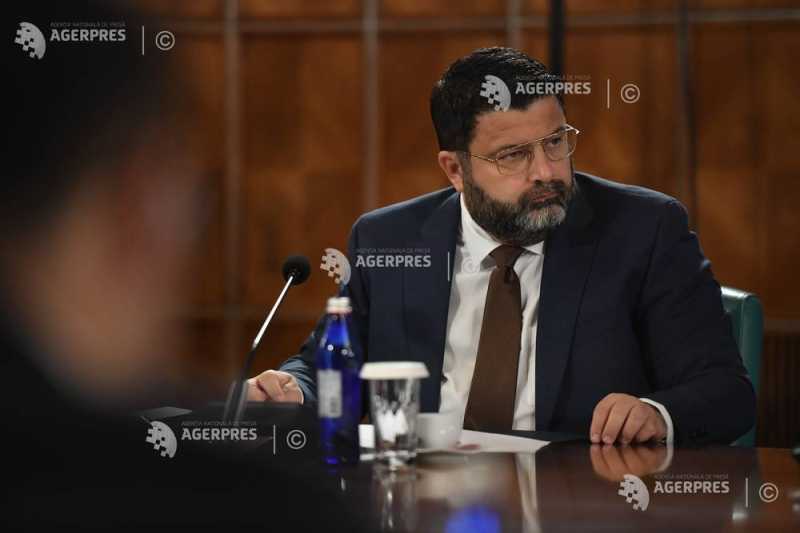
Incident at sea/ForMin Neculaescu: Attack on a commercial vessel - blatant violation of international law
Foreign Affairs Minister Dan Neculaescu condemned the attack on a commercial vessel located just 13 nautical miles off the coast of Constanta, in which one sailor was killed and others were injured, underscoring that Romania is working closely with NATO allies, including Bulgaria and Türkiye, to boost the implementation of additional surveillance capabilities agreed at
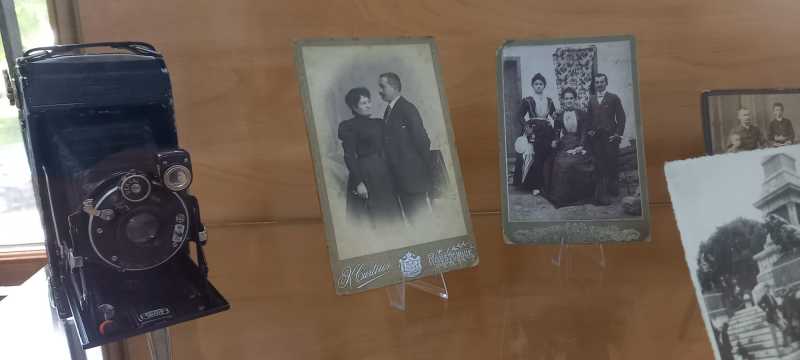
'Giurgiu-Ruse. Superangular' exhibition opens at Regional Museum of History in Ruse
The exhibition 'Giurgiu-Ruse. Superangular - Vintage Photography and Photographic Technique', which includes vintage photographs, cameras and images from the library of the National News Agency AGERPRES, opened this week at the Regional Museum of History in Ruse, Bulgaria, after being launched in May at the Teohari Antonescu County Museum in Giurgiu. T
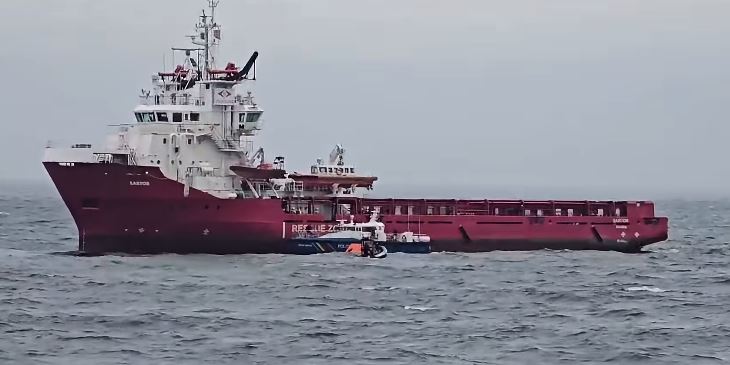
Incident at sea / Drone-hit vessel capsizes, with imminent risk of sinking
Structures of the Ministry of Internal Affairs (MAI) are participating on Friday in the search and rescue operation for people missing from a Comoros-flagged commercial vessel that was struck by a drone in the Black Sea, outside Romania's territorial waters. 'At around 10:00, border police officers from the Coast Guard were informed by the Constanta Ma
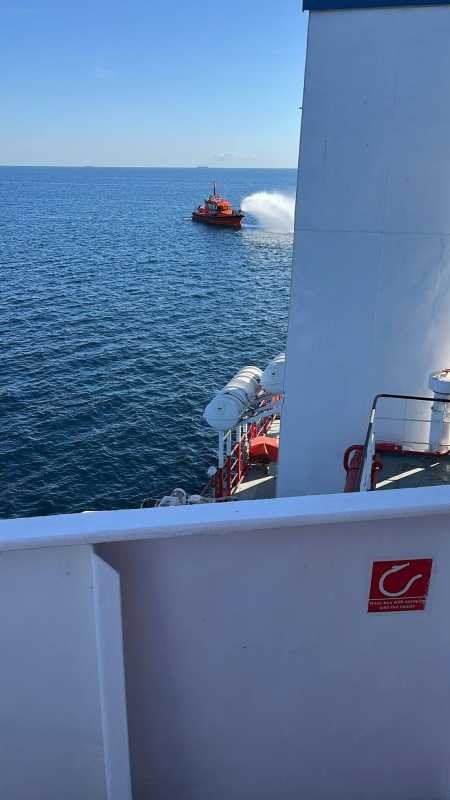

Major rescue operation offshore of Constanta for crew of vessel at risk of sinking; one dead
Authorities launched a search and rescue operation on Friday for the crew of a vessel reportedly at risk of sinking 13 nautical miles offshore from Constanta. One person has been found dead. According to the Romanian Naval Authority (ANR), a major search and rescue operation is currently under way in the Black Sea. The Maritime Coordination Cent
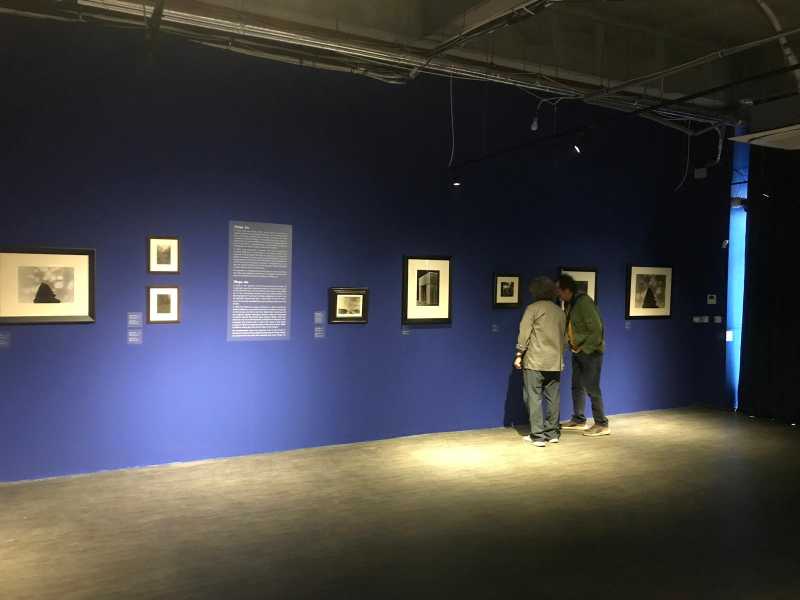
Constantin Brancusi celebrated in major exhibition at Museum of Modern Art (MoMA)
The Museum of Modern Art (MoMA) in New York is hosting the retrospective exhibition 'Brancusi: The Artist and His Studio' from 25 October to 27 February 2027, dedicated to one of the most influential artists of the 20th century. Organised with the support of the Romanian Cultural Institute (ICR) in New York, the exhibition marks the continuation and st
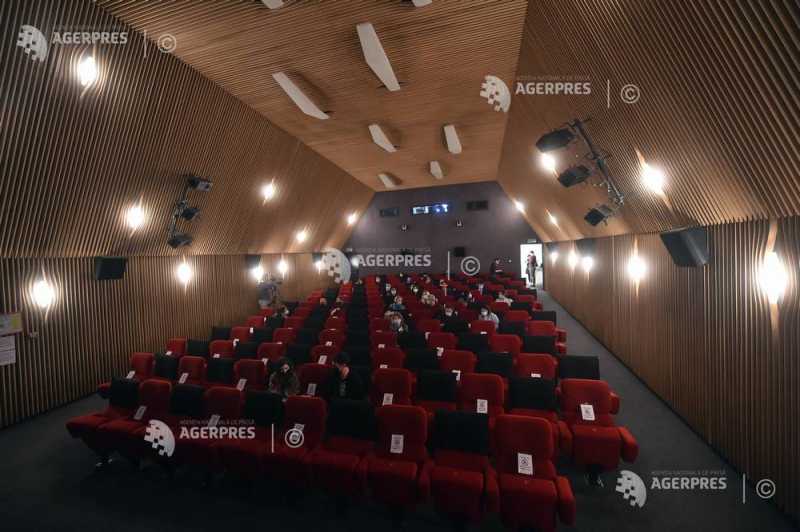
'Les Films de Cannes a Bucarest' opens on Friday, in Bucharest; 'Fjord' - gala screening at Romanian Athenaeum on Saturday
The 17th edition of Les Films de Cannes a Bucarest, one of the highlights of the autumn film season, opens in Bucharest on Friday. Between October 23 and November 1, the Cinema Elvire Popesco, the Peasant Museum Cinema, the Auditorium Hall of the National Museum of Art of Romania and Apollo 111 will host this special experience for festival audiences.
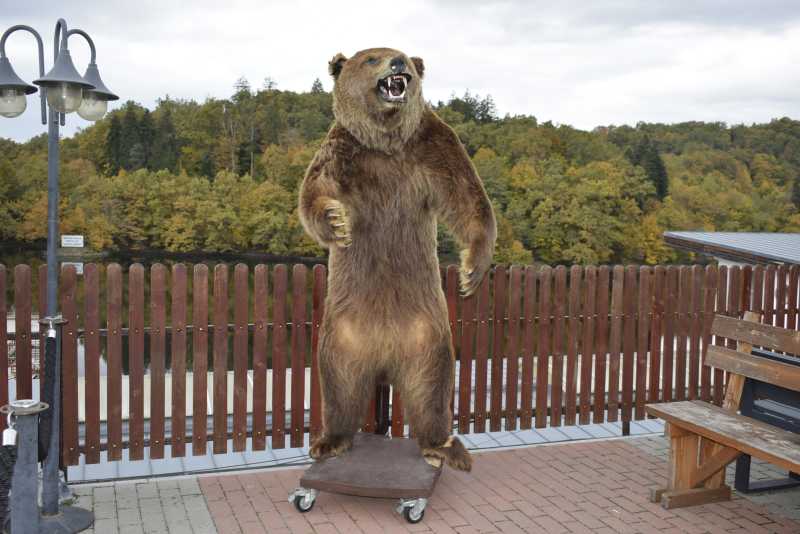
EUR 2.5-million theme park dedicated to bears from all over the world to open at Sovata
The City Hall of Sovata will build a theme park dedicated to bear species around the globe, an investment estimated at EUR 2.5 million euros that will get European funding. 'Where did the idea come from? Lately we still have problems with bears, but not only us. And then I said that, anyway, if we have bears in Targu Mure, and in Cluj-Napoca, we have alway
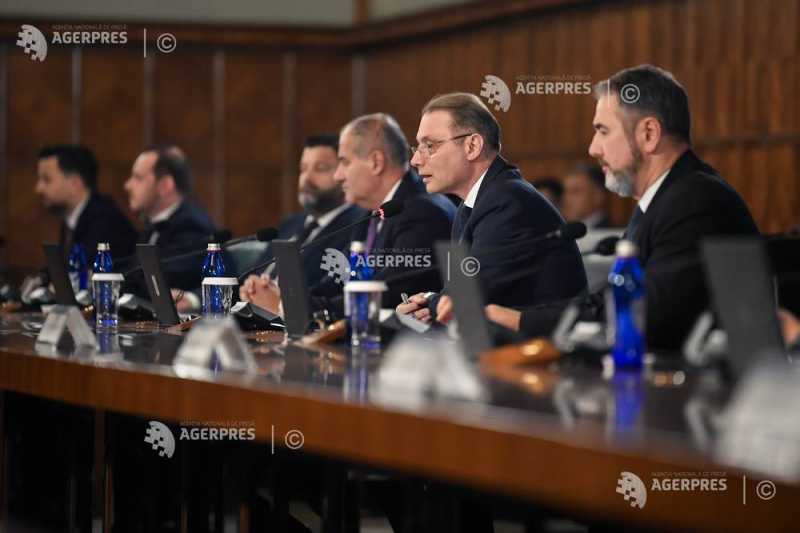
PM Niculescu: I want us to establish an integrated plan to improve safety in schools very quickly
Prime Minister Luca Niculescu announced at the start of the Government meeting that an integrated plan would be drafted to improve safety in schools, with clear responsibilities, prevention measures, rapid intervention and firm sanctions for acts of violence. On Friday, the prime minister will hold a working meeting with ministers and the relevant institutions

'Romania and the Republic of Moldova. The Partnership for the EU' volume launched in Bucharest
The tenth volume in the Documentary Notebooks series, entitled 'Romania and the Republic of Moldova: The Partnership for the EU', coordinated by Andrei Stoian and Victor Vevera, was launched on Thursday by Club Romania Publishing at the 'Carol I' Central University Library, in the presence of several of the contributors. The book brings togethe
President Dan to host meeting of Forum of Young Romanians Abroad
The Forum of Young Romanians Abroad (FTRP), now in its sixth edition, opens its works on Friday at the Cotroceni Presidential Palace, in the presence of President Nicusor Dan. Over 150 young people from Romania and the diaspora will participate, for six days, in activities dedicated to identifying concrete solutions to the problems that concern them. The event
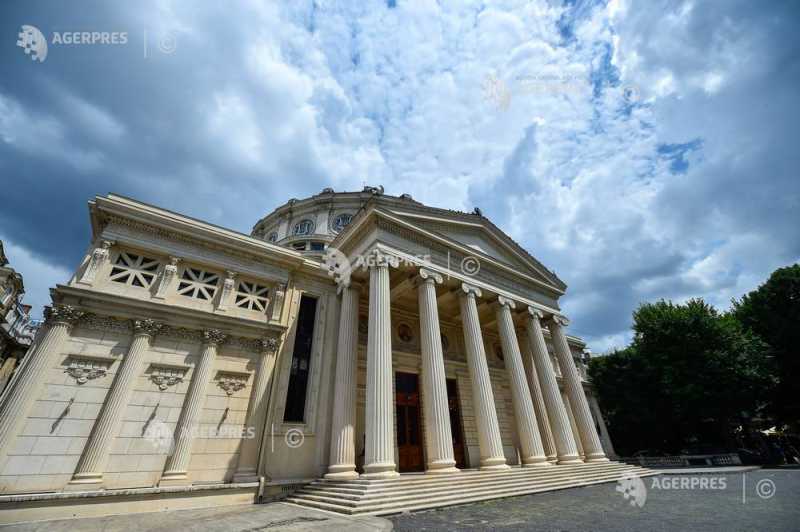
Royal Charity Concert to take place at Romanian Athenaeum on Sunday
The traditional Royal Charity Concert will take place at the Romanian Athenaeum on Sunday, in the presence of the Royal Family of Romania. According to a press release sent to AGERPRES on Thursday, the 17th edition of the gala, organised by the Margareta of Romania Royal Foundation, will bring together internationally renowned musicians, classical music enthus

Romania aims to contribute to Ukraine's reconstruction as a long-term partner, says Finance Minister Alexandru Nazare
Ukraine's recovery and reconstruction needs are estimated at almost 600 billion US dollars over the next decade, and Romania wants to contribute as a long-term partner through projects that create value on both sides of the border, Finance Minister Alexandru Nazare said on Thursday at an event dedicated to the reconstruction of the neighbouring country. &#
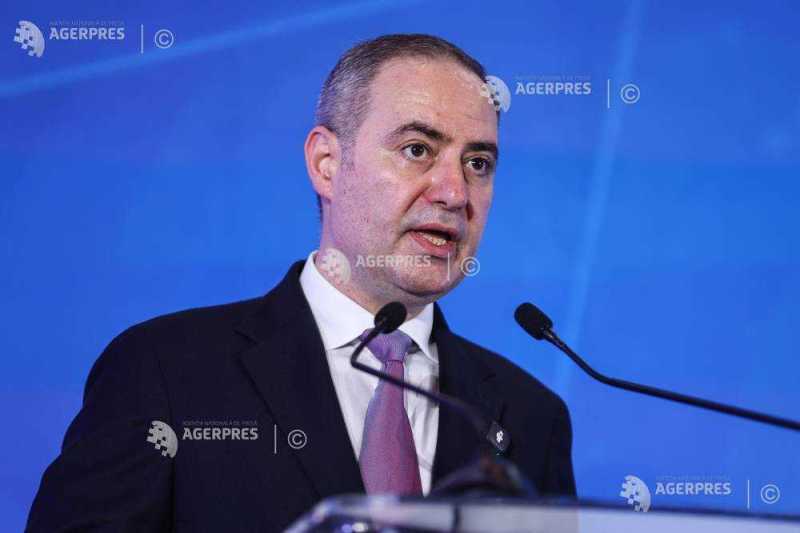
FinMin Nazare:We must create best real instruments to internationalise Romanian business in Ukraine and elsewhere
Romania must create best possibly real instruments to internationalise Romanian business in Ukraine and elsewhere, and the authorities must be more ambitious in this demarch, Finance Minister Alexandru Nazare told an event dedicated to the neighouring country's reconstruction. 'Beyond offering advice, I believe we need to take a much more conscientious