

INTERVIEW/Moldova's Deputy PM Valeriu Chiveri: Taxes and duties for economic operators in Transnistria from 1 July

The authorities in the Republic of Moldova have decided to introduce taxes and duties for economic operators in the separatist region of Transnistria from 1 July, Moldovan Deputy Prime Minister for Reintegration Valeriu Chiveri announced in an interview with AGERPRES Romanian National News Agency.
The new taxes levied on companies located on the left bank of the Dniester River will be used to support the population in the region, Chiveri points out.
In the interview, the Moldovan deputy prime minister speaks about the influence Russia has over the authorities in Tiraspol, as well as the growing tendency of the population in Transnistria to seek employment in Chisinau and other major cities in Moldova.
He says that more than 25,000 people cross the so-called border between Transnistria and the Republic of Moldova every day in order to go to work or school.
Valeriu Chiveri acknowledged that 'reintegration comes at a cost' and voiced hope that, together with the European Union, funding sources would be identified to cover the needs related to the reintegration of Transnistria into the Republic of Moldova.
AGERPRES: Mr Valeriu Chiveri, you are the Deputy Prime Minister of the Republic of Moldova in charge of the reintegration of Transnistria. How do you currently perceive the relationship between Chisinau and Tiraspol?
Valeriu Chiveri: The relationship is, first and foremost, one of dialogue and working-level correspondence through the existing communication platforms. If we look at the not-too-distant past, we could speak about managing the situation in the sense of maintaining peace and stability and preventing conflict situations. Now, through the latest actions undertaken by the Government of the Republic of Moldova, we hope to achieve greater momentum and some visible results within a reasonable timeframe. At the same time, the objectives of the parties to the conflict remain different. We continue to advocate respect for sovereignty and territorial integrity, therefore a settlement based on this principle. Those in Tiraspol continue to advocate for the status quo. So, at this moment, this is where we stand.
AGERPRES: Negotiations have been ongoing for quite some time. Have you felt that any progress has been made recently?
Valeriu Chiveri: Negotiations have indeed been ongoing for quite some time. At present, however, we cannot speak of negotiations in the proper sense. What exists is working-level communication, either in the existing 1+1 format between political representatives or within the territorial working groups or joint control commissions. As I said, we do not currently have a genuine negotiation format and, so far, we have not seen signs of flexibility from the other side in Tiraspol.
AGERPRES: Are there forces operating behind the scenes that oppose this negotiation and reintegration process of Transnistria?
Valeriu Chiveri: These forces are very visible. First of all, we must take into account the fact that the regime in Tiraspol acts in tandem with Russia, and this must be stated very clearly. Russia has considerable influence over the region, including through its illegal military presence, political messaging and support, as well as economic and especially energy support. For these reasons, we believe that Tiraspol's uncompromising position is dictated primarily by this support.
AGERPRES: Recently, the Republic of Moldova's Parliament voted to create a convergence fund involving the taxation of companies on the left bank of the Dniester. How will this work? What effects will this measure produce?
Valeriu Chiveri: I said at the beginning that in recent times certain actions have been undertaken which should provide increasing positive momentum to the reintegration process. I was referring first of all to the creation of the convergence fund and the elimination of the tax facilities previously enjoyed by economic operators on the left bank of the Dniester. This process will be gradual, beginning on 1 July 2026. Value added tax and excise duties will be applied to excisable goods. We are talking about alcohol, tobacco products and luxury goods. Gradually, the system will be expanded and the entire tax regime will be unified by 1 January 2030. These funds will also be used to create the convergence fund. The mechanism is due to be developed by 1 August 2026 and we intend to use the accumulated funds for social and infrastructure projects in the Transnistrian region. We will also work actively with our partners. We want this fund to also be supplemented with contributions from the European Union as an organisation, as well as from member states and partners. Through this fund, we want to create conditions that would raise living standards on the left bank of the Dniester, especially for vulnerable groups, and to some extent align incomes with those of citizens of the Republic of Moldova living on the right bank.

AGERPRES: Could this also involve relocating production capacities from the left bank of the Dniester to the constitutional territory of the Republic of Moldova?
Valeriu Chiveri: Not necessarily. It depends on the enterprise and on the companies operating there. If similar conditions are created, I do not see why relocation would be necessary. Through our actions aimed at integrating enterprises from the left bank of the Dniester into Moldova's economic, customs and fiscal space, the same operating conditions will apply.
AGERPRES: The inhabitants of the region are facing a rather difficult economic and social situation. Do they understand the advantages they could gain through reintegration into the constitutional territory and accession to the European Union?
Valeriu Chiveri: First of all, I would not want to dramatise the situation. It is complicated, but not critical, and it is generated by the poor way things have been managed on the left bank of the Dniester. An economy based on free energy sources could not function indefinitely and we have reached the point where this affects the living standards of the population there. Incidentally, the population and economic operators on the left bank already benefit from the Republic of Moldova's agreements and commitments within several international organisations. For example, the Deep and Comprehensive Free Trade Agreement. Enterprises on the left bank operate under the same conditions. Another example is freedom of movement. Citizens from the left bank who hold Moldovan passports enjoy the same rights as those on the right bank. So these benefits are already visible and practical.
The fact that the Republic of Moldova, through reforms supported by the European Union, is becoming an increasingly attractive country for citizens regardless of whether they live on the left or right bank of the Dniester is also evident and we have concrete data. Every day, more than 25,000 citizens from the left bank travel to Chisinau or other localities in the Republic of Moldova for work, medical treatment or education. So we have already become a centre of attraction for our citizens and this will continue. As long as the Republic of Moldova pursues the strategic objective of European integration, more and more benefits will emerge for our citizens. I am also referring here to the quality of services provided to our citizens, regardless of whether they live on the left or right bank. Last year, 75,000 citizens of the Republic of Moldova living on the left bank were included in Moldova's health insurance system. This is a large number when compared with the estimated total population of the region, which we estimate at 350,000.
AGERPRES: Could the Transnistrian issue become an obstacle in the Republic of Moldova's accession process to European structures?
Valeriu Chiveri: It is an issue that we are approaching with the utmost seriousness. We want the Republic of Moldova to become part of the European Union as an integrated country. At the same time, we understand that these two processes, European integration on the one hand and the reintegration of the country on the other, are two distinct and parallel processes with different timelines and speeds. Why do I say this? Because integration into the European Union is also a highly complex process, but we have a very clear timetable, practically day by day, outlining what needs to be done, how and by whom.
In the case of reintegration, matters are more complicated. Not everything depends on our efforts or on the efforts of the Government in Chisinau. There are very important external factors affecting this process. First and foremost, I am referring to the illegal presence of Russian military forces on the country's territory. We must also take into account the regional geopolitical situation and the war in the neighbouring country and we must understand that the peace agreement currently under discussion will have a major impact on regional security and, one way or another, on the settlement process. The security guarantees being discussed in relation to Ukraine will likewise affect how this issue is managed.

AGERPRES: Reintegration, beyond its political dimension, also involves a substantial economic and financial effort. Have you estimated the costs?
Valeriu Chiveri: We are in such a dynamic situation that it is very difficult to make very clear estimates. There are approximate estimates. I would not like to provide figures now in order to avoid speculation and unnecessary debate on the subject, but we must acknowledge that reintegration comes at a cost. When we designed the convergence fund, we also considered the fact that part of the resources needed for reintegration would come from this fund, including with contributions from European partners.
AGERPRES: So you have discussed with European officials the possibility of supporting part of these expenses?
Valeriu Chiveri: We have had general discussions. We are not yet at the stage of implementing this project. We have created a project, the convergence fund. Nor has the reintegration process itself reached the scale at which we could request additional funds to pursue this objective. However, in general terms, the issue has been discussed and we are pleased that European partners have shown understanding towards these requests.
AGERPRES: You have recently returned from Brussels, where you met with other European officials. Did you discuss a concrete plan regarding Transnistrian reintegration?
Valeriu Chiveri: We discussed our strategic vision rather than a concrete plan, especially considering that, as I mentioned, on 30 April Parliament voted on the law on lifting tax facilities and the creation of the convergence fund. These were the main topics of discussion.
AGERPRES: Romania was part of a conflict settlement format immediately after the end of the Transnistrian war. Do you think it could now play a role in this process?
Valeriu Chiveri: Romania has always played an important role in this process, even if not directly, but by supporting the Republic of Moldova, strengthening state institutions and promoting reforms, it contributed to making the Republic of Moldova on the right bank a stronger and more attractive country, a centre of attraction for our citizens. This is already a very good example showing that Romania has always stood by us, especially since it is the country that best understands the realities in the Republic of Moldova, the mentality, considering our shared past and history, common language, culture and traditions. As for Romania's future role, we are not currently discussing a new negotiation format and we do not have an international one. The 5+2 format is dysfunctional and, for the time being, we are not discussing a different approach. We are not even using the format that existed until recently, but Romania, as a member state of the European Union, could make a substantial contribution to creating a correct perception of the settlement process regarding the Transnistrian conflict, and I am sure this is exactly what it is doing. AGERPRES (RO - writing by: Cristian Lupascu; EN - writing by: Adina Panaitescu)
The content of the www.agerpres.ro website has the exclusive purpose of public informing.
All the information published on this website by AGERPRES is protected by relevant legal dispositions.
It is forbidden to copy, reproduce, recompile, decompile, distribute, publish, display, modify, create derived components or products or full services, as well as any exploitation of the site's content.
Details in the section Terms of Use. If you are interested in picking up AGERPRES news items, please contact the Marketing Department – marketing@agerpres.ro.
The use of the Comments section entails your obligation to respect the AGERPRES terms and conditions in regards to the publishing of comments on the www.agerpres.ro.
Other news in category

9-year-old Daniel Sava wins mental arithmetic top title at WAMAS 2026 competition
A 9-year-old pupil from the 'Anghel Saligny' Secondary School in Focsani has won the title of world champion in mental arithmetic at the World Association of Mental Arithmetic Schools (WAMAS) 2026 competition held in Istanbul, a performance also noted by local authorities. According to Focsani mayor Cristi Valentin Misaila, Daniel Sava took first place

Prosecutor General: In a rule-of-law state prosecutors do not answer to opinion trends or political interests
Romania's Prosecutor General Cristina Chiriac said on Friday that in a rule-of-law state prosecutors do not answer to opinion trends, political interests or media campaigns. She noted that prosecutors of the Directorate for Investigating Organised Crime and Terrorism - DIICOT have faced public criticism and pressure in recent days over an ongoing criminal
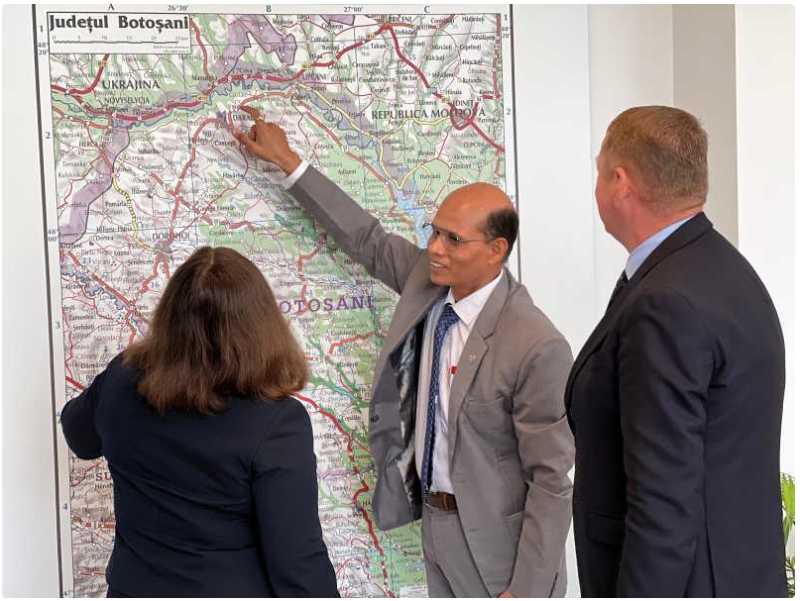
Ambassador of India to Romania meets with representatives of Botosani County authorities
The Indian Ambassador to Romania, Manoj Kumar Mohapatra, paid a visit to Botosani County on Friday, where he met with representatives of the county authorities. The Indian diplomat met with Prefect Raluca Curelariu and the Vice President of the County Council, Constantin Bursuc. According to representatives of the Prefect's Institution, '
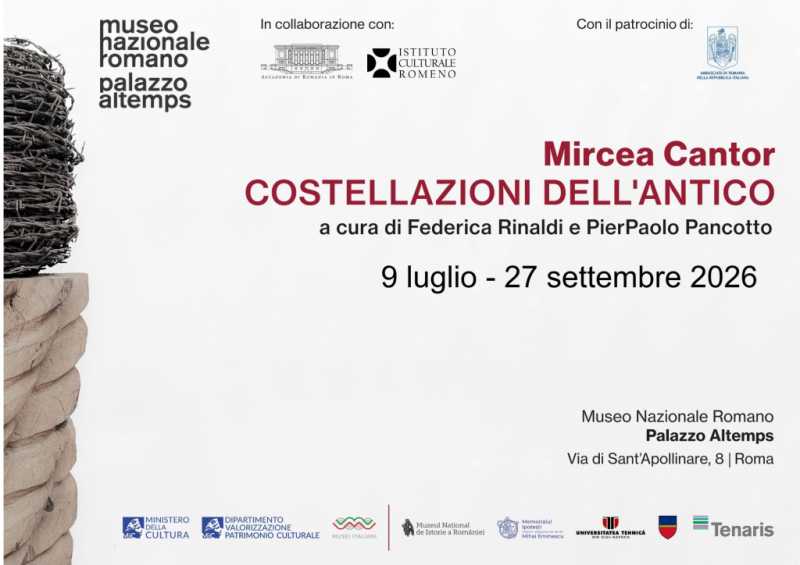
'Mircea Cantor - Constellations of Antiquity' exhibition opens at Rome's Palazzo Altemps on July 10
Romanian artist Mircea Cantor's exhibition 'Constellations of Antiquity' will be hosted by the prestigious Palazzo Altemps museum in Rome from July 10 to September 27. The exhibition will open on July 9, according to a press release issued on Friday by the Romanian Cultural Institute (ICR). Conceived by the artist not only as an emot
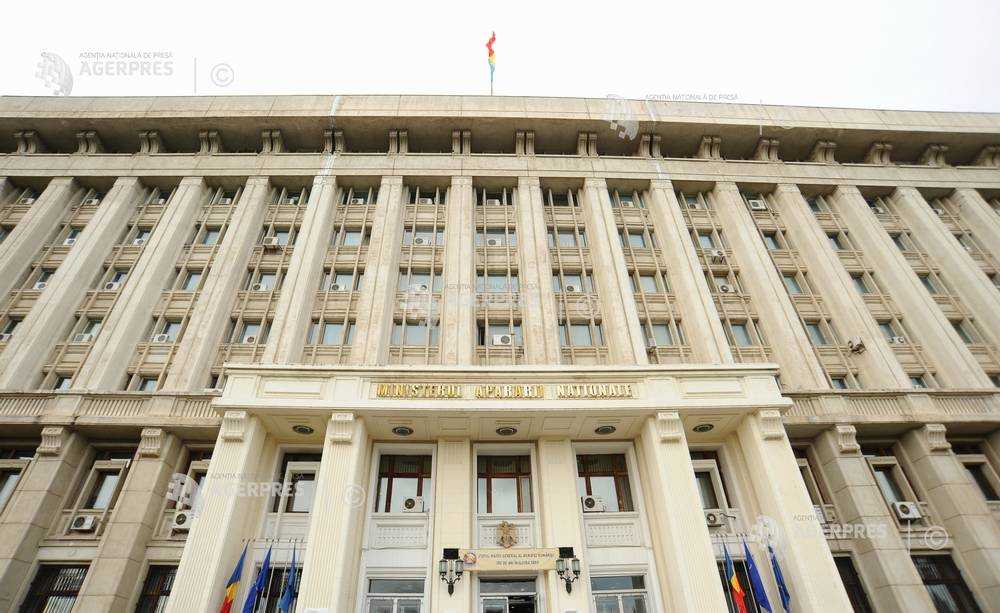
MApN: Ukraine states that drone incident near Constanta is isolated case, likely caused by Russia's actions
The Ministry of National Defence reported that their Ukrainian counterparts stated the incident at the Port of Constanta on June 5 was an 'isolated' one, 'most likely caused by electronic warfare actions by the Russian Federation.' 'The Ukrainian Ministry of Defence has responded to the 14 questions posed by Minister Radu Miruta regarding t
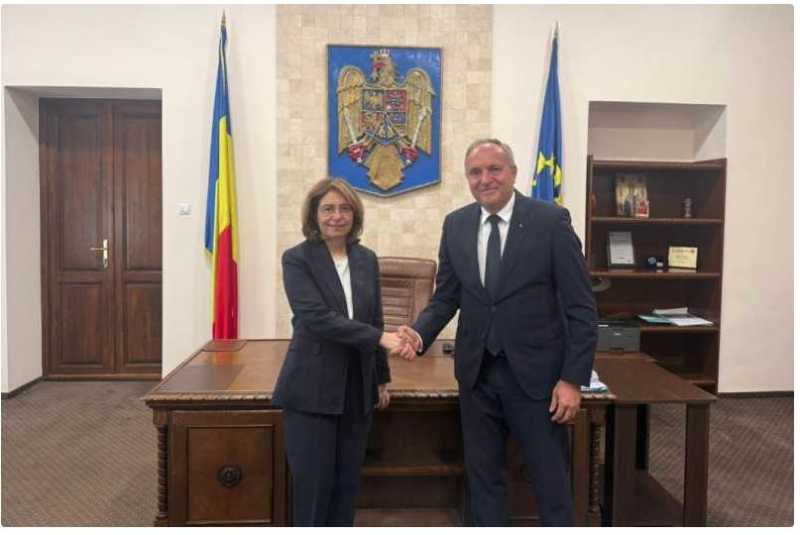
Greek Ambassador to Romania supports expansion of investments in Bihor County
Greece is interested in expanding its investments in Bihor County in areas such as infrastructure, construction and energy, Greek Ambassador to Romania Lili Evangelia Grammatika said on Friday during a meeting at the headquarters of the Bihor Prefecture. According to a press reease issued by the Prefecture, the Greek ambassador, accompanied by Nikolaos Vlahaki
Ministry of Health: 58 addenda to financing agreements under PNNR, signed this week
A total of 58 addenda to financing agreements under the National Recovery and Resilience Plan (PNRR) were signed between 29 June and 3 July, the Ministry of Health said on Friday. Under Component 12 (Health), eight addenda were signed, comprising three term extensions for outpatient healthcare facilities, two extensions and one amendment increasing the benefic
Competition Council: Fuel prices below EU average in H1; diesel up from July 1
Fuel prices in Romania remained significantly below the European Union average for most of the period between March 1 and June 30, 2026, both in terms of retail prices including taxes and prices excluding taxes, according to the Romanian Competition Council, which is monitoring price developments following the expiry of the cap on commercial mark-ups and the temporary reduct
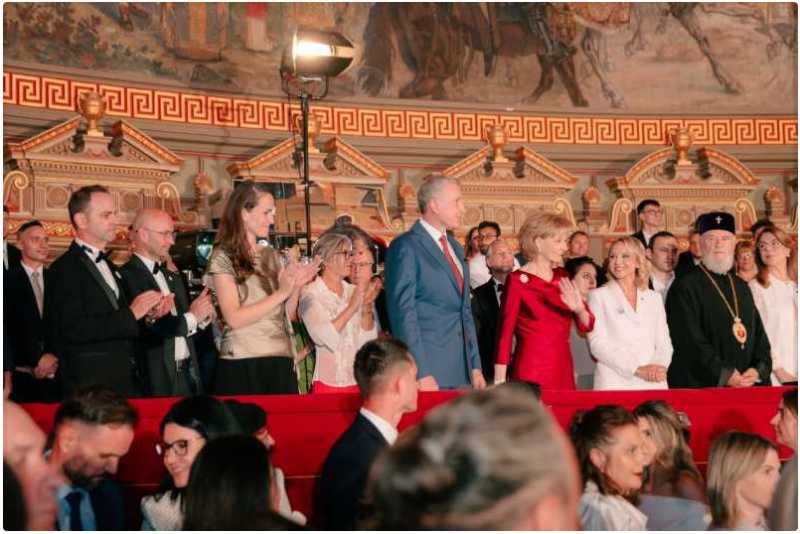
Romanian Red Cross Gala held at the Romanian Athenaeum; Custodian of the Crown Margareta in attendance
The Romanian Red Cross Gala, marking the 150th anniversary of the organisation's founding, took place on Thursday evening at the Romanian Athenaeum, in the presence of Her Majesty Margareta, Custodian of the Romanian Crown, and Prince Radu. On the occasion, the Bucharest National Opera Orchestra, conducted by Daniel Jinga, gave a concert featuring soprano
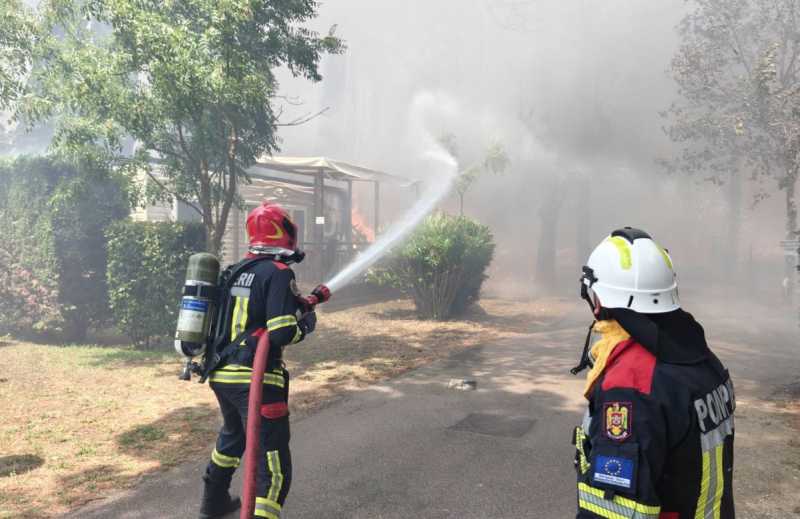
Romanian firefighters evacuate more than 150 LPG cylinders from campsite in France
Romanian firefighters evacuated more than 150 LPG cylinders from a campsite in France during a mission supporting the French authorities to contain the effects of a vegetation fire that spread to the site, affecting an area of several hectares. 'The request for assistance was received at around 13:00. Upon arrival, crews found a rapidly spreading fire burn
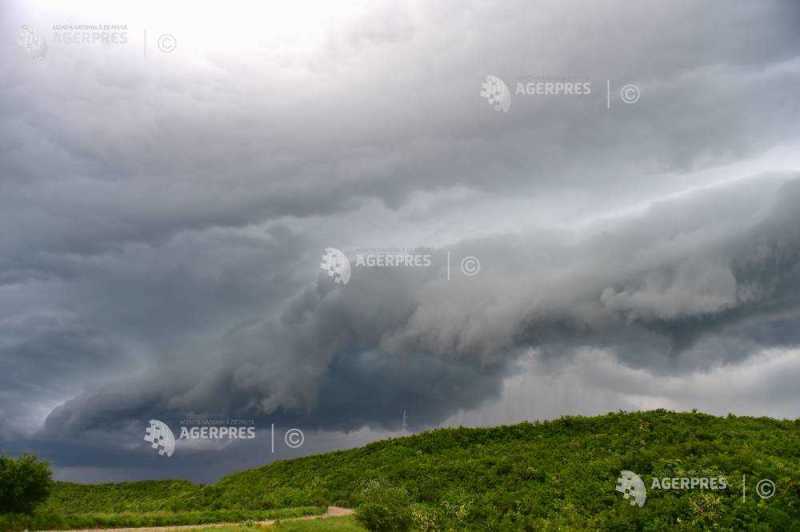
Code Yellow for atmospheric instability, torrential rain, strong winds until Saturday morning
Nearly all regions of Romania will be under a Code Yellow warning for atmospheric instability, torrential rain and strong winds until Saturday morning, according to the National Meteorological Administration (ANM). On Friday, 3 July, periods of atmospheric instability are expected in Maramures, Transylvania, Moldavia, Oltenia, Muntenia and Dobrogea. The weathe
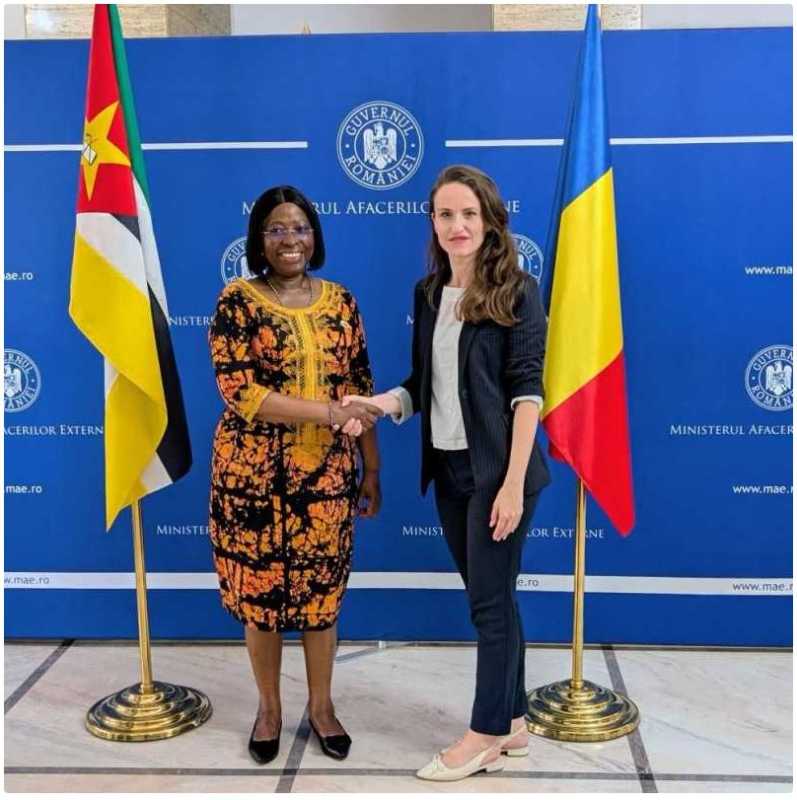
ForMin Toiu meets her counterpart from Mozambique; favorable prospects for capitalizing on existing potential
Acting Minister of Foreign Affairs, Oana Toiu, met on Thursday with the Minister of Foreign Affairs and Cooperation of the Republic of Mozambique, Maria Manuela dos Santos Lucas, the two officials agreeing that there are favorable prospects for further capitalizing on the existing potential and encouraging contacts between institutions and companies from the two countries.
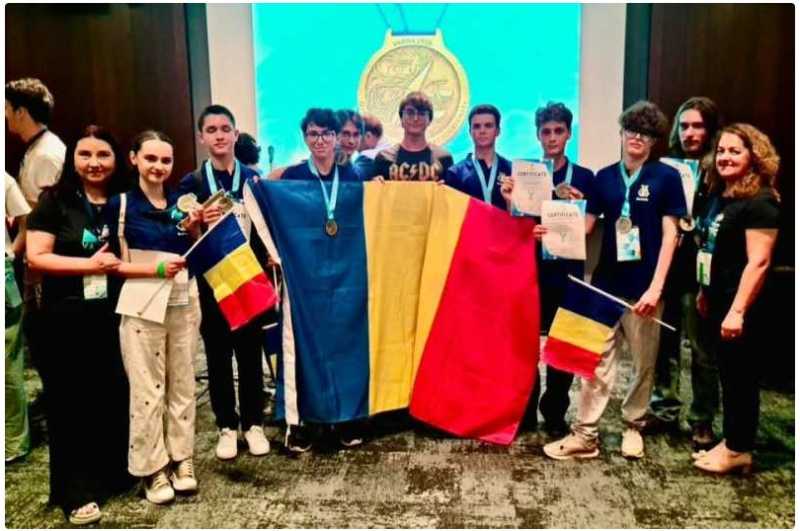
Romania - 1st place among nations at the European Geography Olympiad in Varna
Romania ranked first among nations, with five gold medals and three silver medals, at the European Geography Olympiad that took place in Varna, Bulgaria, informs the Ministry of Education in a post on its official Facebook page. In the 'Juniors' category, Romania was represented by: Matesescu-Pascalau Bogdan-Andrei, 'C. D. Loga' National Colleg
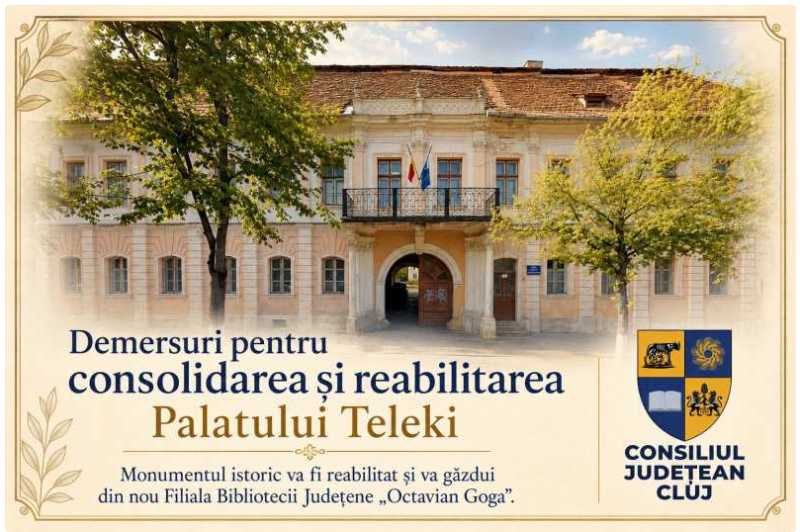
Cluj-Napoca's Teleki Palace in for RON 67 mln overhaul, slated for cultural-tourism integration
Teleki Palace in Cluj-Napoca is set to undergo a major rehabilitation worth over RON 67 million, aiming to restore the historic building and reintegrate it into the city's cultural-tourism circuit, the Cluj County Council announced. The project will refurbish the palace and bring back to the building the 'Octavian Goga' County Library branch curren

Viorel Pasca, accused in Bihor illegal nursing-homes case, unapologetic at Bucharest Tribunal, insists he did good
Viorel Pasca, head of the 'Dumbrava - Dumnezeu Poarta de Grija' Association, said on Thursday that out of roughly 400 residents housed in the facilities of the charity, only about 100 had any income, and even those were 'small, modest amounts', insisting that maintenance costs were covered by donations from ordinary people. 'I consider that