

On the road to nowhere? European carmakers face EV push from China (enr)

Car imports are a major hot-button issue in the already fraught trade relationship between the EU and China. The electric vehicles market is accelerating, while the EU appears directionless, swerving between green policies and demands to protect national industries.
Growing popularity of electric vehicles (EVs) from China is causing headaches for European carmakers - and for Brussels, with national governments clamouring for protection for their national champions.
The European Commission, which is in charge of trade policies for the bloc, has to square the circle between avoiding a trade war and injecting some life into the idling economy.
In one recent step the EU is attempting to introduce minimum prices for Chinese made EVs to offset subsidies instead of slapping on more tariffs.
The EU in 2024 had introduced tariffs of up to 35.3 percent on EVs imported from China after an anti-subsidy probe concluded that the country's support undercut European automakers. Manufacturers in China benefit from unfair subsidies that give them a significant advantage in the European market. Since then, the two sides have been engaged in talks to find other solutions.
How cheap is too cheap?
Under new guidelines published by the Commission last week, companies can commit to setting minimum prices for vehicles exported to the European Union in order to avoid the price surcharges. In addition, in the case of a corresponding offer, commitments to invest in the EU or to limit exports would be positively taken into account.
Such offers would be assessed objectively and fairly by the Commission, according to the new guidelines. A prerequisite for acceptance is that the measures eliminate the damaging effects of subsidies and have an effect equivalent to the tariffs.
The published document was 'intended to provide guidance to Chinese exporters who may be considering submitting price undertaking offers for exports of battery electric vehicles to the EU, which are currently subject to countervailing duties,' Commission spokesman Olof Gill said.
He said that at present, the Commission has received one price undertaking offer, without specifying which company or for which model. He added that the Commission is ready to consider other proposals, provided that they 'adequately address the unfair competitive advantage' and demonstrate that they are 'feasible in practice'.
Leading German automotive expert Ferdinand Dudenhöffer, head of the private institute Center Automotive Research (CAR), was skeptical of the effects of the minimum prices could have on competition.
According to EU calculations, manufacturers in China benefit from unfair subsidies that give them a price advantage of around 20 percent on the European market. For this reason, tariffs ranging from 7.8 to 35.3 percent were imposed from 2024, depending on the manufacturer. German and US companies that manufacture in China are also affected. In retaliation, China imposed special tariffs on EU goods such as spirits, pork, and dairy products.
According to CAR, Chinese manufacturers sell their models in the EU at an average markup of 118 percent on top of the domestic price. 'Given the current price level in Europe, there should still be significant scope for Chinese manufacturers to reduce prices,' said Dudenhöffer.
Pressure from all sides
According to the latest report by the EU research agency Eurofound, the automotive industry in the EU directly employs around 6 million workers and another 6 million in related sectors.
Since 2019, the pace of job losses in the sector has clearly accelerated. In 2024 alone and at the beginning of 2025, layoffs announced by European companies affected around 100,000 jobs.
The largest employment losses have been recorded in countries with a strong presence of Europe's biggest car manufacturers. In France, a structural decline is feared, while since 2019 job cuts have also affected Germany, Italy, and, to a lesser extent, Spain. Central and Eastern European countries - Czechia, Hungary, Poland, Romania, and Slovakia - are facing the relocation of production outside the EU to countries with lower labor costs.
This is happening because sales of cars originating from China, including electric vehicles (EVs), are increasing in the EU. In practice, some of these cars on EU markets are not only models of Chinese brands but also vehicles produced in China for Western brands.
German auto angst
Germany, for many years a global carmaking powerhouse, is facing a dilemma. Demand for EVs is rising, but it is not just the battery powered Volkswagens or BMWs customers are flocking to - and the long-term outlook is dire.
Electric vehicle sales rebounded strongly in Germany in 2025, according to official data from early January this year, with Chinese manufacturers making inroads from a low base in the EU's largest economy despite tariffs.
EV sales rose 43.2 percent last year to 545,142 in total, the KBA federal transport authority said, representing 19.1 percent of all new cars sold.
Chinese EV giant BYD - which last year overtook Elon Musk's Tesla to become the worlds largest electric carmaker - saw its German sales rise over 700 percent to more than 23,000 cars, giving it 0.8 percent of the overall auto market.
'International vehicle manufacturers with affordable battery electric vehicles and plug-in hybrids have contributed disproportionately to growth in these segments,' said Imelda Labbé, head of the VDIK foreign carmakers' lobby in Germany.
The rise in EV sales last year comes after a fall of almost 30 percent in 2024 following the withdrawal of government subsidies, and Germany's electric car market is still smaller than optimists had hoped for. After the decline in the market in 2024, the government said in December it would introduce subsidies again.
Some motorists will be able to benefit from 5,000 Euro for the purchase of new EVs or hybrids so long as their components are largely made in Germany. But industry figures say that better charging infrastructure and cheaper power would be needed to really boost EVs and warned that the planned subsidy would have limited impact.
On the other hand, German carmakers have been reporting strong declines in vehicle sales in China. Volkswagen said in January its sales dropped by 8 percent in 2025 year-on-year, as it was facing intense competition on the Chinese market from local producers. Mercedes-Benz reported a 19 percent decline in sales for the year, while BMW sold 12,5 percent fewer cars in China.
German manufacturers like Mercedes or VW sell about 30 percent of their cars on the Chinese market.
The tug-of-war affects not just major players, but the automotive sector across the continent.
Bulgaria for example is not a major car producer, but it is increasingly important as a supplier of automotive components to European manufacturers. The sector has grown into one of the country's strongest industrial branches, generating close to 11 billion Euro in annual turnover, according to business media and industry analyses.
This means that it is indirectly exposed to the EU-China trade dispute over electric vehicles: weaker competitiveness of European carmakers could reduce orders for Bulgarian suppliers, while a recovery in EV sales in core markets such as Germany would have the opposite effect.
At the same time, Chinese manufacturers are not only exporting cars to Europe but are also expanding production and partnerships within the EU, with Bulgaria being increasingly part of China's automotive strategy in Southeast Europe according to analysts.
For Bulgaria, this creates a mixed impact: EU trade measures may protect European carmakers, but Chinese localization in Europe could also open new opportunities for Bulgarian suppliers.
Dudenhöffer expects the sector to shrink in the next years in Germany and Europe, as manufacturers shift their production to the US or Asia, he said in his market forecast for 2026.
Fading from Green to Petrol
And then there are of course the EU's green policies: The EU in December rolled back a 2035 ban on new petrol and diesel cars seen as a milestone in the fight against climate change, as the bloc pivots to bolstering its crisis-hit auto sector.
Under proposals slammed by green groups as an act of 'self-sabotage', carmakers will have to cut exhaust emissions from new vehicles by 90 percent from 2021 levels - down from an envisaged 100 percent.
This means that in practice automakers will still be able to sell a limited number of polluting vehicles - from plug-in hybrids to diesel cars - beyond 2035, provided the resulting emissions are 'compensated' in various ways.
The EU's Industry Commissioner, Stéphane Séjourné, insisted the bloc's green ambitions stood intact as he put forward a plan billed as a 'lifeline' for Europe's auto industry.
The combustion-engine ban was hailed as a major win in the climate fight and a key tool to drive investments in electrification when adopted in 2023.
The compromise plan was slammed by both environmentalists and industry groups.
While the EU had recognised that remaining open to different technologies was important, its proposal was 'fraught with so many obstacles it threatens to remain ineffective in practice', the president of the German Association of the Automotive Industry (VDA), Hildegard Müller, said. 'In times of increasing international competition, in times when European economic power is crucial, this overall package from Brussels is disastrous.'
The future of German car manufacturers - and by extension automakers in other EU member states - is closely linked to the Chinese market.
According to Dudenhöffer, they must develop and build electric cars 'in China for China'. In this context, he criticised the softening of the combustion engine phase-out. He said it was not possible to disconnect from developments, but that it is necessary to face competition in the tough Chinese market. 'If you're not in China, you're not in the car business.'
The content of this article is based on reporting by AFP, ANSA, BTA, dpa, PAP, as part of the European Newsroom (enr) project. AGERPRES (editing by: Simona Klodnischi)
The content of the www.agerpres.ro website has the exclusive purpose of public informing.
All the information published on this website by AGERPRES is protected by relevant legal dispositions.
It is forbidden to copy, reproduce, recompile, decompile, distribute, publish, display, modify, create derived components or products or full services, as well as any exploitation of the site's content.
Details in the section Terms of Use. If you are interested in picking up AGERPRES news items, please contact the Marketing Department – marketing@agerpres.ro.
The use of the Comments section entails your obligation to respect the AGERPRES terms and conditions in regards to the publishing of comments on the www.agerpres.ro.
Other news in category
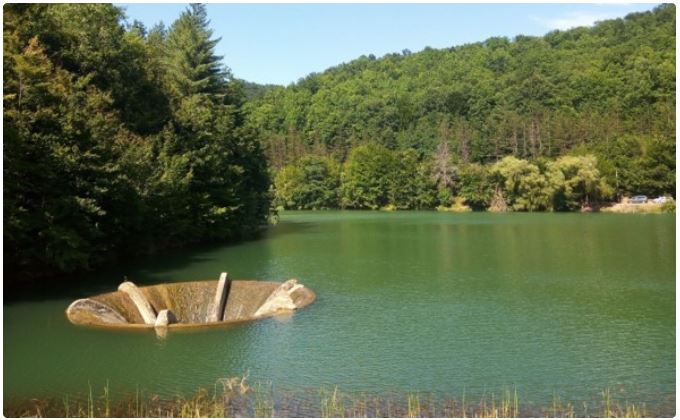
'Whirlpool' Vida Lake to turn into sustainable rural tourism site
The Dobresti local administration is preparing to turn Lake Vida - one of Romania's most spectacular and unique lakes - into a regional hub for active and sustainable rural tourism, through a project estimated at four million euros, following the completion of complex desilting works. Dobresti mayor Florin Copos recently told AGERPRES that the local author
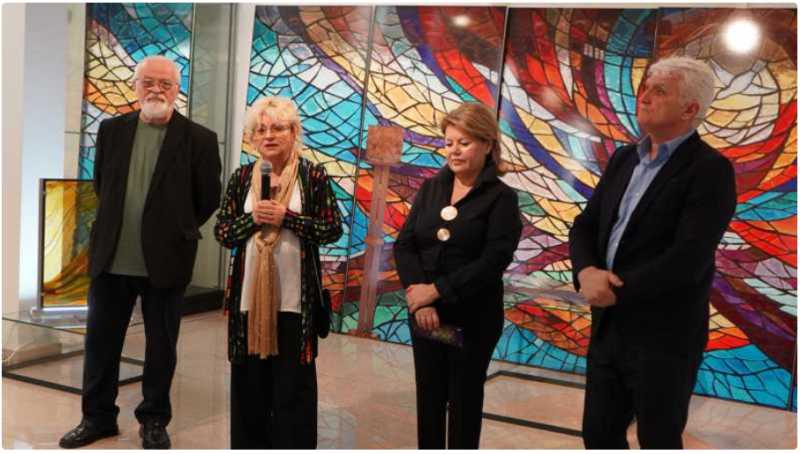
Amalia Verzea's 'The Art of Stained Glass at 360 Degrees' arrives in Oradea
After being presented in Bucharest, the personal exhibition 'The Art of Stained Glass at 360 Degrees' signed by internationally renowned Oradea artist Amalia Verzea, has arrived in her hometown, at the Cris Land Museum, where it can be visited until May 10. The exhibition will later travel to Rome. 'I have been making stained glass all my life. Sin
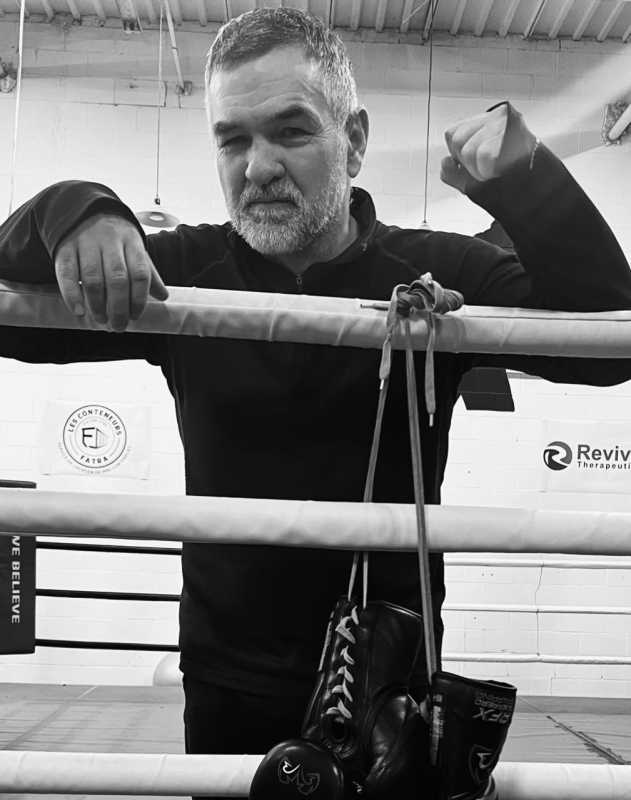
#BoxingCentenary/INTERVIEW Leonard Doroftei: Romanian boxing can rise again, but only with better coaching
Former boxing great Leonard Doroftei told AGERPRES in an interview that Romanian boxing is going through a rather challenging period, but he remains confident the sport will recover and once again produce athletes capable of winning medals at European, World and Olympic level. 'We're going through a tougher patch. I hope that one day we'll bounce b

#Nadia Year/International Day of Sport for Development and Peace celebrated with small gymnasts
The Romanian Olympic Committee (COSR), through the Romanian Olympic Academy on Friday organised an event at the Mariana Bitang Gymnastics Hall inside the Dinamo Sports Club, celebrating International Day of Sport for Development and Peace together with young gymnasts and legends of Romanian gymnastics. The event is part of the series of actions carried out by

Iasi equestrian wins first place at her debut at CSIO Ch Nations Cup Youth Belgium
Iasi equestrian Ilinca Rata, aged 14, brought Romania its first victory in the CSIO Ch Nations Cup Youth competition, held in Opglabbeek (Belgium). Registered with the Equester Sports Club Iasi, Ilinca won in the debut event for the Children category - Small Tour (1.15 m), after a penalty-free course, performed alongside the horse Innocence S/Ingo.

Ioana Dogioiu: Government approves ordinance on temporary reduction of excise duty on diesel fuel
Government spokesperson Ioana Dogioiu declared on Friday that the Executive adopted the normative act regarding the temporary reduction of the excise duty level for diesel and the establishment of the solidarity contribution on revenues from the marketing of crude oil and energy products obtained from the processing of crude oil extracted from the territory of Romania.

Jianu:Entrepreneurial index for 2026 fell to 43.25 points; only two macroeconomic indicators are increasing
The entrepreneurial index dropped this year to 43.25 points, from 49.5 points in 2025, in conditions in which most macroeconomic indicators stagnated or registered decreases, while the dynamics of turnover and foreign investments were on the rise, data from the third edition of the report show. 'We meet today at the launch of the Romanian Entrepreneurship

One of Romania's main challenges remains high level of energy prices during peak hours (StateSec)
One of Romania's main challenges remains the high level of energy prices during peak hours, and the solutions are increasing domestic production, investing in storage capacities and more efficient management of consumption, according to Energy Ministry Secretary of State Cristian Busoi. 'One of Romania's main challenges remains the high level of en
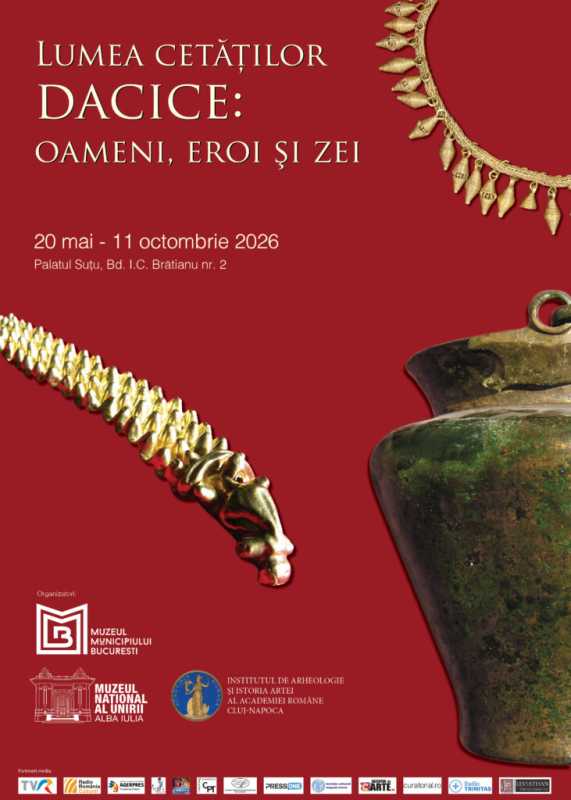
'The World of the Dacian Fortresses: People, Heroes and Gods' exhibtion to open at Sutu Palace
The thematic exhibition 'The World of the Dacian Fortresses: People, Heroes and Gods' will open on 20 May at the Sutu Palace. 'From 20 May, we invite you to the thematic exhibition ‘The World of the Dacian Fortresses: People, Heroes and Gods,' an opportunity to discover the fascinating world of the Dacians and their fortifications, viewed
Romania records tourist arrivals down 3.7% and overnight stays down 3% in February
Arrivals and overnight stays in the establishments of tourists' reception with functions of tourists' accommodation, including apartments and rooms for rent decreased by 3.7% and by 3%, respectively, in February 2026 compared to the same month last year, according to the National Institute of Statistics (INS) data published on Friday. The arriva

Exhibition dedicated to young artists, organised in partnership with Margareta of Romania Royal Foundation
The Buzau County Museum, in partnership with the Margareta of Romania Royal Foundation, is organizing the opening of the exhibition called 'The aspiration to fly' ('Nazuinta de zbor'), dedicated to young artists of the 2026 generation, an event which coincides with the 130th anniversary of the inauguration of the former 'I. C. Bratianu' hospital build

FEATURE/ Inter-institutional training on the Danube part of Sea Shield exercise
The Sfantu Gheorghe branch of the Danube on Thursday hosted an inter-institutional training exercise that dealt with the management of a refugee crisis in the Danube Delta area and prisoners of war, an event that was part of a wider Sea Shield exercise. The military exercise designed to secure the interoperability of the entities participating in a multination
Romania to start vaccine negotiation with Pfizer as ill-considered decisions backfire
Prime Minister Ilie Bolojan announced on Thursday that Romania will contact Pfizer, with which he will start a negotiation, considering that some 'thoughtless decisions turn against them in a longer or shorter time'. 'Unfortunately, we received the news of the sentence in the first instance, unfortunately enforceable by the Belgian Court, under whi
Ancient gold artifacts stolen in Drents Museum heist handed over to Romania
The Cotofenesti golden helmet and two of the three Dacian gold bracelets stolen last year from the Drents Museum in the Netherlands and subsequently recovered have been returned to Romania, the Dutch Prosecution Service announced on Thursday in a press release published on its website. Stan Rares-Petru and Daniela Buruiana, representatives of the Romanian Pros
Culture Minister Demeter hails Cotofenesti helmet recovery: It's a victory, it's what I hoped for
Culture Minister Demeter Andras expressed satisfaction at the recovery of the iconic Geto-Dacian Cotofenesti golden helmet and two gold bracelets, stressing that the amount to be returned to the Dutch side will be determined only after the restoration of the artifacts is completed. 'It's a victory, it's a joy. It's what I hoped for. From the fi