

INTERVIEW/Italian Ambassador: Great potential for improving level of military training and cooperation in military industry
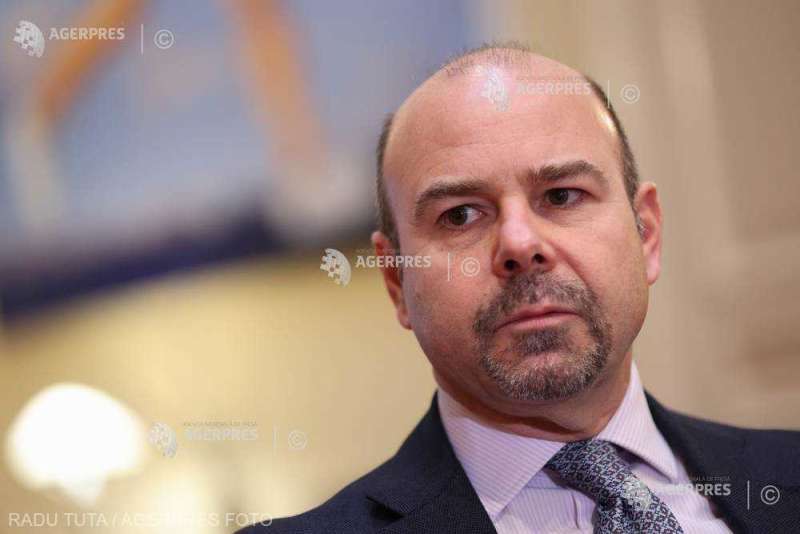
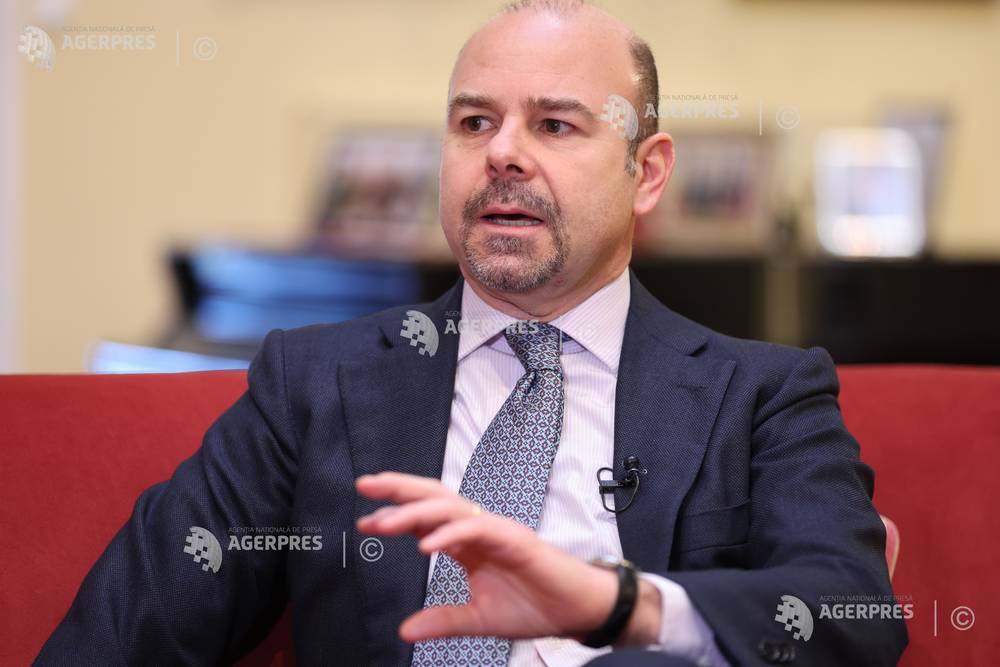
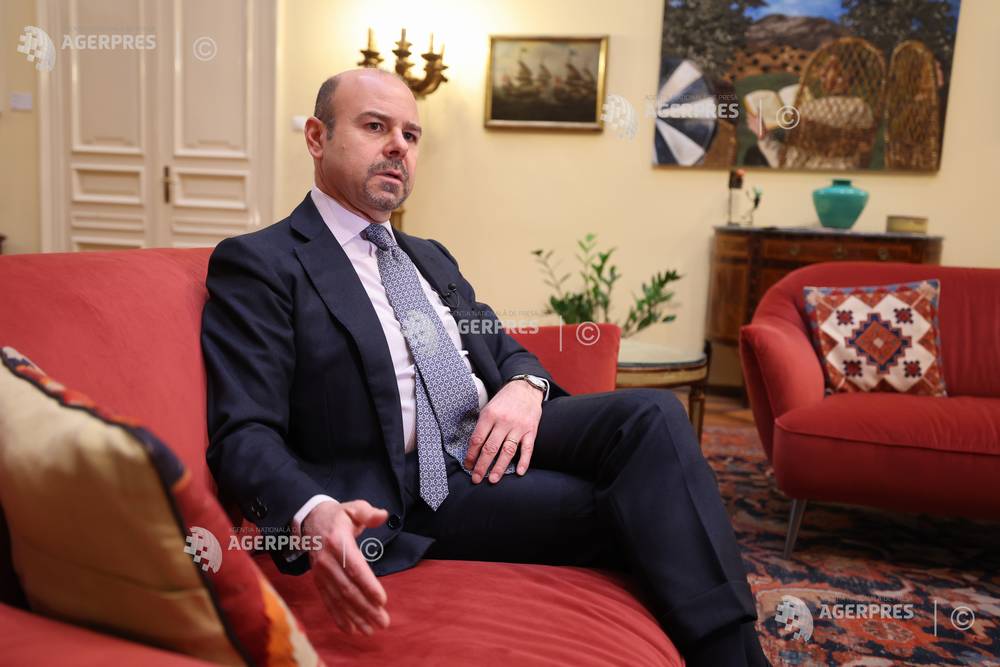
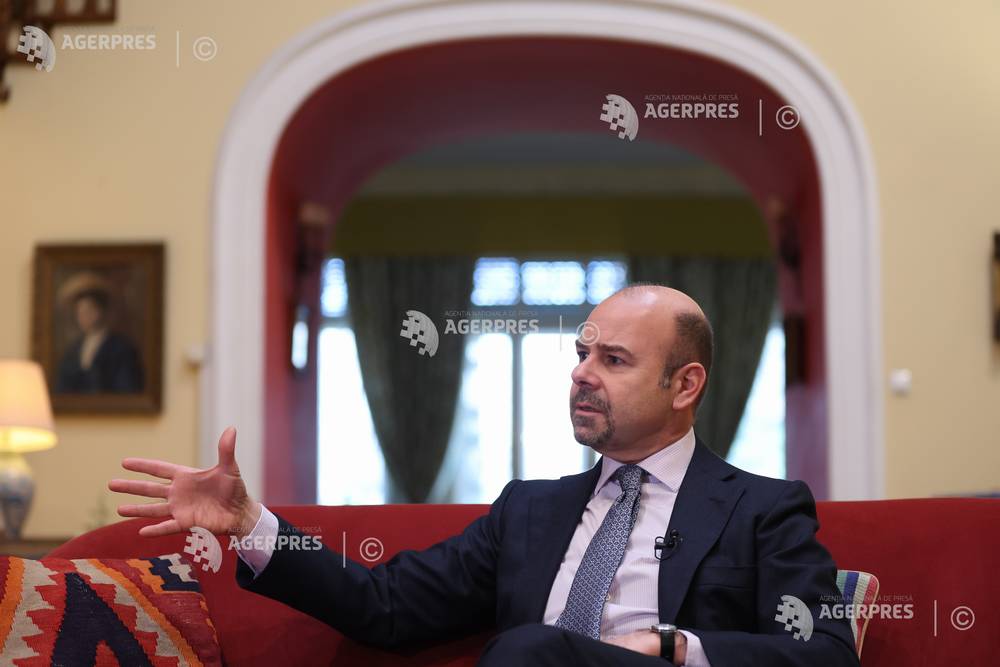
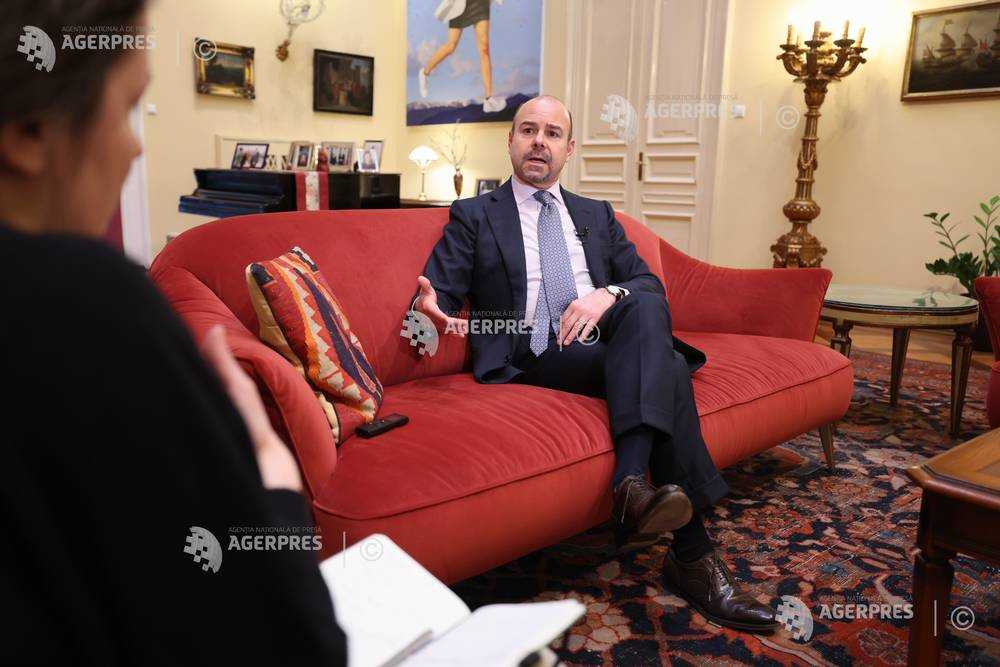
The Italian Ambassador in Bucharest, Alfredo Maria Durante Mangoni, told AGERPRES in an interview that there is a great potential for improving the level of military training, but also for Romanian-Italian cooperation in the military industry.
He said that Romania has expressed interest in assessing a form of Italian participation in demining activities in the Black Sea and that the governments of the two countries are discussing the issue.
The diplomat also said that Romania's full accession to the Schengen Area is "a strategic decision" that should be made as soon as possible.
In the interview, the Italian ambassador also spoke about the political commitment regarding the possibility for people convicted in their country of origin to serve their sentence in that country, the European Parliament election, the Romanian community in Italy, as well as the way the migration issue is managed in his country.
AGERPRES: Mister Ambassador, recently, there was a joint meeting of the Romanian and Italian governments. On this occasion, the Romanian community in Italy and the Italian community in Romania were discussed. Could you talk about the Romanian community in Italy and the way it has evolved from the 90s, when Romanians had blue collar jobs and were struggling, until now?
Alfredo Maria Durante Mangoni: I think that one of the main outcomes of the G2G meeting two weeks ago in Rome was precisely the fact to acknowledge, recognize the excellent level of integration of the Romanian community in Italy. We are well into the second generation and we have seen a great transformation: people with the increasing level of professional qualifications, not just construction workers or helpers in families, but also professionals and businessmen. The level of Romanian investments in Italy is also slowly growing. We consider the presence of the Romanian diaspora in Italy as a best practice of integration. They bring a very important contribution to the Italian GDP. And I think that the Romanian government, Prime Minister Ciolacu, who had the opportunity to meet the Romanian community at the capital, in Rome, are well aware of this important contribution. Regarding the Italian community in Romania, of course it's not so big, but we have a dynamic group of businessmen, we have several students enrolled in Romanian universities, as well as also some pensioners, some retired people that decided to come and enjoy their new life in Romania. And besides that, also a small national minority, historical minority, coming from late 19th century. At the time, they were even, some of them, they were not even citizens of the Kingdom of Italy because they were under the Austrian Empire rule. But the two communities are a great asset for our bilateral partnership.
AGERPRES: As far as you know, could you make a profile of the Romanian living in Italy? I mean, do they choose to live there or do they retire and come back to Romania? Are their children completely integrated in the society?
Alfredo Maria Durante Mangoni: I think that they are well integrated from the economic and professional point of view, and they are also looking to improve their standard of living, and they let their children have their studies, study at Italian schools and universities. The level of services is also attractive, I think. Many of them are coming back to Romania after the end of their working life. We have seen also some improvements in terms of proceedings regarding the social benefits and payment of pensions. We have reduced the time needed for processing the requests of Romanian workers. And I think that the overall experience is very, very positive.
AGERPRES: Presently, Italy is at the front line of the migration wave. It has to deal with a lot of issues regarding migration, including the very serious cases in Lampedusa, for example. Recently, the Albanian Parliament has approved an agreement with Italy to host asylum seekers going to Italy. Albania will host them, while their papers are being processed. Could you nuance this matter? It is a new decision, it is a decision that maybe is not understood by all European countries?
Alfredo Maria Durante Mangoni: I think this agreement, which has been carefully designed to be compliant with the European legal framework, is one of the tools that we need to use to stem illegal migration flows, which we feel very strong from the central Mediterranean route through Libya and Tunisia. Of course, when you deal with legal matters, you have to be very careful, but the draft agreement has been positively assessed by the European Commission, as well as by the Constitutional Court of Albania, and we are going to cooperate with Albania in order to process the asylum applications by migrants coming from third countries. We have a consolidated experience of now 25 years of a huge pressure on Italy of illegal migration flows and I can say that we have understood how difficult it is in Europe to have the secondary relocation of migrants throughout other countries willing to host quotas of migrants. That's why the Italian government, not only this government, but also before this government, have always stressed the importance of developing the external dimension of European migration policies. Working with third countries of origin and transit of migration flows is crucial. We want to build new partnerships for managing the mobility of people, for creating job opportunities and investments in the countries of origin. And of course, stemming the impact of climate change is an important aspect in this regard. We consider it very urgent now to finally adopt, before the end of the European Parliament of this legislature, the comprehensive European Pact on Asylum and Migration. All the legal instruments are ready, all the regulations have been approved and endorsed by the Council and Parliament, so it's time to give the final vote on the EU Pact on Asylum and Migration.
AGERPRES: Migration was mentioned in the first place by Austria, the country that vetoed out Romania from complete accession to Schengen. Starting March 31, Romania, will be part of Air Schengen and Maritime Schengen. What is Italy's stance when it comes to the complete accession of Romania to the Schengen area?
Alfredo Maria Durante Mangoni: Completely in favour. We are losing a lot of time. Removing maritime and air borders is positive, is a first step. We have to complete with land borders as soon as possible. We also feel, like Romania, huge economic costs for our companies working in Romania that are affected by the controls at the borders and long queues for customs. So we have always told our Romanian partners as well as our Austrian friends that this is the right decision, there is no alternative. This is a strategic decision that we must take as soon as possible, also given that all the technical criteria are filled.
AGERPRES: You were talking about the current European Parliament. There will be European Parliament elections in June and a lot of European leaders worry about the fact that there will be extreme right movements, that maybe there will be extreme right representatives in the next European Parliament. How are things in Italy? How do the leaders of Italy see this? Is there the danger of extremism?
Alfredo Maria Durante Mangoni: I can say that Italy, Romania, many countries share a common challenge to combat extremism and populism. This was also discussed between Prime Minister Ciolacu and Prime Minister Meloni. And even if they recognized also during the plenary session of the bilateral talks with all other ministers that, they belong to different political families, but pragmatically, they agreed on everything. This is very important. I believe that some lessons should be learned from the experience of this [European, editor's note] legislature. We had the ambition of the Commission to be a geopolitical commission, and the Commission proved fairly well to address the COVID emergency, the pandemic, the outbreak of war in Europe, multiple crises, the green transition. Probably the next European Parliament and the new Commission should adopt a more gradual approach as far as the green transition is concerned. I'm sure that next week in Bucharest, during the European Popular Party Congress and the Deputy Prime Minister and Foreign Minister of Italy Antonio Tiani will attend the Congress, matters like the future of agriculture and the construction of a European Defence dimension will be at the core of discussions.
AGERPRES: During the two governments' meeting in Rome, there were some agreements signed on different fields. One of them was Justice and the issue that Romanian fugitives cannot be extradited or are extradited late from Italy to Romania was also addressed. Prime Minister Meloni said that fugitives belong to the countries that trial them. So how will things change in this regard?
Alfredo Maria Durante Mangoni: I would say that there is a full awareness of the two governments of the matter of fugitives, but not only fugitives. I would like to also highlight what is our main concern here, the detention conditions of Italian nationals that are restricted, that are detained in Romanian prisons. The new joint declaration on the consolidated strategic partnership that was adopted by the two prime ministers includes a political commitment because we are talking about judicial matters and we have to respect of course the independence and autonomy of the judiciary, as well as let the implementation of European Union regulations regarding the criminal cooperation and the execution of penalties be correctly implemented. But there is a declaration, a political commitment regarding the possibility that convicted people in the country of origin may execute the penalty in the country of origin. This means bringing back to Romania convicted persons that have been condemned by Romanian courts for economic, financial crimes, for example for corruption. On the other hand to let the Italian citizens, at the end of the appeal process, to execute the penalty in Italy. The two governments cannot go beyond that because we are talking about matters that are far away of the competence of the two executives.
AGERPRES: You were talking about the detention conditions for Italian nationals here in Romania, could you elaborate, give more details? Are there not standard conditions?
Alfredo Maria Durante Mangoni: No, I'm not hinting because all European countries are subject to the monitoring of the Council of Europe, of the Committee on the Prevention of Torture, this is the competent body. And we have been examined and in the Italian prisons not all the conditions are so adequate. But there are European standards and we have to try to adhere to those standards. There has been a lot of attention in Italy regarding one specific case of an Italian lady detained in Hungary. And since we have some Italian citizens here, I raised the attention of the Romanian government at different levels on these cases. But we have a very good cooperation also on a personal basis with the Justice minister, with the penitentiary where these young people are detained, which is Poarta Alba [penitentiary, editor's note]. And I visited them and we are going to follow closely their proceeding next week. There will be the appeal starting at the Constanta Tribunal.
AGERPRES: Intergovernmental agreements have also been signed in the field of Defence. Can you give more details? Currently, the European Union is trying to boost the Defence industry, how will Italy get involved in the Romanian Defence industry?
Alfredo Maria Durante Mangoni: In the field of Defence we have seen a growing increase of the level of confidence, of cooperation. As far as defence policies are concerned, there is a very good exchange, staff talks between the two armies and also between the navy of the two countries. This also goes with the common exchange of practices between the air forces given the participation of Italy in the air-policing NATO mission here in Romania. We see a great potential also in terms of improving exchanges in the field of training, military training, as well as the industrial cooperation. Since Romania is in the process of moving from old Soviet-time platforms, moving towards more performing platforms in terms of products, services, regarding all domains. We are active in different fields, in the field of land vehicles. We have invested in Romania in the field of naval assets, drones, also satellite capabilities. We can offer a wide range of products and services allowing also a significant impact of technological transfer and job opportunities, qualified jobs in Romania.
AGERPRES: When it comes to the Defence industry and cooperation in this regard, is the Italian government thinking more about the G2G framework or is it thinking about the tender framework which is very time consuming?
Alfredo Maria Durante Mangoni: I would say Defence as well as Energy are very complex areas, sectors. G2G may be one good channel, especially since, usually, companies working in the defence sector are controlled by the state or state owned companies. This is the case of Italy. Our two main players, Leonardo-Finmeccanica, former Finmeccanica and Fincantieri are controlled by the Treasury, through the golden share. There could be also direct business between private companies. We encourage this kind of agreement as well.
AGERPRES: Russia's war against Ukraine actually brought up the question of the Black Sea. Actually the Allies are paying greater attention to the Black Sea which is becoming a strategic area. How does Italy address this reality and how can it get involved, given that you have your own sea where there are situations that need to be addressed? What are Italy's concrete efforts when it comes to defence in the Black Sea area?
Alfredo Maria Durante Mangoni: First of all, we thank Romania for having brought to the fore the strategic importance of the Black Sea that has been recognized at the [NATO, editor's note] Vilnius Summit last July. Now all the Allies are aware that the Black Sea is a hotspot of strategic amplitude for NATO for the implementation of this strategic concept. Soon after the outbreak of the war, we received a request by Romania to participate in demining activities. But unfortunately, this was not possible because of the legal limitations posed by Turkey, according to the Montreux Convention. So Italian military assets, naval assets, could not enter the Black Sea during the war. Now things have evolved. Romania has signed the MOU with Turkey and Bulgaria for the demining. We are closely following the matter. We have received an expression of interest of Romania to assess some form of participation. And this is a matter on which the two governments are currently discussing.
AGERPRES: Because we are talking about Russia's war against Ukraine, there is a lot of debate because two years on, countries might be experiencing fatigue in supporting Ukraine militarily. How do Italian citizens and the Government see this issue?
Alfredo Maria Durante Mangoni: The Italian public opinion is showing signs of fatigue of course. This is nothing surprising. It happens everywhere in Europe. But look at the political leadership. The political leadership is giving very strong messages of continuous support to Ukraine. As long as it is needed. Last Saturday, Prime Minister Meloni visited Kiev. We signed our bilateral security protocol for a ten-year span to improve the security and defence cooperation with Ukraine. And she chaired the first G7 leaders meeting of this year. We have the G7 presidency from Kiev with President [of the European Commission, Ursula, editor's note] von der Leyen, with the Canadian Prime Minister and other leaders including President Biden connected, and President Zelensky of course. So we want to counter this perception that there is a fatigue in the West regarding Ukraine. And our G7 presidency action is precisely focused on taking back Ukraine at the forefront of the international agenda. Because we have seen the Middle East crisis with the horrible attack of, barbaric attack of Hamas against Israeli civilians. Maybe it has been an attempt to divert the international attention from the main focus which is Ukraine and the invasion of Russia.
AGERPRES: In Rome, the two governments also signed an agreement regarding economic relationships between Italy and Romania. What are the main areas of interest on both sides?
Alfredo Maria Durante Mangoni: The general purpose in the field of economic cooperation and investments is for us to revitalise a very successful story of internationalisation of economic partnership between Italy and Romania. Which I think must evolve towards more significant added value and address the new challenges of the double transition, green transition and digital transition. In Rome, the two governments have first of all renewed the strategic partnership through a new joint declaration signed by the prime ministers. And in terms of economic agreements, I would like to mention the cybersecurity agreement between the two agencies, as well as a memorandum of understanding for supporting the SMEs. SMEs are an important feature of our economic pattern in both countries and the memorandum for the cooperation in tourism. On top of that, there has been also the signature of the memorandum of understanding between SACE, the Italian Export Credit Governmental Agency, Anseldo and Nuclear Electrica, to provide a robust contribution to the financing line of the overall Cernavoda project. That means the revamping of Unit 1 and the construction of 3 and 4. As you may know, Anseldo is part of an international consortium with the Canadians and Koreans and supported also by the US companies. And we will provide up to 2 billion euro of financing to this important strategic project. I think there is a great potential for also combining competencies, skills of Romanian startups and Italian venture capital and companies willing to move forward on the value chains. We need to go beyond the manufacturing, beyond the just simple industrial cooperation. We have to focus on innovative sectors, emerging technologies. We have the challenge to diversify the Italian investments in Romania and Romania is called to let your investments in Italy grow.
AGERPRES: Because at the beginning of the interview we were talking about the profile of the Romanian citizen living in Italy. What's the profile of the Italian living in Romania? Are they business people, do they choose to live in Romania for the rest of their lives?
Alfredo Maria Durante Mangoni: The largest part of the Italian community are entrepreneurs, businessmen, that have lived here for now 20, 30 years or even more. There is an important commuting of businessmen from Italy to Romania back and forth, from the north-eastern part of Italy especially. We are in all areas now, in all regions, not only like it was 30 years ago in Timisoara, in Banat, but everywhere in Romania, in different business areas and companies of different sizes. We have also now big investments on strategic projects. I would like to particularly mention Braila Bridge, which despite some narratives of some countries has seen the majority of the stake of the consortium was of an Italian global player we built, with 60 percent of the amount of the contract. The Italian companies have brought the largest contribution to the construction of the Braila Bridge, which is an extraordinary hub and platform for the reconstruction of Ukraine and for the support to Moldova towards its path towards the European Union.
AGERPRES: The last question will be on a lighter note. Italy is the place that everybody dreams to visit, the dream holiday destination. Where do Italians go on vacation, aside from Italy?
Alfredo Maria Durante Mangoni: We are attracted, I think there is a common feature between Italians and Romanians. We are attracted also by far-reaching destinations, exotic places like Maldives. Not everybody can afford, of course, but Europe still gets more attention. European capitals, Paris, Madrid, London, the United States. I also personally try to visit Romania. I've visited many places over these two and a half years. And other countries, I would mention, for example, Morocco, Tunisia, countries that I visited in the last few years, Turkey.AGERPRES(RO - author: Oana Ghita, editor: Florentina Peia; EN - editors: Catalin Cristian Trandafir, Simona Iacob)
The content of the www.agerpres.ro website has the exclusive purpose of public informing.
All the information published on this website by AGERPRES is protected by relevant legal dispositions.
It is forbidden to copy, reproduce, recompile, decompile, distribute, publish, display, modify, create derived components or products or full services, as well as any exploitation of the site's content.
Details in the section Terms of Use. If you are interested in picking up AGERPRES news items, please contact the Marketing Department – marketing@agerpres.ro.
The use of the Comments section entails your obligation to respect the AGERPRES terms and conditions in regards to the publishing of comments on the www.agerpres.ro.
Other news in category

President Dan: I'm convinced the pro-Western direction will continue even if motion of no confidence passes
AGERPRES special correspondent to Dubrovnik Oana Ghita reports: President Nicusor Dan stated on Wednesday that he is convinced that, in the event the motion of no confidence passes, the outcome will be a continuation of Romania's pro-Western direction. The president was asked by journalists whether he is considering the adoption of the motion of no confide

President Dan: In these turbulent times, we must be more united in promoting national interests
The moral strength of war veterans is a benchmark which brings us to mind that what unites us as a people matters more than any passing crisis, and in these turbulent times we must be more united in promoting national interests and values, President NicuSor Dan said on Wednesday in a message on the Day of War Veterans. 'Our thoughts of respect and gratitud
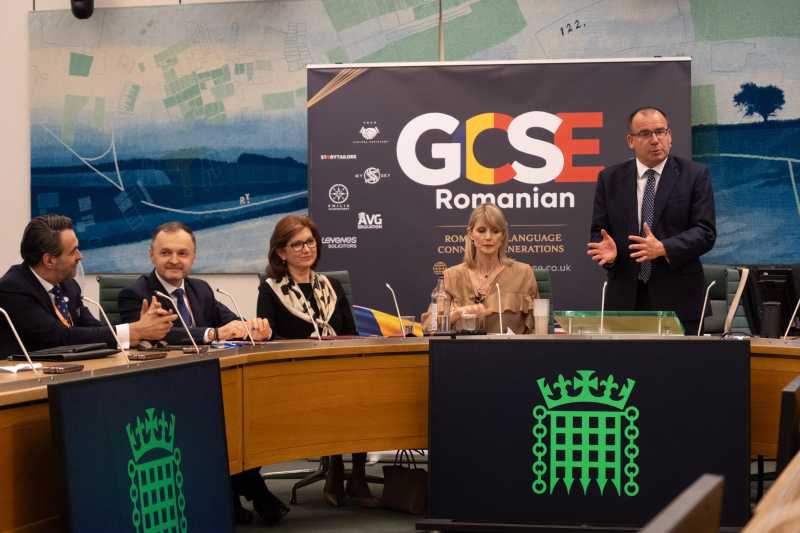
Conference at UK Parliament on introducing Romanian as a GCSE exam option
The introduction of Romanian as an option in the General Certificate of Secondary Education (GCSE) system was the focus of a conference held on Monday at the Palace of Westminster, amid growing recognition of Romanian as the second most widely spoken foreign language in England and Wales, the Embassy of Romania in the United Kingdom said in a Facebook post on Tuesday.
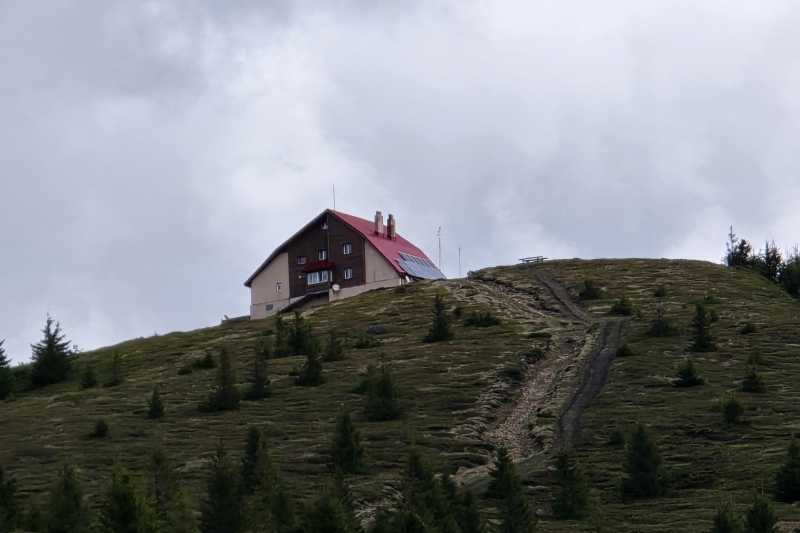
Weather administration to install nine new autonomous automatic weather stations to faster identify dangerous phenomena
The National Meteorological Administration (ANM) is set to install nine new autonomous automatic weather stations in Buzau County, thus increasing the number of meteorological measurement points to 14, with the aim of more rapidly identifying potentially dangerous weather phenomena. According to ANM, the financing contract has been signed for the project '

PNL first deputy chairman: No split; but a corrupt system versus a reformist movement
First deputy chairman of the National Liberal Party, Ciprian Ciucu, said that Romania does not face a real split within the pro-European camp, but rather a confrontation between what he described as a 'corrupt system' seeking to preserve its privileges and a reformist movement trying to keep the country afloat. 'We do not have a 'split'. We

Romanian cinema, at SEEfest in Los Angeles; Ioana Mischie and Daniela Nane participating
Romanian cinema will be present, starting on Wednesday and running until 6 May, at the 21st edition of the South-East European Film Festival in Los Angeles (SEEfest), one of the most important events in the United States dedicated to film productions from this region. This year's edition gives special attention to Romanian film, through a curated selection

Motion of no confidence against PM Bolojan submitted to Parliament
The parliamentary groups of PSD (Social Democratic Party), AUR (Alliance for the Union of Romania) and PACE - Intai Romania (Romania First) tabled a motion of no confidence against Prime Minister Ilie Bolojan in Parliament on Tuesday. The motion is signed by 251 MPs, AUR leader George Simion said. Former Social Democratic Deputy Prime Minister M

#NadiaYear/Nadia Comaneci coming home to Onesti, 50 years after Montreal Summer Olympics
The city of Onesti will host large-scale events to celebrate the first gymnast in history to score a perfect 10 at the Olympic Games, with Nadia Comaneci set to be present in her hometown alongside other figures from Romanian and international sport at the end of May, according to a press release sent to AGERPRES on Tuesday. 'Fifty years after the historic

#NadiaYear Nadia Comaneci to attend Sports Festival 2026
Former gymnastics great Nadia Comaneci will attend this year's Sports Festival 2026 on June 14 at BTarena, taking part in a masterclass organised in partnership with the Romanian Olympic and Sports Committee, according to a press release sent to AGERPRES on Tuesday. 'Nadia Comaneci is the special guest of the Sports Festival 2026 edition. The champion

Bucharest Opera Festival to offer opera, ballet and musical theatre evenings, 11 - 22 June
The fifth edition of the Bucharest Opera Festival will take place at the Bucharest National Opera between 11 and 22 June, offering the public 12 consecutive evenings of opera, ballet and musical theatre, according to a press release the organisers issued on Tuesday. The festival brings together companies from Romania and from around the world. International pa

International Shakespeare Festival begins on 21 May; 11 days of performances, concerts and events
The 'Marin Sorescu' National Theater of Craiova and the Shakespeare Foundation are organising, between 21 and 31 May, the International Shakespeare Festival - 11 days of performances, concerts and events in which Craiova becomes a stage for world theatre. According to organisers, this year's edition is themed 'WILL matters', proposing a ref

President Dan at 3SI Summit to underline importance of transatlantic component to regional projects
AGERPRES special correspondent Oana Ghita reports: President Nicusor Dan on Tuesday participates in the Three Seas Initiative (3SI) Summit, where he will underline the importance of the transatlantic relationship for mobilising the capital and expertise needed for projects in the region, according to the Presidential Administration, while also highlighting the need for great
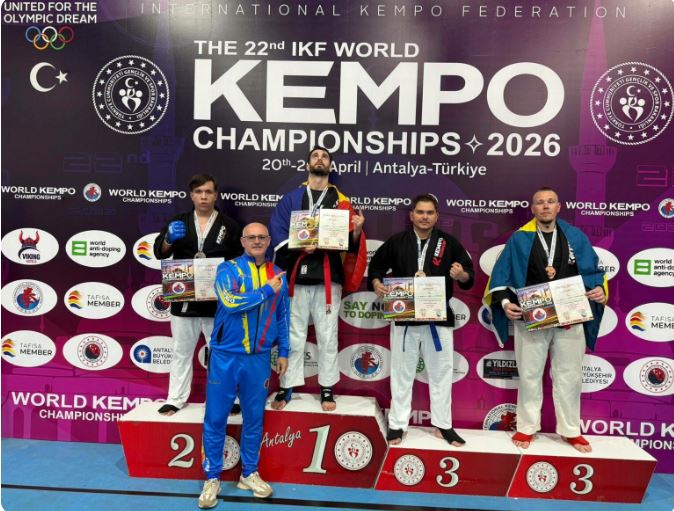
David Sferle from Bihor wins double world title at 22nd IKF Kempo Championship in Antalya
Romanian sport has recorded a new top achievement, as David Sferle, representing CS Crisul Oradea and a member of the national team, became a double world kempo champion at the 22nd IKF World Kempo Championship held in Antalya, according to the club's website. The event, now in its 22nd edition, took place between 20 and 26 April and brought together some

Concordia Employers' Confederation: Political instability has direct and measurable economic cost paid by companies, citizens
Political instability has a direct and measurable economic cost, visible in the interest rates at which the state borrows, in the exchange rate, in loan repayments and in the National Resilience and Recovery Plan (PNRR) funds that Romania risks no longer accessing, according to the Concordia Employers' Confederation. 'First of all, political instabilit
INS: Construction managers expect growth in activity over next three months
Construction managers in Romania expect an increase in activity over the next three months, while the number of employees is set to remain relatively stable in construction, retail trade and services, according to the National Institute of Statistics (INS) data published on Tuesday. According to the quoted source, in the manufacturing industry, the results of