

BNR keeps monetary policy rate at 6.50pct per annum
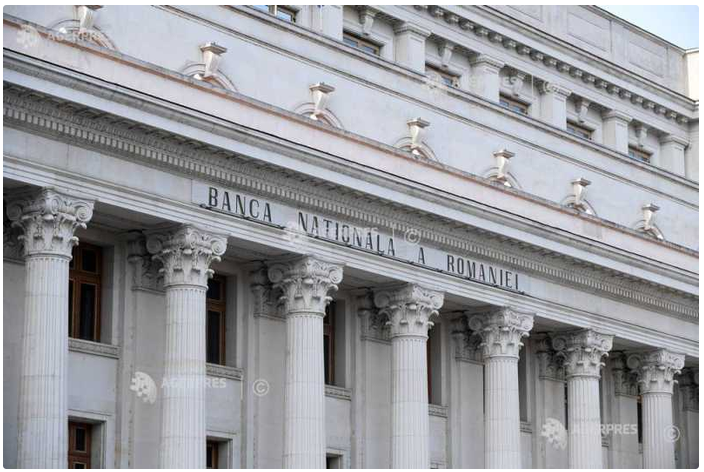
In its meeting of November 12, 2026, the Board of the National Bank of Romania (BNR) decided to keep the monetary policy rate at 6.50% per annum.
It also decided to leave unchanged the lending (Lombard) facility rate at 7.50% per annum and the deposit facility rate at 5.50% per annum, and to maintain the existing levels of minimum reserve requirement ratios on both leu- and foreign currency-denominated liabilities of credit institutions.
'Based on the currently available data and assessments, as well as in light of the high uncertainties, the BNR Board decided in the meeting held today, 12 November 2026, to keep the monetary policy rate at 6.50 % per annum. Moreover, it decided to leave unchanged the lending (Lombard) facility rate at 7.50 % per annum and the deposit facility rate at 5.50 % per annum. Furthermore, the BNR Board decided to maintain the existing levels of minimum reserve requirement ratios on both leu- and foreign currency-denominated liabilities of credit institutions.
The BNR Board decisions aim to ensure and maintain price stability over the medium term, in a manner conducive to achieving sustainable economic growth. The BNR Board reiterates that, at the current juncture, the balanced macroeconomic policy mix and the implementation of structural reforms, also by using EU funds to foster the growth potential over the long term, are of the essence for a stable macroeconomic framework and for strengthening the capacity of the Romanian economy to withstand adverse developments,' according to a BNR press statement released on Thursday.
BNR says it closely monitors developments in the domestic and international environment and stands ready to use the tools at its disposal in order to achieve the fundamental objective regarding medium-term price stability, while safeguarding financial stability.
The monetary policy rate has been at the level of 6.50% per year since August 2024.
The annual inflation rate went up to 6.61% in September, from 6.17% in August 2026, mainly as a result of significantly higher fuel and natural gas prices. In 2026 Q3 as a whole, the annual inflation rate declined substantially, from 10.42% in June, amid the fade-out of the direct effects from the removal of the electricity price cap and the increases in VAT rates and excise duties in July and August 2025.
'The disinflationary base effects associated with the two successive supply-side shocks affected primarily the evolution of exogenous CPI components, especially the annual dynamics of energy prices, whereas the additional downward influences stemming over this period from the decrease in VFE prices were fully offset by those coming from the notable rise in fuel prices, in the context of the surge in the oil price.'
In turn, the annual adjusted CORE2 inflation rate remained unchanged at 6.2% in September 2026, but shed 2.1% from end-Q2, mainly under the impact of the disinflationary base effects associated with the hike in indirect taxes in August 2025, but also amid the decline in some agri-food commodity prices and a weaker consumer demand.
According to BNR, opposite influences came from the indirect effects of costlier fuels and energy, as well as from the higher EUR/RON exchange rate, inter alia amid elevated short-term inflation expectations, overlapping those generated by the pick-up in telecommunications prices and mandatory motor third-party liability insurance tariffs.
In October 2026, the annual inflation rate rose to 6.94 %, largely amid further hikes in fuel prices, as well as owing to the increase in VFE prices. The annual inflation rate calculated based on the Harmonised Index of Consumer Prices (HICP - inflation indicator for EU Member States) dropped to 7.0% in October 2026 from 9.2% in June 2026.
The average annual CPI inflation rate fell to 9.0% in October 2026 from 9.8% in June 2026, while the average annual HICP inflation rate receded to 8.3% in October 2026 from 8.6% in June 2026.
The new statistical data reconfirm the standstill in economic activity in 2026 Q2, after the 0.1% contraction in 2026 Q1 (quarterly change), which implies a further widening, at a moderate pace, of the aggregate demand deficit over this period, yet on a notably higher-than-previously-forecasted path.
Compared to the same year-ago period, economic activity contracted at a significantly slower pace in 2026 Q2, i.e. -0.2% versus -1.2% in the first three months of the year, mainly as a result of the surge in the annual dynamics of gross fixed capital formation, after the sharp decline in the previous quarter, while household consumption displayed a visibly stronger year-on-year drop during this period.
The expansionary impact of net exports rose marginally in 2026 Q2, as the annual change of exports of goods and services saw its positive differential versus that of imports (changes in terms of volume) post a renewed widening, recording a relatively more pronounced increase compared to the previous quarter. Nevertheless, the year-on-year downward trends in trade deficit and current account deficit seen over the past 3-4 quarters came to a halt, reversing in 2026 Q2, as a result of worsening terms of trade.
The latest data and analyses point to a moderate recovery of economic activity in 2026 H2 overall, also due to the sizeable contribution of agriculture. This is associated, however, with a deterioration in the annual dynamics of GDP in 2026 Q3, amid mixed developments across the aggregate demand components and major sectors.
Thus, the year-on-year decline in retail sales halved in 2026 Q3, the very high double-digit annual dynamics of the volume of construction works gained momentum in July-August, while during the same months industrial output recorded a notably milder contraction versus the same year-ago period.
The annual change in exports of goods and services remained, however, flat in July-August 2026, while that of imports continued to rise, the differential between them thus turning slightly negative again. Consequently, the trade deficit and the current account deficit recorded significantly faster annual growth compared to 2026 Q2, while January through August as a whole they posted a renewed widening versus the first eight months of 2025, after having visibly contracted in 2026 H1.
Looking at the labour market, the recent data show new small decreases in the number of employees economy-wide in July and August 2026, but also a significant downward correction in the ILO unemployment rate, which reached again 6.4% in 2026 Q3, from an average of 6.8 % it had climbed to in 2026 Q2.
According to the surveys, employment intentions over the very short horizon declined, however, in October after a visible recovery in Q3, whereas the labour shortage reported by companies saw a halt in the downward trend shown over the past six quarters, picking up markedly in the first month of 2026 Q4, amid an almost across-the-board widening in major sectors.
The annual growth rate of nominal gross wage saw a renewed step-up in July-September 2026, also amid the hike in the gross minimum wage economy-wide, remaining, nevertheless, at a historically low level, while the rate of change of unit labour costs in industry accelerated further during the first two months of 2026 Q3 overall, albeit at a more sluggish pace than in the prior quarter.
The main interbank money market rates extended their relatively pronounced rise into the early days of October 2026, before staying at levels significantly above those reached in the previous three quarters.
Medium- and long-term yields on government securities largely reversed, in the first half of October, the increase seen in September owing inter alia to the domestic political situation, but then halted their downward adjustment, remaining visibly above the values in the first two months of 2026 Q3, amid the escalating Middle East conflict and the subsequent renewed heightening of global risk aversion. Under the circumstances, the EUR/RON exchange rate underwent a partial downward correction in the second 10-day period of October yet reverted quickly and then tended to stick to the readings it had climbed to at the beginning of the month.
The annual growth rate of credit to the private sector held steady in September 2026, at 8.2%, as the pace of increase of the leu-denominated component extended its slow uptrend, reflecting developments in loans to non-financial corporations and households alike, whereas the annual dynamics of foreign currency credit continued to decelerate. The share of the domestic currency component in credit to the private sector remained, however, at 66.8%, partly under the influence of the statistical effect of movements in the leu's exchange rate.
The next monetary policy meeting of the BNR Board will be held on 19 January 2027. AGERPRES (RO - editing by: Nicoleta Banciulea; EN - editing by: Corneliu-Aurelian Colceriu)
The content of the www.agerpres.ro website has the exclusive purpose of public informing.
All the information published on this website by AGERPRES is protected by relevant legal dispositions.
It is forbidden to copy, reproduce, recompile, decompile, distribute, publish, display, modify, create derived components or products or full services, as well as any exploitation of the site's content.
Details in the section Terms of Use. If you are interested in picking up AGERPRES news items, please contact the Marketing Department – marketing@agerpres.ro.
The use of the Comments section entails your obligation to respect the AGERPRES terms and conditions in regards to the publishing of comments on the www.agerpres.ro.
Other news in category
Foreign minister assures family of Romanian woman detained in China of support in transfer efforts
Romanian Foreign Minister Dan Neculaescu met on Thursday with the family of Alina Apostol, a Romanian citizen serving a prison sentence in China, assuring them that the Foreign Ministry remains fully engaged in supporting her case. 'Through our consular network, we are closely monitoring the observance of all her rights, her detention conditions and her st

ICI Bucharest head: Romanian AI Factory infrastructure could become fully operational in 2027
The Romanian AI Factory infrastructure, being developed as part of a European project involving the National Institute for Research and Development in Informatics - ICI Bucharest, could become fully operational in 2027, the institute's Director General, Adrian Victor Vevera, said on Thursday at the 'Digital Finance in Central and Eastern Europe' Forum.

Romania's automotive industry accounts for 13-14% of GDP, one-third of exports, economy minister says
Romania's automotive industry is a strategic sector that contributes around 13-14% of gross domestic product (GDP) and generates one-third of the country's exports, Economy, Digitalisation, Entrepreneurship and Tourism Minister Daniel Zamfir said on Thursday at an event dedicated to sustainable and affordable mobility. 'I am pleased to discuss the

PM Niculescu announces project for Romania's next 20 years in EU, with youth playing central role
The Government is preparing a project for Romania's next 20 years in the European Union, with young people at its heart, Prime Minister Luca Niculescu said on Thursday, adding that the initiative is intended to be promoted jointly with other EU member states. 'We have had a week with an intensive European agenda. The visit by European Commission Presid

PM Niculescu: Gov't to draw up integrated plan to improve safety in schools, setting out clear responsibilities
The Government will draw up an integrated plan to improve safety in schools, setting out clear responsibilities for all those involved and providing for concrete preventive measures, rapid response mechanisms and firm sanctions for acts of violence, Prime Minister Luca Niculescu said on Thursday. He attended a meeting of the Working Group on the Prevention of
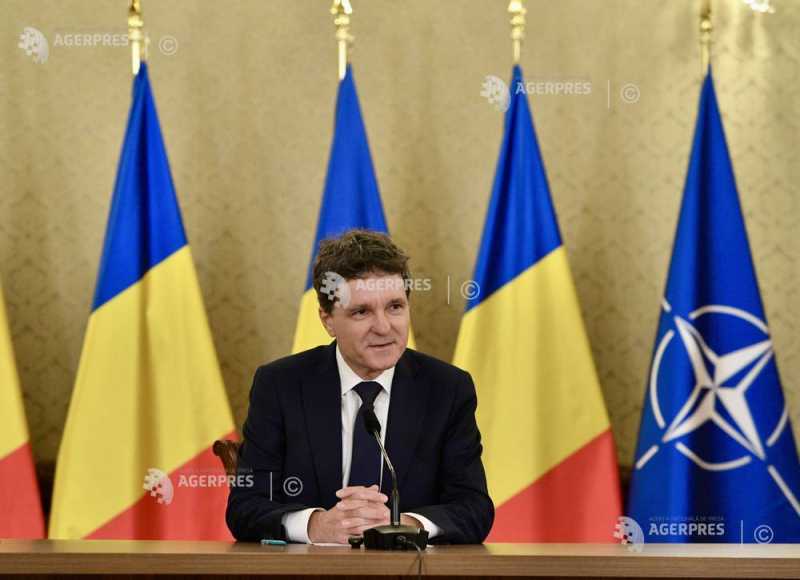
President Nicusor Dan attending European Political Community ninth meeting
President Nicusor Dan will attend the ninth meeting of the European Political Community (EPC), hosted by Ireland in Dublin, on Thursday. The summit, entitled '‘Europe - strong, secure and connected,' will bring together leaders from across Europe to discuss the main challenges facing the continent, with a focus on security, competitiveness and re
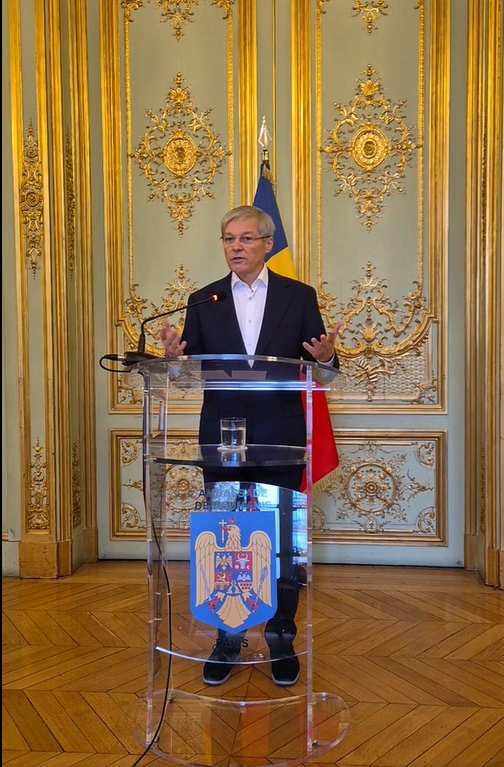
Dacian Ciolos announces academic coordination program between Romania and African Union
Dacian Ciolos, Romania's candidate for the position of Secretary General of the Francophonie, announced on Wednesday the launch of an academic cooperation program between Romania and the African Union. Through this initiative, Romanian universities will offer up to 1,709 study scholarships to young Africans, starting with the 2027-2028 academic year. Accor
George Emil Palade UMFST joins Global Network of UNESCO Chairs
The George Emil Palade University of Medicine, Pharmacy, Sciences and Technology (UMFST) of Targu Mures has been designated by the United Nations Educational, Scientific and Cultural Organization to host the UNESCO Chair Medical Humanities, Ethics and Human-Centred Digital Health, the UMFST Rector Leonard Azamfirei announced on Wednesday. 'This success is
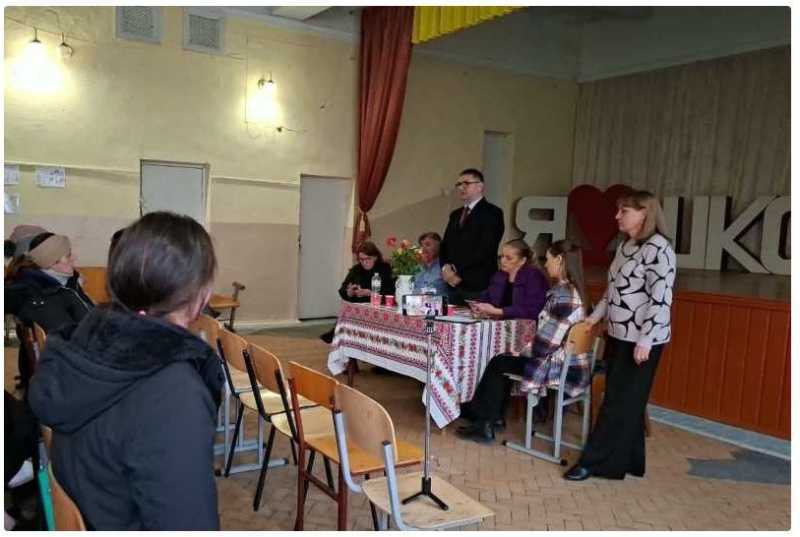
Romanian community of Orlivka protesting closure of local high school
The Romanian community of Orlivka, Ismail district, has spoken out against the closure of the local Romanian-language high schoo during consultations with the Ukrainian authorities on November 10, the Consulate General of Romania in Odessa has announced. The high school in question would be reorganised as a gymnasium.
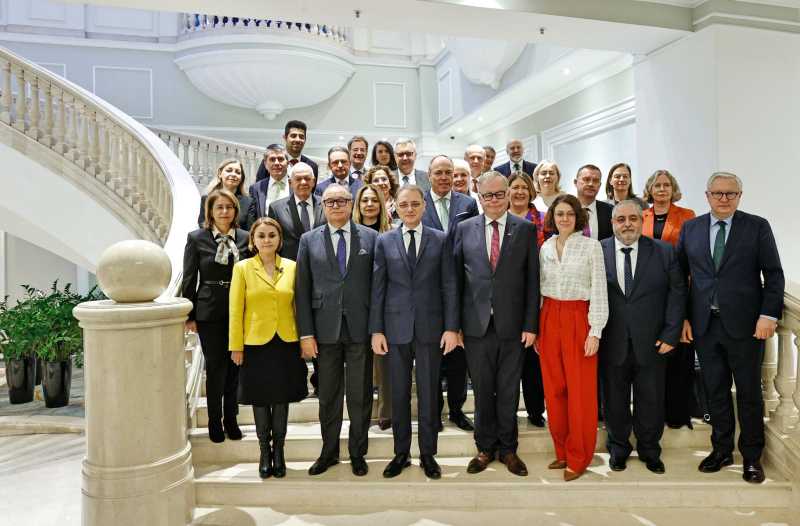
PM Niculescu, EU ambassadors discuss Gov't priorities, Romania's contribution to stronger Europe
Prime Minister Luca Niculescu met on Wednesday with the ambassadors of EU member states and the European Commission's representative in Bucharest to discuss the new Government's priorities and how Romania can contribute to a safer, stronger Europe that is better prepared to face current challenges. 'This morning, I met with the ambassadors of EU me

Veterans of Theatres of Operations Day/Niculescu: State must honour its obligations to veterans
The respect and gratitude owed to veterans of theatres of operations must also be reflected in the way the Romanian state fulfils its obligations towards them, Prime Minister Luca Niculescu stressed on Wednesday. 'Today we pay tribute to Romanian servicemen who took part in missions in theatres of operations, far from their country and families, in places

ActiveWatch says president's ban on journalist Ovidiu Vanghele breaches constitutional rights
Dozens of associations, non-governmental organizations and media outlets have signed an open letter alleging that President Nicusor Dan is violating constitutional provisions guaranteeing freedom of expression and the right to information by banning journalist Ovidiu Vanghele from attending press conferences at the Cotroceni Palace. 'In the press conferenc

Veterans of Theatres of Operations Day/Oprea: Professionalism - the foundation of military cooperation with allies
The professionalism demonstrated by Romanian servicemen in theatres of operations over the years has been the foundation of military trust and cooperation with NATO allies, Minister of National Defence Radu Oprea said on Wednesday. He attended a military and religious ceremony organised by the Ministry of National Defence (MApN) at the Monument to the Heroes w
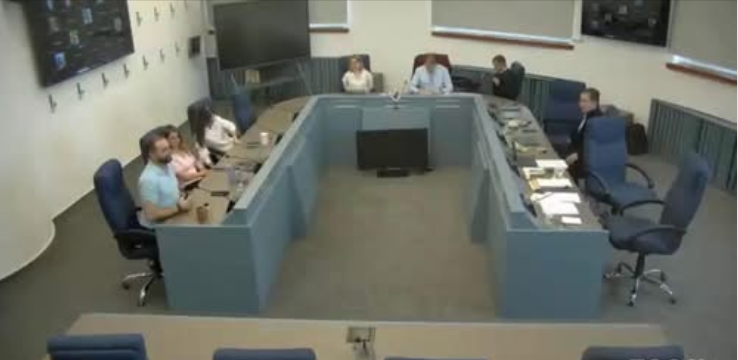
Romanian audiovisual council members debate president's decision to bar journalist from press conferences
President Nicusor Dan's statement that journalist Ovidiu Vanghele would be barred from attending his press conferences was discussed on Wednesday at a meeting of the National Audiovisual Council (CNA). CNA member Dorina Rusu said that 'the law expressly stipulates that no authority may prohibit journalists from attending presidential events and press c